 On page 156, let’s pick out the adjective
 clauses in Jamal’s job application.

 Now, write your own paragraph outlining
 your own job skills. Use at least THREE
 adjective clauses, and underline them.
 A subordinate clause that functions as an
 adverb. It modifies a verb, an adjective, or
 another adverb.
 Tells HOW, HOW MUCH, WHEN, WHERE,
 WHY, TO WHAT EXTENT, or UNDER WHAT
 CIRCUMSTANCES.
 A comma always follows introductory adverb
 clauses.
   Even though Sam hurt his ankle, he won the race.
    [The clause modifies the verb won; it tells under
    what circumstance.]

   The house is quiet when it is empty. [The clause
    modifies the adjective quiet; it tells when it is quiet.]

   Gail arrived much later than she had planned. [The
    clause modifies the adverb later; it tells how much
    later.]
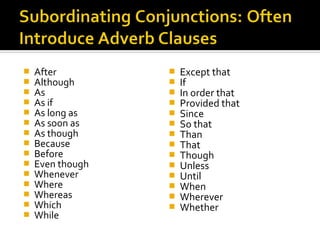
   After            Except that
   Although         If
   As               In order that
   As if            Provided that
   As long as       Since
   As soon as       So that
   As though        Than
   Because          That
   Before           Though
   Even though      Unless
   Whenever         Until
   Where            When
   Whereas          Wherever
   Which            Whether
   While
 On a separate sheet of paper, write ten
 interesting sentences containing adverb or
 adjective clauses (and underline them). You
 may also want to create an answer key.

 When you are finished, exchange papers with
 a partner. Identify whether the clause you’ve
 underlined is an ADJECTIVE or ADVERB.
   . . . Is important for sentence combining.

 On a separate sheet of paper, rewrite the
    short paragraph on page 158. Work with a
    small group to add important information
    answering questions how, why, when &
    where. Underline the adverb clauses in your
    paragraph– try to use at least three.

Adjective adverb clauses

  • 2.
     On page156, let’s pick out the adjective clauses in Jamal’s job application.  Now, write your own paragraph outlining your own job skills. Use at least THREE adjective clauses, and underline them.
  • 3.
     A subordinateclause that functions as an adverb. It modifies a verb, an adjective, or another adverb.  Tells HOW, HOW MUCH, WHEN, WHERE, WHY, TO WHAT EXTENT, or UNDER WHAT CIRCUMSTANCES.  A comma always follows introductory adverb clauses.
  • 4.
    Even though Sam hurt his ankle, he won the race. [The clause modifies the verb won; it tells under what circumstance.]  The house is quiet when it is empty. [The clause modifies the adjective quiet; it tells when it is quiet.]  Gail arrived much later than she had planned. [The clause modifies the adverb later; it tells how much later.]
  • 5.
    After  Except that  Although  If  As  In order that  As if  Provided that  As long as  Since  As soon as  So that  As though  Than  Because  That  Before  Though  Even though  Unless  Whenever  Until  Where  When  Whereas  Wherever  Which  Whether  While
  • 6.
     On aseparate sheet of paper, write ten interesting sentences containing adverb or adjective clauses (and underline them). You may also want to create an answer key.  When you are finished, exchange papers with a partner. Identify whether the clause you’ve underlined is an ADJECTIVE or ADVERB.
  • 7.
    . . . Is important for sentence combining.  On a separate sheet of paper, rewrite the short paragraph on page 158. Work with a small group to add important information answering questions how, why, when & where. Underline the adverb clauses in your paragraph– try to use at least three.