Dr. Md. Tarikul Islam
FCPS (Medicine) P-II Course Student
Dept. of Medicine (Brown unit),
BSMMU
1921

 Type 1 diabetes
 Type 2 diabetes
 Gestational diabetes mellitus (GDM)
 Specific types of diabetes due to other causes
 Monogenic
 Pancreatic diseases
 Drug induced
Classification

 FPG ≥126 mg/dL (7.0 mmol/L)
or
 2-h PG ≥200 mg/dL (11.1 mmol/L) during OGTT
or
 A1C ≥6.5% (48 mmol/mol)
or
 In a patient with classic symptoms of hyperglycemia
or hyperglycemic crisis, RBS ≥200 mg/dL (11.1
mmol/L)
Diagnosis

 FPG 5.6 - 6.9 mmol/L (IFG)
or
 2-h PG during 75-g OGTT 7.8 - 11.0 mmol/L (IGT)
or
 A1C 5.7–6.4%
Pre-diabetes
* WHO define the IFG cutoff at 110 mg/dL (6.1 mmol/L)

 75-g OGTT, with plasma glucose measurement when
patient is fasting and at 1 and 2 h, at 24–28 weeks of
gestation in women not previously diagnosed with
diabetes.
 The diagnosis of GDM is made when any of the following
plasma glucose values are met or exceeded:
GDM
One-step strategy
Fasting 5.1 mmol/L
1 h 10.0 mmol/L
2 h 8.5 mmol/L

Step 1:
 Perform a 50-g GTT (nonfasting), with plasma glucose
measurement at 1 h, at 24–28 weeks of gestation in
women not previously diagnosed with diabetes.
 If the plasma glucose level measured 1 h after the load is
≥7.2 mmol/L, 7.5 mmol/L, or 7.8 mmol/L, proceed to a
100-g OGTT.
GDM
Two-step strategy

Step 2:
 The 100-g OGTT should be performed when the patient is
fasting.
 The diagnosis of GDM is made if at least two of the
following four plasma glucose levels (measured fasting
and 1 h, 2 h, 3 h during OGTT) are met or exceeded:
GDM
Two-step strategy
Carpenter-Coustan or NDDG
•• Fasting 5.3 mmol/L 5.8 mmol/L
•• 1 h 10.0 mmol/L 10.6 mmol/L
•• 2 h 8.6 mmol/L 9.2 mmol/L
•• 3 h 7.8 mmol/L 8.0 mmol/L

The diagnosis of MODY should be considered in adults
diagnosed with diabetes with the following findings:
 Onset at an early age (<25 years)
 Diabetes without typical features of type 1 or type 2
diabetes (negative autoantibodies, nonobese, lacking
other metabolic features)
 Multiple family members with same type of diabetes
 Stable, mild fasting hyperglycemia (5.5–8.5 mmol/L),
stable A1C 5.6-7.6%
MODY

In overweight or obese (BMI ≥25 kg/m2) adults who have
one or more of the following risk factors:
 First-degree relative with diabetes
 High-risk race/ethnicity (e.g., African American, Asian)
 History of CVD
 Hypertension
 HDL <35 mg/dL and/or TG >250 mg/dL
Criteria for testing in asymptomatic
adults

 Women with PCOS
 Physical inactivity
 Other clinical conditions associated with insulin
resistance (e.g., severe obesity, acanthosis nigricans)
 Patients with prediabetes should be tested yearly
 For all other patients, testing should begin at age 45
years
Criteria for testing in asymptomatic
adults

 Metformin therapy should be considered in those with
prediabetes, especially for those with
 BMI ≥35 kg/m2
 aged <60 years, and
 women with prior GDM
 Prediabetes is associated with heightened cardiovascular
risk
Prevention or Delay of Type 2
Diabetes

Comprehensive Medical
Evaluation

 Annual vaccination against influenza
 Vaccination against pneumococcal disease (PPSV23)
 3-dose series of hepatitis B vaccine to unvaccinated
adults
Vaccinations

 A1C test at least two times a year in patients who have
stable glycemic control
 A1C test quarterly in patients whose therapy has changed
or who are not meeting glycemic goals
Glycemic targets
A1c <7%
Preprandial 4.4-7.2 mmol/L
Postprandial (1-2h) <10 mmol/L

Less stringent A1C goals (such as <8%) may be appropriate
for patients with-
 history of severe hypoglycemia
 limited life expectancy
 advanced microvascular or macrovascular
complications
 extensive comorbid conditions
 long-standing diabetes in whom the goal is difficult to
achieve
Glycemic targets

Hypoglycemia
Level Glycemic criteria/description
Level 1 Glucose <70 mg/dL (3.9 mmol/L) and
glucose ≥54 mg/dL (3.0 mmol/L)
Level 2 Glucose <54 mg/dL (3.0 mmol/L)
Level 3 A severe event characterized by altered
mental and/or physical status requiring
assistance

 Glucose (15–20 g) is the preferred treatment for the
conscious individual with blood glucose <70 mg/dL [3.9
mmol/L]
 15 minutes after treatment, if SMBG shows continued
hypoglycemia, the treatment should be repeated.
Treatment

 Once SMBG returns to normal, the individual should
consume a meal or snack to prevent recurrence of
hypoglycemia
 Glucagon should be prescribed for all individuals at
increased risk of level 2 hypoglycemia
Treatment

Lifestyle management

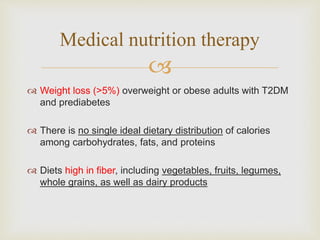
 Weight loss (>5%) overweight or obese adults with T2DM
and prediabetes
 There is no single ideal dietary distribution of calories
among carbohydrates, fats, and proteins
 Diets high in fiber, including vegetables, fruits, legumes,
whole grains, as well as dairy products
Medical nutrition therapy

 Diet rich in monounsaturated and polyunsaturated fats
 Eating foods rich in long-chain n-3 fatty acids, such as
fatty fish, nuts and seeds
 Higher intakes of nuts, berries, yogurt, coffee, and tea are
associated with reduced diabetes risk
 Conversely, smoking, red meats and sugar-sweetened
beverages are associated with an increased risk
Medical nutrition therapy

 ≥150 min moderate-to-vigorous intensity aerobic activity
per week, at least 3 days/week, with no more than 2
consecutive days without activity
 All adults, and particularly those with T2DM, should avoid
prolonged sitting for >30 min for blood glucose benefits
 Flexibility training and balance training are recommended
2–3 times/week for older adults with diabetes
Physical activity

When choosing glucose-lowering medications for overweight
or obese patients, consider their effect on weight:
 Agents associated with varying degrees of weight loss
include metformin, α-glucosidase inhibitors, SGLT2
inhibitors, GLP1 receptor agonists
 DPP4 inhibitors are weight neutral
 Insulin secretagogues, TZDs, and insulin often cause
weight gain
Obesity management

Whenever possible, minimize medications for comorbid
conditions that are associated with weight gain:
 antipsychotics
 antidepressants
 glucocorticoids
 injectable progestins
 anticonvulsants including gabapentin
 possibly sedating antihistamines and anticholinergics

Weight-loss medications are effective as adjuncts to diet,
physical activity, and behavioral counseling for selected patients
with type 2 diabetes and BMI ≥27 kg/m2:
1. Orlistat
2. Lorcaserin
3. Phentermine/ topiramate
4. Naltrexone/ bupropion
5. Liraglutide

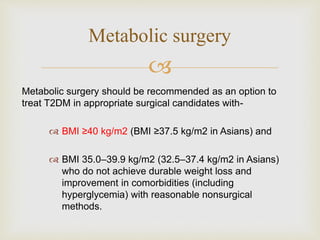
Metabolic surgery should be recommended as an option to
treat T2DM in appropriate surgical candidates with-
 BMI ≥40 kg/m2 (BMI ≥37.5 kg/m2 in Asians) and
 BMI 35.0–39.9 kg/m2 (32.5–37.4 kg/m2 in Asians)
who do not achieve durable weight loss and
improvement in comorbidities (including
hyperglycemia) with reasonable nonsurgical
methods.
Metabolic surgery

Pharmacologic Approaches to
Glycemic Treatment

 Most people with type 1 diabetes should be treated with
multiple daily injections of prandial and basal insulin, or
continuous subcutaneous insulin infusion
 Most individuals with type 1 diabetes should use rapid-
acting insulin analogs to reduce hypoglycemia risk
Type 1 diabetes

 Metformin is the preferred initial pharmacologic agent
 Long-term use of metformin may be associated with
biochemical vitamin B12 deficiency, and periodic
measurement should be considered, especially in those
with anemia or peripheral neuropathy
Type 2 diabetes

 The early introduction of insulin should be considered if-
 weight loss
 symptoms of hyperglycemia
 A1C levels (>10%) or blood glucose levels (≥16.7 mmol/L)
 Dual therapy in patients who have A1C ≥1.5% above
their glycemic target

 Patients with established atherosclerotic CVD, SGLT2
inhibitors, or GLP1 receptor agonists are recommended
 Patients with ASCVD at high risk of heart failure or in
whom heart failure coexists, SGLT2 inhibitors are
preferred
 For patients CKD, consider use of a SGLT2 inhibitor, or
GLP1 receptor agonist

Cardiovascular Disease
and Risk Management

Atherosclerotic cardiovascular disease
(ASCVD)
defined as coronary heart disease, cerebrovascular disease, or
peripheral arterial disease presumed to be of atherosclerotic origin
ASCVD risk factors include
 LDL cholesterol ≥100 mg/dL (2.6 mmol/L)
 HTN
 smoking
 CKD
 albuminuria
 family history of premature ASCVD
ACC/AHA ASCVD risk calculator is generally a useful tool to
estimate 10-year ASCVD risk

Lifestyle Intervention
 For patients with blood pressure >120/80 mmHg, lifestyle
intervention consists of
 weight loss if overweight or obese
 Dietary Approaches to Stop Hypertension (DASH) diet
 moderation of alcohol intake and
 increased physical activity

Blood pressure
 Existing ASCVD or 10-year ASCVD risk >15% : <130/80
mmHg
 For individuals at lower risk for cardiovascular disease
(10-year ASCVD risk <15%) and CKD, treat to a blood
pressure target of <140/90 mmHg.

Pharmacologic
Interventions
 An ACE inhibitor or ARB, is the recommended first-line
treatment if urinary ACR ≥30 mg/g
 For patients treated with an ACE inhibitor, ARB or diuretic,
serum eGFR and serum potassium levels should be
monitored at least annually

Resistant hypertension
 Resistant hypertension is defined as blood pressure
≥140/90 mmHg despite a therapeutic strategy that
includes appropriate lifestyle management plus a
diuretic and two other antihypertensive drugs
belonging to different classes at adequate doses
 Exclude medication non-adherence, white coat
hypertension, and secondary hypertension
 Consider mineralocorticoid receptor antagonist
therapy

Lipid management

Lifestyle Intervention
Lifestyle modification focusing on weight loss (if indicated):
 Mediterranean diet or DASH dietary pattern;
 reduction of saturated fat and trans fat;
 increase of dietary n-3 fatty acids,
 viscous fiber, and plant stanols/sterols intake; and
 increased physical activity

Statin
 ASCVD or 10-year ASCVD >20% high-intensity statin
therapy
 aged <40 years with additional ASCVD risk factors, the
patient and provider should consider using moderate-
intensity statin
 For patients with diabetes aged ≥40 without ASCVD, use
moderate-intensity statin
 Statin therapy is contraindicated in pregnancy.

Statin
High-intensity statin
therapy (lowers LDL
cholesterol by ≥50%)
Moderate-intensity statin
therapy (lowers LDL
cholesterol by 30–50%)
Atorvastatin 40–80 mg
Rosuvastatin 20–40 mg
Atorvastatin 10–20 mg
Rosuvastatin 5–10 mg
Simvastatin 20–40 mg
Pravastatin 40–80 mg

Hypertriglyceridemia
 ≥500 mg/dL (5.7 mmol/L): evaluate for secondary causes
of hypertriglyceridemia and consider medical therapy
 175–499 mg/dL:
 address and treat lifestyle factors (obesity and
metabolic syndrome)
 secondary factors (diabetes, CLD, CKD and/or
nephrotic syndrome, hypothyroidism)
 medications that raise triglycerides

Anti-platelet agents
 Use aspirin therapy (75–162 mg/day) as a secondary
prevention strategy in those with diabetes and a history of
ASCVD
 For patients with ASCVD and documented aspirin allergy,
clopidogrel (75 mg/day) should be used
 Aspirin therapy (75–162 mg/day) may be considered as a
primary prevention strategy in those with diabetes who
are at increased cardiovascular risk

Anti-platelet agents
These recommendations for using aspirin as primary
prevention include both men and women aged ≥50 years
with diabetes and at least one additional major risk factor
 Family history of premature ASCVD
 Hypertension
 Dyslipidemia
 Smoking or
 Chronic kidney disease/albuminuria
…who are not at increased risk of bleeding

Microvascular
Complications

Diabetic kidney disease

 At least once a year, assess urinary albumin (e.g., spot
urinary ACR) and eGFR
 2 of 3 specimens collected within a 3-6 months period
should be abnormal before considering albuminuria
 Optimize glucose control to reduce the risk or slow the
progression of CKD

 While ACE inhibitors or ARBs are often prescribed
for albuminuria without hypertension, clinical trials
have not been performed in this setting to determine
whether this improves renal outcomes

Diabetic retinopathy

To reduce the risk or slow the progression of diabetic
retinopathy
 Optimize glycemic control
 Optimize blood pressure and serum lipid control

In high-risk PDR and, in some cases, severe NPDR:
 Panretinal laser photocoagulation therapy
 Intravitreous injections of anti–VEGF ranibizumab
The presence of retinopathy is not a contraindication to
aspirin therapy, as aspirin does not increase the risk of
retinal hemorrhage
Treatment

 ACE inhibitors and ARBs are both effective treatments in
diabetic retinopathy
 In patients with dyslipidemia, retinopathy progression may
be slowed by the addition of fenofibrate
Adjunctive therapy

Neuropathy

 Optimize glucose control to prevent or delay the
development of neuropathy in patients with type 1
diabetes and to slow the progression of neuropathy in
patients with type 2 diabetes
 Pregabalin, duloxetine, or gabapentin are recommended
as initial pharmacologic treatments for neuropathic pain
 Tapentadol, TCA, venlafaxine, crabamzepine, topical
capsaicin may be effective
Treatment

Nonpharmacologic measures
 adequate salt intake
 avoiding medications that aggravate hypotension
 compressive garments over the legs and abdomen
Pharmacologic measures:
 Midodrine
 Droxidopa
Orthostatic Hypotension

 Treatment of hypogonadism if present
 PDE5 inhibitors
 Intracorporeal or intraurethral prostaglandins
 Vacuum devices or penile prostheses
Erectile Dysfunction

 A low-fiber, low-fat eating plan in small frequent meals
with a greater proportion of liquid calories may be useful
 Withdrawing drugs with adverse effects on
gastrointestinal motility including opioids, anticholinergics,
tricyclic antidepressants, GLP-1 RA, and possibly DPP4
inhibitors may also improve intestinal motility
Gastroparesis

In cases of severe gastroparesis, pharmacologic
interventions are needed:
 Metoclopramide
 Domperidone, erythromycin
 Gastric electrical stimulation using a surgically
implantable device
Gastroparesis

Diabetic foot

The examination should include
 inspection of the skin
 assessment of foot deformities
 neurological assessment
 vascular assessment
 Patients with symptoms of claudication or decreased or
absent pedal pulses should be referred for ABI and for
further vascular assessment as appropriate

 General preventive foot self-care education
 Use of custom therapeutic footwear
 Wounds without evidence of soft tissue or bone infection
do not require antibiotic therapy
Management

 Most diabetic foot infections are polymicrobial, with
aerobic gram-positive cocci
 Those at risk for infection with antibiotic-resistant
organisms or with chronic, previously treated, or severe
infections require broader-spectrum regimens
 Hyperbaric oxygen therapy (HBOT) has mixed evidence
supporting its use as an adjunctive treatment

Older adults

 Multiple coexisting chronic illnesses, cognitive
impairment, or functional dependence: less stringent
glycemic goals (such as A1C <8.0–8.5%)
 Otherwise healthy: lower glycemic goals (such as
A1C <7.5%)
Treatment goals

 Metformin is the first-line agent
 Insulin secretagogues: associated with hypoglycemia and
should be used with caution. If used, shorter-duration
sulfonylureas, such as glipizide
 DPP-4 inhibitors: few side effects and minimal
hypoglycemia
 SGLT2 inhibitors: long-term experience in this population
is limited
Pharmacological therapy

 Insulin:
 Once-daily basal insulin associated with minimal side
effects
 Multiple daily injections of insulin may be too complex
 GLP-1 receptor agonists: associated with nausea,
vomiting, diarrhea, and weight loss
Pharmacological therapy

Pregnancy

 Preconception glycemic management: ideally A1C <6.5%
 Women with preexisting diabetes who are planning
pregnancy or who have become pregnant should be
counseled on the risk of development and/or progression
of diabetic retinopathy
Preexisting diabetes

Dilated eye examinations:
 before pregnancy or in the first trimester
 every trimester
 1-year postpartum
Preexisting diabetes

 Insulin is the preferred agent for management of both
type 1 and type 2 diabetes in pregnancy
 Oral agents are generally insufficient to overcome the
insulin resistance in type 2 diabetes and are ineffective in
type 1 diabetes
Management of preexisting
DM

 Lifestyle change is an essential component
 Insulin is the preferred medication
 Metformin and glyburide should not be used as first-line
agents
 Metformin, when used to treat PCOS and induce
ovulation, should be discontinued once pregnancy has
been confirmed
Management of GDM

Glycemic targets
Fasting <5.3 mmol/L
Postprandial (1h) <7.8 mmol/L
Postprandial (2h) <6.7 mmol/L
A1c <6%

Women with type 1 or type 2 diabetes should be prescribed-
 low-dose aspirin 60–150 mg/day (usual dose 81 mg/day)
 from the end of the first trimester until the baby is born
……in order to lower the risk of preeclampsia
Preeclampsia and Aspirin

 Blood pressure targets: 120–160/80–105 mmHg
 Potentially teratogenic medications (i.e., ACE inhibitors,
angiotensin receptor blockers, statins) should be avoided
 Safe in pregnancy: methyldopa, nifedipine, labetalol,
diltiazem, clonidine, and prazosin
Management of HTN

 75-g OGTT at 4–12 weeks postpartum
 Lifelong screening at least every 3 years
 Prediabetes: intensive lifestyle interventions or metformin
Postpartum care

Diabetes Care in the
Hospital

 Hyperglycemia in hospitalized patients is defined as blood
glucose levels >7.8 mmol/L
 An admission A1C value ≥6.5% suggests that diabetes
preceded hospitalization

 Insulin therapy should be initiated for treatment of
persistent hyperglycemia ≥10.0 mmol/L
 Target glucose range: 7.8–10.0 mmol/L
 In the patient who is eating meals, glucose monitoring
should be performed before meals
 In the patient who is not eating, glucose monitoring is
advised every 4–6 h

Noncritically ill poor oral intake or
NPO
Basal insulin or
basal plus
correction
good nutritional
intake
basal, prandial,
and correction
Critical care setting continuous IV
insulin
Insulin regimen

Sole use of sliding scale insulin in the inpatient
hospital setting is strongly discouraged
Insulin regimen

 Once-a-day, short-acting GC (e.g. prednisone):
intermediate-acting (NPH) insulin
 For long-acting GC e.g. dexamethasone or multidose
glucocorticoid: long-acting insulin
 For higher doses of GC: prandial and correctional insulin
in addition to basal insulin
Glucocorticoid Therapy

 Target glucose range for the perioperative period should
be 4.4–10.0 mmol/L
 Withhold metformin the day of surgery
Perioperative Care

 Withhold any other oral hypoglycemic agents the morning
of surgery or procedure and give half of NPH dose or 60–
80% doses of long-acting analog or pump basal insulin.
 Monitor blood glucose at least every 4–6 h while NPO
and dose with short- or rapid-acting insulin as needed
Perioperative Care
Diabetes Pre-diabetes Targets
Fasting 7 mmol/L 5.6-6.9 mmol/L 4.4-7.2 mmol/L
2h 75g
glucose
11.1 mmol/L 7.8-11 mmol/L <10 mmol/L
A1c 6.5% 5.7-6.4% <7%
Metformin
ASCVD/HF/CKD
Overweight/obese
Hypoglycemia
Cost
SGLT2i
GLP1 RA/SGLT2i
DPP4i/SGLT2i/TZD
SU/TZD
Blood pressure
ASCVD/ 10y risk>15%
10y risk<15%
CKD
Albuminuria
<130/80mmHg
<140/90mmHg
ACEi/ARB
CCB
Diuretics
ACEi/ARB
>160/100mmHg 2 drugs
Lipid management
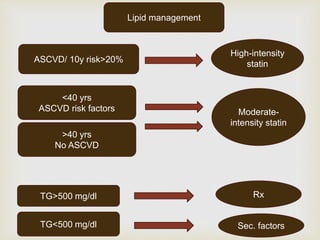
ASCVD/ 10y risk>20%
<40 yrs
ASCVD risk factors
TG>500 mg/dl
High-intensity
statin
Moderate-
intensity statin
Rx
TG<500 mg/dl Sec. factors
>40 yrs
No ASCVD
Low dose aspirin
Sec. prevention
Pri. prevention
H/O ASCVD
Age ≥50 years
+
DL/HTN/CKD/
Smoking/ F/H
Pregnancy
Microvascular complications
Metoclopramide
Domp., Erythro.
Gastroparesis
PRPC/Anti-VEGF
ACEi/ARB
Fibrate
ACEi/ARB
SGLT2i
DR
DKD
Non-pharmacological
Midodrine
Orthostatic
HoTN
DN
Pregaba.
Dulox., Gaba.
GDM
Insulin
120-160/80-105 mmHgBP
50g GTT,
Then 100g GTT
75g GTT
2 steps
1 step
FPG< 5.3
1h PPG< 7.8
2h PPG< 6.7
Glycemic
targets
Thank
You

ADA guidelines 2019_Dr.Tarik

  • 1.
    Dr. Md. TarikulIslam FCPS (Medicine) P-II Course Student Dept. of Medicine (Brown unit), BSMMU
  • 2.
  • 3.
      Type 1diabetes  Type 2 diabetes  Gestational diabetes mellitus (GDM)  Specific types of diabetes due to other causes  Monogenic  Pancreatic diseases  Drug induced Classification
  • 4.
      FPG ≥126mg/dL (7.0 mmol/L) or  2-h PG ≥200 mg/dL (11.1 mmol/L) during OGTT or  A1C ≥6.5% (48 mmol/mol) or  In a patient with classic symptoms of hyperglycemia or hyperglycemic crisis, RBS ≥200 mg/dL (11.1 mmol/L) Diagnosis
  • 5.
      FPG 5.6- 6.9 mmol/L (IFG) or  2-h PG during 75-g OGTT 7.8 - 11.0 mmol/L (IGT) or  A1C 5.7–6.4% Pre-diabetes * WHO define the IFG cutoff at 110 mg/dL (6.1 mmol/L)
  • 6.
      75-g OGTT,with plasma glucose measurement when patient is fasting and at 1 and 2 h, at 24–28 weeks of gestation in women not previously diagnosed with diabetes.  The diagnosis of GDM is made when any of the following plasma glucose values are met or exceeded: GDM One-step strategy Fasting 5.1 mmol/L 1 h 10.0 mmol/L 2 h 8.5 mmol/L
  • 7.
     Step 1:  Performa 50-g GTT (nonfasting), with plasma glucose measurement at 1 h, at 24–28 weeks of gestation in women not previously diagnosed with diabetes.  If the plasma glucose level measured 1 h after the load is ≥7.2 mmol/L, 7.5 mmol/L, or 7.8 mmol/L, proceed to a 100-g OGTT. GDM Two-step strategy
  • 8.
     Step 2:  The100-g OGTT should be performed when the patient is fasting.  The diagnosis of GDM is made if at least two of the following four plasma glucose levels (measured fasting and 1 h, 2 h, 3 h during OGTT) are met or exceeded: GDM Two-step strategy
  • 9.
    Carpenter-Coustan or NDDG ••Fasting 5.3 mmol/L 5.8 mmol/L •• 1 h 10.0 mmol/L 10.6 mmol/L •• 2 h 8.6 mmol/L 9.2 mmol/L •• 3 h 7.8 mmol/L 8.0 mmol/L
  • 10.
     The diagnosis ofMODY should be considered in adults diagnosed with diabetes with the following findings:  Onset at an early age (<25 years)  Diabetes without typical features of type 1 or type 2 diabetes (negative autoantibodies, nonobese, lacking other metabolic features)  Multiple family members with same type of diabetes  Stable, mild fasting hyperglycemia (5.5–8.5 mmol/L), stable A1C 5.6-7.6% MODY
  • 11.
     In overweight orobese (BMI ≥25 kg/m2) adults who have one or more of the following risk factors:  First-degree relative with diabetes  High-risk race/ethnicity (e.g., African American, Asian)  History of CVD  Hypertension  HDL <35 mg/dL and/or TG >250 mg/dL Criteria for testing in asymptomatic adults
  • 12.
      Women withPCOS  Physical inactivity  Other clinical conditions associated with insulin resistance (e.g., severe obesity, acanthosis nigricans)  Patients with prediabetes should be tested yearly  For all other patients, testing should begin at age 45 years Criteria for testing in asymptomatic adults
  • 13.
      Metformin therapyshould be considered in those with prediabetes, especially for those with  BMI ≥35 kg/m2  aged <60 years, and  women with prior GDM  Prediabetes is associated with heightened cardiovascular risk Prevention or Delay of Type 2 Diabetes
  • 14.
  • 18.
      Annual vaccinationagainst influenza  Vaccination against pneumococcal disease (PPSV23)  3-dose series of hepatitis B vaccine to unvaccinated adults Vaccinations
  • 19.
      A1C testat least two times a year in patients who have stable glycemic control  A1C test quarterly in patients whose therapy has changed or who are not meeting glycemic goals Glycemic targets A1c <7% Preprandial 4.4-7.2 mmol/L Postprandial (1-2h) <10 mmol/L
  • 20.
     Less stringent A1Cgoals (such as <8%) may be appropriate for patients with-  history of severe hypoglycemia  limited life expectancy  advanced microvascular or macrovascular complications  extensive comorbid conditions  long-standing diabetes in whom the goal is difficult to achieve Glycemic targets
  • 21.
     Hypoglycemia Level Glycemic criteria/description Level1 Glucose <70 mg/dL (3.9 mmol/L) and glucose ≥54 mg/dL (3.0 mmol/L) Level 2 Glucose <54 mg/dL (3.0 mmol/L) Level 3 A severe event characterized by altered mental and/or physical status requiring assistance
  • 22.
      Glucose (15–20g) is the preferred treatment for the conscious individual with blood glucose <70 mg/dL [3.9 mmol/L]  15 minutes after treatment, if SMBG shows continued hypoglycemia, the treatment should be repeated. Treatment
  • 23.
      Once SMBGreturns to normal, the individual should consume a meal or snack to prevent recurrence of hypoglycemia  Glucagon should be prescribed for all individuals at increased risk of level 2 hypoglycemia Treatment
  • 24.
  • 25.
      Weight loss(>5%) overweight or obese adults with T2DM and prediabetes  There is no single ideal dietary distribution of calories among carbohydrates, fats, and proteins  Diets high in fiber, including vegetables, fruits, legumes, whole grains, as well as dairy products Medical nutrition therapy
  • 26.
      Diet richin monounsaturated and polyunsaturated fats  Eating foods rich in long-chain n-3 fatty acids, such as fatty fish, nuts and seeds  Higher intakes of nuts, berries, yogurt, coffee, and tea are associated with reduced diabetes risk  Conversely, smoking, red meats and sugar-sweetened beverages are associated with an increased risk Medical nutrition therapy
  • 27.
      ≥150 minmoderate-to-vigorous intensity aerobic activity per week, at least 3 days/week, with no more than 2 consecutive days without activity  All adults, and particularly those with T2DM, should avoid prolonged sitting for >30 min for blood glucose benefits  Flexibility training and balance training are recommended 2–3 times/week for older adults with diabetes Physical activity
  • 28.
     When choosing glucose-loweringmedications for overweight or obese patients, consider their effect on weight:  Agents associated with varying degrees of weight loss include metformin, α-glucosidase inhibitors, SGLT2 inhibitors, GLP1 receptor agonists  DPP4 inhibitors are weight neutral  Insulin secretagogues, TZDs, and insulin often cause weight gain Obesity management
  • 29.
     Whenever possible, minimizemedications for comorbid conditions that are associated with weight gain:  antipsychotics  antidepressants  glucocorticoids  injectable progestins  anticonvulsants including gabapentin  possibly sedating antihistamines and anticholinergics
  • 30.
     Weight-loss medications areeffective as adjuncts to diet, physical activity, and behavioral counseling for selected patients with type 2 diabetes and BMI ≥27 kg/m2: 1. Orlistat 2. Lorcaserin 3. Phentermine/ topiramate 4. Naltrexone/ bupropion 5. Liraglutide
  • 31.
     Metabolic surgery shouldbe recommended as an option to treat T2DM in appropriate surgical candidates with-  BMI ≥40 kg/m2 (BMI ≥37.5 kg/m2 in Asians) and  BMI 35.0–39.9 kg/m2 (32.5–37.4 kg/m2 in Asians) who do not achieve durable weight loss and improvement in comorbidities (including hyperglycemia) with reasonable nonsurgical methods. Metabolic surgery
  • 32.
  • 33.
      Most peoplewith type 1 diabetes should be treated with multiple daily injections of prandial and basal insulin, or continuous subcutaneous insulin infusion  Most individuals with type 1 diabetes should use rapid- acting insulin analogs to reduce hypoglycemia risk Type 1 diabetes
  • 34.
      Metformin isthe preferred initial pharmacologic agent  Long-term use of metformin may be associated with biochemical vitamin B12 deficiency, and periodic measurement should be considered, especially in those with anemia or peripheral neuropathy Type 2 diabetes
  • 35.
      The earlyintroduction of insulin should be considered if-  weight loss  symptoms of hyperglycemia  A1C levels (>10%) or blood glucose levels (≥16.7 mmol/L)  Dual therapy in patients who have A1C ≥1.5% above their glycemic target
  • 36.
      Patients withestablished atherosclerotic CVD, SGLT2 inhibitors, or GLP1 receptor agonists are recommended  Patients with ASCVD at high risk of heart failure or in whom heart failure coexists, SGLT2 inhibitors are preferred  For patients CKD, consider use of a SGLT2 inhibitor, or GLP1 receptor agonist
  • 39.
  • 40.
     Atherosclerotic cardiovascular disease (ASCVD) definedas coronary heart disease, cerebrovascular disease, or peripheral arterial disease presumed to be of atherosclerotic origin ASCVD risk factors include  LDL cholesterol ≥100 mg/dL (2.6 mmol/L)  HTN  smoking  CKD  albuminuria  family history of premature ASCVD ACC/AHA ASCVD risk calculator is generally a useful tool to estimate 10-year ASCVD risk
  • 41.
     Lifestyle Intervention  Forpatients with blood pressure >120/80 mmHg, lifestyle intervention consists of  weight loss if overweight or obese  Dietary Approaches to Stop Hypertension (DASH) diet  moderation of alcohol intake and  increased physical activity
  • 43.
     Blood pressure  ExistingASCVD or 10-year ASCVD risk >15% : <130/80 mmHg  For individuals at lower risk for cardiovascular disease (10-year ASCVD risk <15%) and CKD, treat to a blood pressure target of <140/90 mmHg.
  • 44.
     Pharmacologic Interventions  An ACEinhibitor or ARB, is the recommended first-line treatment if urinary ACR ≥30 mg/g  For patients treated with an ACE inhibitor, ARB or diuretic, serum eGFR and serum potassium levels should be monitored at least annually
  • 46.
     Resistant hypertension  Resistanthypertension is defined as blood pressure ≥140/90 mmHg despite a therapeutic strategy that includes appropriate lifestyle management plus a diuretic and two other antihypertensive drugs belonging to different classes at adequate doses  Exclude medication non-adherence, white coat hypertension, and secondary hypertension  Consider mineralocorticoid receptor antagonist therapy
  • 48.
  • 49.
     Lifestyle Intervention Lifestyle modificationfocusing on weight loss (if indicated):  Mediterranean diet or DASH dietary pattern;  reduction of saturated fat and trans fat;  increase of dietary n-3 fatty acids,  viscous fiber, and plant stanols/sterols intake; and  increased physical activity
  • 50.
     Statin  ASCVD or10-year ASCVD >20% high-intensity statin therapy  aged <40 years with additional ASCVD risk factors, the patient and provider should consider using moderate- intensity statin  For patients with diabetes aged ≥40 without ASCVD, use moderate-intensity statin  Statin therapy is contraindicated in pregnancy.
  • 51.
     Statin High-intensity statin therapy (lowersLDL cholesterol by ≥50%) Moderate-intensity statin therapy (lowers LDL cholesterol by 30–50%) Atorvastatin 40–80 mg Rosuvastatin 20–40 mg Atorvastatin 10–20 mg Rosuvastatin 5–10 mg Simvastatin 20–40 mg Pravastatin 40–80 mg
  • 52.
     Hypertriglyceridemia  ≥500 mg/dL(5.7 mmol/L): evaluate for secondary causes of hypertriglyceridemia and consider medical therapy  175–499 mg/dL:  address and treat lifestyle factors (obesity and metabolic syndrome)  secondary factors (diabetes, CLD, CKD and/or nephrotic syndrome, hypothyroidism)  medications that raise triglycerides
  • 53.
     Anti-platelet agents  Useaspirin therapy (75–162 mg/day) as a secondary prevention strategy in those with diabetes and a history of ASCVD  For patients with ASCVD and documented aspirin allergy, clopidogrel (75 mg/day) should be used  Aspirin therapy (75–162 mg/day) may be considered as a primary prevention strategy in those with diabetes who are at increased cardiovascular risk
  • 54.
     Anti-platelet agents These recommendationsfor using aspirin as primary prevention include both men and women aged ≥50 years with diabetes and at least one additional major risk factor  Family history of premature ASCVD  Hypertension  Dyslipidemia  Smoking or  Chronic kidney disease/albuminuria …who are not at increased risk of bleeding
  • 55.
  • 56.
  • 57.
      At leastonce a year, assess urinary albumin (e.g., spot urinary ACR) and eGFR  2 of 3 specimens collected within a 3-6 months period should be abnormal before considering albuminuria  Optimize glucose control to reduce the risk or slow the progression of CKD
  • 58.
      While ACEinhibitors or ARBs are often prescribed for albuminuria without hypertension, clinical trials have not been performed in this setting to determine whether this improves renal outcomes
  • 59.
  • 60.
     To reduce therisk or slow the progression of diabetic retinopathy  Optimize glycemic control  Optimize blood pressure and serum lipid control
  • 61.
     In high-risk PDRand, in some cases, severe NPDR:  Panretinal laser photocoagulation therapy  Intravitreous injections of anti–VEGF ranibizumab The presence of retinopathy is not a contraindication to aspirin therapy, as aspirin does not increase the risk of retinal hemorrhage Treatment
  • 62.
      ACE inhibitorsand ARBs are both effective treatments in diabetic retinopathy  In patients with dyslipidemia, retinopathy progression may be slowed by the addition of fenofibrate Adjunctive therapy
  • 63.
  • 64.
      Optimize glucosecontrol to prevent or delay the development of neuropathy in patients with type 1 diabetes and to slow the progression of neuropathy in patients with type 2 diabetes  Pregabalin, duloxetine, or gabapentin are recommended as initial pharmacologic treatments for neuropathic pain  Tapentadol, TCA, venlafaxine, crabamzepine, topical capsaicin may be effective Treatment
  • 65.
     Nonpharmacologic measures  adequatesalt intake  avoiding medications that aggravate hypotension  compressive garments over the legs and abdomen Pharmacologic measures:  Midodrine  Droxidopa Orthostatic Hypotension
  • 66.
      Treatment ofhypogonadism if present  PDE5 inhibitors  Intracorporeal or intraurethral prostaglandins  Vacuum devices or penile prostheses Erectile Dysfunction
  • 67.
      A low-fiber,low-fat eating plan in small frequent meals with a greater proportion of liquid calories may be useful  Withdrawing drugs with adverse effects on gastrointestinal motility including opioids, anticholinergics, tricyclic antidepressants, GLP-1 RA, and possibly DPP4 inhibitors may also improve intestinal motility Gastroparesis
  • 68.
     In cases ofsevere gastroparesis, pharmacologic interventions are needed:  Metoclopramide  Domperidone, erythromycin  Gastric electrical stimulation using a surgically implantable device Gastroparesis
  • 69.
  • 70.
     The examination shouldinclude  inspection of the skin  assessment of foot deformities  neurological assessment  vascular assessment  Patients with symptoms of claudication or decreased or absent pedal pulses should be referred for ABI and for further vascular assessment as appropriate
  • 71.
      General preventivefoot self-care education  Use of custom therapeutic footwear  Wounds without evidence of soft tissue or bone infection do not require antibiotic therapy Management
  • 72.
      Most diabeticfoot infections are polymicrobial, with aerobic gram-positive cocci  Those at risk for infection with antibiotic-resistant organisms or with chronic, previously treated, or severe infections require broader-spectrum regimens  Hyperbaric oxygen therapy (HBOT) has mixed evidence supporting its use as an adjunctive treatment
  • 73.
  • 74.
      Multiple coexistingchronic illnesses, cognitive impairment, or functional dependence: less stringent glycemic goals (such as A1C <8.0–8.5%)  Otherwise healthy: lower glycemic goals (such as A1C <7.5%) Treatment goals
  • 75.
      Metformin isthe first-line agent  Insulin secretagogues: associated with hypoglycemia and should be used with caution. If used, shorter-duration sulfonylureas, such as glipizide  DPP-4 inhibitors: few side effects and minimal hypoglycemia  SGLT2 inhibitors: long-term experience in this population is limited Pharmacological therapy
  • 76.
      Insulin:  Once-dailybasal insulin associated with minimal side effects  Multiple daily injections of insulin may be too complex  GLP-1 receptor agonists: associated with nausea, vomiting, diarrhea, and weight loss Pharmacological therapy
  • 77.
  • 78.
      Preconception glycemicmanagement: ideally A1C <6.5%  Women with preexisting diabetes who are planning pregnancy or who have become pregnant should be counseled on the risk of development and/or progression of diabetic retinopathy Preexisting diabetes
  • 79.
     Dilated eye examinations: before pregnancy or in the first trimester  every trimester  1-year postpartum Preexisting diabetes
  • 80.
      Insulin isthe preferred agent for management of both type 1 and type 2 diabetes in pregnancy  Oral agents are generally insufficient to overcome the insulin resistance in type 2 diabetes and are ineffective in type 1 diabetes Management of preexisting DM
  • 81.
      Lifestyle changeis an essential component  Insulin is the preferred medication  Metformin and glyburide should not be used as first-line agents  Metformin, when used to treat PCOS and induce ovulation, should be discontinued once pregnancy has been confirmed Management of GDM
  • 82.
     Glycemic targets Fasting <5.3mmol/L Postprandial (1h) <7.8 mmol/L Postprandial (2h) <6.7 mmol/L A1c <6%
  • 83.
     Women with type1 or type 2 diabetes should be prescribed-  low-dose aspirin 60–150 mg/day (usual dose 81 mg/day)  from the end of the first trimester until the baby is born ……in order to lower the risk of preeclampsia Preeclampsia and Aspirin
  • 84.
      Blood pressuretargets: 120–160/80–105 mmHg  Potentially teratogenic medications (i.e., ACE inhibitors, angiotensin receptor blockers, statins) should be avoided  Safe in pregnancy: methyldopa, nifedipine, labetalol, diltiazem, clonidine, and prazosin Management of HTN
  • 85.
      75-g OGTTat 4–12 weeks postpartum  Lifelong screening at least every 3 years  Prediabetes: intensive lifestyle interventions or metformin Postpartum care
  • 86.
  • 87.
      Hyperglycemia inhospitalized patients is defined as blood glucose levels >7.8 mmol/L  An admission A1C value ≥6.5% suggests that diabetes preceded hospitalization
  • 88.
      Insulin therapyshould be initiated for treatment of persistent hyperglycemia ≥10.0 mmol/L  Target glucose range: 7.8–10.0 mmol/L  In the patient who is eating meals, glucose monitoring should be performed before meals  In the patient who is not eating, glucose monitoring is advised every 4–6 h
  • 89.
     Noncritically ill poororal intake or NPO Basal insulin or basal plus correction good nutritional intake basal, prandial, and correction Critical care setting continuous IV insulin Insulin regimen
  • 90.
     Sole use ofsliding scale insulin in the inpatient hospital setting is strongly discouraged Insulin regimen
  • 91.
      Once-a-day, short-actingGC (e.g. prednisone): intermediate-acting (NPH) insulin  For long-acting GC e.g. dexamethasone or multidose glucocorticoid: long-acting insulin  For higher doses of GC: prandial and correctional insulin in addition to basal insulin Glucocorticoid Therapy
  • 92.
      Target glucoserange for the perioperative period should be 4.4–10.0 mmol/L  Withhold metformin the day of surgery Perioperative Care
  • 93.
      Withhold anyother oral hypoglycemic agents the morning of surgery or procedure and give half of NPH dose or 60– 80% doses of long-acting analog or pump basal insulin.  Monitor blood glucose at least every 4–6 h while NPO and dose with short- or rapid-acting insulin as needed Perioperative Care
  • 94.
    Diabetes Pre-diabetes Targets Fasting7 mmol/L 5.6-6.9 mmol/L 4.4-7.2 mmol/L 2h 75g glucose 11.1 mmol/L 7.8-11 mmol/L <10 mmol/L A1c 6.5% 5.7-6.4% <7%
  • 95.
  • 96.
    Blood pressure ASCVD/ 10yrisk>15% 10y risk<15% CKD Albuminuria <130/80mmHg <140/90mmHg ACEi/ARB CCB Diuretics ACEi/ARB >160/100mmHg 2 drugs
  • 97.
    Lipid management ASCVD/ 10yrisk>20% <40 yrs ASCVD risk factors TG>500 mg/dl High-intensity statin Moderate- intensity statin Rx TG<500 mg/dl Sec. factors >40 yrs No ASCVD
  • 98.
    Low dose aspirin Sec.prevention Pri. prevention H/O ASCVD Age ≥50 years + DL/HTN/CKD/ Smoking/ F/H Pregnancy
  • 99.
  • 100.
    GDM Insulin 120-160/80-105 mmHgBP 50g GTT, Then100g GTT 75g GTT 2 steps 1 step FPG< 5.3 1h PPG< 7.8 2h PPG< 6.7 Glycemic targets
  • 101.