8:40:35 AM
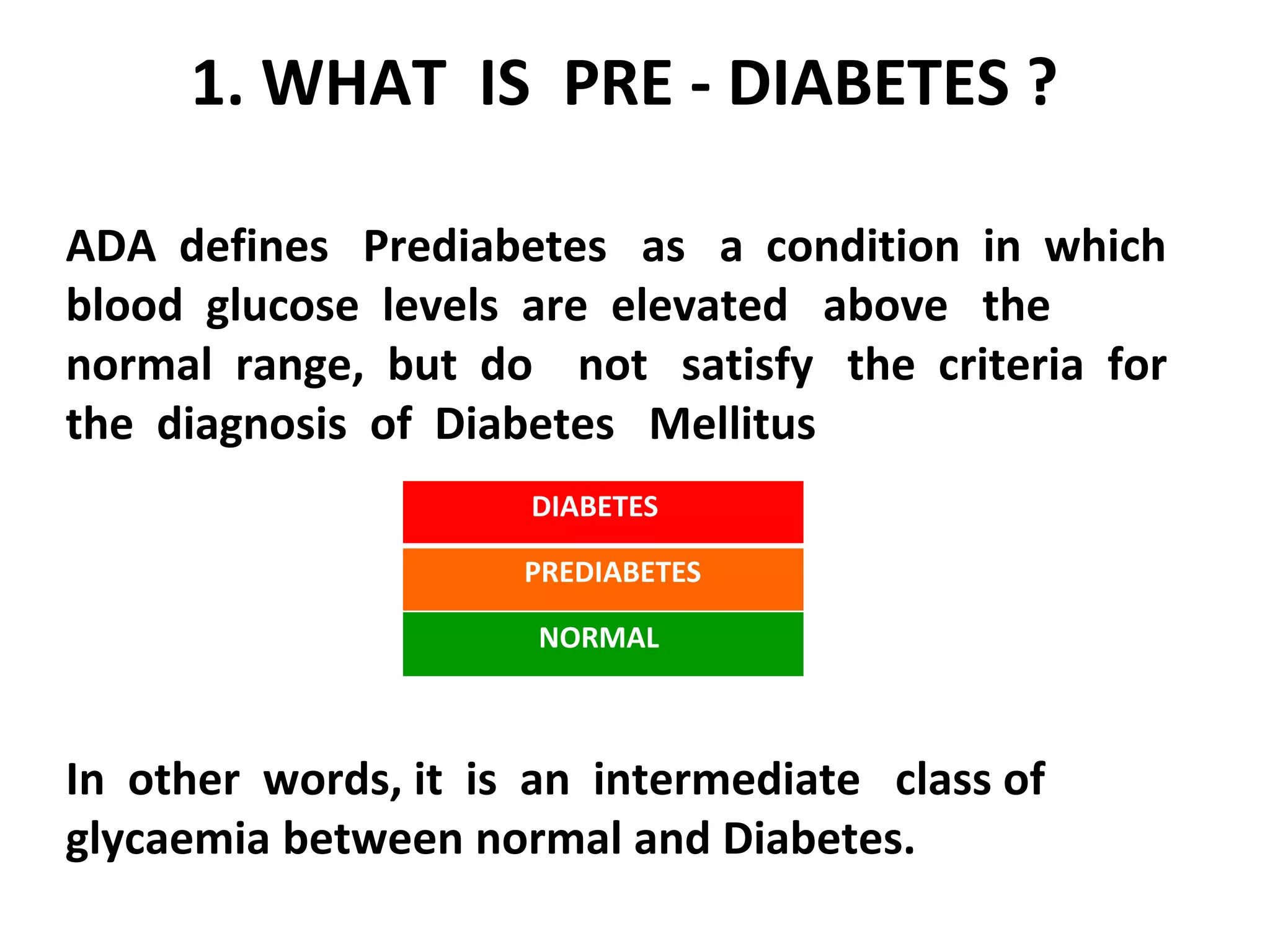
1. WHAT IS PRE - DIABETES ?
ADA defines Prediabetes as a condition in which
blood glucose levels are elevated above the
normal range, but do not satisfy the criteria for
the diagnosis of Diabetes Mellitus
In other words, it is an intermediate class of
glycaemia between normal and Diabetes.
DIABETES
PREDIABETES
NORMAL
2. PREDIABETES - THE EVOLUTION
Pre – 1979
ABNORMALITIES OF PREGNANCY STRONG FAMILY HISTORY OF
DIABETES MELLITUS
copyright 2006
www.brainybetty.com
4
IGT
IGT was introduced in 1979 because
1. Large epidemiological studies showed that diabetes –
specific mircroangiopathic complications such as retinopathy and
nephropathy developed only if the 2 - hour OGTT value was >
200mg%
2. Lesser degrees of glucose intolerance that were not
associated with the development of such diabetes -
specific mircroangiopathic complications did not warrant
a label of Diabetes, and its attendant psychological,
social and economic stigma.
IFG
 IFG was introduced in 1997.
 Reason :To avoid the need for doing an
OGTT to diagnose IGT
 Criteria : FPG > 110mg% < 126 mg%
Redefined in 2003 as a FPG of
> 100mg% < 126 mg%
 Reason: To increase the sensitivity for
diagnosis
WHAT IS PREDIABETES TODAY ?
Prediabetes is defined as an intermediate class of
glycaemia between normal and Diabetes that consists of
• Isolated IFG (i IFG)
• Isolated IGT (i IGT)
• A combination of IFG and IGT
3. WHY PREDIABETES ?
It portends a “ Cardio metabolic Risk”
Risk for Type 2 Diabetes Risk for CV Disease
• 6 fold risk compared to NGT • 2-3 fold risk compared to NGT
• Risk conferred by Prediabetes
to CVD is similar to that of
Type 2 Diabetes
• IGT confers greater risk than
IFG
4. IS CATEGORISATION OF PREDIABETES IN ITS
PRESENT FORMAT UNIVERSALLY ACCEPTED ?
NO
Because 1. Prediabetes does not always progress to Diabetes
2. The definition does not include other risk
factors for Diabetes such as
• Family history of Type 2 Diabetes
• Other components of metabolic syndrome
5. DIAGNOSTIC CRITERIA FOR PREDIABETES
FPG 2hour OGTT HbA1c
(mg%) ( mg%) (%)
ADA (2010) > 100 < 126 > 140 < 200 > 5.7 < 6.5
WHO (2013) > 110 < 126 > 140 < 200 -
HbA1c is less sensitive
• Consensus based on several studies: OGTT + FPG
• Future perspective : Secreted Frizzled - related protein 4
(SFRP-4), an adiponectin as a biomarker of pancreatic β-cell
dysfunction and, therefore, Pre-Diabetes and Diabetes.
6. Prevalence of Diabetes and Pre-Diabetes
Diabetes Pre-DIABETES
(%) (%)
Tamil Nadu 10.4 8.3
Maharashtra 5.3 12.8
Jharkhand 5.3 8.1
Chandigarh 13.6 14.5
ICMR – INDIAB STUDY (2011)
Diabetologia (2011) 54: 3022-27
7. PATHOPHYSIOLOGY OF PREDIABETES
Implications of Normal Glucose Tolerance
Normal FPG Normal 2 hour OGTT
↓ ↓
Adequate insulin secretion Adequate insulin secretion
+ +
Good hepatic insulin Good peripheral (skeletal
sensitivity muscle) insulin sensitivity
IMPLICATIONS OF PREDIABETES
IFG IGT
↓ ↓
Hepatic Insulin Skeletal Muscle
Resistance Insulin Resistance
ISOLATED IFG (i IFG)
1. Reduced hepatic insulin sensitivity
2. Stationary β – cell and / or chronic low
β – cell mass
3. Altered GLP – I secretion
4. Inappropriately elevated glucagon
secretion
ISOLATED IGT (i IGT)
1. Reduced peripheral insulin sensitivity
2. Near normal hepatic insulin sensitivity
3. Progressive loss of β – cell function
4. Reduced secretion of glucose – dependent
insulinotropic polypeptide
5. Inappropriately elevated glucagon secretion
IFG + IGT
1. Severe defects in both peripheral and hepatic
insulin sensitivity
2. Progressive loss of β – cell function
8. AETIOLOGY OF PREDIABETES
Isolated IFG Isolated IGT IFG + IGT
↓ ↓ ↓
Predominantly related Exact etiology to Genetic factors to
Physical Inactivity not yet studied
+ +
Smoking Unhealthy diet
Male Sex Short stature
9. RISK FACTORS FOR THE DEVELOPMENT OF
DIABETES AND PREDIABETES IN INDIA
DIABETES
1. Age
2. Male sex
3. Family history of Diabetes
4. Urban residence
5. Abdominal obesity
6. Generalized obesity
7. Hypertension
8. Income status
PREDIABETES
1. Age
2. Family history of Diabetes
3. Abdominal obesity
4. Hypertension
5. Income status
ICMR – INDIAB STUDY (2011)
Diabetologia (2011) 54: 3022-27
10. NATURAL HISTORY OF PREDIABETES
DPP study India
32% Normal IGT Diabetes Mellitus 34%
18% Normal IFG + IGT Diabetes Mellitus 56%
11. PRE DIABETES AND CLUSTERING OF RISK
FACTORS
Prediabetes is associated with risk factors for CVD
(“Clustering of CVD risk factors”) such as
• Central adiposity
• Elevated Triglycerides
• Low HDL
• Hypertension
In fact, it is a component of Metabolic Syndrome
12. PREDIABETES AND LIPID PROFILING
• No significant difference between TC in NGT,
Type 2 DM and Prediabetes
• Cholesterol ester and most cholesterol ester species
strongly associated with Type 2 DM and Prediabetes
• This is probably related to high TG and VLDL levels
seen in T2 DM and Prediabetes
In other words, lipid profiles of T2DM and
Prediabetes are similar
THE CONCEPT OF LIPODOMIC ANALYSIS
• Important
• 259 individual lipid species including sphingolipids,
phospholipids, glycerolipids and cholesterol esters
were measured in NGT, Prediabetes and T2DM and
it was found that the plasma lipoprotein aberration
associated with T2DM is also present in Prediabetes,
but not in those with NGT.
13. PREDIABETES AND ITS VASCULAR
CONNECTIONS
Prediabetes
Macrovascular Disease, Diabetes Mellitus
directly together with ↓
other CVD risk factors Microvascular Disease,
indirectly
PREVALENCE OF MICROALBUMINURIA IN PREDIABETES
COMPARED TO NORMAL SUBJECTS
0%
2%
4%
6%
8%
10%
12%
14%
16%
18%
20%
IFG IGT Normal glucose tolerance
18%
14%
0%
Mechanism : Glycation of basal membrane proteins
↓
Loss of selective power of membrane
↓
Glomerular hyperfusion and hyperfiltration .
14. MANAGEMENT PRINCIPLES
I. Life Style Intervention is the cornerstone
• Diet
• Exercise: 30 min / day of moderate exercise
• Weight reduction : ~ 7%
II. Metformin is the only recommended pharmacologic agent
(ADA and European consortium)
• Effective, especially in younger and heavier subjects
• Tolerability
• Acceptability
• Cost-effectiveness
• Has shown cardiovascular benefits in UKPDS
all cause mortality
diabetes-related mortality
Myocardial Infarction
III. US-FDA does not approve Pharmacotherapy
1. That physicians do not record a diagnosis of Pre-Diabetes
is both intriguing and a matter for concern.
2. Pre - Diabetes is an important recognizable cardiometabolic
risk factor that needs to be addressed, if one were to
prevent or delay the twin - trouble of Diabetes and
cardiovascular diseases in the new millennium.
3. It is recommended that one should systematically screen for
Pre diabetes and offer positive screeners effective intervention
to prevent or delay the onset of Diabetes and macrovascular
disease.
15. CONCLUSION
8:40 AM copyright 2006
www.brainybetty.com
28
Why βeta cell to be saved ?? Very early!!!
 Βeta cell growth (proliferation) begins shortly after birth.
 1-3% in the first year of life.
 Βeta cell proliferation declines to less than 0.2% after 2 years.
 Normal adult rate of βeta cell proliferation is 0.1%.
 Βeta cell functions decline by 23% even in normoglycemic adolescent.
 Βeta cell death begins 10-12 years before diagnosis of Diabetes and 50% is
already lost at the time of diagnosis.
 Due to oxidative stress & Endoplasmic reticulum stress, 3 to 10 fold increase in
βeta cell apoptosis .
 Βeta cell do not have catalase & glutathione and are vulnerable to oxidative
stress.
PREVENTION & REMISSION OF DIABETES
8:40 AM copyright 2006
www.brainybetty.com
29
ΒETA CELL DYSFUNCTION & REPAIR
CYTOKINES:
 Pro-inflammatory cytokines cause beta cell death via the
induction of mitochondrial stress and other responses
OXIDATIVE STRESS:(OS)
 OS leads to damage mitochondria and cellular proteins,
lipids, and nucleic acids.
 OS initiates and contributes to both endoplasmic reticulum
(ER) stress and autophagy.
8:40 AM copyright 2006
www.brainybetty.com
30
Factors Perpetuating Progressive Alteration of Beta cell Function
 An increased cellular adenosine triphosphate (ATP)/adenosine diphosphate (ADP)
ratio primarily induced by oxidative phosphorylation closes ATP-sensitive K+
channels, which subsequently causes membrane depolarization and opening of
voltage-dependent Ca2+ channels, leading to increased cytosolic [Ca2+]ion.
 Epicatechin (EC) activate G-protein coupled receptor (GPR) 40 to further
increase cytosolic [Ca2+]ion. The increased [Ca2+]ion activates
Ca2+/calmodulin-dependent protein kinase II (CaMKII), which serves as the
triggering signal in glucose-induced insulin secretion and increases
extracellular signal-regulated kinase (ERK) phosphorylation.
 The increased [Ca2+]ion also leads to activation of Ca2+-dependent
adenylate cyclase, which increases the cyclic adenosine monophosphate
(cAMP) level, leading to protein kinase A (PKA) activation.
 Activated PKA then prevents dephosphorylation of CaMKII by inhibiting
protein phosphatase–1 (PP1), which specifically dephosphorylates CaMKII.
Pterocarpus marsupium(PM)
PM– EPICATECHIN PROCESS IN REGENERATING ΒCELL
8:40 AM copyright 2006 www.brainybetty.com 31
PM : EPI-CATECHIN PROCESS IN REGENERATING Β CELL
8:40 AM copyright 2006
www.brainybetty.com
32
ENDOPLASMIC RETICULUM STRESS & INFLAMMATION: (ER)
apoptosis in type 2 diabetes
8:40 AM copyright 2006
www.brainybetty.com
33
Efficacy of vijayasar (pterocarpus marsupium) in the treatment of newly diagnosed patients with type 2
diabetes mellitus: a flexible dose double-blind multicenter randomized controlled trial
ICMR Study Group* on Efficacy of Vijayasar in Type 2 Diabetes Meillitus :RS Hariharan et al
SUMMARY
The aim of the study was to compare the blood glucose lowering effect of vijayasar (Pterocarpus
marsupium), a traditional Indian plant, with a standard pharmacological agent tolbutamide, in the
management of diabetes, and to determine adverse effects if any, of the plant remedy in a multicenter
trial. The study was carried out at three diabetes centers attached to teaching medical institutions in
different regions of the country, representing three different segments of the population in India. A total
of 365 newly diagnosed or untreated patients with type 2 diabetes mellitus whose fasting blood glucose
was <12.8 mmol/l were randomized to receive either the trial drug (n=182) or the standard
pharmacological agent (n=183). The duration of treatment was 36 weeks with 4 weekly clinic
attendance for review and collection of drug. It was a flexible dose trial, the dosage of Vijayasar being 2
to 4 g/day, and of tolbutamide 0.75 to 1.5 g/day. If blood glucose was not controlled in either arm even
after receiving the highest dose, the patient was withdrawn from the trial. There were 172 patients in the
vijayasar group and 177 patients in the tolbutamide group for the analysis. The mean decrease in either
fasting or postprandial blood glucose showed no significant between group differences (p=0.2). 86% of
patients in the vijayasar group and 94% in tolbutamide group attained glycemic control. There was no
significant change in lipids and other laboratory parameters (p>0.05) during the course of the study.
Analysis of the adverse effects reported revealed none of them to be specific to trial drugs. It is
concluded that vijayasar is an effective blood glucose lowering traditional Indian plant agent, its
glycemic effect being comparable to that of tolbutamide in treatment-native patients with type 2
diabetes and free from any significant side effects.
8:40 AM copyright 2006
www.brainybetty.com
34
Use of Cresvin Beta in patient with
Acanthosis nigricans: A case report
8:40 AM 35
Dark, coarse and velvety in neck
copyright 2006
www.brainybetty.com
8:40 AM 36copyright 2006
www.brainybetty.com
8:40 AM 37copyright 2006
www.brainybetty.com
8:40 AM copyright 2006
www.brainybetty.com
38
• Curcumin inhibit the release of inflammatory cytokines
like TNF𝛼, IL-6, and IL-1β levels and decrease plasma free
fatty acids.
• Curcumin inhibits NF-𝜅B activation and induces
peroxisome proliferator-activated receptor gamma
(PPAR-𝛾) and Nrf2 activation.
CURCUMIN
8:40 AM copyright 2006
www.brainybetty.com
39
 Salacia contain potent α -glucosidase inhibitors
(salacinol and kotalanol).
 Salacinol and kotalanol competitively bind to α-glucosidase
present in the brush borders of small intestine (enterocyte)
prevent the breakdown of oligosaccharides into
monosaccharides and maintain the normal blood levels in the
human body.
 S. reticulata significantly increase serum insulin and HDL-
cholesterol .
 Decrease in plasma HbA1C and serum triacyl glycerol.
 S.reticulata decreases blood glucose level by 30%.
SALACIA reticulata
8:40 AM copyright 2006
www.brainybetty.com
40
Salacia lowers blood sugar level. Salacia reticulata
binds to intestinal enzyme alpha-glucosidases that break down
carbohydrates into glucose in the body..
8:40 AM copyright 2006
www.brainybetty.com
41
8:40 AM copyright 2006
www.brainybetty.com
42
Scientists now call Alzheimer's disease “Type 3 diabetes.” ...
More recent studies show people with diabetes have a four-
fold risk for developing Alzheimer's. People with pre-
diabetes or metabolic syndrome have an increased risk for
having pre-dementia or mild cognitive impairment (MCI)
8:40 AM copyright 2006
www.brainybetty.com
43
AMYLOID PLAQUES
 Beta-amyloid comes from a larger protein found in the fatty membrane
surrounding nerve cells.
 Beta-amyloid is chemically "sticky" and gradually builds up
into plaques.
8:40 AM copyright 2006
www.brainybetty.com
44
DIABESITY
 Obesity is accumulation of the carbohydrates and fats.
 Gymnemic acid prevent the binding of carbohydrates to the receptors in the intestine.
 Gymnemic acid acts on “empty calories” and prevent obese stage.
Int. J. Pure App. Biosci. 2 (6): 318-325 (2014)
Obesity leads to changes in pancreatic energy metabolism with a substrate shift from
glucose to FAs. In morbidly obese humans, impaired pancreatic blood flow may contribute
to -cell dysfunction and in the pathogenesis of type 2 diabetes.
(J Clin Endocrinol Metab 99: E981–E990, 2014)8:40 AM copyright 2006
www.brainybetty.com
45
INSULIN & GLUCAGON
BALANCE
Resveratrol ensures Insulin
Glucagon balance.
Salacia reticulate positively
influences glucose
metabolism pathways in the
liver and skeletal muscle.
Pterocarpus marsupium
leads to improved glucose
control.
8:40 AM copyright 2006
www.brainybetty.com
46
GROWTH HORMONE
Gymnema sylvestre has proven efficacy in adrenaline and growth
hormone induced hyperglycemia.
Ashvagandha-regulates, protect and improves HTPA - Axis
metabolism.
Resveratrol influences thyroid function by enhancing iodide
trapping and, by increasing TSH secretion.
Ashvagandha improves sperm count by 167% and 53% increase
in sperm volume.8:40 AM copyright 2006
www.brainybetty.com
47
Endogenous Repair Systems
Vitagenes
Resveratrol activates sirtuin 1 (SIRT1) and vitagenes, prevent the
deleterious effects triggered by oxidative stress.
Sirtuins
These pathways are all very influential "cellular switches” that control a
wide range of key functions including protein translation, autophagy,
mitochondrial function and bioenergetics, and the cellular metabolism
of fats, proteins, and carbohydrates
8:40 AM copyright 2006
www.brainybetty.com
48
AN IDEAL COMBINATION WITH LEAST SIDE EFFECTS &
REGENERATE β- CELLS
8:40 AM copyright 2006
www.brainybetty.com
49
8:40 AM copyright 2006
www.brainybetty.com
50
8:40 AM copyright 2006
www.brainybetty.com
51
Treatment with Cresvin Beta resulted in normalizing the pancreatic histoacrchitecture.
An increase in the number of beta cells in islets showed that they were Regenerated.
8:40 AM copyright 2006
www.brainybetty.com
52
Conclusion :
The Present animal study conducted to determine the anti-
diabetic efficacy of Cresvin Beta, confirmed that Cresvin
beta tablet has potential anti-diabetic action in
streptozotocin induced diabetic model rats, When
compared with that of standard drug Glibenclamide.
Further clinical trials in human could help In establishing
the effects and usage of Cresvin beta in patients with
Diabetic mellitus.
8:40 AM copyright 2006
www.brainybetty.com
53
Ingredients Action
Pterocarpus
Protects, Repair and Regenerate Beta cell, enhances endogenous
insulin secretion, reduces insulin resistance, protects beta cell
from inflammatory damages,
Gymnema
Protects and rejuvenates the pancreatic and Islets cells from
Apoptosis. Enhances the endogenous insulin secretion by
regeneration / revitalization of the residual beta cells.
Salacia
It controls the carbohydrate metabolism, alters hepatic and
skeletal muscle glycogen content. Enhances the serum insulin
levels by stimulating the Islets of Langerhans.
Ashwagandha
A potent immunomodulator. It stimulates WBC and bone marrow
cellularity, augments endogenous antioxidants, maintains the
myocardial antioxidant status and significantly restores most of
the altered hemodynamic parameters and contribute to its
cardio protective effect.
Curcumin
A hypocholesterolemic, it helps reduce cholesterol, triglycerides
and acts as an anti-inflammatory. It also enhances anti-oxidant
and anti-obesity activity.
Resveratrol
Anti aging, Protecting the endothelial lining of arteries, Reducing
oxidative stress, improves muscle health, cancer suppressor,
Increases sex hormone.
Ideal Combination with least side effects & Regenerate β- Cells
8:40 AM copyright 2006
www.brainybetty.com
54
8:40 AM copyright 2006
www.brainybetty.com
55

Pre Diabetes

  • 1.
  • 2.
    1. WHAT ISPRE - DIABETES ? ADA defines Prediabetes as a condition in which blood glucose levels are elevated above the normal range, but do not satisfy the criteria for the diagnosis of Diabetes Mellitus In other words, it is an intermediate class of glycaemia between normal and Diabetes. DIABETES PREDIABETES NORMAL
  • 3.
    2. PREDIABETES -THE EVOLUTION Pre – 1979 ABNORMALITIES OF PREGNANCY STRONG FAMILY HISTORY OF DIABETES MELLITUS
  • 4.
  • 5.
    IGT IGT was introducedin 1979 because 1. Large epidemiological studies showed that diabetes – specific mircroangiopathic complications such as retinopathy and nephropathy developed only if the 2 - hour OGTT value was > 200mg% 2. Lesser degrees of glucose intolerance that were not associated with the development of such diabetes - specific mircroangiopathic complications did not warrant a label of Diabetes, and its attendant psychological, social and economic stigma.
  • 6.
    IFG  IFG wasintroduced in 1997.  Reason :To avoid the need for doing an OGTT to diagnose IGT  Criteria : FPG > 110mg% < 126 mg% Redefined in 2003 as a FPG of > 100mg% < 126 mg%  Reason: To increase the sensitivity for diagnosis
  • 7.
    WHAT IS PREDIABETESTODAY ? Prediabetes is defined as an intermediate class of glycaemia between normal and Diabetes that consists of • Isolated IFG (i IFG) • Isolated IGT (i IGT) • A combination of IFG and IGT
  • 8.
    3. WHY PREDIABETES? It portends a “ Cardio metabolic Risk” Risk for Type 2 Diabetes Risk for CV Disease • 6 fold risk compared to NGT • 2-3 fold risk compared to NGT • Risk conferred by Prediabetes to CVD is similar to that of Type 2 Diabetes • IGT confers greater risk than IFG
  • 9.
    4. IS CATEGORISATIONOF PREDIABETES IN ITS PRESENT FORMAT UNIVERSALLY ACCEPTED ? NO Because 1. Prediabetes does not always progress to Diabetes 2. The definition does not include other risk factors for Diabetes such as • Family history of Type 2 Diabetes • Other components of metabolic syndrome
  • 10.
    5. DIAGNOSTIC CRITERIAFOR PREDIABETES FPG 2hour OGTT HbA1c (mg%) ( mg%) (%) ADA (2010) > 100 < 126 > 140 < 200 > 5.7 < 6.5 WHO (2013) > 110 < 126 > 140 < 200 - HbA1c is less sensitive • Consensus based on several studies: OGTT + FPG • Future perspective : Secreted Frizzled - related protein 4 (SFRP-4), an adiponectin as a biomarker of pancreatic β-cell dysfunction and, therefore, Pre-Diabetes and Diabetes.
  • 11.
    6. Prevalence ofDiabetes and Pre-Diabetes Diabetes Pre-DIABETES (%) (%) Tamil Nadu 10.4 8.3 Maharashtra 5.3 12.8 Jharkhand 5.3 8.1 Chandigarh 13.6 14.5 ICMR – INDIAB STUDY (2011) Diabetologia (2011) 54: 3022-27
  • 12.
    7. PATHOPHYSIOLOGY OFPREDIABETES Implications of Normal Glucose Tolerance Normal FPG Normal 2 hour OGTT ↓ ↓ Adequate insulin secretion Adequate insulin secretion + + Good hepatic insulin Good peripheral (skeletal sensitivity muscle) insulin sensitivity
  • 13.
    IMPLICATIONS OF PREDIABETES IFGIGT ↓ ↓ Hepatic Insulin Skeletal Muscle Resistance Insulin Resistance
  • 14.
    ISOLATED IFG (iIFG) 1. Reduced hepatic insulin sensitivity 2. Stationary β – cell and / or chronic low β – cell mass 3. Altered GLP – I secretion 4. Inappropriately elevated glucagon secretion
  • 15.
    ISOLATED IGT (iIGT) 1. Reduced peripheral insulin sensitivity 2. Near normal hepatic insulin sensitivity 3. Progressive loss of β – cell function 4. Reduced secretion of glucose – dependent insulinotropic polypeptide 5. Inappropriately elevated glucagon secretion
  • 16.
    IFG + IGT 1.Severe defects in both peripheral and hepatic insulin sensitivity 2. Progressive loss of β – cell function
  • 17.
    8. AETIOLOGY OFPREDIABETES Isolated IFG Isolated IGT IFG + IGT ↓ ↓ ↓ Predominantly related Exact etiology to Genetic factors to Physical Inactivity not yet studied + + Smoking Unhealthy diet Male Sex Short stature
  • 18.
    9. RISK FACTORSFOR THE DEVELOPMENT OF DIABETES AND PREDIABETES IN INDIA DIABETES 1. Age 2. Male sex 3. Family history of Diabetes 4. Urban residence 5. Abdominal obesity 6. Generalized obesity 7. Hypertension 8. Income status PREDIABETES 1. Age 2. Family history of Diabetes 3. Abdominal obesity 4. Hypertension 5. Income status ICMR – INDIAB STUDY (2011) Diabetologia (2011) 54: 3022-27
  • 19.
    10. NATURAL HISTORYOF PREDIABETES DPP study India 32% Normal IGT Diabetes Mellitus 34% 18% Normal IFG + IGT Diabetes Mellitus 56%
  • 20.
    11. PRE DIABETESAND CLUSTERING OF RISK FACTORS Prediabetes is associated with risk factors for CVD (“Clustering of CVD risk factors”) such as • Central adiposity • Elevated Triglycerides • Low HDL • Hypertension In fact, it is a component of Metabolic Syndrome
  • 21.
    12. PREDIABETES ANDLIPID PROFILING • No significant difference between TC in NGT, Type 2 DM and Prediabetes • Cholesterol ester and most cholesterol ester species strongly associated with Type 2 DM and Prediabetes • This is probably related to high TG and VLDL levels seen in T2 DM and Prediabetes In other words, lipid profiles of T2DM and Prediabetes are similar
  • 22.
    THE CONCEPT OFLIPODOMIC ANALYSIS • Important • 259 individual lipid species including sphingolipids, phospholipids, glycerolipids and cholesterol esters were measured in NGT, Prediabetes and T2DM and it was found that the plasma lipoprotein aberration associated with T2DM is also present in Prediabetes, but not in those with NGT.
  • 23.
    13. PREDIABETES ANDITS VASCULAR CONNECTIONS Prediabetes Macrovascular Disease, Diabetes Mellitus directly together with ↓ other CVD risk factors Microvascular Disease, indirectly
  • 24.
    PREVALENCE OF MICROALBUMINURIAIN PREDIABETES COMPARED TO NORMAL SUBJECTS 0% 2% 4% 6% 8% 10% 12% 14% 16% 18% 20% IFG IGT Normal glucose tolerance 18% 14% 0% Mechanism : Glycation of basal membrane proteins ↓ Loss of selective power of membrane ↓ Glomerular hyperfusion and hyperfiltration .
  • 25.
    14. MANAGEMENT PRINCIPLES I.Life Style Intervention is the cornerstone • Diet • Exercise: 30 min / day of moderate exercise • Weight reduction : ~ 7% II. Metformin is the only recommended pharmacologic agent (ADA and European consortium) • Effective, especially in younger and heavier subjects • Tolerability • Acceptability • Cost-effectiveness • Has shown cardiovascular benefits in UKPDS all cause mortality diabetes-related mortality Myocardial Infarction III. US-FDA does not approve Pharmacotherapy
  • 27.
    1. That physiciansdo not record a diagnosis of Pre-Diabetes is both intriguing and a matter for concern. 2. Pre - Diabetes is an important recognizable cardiometabolic risk factor that needs to be addressed, if one were to prevent or delay the twin - trouble of Diabetes and cardiovascular diseases in the new millennium. 3. It is recommended that one should systematically screen for Pre diabetes and offer positive screeners effective intervention to prevent or delay the onset of Diabetes and macrovascular disease. 15. CONCLUSION
  • 28.
    8:40 AM copyright2006 www.brainybetty.com 28
  • 29.
    Why βeta cellto be saved ?? Very early!!!  Βeta cell growth (proliferation) begins shortly after birth.  1-3% in the first year of life.  Βeta cell proliferation declines to less than 0.2% after 2 years.  Normal adult rate of βeta cell proliferation is 0.1%.  Βeta cell functions decline by 23% even in normoglycemic adolescent.  Βeta cell death begins 10-12 years before diagnosis of Diabetes and 50% is already lost at the time of diagnosis.  Due to oxidative stress & Endoplasmic reticulum stress, 3 to 10 fold increase in βeta cell apoptosis .  Βeta cell do not have catalase & glutathione and are vulnerable to oxidative stress. PREVENTION & REMISSION OF DIABETES 8:40 AM copyright 2006 www.brainybetty.com 29
  • 30.
    ΒETA CELL DYSFUNCTION& REPAIR CYTOKINES:  Pro-inflammatory cytokines cause beta cell death via the induction of mitochondrial stress and other responses OXIDATIVE STRESS:(OS)  OS leads to damage mitochondria and cellular proteins, lipids, and nucleic acids.  OS initiates and contributes to both endoplasmic reticulum (ER) stress and autophagy. 8:40 AM copyright 2006 www.brainybetty.com 30 Factors Perpetuating Progressive Alteration of Beta cell Function
  • 31.
     An increasedcellular adenosine triphosphate (ATP)/adenosine diphosphate (ADP) ratio primarily induced by oxidative phosphorylation closes ATP-sensitive K+ channels, which subsequently causes membrane depolarization and opening of voltage-dependent Ca2+ channels, leading to increased cytosolic [Ca2+]ion.  Epicatechin (EC) activate G-protein coupled receptor (GPR) 40 to further increase cytosolic [Ca2+]ion. The increased [Ca2+]ion activates Ca2+/calmodulin-dependent protein kinase II (CaMKII), which serves as the triggering signal in glucose-induced insulin secretion and increases extracellular signal-regulated kinase (ERK) phosphorylation.  The increased [Ca2+]ion also leads to activation of Ca2+-dependent adenylate cyclase, which increases the cyclic adenosine monophosphate (cAMP) level, leading to protein kinase A (PKA) activation.  Activated PKA then prevents dephosphorylation of CaMKII by inhibiting protein phosphatase–1 (PP1), which specifically dephosphorylates CaMKII. Pterocarpus marsupium(PM) PM– EPICATECHIN PROCESS IN REGENERATING ΒCELL 8:40 AM copyright 2006 www.brainybetty.com 31
  • 32.
    PM : EPI-CATECHINPROCESS IN REGENERATING Β CELL 8:40 AM copyright 2006 www.brainybetty.com 32
  • 33.
    ENDOPLASMIC RETICULUM STRESS& INFLAMMATION: (ER) apoptosis in type 2 diabetes 8:40 AM copyright 2006 www.brainybetty.com 33
  • 34.
    Efficacy of vijayasar(pterocarpus marsupium) in the treatment of newly diagnosed patients with type 2 diabetes mellitus: a flexible dose double-blind multicenter randomized controlled trial ICMR Study Group* on Efficacy of Vijayasar in Type 2 Diabetes Meillitus :RS Hariharan et al SUMMARY The aim of the study was to compare the blood glucose lowering effect of vijayasar (Pterocarpus marsupium), a traditional Indian plant, with a standard pharmacological agent tolbutamide, in the management of diabetes, and to determine adverse effects if any, of the plant remedy in a multicenter trial. The study was carried out at three diabetes centers attached to teaching medical institutions in different regions of the country, representing three different segments of the population in India. A total of 365 newly diagnosed or untreated patients with type 2 diabetes mellitus whose fasting blood glucose was <12.8 mmol/l were randomized to receive either the trial drug (n=182) or the standard pharmacological agent (n=183). The duration of treatment was 36 weeks with 4 weekly clinic attendance for review and collection of drug. It was a flexible dose trial, the dosage of Vijayasar being 2 to 4 g/day, and of tolbutamide 0.75 to 1.5 g/day. If blood glucose was not controlled in either arm even after receiving the highest dose, the patient was withdrawn from the trial. There were 172 patients in the vijayasar group and 177 patients in the tolbutamide group for the analysis. The mean decrease in either fasting or postprandial blood glucose showed no significant between group differences (p=0.2). 86% of patients in the vijayasar group and 94% in tolbutamide group attained glycemic control. There was no significant change in lipids and other laboratory parameters (p>0.05) during the course of the study. Analysis of the adverse effects reported revealed none of them to be specific to trial drugs. It is concluded that vijayasar is an effective blood glucose lowering traditional Indian plant agent, its glycemic effect being comparable to that of tolbutamide in treatment-native patients with type 2 diabetes and free from any significant side effects. 8:40 AM copyright 2006 www.brainybetty.com 34
  • 35.
    Use of CresvinBeta in patient with Acanthosis nigricans: A case report 8:40 AM 35 Dark, coarse and velvety in neck copyright 2006 www.brainybetty.com
  • 36.
    8:40 AM 36copyright2006 www.brainybetty.com
  • 37.
    8:40 AM 37copyright2006 www.brainybetty.com
  • 38.
    8:40 AM copyright2006 www.brainybetty.com 38
  • 39.
    • Curcumin inhibitthe release of inflammatory cytokines like TNF𝛼, IL-6, and IL-1β levels and decrease plasma free fatty acids. • Curcumin inhibits NF-𝜅B activation and induces peroxisome proliferator-activated receptor gamma (PPAR-𝛾) and Nrf2 activation. CURCUMIN 8:40 AM copyright 2006 www.brainybetty.com 39
  • 40.
     Salacia containpotent α -glucosidase inhibitors (salacinol and kotalanol).  Salacinol and kotalanol competitively bind to α-glucosidase present in the brush borders of small intestine (enterocyte) prevent the breakdown of oligosaccharides into monosaccharides and maintain the normal blood levels in the human body.  S. reticulata significantly increase serum insulin and HDL- cholesterol .  Decrease in plasma HbA1C and serum triacyl glycerol.  S.reticulata decreases blood glucose level by 30%. SALACIA reticulata 8:40 AM copyright 2006 www.brainybetty.com 40
  • 41.
    Salacia lowers bloodsugar level. Salacia reticulata binds to intestinal enzyme alpha-glucosidases that break down carbohydrates into glucose in the body.. 8:40 AM copyright 2006 www.brainybetty.com 41
  • 42.
    8:40 AM copyright2006 www.brainybetty.com 42
  • 43.
    Scientists now callAlzheimer's disease “Type 3 diabetes.” ... More recent studies show people with diabetes have a four- fold risk for developing Alzheimer's. People with pre- diabetes or metabolic syndrome have an increased risk for having pre-dementia or mild cognitive impairment (MCI) 8:40 AM copyright 2006 www.brainybetty.com 43
  • 44.
    AMYLOID PLAQUES  Beta-amyloidcomes from a larger protein found in the fatty membrane surrounding nerve cells.  Beta-amyloid is chemically "sticky" and gradually builds up into plaques. 8:40 AM copyright 2006 www.brainybetty.com 44
  • 45.
    DIABESITY  Obesity isaccumulation of the carbohydrates and fats.  Gymnemic acid prevent the binding of carbohydrates to the receptors in the intestine.  Gymnemic acid acts on “empty calories” and prevent obese stage. Int. J. Pure App. Biosci. 2 (6): 318-325 (2014) Obesity leads to changes in pancreatic energy metabolism with a substrate shift from glucose to FAs. In morbidly obese humans, impaired pancreatic blood flow may contribute to -cell dysfunction and in the pathogenesis of type 2 diabetes. (J Clin Endocrinol Metab 99: E981–E990, 2014)8:40 AM copyright 2006 www.brainybetty.com 45
  • 46.
    INSULIN & GLUCAGON BALANCE Resveratrolensures Insulin Glucagon balance. Salacia reticulate positively influences glucose metabolism pathways in the liver and skeletal muscle. Pterocarpus marsupium leads to improved glucose control. 8:40 AM copyright 2006 www.brainybetty.com 46
  • 47.
    GROWTH HORMONE Gymnema sylvestrehas proven efficacy in adrenaline and growth hormone induced hyperglycemia. Ashvagandha-regulates, protect and improves HTPA - Axis metabolism. Resveratrol influences thyroid function by enhancing iodide trapping and, by increasing TSH secretion. Ashvagandha improves sperm count by 167% and 53% increase in sperm volume.8:40 AM copyright 2006 www.brainybetty.com 47
  • 48.
    Endogenous Repair Systems Vitagenes Resveratrolactivates sirtuin 1 (SIRT1) and vitagenes, prevent the deleterious effects triggered by oxidative stress. Sirtuins These pathways are all very influential "cellular switches” that control a wide range of key functions including protein translation, autophagy, mitochondrial function and bioenergetics, and the cellular metabolism of fats, proteins, and carbohydrates 8:40 AM copyright 2006 www.brainybetty.com 48
  • 49.
    AN IDEAL COMBINATIONWITH LEAST SIDE EFFECTS & REGENERATE β- CELLS 8:40 AM copyright 2006 www.brainybetty.com 49
  • 50.
    8:40 AM copyright2006 www.brainybetty.com 50
  • 51.
    8:40 AM copyright2006 www.brainybetty.com 51 Treatment with Cresvin Beta resulted in normalizing the pancreatic histoacrchitecture. An increase in the number of beta cells in islets showed that they were Regenerated.
  • 52.
    8:40 AM copyright2006 www.brainybetty.com 52 Conclusion : The Present animal study conducted to determine the anti- diabetic efficacy of Cresvin Beta, confirmed that Cresvin beta tablet has potential anti-diabetic action in streptozotocin induced diabetic model rats, When compared with that of standard drug Glibenclamide. Further clinical trials in human could help In establishing the effects and usage of Cresvin beta in patients with Diabetic mellitus.
  • 53.
    8:40 AM copyright2006 www.brainybetty.com 53
  • 54.
    Ingredients Action Pterocarpus Protects, Repairand Regenerate Beta cell, enhances endogenous insulin secretion, reduces insulin resistance, protects beta cell from inflammatory damages, Gymnema Protects and rejuvenates the pancreatic and Islets cells from Apoptosis. Enhances the endogenous insulin secretion by regeneration / revitalization of the residual beta cells. Salacia It controls the carbohydrate metabolism, alters hepatic and skeletal muscle glycogen content. Enhances the serum insulin levels by stimulating the Islets of Langerhans. Ashwagandha A potent immunomodulator. It stimulates WBC and bone marrow cellularity, augments endogenous antioxidants, maintains the myocardial antioxidant status and significantly restores most of the altered hemodynamic parameters and contribute to its cardio protective effect. Curcumin A hypocholesterolemic, it helps reduce cholesterol, triglycerides and acts as an anti-inflammatory. It also enhances anti-oxidant and anti-obesity activity. Resveratrol Anti aging, Protecting the endothelial lining of arteries, Reducing oxidative stress, improves muscle health, cancer suppressor, Increases sex hormone. Ideal Combination with least side effects & Regenerate β- Cells 8:40 AM copyright 2006 www.brainybetty.com 54
  • 55.
    8:40 AM copyright2006 www.brainybetty.com 55