Inventions, Trademarks and
copyright.
Dr. Carlos Téllez Martínez
November 2015
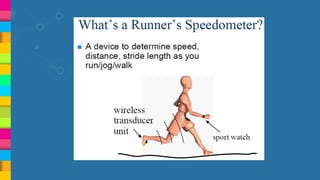
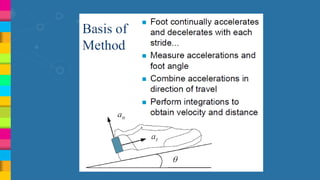
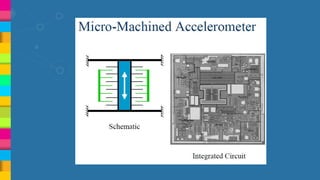
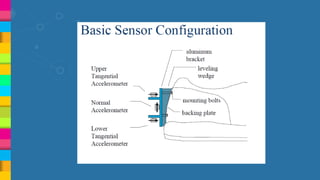
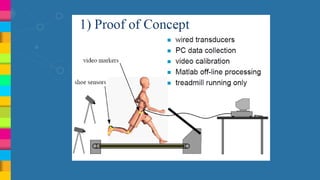
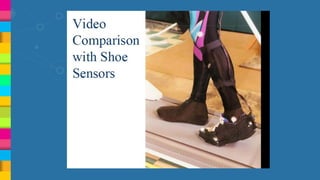
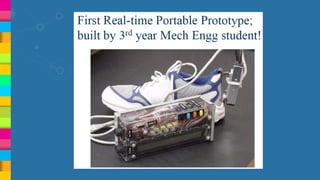
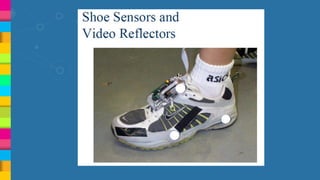
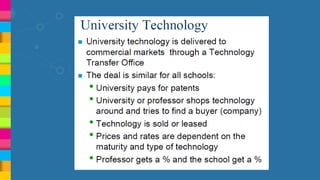
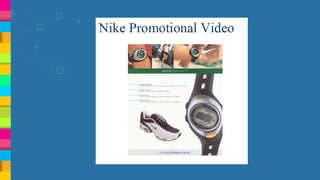
Ejemplo del desarrollo de un producto de base
tecnológica en una universidad y licenciamiento de
la tecnología.
Referencia:
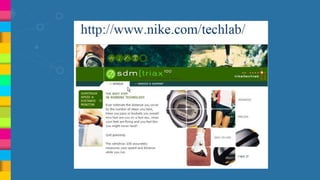
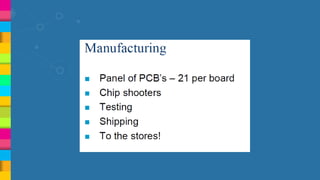
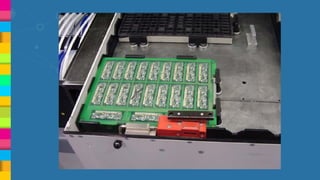
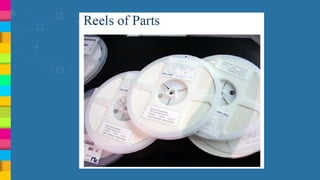
Si el prototipo funcional
está listo este puede patentarse
Trademarks
Dr. Carlos Téllez Martínez
November 2015
Introduction
 Trademarks existed in antiquity.
 3,000 years ago, Indian craftsmen used their signatures as trademarks to
identify their artistic creations before sending them to Iran.
 Later, over 100 different brands of Roman pottery were utilized,
including the FORTIS brand that became so famous that it was copied
and counterfeited.
 The use of trademarks is increased with the rise of commerce in the
Middle Ages.
What are trademarks?
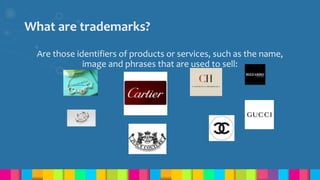
Are those identifiers of products or services, such as the name,
image and phrases that are used to sell:
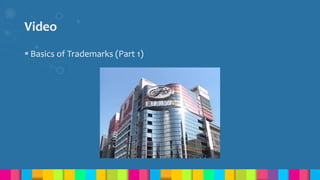
Video
 Basics of Trademarks (Part 1)
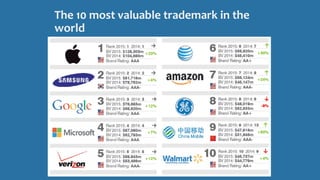
The 10 most valuable trademark in the
world
Sector analysis
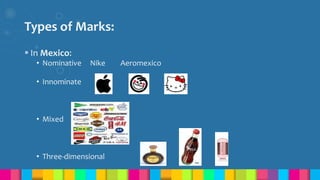
Types of Marks:
 In Mexico:
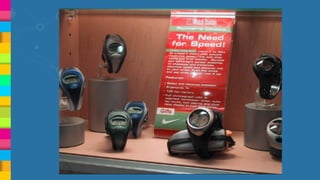
• Nominative Nike Aeromexico
• Innominate
• Mixed
• Three-dimensional
Inventions and Patents
Dr. Carlos Téllez Martínez
November 2015
Invention vs. innovation
 Invention: something new and the way of evaluation are purely
technical.
 Innovation: not necessarily new but the way of evaluation is
commercial.
Concept of a patent
 A patent is an exchange (quid pro quo) in which the inventor discloses
an invention and in return the society grants a temporary monopoly.
 A patent is granted by a government office (usually the Patent Office)
following submission of an application document. This document
describes an invention and creates a legal situation in which the
invention can only be exploited with the permission of the patent
holder.
 In other words, a patent protects an invention and gives the owner the
exclusive right to use his invention for a limited period of time.
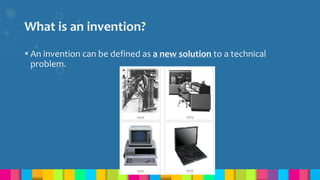
What is an invention?
 An invention can be defined as a new solution to a technical
problem.
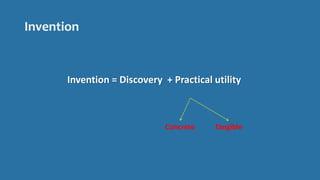
Invention
Invention = Discovery + Practical utility
Concrete Tangible
Legal definition of an invention
 Mexico (Ley de la Propiedad Industrial):
• Article 15. Invention is considered any human creation that allows to
transform matter or energy existing in nature, for exploitation by man and
meet their specific needs.
 United States:
• Diamond v. ChaKrabarty 447 US 303, 206 USPQ 193 (1980) (Forms of life)
• Anything under the sun that is man-made
Important elements:
 Novelty
 Non Obviousness (Inventive step)
 Industrial application (useful)
Copyright
Dr. Carlos Téllez Martínez
November 2015
What is copyright?
 Copyright is:
• a set of legal rules and principles governing moral and economic rights the
law grants authors (copyright)
• by the mere fact of creation of a work:
• literary,
• artistic,
• musical,
• scientific or didactic,
 it is published or unpublished.
 Reference: https://es.wikipedia.org/wiki/Derecho_de_autor
Copyright basics
 https://www.youtube.com/watch?v=Uiq42O6rhW4
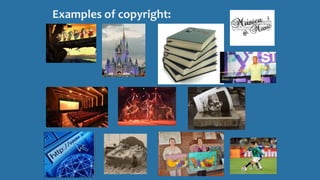
Examples of copyright:
Work on copyright
 Keep in mind that copyright protects "works".
 For "works” means the concrete expression of thoughts and ideas.
 The ideas and thoughts are not protected as to protect them
unjustifiably restrict freedom of expression, free access to
information and free access to raw data, all essential elements for
cultural enrichment.
Fundamental principles of the Berne
Convention
 These are the three basic principles of the Berne Convention:
• National treatment principle
• Principle of automatic protection
• Principle of independence of protection
Berne three-step test
 This test helps determine if there is damage by the exploitation of a
work.
 The Berne Convention Article 9 fraction 2 states:
 It shall be a matter for legislation in the countries of the Union to
permit the reproduction of such works in certain special cases,
provided that such reproduction does not conflict with a normal
exploitation of the work and does not unreasonably prejudice the
legitimate interests of the author.
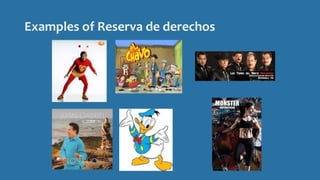
Examples of Reserva de derechos
What is Creative Commons?
 https://www.youtube.com/watch?v=8YkbeycRa2A
What is a Collective Management
Organization?
 Video
Dr. Carlos Téllez
Profesor Titular
Dr. Carlos Téllez
carlos.tellez.martinez@itesm.mx
Lic. Sergio García
Profesor Tutor Líder
Lic. Sergio García
sagm@itesm.mx
Derechos Reservados 2015 Tecnológico de Monterrey
Prohibida la reproducción total o parcial de esta obra
sin expresa autorización del Tecnológico de Monterrey.
Derechos Reservados 2015 Tecnológico de Monterrey
Prohibida la reproducción total o parcial de esta obra
sin expresa autorización del Tecnológico de Monterrey.

Ad2011 clase13 ad15

  • 1.
    Inventions, Trademarks and copyright. Dr.Carlos Téllez Martínez November 2015
  • 2.
    Ejemplo del desarrollode un producto de base tecnológica en una universidad y licenciamiento de la tecnología. Referencia:
  • 7.
    Si el prototipofuncional está listo este puede patentarse
  • 25.
    Trademarks Dr. Carlos TéllezMartínez November 2015
  • 26.
    Introduction  Trademarks existedin antiquity.  3,000 years ago, Indian craftsmen used their signatures as trademarks to identify their artistic creations before sending them to Iran.  Later, over 100 different brands of Roman pottery were utilized, including the FORTIS brand that became so famous that it was copied and counterfeited.  The use of trademarks is increased with the rise of commerce in the Middle Ages.
  • 27.
    What are trademarks? Arethose identifiers of products or services, such as the name, image and phrases that are used to sell:
  • 28.
    Video  Basics ofTrademarks (Part 1)
  • 29.
    The 10 mostvaluable trademark in the world
  • 30.
  • 31.
    Types of Marks: In Mexico: • Nominative Nike Aeromexico • Innominate • Mixed • Three-dimensional
  • 32.
    Inventions and Patents Dr.Carlos Téllez Martínez November 2015
  • 33.
    Invention vs. innovation Invention: something new and the way of evaluation are purely technical.  Innovation: not necessarily new but the way of evaluation is commercial.
  • 34.
    Concept of apatent  A patent is an exchange (quid pro quo) in which the inventor discloses an invention and in return the society grants a temporary monopoly.  A patent is granted by a government office (usually the Patent Office) following submission of an application document. This document describes an invention and creates a legal situation in which the invention can only be exploited with the permission of the patent holder.  In other words, a patent protects an invention and gives the owner the exclusive right to use his invention for a limited period of time.
  • 35.
    What is aninvention?  An invention can be defined as a new solution to a technical problem.
  • 36.
    Invention Invention = Discovery+ Practical utility Concrete Tangible
  • 37.
    Legal definition ofan invention  Mexico (Ley de la Propiedad Industrial): • Article 15. Invention is considered any human creation that allows to transform matter or energy existing in nature, for exploitation by man and meet their specific needs.  United States: • Diamond v. ChaKrabarty 447 US 303, 206 USPQ 193 (1980) (Forms of life) • Anything under the sun that is man-made
  • 38.
    Important elements:  Novelty Non Obviousness (Inventive step)  Industrial application (useful)
  • 39.
    Copyright Dr. Carlos TéllezMartínez November 2015
  • 40.
    What is copyright? Copyright is: • a set of legal rules and principles governing moral and economic rights the law grants authors (copyright) • by the mere fact of creation of a work: • literary, • artistic, • musical, • scientific or didactic,  it is published or unpublished.  Reference: https://es.wikipedia.org/wiki/Derecho_de_autor
  • 41.
  • 42.
  • 43.
    Work on copyright Keep in mind that copyright protects "works".  For "works” means the concrete expression of thoughts and ideas.  The ideas and thoughts are not protected as to protect them unjustifiably restrict freedom of expression, free access to information and free access to raw data, all essential elements for cultural enrichment.
  • 44.
    Fundamental principles ofthe Berne Convention  These are the three basic principles of the Berne Convention: • National treatment principle • Principle of automatic protection • Principle of independence of protection
  • 45.
    Berne three-step test This test helps determine if there is damage by the exploitation of a work.  The Berne Convention Article 9 fraction 2 states:  It shall be a matter for legislation in the countries of the Union to permit the reproduction of such works in certain special cases, provided that such reproduction does not conflict with a normal exploitation of the work and does not unreasonably prejudice the legitimate interests of the author.
  • 46.
  • 47.
    What is CreativeCommons?  https://www.youtube.com/watch?v=8YkbeycRa2A
  • 48.
    What is aCollective Management Organization?  Video
  • 49.
  • 50.
  • 51.
  • 52.
  • 53.
    Derechos Reservados 2015Tecnológico de Monterrey Prohibida la reproducción total o parcial de esta obra sin expresa autorización del Tecnológico de Monterrey. Derechos Reservados 2015 Tecnológico de Monterrey Prohibida la reproducción total o parcial de esta obra sin expresa autorización del Tecnológico de Monterrey.