



The Need Of Time.
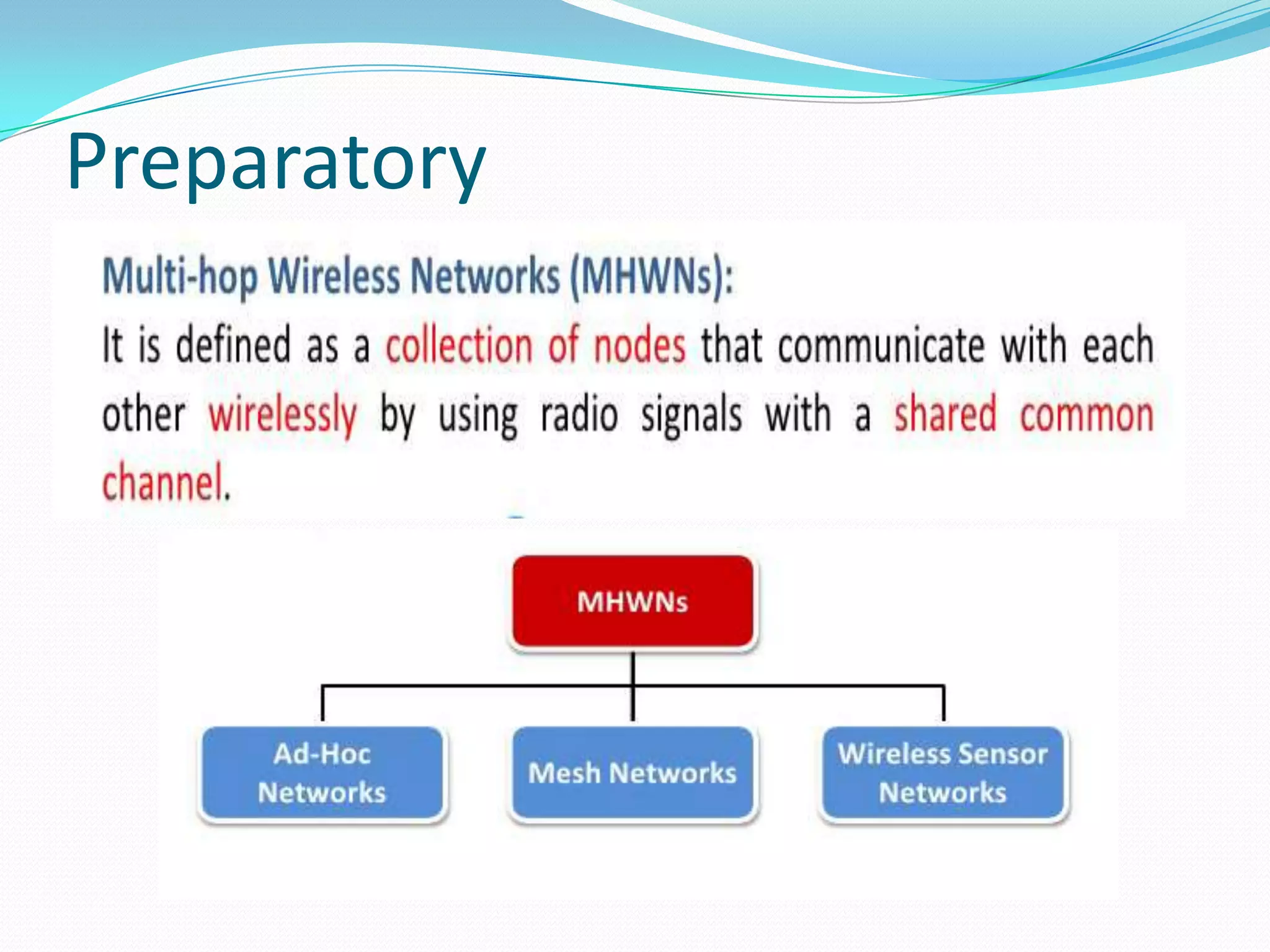
Preparatory
Ad-hoc network
 Ad hoc -- a Latin phrase which means "for this

purpose".
 The rapid growth of Internet
 Today’s society with the development of mobile

devices it has become important to stay online all the
time.
 Also called mesh networks.
Defination:
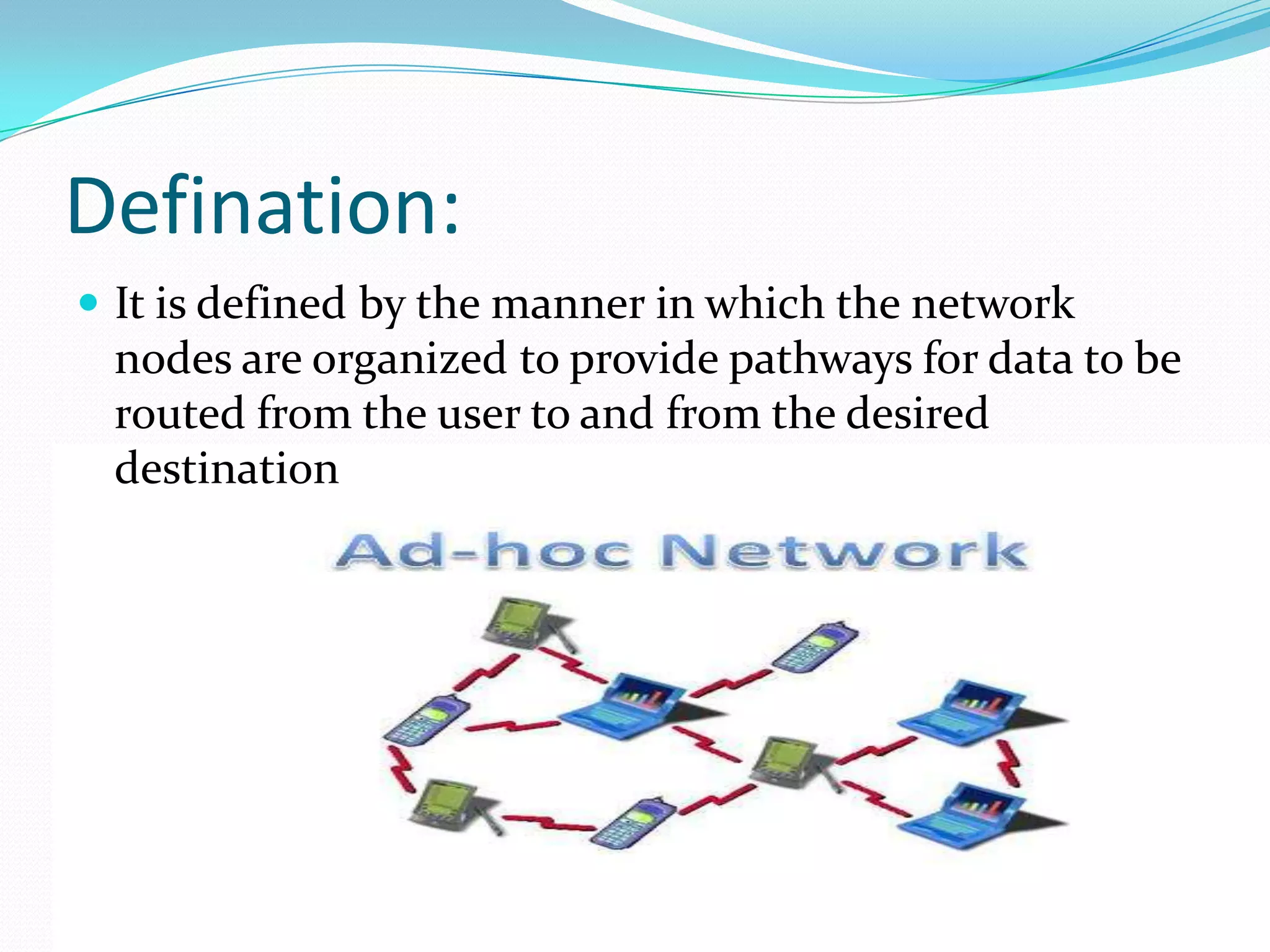
 It is defined by the manner in which the network

nodes are organized to provide pathways for data to be
routed from the user to and from the desired
destination
Ad-hoc network
 A network without any base stations “infrastructure-

less” or multi-hop
 A collection of two or more devices equipped with

wireless communications and networking capability
 Supports anytime and anywhere computing
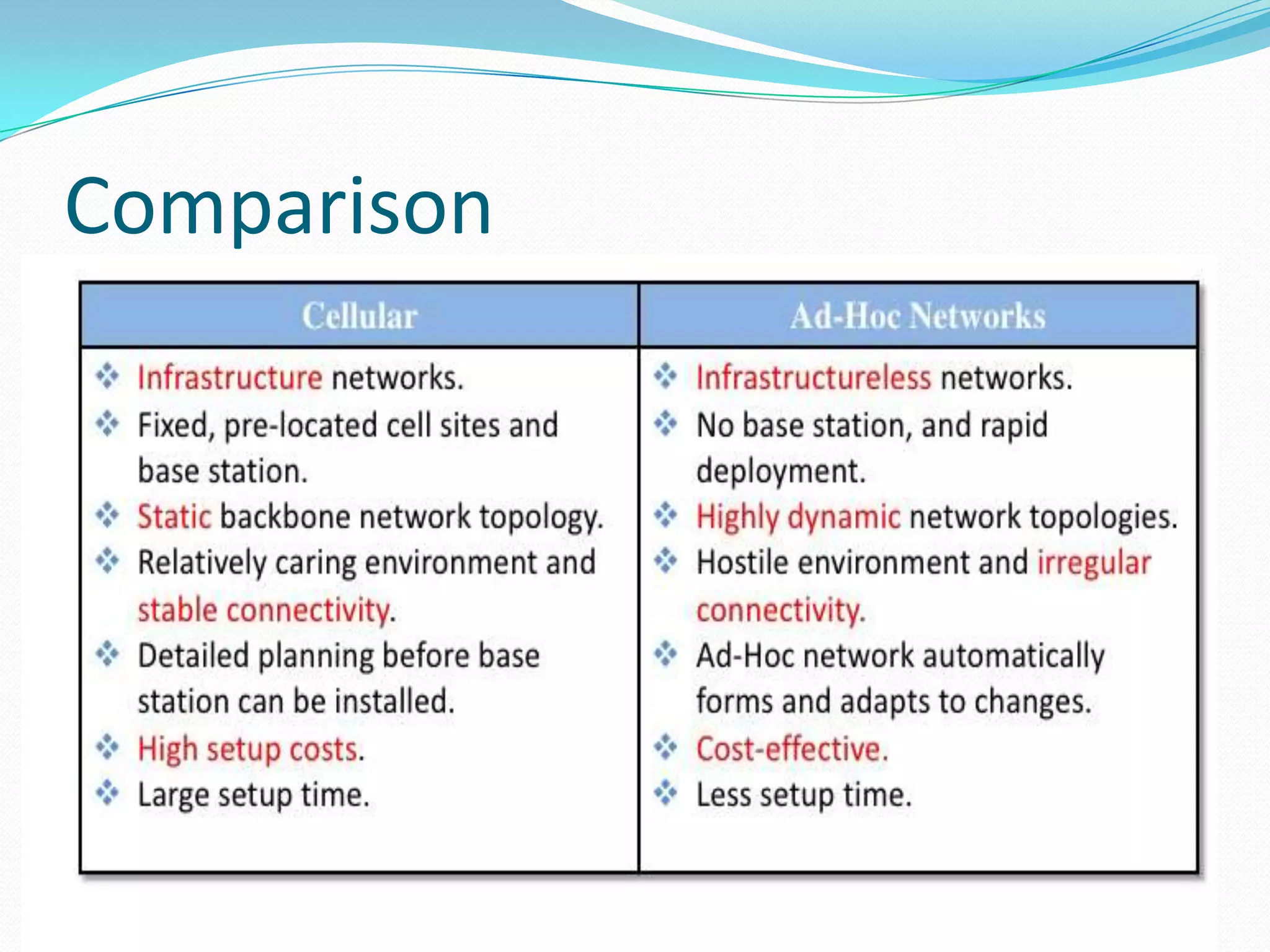
Comparison
Routing
 Selection Criteria
 Routes are preferred if the sequence numbers are newer
 If the sequence numbers are the same, the one with

better metric is preferred

 Requirements
 Simple, reliable and efficient
 Distributed but lightweight in nature
 Quickly adapts to changes in topology
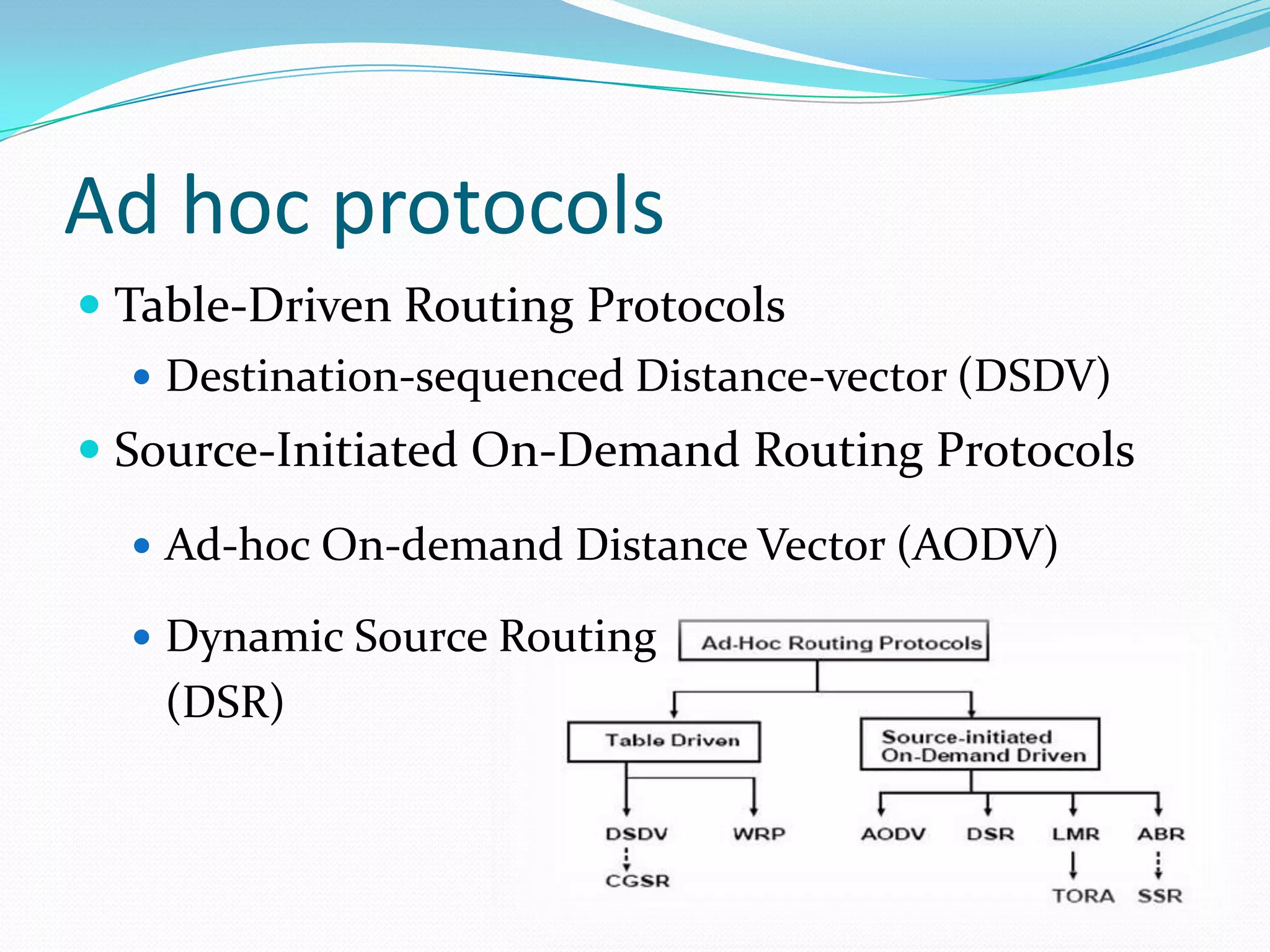
Ad hoc protocols
 Table-Driven Routing Protocols
 Destination-sequenced Distance-vector (DSDV)
 Source-Initiated On-Demand Routing Protocols
 Ad-hoc On-demand Distance Vector (AODV)
 Dynamic Source Routing

(DSR)
Ad-hoc On-demand Distance
Vector (AODV)
 It belongs to the class of Distance Vector Routing

Protocols (DV).
 Hop-by-hop routing

 Source sends request to neighbors
 Each neighbor does so until reach the destination
 Destination node sends reply follow the reverse path
 Source doesn’t put whole path but only next hop addr

in outgoing packets
Destination-sequenced Distancevector (DSDV)
 Effective for creating ad-hoc networks for small

populations of mobile nodes.
 Also requires each mobile node to maintain a complete

list of routes one for each destination within the adhoc network.
 Link breakages are reported immediately and routes

are quickly reestablished
Dynamic Source Routing (DSR)
 Source broadcasts request through the network.
 Intermediate nodes add its address to request and

continue broadcasting until reply received.
 Full path chosen by source and put into each packet

sent.
 Minimum node cost to find the optimal paths
Mobile Ad Hoc Networks (MANET)
 It is a kind of network in which all the nodes can move

randomly.
 It is more rigorous than that of traditional network
 It is a self-configuring infrastructureless network of

mobile devices connected by wireless links.
Mobile Ad Hoc Networks (MANET)
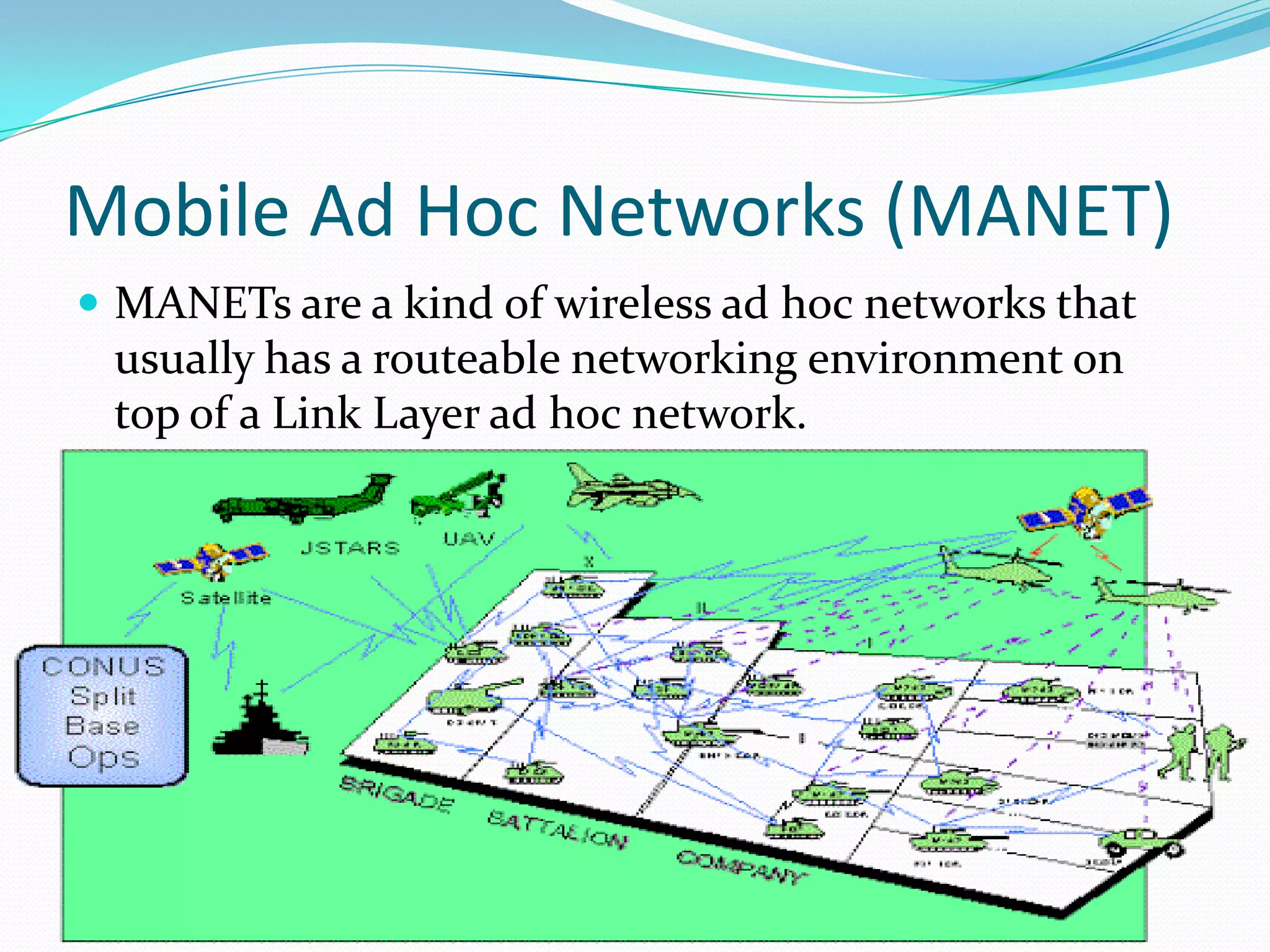
 MANETs are a kind of wireless ad hoc networks that

usually has a routeable networking environment on
top of a Link Layer ad hoc network.
Vehicular Ad Hoc Networks
(VANET)
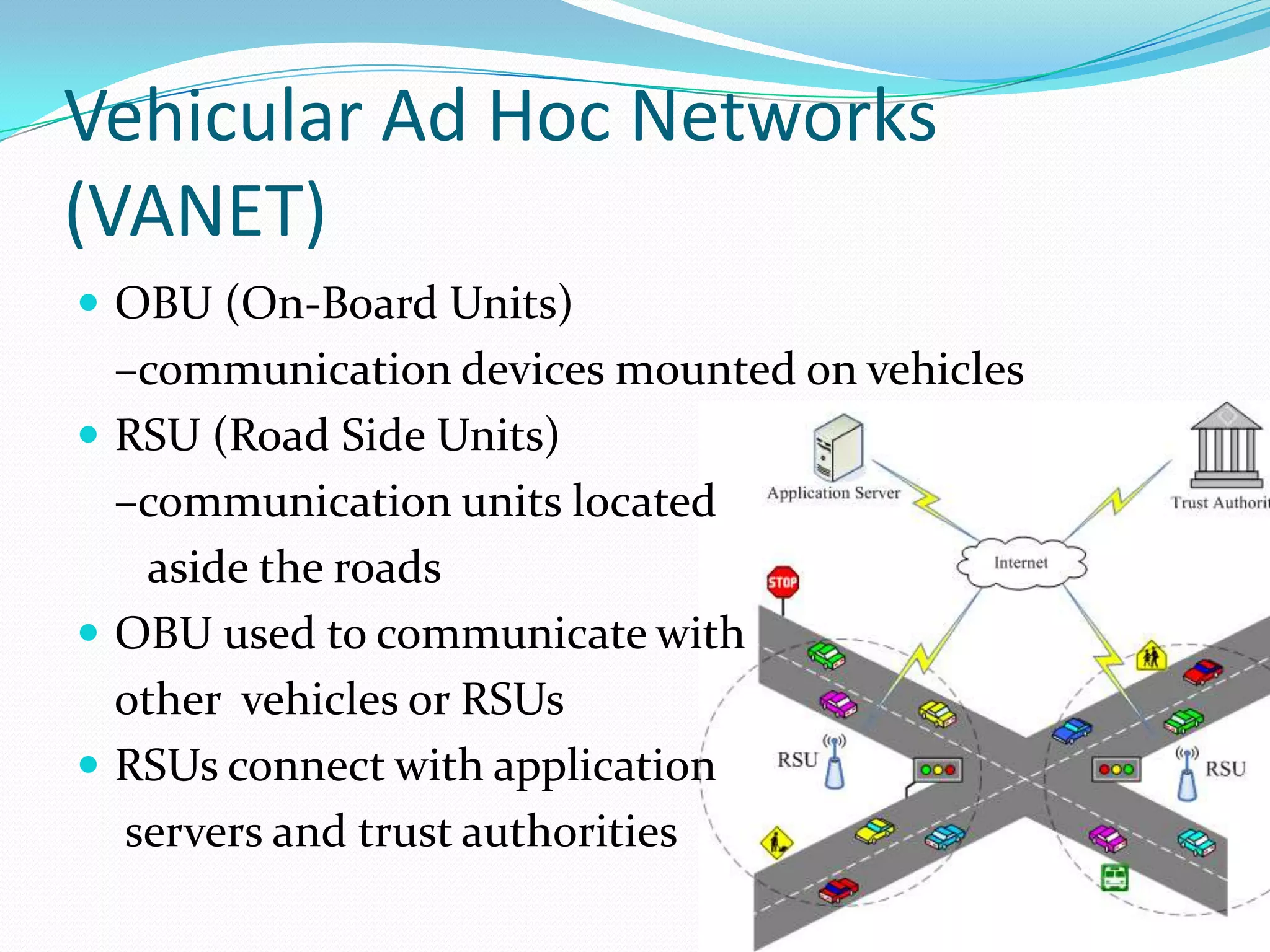
 OBU (On-Board Units)

–communication devices mounted on vehicles
 RSU (Road Side Units)
–communication units located
aside the roads
 OBU used to communicate with
other vehicles or RSUs
 RSUs connect with application
servers and trust authorities
Applications
Applications
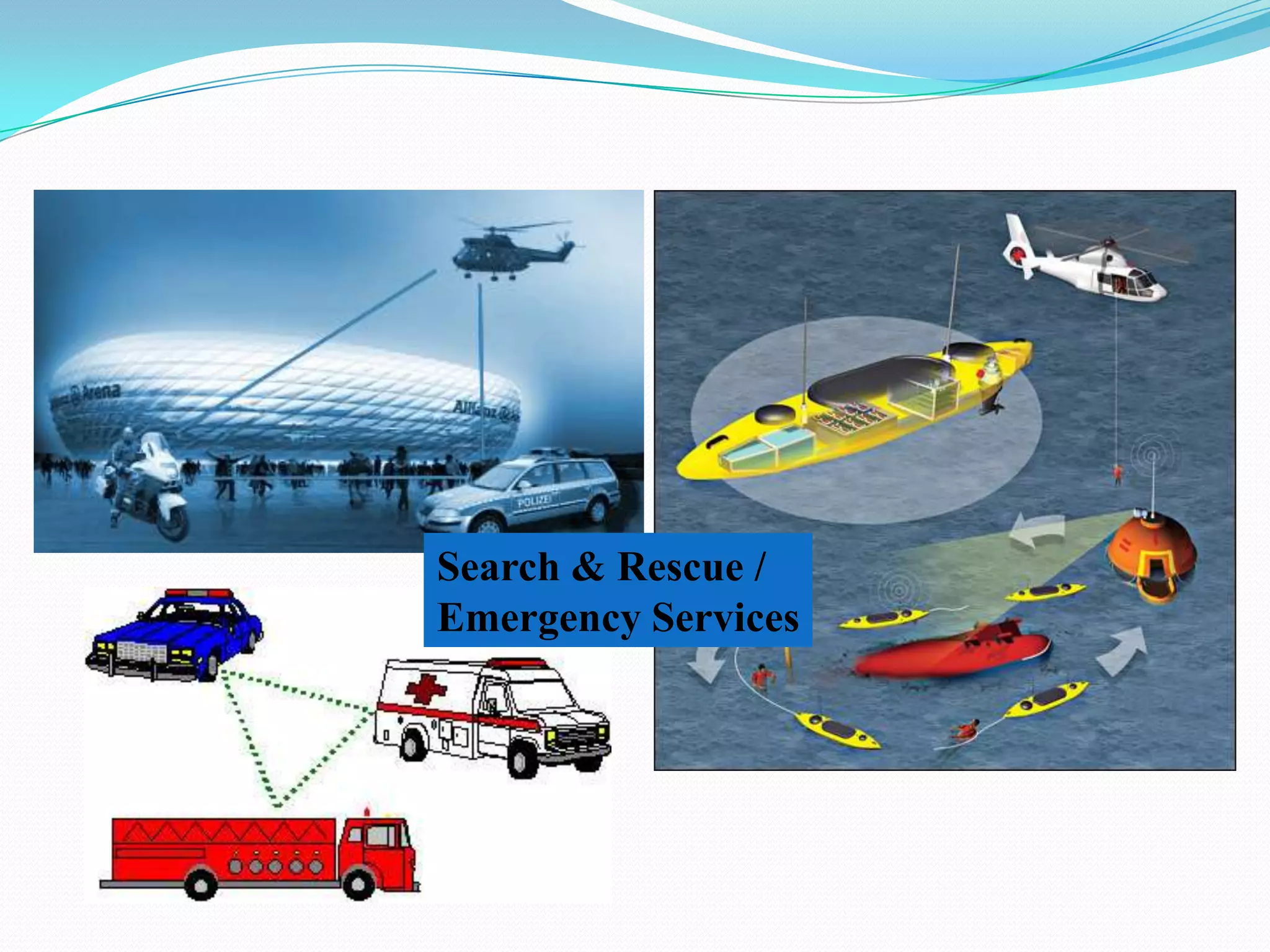
Search & Rescue /
Emergency Services
Advantages
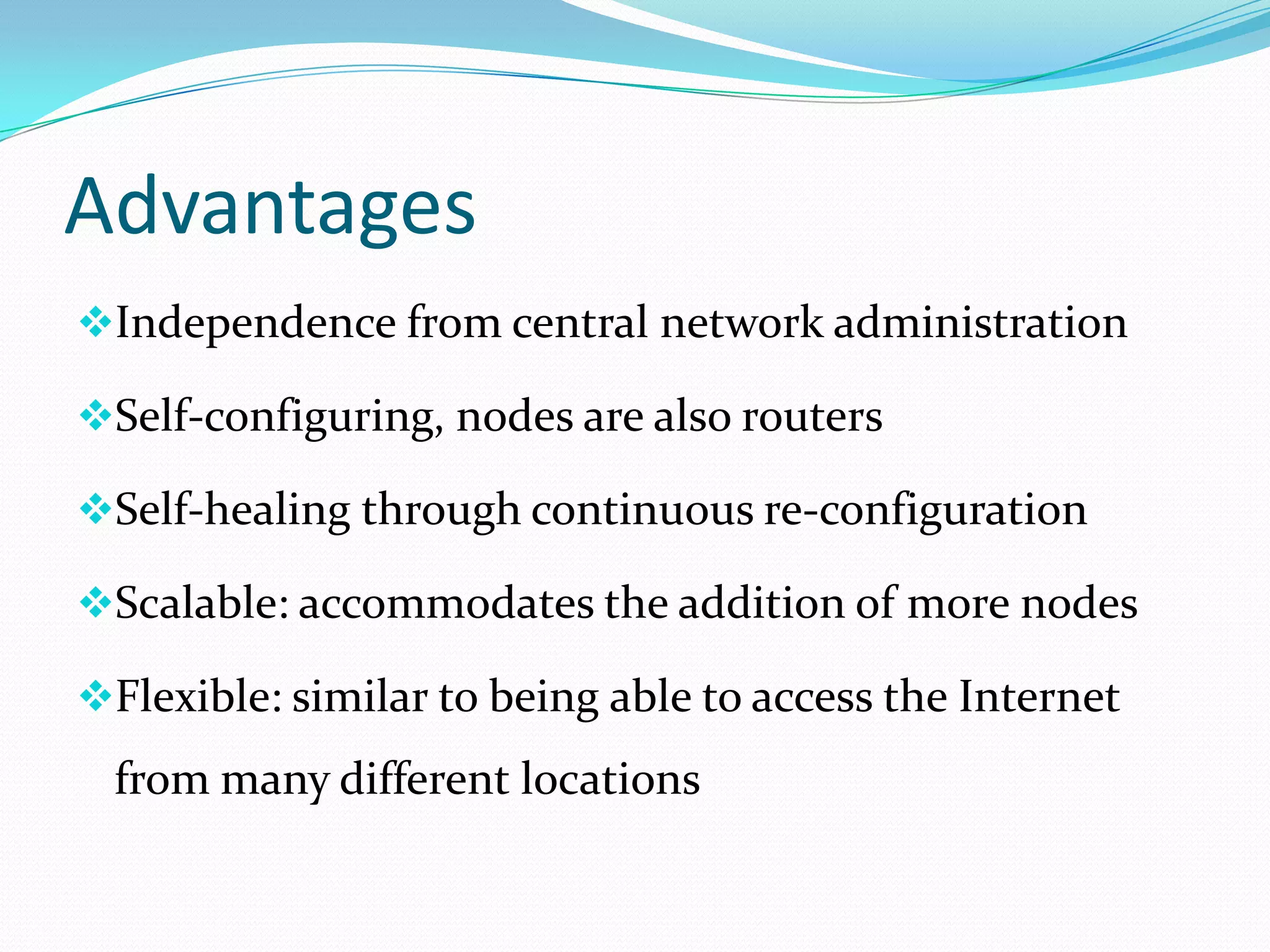
Advantages
Independence from central network administration
Self-configuring, nodes are also routers
Self-healing through continuous re-configuration
Scalable: accommodates the addition of more nodes
Flexible: similar to being able to access the Internet

from many different locations
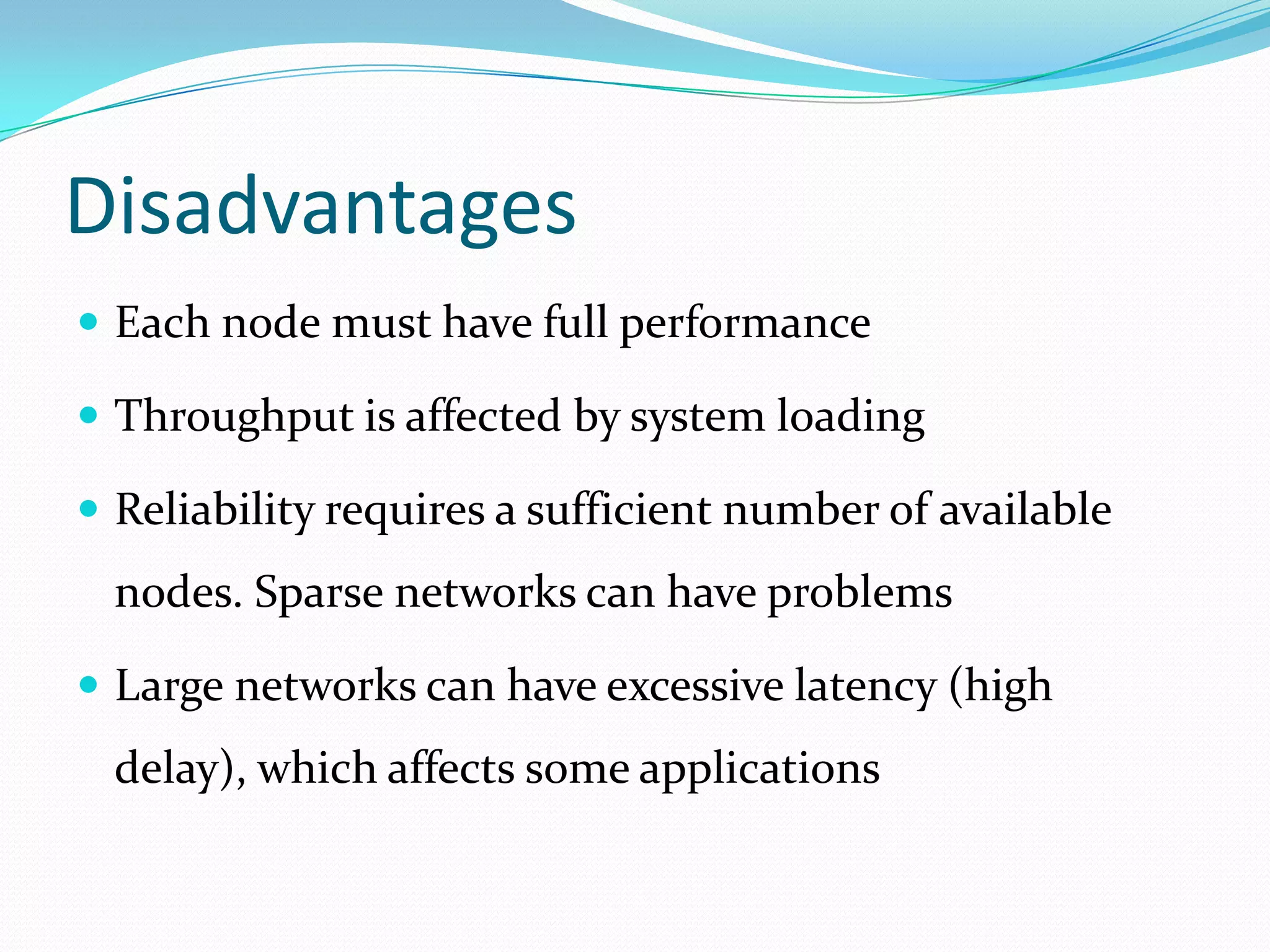
Disadvantages
 Each node must have full performance
 Throughput is affected by system loading
 Reliability requires a sufficient number of available

nodes. Sparse networks can have problems
 Large networks can have excessive latency (high

delay), which affects some applications
Advantages

Present
Applications

Future
Applications

NEED OF THE
TIME
Ad hoc network

Ad hoc network

  • 2.
  • 3.
  • 4.
    Ad-hoc network  Adhoc -- a Latin phrase which means "for this purpose".  The rapid growth of Internet  Today’s society with the development of mobile devices it has become important to stay online all the time.  Also called mesh networks.
  • 5.
    Defination:  It isdefined by the manner in which the network nodes are organized to provide pathways for data to be routed from the user to and from the desired destination
  • 6.
    Ad-hoc network  Anetwork without any base stations “infrastructure- less” or multi-hop  A collection of two or more devices equipped with wireless communications and networking capability  Supports anytime and anywhere computing
  • 7.
  • 8.
    Routing  Selection Criteria Routes are preferred if the sequence numbers are newer  If the sequence numbers are the same, the one with better metric is preferred  Requirements  Simple, reliable and efficient  Distributed but lightweight in nature  Quickly adapts to changes in topology
  • 9.
    Ad hoc protocols Table-Driven Routing Protocols  Destination-sequenced Distance-vector (DSDV)  Source-Initiated On-Demand Routing Protocols  Ad-hoc On-demand Distance Vector (AODV)  Dynamic Source Routing (DSR)
  • 10.
    Ad-hoc On-demand Distance Vector(AODV)  It belongs to the class of Distance Vector Routing Protocols (DV).  Hop-by-hop routing  Source sends request to neighbors  Each neighbor does so until reach the destination  Destination node sends reply follow the reverse path  Source doesn’t put whole path but only next hop addr in outgoing packets
  • 11.
    Destination-sequenced Distancevector (DSDV) Effective for creating ad-hoc networks for small populations of mobile nodes.  Also requires each mobile node to maintain a complete list of routes one for each destination within the adhoc network.  Link breakages are reported immediately and routes are quickly reestablished
  • 12.
    Dynamic Source Routing(DSR)  Source broadcasts request through the network.  Intermediate nodes add its address to request and continue broadcasting until reply received.  Full path chosen by source and put into each packet sent.  Minimum node cost to find the optimal paths
  • 13.
    Mobile Ad HocNetworks (MANET)  It is a kind of network in which all the nodes can move randomly.  It is more rigorous than that of traditional network  It is a self-configuring infrastructureless network of mobile devices connected by wireless links.
  • 14.
    Mobile Ad HocNetworks (MANET)  MANETs are a kind of wireless ad hoc networks that usually has a routeable networking environment on top of a Link Layer ad hoc network.
  • 15.
    Vehicular Ad HocNetworks (VANET)  OBU (On-Board Units) –communication devices mounted on vehicles  RSU (Road Side Units) –communication units located aside the roads  OBU used to communicate with other vehicles or RSUs  RSUs connect with application servers and trust authorities
  • 16.
  • 17.
  • 18.
    Search & Rescue/ Emergency Services
  • 19.
  • 20.
    Advantages Independence from centralnetwork administration Self-configuring, nodes are also routers Self-healing through continuous re-configuration Scalable: accommodates the addition of more nodes Flexible: similar to being able to access the Internet from many different locations
  • 21.
    Disadvantages  Each nodemust have full performance  Throughput is affected by system loading  Reliability requires a sufficient number of available nodes. Sparse networks can have problems  Large networks can have excessive latency (high delay), which affects some applications
  • 22.

Editor's Notes

  • #5 The rapid growth of Internet has made communication an integrated and highly importantfactor of computing. In today’s society with the development of mobile devices it hasbecome important to stay online all the time. In order to stay online all the time it must bepossible to set up a network fast and cost effective when moving between differentinfrastructures, ad hoc networks deals with this kinds of issues.
  • #9 Protocol reaction to topology changes should result in minimal control overheadBandwidth efficientMobility management involving user location and hand-off management
  • #11 In November 2001 the MANET (Mobile Ad-hoc Networks) Working Group for routing of the IEFT community has published the first version of the AODV Routing Protocol (Ad hoc On Demand Distance Vector).DV=). In a DV every node knows itsneighbours and the costs to reach them. A node maintains its own routing table, storing all nodes in thenetwork, the distance and the next hop to them. If a node is not reachable the distance to it is set toinfinity. AODV is an ‘on demand routing protocol’ with small delay. That means that routes are only establishedwhen needed to reduce traffic overhead. AODV supports Unicast, Broadcast and Multicast without anyfurther protocols.
  • #12 The main complexity in DSDV is in generating and maintaining these routing tables
  • #16 allowing cars approximately 100 to 300 metres of each other to connect and, in turn, create a network with a wide range. As cars fall out of the signal range and drop out of the network, other cars can join in, connecting vehicles to one another so that a mobile Internet is created. It is estimated that the first systems that will integrate this technology are police and fire vehicles to communicate with each other for safety purposes. Automotive companies like General Motors, Toyota, Nissan, DaimlerChrysler, BMW and Ford
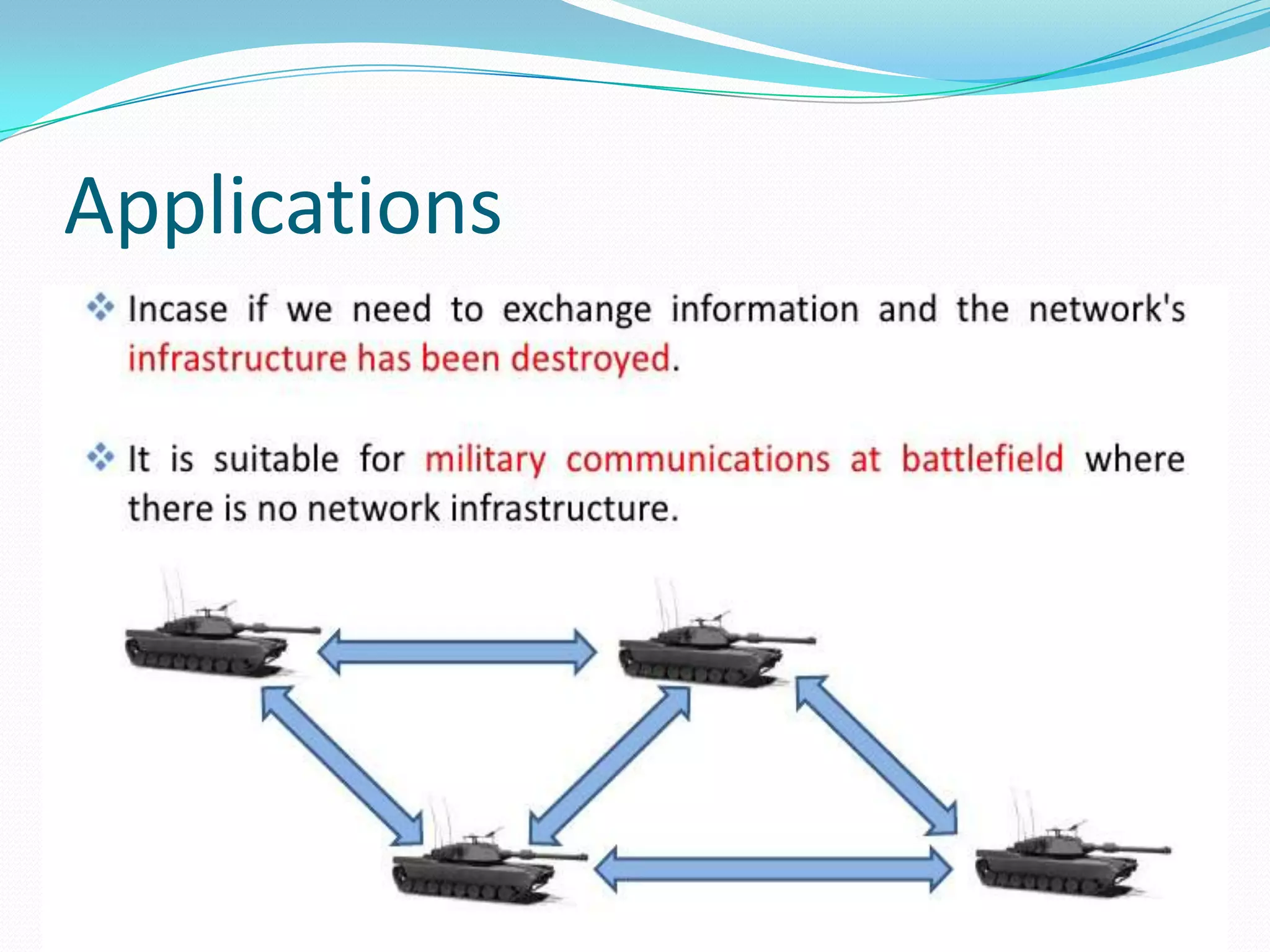
  • #17 The very imp app of dhocnw is that when infrastructure has been destroyed and we need to exchange of info then we use adhoc nw.In the battle field there is nonw infrastructure the adhocnw is suiteable for Military: decentralized network configuration communication b/w armed vahicles e.g. tanks etc.
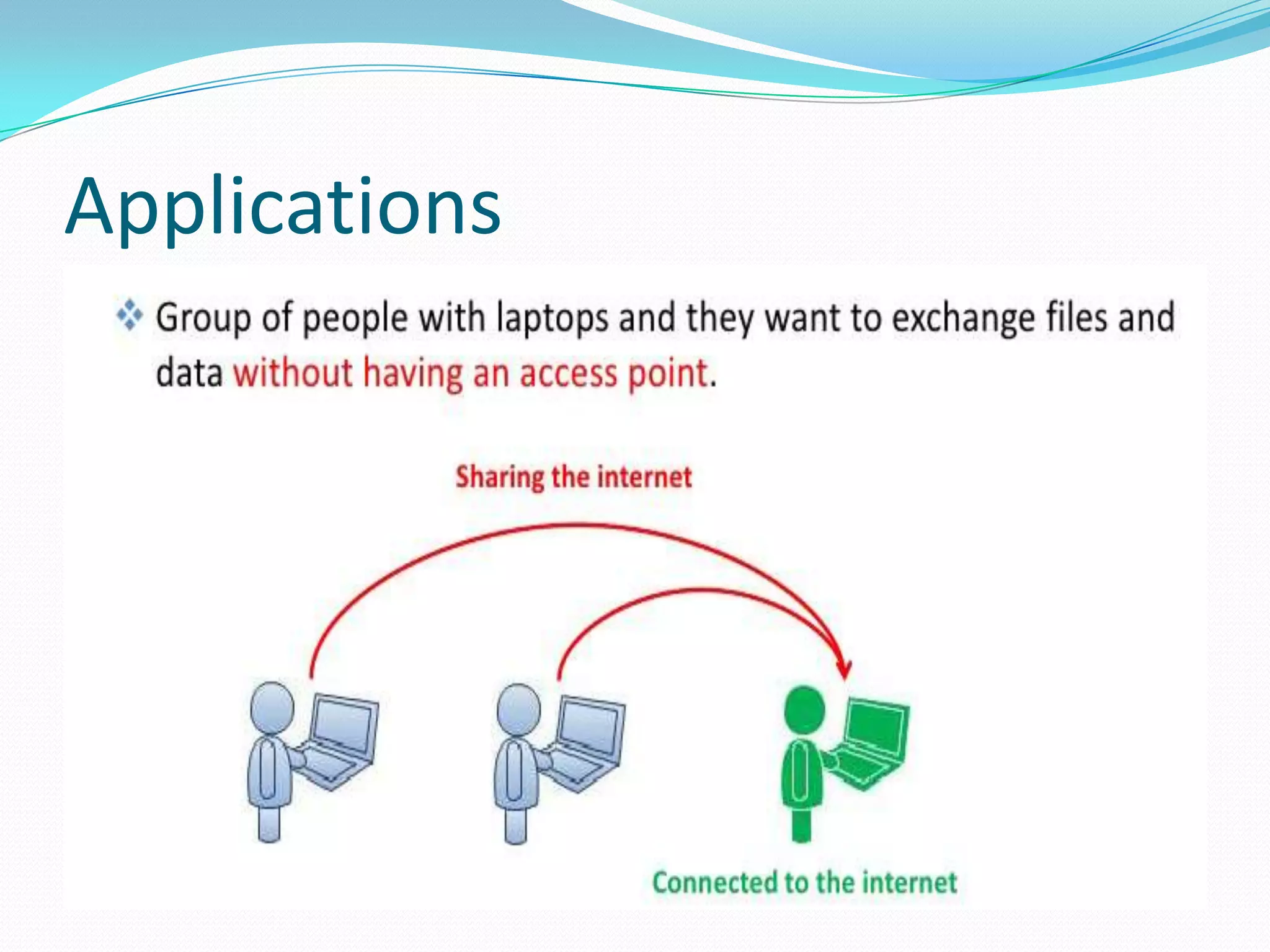
  • #18 When group of people having laptops and they want to exchangefiles and data without having an access point and only 1 laptop have internet connection than by using adhocnw all laptops can share data.
  • #19 In case of terrorist attacks, earth quick , flood and other natural disasters all rescue teams can contact each others by using adhocnw so that they can do their search and rescue missions better also in remote areas.
  • #20 Now advantages of adhoc nw.
  • #21 Every node can be perform as transceiver.