Presented by Sah, Kalpana
SWU- School of medicine
 The tonsils participate in systemic immune
surveillance.
 In addition, local tonsillar defenses include a
lining of antigen-processing squamous
epithelium that involves B- and T-cell
responses.
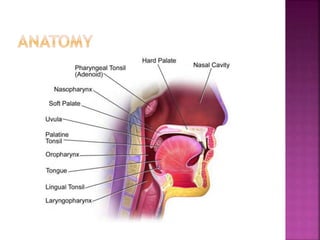
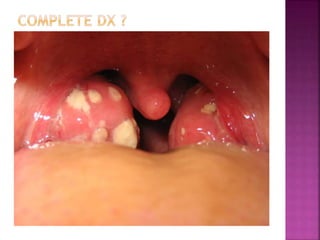
 Tonsillopharyngitis is acute infection of the
pharynx, palatine tonsils, or both.
 Tonsillopharyngitis is usually viral, most often
caused by the common cold viruses
(adenovirus, rhinovirus, influenza,
coronavirus, and respiratory syncytial virus),
but occasionally by Epstein-Barr virus, herpes
simplex virus, cytomegalovirus, or HIV.
 In about 30% of patients, the cause is
bacterial.
 Group A β-hemolytic streptococcus (GABHS)
is most common (Streptococcal Infections)
butStaphylococcus aureus, Streptococcus
pneumoniae, Mycoplasma
pneumoniae,and Chlamydia pneumoniae are
sometimes involved.
 Rare causes include
pertussis, Fusobacterium, diphtheria,
syphilis, and gonorrhea.
 GABHS occurs most commonly between ages
5 and 15 and is uncommon before age 3.
 Pain with swallowing is the hallmark and is often
referred to the ears.
 Very young children who are not able to
complain of sore throat often refuse to eat.
 High fever, malaise, headache, and GI upset are
common, as are halitosis and a muffled voice.
 A scarlatiniform or nonspecific rash may also be
present.
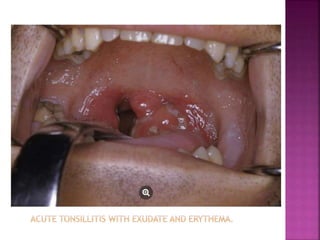
 The tonsils are swollen and red and often have
purulent exudates.
 Tender cervical lymphadenopathy may be
present.
 Fever, adenopathy, palatal petechiae, and
exudates are somewhat more common with
GABHS than with viral tonsillopharyngitis, but
there is much overlap.
 GABHS usually resolves within 7 days.
Untreated GABHS may lead to local suppurative
complications (eg, peritonsillar abscess or
cellulitis) and sometimes to rheumatic fever or
glomerulonephritis.
 Diagnosis is clinical, supplemented by
culture or rapid antigen test. Treatment
depends on symptoms and, in the case of
group A β-hemolytic streptococcus,
involves antibiotics.
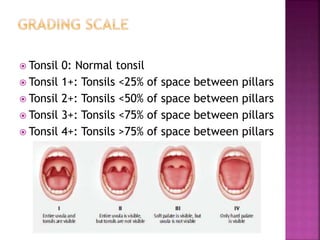
 Tonsil 0: Normal tonsil
 Tonsil 1+: Tonsils <25% of space between pillars
 Tonsil 2+: Tonsils <50% of space between pillars
 Tonsil 3+: Tonsils <75% of space between pillars
 Tonsil 4+: Tonsils >75% of space between pillars
 Clinical evaluation
 GABHS ruled out by rapid antigen test, culture,
or both
 Pharyngitis itself is easily recognized clinically.
However, its cause is not. Rhinorrhea and cough
usually indicate a viral cause.
 Infectious mononucleosis is suggested by
posterior cervical or generalized adenopathy,
hepatosplenomegaly, fatigue, and malaise
for > 1 wk; a full neck with petechiae of the
soft palate; and thick tonsillar exudates.
 A dirty gray, thick, tough membrane that
bleeds if peeled away indicates diphtheria.
 Rapid antigen tests are specific but not
sensitive and may need to be followed by a
culture, which is about 90% specific and 90%
sensitive.
 In adults, many authorities recommend using
the following 4 criteria:
 History of fever
 Tonsillar exudates
 Absence of cough
 Tender anterior cervical lymphadenopathy
 Patients who meet 1 or no criteria are
unlikely to have GABHS and should not be
tested.
 Patients who meet 2 criteria can be tested.
 Patients who meet 3 or 4 criteria can be
tested or treated empirically for GABHS.
 Symptomatic treatment
 Antibiotics for GABHS
 Tonsillectomy considered for recurrent
GABHS
 Supportive treatments include analgesia,
hydration, and rest.
 Analgesics may be systemic or topical.
 NSAIDs are usually effective systemic
analgesics.
 Some clinicians also give a single dose of a
corticosteroid (eg,dexamethasone 10 mg IM),
which may help shorten symptom duration.
 Topical analgesics are available as lozenges
and sprays; ingredients include benzocaine,
phenol, lidocaine, and other substances.
These topical analgesics can reduce pain but
have to be used repeatedly and often affect
taste. Benzocaine used for pharyngitis has
rarely caused methemoglobinemia.
 Penicillin V is usually considered the drug of
choice for GABHS tonsillopharyngitis; dose is
250 mg po bid for 10 days for patients < 27
kg and 500 mg for those > 27 kg.
 Amoxicillin is effective and more palatable if
a liquid preparation is required.
 If adherence is a concern, a single dose of
benzathine penicillin 1.2 million units IM
(600,000 units for children ≤ 27 kg) is
effective. Other oral drugs include
macrolides for patients allergic to penicillin,
a 1st-generation cephalosporin,
and clindamycin.
 Tonsillectomy should be considered if GABHS
tonsillitis recurs repeatedly (> 6
episodes/yr, > 4 episodes/yr for 2 yr, or > 3
episodes/yr for 3 yr) or if acute infection is
severe and persistent despite antibiotics.
 Other criteria for tonsillectomy include
obstructive sleep disorder, recurrent
peritonsillar abscess, and suspicion of cancer.
 Pharyngitis itself is easily recognized clinically, but
diagnosing the 25 to 30% of cases caused by
streptococci is not.
 Clinical criteria (modified Centor score) can help to
select patients for further testing or empiric
antibiotic treatment, although some authorities
recommend testing all children using a rapid
antigen test and sometimes culture.
 Penicillin remains the drug of choice for
streptococcal pharyngitis; cephalosporins or
macrolides are alternatives for patients allergic to
penicillin.
Acute tonsillopharyngitis

Acute tonsillopharyngitis

  • 1.
    Presented by Sah,Kalpana SWU- School of medicine
  • 3.
     The tonsilsparticipate in systemic immune surveillance.  In addition, local tonsillar defenses include a lining of antigen-processing squamous epithelium that involves B- and T-cell responses.
  • 4.
     Tonsillopharyngitis isacute infection of the pharynx, palatine tonsils, or both.
  • 5.
     Tonsillopharyngitis isusually viral, most often caused by the common cold viruses (adenovirus, rhinovirus, influenza, coronavirus, and respiratory syncytial virus), but occasionally by Epstein-Barr virus, herpes simplex virus, cytomegalovirus, or HIV.
  • 6.
     In about30% of patients, the cause is bacterial.  Group A β-hemolytic streptococcus (GABHS) is most common (Streptococcal Infections) butStaphylococcus aureus, Streptococcus pneumoniae, Mycoplasma pneumoniae,and Chlamydia pneumoniae are sometimes involved.
  • 7.
     Rare causesinclude pertussis, Fusobacterium, diphtheria, syphilis, and gonorrhea.  GABHS occurs most commonly between ages 5 and 15 and is uncommon before age 3.
  • 8.
     Pain withswallowing is the hallmark and is often referred to the ears.  Very young children who are not able to complain of sore throat often refuse to eat.  High fever, malaise, headache, and GI upset are common, as are halitosis and a muffled voice.  A scarlatiniform or nonspecific rash may also be present.  The tonsils are swollen and red and often have purulent exudates.  Tender cervical lymphadenopathy may be present.
  • 9.
     Fever, adenopathy,palatal petechiae, and exudates are somewhat more common with GABHS than with viral tonsillopharyngitis, but there is much overlap.  GABHS usually resolves within 7 days. Untreated GABHS may lead to local suppurative complications (eg, peritonsillar abscess or cellulitis) and sometimes to rheumatic fever or glomerulonephritis.
  • 11.
     Diagnosis isclinical, supplemented by culture or rapid antigen test. Treatment depends on symptoms and, in the case of group A β-hemolytic streptococcus, involves antibiotics.
  • 12.
     Tonsil 0:Normal tonsil  Tonsil 1+: Tonsils <25% of space between pillars  Tonsil 2+: Tonsils <50% of space between pillars  Tonsil 3+: Tonsils <75% of space between pillars  Tonsil 4+: Tonsils >75% of space between pillars
  • 14.
     Clinical evaluation GABHS ruled out by rapid antigen test, culture, or both  Pharyngitis itself is easily recognized clinically. However, its cause is not. Rhinorrhea and cough usually indicate a viral cause.
  • 15.
     Infectious mononucleosisis suggested by posterior cervical or generalized adenopathy, hepatosplenomegaly, fatigue, and malaise for > 1 wk; a full neck with petechiae of the soft palate; and thick tonsillar exudates.  A dirty gray, thick, tough membrane that bleeds if peeled away indicates diphtheria.
  • 16.
     Rapid antigentests are specific but not sensitive and may need to be followed by a culture, which is about 90% specific and 90% sensitive.  In adults, many authorities recommend using the following 4 criteria:  History of fever  Tonsillar exudates  Absence of cough  Tender anterior cervical lymphadenopathy
  • 17.
     Patients whomeet 1 or no criteria are unlikely to have GABHS and should not be tested.  Patients who meet 2 criteria can be tested.  Patients who meet 3 or 4 criteria can be tested or treated empirically for GABHS.
  • 18.
     Symptomatic treatment Antibiotics for GABHS  Tonsillectomy considered for recurrent GABHS
  • 19.
     Supportive treatmentsinclude analgesia, hydration, and rest.  Analgesics may be systemic or topical.  NSAIDs are usually effective systemic analgesics.  Some clinicians also give a single dose of a corticosteroid (eg,dexamethasone 10 mg IM), which may help shorten symptom duration.
  • 20.
     Topical analgesicsare available as lozenges and sprays; ingredients include benzocaine, phenol, lidocaine, and other substances. These topical analgesics can reduce pain but have to be used repeatedly and often affect taste. Benzocaine used for pharyngitis has rarely caused methemoglobinemia.
  • 21.
     Penicillin Vis usually considered the drug of choice for GABHS tonsillopharyngitis; dose is 250 mg po bid for 10 days for patients < 27 kg and 500 mg for those > 27 kg.  Amoxicillin is effective and more palatable if a liquid preparation is required.
  • 22.
     If adherenceis a concern, a single dose of benzathine penicillin 1.2 million units IM (600,000 units for children ≤ 27 kg) is effective. Other oral drugs include macrolides for patients allergic to penicillin, a 1st-generation cephalosporin, and clindamycin.
  • 23.
     Tonsillectomy shouldbe considered if GABHS tonsillitis recurs repeatedly (> 6 episodes/yr, > 4 episodes/yr for 2 yr, or > 3 episodes/yr for 3 yr) or if acute infection is severe and persistent despite antibiotics.  Other criteria for tonsillectomy include obstructive sleep disorder, recurrent peritonsillar abscess, and suspicion of cancer.
  • 24.
     Pharyngitis itselfis easily recognized clinically, but diagnosing the 25 to 30% of cases caused by streptococci is not.  Clinical criteria (modified Centor score) can help to select patients for further testing or empiric antibiotic treatment, although some authorities recommend testing all children using a rapid antigen test and sometimes culture.  Penicillin remains the drug of choice for streptococcal pharyngitis; cephalosporins or macrolides are alternatives for patients allergic to penicillin.

Editor's Notes

  • #9 Sore Throat, Dysphagia, Cervical lymphadenopathy, Fever
  • #13 Tonsil Size Grading Grade 0: Tonsils absent Grade 1: hidden behind tonsillar pillars Grade 2: Extend to pillars Grade 3: Visible beyond pillars Grade 4: Enarged to midline