Acid
Peptic
Disease
Dr. Aneesh M. S
Asst. Professor
Department of Kayachikitsa
VAC Ollur
Digestion
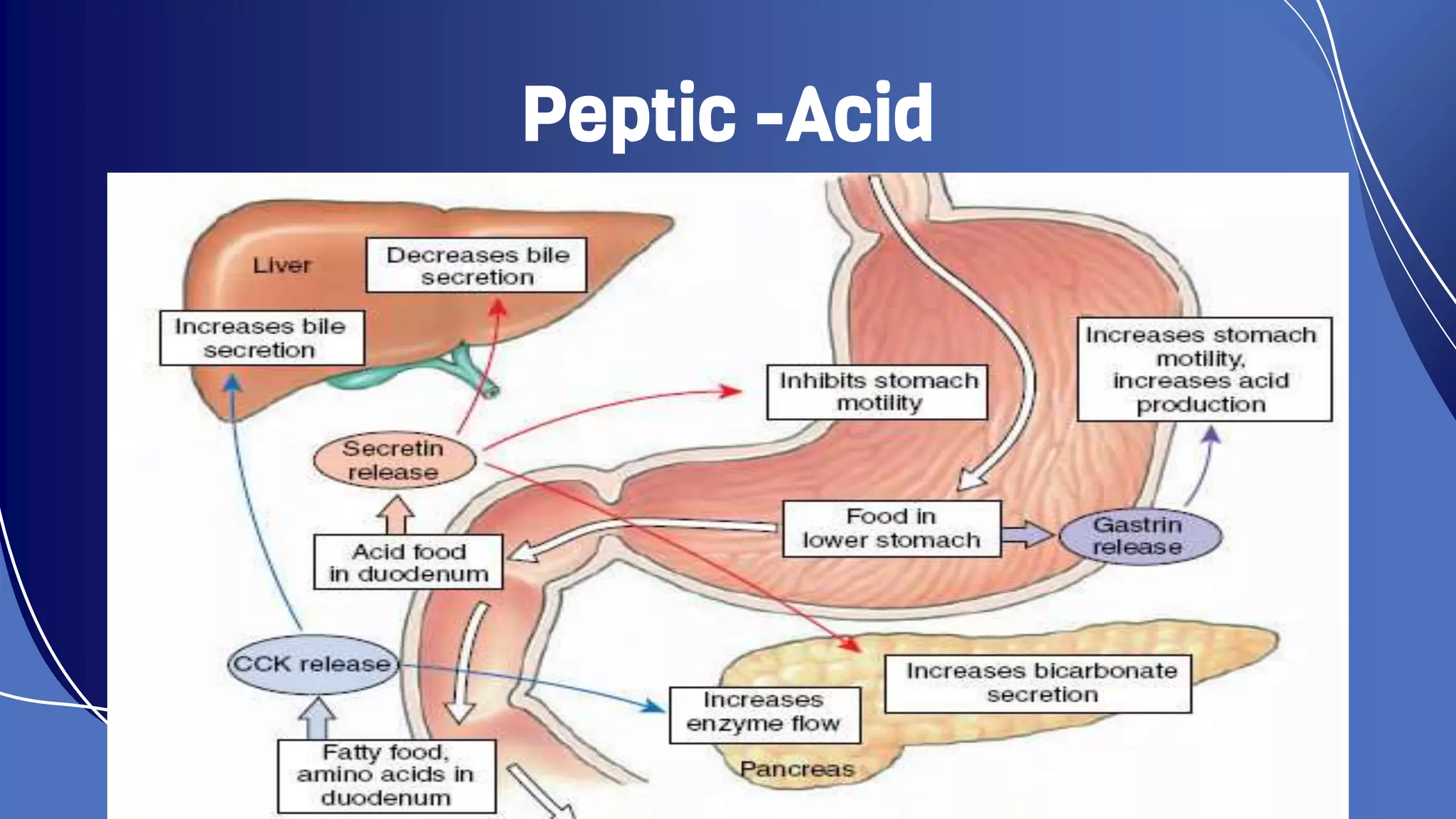
Peptic -Acid
Acid Peptic Disease
• “Peptic” - relating to or promoting digestion
• Acid- Acid secretion & regulation related
• also known as acid peptic disorders
• collection of diseases involving acid production in the stomach
and nearby parts of the gastrointestinal tract
Acid Peptic Disease
• pathogenic mechanisms leading to either excessive acid secretion or
diminished mucosal defense
• Gastroesophageal Reflux Disease
• Gastritis
• Gastric Ulcer
• Duodenal Ulcer
• Esophageal Ulcer
• Zollinger–ellison Syndrome
• Meckel's Diverticulum Ulcer.
Gastroesophageal Reflux Disease
1. Gastroesophageal reflux disease (GERD) or gastro-oesophageal reflux
disease (GORD)
2. chronic diseases where stomach content persistently and regularly
flows up into the esophagus
3. Common symptoms
• acidic taste in the mouth
• Regurgitation
• heartburn.
4. Less common symptoms
• pain with swallowing/sore throat
• increased salivation (also known as water brash)
• Nausea
• chest pain
• Coughing
• globus sensation
Gastroesophageal Reflux Disease
• The acid reflux can induce asthma attack
• GERD sometimes causes injury to the esophagus.
1. Reflux esophagitis – inflammation of esophageal epithelium which can
cause ulcers near the junction of the stomach and esophagus
2. Esophageal strictures – the persistent narrowing of the esophagus caused
by reflux-induced inflammation
3. Barrett's esophagus – intestinal metaplasia (changes of the epithelial cells
from squamous to intestinal columnar epithelium) of the distal esophagus
4. Esophageal adenocarcinoma – a form of cancer
• GERD sometimes causes injury of the larynx (LPR)
Treatment - GERD
1. Medical nutrition therapy and lifestyle changes
2. Medications
3. primary medications used for GERD are
4. proton-pump inhibitors-
• eg., omeprazole
• twice a day.
• one half to one hour before a meal.
• Targeting the terminal step in acid production
5. H2 receptor blockers
• are a type of antihistamine
• block the action of histamine at the histamine H2 receptors of the parietal cells
• ranitidine
6. antacids with or without alginic acid
Gastritis
• inflammation of the lining of the stomach
• may occur as a short episode or may be of a long
duration.
• the most common is upper abdominal pain
• nausea and vomiting, bloating, loss of appetite
and heartburn
• Common causes include
• infection with Helicobacter pylori
• use of nonsteroidal anti-inflammatory drugs
(NSAIDs).
• Less common causes include
• Alcohol
• Smoking
• severe illness
• autoimmune problems
• radiation therapy
• Crohn's disease.
Gastritis
• Antacids are a common treatment for mild to medium gastritis
• When antacids do not provide enough relief
• H2 blockers
• proton-pump inhibitors
• Cytoprotective agents  protect the tissues that line of
stomach and small intestine.
• Sucralfate
• misoprostol
Peptic ulcer disease (PUD)
• break in the inner lining of the stomach
• the first part of the small intestine
• sometimes the lower esophagus.
• gastric ulcer - ulcer in the stomach
• Diagnosis
• Stomach pain is usually the first signal of a peptic
ulcer.
• Endoscopy
Peptic ulcer disease (PUD)
• Symptoms
• abdominal pain
• epigastric, mealtimes
• Duodenal ulcers,  three hours after taking a meal and wakes the
person from sleep
• bloating and abdominal fullness
• waterbrash
• nausea and copious vomiting;
• loss of appetite
• weight loss gastric ulcer;
• weight gain duodenal ulcer
Peptic ulcer disease (PUD)
• Symptoms
• hematemesis (vomiting of blood);
• directly from a gastric ulcer or from damage from severe/continuing
vomiting.
• melena (tarry, foul-smelling feces)
• due to presence of oxidized iron from hemoglobin
• Rarely- gastric or duodenal perforation
• which leads to acute peritonitis and extreme, stabbing pain and requires
immediate surgery..
Treatment
1. H. pylori - pantoprazole and clarithromycin are combined with either
amoxicillin or metronidazole
2. NSAIDs induced ulcers- NSAIDs are withdrawn with the introduction of
proton pump inhibitors
3. Bleeding- Intravenous PPIs
4. Endoscopic therapy - cautery, Endo clip, or epinephrine injection
Zollinger–Ellison syndrome
• tumors cause the stomach to produce too much acid, resulting in peptic ulcers
• Gastrinoma, a neuroendocrine tumor that secretes a hormone called gastrin
• overproduction of gastric acid by parietal cells
• commonly arise in the duodenum, pancreas or stomach
• Diagnosis
• Secretin stimulation test
• Gastrinoma cells release gastrin in response to secretin stimulation
• Fasting gastrin levels on at least three occasions
• Treatment
• Proton pump inhibitors
• H2-receptor antagonists
• Surgery to remove peptic ulcers or tumors might also be considered.
Thank You

Acid peptic disease.pptx

  • 1.
    Acid Peptic Disease Dr. Aneesh M.S Asst. Professor Department of Kayachikitsa VAC Ollur
  • 2.
  • 3.
  • 4.
    Acid Peptic Disease •“Peptic” - relating to or promoting digestion • Acid- Acid secretion & regulation related • also known as acid peptic disorders • collection of diseases involving acid production in the stomach and nearby parts of the gastrointestinal tract
  • 5.
    Acid Peptic Disease •pathogenic mechanisms leading to either excessive acid secretion or diminished mucosal defense • Gastroesophageal Reflux Disease • Gastritis • Gastric Ulcer • Duodenal Ulcer • Esophageal Ulcer • Zollinger–ellison Syndrome • Meckel's Diverticulum Ulcer.
  • 6.
    Gastroesophageal Reflux Disease 1.Gastroesophageal reflux disease (GERD) or gastro-oesophageal reflux disease (GORD) 2. chronic diseases where stomach content persistently and regularly flows up into the esophagus 3. Common symptoms • acidic taste in the mouth • Regurgitation • heartburn. 4. Less common symptoms • pain with swallowing/sore throat • increased salivation (also known as water brash) • Nausea • chest pain • Coughing • globus sensation
  • 7.
    Gastroesophageal Reflux Disease •The acid reflux can induce asthma attack • GERD sometimes causes injury to the esophagus. 1. Reflux esophagitis – inflammation of esophageal epithelium which can cause ulcers near the junction of the stomach and esophagus 2. Esophageal strictures – the persistent narrowing of the esophagus caused by reflux-induced inflammation 3. Barrett's esophagus – intestinal metaplasia (changes of the epithelial cells from squamous to intestinal columnar epithelium) of the distal esophagus 4. Esophageal adenocarcinoma – a form of cancer • GERD sometimes causes injury of the larynx (LPR)
  • 8.
    Treatment - GERD 1.Medical nutrition therapy and lifestyle changes 2. Medications 3. primary medications used for GERD are 4. proton-pump inhibitors- • eg., omeprazole • twice a day. • one half to one hour before a meal. • Targeting the terminal step in acid production 5. H2 receptor blockers • are a type of antihistamine • block the action of histamine at the histamine H2 receptors of the parietal cells • ranitidine 6. antacids with or without alginic acid
  • 9.
    Gastritis • inflammation ofthe lining of the stomach • may occur as a short episode or may be of a long duration. • the most common is upper abdominal pain • nausea and vomiting, bloating, loss of appetite and heartburn • Common causes include • infection with Helicobacter pylori • use of nonsteroidal anti-inflammatory drugs (NSAIDs). • Less common causes include • Alcohol • Smoking • severe illness • autoimmune problems • radiation therapy • Crohn's disease.
  • 10.
    Gastritis • Antacids area common treatment for mild to medium gastritis • When antacids do not provide enough relief • H2 blockers • proton-pump inhibitors • Cytoprotective agents  protect the tissues that line of stomach and small intestine. • Sucralfate • misoprostol
  • 11.
    Peptic ulcer disease(PUD) • break in the inner lining of the stomach • the first part of the small intestine • sometimes the lower esophagus. • gastric ulcer - ulcer in the stomach • Diagnosis • Stomach pain is usually the first signal of a peptic ulcer. • Endoscopy
  • 12.
    Peptic ulcer disease(PUD) • Symptoms • abdominal pain • epigastric, mealtimes • Duodenal ulcers,  three hours after taking a meal and wakes the person from sleep • bloating and abdominal fullness • waterbrash • nausea and copious vomiting; • loss of appetite • weight loss gastric ulcer; • weight gain duodenal ulcer
  • 13.
    Peptic ulcer disease(PUD) • Symptoms • hematemesis (vomiting of blood); • directly from a gastric ulcer or from damage from severe/continuing vomiting. • melena (tarry, foul-smelling feces) • due to presence of oxidized iron from hemoglobin • Rarely- gastric or duodenal perforation • which leads to acute peritonitis and extreme, stabbing pain and requires immediate surgery..
  • 14.
    Treatment 1. H. pylori- pantoprazole and clarithromycin are combined with either amoxicillin or metronidazole 2. NSAIDs induced ulcers- NSAIDs are withdrawn with the introduction of proton pump inhibitors 3. Bleeding- Intravenous PPIs 4. Endoscopic therapy - cautery, Endo clip, or epinephrine injection
  • 15.
    Zollinger–Ellison syndrome • tumorscause the stomach to produce too much acid, resulting in peptic ulcers • Gastrinoma, a neuroendocrine tumor that secretes a hormone called gastrin • overproduction of gastric acid by parietal cells • commonly arise in the duodenum, pancreas or stomach • Diagnosis • Secretin stimulation test • Gastrinoma cells release gastrin in response to secretin stimulation • Fasting gastrin levels on at least three occasions • Treatment • Proton pump inhibitors • H2-receptor antagonists • Surgery to remove peptic ulcers or tumors might also be considered.
  • 16.