MCCIA webinar
April 14, 2020
Achieving Success with IT Projects
Ashish Belagali
LinkedIn: belagali17
Twitter: belagali17
Agenda
 Intent: Cover “what it takes so that your project does not
land up in the failed projects’ wasteland”
 20+ years experience
 20 slides
Context
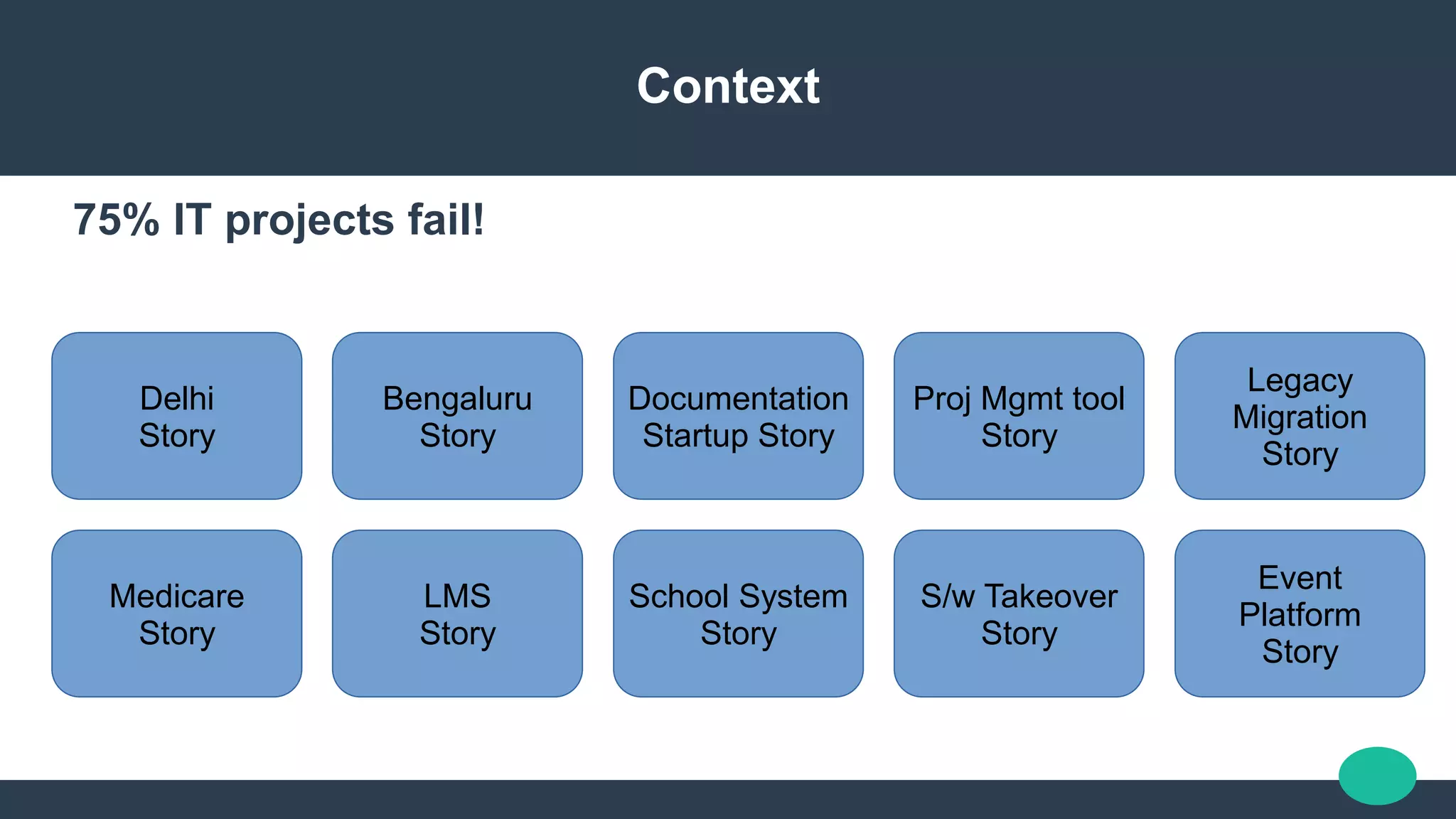
75% IT projects fail!
Delhi
Story
Bengaluru
Story
Documentation
Startup Story
Medicare
Story
LMS
Story
School System
Story
Proj Mgmt tool
Story
S/w Takeover
Story
Legacy
Migration
Story
Event
Platform
Story
Failure Analysis
 Projects fail for different reasons.
 Failures can be foreseen, and mostly avoided.
 Don’t let a good failure go waste!
Making of a Successful Project
 Have your understanding in place.
 Prepare to invest time.
 Boost team morale.
 Expect issues. Deal with them.
 Life will be a little boring. Welcome it.
Theory X vs Theory Y
 X
 Y
 X+Y
 Y-X
Strategy 101
 Why to build? - 1.2X, 10X
 What to build?
 Build vs Buy
 MVP vs full fledged
 MVP throw-away vs enhanceable
 Keep changing with business needs
 Mobile / Web / Desktop / Browser plugin / Services
 Riding on another product
Project Management 101
 Project Planning
 Plan unknowns / R&D upfront
 Plan parallelism
 Hidden costs of people change
 Project Tracking
 Risk Management
 Identify
 Avoid / Mitigate / Live with
Communications 101
 Highly important
 Continuous dialog
 Mutual trust based
 Respect human factor
 Periodic status
 Even better, progress reviews
 Documented, referenceable
 Communication with Stakeholders, Users
 Sooner the better – Beta use
HR 101
 10X differentiator
 Think of
 Morale boosting
 Rewards
 Be appreciative and supportive
 Share the bigger picture
 Share success stories
Software Engineering 101
 Wisdom of the sages
 Req, Des, Dev, Test, Deploy
 Better than “just code” approach
Requirements Capture
 Beware of the impact of requirement addition
 At various stages
 Some times done before budgeting
 Make explicit. “A stitch in time..”
 Rigor => SRS / Use cases / User stories
 Invest in learning UML
Freestyle vs Waterfall vs Agile
 How much rigor do you need?
 Agile is not an excuse for poor quality.
 Continuous thinking
 Making adjustments
 Continuous delivery
Which Technology?
 Many choices
 Languages – C/C++, .Net, Java, PHP, Python
 Deep tech – AI / ML, Data analytics
 Service providers – Cloud, DevOps
 RAD – No code, low code
 Wise choice
 Familiarity
 Future-proof investment
 Speed of development
Security 101
 Size of lock <= Valuables
 Compliances, Certifications costly
 Choose hassles only on need-basis
Engagement Structuring
 Fixed Cost / T&M / Retainer
 Be fair
 One step ahead from either side
Project Budgeting
 Majorly linked to effort
 “Accurate Estimate” does not exist.
 Factors
 Team seniority
 Technology
 Rigor, Safety net (testing)
 Do not be penny-wise, pound-foolish
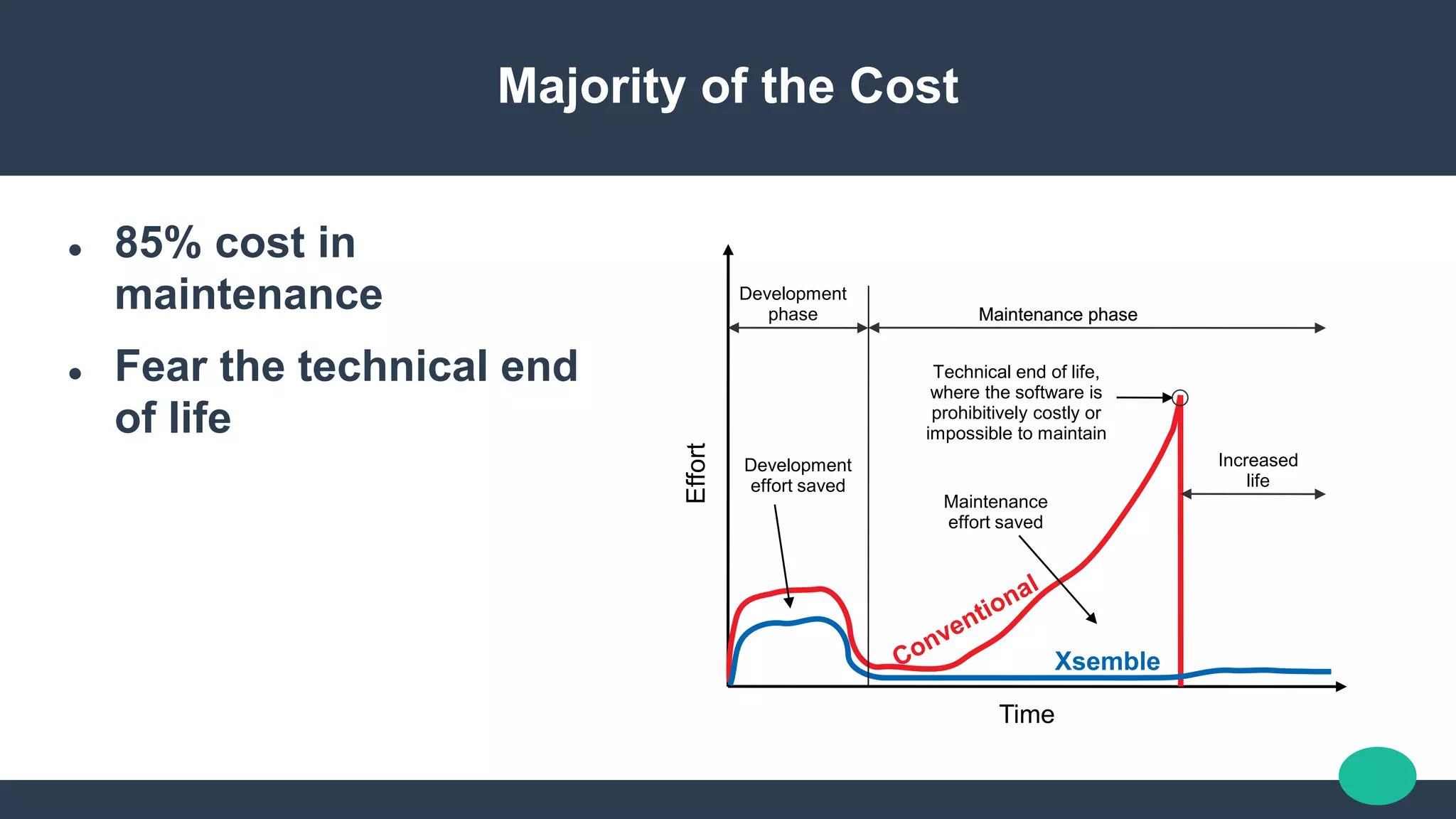
Majority of the Cost
 85% cost in
maintenance
 Fear the technical end
of life
Development
phase Maintenance phase
Development
effort saved
Maintenance
effort saved
Technical end of life,
where the software is
prohibitively costly or
impossible to maintain
Increased
life
Maintenance phase
Xsemble
Time
Effort
Leverage Tools
 Project Management
 Communication Technologies
 Task tracking / Time tracking / Kanban
 Source code management
 Development tools
 Continuous delivery
Thank you
 Q&A
 Software Design Workshop (Xsemble way)
Ashish Belagali
LinkedIn: belagali17
Twitter: belagali17

Achieving Success with IT Projects

  • 1.
    MCCIA webinar April 14,2020 Achieving Success with IT Projects Ashish Belagali LinkedIn: belagali17 Twitter: belagali17
  • 2.
    Agenda  Intent: Cover“what it takes so that your project does not land up in the failed projects’ wasteland”  20+ years experience  20 slides
  • 3.
    Context 75% IT projectsfail! Delhi Story Bengaluru Story Documentation Startup Story Medicare Story LMS Story School System Story Proj Mgmt tool Story S/w Takeover Story Legacy Migration Story Event Platform Story
  • 4.
    Failure Analysis  Projectsfail for different reasons.  Failures can be foreseen, and mostly avoided.  Don’t let a good failure go waste!
  • 5.
    Making of aSuccessful Project  Have your understanding in place.  Prepare to invest time.  Boost team morale.  Expect issues. Deal with them.  Life will be a little boring. Welcome it.
  • 6.
    Theory X vsTheory Y  X  Y  X+Y  Y-X
  • 7.
    Strategy 101  Whyto build? - 1.2X, 10X  What to build?  Build vs Buy  MVP vs full fledged  MVP throw-away vs enhanceable  Keep changing with business needs  Mobile / Web / Desktop / Browser plugin / Services  Riding on another product
  • 8.
    Project Management 101 Project Planning  Plan unknowns / R&D upfront  Plan parallelism  Hidden costs of people change  Project Tracking  Risk Management  Identify  Avoid / Mitigate / Live with
  • 9.
    Communications 101  Highlyimportant  Continuous dialog  Mutual trust based  Respect human factor  Periodic status  Even better, progress reviews  Documented, referenceable  Communication with Stakeholders, Users  Sooner the better – Beta use
  • 10.
    HR 101  10Xdifferentiator  Think of  Morale boosting  Rewards  Be appreciative and supportive  Share the bigger picture  Share success stories
  • 11.
    Software Engineering 101 Wisdom of the sages  Req, Des, Dev, Test, Deploy  Better than “just code” approach
  • 12.
    Requirements Capture  Bewareof the impact of requirement addition  At various stages  Some times done before budgeting  Make explicit. “A stitch in time..”  Rigor => SRS / Use cases / User stories  Invest in learning UML
  • 13.
    Freestyle vs Waterfallvs Agile  How much rigor do you need?  Agile is not an excuse for poor quality.  Continuous thinking  Making adjustments  Continuous delivery
  • 14.
    Which Technology?  Manychoices  Languages – C/C++, .Net, Java, PHP, Python  Deep tech – AI / ML, Data analytics  Service providers – Cloud, DevOps  RAD – No code, low code  Wise choice  Familiarity  Future-proof investment  Speed of development
  • 15.
    Security 101  Sizeof lock <= Valuables  Compliances, Certifications costly  Choose hassles only on need-basis
  • 16.
    Engagement Structuring  FixedCost / T&M / Retainer  Be fair  One step ahead from either side
  • 17.
    Project Budgeting  Majorlylinked to effort  “Accurate Estimate” does not exist.  Factors  Team seniority  Technology  Rigor, Safety net (testing)  Do not be penny-wise, pound-foolish
  • 18.
    Majority of theCost  85% cost in maintenance  Fear the technical end of life Development phase Maintenance phase Development effort saved Maintenance effort saved Technical end of life, where the software is prohibitively costly or impossible to maintain Increased life Maintenance phase Xsemble Time Effort
  • 19.
    Leverage Tools  ProjectManagement  Communication Technologies  Task tracking / Time tracking / Kanban  Source code management  Development tools  Continuous delivery
  • 20.
    Thank you  Q&A Software Design Workshop (Xsemble way) Ashish Belagali LinkedIn: belagali17 Twitter: belagali17