Accelerating biomedical discovery
with an Internet of FAIR data and services
@micheldumontier::Semantics:2019-09-101
Michel Dumontier, Ph.D.
Distinguished Professor of Data Science
Director, Institute of Data Science
An increasing number of discoveries
are made using already available data
@micheldumontier::Semantics:2019-09-102
3
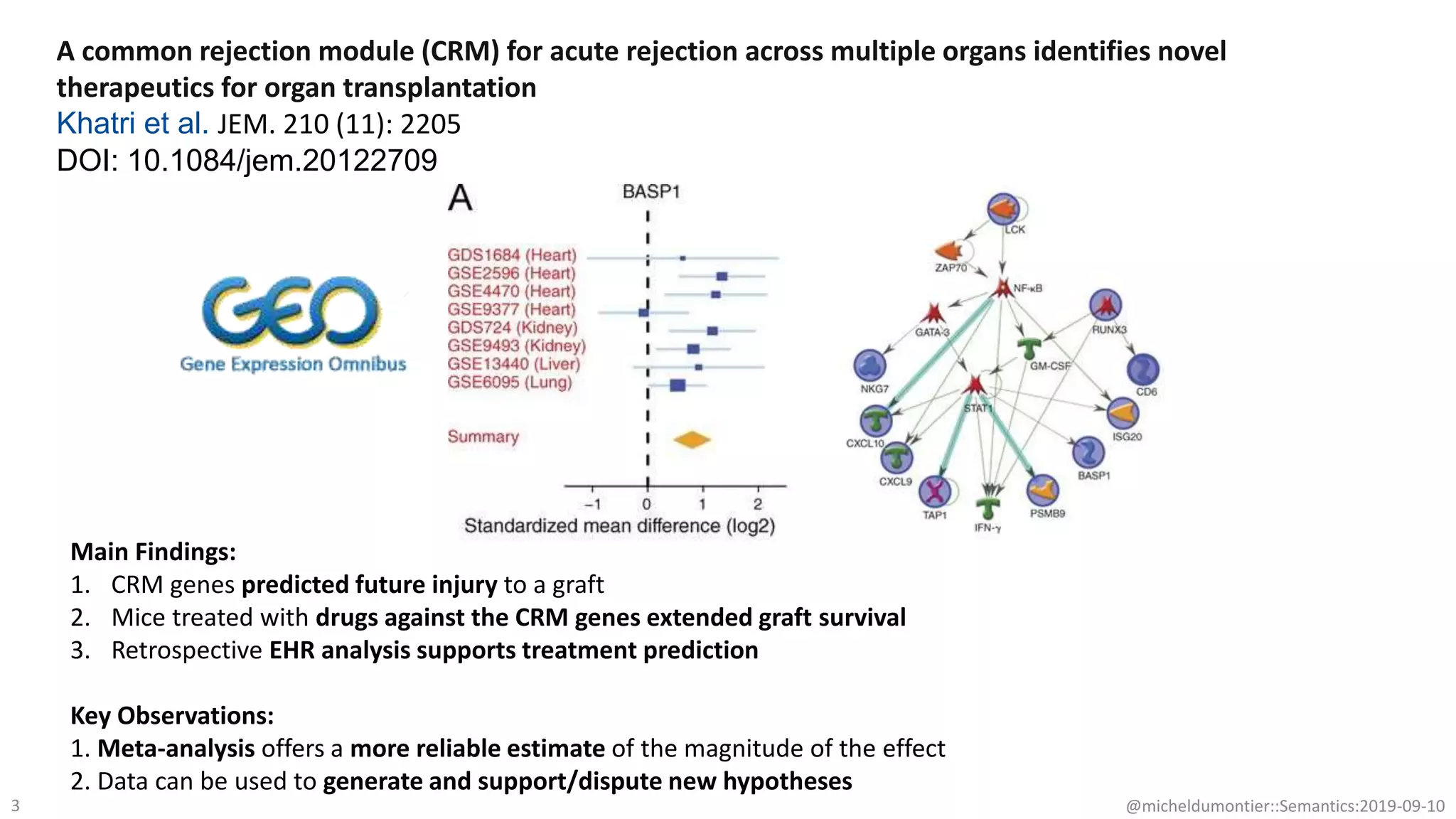
A common rejection module (CRM) for acute rejection across multiple organs identifies novel
therapeutics for organ transplantation
Khatri et al. JEM. 210 (11): 2205
DOI: 10.1084/jem.20122709
@micheldumontier::Semantics:2019-09-10
Main Findings:
1. CRM genes predicted future injury to a graft
2. Mice treated with drugs against the CRM genes extended graft survival
3. Retrospective EHR analysis supports treatment prediction
Key Observations:
1. Meta-analysis offers a more reliable estimate of the magnitude of the effect
2. Data can be used to generate and support/dispute new hypotheses
However, significant effort is
still needed to find the right
dataset(s), make sense of them,
and use for a new purpose
@micheldumontier::Semantics:2019-09-104
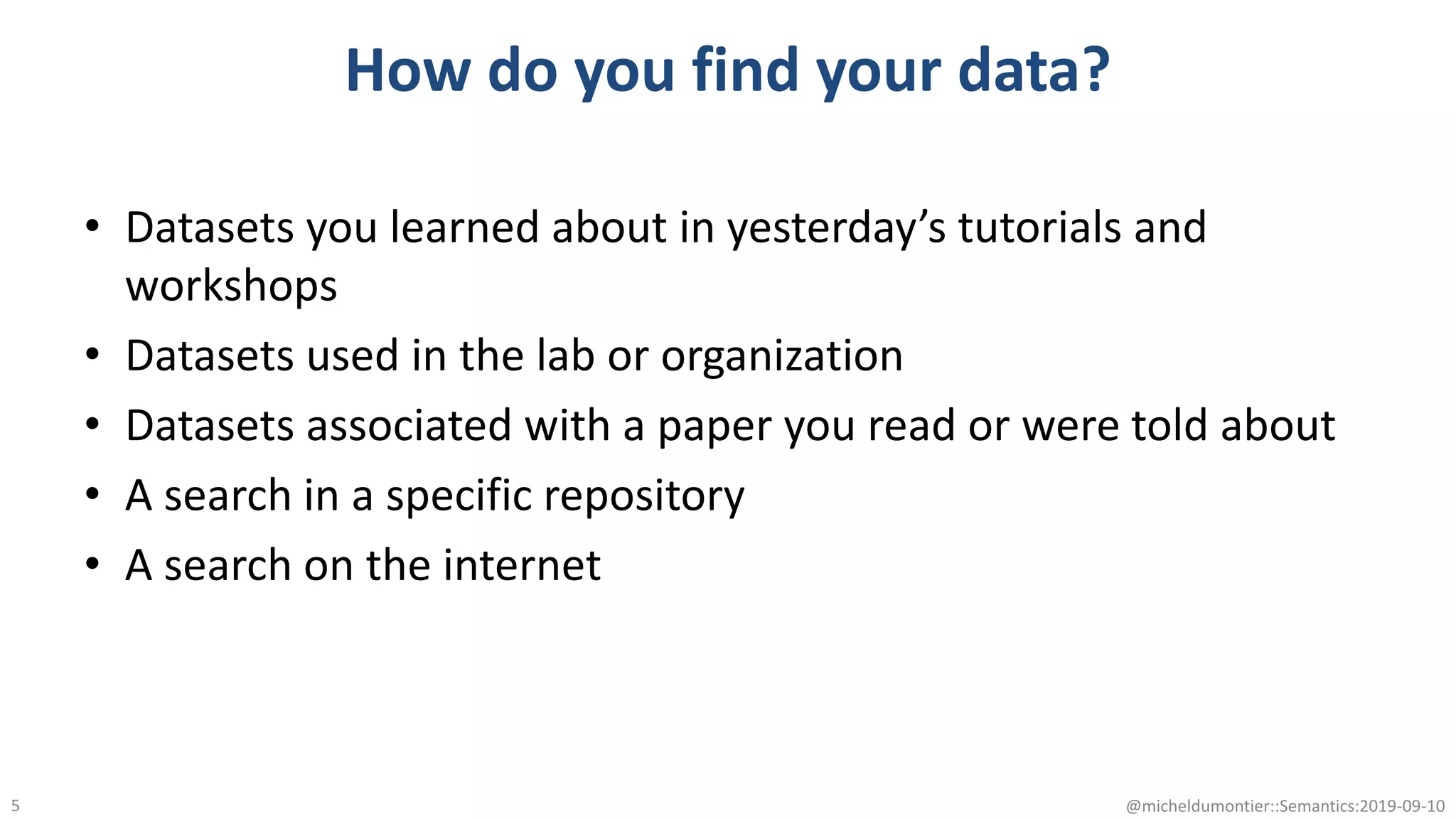
How do you find your data?
• Datasets you learned about in yesterday’s tutorials and
workshops
• Datasets used in the lab or organization
• Datasets associated with a paper you read or were told about
• A search in a specific repository
• A search on the internet
@micheldumontier::Semantics:2019-09-105
@micheldumontier::Semantics:2019-09-106
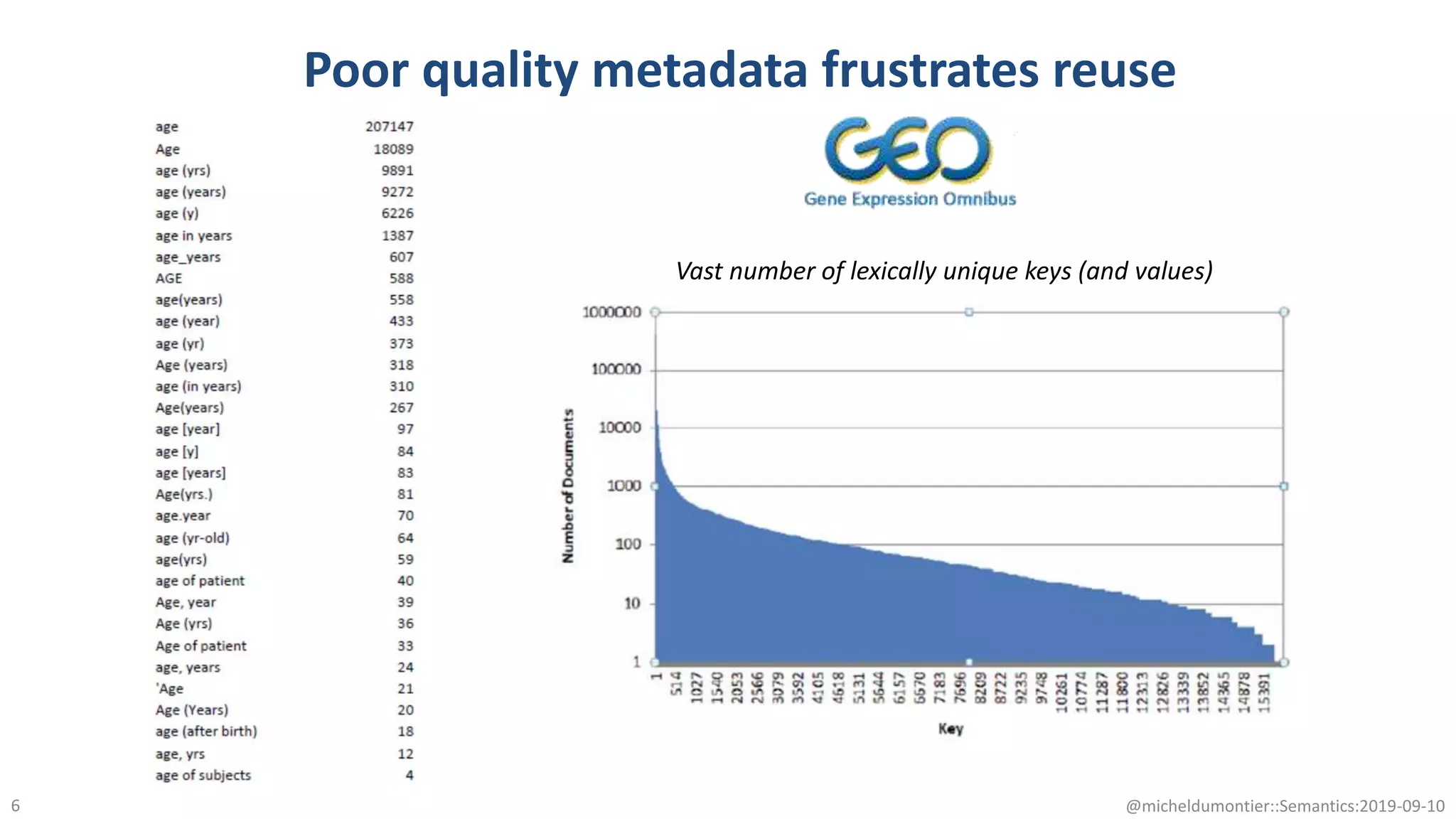
Poor quality metadata frustrates reuse
Vast number of lexically unique keys (and values)
7 @micheldumontier::Semantics:2019-09-10
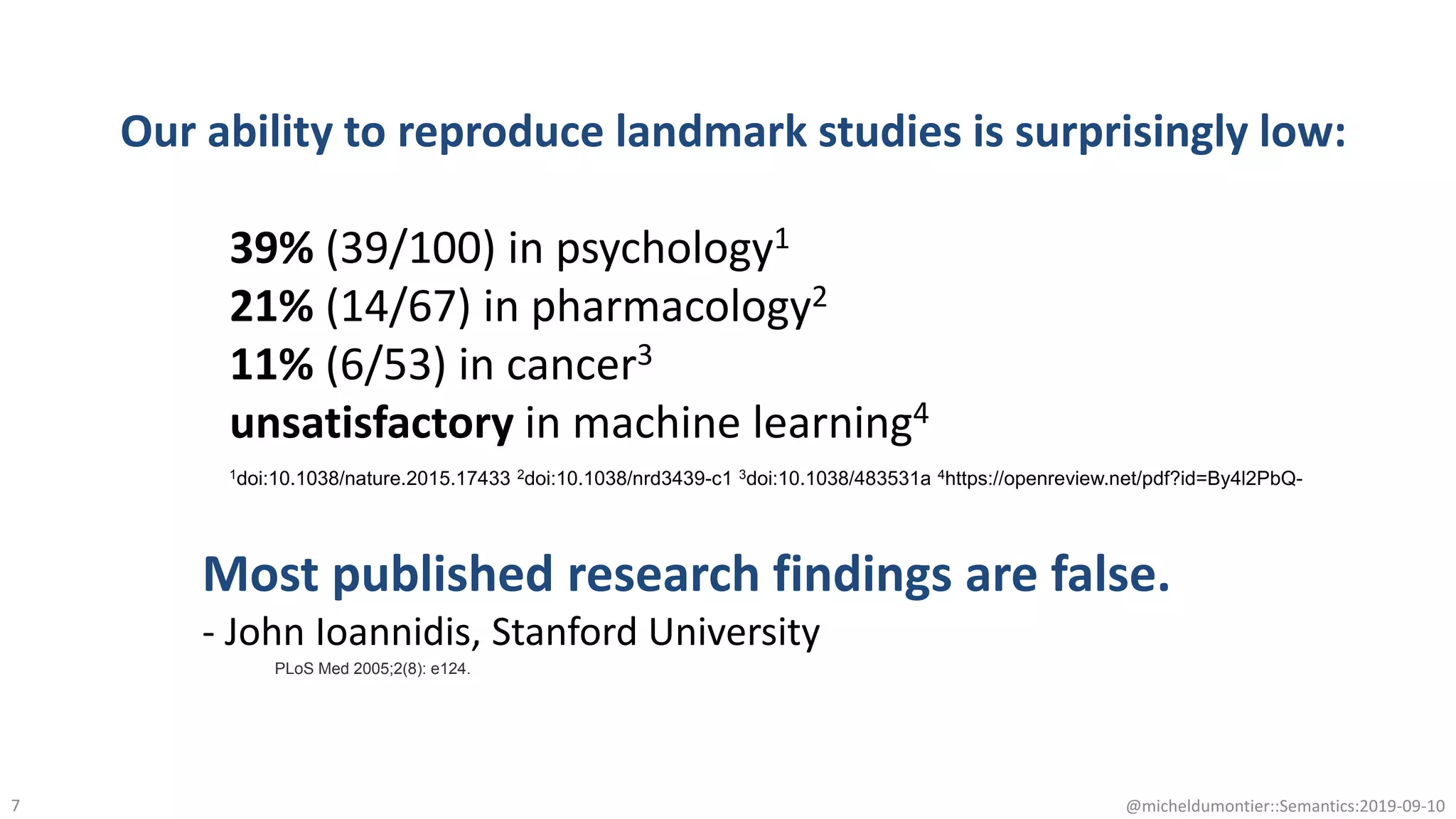
Our ability to reproduce landmark studies is surprisingly low:
39% (39/100) in psychology1
21% (14/67) in pharmacology2
11% (6/53) in cancer3
unsatisfactory in machine learning4
1doi:10.1038/nature.2015.17433 2doi:10.1038/nrd3439-c1 3doi:10.1038/483531a 4https://openreview.net/pdf?id=By4l2PbQ-
Most published research findings are false.
- John Ioannidis, Stanford University
PLoS Med 2005;2(8): e124.
@micheldumontier::Semantics:2019-09-108
9
What hope do we really have to realize
?
@micheldumontier::Semantics:2019-09-1010
Poor quality
(meta)data Reproducibility
Crisis
Translational
Failure
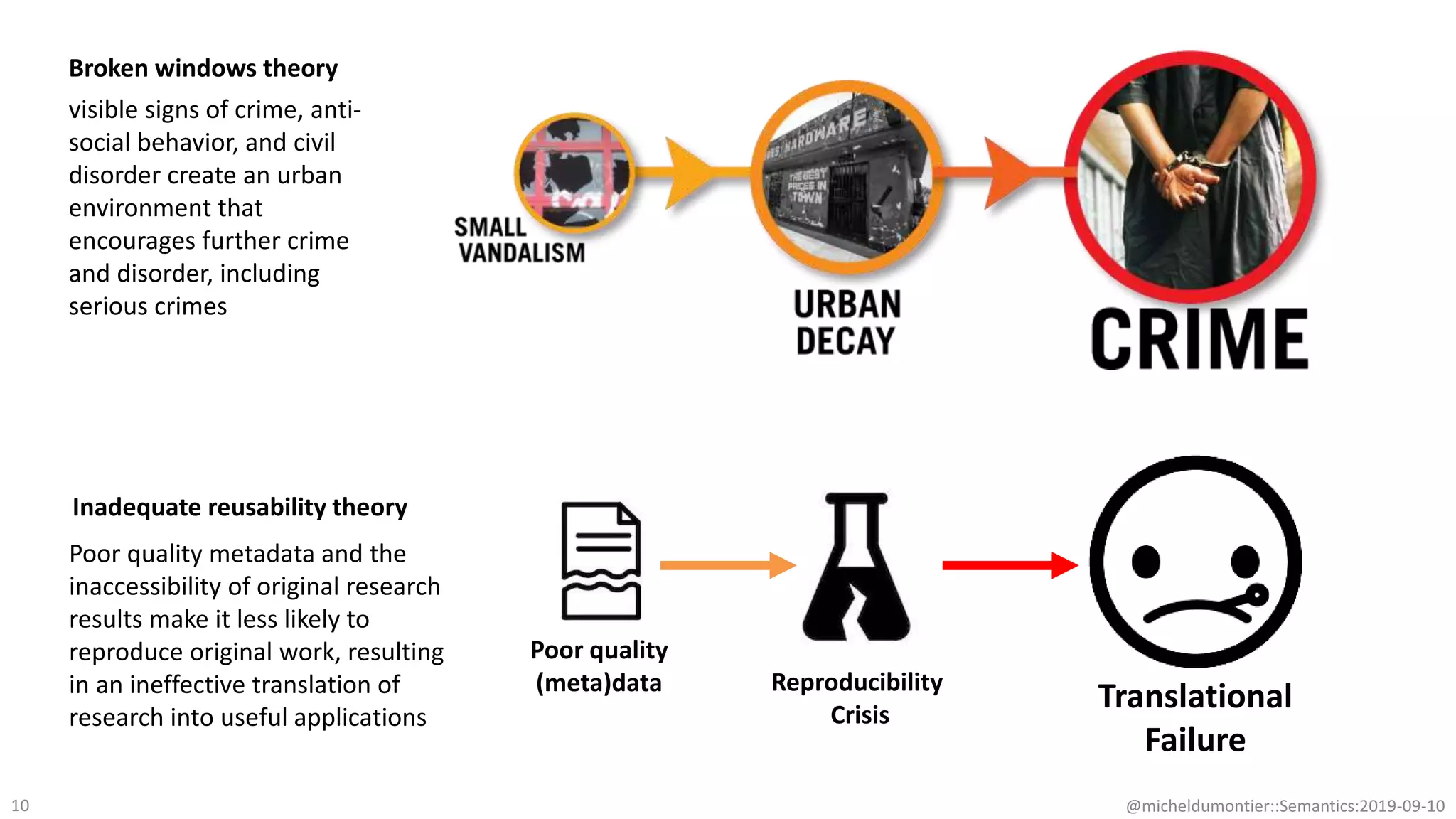
Broken windows theory
Inadequate reusability theory
visible signs of crime, anti-
social behavior, and civil
disorder create an urban
environment that
encourages further crime
and disorder, including
serious crimes
Poor quality metadata and the
inaccessibility of original research
results make it less likely to
reproduce original work, resulting
in an ineffective translation of
research into useful applications
@micheldumontier::Semantics:2019-09-1011
It’s time to completely rethink
how we perform research
@micheldumontier::Semantics:2019-09-1012
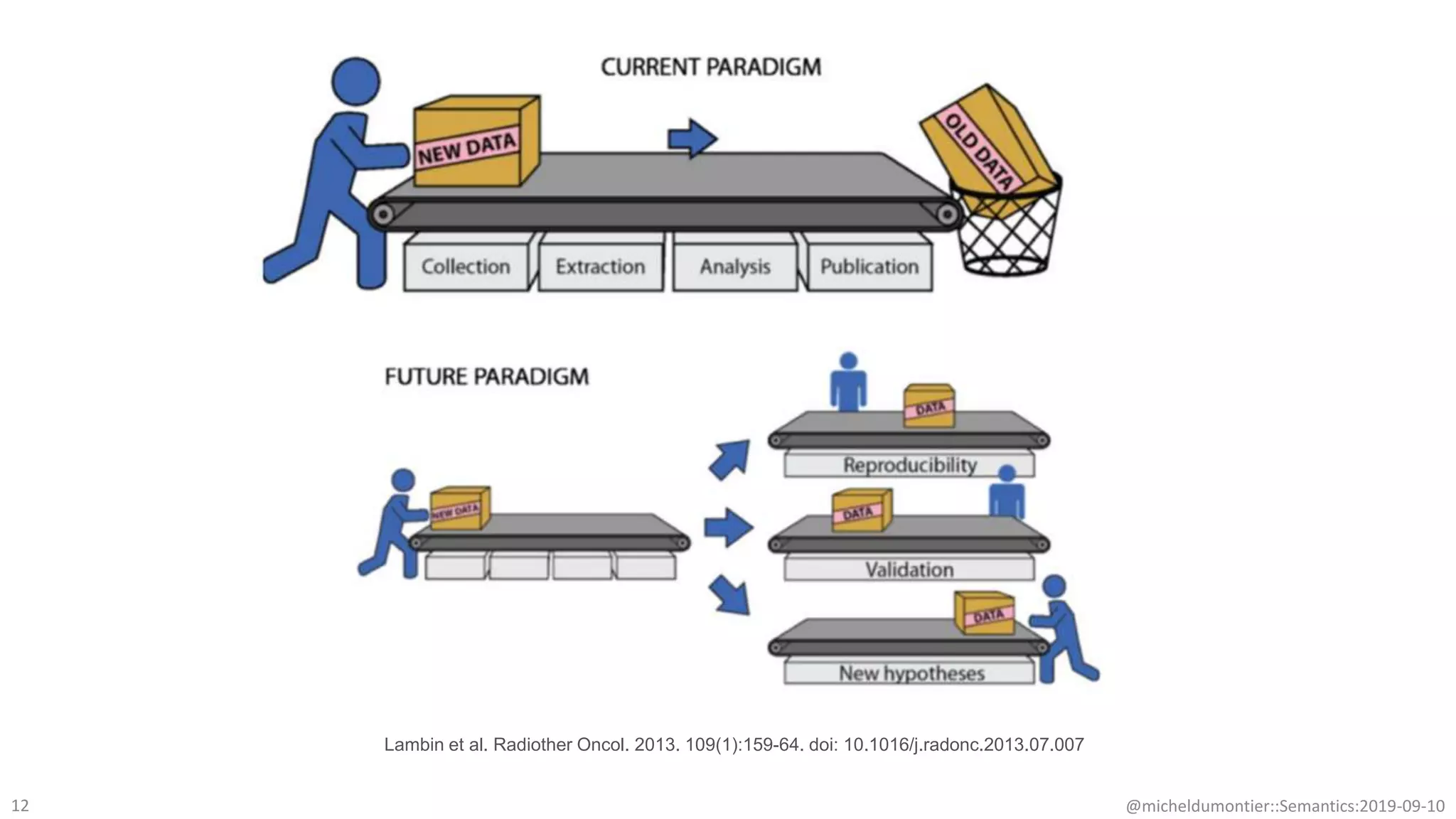
Lambin et al. Radiother Oncol. 2013. 109(1):159-64. doi: 10.1016/j.radonc.2013.07.007
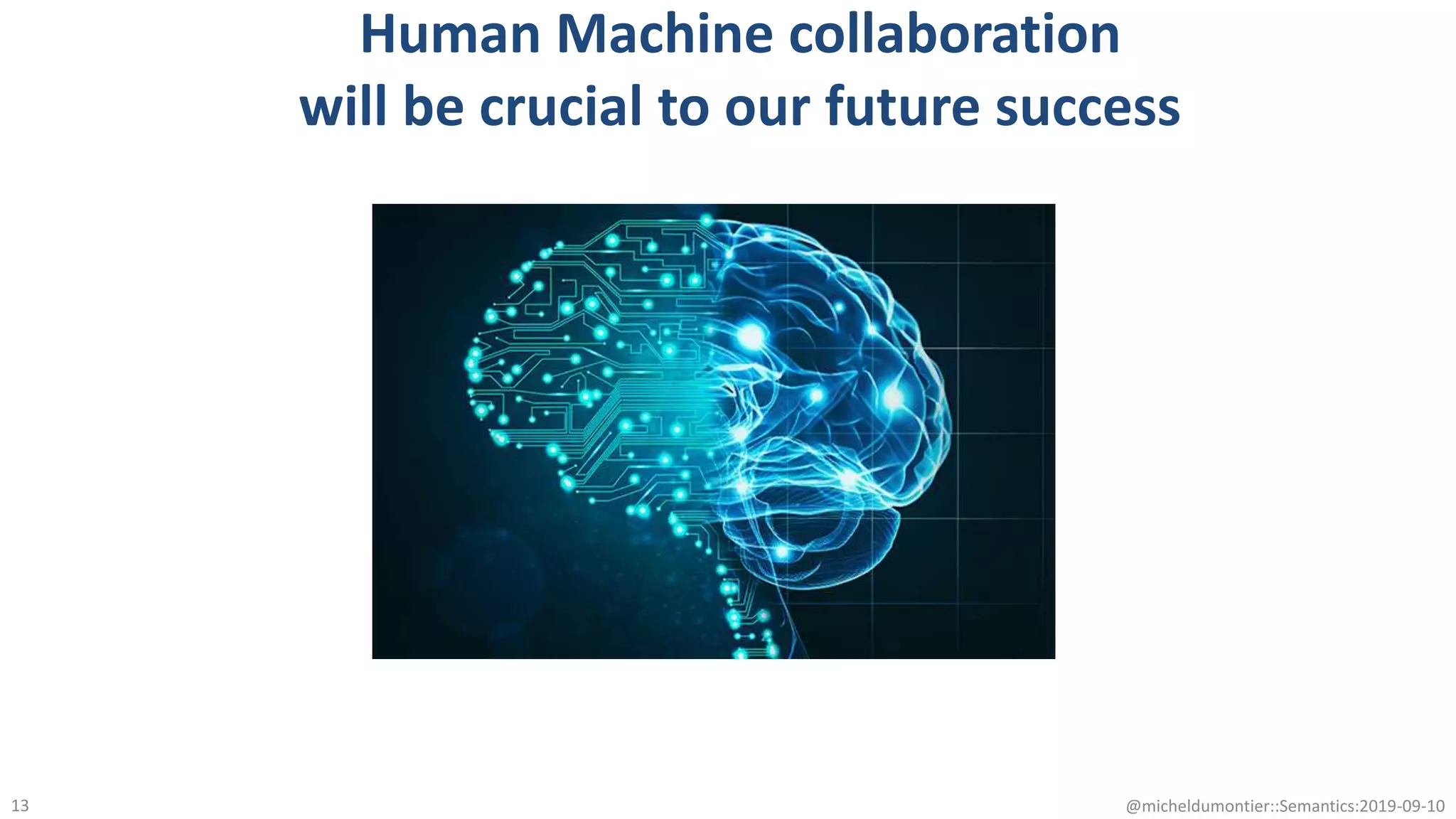
Human Machine collaboration
will be crucial to our future success
@micheldumontier::Semantics:2019-09-1013
We need a new social contract, supported
by legal and technological infrastructure
to make digital resources available in a
responsible manner
@micheldumontier::Semantics:2019-09-1014
@micheldumontier::Semantics:2019-09-1015
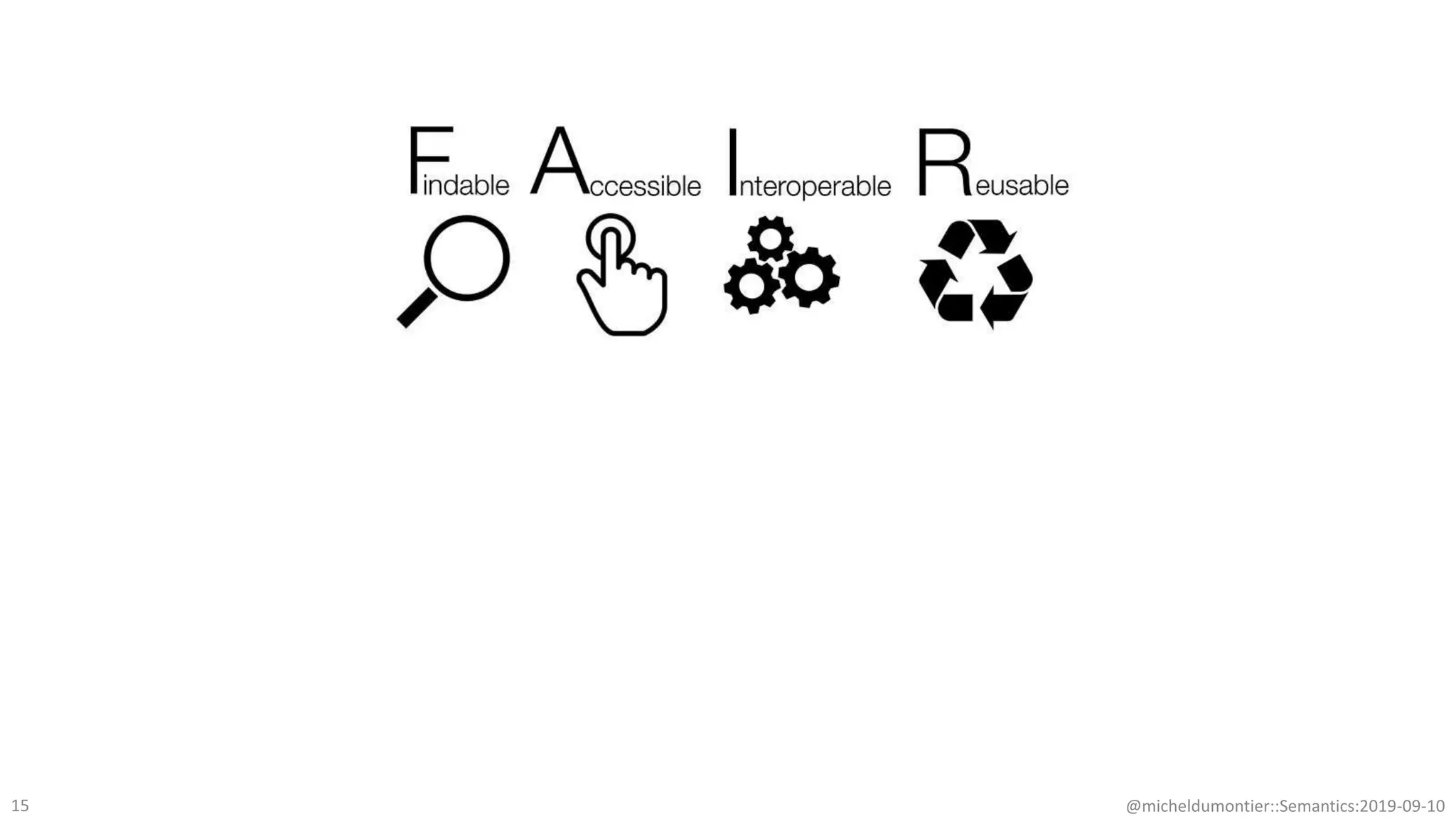
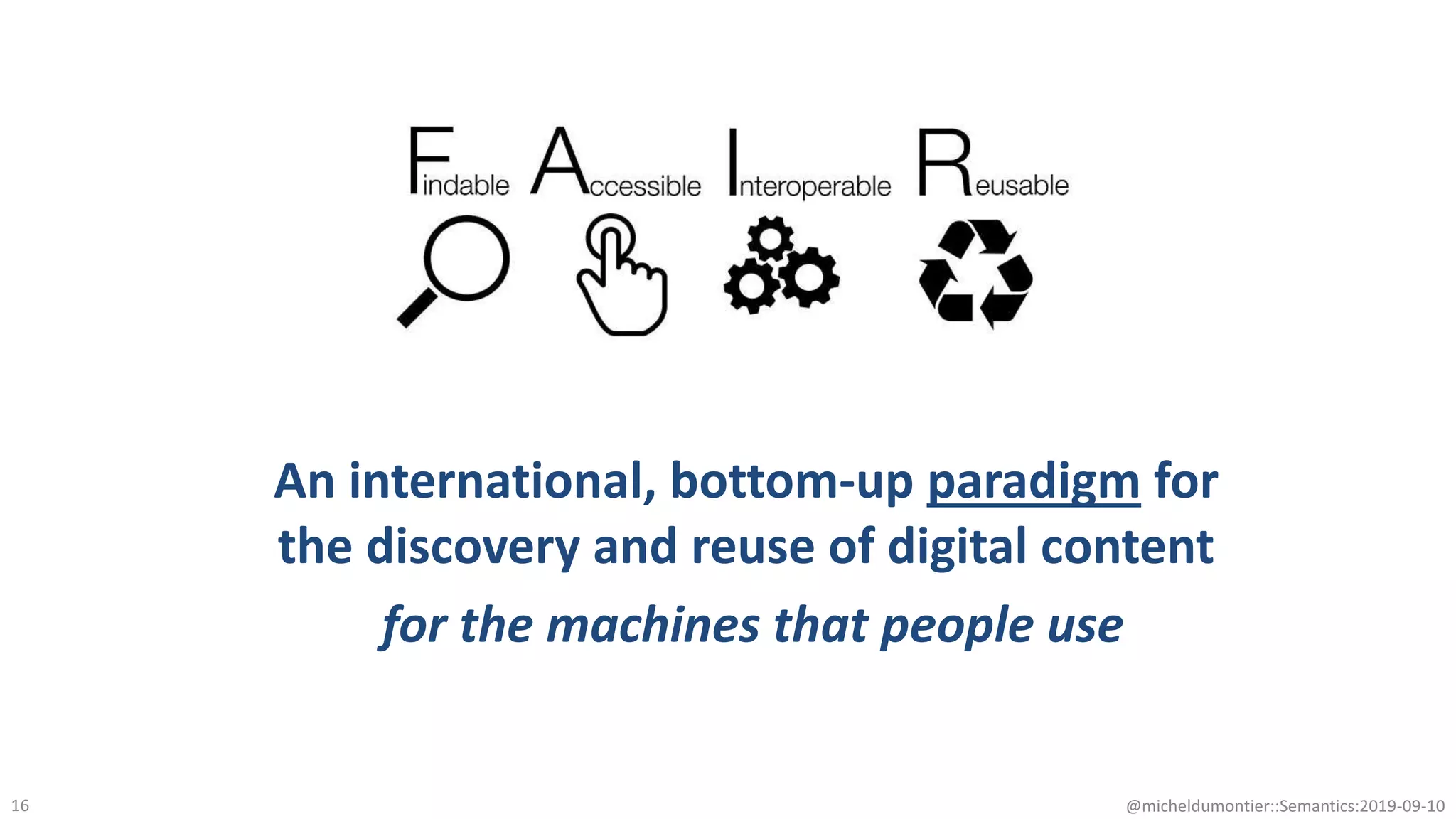
An international, bottom-up paradigm for
the discovery and reuse of digital content
for the machines that people use
@micheldumontier::Semantics:2019-09-1016
@micheldumontier::Semantics:2019-09-1017
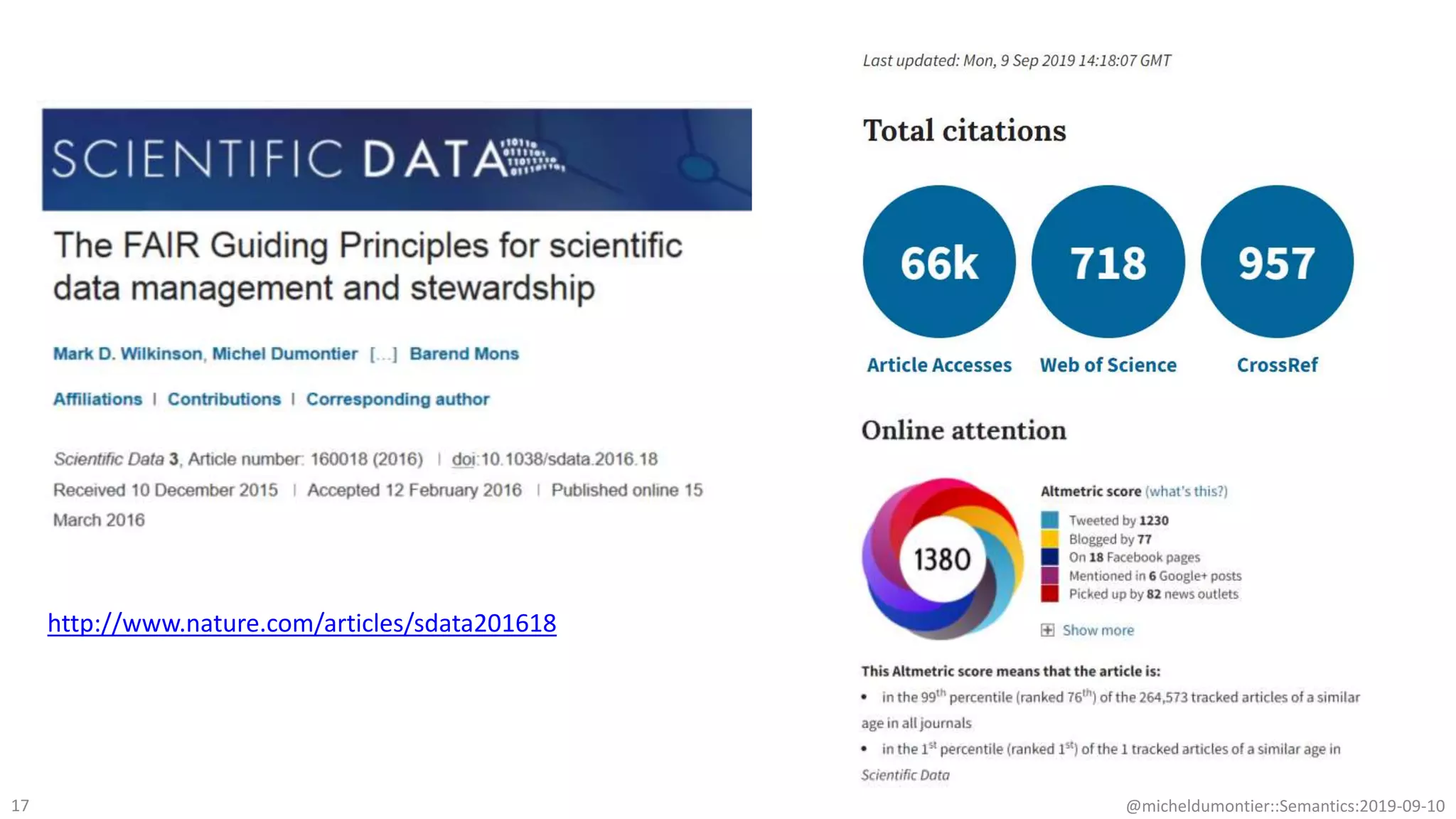
http://www.nature.com/articles/sdata201618
@micheldumontier::Semantics:2019-09-1018
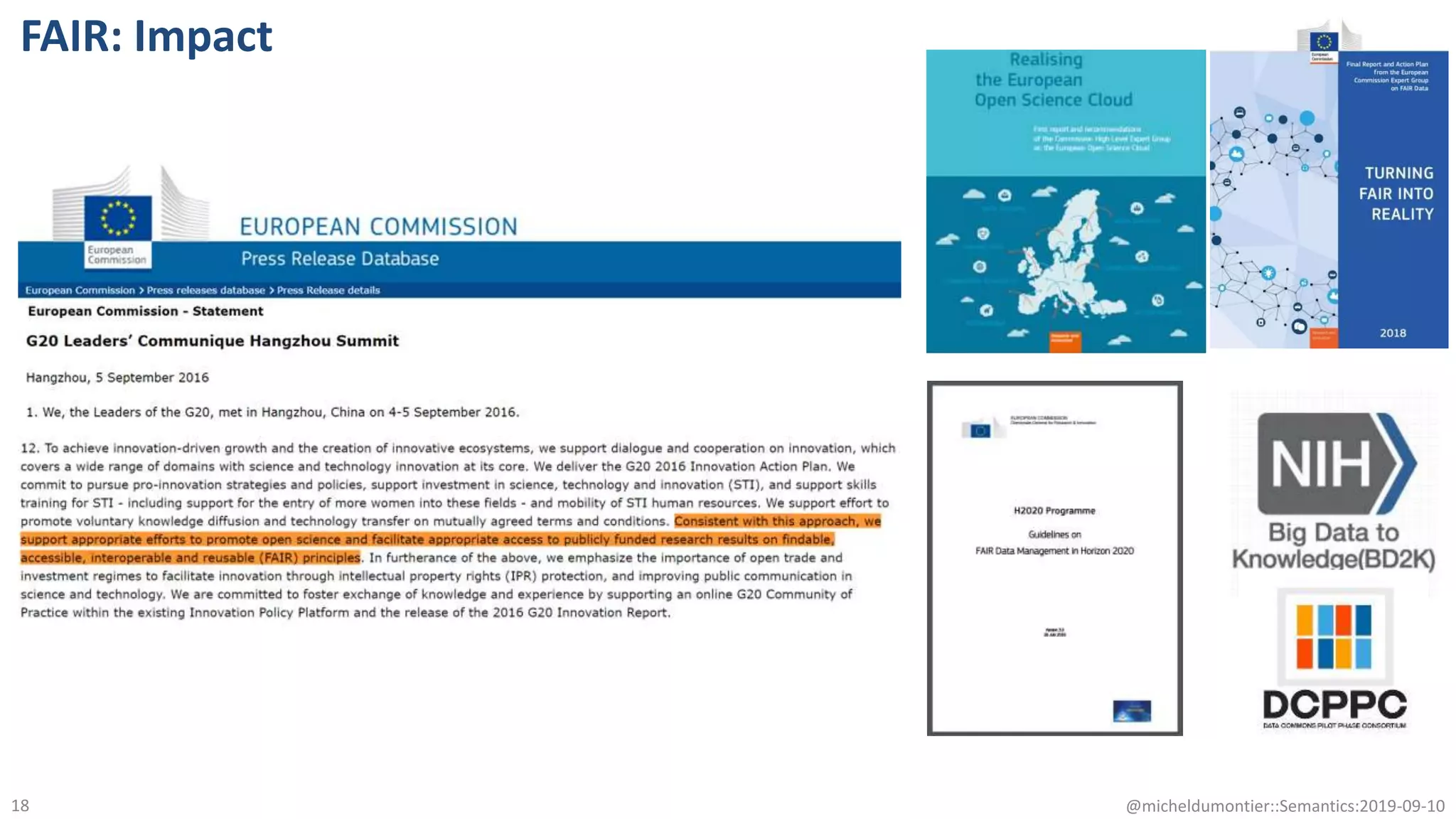
FAIR: Impact
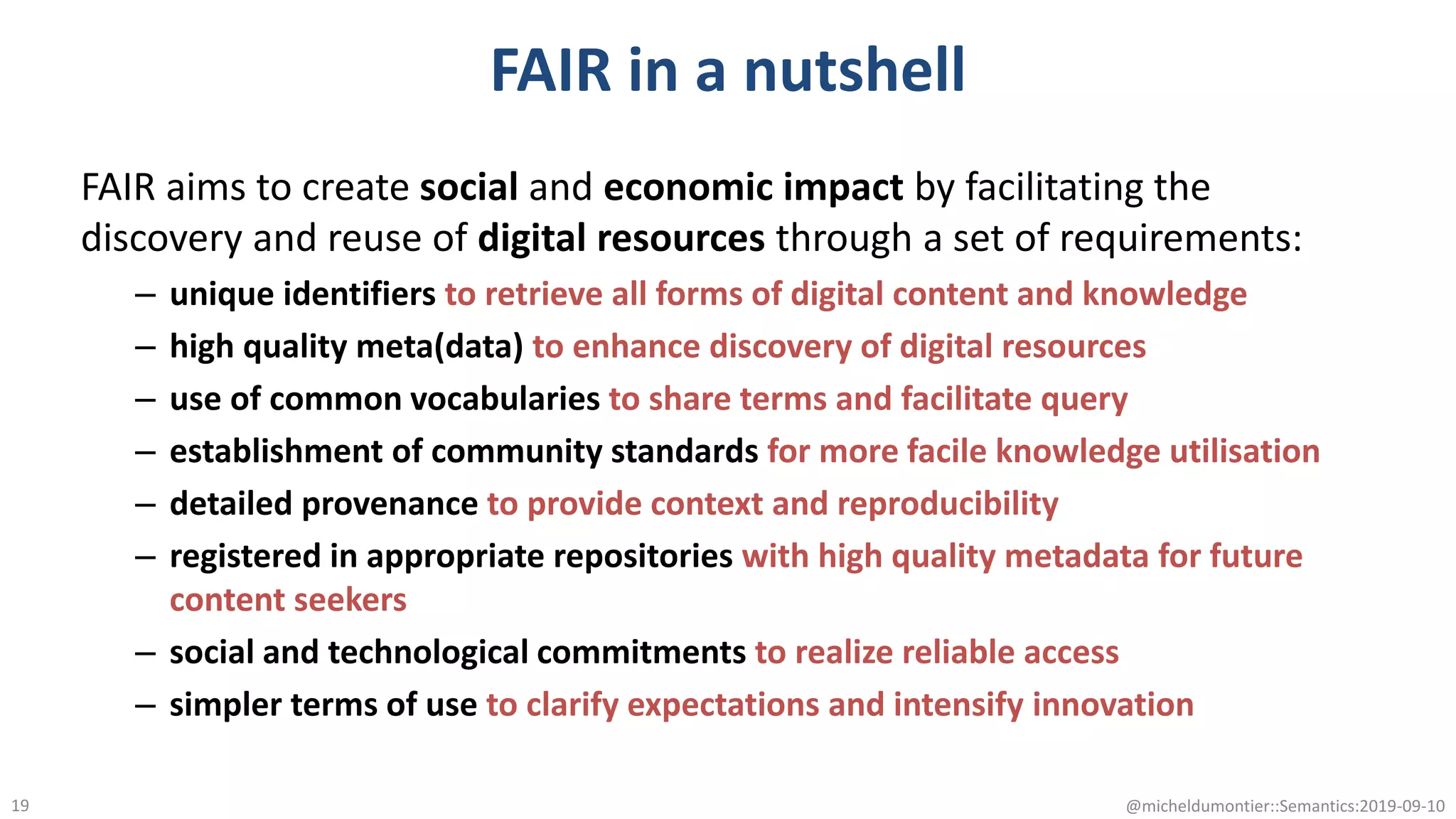
FAIR in a nutshell
FAIR aims to create social and economic impact by facilitating the
discovery and reuse of digital resources through a set of requirements:
– unique identifiers to retrieve all forms of digital content and knowledge
– high quality meta(data) to enhance discovery of digital resources
– use of common vocabularies to share terms and facilitate query
– establishment of community standards for more facile knowledge utilisation
– detailed provenance to provide context and reproducibility
– registered in appropriate repositories with high quality metadata for future
content seekers
– social and technological commitments to realize reliable access
– simpler terms of use to clarify expectations and intensify innovation
@micheldumontier::Semantics:2019-09-1019
@micheldumontier::Semantics:2019-09-1020
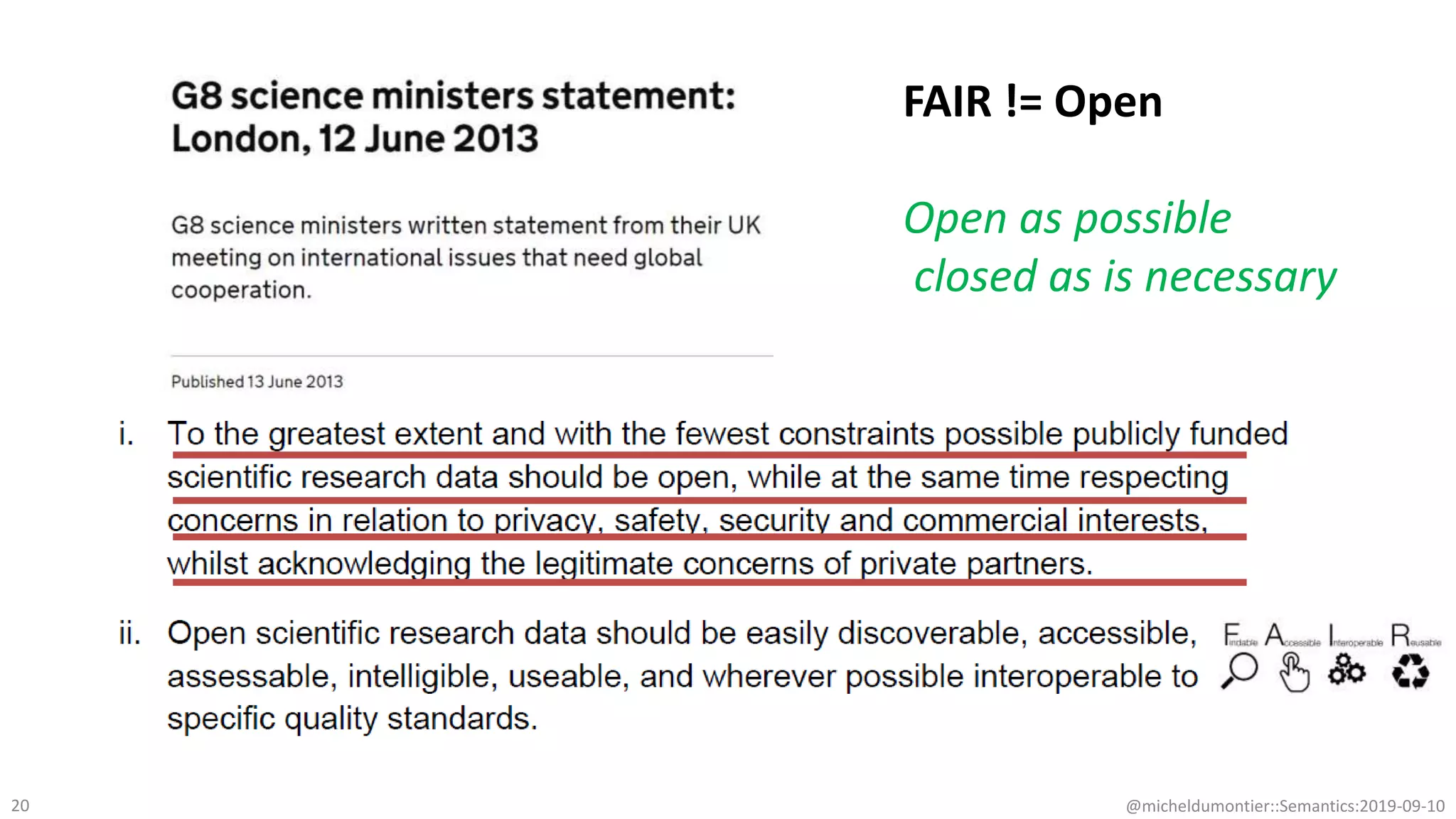
FAIR != Open
Open as possible
closed as is necessary
@micheldumontier::Semantics:2019-09-1021
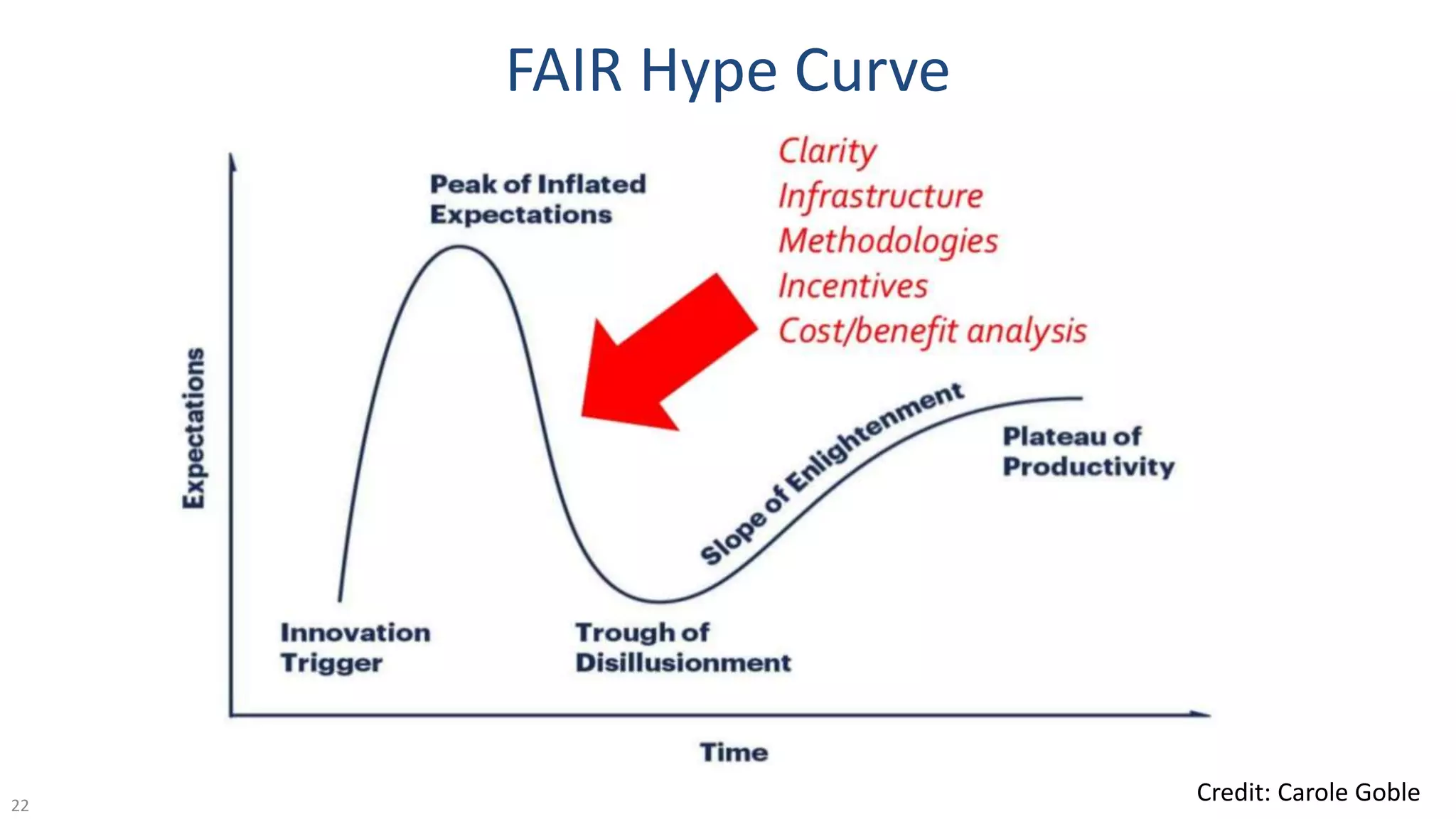
FAIR Hype Curve
22
Credit: Carole Goble
Why Should *I* Go FAIR?
• Makes it easier for me to use my own data for a new purpose
• Makes it easier for other people to find, use and cite my data,
and for them to understand what I expect in return
• Makes it easier/possible for people to verify my work
• Ensure that the data are available in the future, especially as I
may not want the responsibility
• Satisfy expectations around data management from
institution, funding agency, journal, my peers
@micheldumontier::Semantics:2019-09-1023
Let’s build the Internet of FAIR data and services
@micheldumontier::Semantics:2019-09-1024
@micheldumontier::Semantics:2019-09-1025
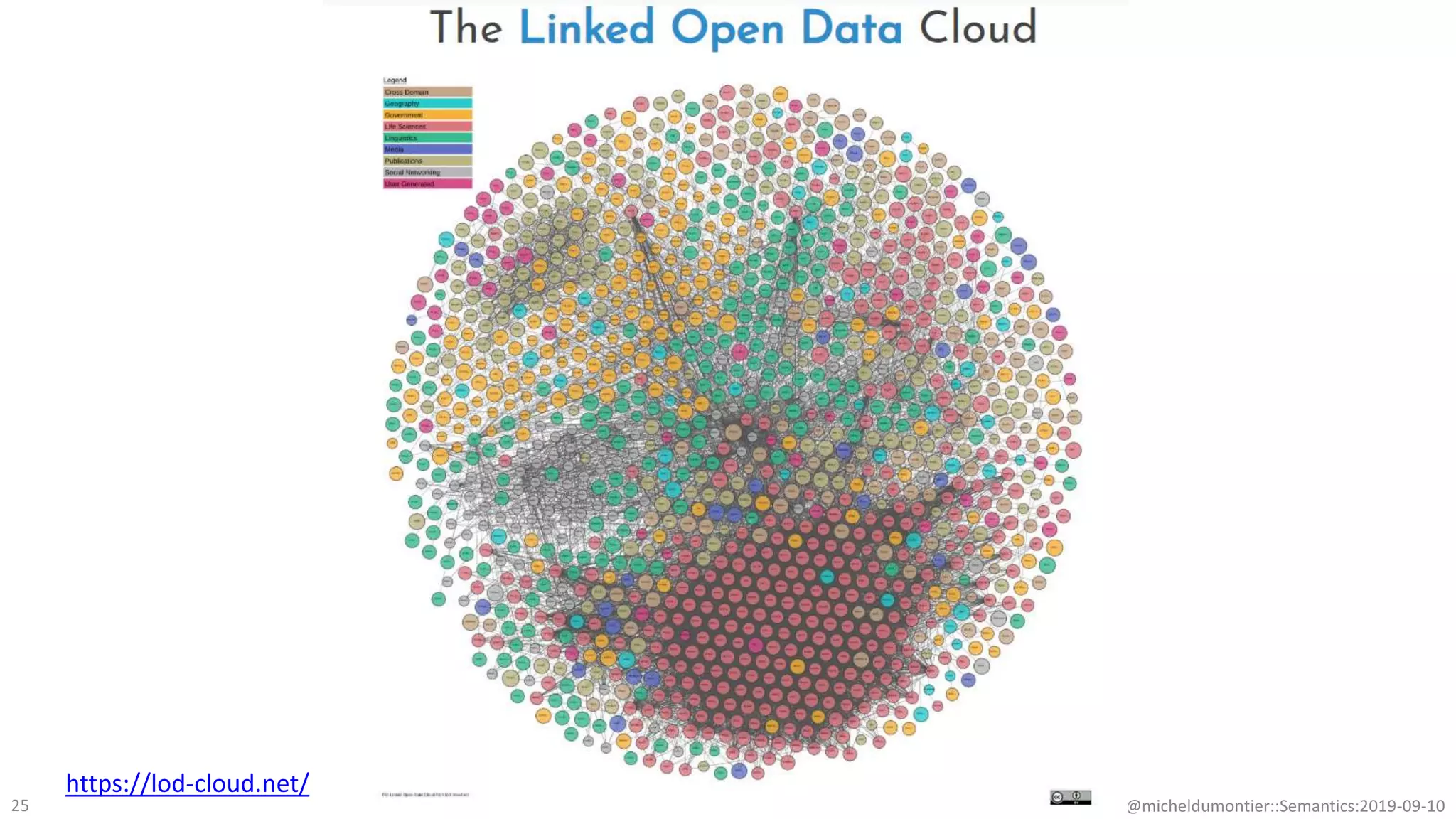
https://lod-cloud.net/
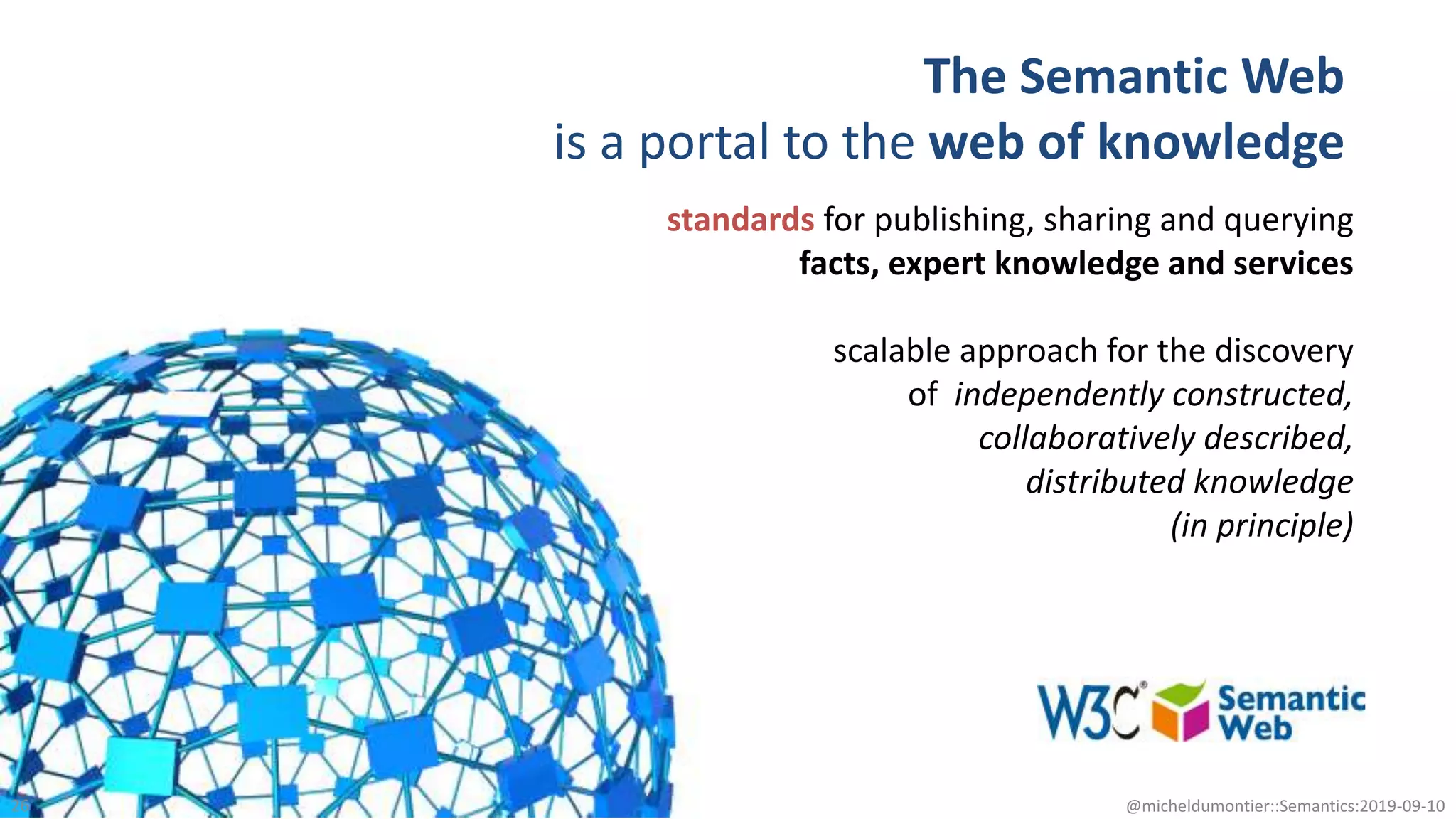
The Semantic Web
is a portal to the web of knowledge
26 @micheldumontier::Semantics:2019-09-10
standards for publishing, sharing and querying
facts, expert knowledge and services
scalable approach for the discovery
of independently constructed,
collaboratively described,
distributed knowledge
(in principle)
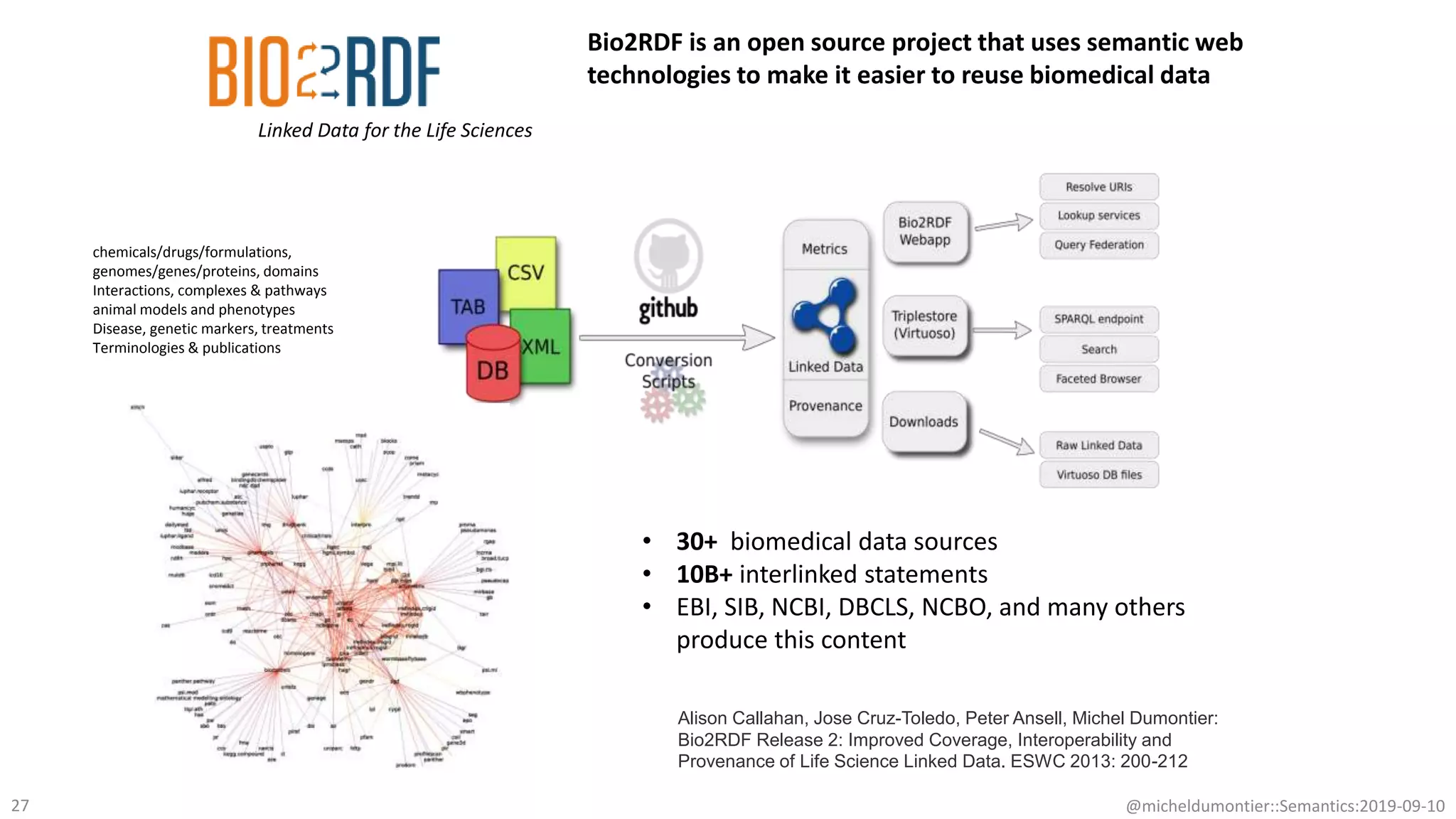
• 30+ biomedical data sources
• 10B+ interlinked statements
• EBI, SIB, NCBI, DBCLS, NCBO, and many others
produce this content
chemicals/drugs/formulations,
genomes/genes/proteins, domains
Interactions, complexes & pathways
animal models and phenotypes
Disease, genetic markers, treatments
Terminologies & publications
27
Alison Callahan, Jose Cruz-Toledo, Peter Ansell, Michel Dumontier:
Bio2RDF Release 2: Improved Coverage, Interoperability and
Provenance of Life Science Linked Data. ESWC 2013: 200-212
Linked Data for the Life Sciences
Bio2RDF is an open source project that uses semantic web
technologies to make it easier to reuse biomedical data
@micheldumontier::Semantics:2019-09-10
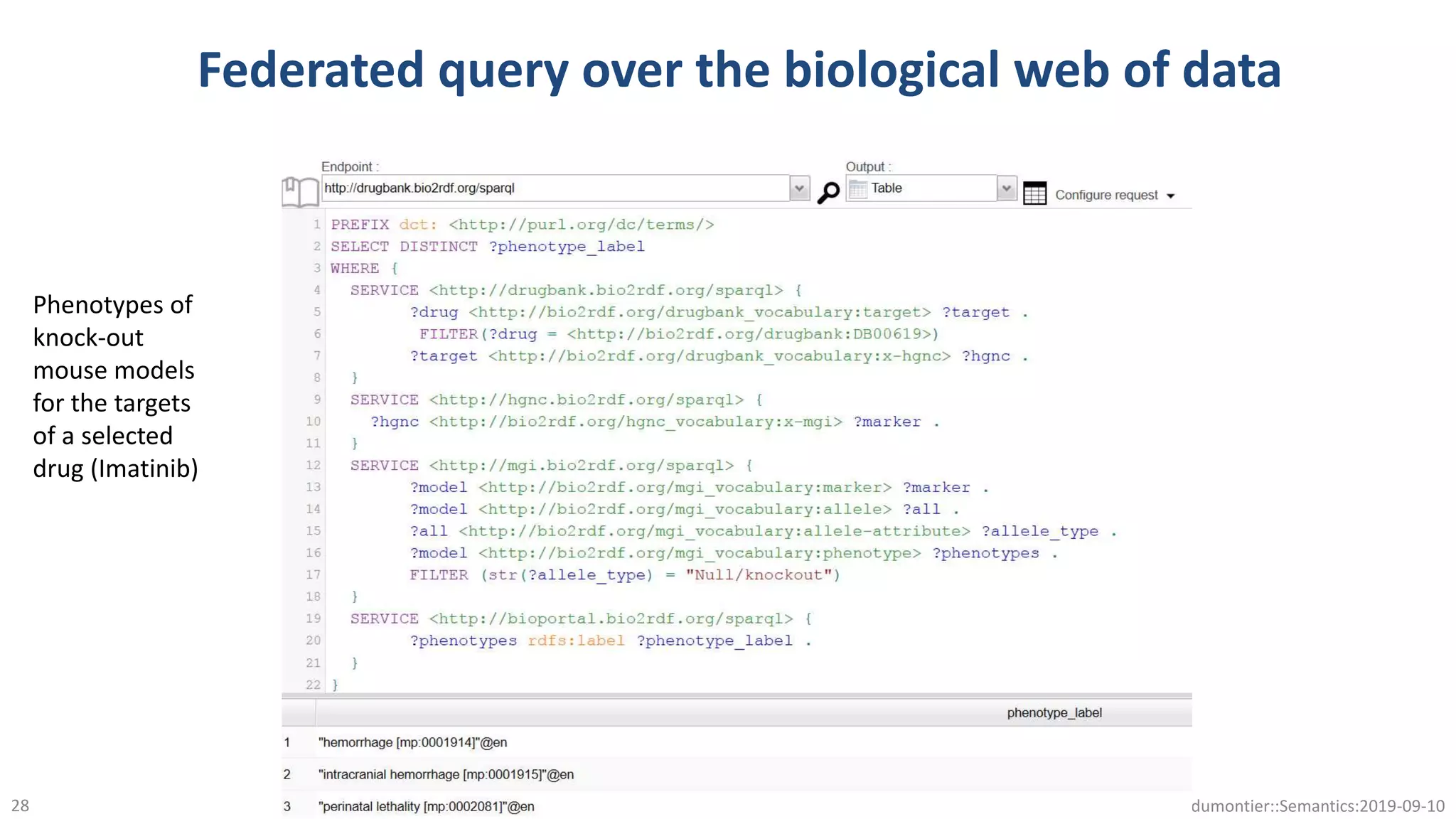
Federated query over the biological web of data
@micheldumontier::Semantics:2019-09-1028
Phenotypes of
knock-out
mouse models
for the targets
of a selected
drug (Imatinib)
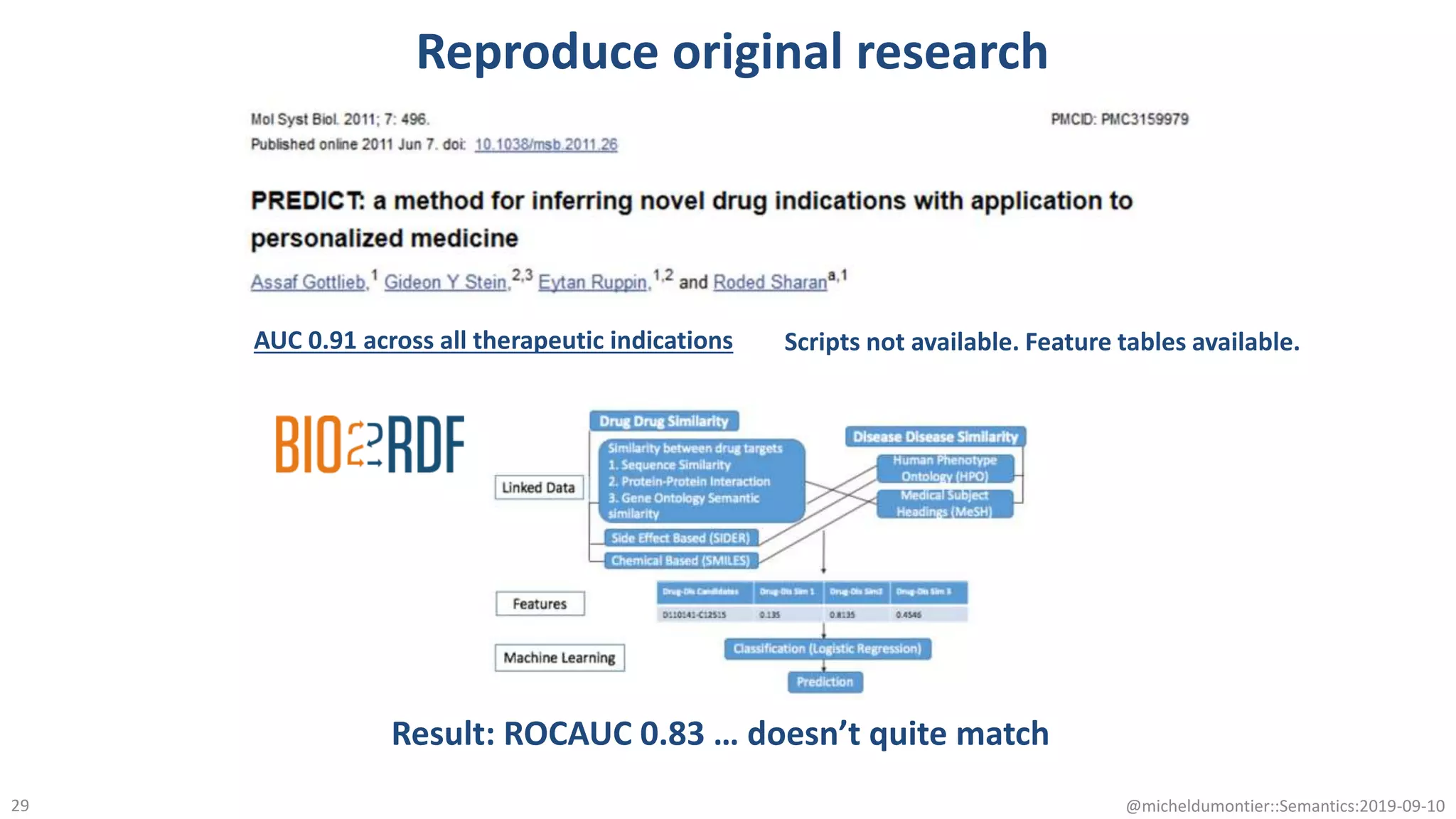
Reproduce original research
@micheldumontier::Semantics:2019-09-1029
AUC 0.91 across all therapeutic indications Scripts not available. Feature tables available.
Result: ROCAUC 0.83 … doesn’t quite match
@micheldumontier::Semantics:2019-09-1030
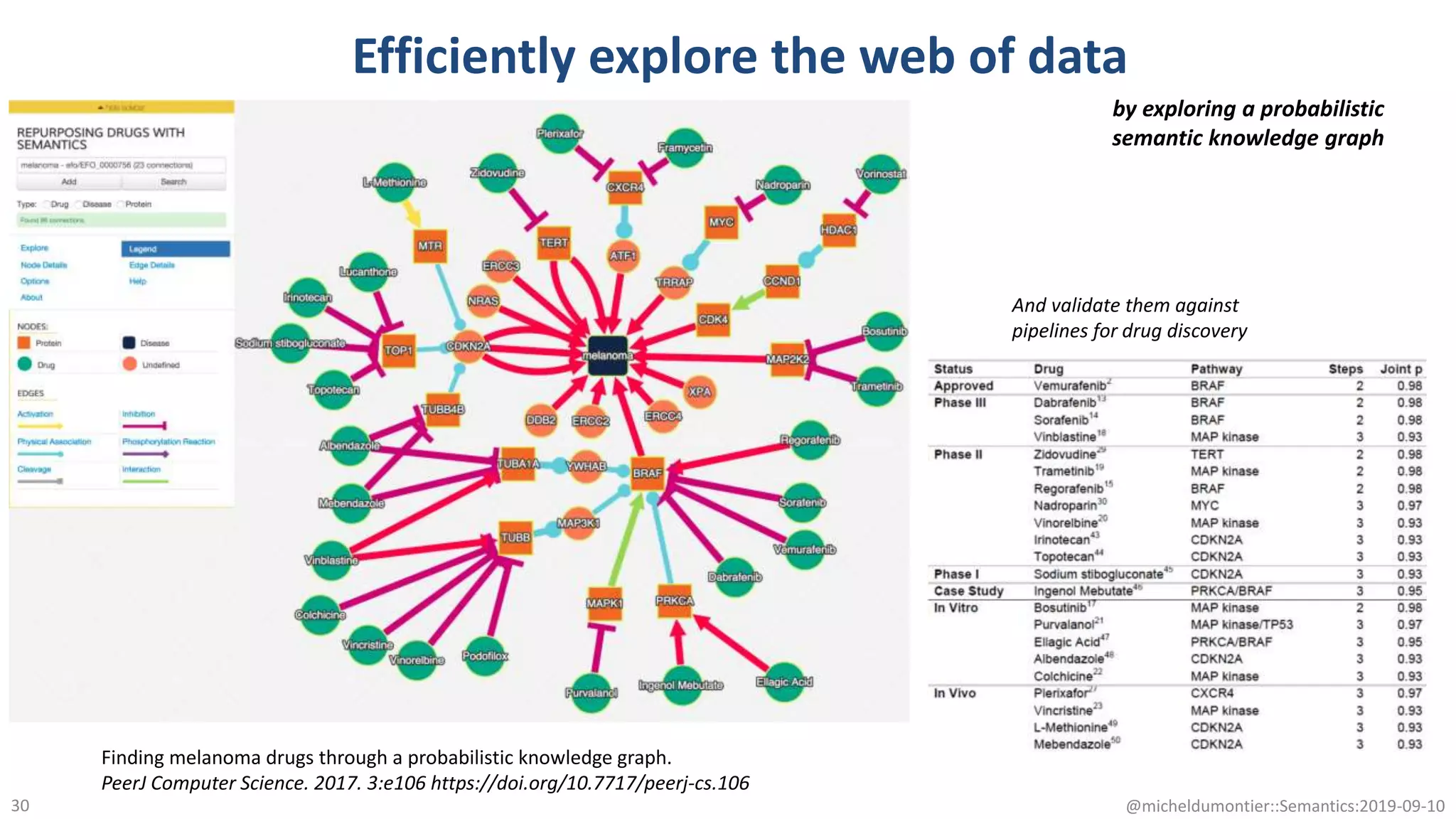
Efficiently explore the web of data
Finding melanoma drugs through a probabilistic knowledge graph.
PeerJ Computer Science. 2017. 3:e106 https://doi.org/10.7717/peerj-cs.106
by exploring a probabilistic
semantic knowledge graph
And validate them against
pipelines for drug discovery
@micheldumontier::Semantics:2019-09-1031
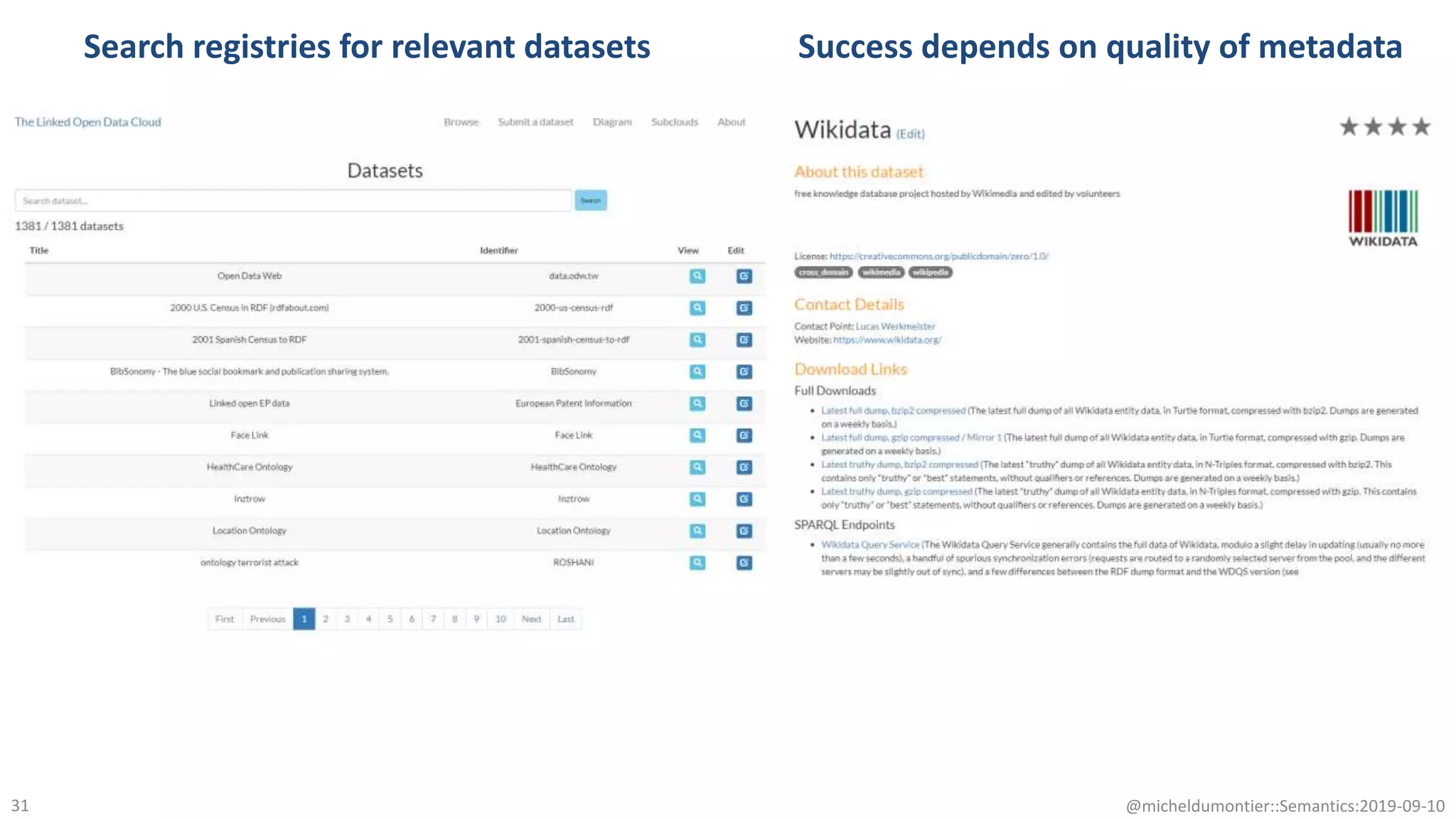
Success depends on quality of metadataSearch registries for relevant datasets
@micheldumontier::Semantics:2019-09-1032
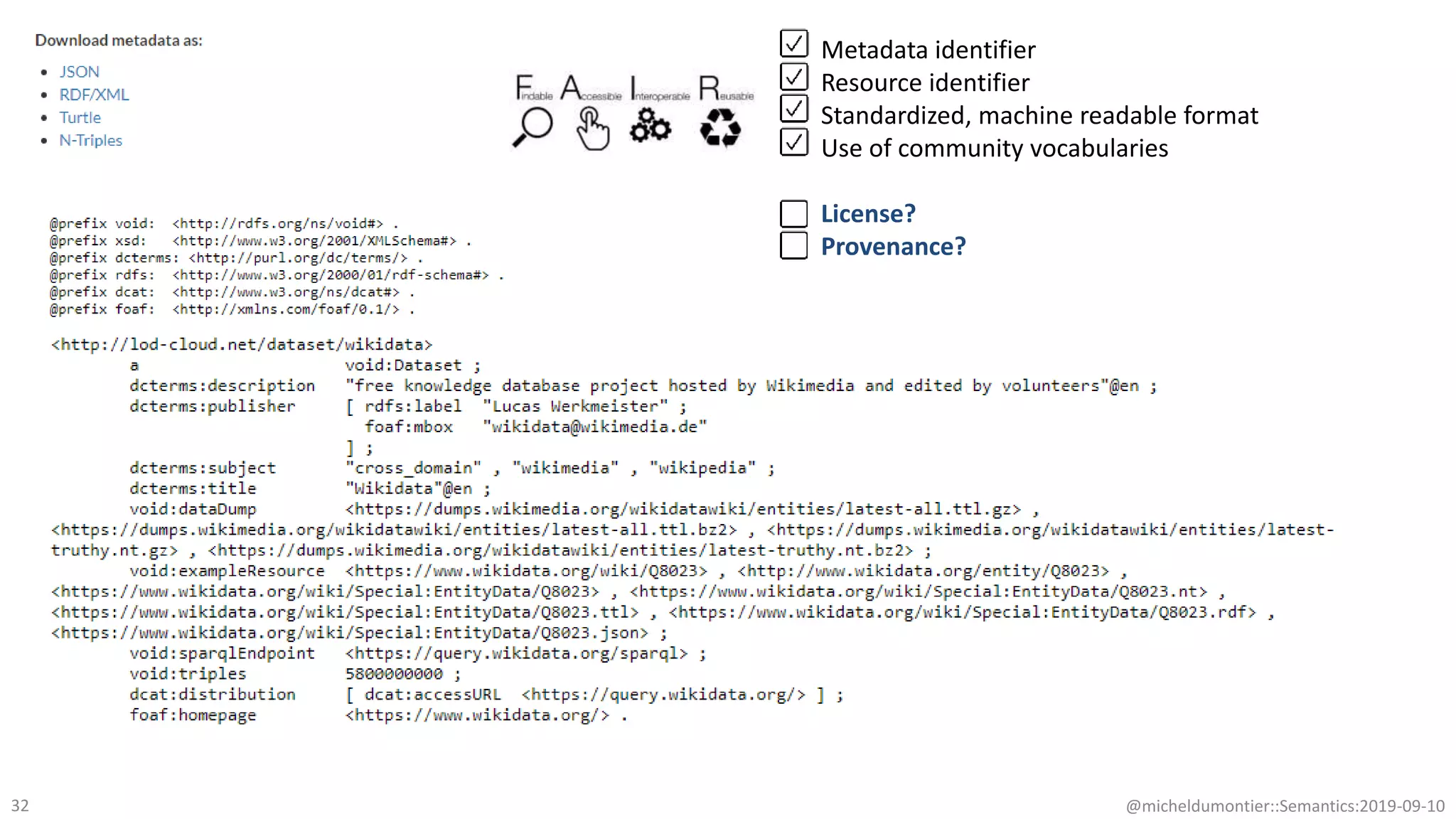
Metadata identifier
Resource identifier
Standardized, machine readable format
Use of community vocabularies
License?
Provenance?
@micheldumontier::Semantics:2019-09-1033
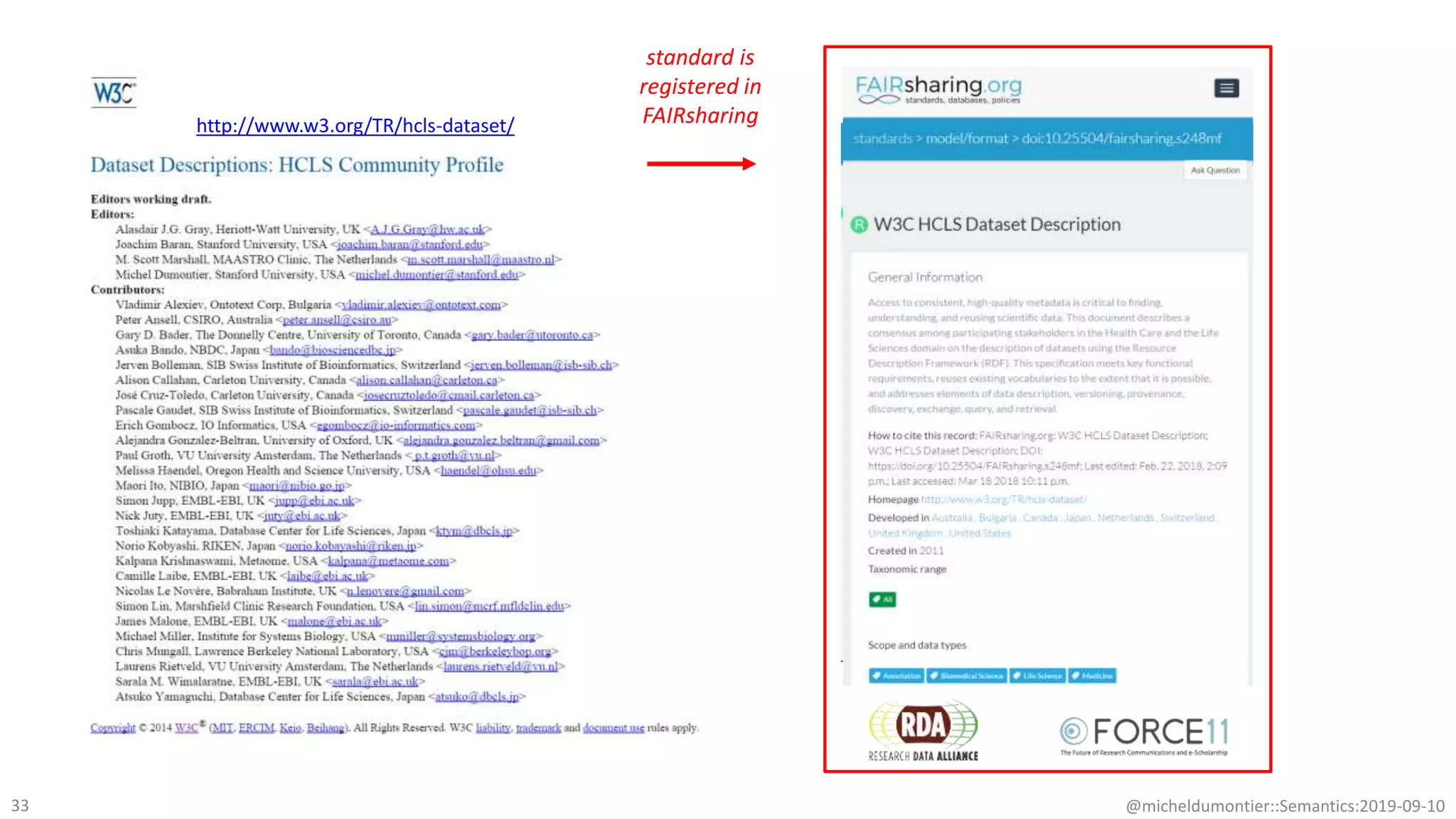
http://www.w3.org/TR/hcls-dataset/
standard is
registered in
FAIRsharing
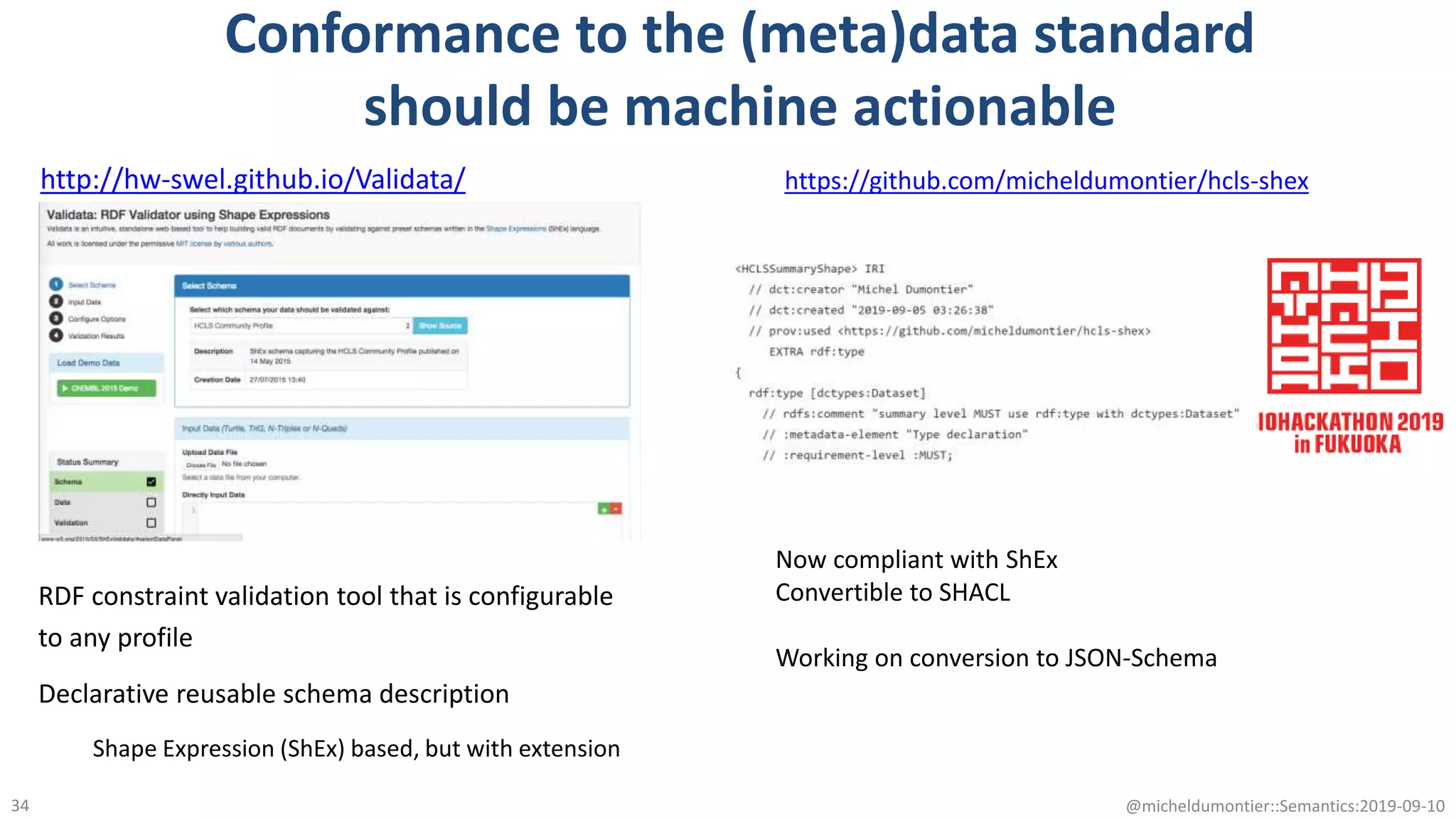
Conformance to the (meta)data standard
should be machine actionable
@micheldumontier::Semantics:2019-09-1034
http://hw-swel.github.io/Validata/
RDF constraint validation tool that is configurable
to any profile
Declarative reusable schema description
Shape Expression (ShEx) based, but with extension
https://github.com/micheldumontier/hcls-shex
Now compliant with ShEx
Convertible to SHACL
Working on conversion to JSON-Schema
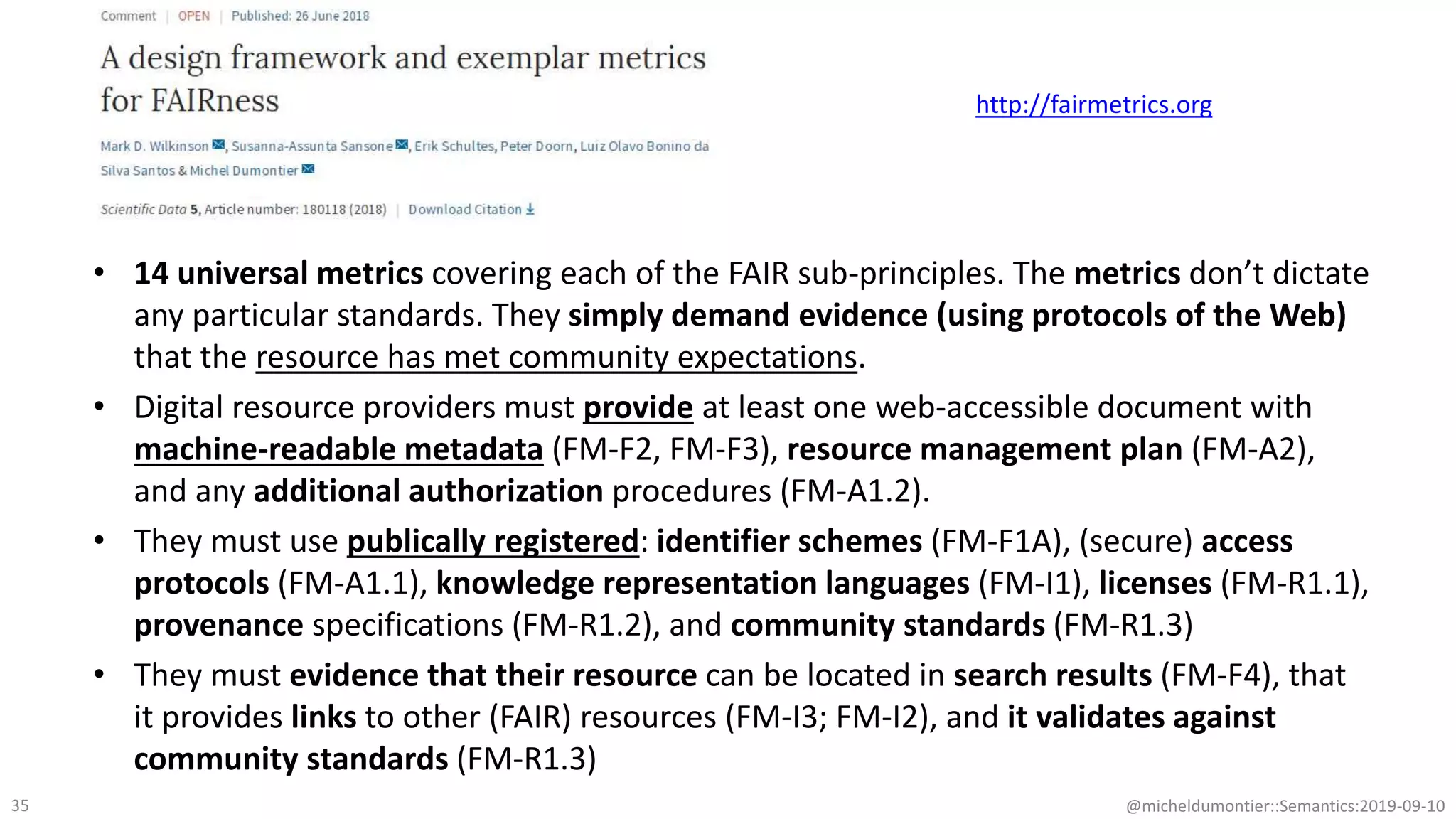
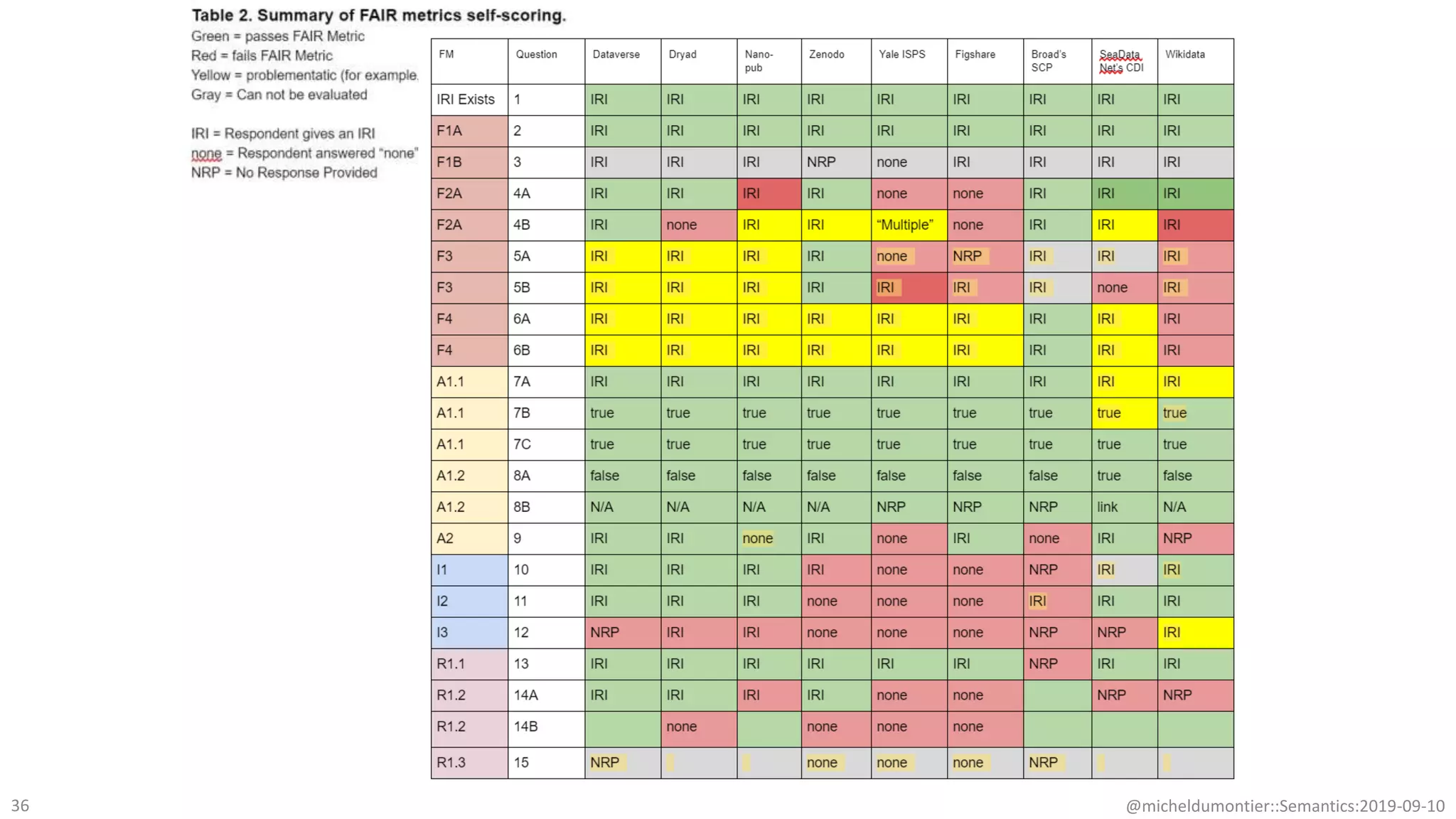
• 14 universal metrics covering each of the FAIR sub-principles. The metrics don’t dictate
any particular standards. They simply demand evidence (using protocols of the Web)
that the resource has met community expectations.
• Digital resource providers must provide at least one web-accessible document with
machine-readable metadata (FM-F2, FM-F3), resource management plan (FM-A2),
and any additional authorization procedures (FM-A1.2).
• They must use publically registered: identifier schemes (FM-F1A), (secure) access
protocols (FM-A1.1), knowledge representation languages (FM-I1), licenses (FM-R1.1),
provenance specifications (FM-R1.2), and community standards (FM-R1.3)
• They must evidence that their resource can be located in search results (FM-F4), that
it provides links to other (FAIR) resources (FM-I3; FM-I2), and it validates against
community standards (FM-R1.3)
@micheldumontier::Semantics:2019-09-1035
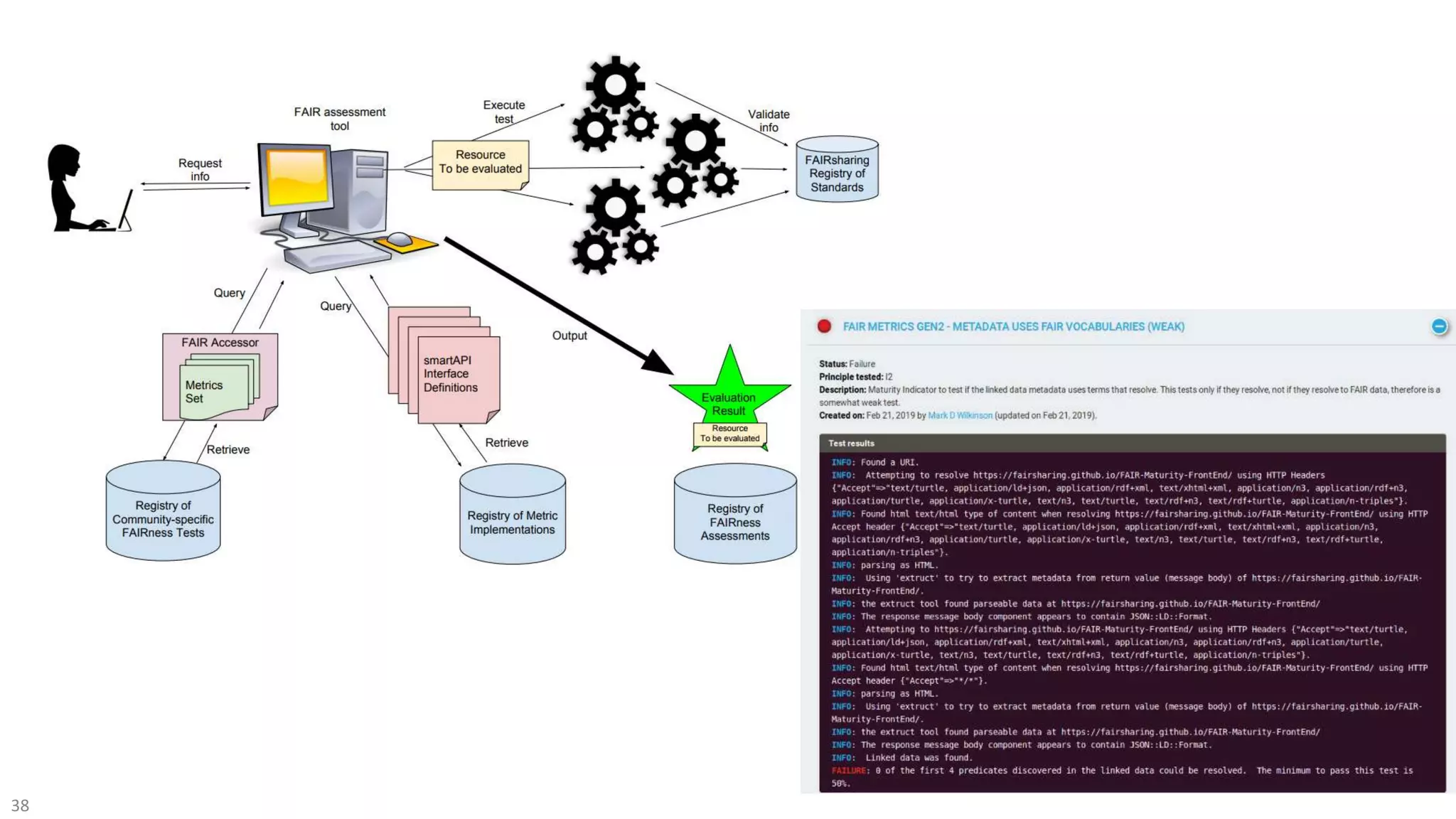
http://fairmetrics.org
@micheldumontier::Semantics:2019-09-1036
37
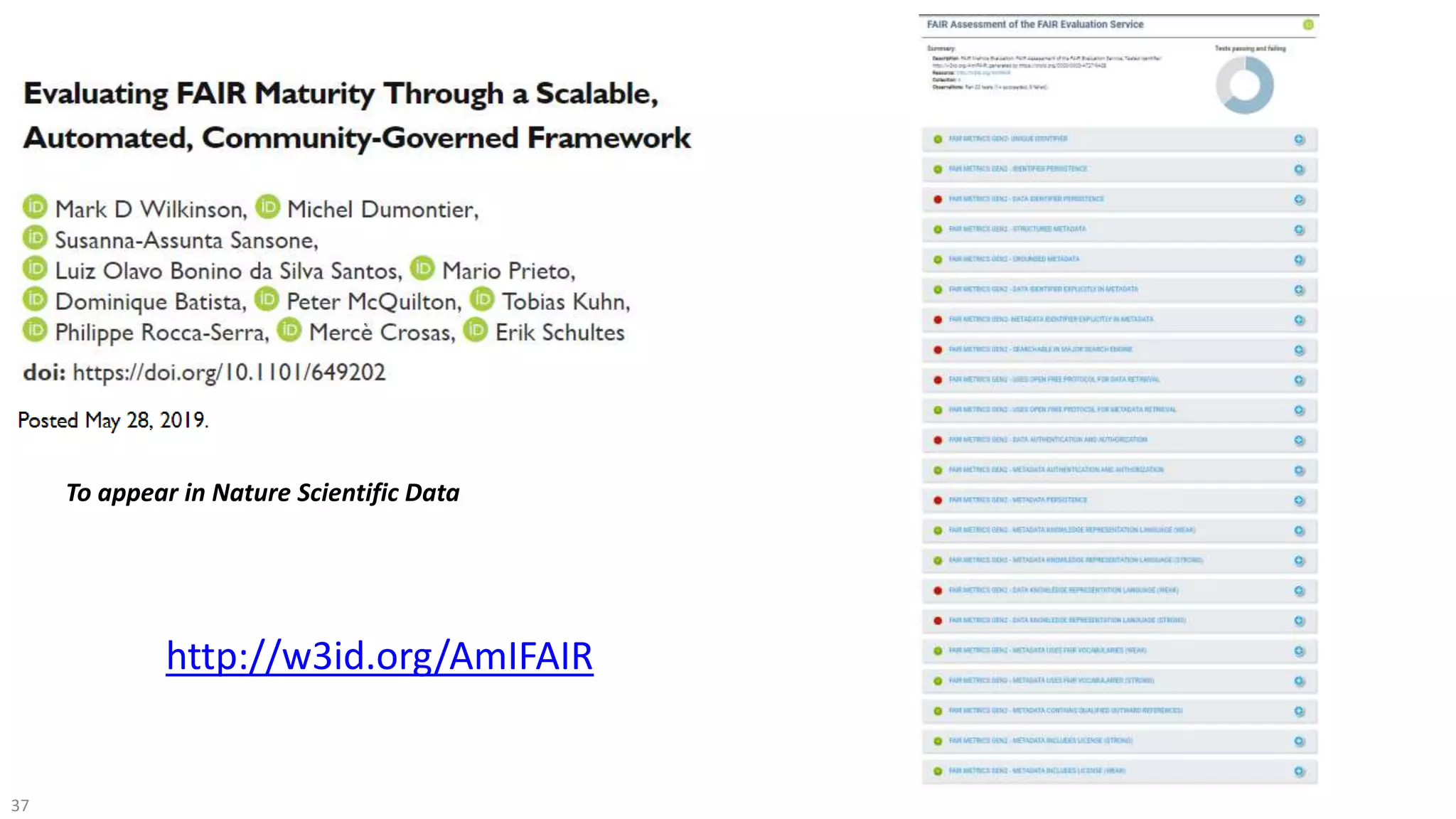
http://w3id.org/AmIFAIR
To appear in Nature Scientific Data
38
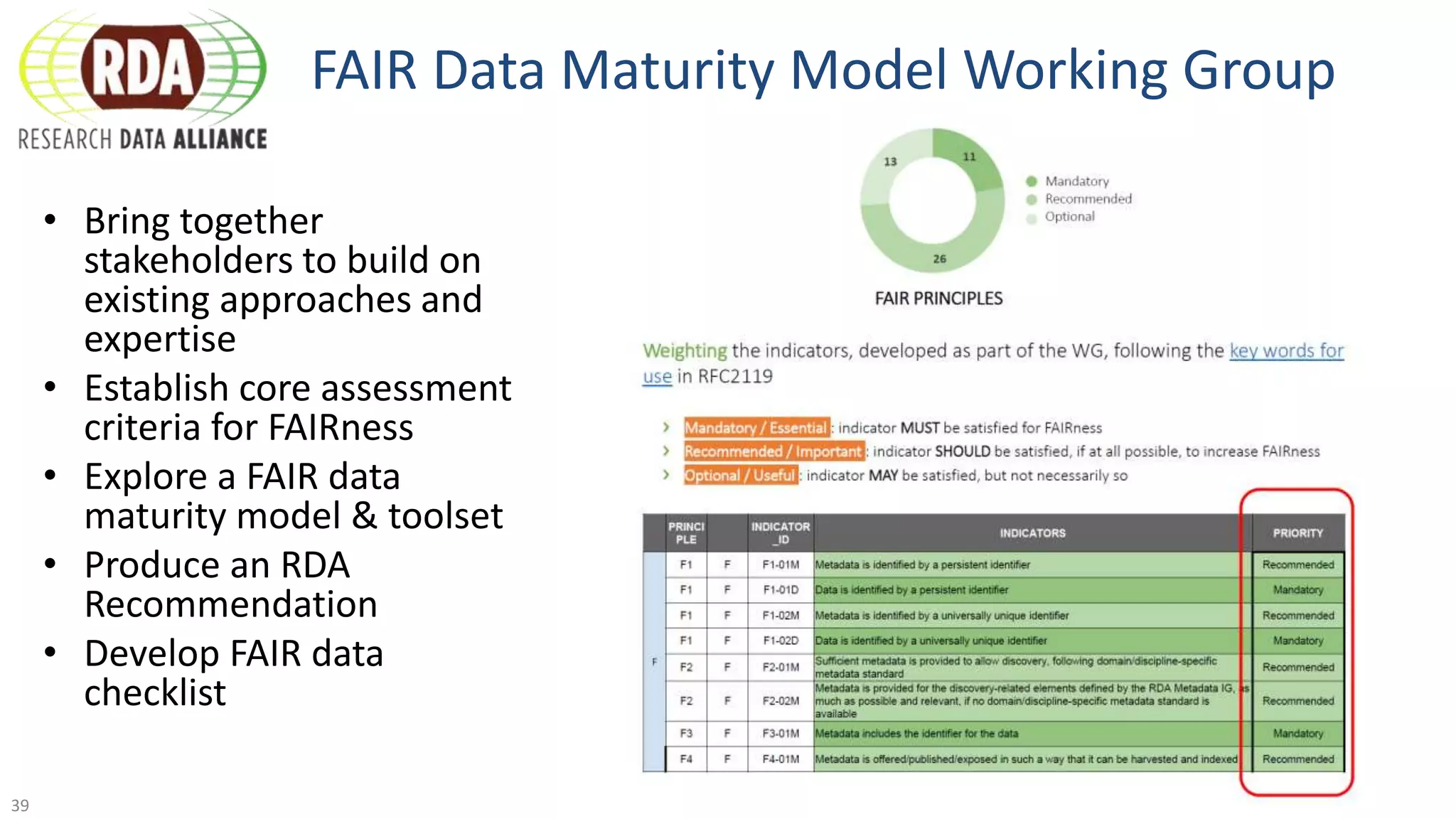
FAIR Data Maturity Model Working Group
• Bring together
stakeholders to build on
existing approaches and
expertise
• Establish core assessment
criteria for FAIRness
• Explore a FAIR data
maturity model & toolset
• Produce an RDA
Recommendation
• Develop FAIR data
checklist
39
Your invitation to participate
https://osf.io/n7uwp/
erik.schultes@go-fair.org
40
The Internet of FAIR data and services
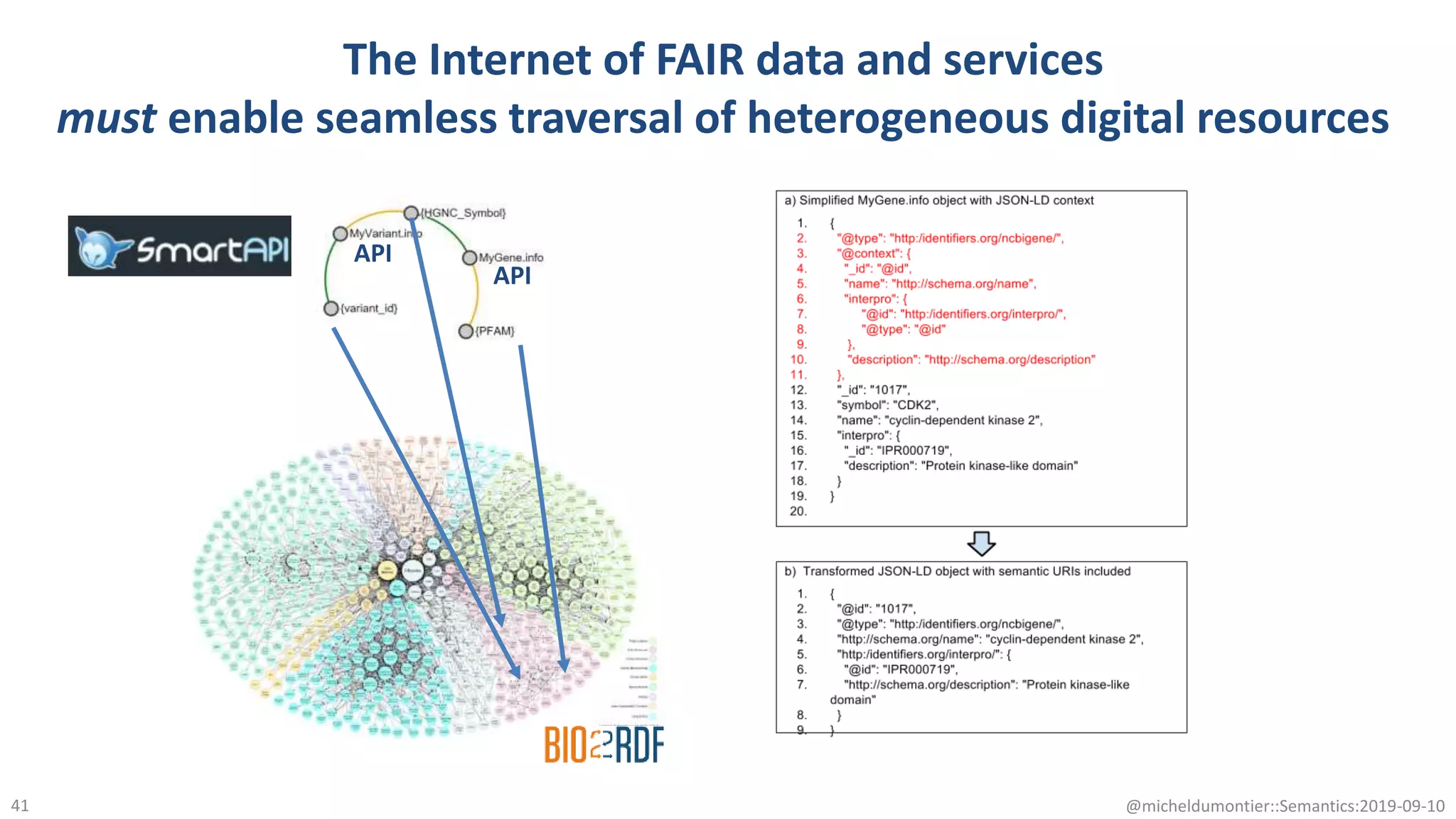
must enable seamless traversal of heterogeneous digital resources
41 @micheldumontier::Semantics:2019-09-10
API
API
@micheldumontier::Semantics:2019-09-1042
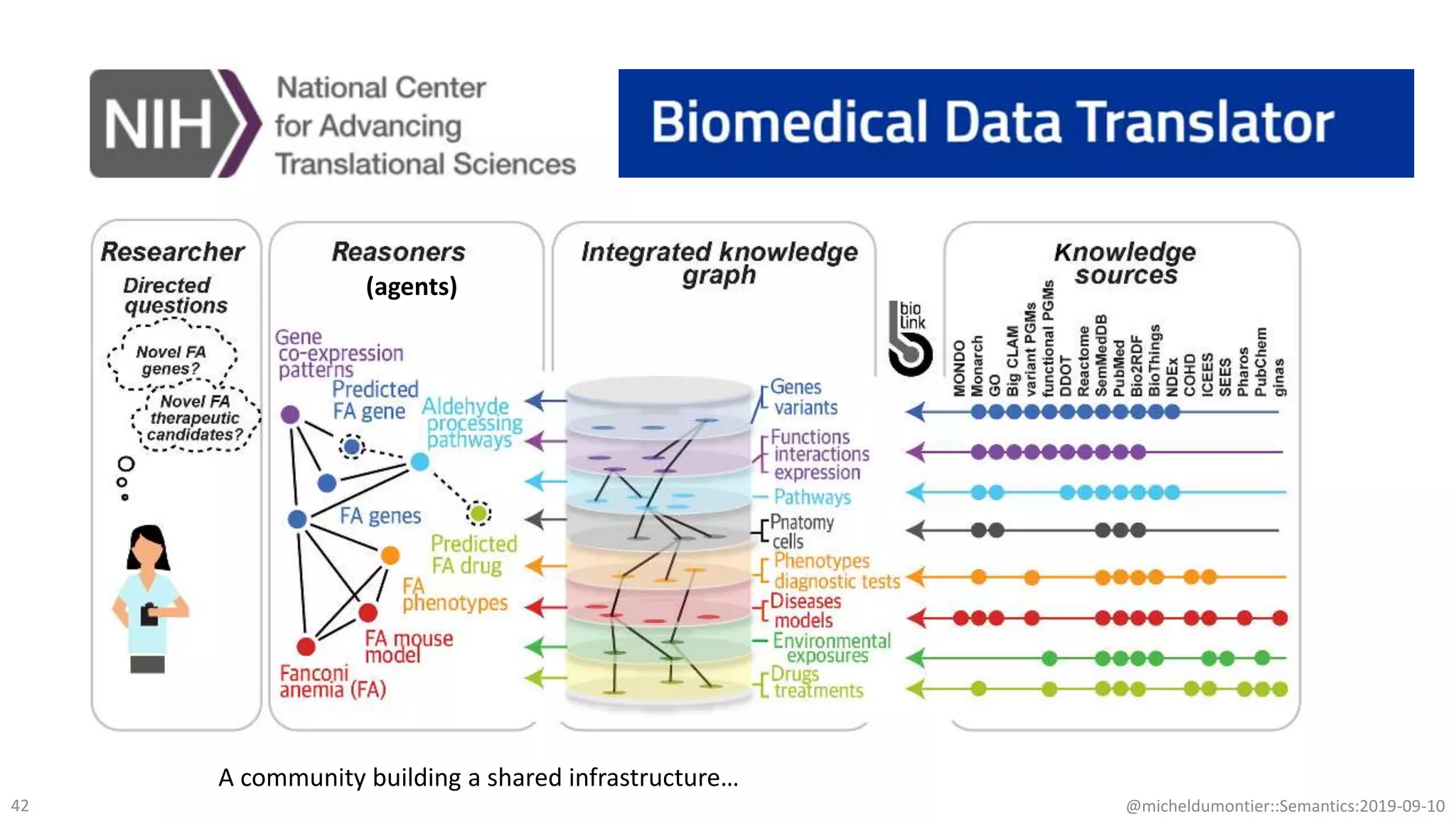
(agents)
A community building a shared infrastructure…
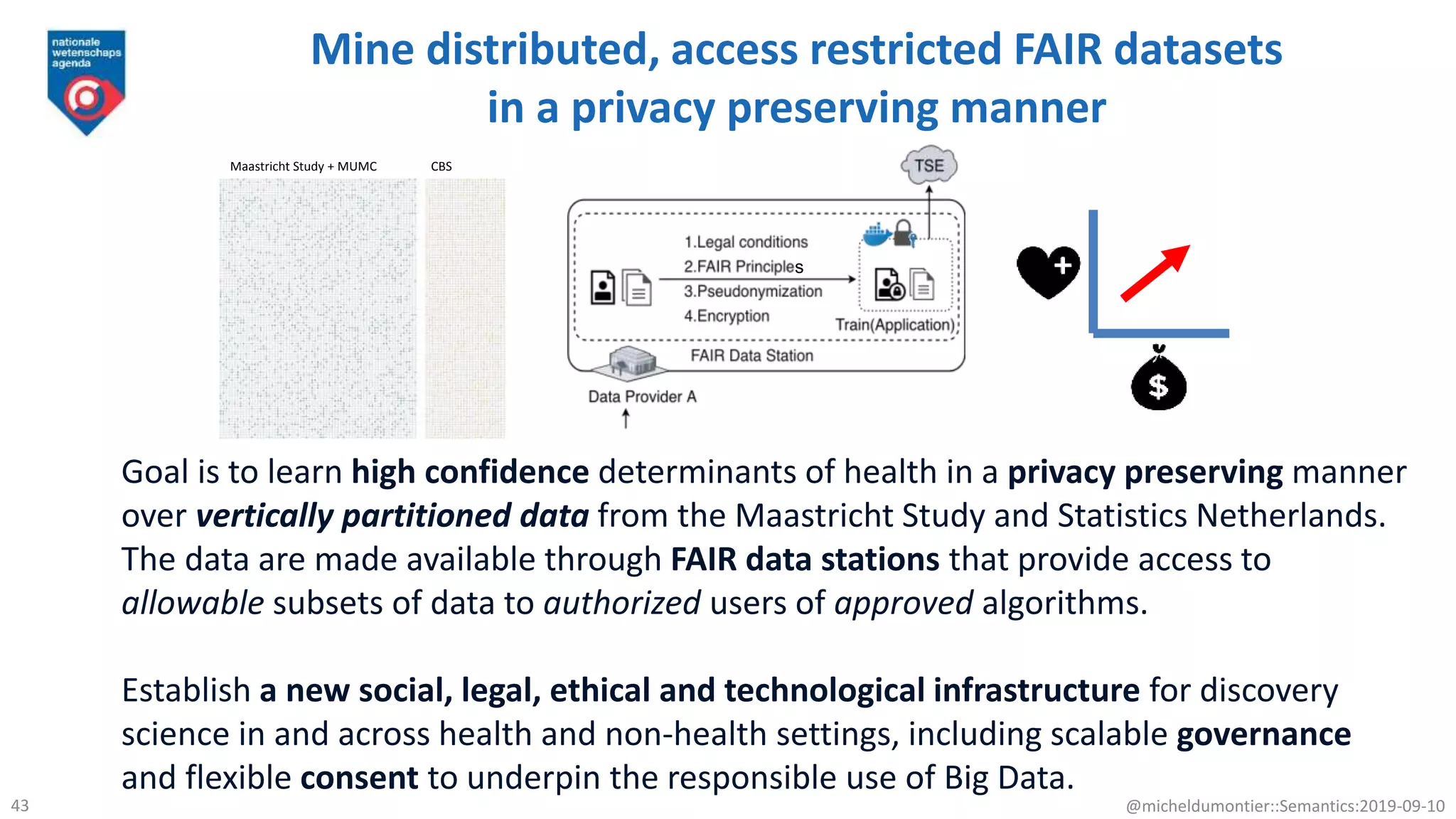
Mine distributed, access restricted FAIR datasets
in a privacy preserving manner
Maastricht Study + MUMC CBS
Goal is to learn high confidence determinants of health in a privacy preserving manner
over vertically partitioned data from the Maastricht Study and Statistics Netherlands.
The data are made available through FAIR data stations that provide access to
allowable subsets of data to authorized users of approved algorithms.
Establish a new social, legal, ethical and technological infrastructure for discovery
science in and across health and non-health settings, including scalable governance
and flexible consent to underpin the responsible use of Big Data.
@micheldumontier::Semantics:2019-09-1043
s
Summary
FAIR represents a global initiative to enhance the discovery and reuse of all kinds
of digital resources. It is a work in progress!
It demands a new social, legal, ethical, scientific and technological
infrastructure that currently doesn’t exist in whole, but has to be built for and
adopted by digital savvy communities! It must answer the questions:
– How can we share data and perform analyses in a responsible manner?
– What incentives, rewards and penalties are needed to maximize trust, participation,
legality, and utility?
Semantics, coupled with AI technologies, may enable humans, aided by
intelligent machine agents, to exploit the Internet of FAIR data and services,
and hence to accelerate discovery in biomedicine and in other disciplines.
@micheldumontier::Semantics:2019-09-1044
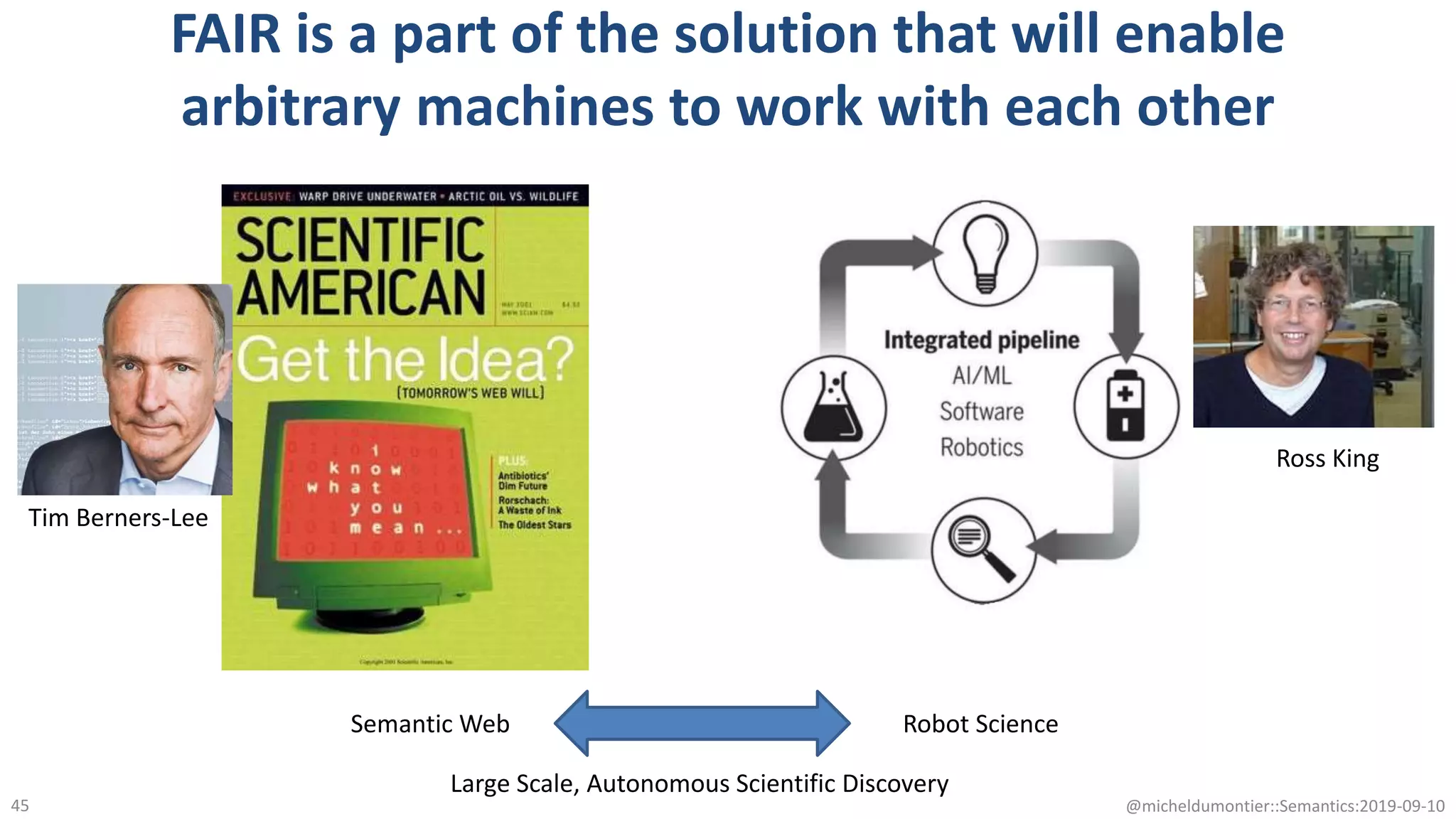
FAIR is a part of the solution that will enable
arbitrary machines to work with each other
@micheldumontier::Semantics:2019-09-1045
Tim Berners-Lee
Ross King
Semantic Web Robot Science
Large Scale, Autonomous Scientific Discovery
Acknowledgements
@micheldumontier::Semantics:2019-09-1046
FAIR FAIR metrics
Dumontier Lab (Maastricht University, Stanford University, Carleton University)
MU: Seun Adekunle, Remzi Celebi, Dorina Claessens, Ricardo De Miranda Azevedo, Pedro Hernandez Serrano, Massimiliano Grassi, Andine Havelange,
Lianne Ippel, Alexander Malic, Kody Moodley, Stuti Nayak, Nadine Rouleaux, Claudia van open, Chang Sun, Amrapali Zaveri
SU: Sandeep Ayyar, Remzi Celebi, Shima Dastgheib, Maulik Kamdar, David Odgers, Maryam Panahiazar, Amrapali Zaveri
CU: Alison Callahan, Jose Toledo-Cruz, Natalia Villaneuva-Rosales
michel.dumontier@maastrichtuniversity.nl
Website: http://maastrichtuniversity.nl/ids
47 @micheldumontier::Semantics:2019-09-10
The mission of the Institute of Data Science at Maastricht University is to foster a
collaborative environment for multi-disciplinary data science research,
interdisciplinary training, and data-driven innovation .
We tackle key scientific, technical, social, legal, ethical issues that advance our
understanding across a variety of disciplines and strengthen our communities in the
face of these developments.

Acclerating biomedical discovery with an internet of FAIR data and services - keynote @ Semantics2019

  • 1.
    Accelerating biomedical discovery withan Internet of FAIR data and services @micheldumontier::Semantics:2019-09-101 Michel Dumontier, Ph.D. Distinguished Professor of Data Science Director, Institute of Data Science
  • 2.
    An increasing numberof discoveries are made using already available data @micheldumontier::Semantics:2019-09-102
  • 3.
    3 A common rejectionmodule (CRM) for acute rejection across multiple organs identifies novel therapeutics for organ transplantation Khatri et al. JEM. 210 (11): 2205 DOI: 10.1084/jem.20122709 @micheldumontier::Semantics:2019-09-10 Main Findings: 1. CRM genes predicted future injury to a graft 2. Mice treated with drugs against the CRM genes extended graft survival 3. Retrospective EHR analysis supports treatment prediction Key Observations: 1. Meta-analysis offers a more reliable estimate of the magnitude of the effect 2. Data can be used to generate and support/dispute new hypotheses
  • 4.
    However, significant effortis still needed to find the right dataset(s), make sense of them, and use for a new purpose @micheldumontier::Semantics:2019-09-104
  • 5.
    How do youfind your data? • Datasets you learned about in yesterday’s tutorials and workshops • Datasets used in the lab or organization • Datasets associated with a paper you read or were told about • A search in a specific repository • A search on the internet @micheldumontier::Semantics:2019-09-105
  • 6.
    @micheldumontier::Semantics:2019-09-106 Poor quality metadatafrustrates reuse Vast number of lexically unique keys (and values)
  • 7.
    7 @micheldumontier::Semantics:2019-09-10 Our abilityto reproduce landmark studies is surprisingly low: 39% (39/100) in psychology1 21% (14/67) in pharmacology2 11% (6/53) in cancer3 unsatisfactory in machine learning4 1doi:10.1038/nature.2015.17433 2doi:10.1038/nrd3439-c1 3doi:10.1038/483531a 4https://openreview.net/pdf?id=By4l2PbQ- Most published research findings are false. - John Ioannidis, Stanford University PLoS Med 2005;2(8): e124.
  • 8.
  • 9.
    9 What hope dowe really have to realize ?
  • 10.
    @micheldumontier::Semantics:2019-09-1010 Poor quality (meta)data Reproducibility Crisis Translational Failure Brokenwindows theory Inadequate reusability theory visible signs of crime, anti- social behavior, and civil disorder create an urban environment that encourages further crime and disorder, including serious crimes Poor quality metadata and the inaccessibility of original research results make it less likely to reproduce original work, resulting in an ineffective translation of research into useful applications
  • 11.
    @micheldumontier::Semantics:2019-09-1011 It’s time tocompletely rethink how we perform research
  • 12.
    @micheldumontier::Semantics:2019-09-1012 Lambin et al.Radiother Oncol. 2013. 109(1):159-64. doi: 10.1016/j.radonc.2013.07.007
  • 13.
    Human Machine collaboration willbe crucial to our future success @micheldumontier::Semantics:2019-09-1013
  • 14.
    We need anew social contract, supported by legal and technological infrastructure to make digital resources available in a responsible manner @micheldumontier::Semantics:2019-09-1014
  • 15.
  • 16.
    An international, bottom-upparadigm for the discovery and reuse of digital content for the machines that people use @micheldumontier::Semantics:2019-09-1016
  • 17.
  • 18.
  • 19.
    FAIR in anutshell FAIR aims to create social and economic impact by facilitating the discovery and reuse of digital resources through a set of requirements: – unique identifiers to retrieve all forms of digital content and knowledge – high quality meta(data) to enhance discovery of digital resources – use of common vocabularies to share terms and facilitate query – establishment of community standards for more facile knowledge utilisation – detailed provenance to provide context and reproducibility – registered in appropriate repositories with high quality metadata for future content seekers – social and technological commitments to realize reliable access – simpler terms of use to clarify expectations and intensify innovation @micheldumontier::Semantics:2019-09-1019
  • 20.
  • 21.
  • 22.
  • 23.
    Why Should *I*Go FAIR? • Makes it easier for me to use my own data for a new purpose • Makes it easier for other people to find, use and cite my data, and for them to understand what I expect in return • Makes it easier/possible for people to verify my work • Ensure that the data are available in the future, especially as I may not want the responsibility • Satisfy expectations around data management from institution, funding agency, journal, my peers @micheldumontier::Semantics:2019-09-1023
  • 24.
    Let’s build theInternet of FAIR data and services @micheldumontier::Semantics:2019-09-1024
  • 25.
  • 26.
    The Semantic Web isa portal to the web of knowledge 26 @micheldumontier::Semantics:2019-09-10 standards for publishing, sharing and querying facts, expert knowledge and services scalable approach for the discovery of independently constructed, collaboratively described, distributed knowledge (in principle)
  • 27.
    • 30+ biomedicaldata sources • 10B+ interlinked statements • EBI, SIB, NCBI, DBCLS, NCBO, and many others produce this content chemicals/drugs/formulations, genomes/genes/proteins, domains Interactions, complexes & pathways animal models and phenotypes Disease, genetic markers, treatments Terminologies & publications 27 Alison Callahan, Jose Cruz-Toledo, Peter Ansell, Michel Dumontier: Bio2RDF Release 2: Improved Coverage, Interoperability and Provenance of Life Science Linked Data. ESWC 2013: 200-212 Linked Data for the Life Sciences Bio2RDF is an open source project that uses semantic web technologies to make it easier to reuse biomedical data @micheldumontier::Semantics:2019-09-10
  • 28.
    Federated query overthe biological web of data @micheldumontier::Semantics:2019-09-1028 Phenotypes of knock-out mouse models for the targets of a selected drug (Imatinib)
  • 29.
    Reproduce original research @micheldumontier::Semantics:2019-09-1029 AUC0.91 across all therapeutic indications Scripts not available. Feature tables available. Result: ROCAUC 0.83 … doesn’t quite match
  • 30.
    @micheldumontier::Semantics:2019-09-1030 Efficiently explore theweb of data Finding melanoma drugs through a probabilistic knowledge graph. PeerJ Computer Science. 2017. 3:e106 https://doi.org/10.7717/peerj-cs.106 by exploring a probabilistic semantic knowledge graph And validate them against pipelines for drug discovery
  • 31.
    @micheldumontier::Semantics:2019-09-1031 Success depends onquality of metadataSearch registries for relevant datasets
  • 32.
    @micheldumontier::Semantics:2019-09-1032 Metadata identifier Resource identifier Standardized,machine readable format Use of community vocabularies License? Provenance?
  • 33.
  • 34.
    Conformance to the(meta)data standard should be machine actionable @micheldumontier::Semantics:2019-09-1034 http://hw-swel.github.io/Validata/ RDF constraint validation tool that is configurable to any profile Declarative reusable schema description Shape Expression (ShEx) based, but with extension https://github.com/micheldumontier/hcls-shex Now compliant with ShEx Convertible to SHACL Working on conversion to JSON-Schema
  • 35.
    • 14 universalmetrics covering each of the FAIR sub-principles. The metrics don’t dictate any particular standards. They simply demand evidence (using protocols of the Web) that the resource has met community expectations. • Digital resource providers must provide at least one web-accessible document with machine-readable metadata (FM-F2, FM-F3), resource management plan (FM-A2), and any additional authorization procedures (FM-A1.2). • They must use publically registered: identifier schemes (FM-F1A), (secure) access protocols (FM-A1.1), knowledge representation languages (FM-I1), licenses (FM-R1.1), provenance specifications (FM-R1.2), and community standards (FM-R1.3) • They must evidence that their resource can be located in search results (FM-F4), that it provides links to other (FAIR) resources (FM-I3; FM-I2), and it validates against community standards (FM-R1.3) @micheldumontier::Semantics:2019-09-1035 http://fairmetrics.org
  • 36.
  • 37.
  • 38.
  • 39.
    FAIR Data MaturityModel Working Group • Bring together stakeholders to build on existing approaches and expertise • Establish core assessment criteria for FAIRness • Explore a FAIR data maturity model & toolset • Produce an RDA Recommendation • Develop FAIR data checklist 39
  • 40.
    Your invitation toparticipate https://osf.io/n7uwp/ erik.schultes@go-fair.org 40
  • 41.
    The Internet ofFAIR data and services must enable seamless traversal of heterogeneous digital resources 41 @micheldumontier::Semantics:2019-09-10 API API
  • 42.
  • 43.
    Mine distributed, accessrestricted FAIR datasets in a privacy preserving manner Maastricht Study + MUMC CBS Goal is to learn high confidence determinants of health in a privacy preserving manner over vertically partitioned data from the Maastricht Study and Statistics Netherlands. The data are made available through FAIR data stations that provide access to allowable subsets of data to authorized users of approved algorithms. Establish a new social, legal, ethical and technological infrastructure for discovery science in and across health and non-health settings, including scalable governance and flexible consent to underpin the responsible use of Big Data. @micheldumontier::Semantics:2019-09-1043 s
  • 44.
    Summary FAIR represents aglobal initiative to enhance the discovery and reuse of all kinds of digital resources. It is a work in progress! It demands a new social, legal, ethical, scientific and technological infrastructure that currently doesn’t exist in whole, but has to be built for and adopted by digital savvy communities! It must answer the questions: – How can we share data and perform analyses in a responsible manner? – What incentives, rewards and penalties are needed to maximize trust, participation, legality, and utility? Semantics, coupled with AI technologies, may enable humans, aided by intelligent machine agents, to exploit the Internet of FAIR data and services, and hence to accelerate discovery in biomedicine and in other disciplines. @micheldumontier::Semantics:2019-09-1044
  • 45.
    FAIR is apart of the solution that will enable arbitrary machines to work with each other @micheldumontier::Semantics:2019-09-1045 Tim Berners-Lee Ross King Semantic Web Robot Science Large Scale, Autonomous Scientific Discovery
  • 46.
    Acknowledgements @micheldumontier::Semantics:2019-09-1046 FAIR FAIR metrics DumontierLab (Maastricht University, Stanford University, Carleton University) MU: Seun Adekunle, Remzi Celebi, Dorina Claessens, Ricardo De Miranda Azevedo, Pedro Hernandez Serrano, Massimiliano Grassi, Andine Havelange, Lianne Ippel, Alexander Malic, Kody Moodley, Stuti Nayak, Nadine Rouleaux, Claudia van open, Chang Sun, Amrapali Zaveri SU: Sandeep Ayyar, Remzi Celebi, Shima Dastgheib, Maulik Kamdar, David Odgers, Maryam Panahiazar, Amrapali Zaveri CU: Alison Callahan, Jose Toledo-Cruz, Natalia Villaneuva-Rosales
  • 47.
    michel.dumontier@maastrichtuniversity.nl Website: http://maastrichtuniversity.nl/ids 47 @micheldumontier::Semantics:2019-09-10 Themission of the Institute of Data Science at Maastricht University is to foster a collaborative environment for multi-disciplinary data science research, interdisciplinary training, and data-driven innovation . We tackle key scientific, technical, social, legal, ethical issues that advance our understanding across a variety of disciplines and strengthen our communities in the face of these developments.

Editor's Notes

  • #4 Abstract Using meta-analysis of eight independent transplant datasets (236 graft biopsy samples) from four organs, we identified a common rejection module (CRM) consisting of 11 genes that were significantly overexpressed in acute rejection (AR) across all transplanted organs. The CRM genes could diagnose AR with high specificity and sensitivity in three additional independent cohorts (794 samples). In another two independent cohorts (151 renal transplant biopsies), the CRM genes correlated with the extent of graft injury and predicted future injury to a graft using protocol biopsies. Inferred drug mechanisms from the literature suggested that two FDA-approved drugs (atorvastatin and dasatinib), approved for nontransplant indications, could regulate specific CRM genes and reduce the number of graft-infiltrating cells during AR. We treated mice with HLA-mismatched mouse cardiac transplant with atorvastatin and dasatinib and showed reduction of the CRM genes, significant reduction of graft-infiltrating cells, and extended graft survival. We further validated the beneficial effect of atorvastatin on graft survival by retrospective analysis of electronic medical records of a single-center cohort of 2,515 renal transplant patients followed for up to 22 yr. In conclusion, we identified a CRM in transplantation that provides new opportunities for diagnosis, drug repositioning, and rational drug design.
  • #19 G20: http://europa.eu/rapid/press-release_STATEMENT-16-2967_en.htm EOSC: https://ec.europa.eu/research/openscience/pdf/realising_the_european_open_science_cloud_2016.pdf H2020: https://goo.gl/Strjua
  • #21 https://www.gov.uk/government/publications/g8-science-ministers-statement-london-12-june-2013
  • #28 The Bio2RDF project transforms silos of life science data into a globally distributed network of linked data for biological knowledge discovery.