ANATOMY OF ANTERIOR ABDOMINAL
WALL AND ABDOMINAL INCISIONS FOR
GYNAECOLOGICAL SURGERIES AND
LAPAROTOMY PORT SITES
Dr. Tanya Das
Moderator:Dr. Rosina Manandhar
ANATOMY OF ANTERIOR ABDOMINAL
WALL
Why important?
-To avoid injury to vessels and nerves
-To close any incision with minimal chance of
dehiscence.
Boundary
Superiorly-the costal cartilage of 7th,8th,9th ribs
Laterally-iliac crests
Inferiorly-inguinal ligament,the pubic crests and
superior border of the symphysis pubis
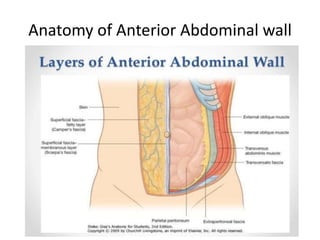
Anatomy of Anterior Abdominal wall
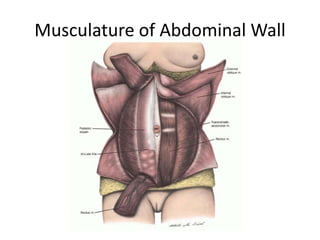
Musculature of Abdominal Wall
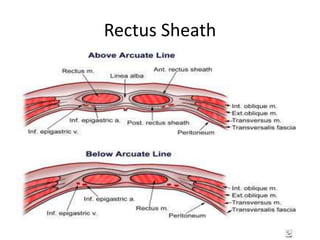
Rectus Sheath
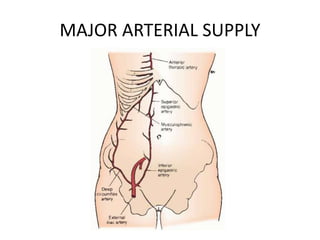
MAJOR ARTERIAL SUPPLY
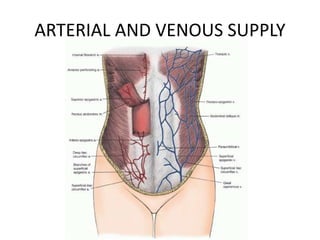
ARTERIAL AND VENOUS SUPPLY
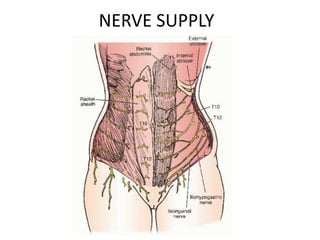
NERVE SUPPLY
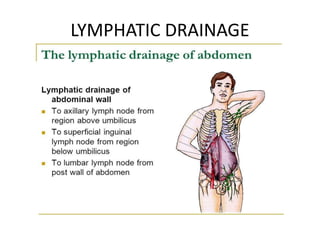
LYMPHATIC DRAINAGE
Abdominal incisions for most gynecologic
procedures can be divided into:
1.Transverse Incision
2.Vertical Incision
3. Oblique Incision
TRANSVERSE INCISION
ADVANTAGES:
1.Best cosmetic results
2.30 times stronger than midline incisions
3.Less painful
4.Results in less interference with postoperative
respirations
5.Less wound dehiscence
DISADVANTAGES:
1.More time consuming
2.More hemorrhagic
3.Less exposure
4.Division of multiple layers of fascia and muscle
–formation of potential spaces-hematoma and
seroma formatiom.
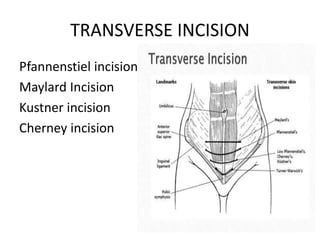
TRANSVERSE INCISION
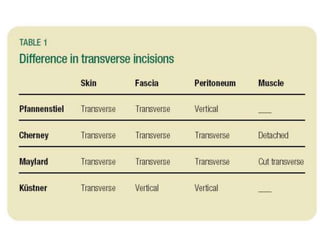
Pfannenstiel incision
Maylard Incision
Kustner incision
Cherney incision
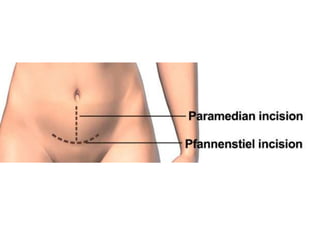
Pfannenstiel incision
-Transverse incision that are slightly curved
-10-15cm long,about 2cm above the symphysis
pubis
-Excellent cosmetic results
-Exposure is limited
-If extended laterally-injury to hypogastric and
ilioinguinal nerves
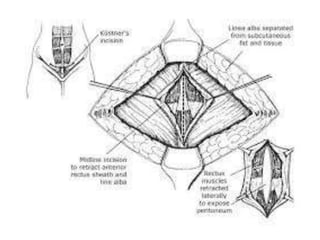
KUSTNER INCISION
-Modified Pfannenstiel incision
-slightly curved transverse incision below the level
of Anterior superior iliac spine and extends just
below the pubic hairline,through subcutaneous fat
down to the aponeurosis of external oblique muscle
and the anterior rectus sheath
-Inferior epigastric artery may be encounter in
subcutaneous fat at the lateral margin of the
incision
- Fascia cleared superiorly and inferiorly to
create space to permit adequate vertical
incision in linea alba
- Separation of rectus muscle and entrance into
peritoneum similar to other transverse
incisions
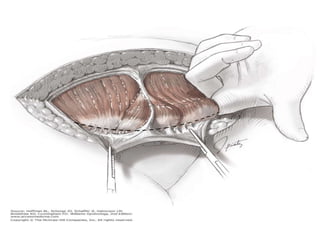
CHERNEY INCISION
-The Rectus muscles are transected at their
tendinous insertion into the symphysis pubis
-Provide excellent access to the space of Retzius
and pelvic side wall
-Bleeding is negligible
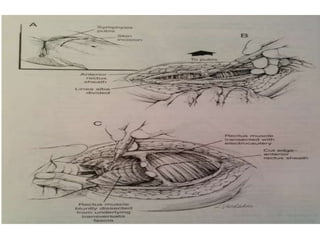
MAYLARD INCISION
-Transverse muscle cutting incision
-Provide excellent pelvic exposure
-Used for radical pelvic surgery,including radical
hysterectomy with pelvic lymph node dissection
and pelvic exenteration
-Inferior epigatric vessels must be ligated before
incising the rectus muscle to avoid tearing of the
vessels, vessel retraction and hematoma
formation
VERTICAL INCISIONS
Advantages
-Excellent exposure
-Easily extended
-Rapid entry to the abdominal cavity
-Minimal nerve damage
-Least hemorrhagic
Disadvantages:
-Wound dehiscence and hernia are more
common
-Poor cosmetic results
-Higher infection rates, hemorrhage and
operating time with paramedian incision.
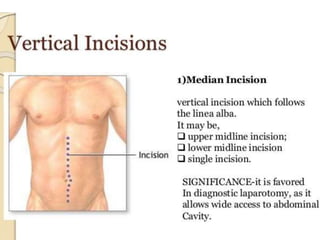
MIDLINE(median) INCISION
-Least hemorrhagic
-Rapid entry to abdominal cavity
-Minimal nerve damage
-Dehiscence and hernia are more common
PARAMEDIAN INCISION
-Lateral to midline
-Splits the rectus muscle longitudinally
-Risk of bleeding and nerve injury increased
-Greater strength than midline incision
-Modified paramedian incision retracts the
rectus muscle laterally before incising the
posterior rectus sheath and peritoneum
Oblique Incisions
-Can be used for transperitoneal or
extraperitoneal approach.
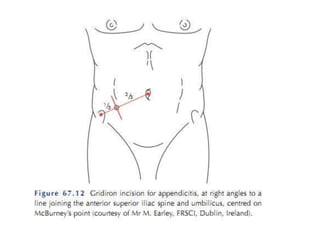
1.Gridiron(muslce splitting Incision)Incision
-appendectomy
-extraperitoneal drainage of an abscess
from pelvic inflammatory disease.
Made obliquely downward and inward over the
McBurney point
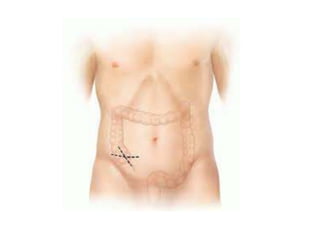
2.Rockey-Davis Incision
-Alternative to McBurney incision
-transverse incision placed at the junction of
middle and lower thirds of a line extending from
the anterior superior iliac spine to the umbilicus.
-medially extends to the border of rectus muscle
Incisions Used for Cesaerean section
• Pfannenstiel Incision
• Joel cohen Incision
• Misgav Ladach Incision
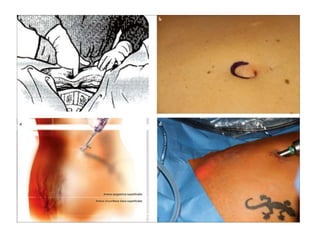
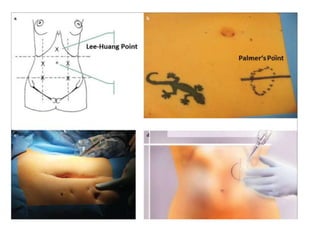
LAPAROTOMY PORT SITES
THANK YOU

Abdominal incisions

  • 1.

    ANATOMY OF ANTERIORABDOMINAL WALL AND ABDOMINAL INCISIONS FOR GYNAECOLOGICAL SURGERIES AND LAPAROTOMY PORT SITES Dr. Tanya Das Moderator:Dr. Rosina Manandhar
  • 2.
    ANATOMY OF ANTERIORABDOMINAL WALL Why important? -To avoid injury to vessels and nerves -To close any incision with minimal chance of dehiscence.
  • 3.
    Boundary Superiorly-the costal cartilageof 7th,8th,9th ribs Laterally-iliac crests Inferiorly-inguinal ligament,the pubic crests and superior border of the symphysis pubis
  • 4.
    Anatomy of AnteriorAbdominal wall
  • 5.
  • 6.
  • 7.
  • 8.
  • 9.
  • 10.
  • 11.
    Abdominal incisions formost gynecologic procedures can be divided into: 1.Transverse Incision 2.Vertical Incision 3. Oblique Incision
  • 12.
    TRANSVERSE INCISION ADVANTAGES: 1.Best cosmeticresults 2.30 times stronger than midline incisions 3.Less painful 4.Results in less interference with postoperative respirations 5.Less wound dehiscence
  • 13.
    DISADVANTAGES: 1.More time consuming 2.Morehemorrhagic 3.Less exposure 4.Division of multiple layers of fascia and muscle –formation of potential spaces-hematoma and seroma formatiom.
  • 14.
    TRANSVERSE INCISION Pfannenstiel incision MaylardIncision Kustner incision Cherney incision
  • 15.
    Pfannenstiel incision -Transverse incisionthat are slightly curved -10-15cm long,about 2cm above the symphysis pubis -Excellent cosmetic results -Exposure is limited -If extended laterally-injury to hypogastric and ilioinguinal nerves
  • 17.
    KUSTNER INCISION -Modified Pfannenstielincision -slightly curved transverse incision below the level of Anterior superior iliac spine and extends just below the pubic hairline,through subcutaneous fat down to the aponeurosis of external oblique muscle and the anterior rectus sheath -Inferior epigastric artery may be encounter in subcutaneous fat at the lateral margin of the incision
  • 18.
    - Fascia clearedsuperiorly and inferiorly to create space to permit adequate vertical incision in linea alba - Separation of rectus muscle and entrance into peritoneum similar to other transverse incisions
  • 20.
    CHERNEY INCISION -The Rectusmuscles are transected at their tendinous insertion into the symphysis pubis -Provide excellent access to the space of Retzius and pelvic side wall -Bleeding is negligible
  • 22.
    MAYLARD INCISION -Transverse musclecutting incision -Provide excellent pelvic exposure -Used for radical pelvic surgery,including radical hysterectomy with pelvic lymph node dissection and pelvic exenteration -Inferior epigatric vessels must be ligated before incising the rectus muscle to avoid tearing of the vessels, vessel retraction and hematoma formation
  • 25.
    VERTICAL INCISIONS Advantages -Excellent exposure -Easilyextended -Rapid entry to the abdominal cavity -Minimal nerve damage -Least hemorrhagic
  • 26.
    Disadvantages: -Wound dehiscence andhernia are more common -Poor cosmetic results -Higher infection rates, hemorrhage and operating time with paramedian incision.
  • 27.
    MIDLINE(median) INCISION -Least hemorrhagic -Rapidentry to abdominal cavity -Minimal nerve damage -Dehiscence and hernia are more common
  • 29.
    PARAMEDIAN INCISION -Lateral tomidline -Splits the rectus muscle longitudinally -Risk of bleeding and nerve injury increased -Greater strength than midline incision -Modified paramedian incision retracts the rectus muscle laterally before incising the posterior rectus sheath and peritoneum
  • 30.
    Oblique Incisions -Can beused for transperitoneal or extraperitoneal approach. 1.Gridiron(muslce splitting Incision)Incision -appendectomy -extraperitoneal drainage of an abscess from pelvic inflammatory disease. Made obliquely downward and inward over the McBurney point
  • 32.
    2.Rockey-Davis Incision -Alternative toMcBurney incision -transverse incision placed at the junction of middle and lower thirds of a line extending from the anterior superior iliac spine to the umbilicus. -medially extends to the border of rectus muscle
  • 34.
    Incisions Used forCesaerean section • Pfannenstiel Incision • Joel cohen Incision • Misgav Ladach Incision
  • 35.
  • 38.