The Types of Abdominal
Incisions
 Incisions or cuts on abdomen are mostly made during an emergency or a planned
surgery. Although laparoscopic surgery has reduced the need for large incisions, certain
conditions still require abdominal cuts or incisions.
 Although cuts heal in due time, they can weaken the abdominal muscle and interfere
temporarily with normal abdominal wall functions. There are various types of abdominal
incisions:
Vertical incisions
 Midline incisions or median incisions:
 These incisions are made on the midline of abdomen . It is mostly favored in open surgery
for diagnostic purposes (laparotomy) because it allows wide access to all areas of
abdomen and organs. It allows almost bloodless surgery with a minimum risk of injury to the
blood vessels and nerves.
 Advantages
 Versatile, rapid, low blood loss
 Excellent exposure
 Disadvantages
 More painful
 Increased pulmonary depression
 Less cosmetic
 Paramedian incisions:
 These incisions are made 2-5 cm beside the midline of the trunk on abdomen . It provides
access to tummy structures such as the stomach, liver, and spleen. It avoids any injury to
the nerves, limits trauma to rectus muscle, and permits good restoration of functions
afterward.
 Advantages
 Theoretical decreased risk of herniation
 Improved lateral exposure
 Disadvantages
 More likely to encounter the inferior epigastric vessels compared with midline incision
 Less cosmetic
Transverse incisions
 These incisions cosmetically appear better. They are stronger and less painful. They allow
good access to the upper digestive organs. It can be used in surgeries performed on
children because their tummy girth is longer transversely than vertically.
 Moreover, it is used in surgeries performed on people who are overweight and have short
stature. Transverse incisions reduce the risk of dehiscence. However, the risk of protrusion of
the organs through the abdominal wall is higher with these incisions.
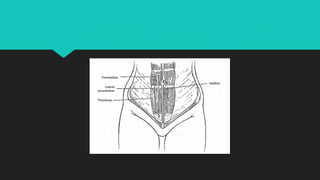
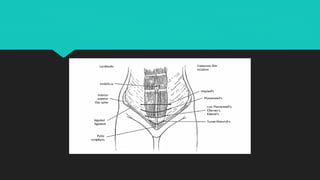
 Pfannenstiel's incisions:
 These are the most common muscle-separating incisions. They are frequently used for
women’s reproductive- and urinary system-related operations. They are commonly used
for cesarean delivery because they provide a cosmetically better appearance. They are
also known as bikini incisions. They are made just 5 cm above your groin area (pubic) and
are mostly 12 cm long.
 The Pfannenstiel incision is a transverse skin incision, two finger-breadths above the
symphysis pubis, which is extended in the direction of the anterior superior iliac spine (ASIS)
and ends 2–3 cm medial to ASIS on both sides.
 Advantages
 More cosmetic
 Scar is almost imperceptible
 Hidden in the pubic hairline
 Obscured by a skin crease
 Less painful
 Less pulmonary depression
 Excellent postoperative strength
 Disadvantages
 No upper abdominal exposure
 Possible increased hematoma rate
 Cherney's incisions:
 These are made 2-3 cm above the groin area, lower than Pfannenstiel's incisions. They
provide excellent access to the pelvic organs during urinary bladder or vaginal repair
surgeries. Because they are a tendon-detaching operation, reattachment of the tendons
(fibrous collagen tissue band) is tedious.
 The Cherney incision is similar to the Pfannenstiel incision, except it involves incising the
rectus tendons and is placed slightly lower on the abdomen.
 Advantages
 Excellent pelvic exposure
 Dehiscence or hernia is rare
 Incision of choice to “extend” Pfannenstiel
 Disadvantages
 Limited upper abdominal exposure
 Maylard's incisions:
 These are true muscle-cutting incisions. They give excellent exposure to the genital
organs. They are made parallel to the traditional placement of Pfannenstiel's incisions.
They are also as popular as Pfannenstiel’s incisions for cesarean delivery and are used for
cancer surgeries.
 Advantages
 Excellent exposure, including upper abdomen
 Dehiscence or hernia is rare
 Disadvantages
 Risk of femoral nerve injury from retractor
 Risk of subfascial hematoma
 Poor choice for patients with extensive vascular disease
 Modified Gibson incisions:
 These incisions are specifically made during surgeries related to women’s reproductive
system or cancer surgeries. Cuts are made on the side of the midline of the abdomen ,
most often made only on the left side.
 McBurney's incisions:
 These are specifically used for appendectomy . They are made at the junction of the
middle third and outer third of the line running from the navel to the upper margin of the
pelvic girdle.
What are the factors considered while
selecting an incision?
 The surgeon will choose the incision best suited for the planned procedure based on the
following most essential factors:
 Accessibility to the affected organ or anticipated pathology
 Extensibility of incision
 Preservation of abdominal wall function
 A reliable and secure closure of the incision
 Moreover, other factors influence the selection of incisions such as:
 Type of surgery (elective or emergency)
 Need for rapid entry into the belly
 The certainty of the diagnosis of disease
 Target organ
 Location of previous surgery scars
 Body habitus such as weight and height of the patient
 Possibility of significant bleeding
 Cosmetic outcome
 Surgeons own experience and preference
What are the complications of abdominal
incisions?
 The complications of abdominal incisions are as follows:
 Hematoma
 Stitch abscess
 Wound infection
 Bursting open of a wound
 Fistula
 Wound pain
 Hernia
 Scarring
 The complications of incisions nowadays have been reduced because many surgeons are
now opting for mini-incisions (laparoscopic surgery).
THANK YOU

Tipo de incisiones abdominales. Cirugía.

  • 1.
    The Types ofAbdominal Incisions
  • 2.
     Incisions orcuts on abdomen are mostly made during an emergency or a planned surgery. Although laparoscopic surgery has reduced the need for large incisions, certain conditions still require abdominal cuts or incisions.
  • 3.
     Although cutsheal in due time, they can weaken the abdominal muscle and interfere temporarily with normal abdominal wall functions. There are various types of abdominal incisions:
  • 4.
    Vertical incisions  Midlineincisions or median incisions:  These incisions are made on the midline of abdomen . It is mostly favored in open surgery for diagnostic purposes (laparotomy) because it allows wide access to all areas of abdomen and organs. It allows almost bloodless surgery with a minimum risk of injury to the blood vessels and nerves.
  • 5.
     Advantages  Versatile,rapid, low blood loss  Excellent exposure  Disadvantages  More painful  Increased pulmonary depression  Less cosmetic
  • 6.
     Paramedian incisions: These incisions are made 2-5 cm beside the midline of the trunk on abdomen . It provides access to tummy structures such as the stomach, liver, and spleen. It avoids any injury to the nerves, limits trauma to rectus muscle, and permits good restoration of functions afterward.
  • 7.
     Advantages  Theoreticaldecreased risk of herniation  Improved lateral exposure  Disadvantages  More likely to encounter the inferior epigastric vessels compared with midline incision  Less cosmetic
  • 9.
    Transverse incisions  Theseincisions cosmetically appear better. They are stronger and less painful. They allow good access to the upper digestive organs. It can be used in surgeries performed on children because their tummy girth is longer transversely than vertically.
  • 10.
     Moreover, itis used in surgeries performed on people who are overweight and have short stature. Transverse incisions reduce the risk of dehiscence. However, the risk of protrusion of the organs through the abdominal wall is higher with these incisions.
  • 12.
     Pfannenstiel's incisions: These are the most common muscle-separating incisions. They are frequently used for women’s reproductive- and urinary system-related operations. They are commonly used for cesarean delivery because they provide a cosmetically better appearance. They are also known as bikini incisions. They are made just 5 cm above your groin area (pubic) and are mostly 12 cm long.
  • 13.
     The Pfannenstielincision is a transverse skin incision, two finger-breadths above the symphysis pubis, which is extended in the direction of the anterior superior iliac spine (ASIS) and ends 2–3 cm medial to ASIS on both sides.
  • 14.
     Advantages  Morecosmetic  Scar is almost imperceptible  Hidden in the pubic hairline  Obscured by a skin crease  Less painful  Less pulmonary depression  Excellent postoperative strength
  • 15.
     Disadvantages  Noupper abdominal exposure  Possible increased hematoma rate
  • 16.
     Cherney's incisions: These are made 2-3 cm above the groin area, lower than Pfannenstiel's incisions. They provide excellent access to the pelvic organs during urinary bladder or vaginal repair surgeries. Because they are a tendon-detaching operation, reattachment of the tendons (fibrous collagen tissue band) is tedious.  The Cherney incision is similar to the Pfannenstiel incision, except it involves incising the rectus tendons and is placed slightly lower on the abdomen.
  • 17.
     Advantages  Excellentpelvic exposure  Dehiscence or hernia is rare  Incision of choice to “extend” Pfannenstiel  Disadvantages  Limited upper abdominal exposure
  • 18.
     Maylard's incisions: These are true muscle-cutting incisions. They give excellent exposure to the genital organs. They are made parallel to the traditional placement of Pfannenstiel's incisions. They are also as popular as Pfannenstiel’s incisions for cesarean delivery and are used for cancer surgeries.
  • 19.
     Advantages  Excellentexposure, including upper abdomen  Dehiscence or hernia is rare  Disadvantages  Risk of femoral nerve injury from retractor  Risk of subfascial hematoma  Poor choice for patients with extensive vascular disease
  • 20.
     Modified Gibsonincisions:  These incisions are specifically made during surgeries related to women’s reproductive system or cancer surgeries. Cuts are made on the side of the midline of the abdomen , most often made only on the left side.
  • 21.
     McBurney's incisions: These are specifically used for appendectomy . They are made at the junction of the middle third and outer third of the line running from the navel to the upper margin of the pelvic girdle.
  • 22.
    What are thefactors considered while selecting an incision?  The surgeon will choose the incision best suited for the planned procedure based on the following most essential factors:  Accessibility to the affected organ or anticipated pathology  Extensibility of incision  Preservation of abdominal wall function  A reliable and secure closure of the incision
  • 23.
     Moreover, otherfactors influence the selection of incisions such as:  Type of surgery (elective or emergency)  Need for rapid entry into the belly  The certainty of the diagnosis of disease  Target organ  Location of previous surgery scars  Body habitus such as weight and height of the patient
  • 24.
     Possibility ofsignificant bleeding  Cosmetic outcome  Surgeons own experience and preference
  • 25.
    What are thecomplications of abdominal incisions?  The complications of abdominal incisions are as follows:  Hematoma  Stitch abscess  Wound infection  Bursting open of a wound  Fistula  Wound pain  Hernia
  • 26.
     Scarring  Thecomplications of incisions nowadays have been reduced because many surgeons are now opting for mini-incisions (laparoscopic surgery).
  • 27.