An ABC BookAn ABC Book
ofof
Text FeaturesText Features
A is for
AAuthor Notes-A note to readers
about making the book.
B is for
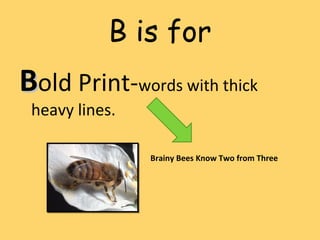
BBold Print-words with thick
heavy lines.
Brainy Bees Know Two from Three
C is for
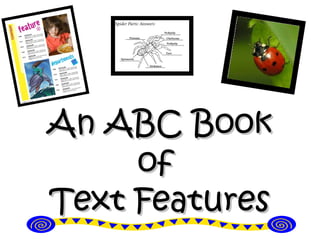
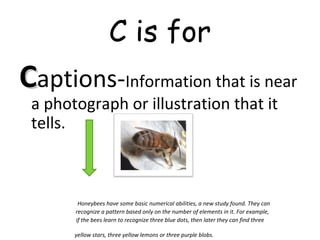
CCaptions-Information that is near
a photograph or illustration that it
tells.
Honeybees have some basic numerical abilities, a new study found. They can
recognize a pattern based only on the number of elements in it. For example,
if the bees learn to recognize three blue dots, then later they can find three
yellow stars, three yellow lemons or three purple blobs.
D is for
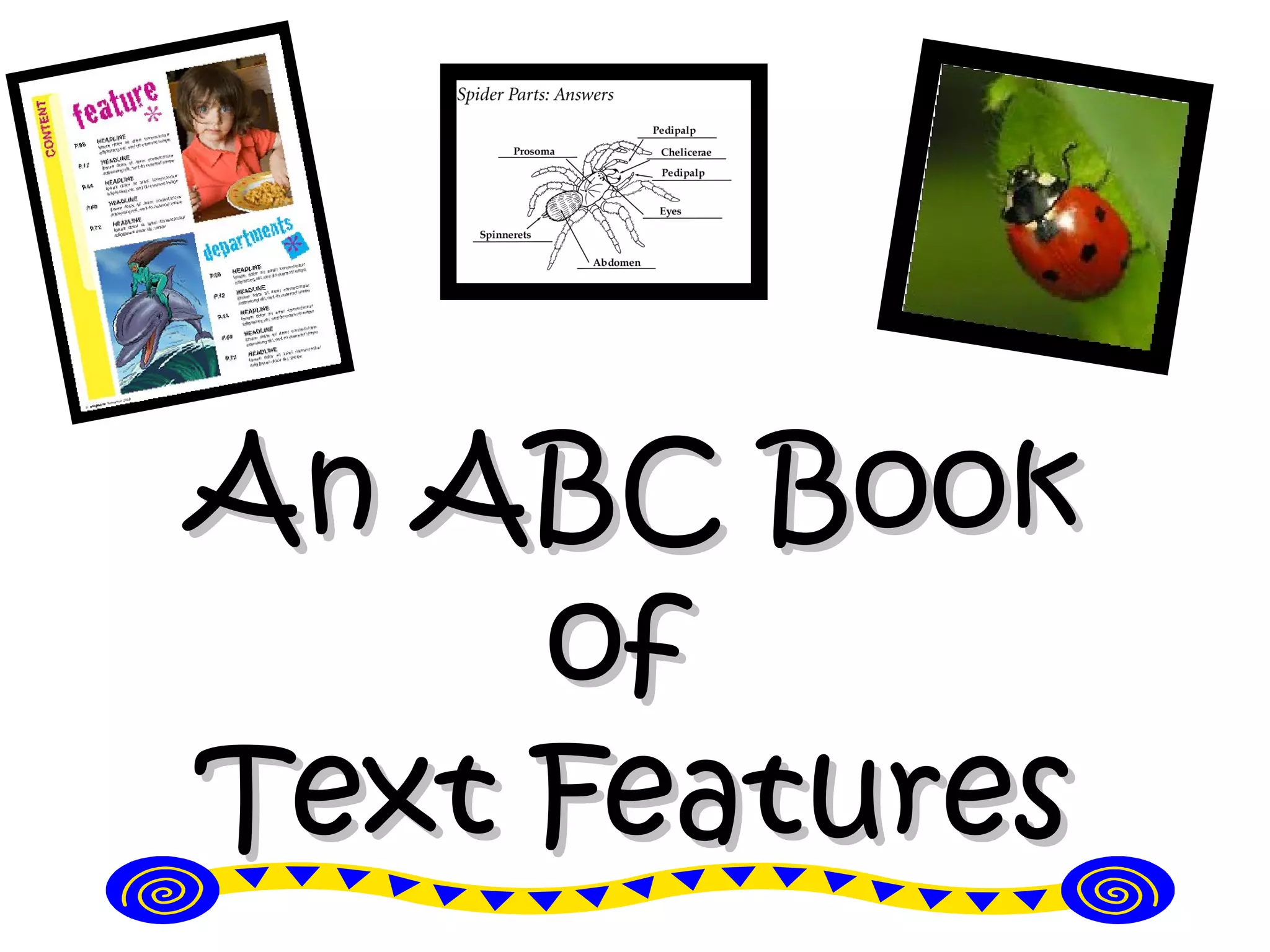
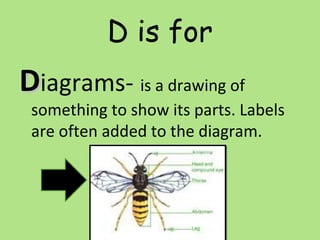
DDiagrams- is a drawing of
something to show its parts. Labels
are often added to the diagram.
E is for
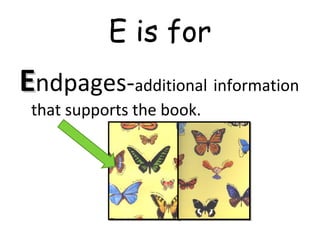
EEndpages-additional information
that supports the book.
F is for
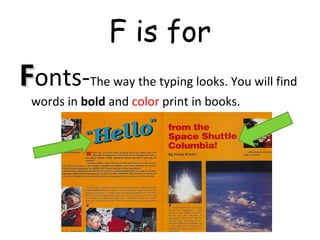
FFonts-The way the typing looks. You will find
words in bold and color print in books.
G is for
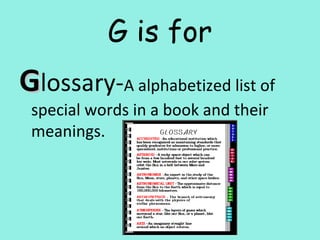
GGlossary-A alphabetized list of
special words in a book and their
meanings.
H is for
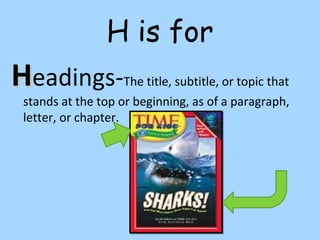
HHeadings-The title, subtitle, or topic that
stands at the top or beginning, as of a paragraph,
letter, or chapter.
I is for
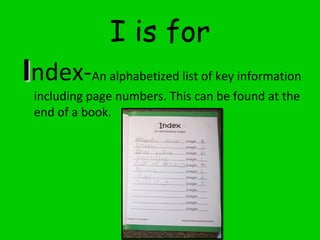
IIndex-An alphabetized list of key information
including page numbers. This can be found at the
end of a book.
J is for
JJust say it! A pronunciation guide is
when the writer spells out the words
phonetically, often in parentheses. This helps us
say the word correctly.
"The Gila (HE-la) Monster is
a kind of lizard."
K is for
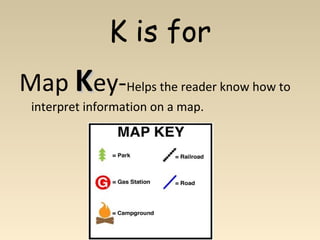
Map KKey-Helps the reader know how to
interpret information on a map.
L is for
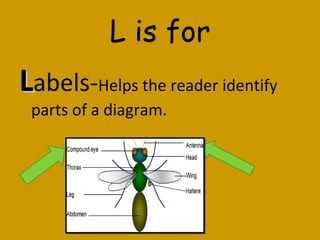
LLabels-Helps the reader identify
parts of a diagram.
M is for
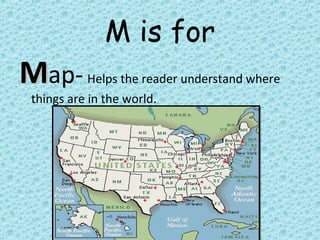
MMap- Helps the reader understand where
things are in the world.
N is for
NNon-Fiction Text Features
• Helps readers better understand what they are
reading about.
• Gives us extra information.
• Text features can be found in textbooks,
magazine articles, reports, web pages, and other
forms of non-fiction text.
O is for
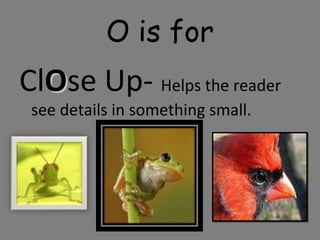
ClOOse Up- Helps the reader
see details in something small.
P is for
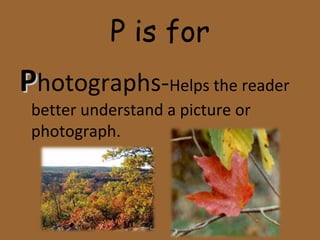
PPhotographs-Helps the reader
better understand a picture or
photograph.
Q is for
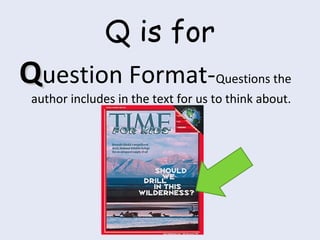
QQuestion Format-Questions the
author includes in the text for us to think about.
R is for
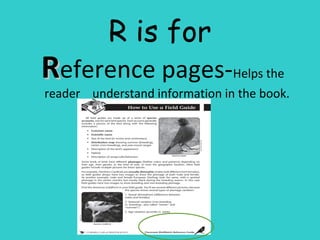
RReference pages-Helps the
reader understand information in the book.
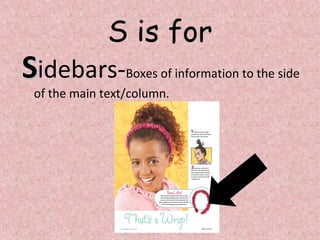
S is for
SSidebars-Boxes of information to the side
of the main text/column.
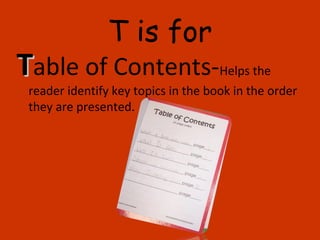
T is for
TTable of Contents-Helps the
reader identify key topics in the book in the order
they are presented.
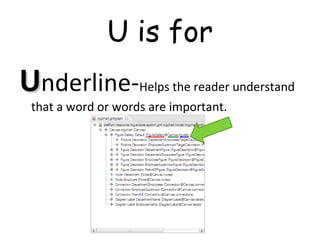
U is for
UUnderline-Helps the reader understand
that a word or words are important.
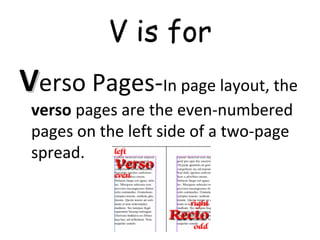
V is for
VVerso Pages-In page layout, the
verso pages are the even-numbered
pages on the left side of a two-page
spread.
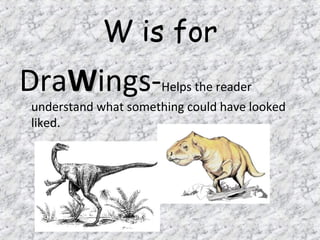
W is for
DraWWings-Helps the reader
understand what something could have looked
liked.
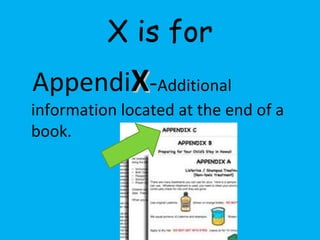
X is for
AppendiXX-Additional
information located at the end of a
book.
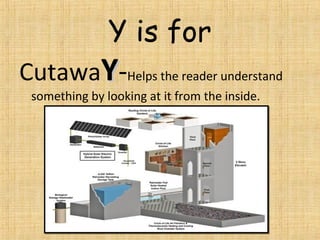
Y is for
CutawaYY-Helps the reader understand
something by looking at it from the inside.
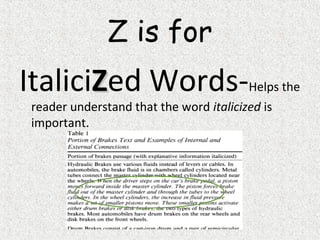
Z is for
ItaliciZZed Words-Helps the
reader understand that the word italicized is
important.

Abcbookoftextfeatures

  • 1.
    An ABC BookAnABC Book ofof Text FeaturesText Features
  • 2.
    A is for AAuthorNotes-A note to readers about making the book.
  • 3.
    B is for BBoldPrint-words with thick heavy lines. Brainy Bees Know Two from Three
  • 4.
    C is for CCaptions-Informationthat is near a photograph or illustration that it tells. Honeybees have some basic numerical abilities, a new study found. They can recognize a pattern based only on the number of elements in it. For example, if the bees learn to recognize three blue dots, then later they can find three yellow stars, three yellow lemons or three purple blobs.
  • 5.
    D is for DDiagrams-is a drawing of something to show its parts. Labels are often added to the diagram.
  • 6.
    E is for EEndpages-additionalinformation that supports the book.
  • 7.
    F is for FFonts-Theway the typing looks. You will find words in bold and color print in books.
  • 8.
    G is for GGlossary-Aalphabetized list of special words in a book and their meanings.
  • 9.
    H is for HHeadings-Thetitle, subtitle, or topic that stands at the top or beginning, as of a paragraph, letter, or chapter.
  • 10.
    I is for IIndex-Analphabetized list of key information including page numbers. This can be found at the end of a book.
  • 11.
    J is for JJustsay it! A pronunciation guide is when the writer spells out the words phonetically, often in parentheses. This helps us say the word correctly. "The Gila (HE-la) Monster is a kind of lizard."
  • 12.
    K is for MapKKey-Helps the reader know how to interpret information on a map.
  • 13.
    L is for LLabels-Helpsthe reader identify parts of a diagram.
  • 14.
    M is for MMap-Helps the reader understand where things are in the world.
  • 15.
    N is for NNon-FictionText Features • Helps readers better understand what they are reading about. • Gives us extra information. • Text features can be found in textbooks, magazine articles, reports, web pages, and other forms of non-fiction text.
  • 16.
    O is for ClOOseUp- Helps the reader see details in something small.
  • 17.
    P is for PPhotographs-Helpsthe reader better understand a picture or photograph.
  • 18.
    Q is for QQuestionFormat-Questions the author includes in the text for us to think about.
  • 19.
    R is for RReferencepages-Helps the reader understand information in the book.
  • 20.
    S is for SSidebars-Boxesof information to the side of the main text/column.
  • 21.
    T is for TTableof Contents-Helps the reader identify key topics in the book in the order they are presented.
  • 22.
    U is for UUnderline-Helpsthe reader understand that a word or words are important.
  • 23.
    V is for VVersoPages-In page layout, the verso pages are the even-numbered pages on the left side of a two-page spread.
  • 24.
    W is for DraWWings-Helpsthe reader understand what something could have looked liked.
  • 25.
    X is for AppendiXX-Additional informationlocated at the end of a book.
  • 26.
    Y is for CutawaYY-Helpsthe reader understand something by looking at it from the inside.
  • 27.
    Z is for ItaliciZZedWords-Helps the reader understand that the word italicized is important.