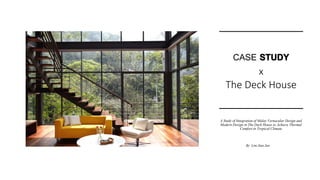

A Study of Integration of Malay Vernacular Design and
Modern Design in The Deck House to Achieve Thermal
Comfort in Tropical Climate
By Lim Jian Jun
CASE
X
The Deck House
PRESENTATION
Tropical Climate
Design Consideration
Malay Vernacular Architecture
Issues
Findings
Conclusion
Reference
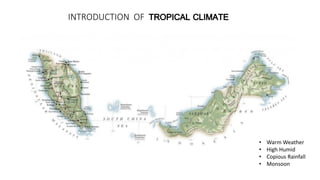
INTRODUCTION OF
• Warm Weather
• High Humid
• Copious Rainfall
• Monsoon
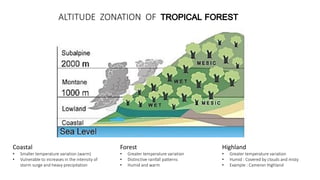
ALTITUDE ZONATION OF
Coastal
• Smaller temperature variation (warm)
• Vulnerable to increases in the intensity of
storm surge and heavy precipitation
Forest
• Greater temperature variation
• Distinctive rainfall patterns
• Humid and warm
Highland
• Greater temperature variation
• Humid : Covered by clouds and misty
• Example : Cameron Highland
TROPICAL CLIMATE :
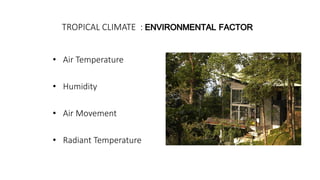
• Air Temperature
• Humidity
• Air Movement
• Radiant Temperature
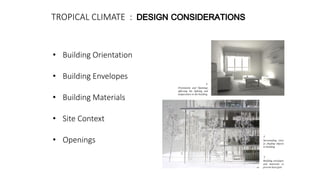
• Building Orientation
• Building Envelopes
• Building Materials
• Site Context
• Openings
TROPICAL CLIMATE :
Orientation and Openings
affecting the lighting and
temperature in the building
Surrounding trees
as shading objects
to building
Building envelopes
and materials to
prevent heat gain
INTRODUCTION OF
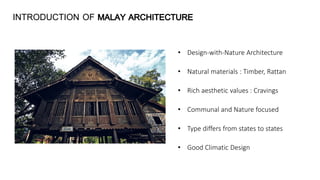
• Design-with-Nature Architecture
• Natural materials : Timber, Rattan
• Rich aesthetic values : Cravings
• Communal and Nature focused
• Type differs from states to states
• Good Climatic Design
MALAY VERNACULAR ARCHITECTURE :
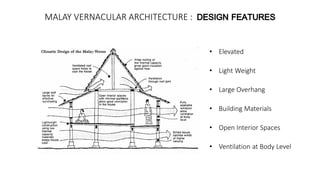
• Elevated
• Light Weight
• Large Overhang
• Building Materials
• Open Interior Spaces
• Ventilation at Body Level
• Lacking of Environmental Concern : Sustainability
• Poor Relation of Natural Environment : Site Responses, Climate
• Local Design and Cultural Values Disintegrated by Modern Influences
ISSUES :
FINDINGS |
A Search for Comfort Living with Vernacular Contemporary Design in Tropical Climate
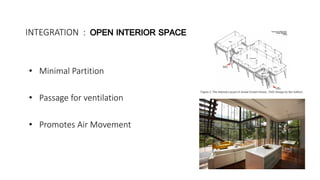
INTEGRATION :
• Minimal Partition
• Passage for ventilation
• Promotes Air Movement
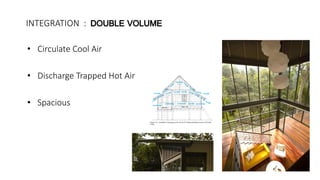
INTEGRATION :
• Circulate Cool Air
• Discharge Trapped Hot Air
• Spacious
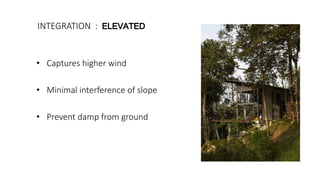
INTEGRATION :
• Captures higher wind
• Minimal interference of slope
• Prevent damp from ground
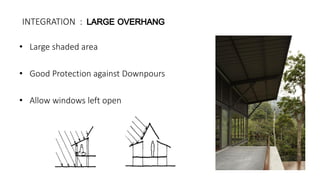
INTEGRATION :
• Large shaded area
• Good Protection against Downpours
• Allow windows left open
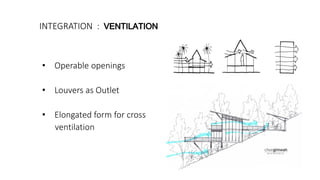
INTEGRATION :
• Operable openings
• Louvers as Outlet
• Elongated form for cross
ventilation
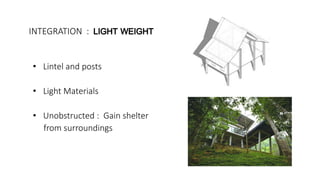
INTEGRATION :
• Lintel and posts
• Light Materials
• Unobstructed : Gain shelter
from surroundings
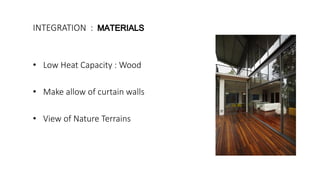
INTEGRATION :
• Low Heat Capacity : Wood
• Make allow of curtain walls
• View of Nature Terrains
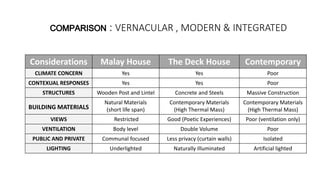
: VERNACULAR , MODERN & INTEGRATED
Considerations Malay House The Deck House Contemporary
CLIMATE CONCERN Yes Yes Poor
CONTEXUAL RESPONSES Yes Yes Poor
STRUCTURES Wooden Post and Lintel Concrete and Steels Massive Construction
BUILDING MATERIALS
Natural Materials
(short life span)
Contemporary Materials
(High Thermal Mass)
Contemporary Materials
(High Thermal Mass)
VIEWS Restricted Good (Poetic Experiences) Poor (ventilation only)
VENTILATION Body level Double Volume Poor
PUBLIC AND PRIVATE Communal focused Less privacy (curtain walls) Isolated
LIGHTING Underlighted Naturally Illuminated Artificial lighted
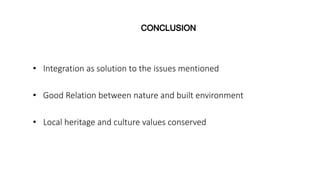
• Integration as solution to the issues mentioned
• Good Relation between nature and built environment
• Local heritage and culture values conserved
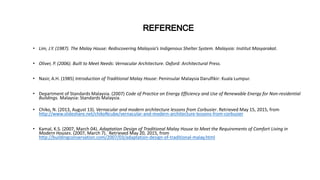
• Lim, J.Y. (1987). The Malay House: Rediscovering Malaysia’s Indigenous Shelter System. Malaysia: Institut Masyarakat.
• Oliver, P. (2006). Built to Meet Needs: Vernacular Architecture. Oxford: Architectural Press.
• Nasir, A.H. (1985) Introduction of Traditional Malay House: Peninsular Malaysia Darulfikir: Kuala Lumpur.
• Department of Standards Malaysia. (2007) Code of Practice on Energy Efficiency and Use of Renewable Energy for Non-residential
Buildings. Malaysia: Standards Malaysia.
• Chiko, N. (2013, August 13). Vernacular and modern architecture lessons from Corbusier. Retrieved May 15, 2015, from
http://www.slideshare.net/chikoNcube/vernacular-and-modern-architecture-lessons-from-corbusier
• Kamal, K.S. (2007, March 04). Adaptation Design of Traditional Malay House to Meet the Requirements of Comfort Living in
Modern Houses. (2007, March 7). Retrieved May 20, 2015, from
http://buildingconservation.com/2007/03/adaptation-design-of-traditional-malay.html

Aa Presentation slides

  • 1.
    A Study ofIntegration of Malay Vernacular Design and Modern Design in The Deck House to Achieve Thermal Comfort in Tropical Climate By Lim Jian Jun CASE X The Deck House
  • 2.
    PRESENTATION Tropical Climate Design Consideration MalayVernacular Architecture Issues Findings Conclusion Reference
  • 3.
    INTRODUCTION OF • WarmWeather • High Humid • Copious Rainfall • Monsoon
  • 4.
    ALTITUDE ZONATION OF Coastal •Smaller temperature variation (warm) • Vulnerable to increases in the intensity of storm surge and heavy precipitation Forest • Greater temperature variation • Distinctive rainfall patterns • Humid and warm Highland • Greater temperature variation • Humid : Covered by clouds and misty • Example : Cameron Highland
  • 5.
    TROPICAL CLIMATE : •Air Temperature • Humidity • Air Movement • Radiant Temperature
  • 6.
    • Building Orientation •Building Envelopes • Building Materials • Site Context • Openings TROPICAL CLIMATE : Orientation and Openings affecting the lighting and temperature in the building Surrounding trees as shading objects to building Building envelopes and materials to prevent heat gain
  • 7.
    INTRODUCTION OF • Design-with-NatureArchitecture • Natural materials : Timber, Rattan • Rich aesthetic values : Cravings • Communal and Nature focused • Type differs from states to states • Good Climatic Design
  • 8.
    MALAY VERNACULAR ARCHITECTURE: • Elevated • Light Weight • Large Overhang • Building Materials • Open Interior Spaces • Ventilation at Body Level
  • 9.
    • Lacking ofEnvironmental Concern : Sustainability • Poor Relation of Natural Environment : Site Responses, Climate • Local Design and Cultural Values Disintegrated by Modern Influences ISSUES :
  • 10.
    FINDINGS | A Searchfor Comfort Living with Vernacular Contemporary Design in Tropical Climate
  • 11.
    INTEGRATION : • MinimalPartition • Passage for ventilation • Promotes Air Movement
  • 12.
    INTEGRATION : • CirculateCool Air • Discharge Trapped Hot Air • Spacious
  • 13.
    INTEGRATION : • Captureshigher wind • Minimal interference of slope • Prevent damp from ground
  • 14.
    INTEGRATION : • Largeshaded area • Good Protection against Downpours • Allow windows left open
  • 15.
    INTEGRATION : • Operableopenings • Louvers as Outlet • Elongated form for cross ventilation
  • 16.
    INTEGRATION : • Linteland posts • Light Materials • Unobstructed : Gain shelter from surroundings
  • 17.
    INTEGRATION : • LowHeat Capacity : Wood • Make allow of curtain walls • View of Nature Terrains
  • 18.
    : VERNACULAR ,MODERN & INTEGRATED Considerations Malay House The Deck House Contemporary CLIMATE CONCERN Yes Yes Poor CONTEXUAL RESPONSES Yes Yes Poor STRUCTURES Wooden Post and Lintel Concrete and Steels Massive Construction BUILDING MATERIALS Natural Materials (short life span) Contemporary Materials (High Thermal Mass) Contemporary Materials (High Thermal Mass) VIEWS Restricted Good (Poetic Experiences) Poor (ventilation only) VENTILATION Body level Double Volume Poor PUBLIC AND PRIVATE Communal focused Less privacy (curtain walls) Isolated LIGHTING Underlighted Naturally Illuminated Artificial lighted
  • 19.
    • Integration assolution to the issues mentioned • Good Relation between nature and built environment • Local heritage and culture values conserved
  • 20.
    • Lim, J.Y.(1987). The Malay House: Rediscovering Malaysia’s Indigenous Shelter System. Malaysia: Institut Masyarakat. • Oliver, P. (2006). Built to Meet Needs: Vernacular Architecture. Oxford: Architectural Press. • Nasir, A.H. (1985) Introduction of Traditional Malay House: Peninsular Malaysia Darulfikir: Kuala Lumpur. • Department of Standards Malaysia. (2007) Code of Practice on Energy Efficiency and Use of Renewable Energy for Non-residential Buildings. Malaysia: Standards Malaysia. • Chiko, N. (2013, August 13). Vernacular and modern architecture lessons from Corbusier. Retrieved May 15, 2015, from http://www.slideshare.net/chikoNcube/vernacular-and-modern-architecture-lessons-from-corbusier • Kamal, K.S. (2007, March 04). Adaptation Design of Traditional Malay House to Meet the Requirements of Comfort Living in Modern Houses. (2007, March 7). Retrieved May 20, 2015, from http://buildingconservation.com/2007/03/adaptation-design-of-traditional-malay.html