MIS
Group 3

Chapter 5 page 16 – 20
Data Modeling and Database
Characteristics
   When building a database, an
    organization must consider:
       - Content
       - Access
       - Logical Structure
       - Physical Organization
Data Modeling and Database
Characteristics
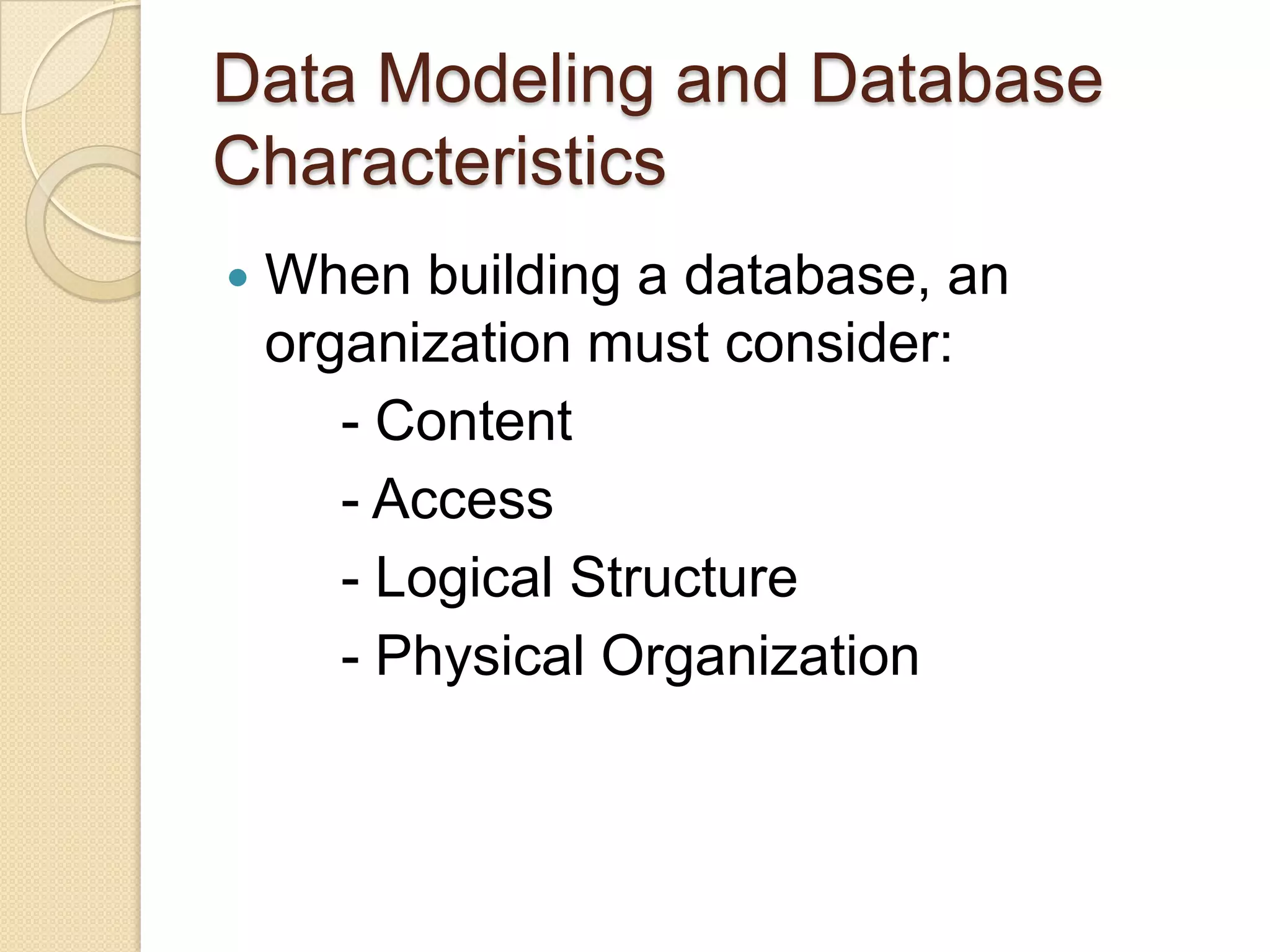
   Content: What data should be
    collected and at what cost?
Data Modeling and Database
Characteristics
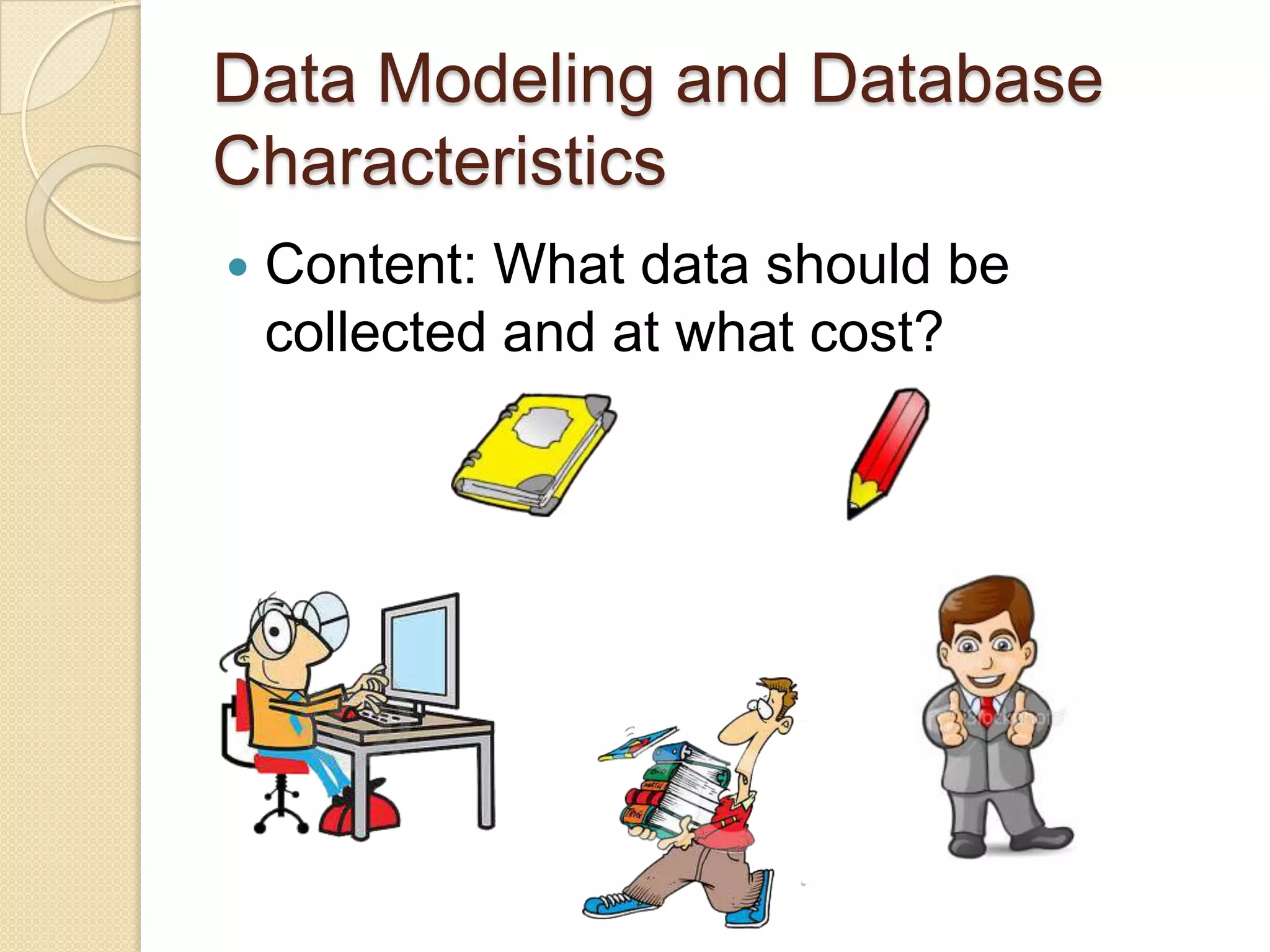
   Access: What data should be provided
    to          which user and when?
Data Modeling and Database
Characteristics
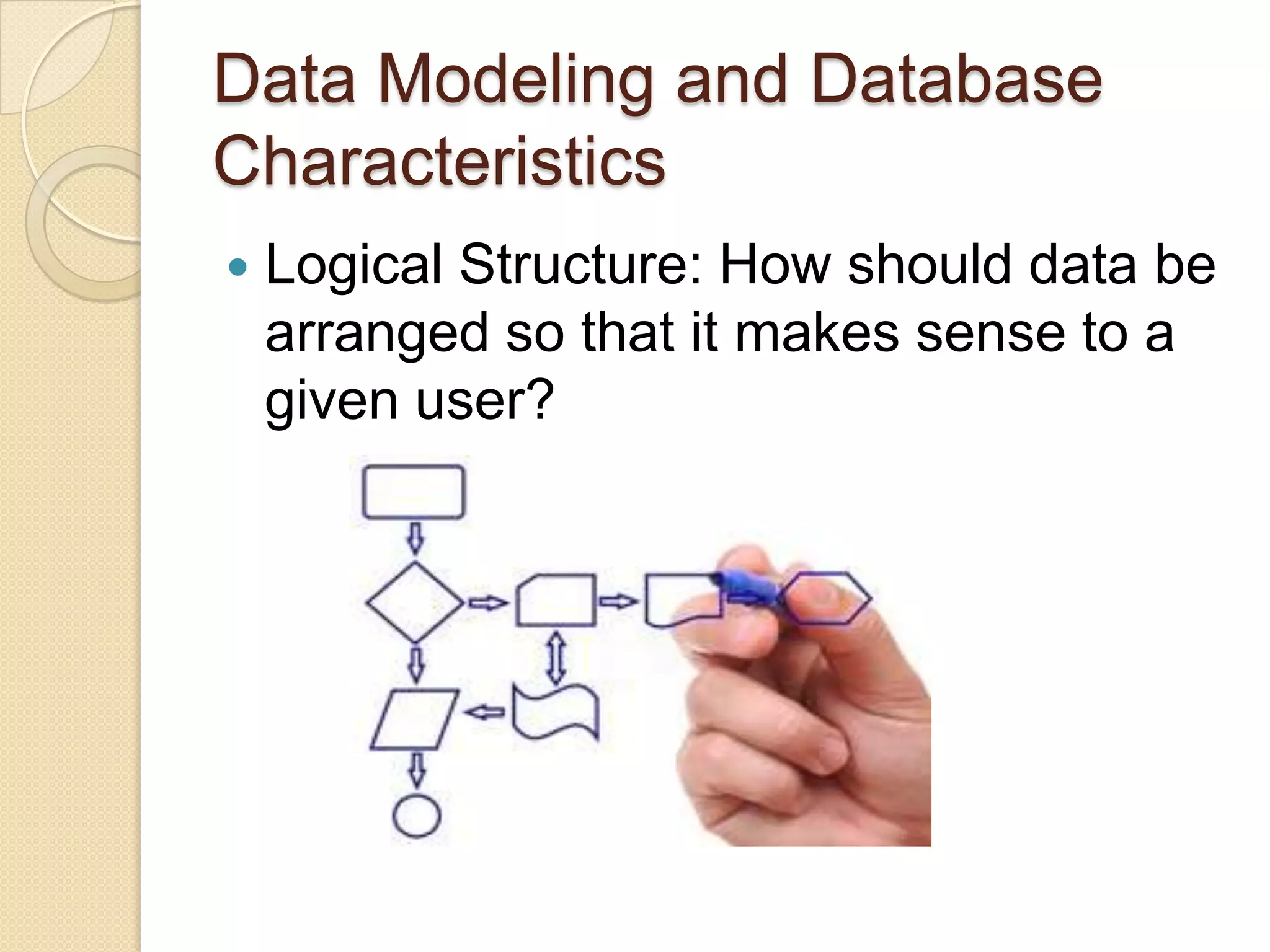
   Logical Structure: How should data be
    arranged so that it makes sense to a
    given user?
Data Modeling and Database
Characteristics
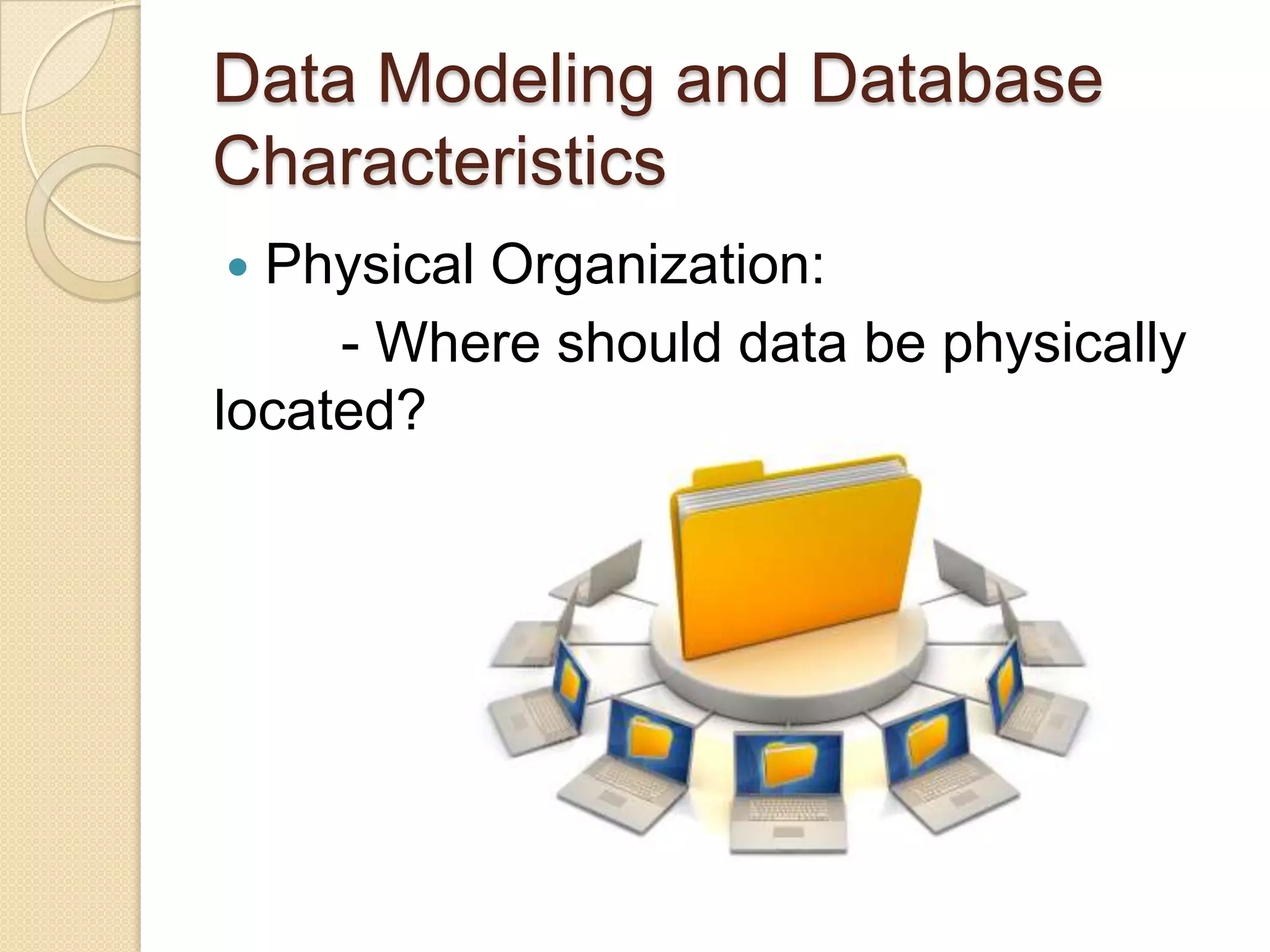
 Physical Organization:
     - Where should data be physically
located?
Data Center
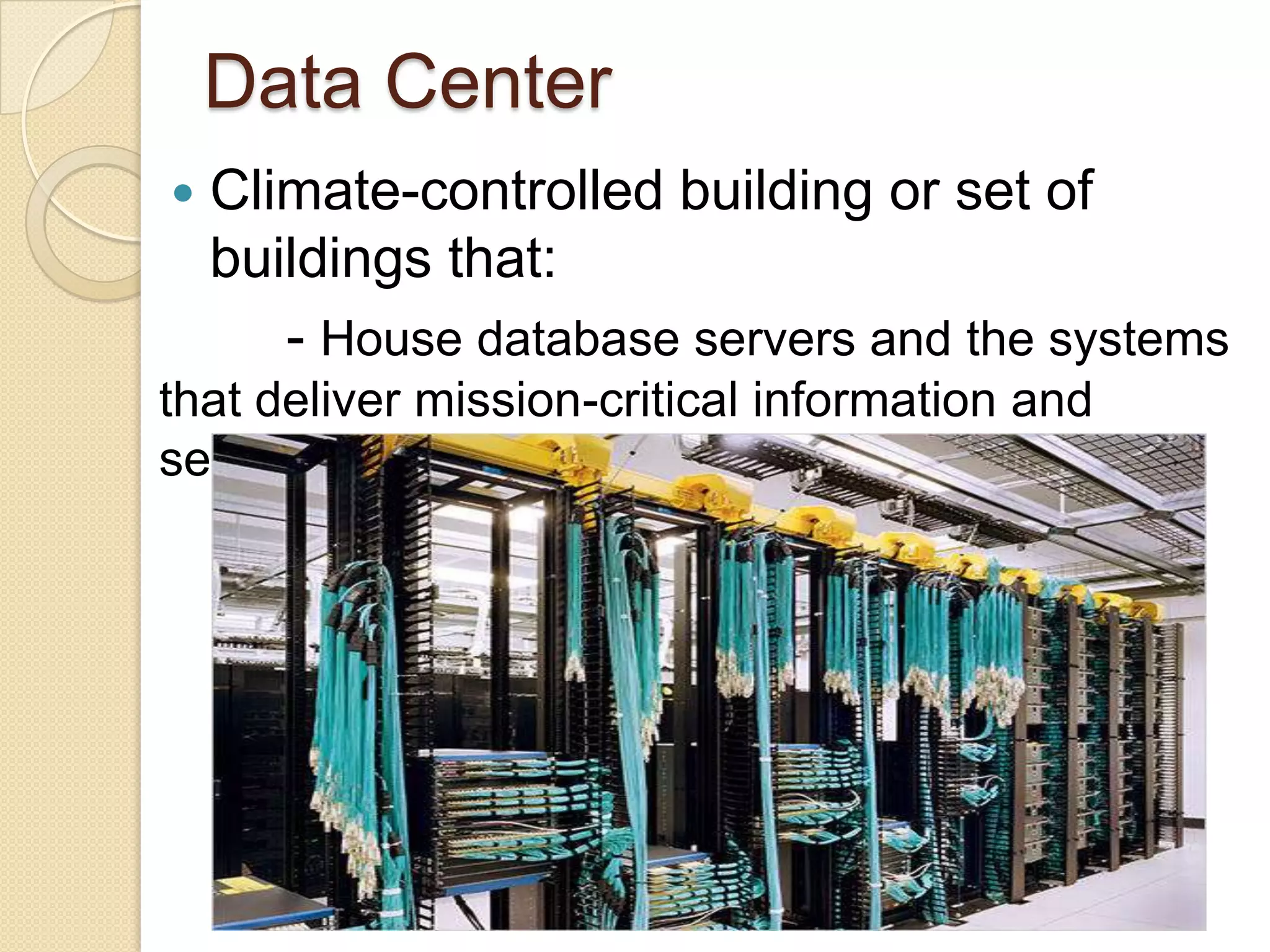
   Climate-controlled building or set of
    buildings that:
       - House database servers and the systems
that deliver mission-critical information and
services.
Data Center
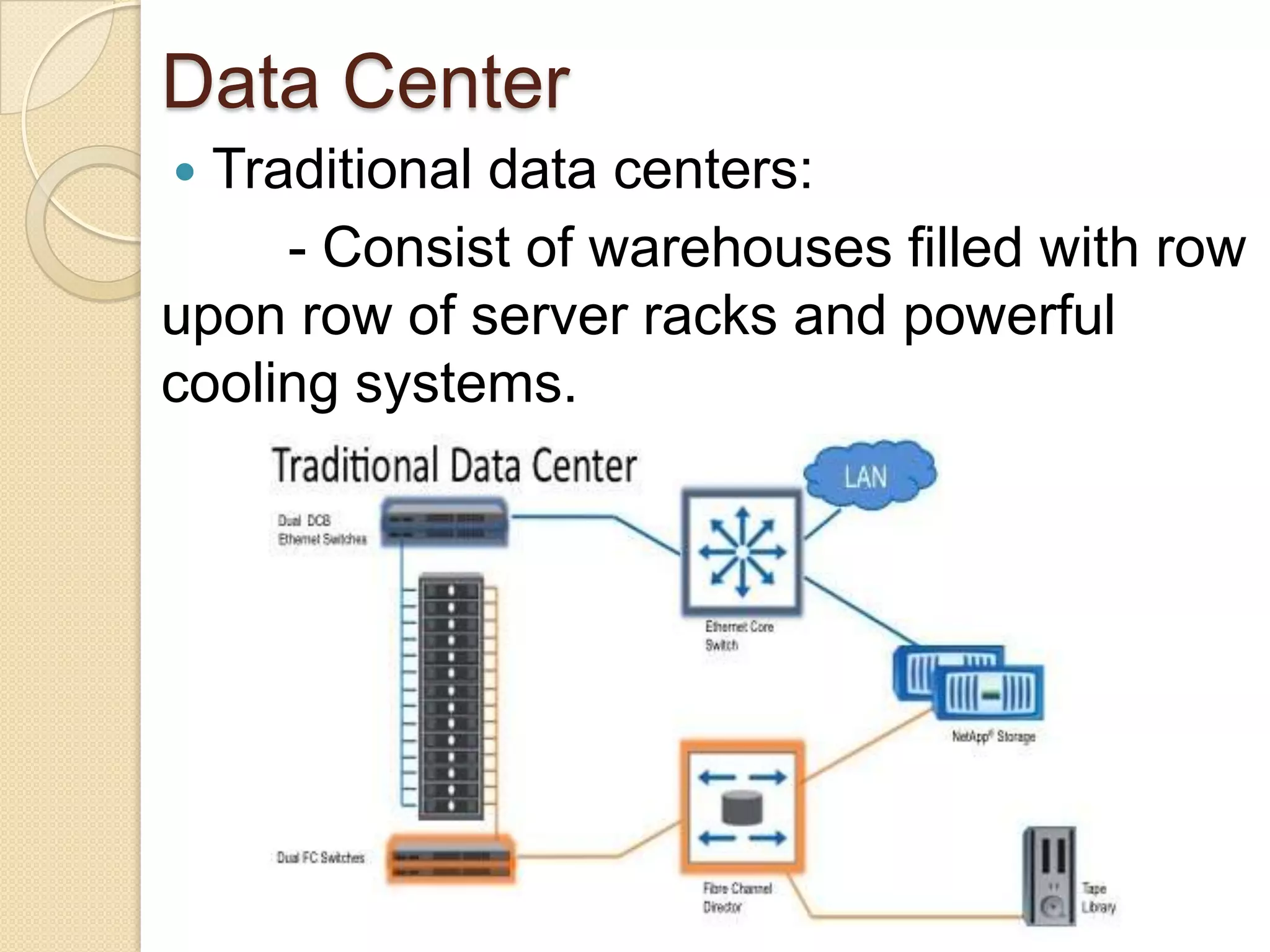
 Traditional data centers:
     - Consist of warehouses filled with row
upon row of server racks and powerful
cooling systems.
Data Modeling
   Building a database requires two
    types of designs:
    ◦ Logical design
      Abstract model of how data should be
       structured and arranged to meet an
       organization’s information needs
    ◦ Physical design:
      Starts from the logical database design and
       fine-tunes it for performance and cost
       considerations
Data Modeling (continued)
   Planned data redundancy
    ◦ Done to improve system performance so
      that user reports or queries can be created
      more quickly
   Data model
    ◦ Diagram of data entities and their
      relationships
   Enterprise data modeling
    ◦ Starts by investigating the general data
      and information needs of the organization
      at the strategic level
Data Modeling ( continued )
   Entity-relationship (ER) diagrams:
    ◦ Data models that use basic graphical
      symbols to show the organization of and
      relationships between data
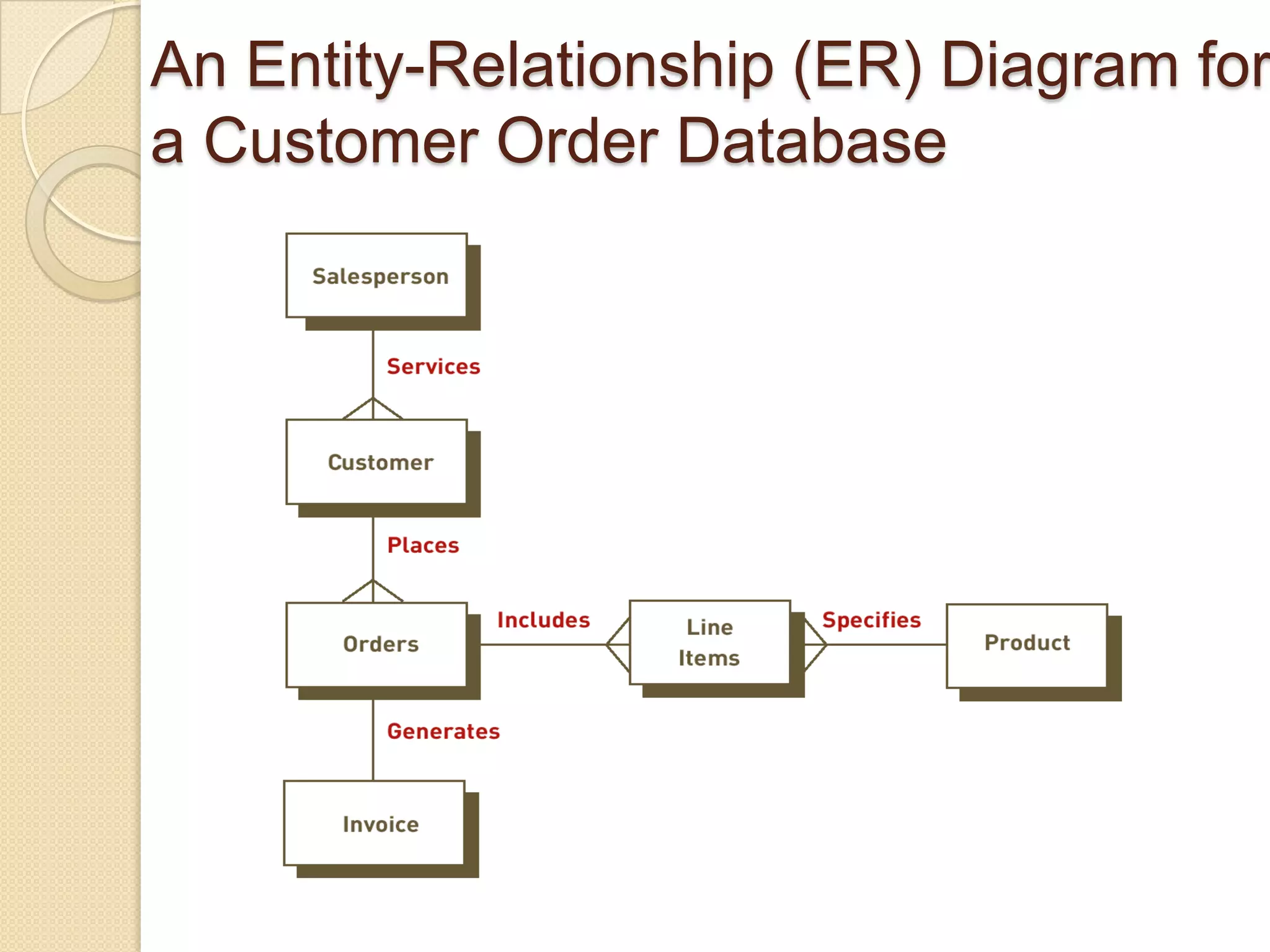
An Entity-Relationship (ER) Diagram for
a Customer Order Database

A1.g3.ch5.16 20

  • 1.
    MIS Group 3 Chapter 5page 16 – 20
  • 2.
    Data Modeling andDatabase Characteristics  When building a database, an organization must consider: - Content - Access - Logical Structure - Physical Organization
  • 3.
    Data Modeling andDatabase Characteristics  Content: What data should be collected and at what cost?
  • 4.
    Data Modeling andDatabase Characteristics  Access: What data should be provided to which user and when?
  • 5.
    Data Modeling andDatabase Characteristics  Logical Structure: How should data be arranged so that it makes sense to a given user?
  • 6.
    Data Modeling andDatabase Characteristics  Physical Organization: - Where should data be physically located?
  • 7.
    Data Center  Climate-controlled building or set of buildings that: - House database servers and the systems that deliver mission-critical information and services.
  • 8.
    Data Center  Traditionaldata centers: - Consist of warehouses filled with row upon row of server racks and powerful cooling systems.
  • 9.
    Data Modeling  Building a database requires two types of designs: ◦ Logical design  Abstract model of how data should be structured and arranged to meet an organization’s information needs ◦ Physical design:  Starts from the logical database design and fine-tunes it for performance and cost considerations
  • 10.
    Data Modeling (continued)  Planned data redundancy ◦ Done to improve system performance so that user reports or queries can be created more quickly  Data model ◦ Diagram of data entities and their relationships  Enterprise data modeling ◦ Starts by investigating the general data and information needs of the organization at the strategic level
  • 11.
    Data Modeling (continued )  Entity-relationship (ER) diagrams: ◦ Data models that use basic graphical symbols to show the organization of and relationships between data
  • 12.
    An Entity-Relationship (ER)Diagram for a Customer Order Database