Access and Use of Government Data by 
Research and Advocacy Organisations in India: 
A Survey of (Potential) Open Data Ecosystem 
Sumandro Chattapadhyay 
ajantriks.net
A Survey of (Potential) Open Data Ecosystem in India 
­Supported 
by World Wide Web Foundation and IDRC, Canada 
­Study 
of the practices of accessing and using government data by 
selected (non­­governmental 
and non­­commercial) 
research and advocacy 
organisations in India 
­Wider 
policy context of India adopting an open government data policy 
and launching an open data portal in 2012 
­Most 
of the organisations interacted with are yet to begin substantial 
usage of the open data portal, but they are working with national­­scale 
government data for a long time 
­Objective 
of the study is not to establish existence of 'open data 
intermediary organisations' in India, but to understand the factors that 
determine their existence, relevance, or otherwise
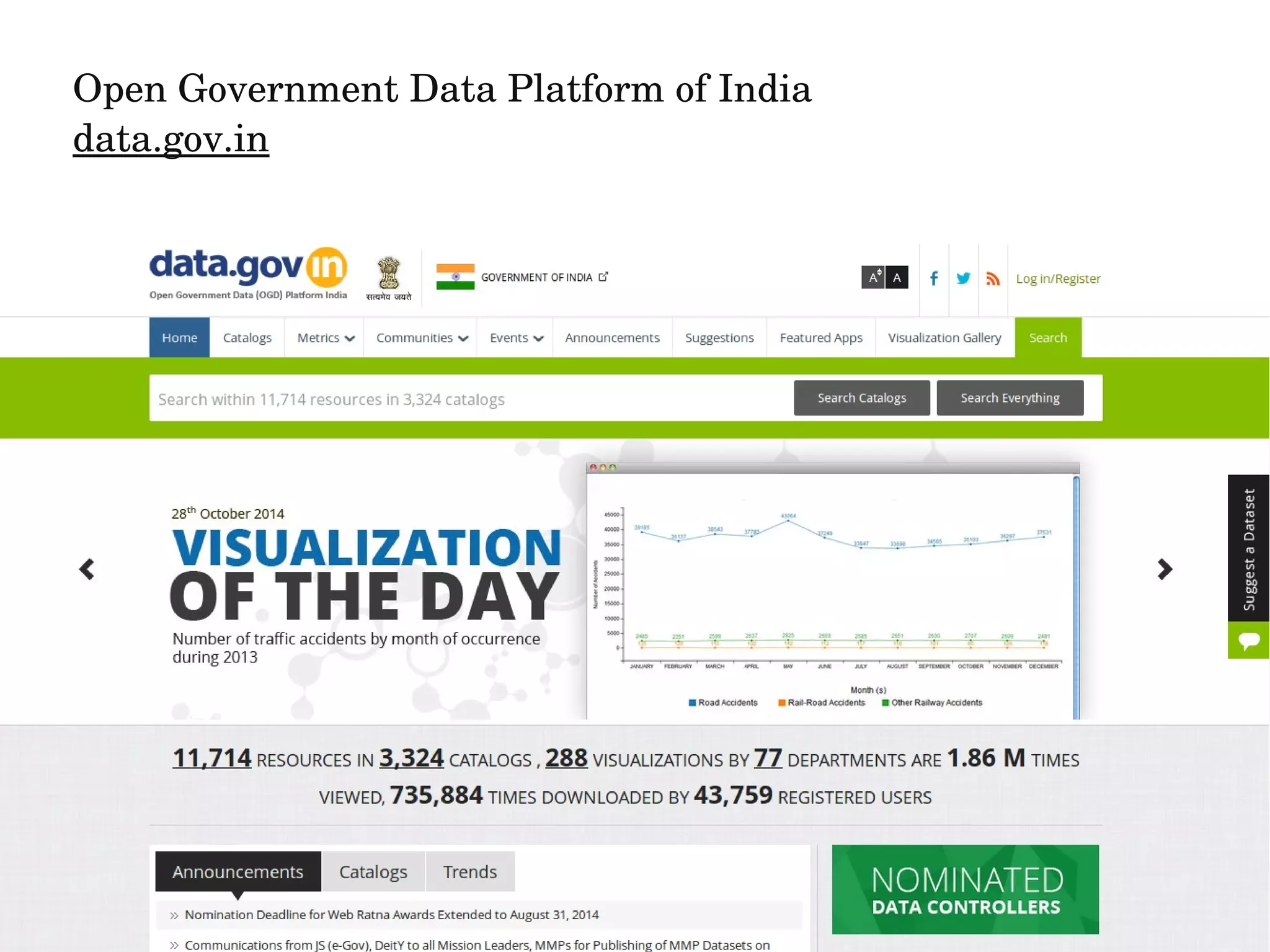
Open Government Data Platform of India 
data.gov.in
Organisations Engaged with in the Study 
­Accountability 
Initiative, Delhi 
­ASER 
Centre, Delhi 
­Association 
for Democractic Reforms, Delhi 
­Akvo, 
Delhi 
­Hyderabad 
Urban Portal, Hyderabad 
­India 
Biodiversity Portal (Strand Life Sciences), Bangalore 
­India 
Energy Portal (The Energy and Resource Institute), Delhi 
­India 
Environment Portal (Centre for Science and Environment), Delhi 
­India 
Urban Portal (National Institute of Urban Affairs), Delhi 
­India 
Water Portal (Arghyam), Bangalore 
­Karnataka 
Learning Partnership, Bangalore 
­PRS 
Legislative, Delhi 
­Transparent 
Chennai, Chennai
Sectors Engaged with in the Study 
­Budget 
and expenditure 
­Education 
and social sector expenditure 
­Political 
representatives and candidates 
­Water 
and sanitation 
­Urban 
development 
­Biodiversity 
­Energy 
and natural resources 
­Environment 
­Urban 
development 
­Water 
and sanitation 
­Education 
­Political 
representatives and parliamentary affairs 
­Urban 
development
Open Data Ecosystem (Working Description) 
­The 
adjective open applies to both data and ecosystem 
­In 
other words, open data ecosystem needs to be conceptualised (and 
realised) as a network of creators and users of open data, where there is 
no unidirectional flow of open data 
­The 
government agencies, in an open data ecosystem, are neither the 
only creators of openly shared data, nor the only agency involved in 
(re)sharing data
Open Data Intermediary Organisations (Working Description) 
Open data intermediary organisations: 
­Either 
access data generated by other entities or self­create 
data 
­Add 
value to data (through acts of sanitising, organising, compiling, 
formatting, documenting, etc.) or not 
­Publish 
the data as open data to be used by other entities
What are the Key Challenges in Accessing Government Data? 
­A 
great wealth of existing government data is not made publicly 
accessible at all (either commercially or otherwise) in digital formats 
­Much 
unpublished data sets are not kept out of public circulation due to 
any specific characteristics of the data itself, but shaped by the reporting 
structure between local, state and central government agencies 
­Another 
key reason for non­publication 
of certain data set is a simple lack 
of precedence of sharing of that data, or lack of confidence of the agency, 
that is aversion of risk of bureacratic criticism 
­Among 
organisations interacted with, there is a general feeling that the 
government has failed to revise and expand its statistical machinery, 
leading to lacking quality and timeliness in data publication
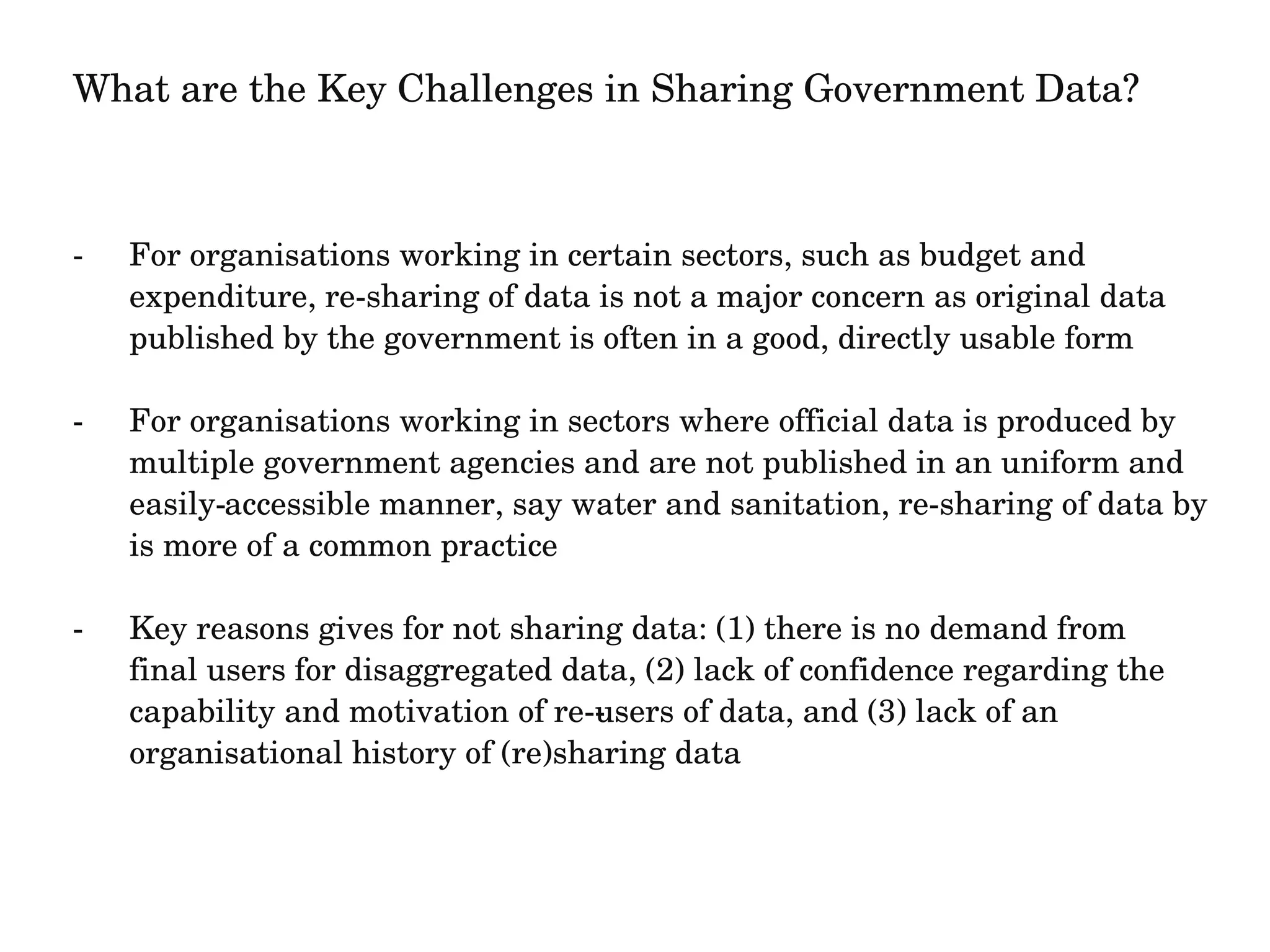
What are the Key Challenges in Sharing Government Data? 
­For 
organisations working in certain sectors, such as budget and 
expenditure, re­sharing 
of data is not a major concern as original data 
published by the government is often in a good, directly usable form 
­For 
organisations working in sectors where official data is produced by 
multiple government agencies and are not published in an uniform and 
easily­accessible 
manner, say water and sanitation, re­sharing 
of data by 
is more of a common practice 
­Key 
reasons gives for not sharing data: (1) there is no demand from 
final users for disaggregated data, (2) lack of confidence regarding the 
capability and motivation of re­­users 
of data, and (3) lack of an 
organisational history of (re)sharing data
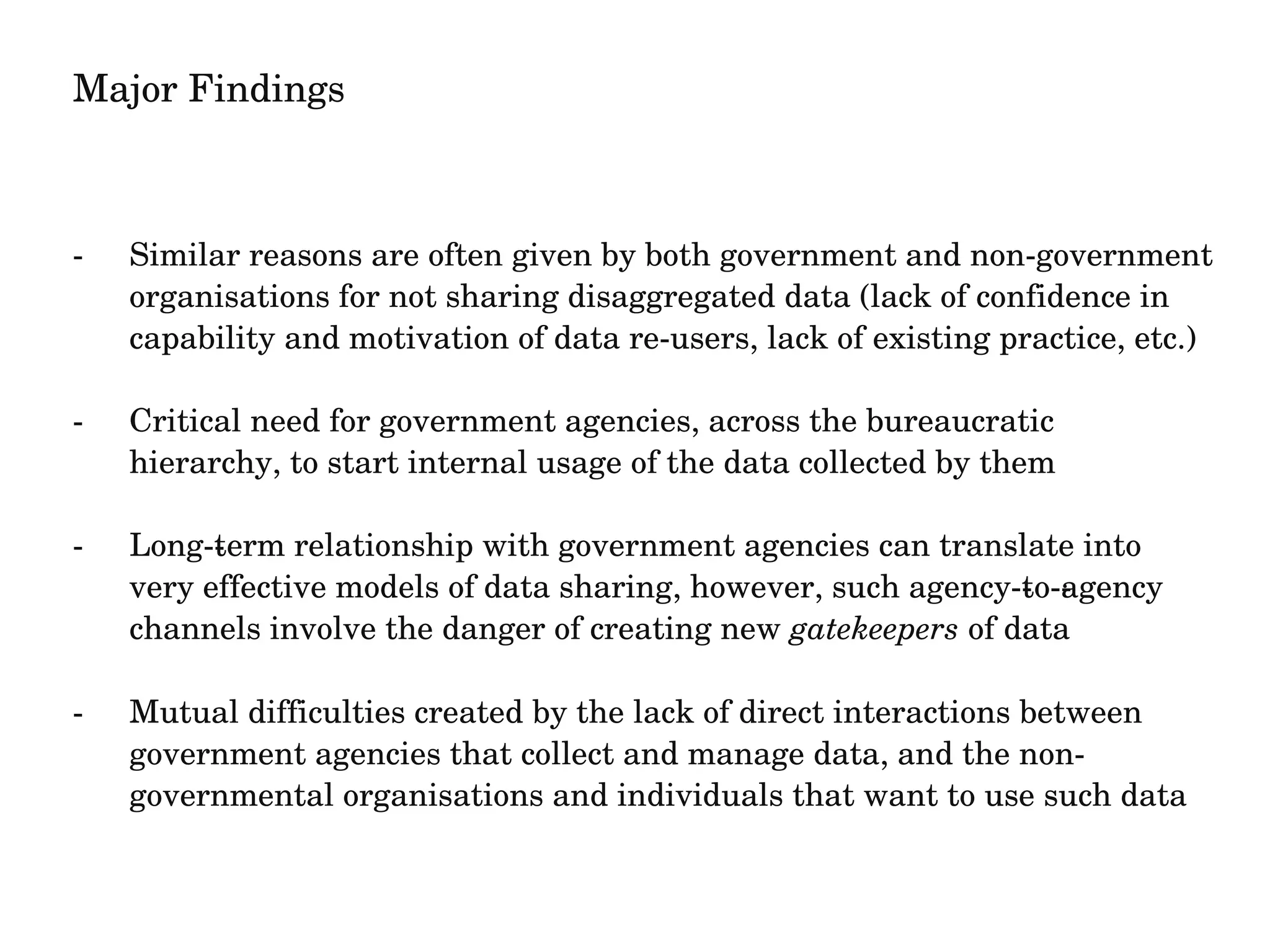
Major Findings 
­Similar 
reasons are often given by both government and non­government 
organisations for not sharing disaggregated data (lack of confidence in 
capability and motivation of data re­users, 
lack of existing practice, etc.) 
­Critical 
need for government agencies, across the bureaucratic 
hierarchy, to start internal usage of the data collected by them 
­Long­­term 
relationship with government agencies can translate into 
very effective models of data sharing, however, such agency­­to­­agency 
channels involve the danger of creating new gatekeepers of data 
­Mutual 
difficulties created by the lack of direct interactions between 
government agencies that collect and manage data, and the non­governmental 
organisations and individuals that want to use such data
Study website: ajantriks.github.io/oddc 
Sumandro Chattapadhyay 
ajantriks.net

A Survey of (Potential) Open Data Ecosystem in India // ICEGOV // October 2014

  • 1.
    Access and Useof Government Data by Research and Advocacy Organisations in India: A Survey of (Potential) Open Data Ecosystem Sumandro Chattapadhyay ajantriks.net
  • 2.
    A Survey of(Potential) Open Data Ecosystem in India ­Supported by World Wide Web Foundation and IDRC, Canada ­Study of the practices of accessing and using government data by selected (non­­governmental and non­­commercial) research and advocacy organisations in India ­Wider policy context of India adopting an open government data policy and launching an open data portal in 2012 ­Most of the organisations interacted with are yet to begin substantial usage of the open data portal, but they are working with national­­scale government data for a long time ­Objective of the study is not to establish existence of 'open data intermediary organisations' in India, but to understand the factors that determine their existence, relevance, or otherwise
  • 3.
    Open Government DataPlatform of India data.gov.in
  • 4.
    Organisations Engaged within the Study ­Accountability Initiative, Delhi ­ASER Centre, Delhi ­Association for Democractic Reforms, Delhi ­Akvo, Delhi ­Hyderabad Urban Portal, Hyderabad ­India Biodiversity Portal (Strand Life Sciences), Bangalore ­India Energy Portal (The Energy and Resource Institute), Delhi ­India Environment Portal (Centre for Science and Environment), Delhi ­India Urban Portal (National Institute of Urban Affairs), Delhi ­India Water Portal (Arghyam), Bangalore ­Karnataka Learning Partnership, Bangalore ­PRS Legislative, Delhi ­Transparent Chennai, Chennai
  • 5.
    Sectors Engaged within the Study ­Budget and expenditure ­Education and social sector expenditure ­Political representatives and candidates ­Water and sanitation ­Urban development ­Biodiversity ­Energy and natural resources ­Environment ­Urban development ­Water and sanitation ­Education ­Political representatives and parliamentary affairs ­Urban development
  • 6.
    Open Data Ecosystem(Working Description) ­The adjective open applies to both data and ecosystem ­In other words, open data ecosystem needs to be conceptualised (and realised) as a network of creators and users of open data, where there is no unidirectional flow of open data ­The government agencies, in an open data ecosystem, are neither the only creators of openly shared data, nor the only agency involved in (re)sharing data
  • 7.
    Open Data IntermediaryOrganisations (Working Description) Open data intermediary organisations: ­Either access data generated by other entities or self­create data ­Add value to data (through acts of sanitising, organising, compiling, formatting, documenting, etc.) or not ­Publish the data as open data to be used by other entities
  • 8.
    What are theKey Challenges in Accessing Government Data? ­A great wealth of existing government data is not made publicly accessible at all (either commercially or otherwise) in digital formats ­Much unpublished data sets are not kept out of public circulation due to any specific characteristics of the data itself, but shaped by the reporting structure between local, state and central government agencies ­Another key reason for non­publication of certain data set is a simple lack of precedence of sharing of that data, or lack of confidence of the agency, that is aversion of risk of bureacratic criticism ­Among organisations interacted with, there is a general feeling that the government has failed to revise and expand its statistical machinery, leading to lacking quality and timeliness in data publication
  • 9.
    What are theKey Challenges in Sharing Government Data? ­For organisations working in certain sectors, such as budget and expenditure, re­sharing of data is not a major concern as original data published by the government is often in a good, directly usable form ­For organisations working in sectors where official data is produced by multiple government agencies and are not published in an uniform and easily­accessible manner, say water and sanitation, re­sharing of data by is more of a common practice ­Key reasons gives for not sharing data: (1) there is no demand from final users for disaggregated data, (2) lack of confidence regarding the capability and motivation of re­­users of data, and (3) lack of an organisational history of (re)sharing data
  • 10.
    Major Findings ­Similar reasons are often given by both government and non­government organisations for not sharing disaggregated data (lack of confidence in capability and motivation of data re­users, lack of existing practice, etc.) ­Critical need for government agencies, across the bureaucratic hierarchy, to start internal usage of the data collected by them ­Long­­term relationship with government agencies can translate into very effective models of data sharing, however, such agency­­to­­agency channels involve the danger of creating new gatekeepers of data ­Mutual difficulties created by the lack of direct interactions between government agencies that collect and manage data, and the non­governmental organisations and individuals that want to use such data
  • 11.
    Study website: ajantriks.github.io/oddc Sumandro Chattapadhyay ajantriks.net