Structure:
- Introductions (15 minutes)
- Introduction to Using Data for Impact (15 minutes)
- Tools and Methods for Working with Data (30 minutes)
- Discussion (15 minutes)
- Breakout Session (45 minutes)
- Presentations and Discussion (30 minutes)
Sunil Abraham
Sumandro Chattapadhyay
Using Data for Impact
Ashoka Future Forum
Pune, 29th
June 2013
Introduction to Using Data for Impact
- Using Data for Impact
- What is Open (Government) Data?
- Open Data Projects
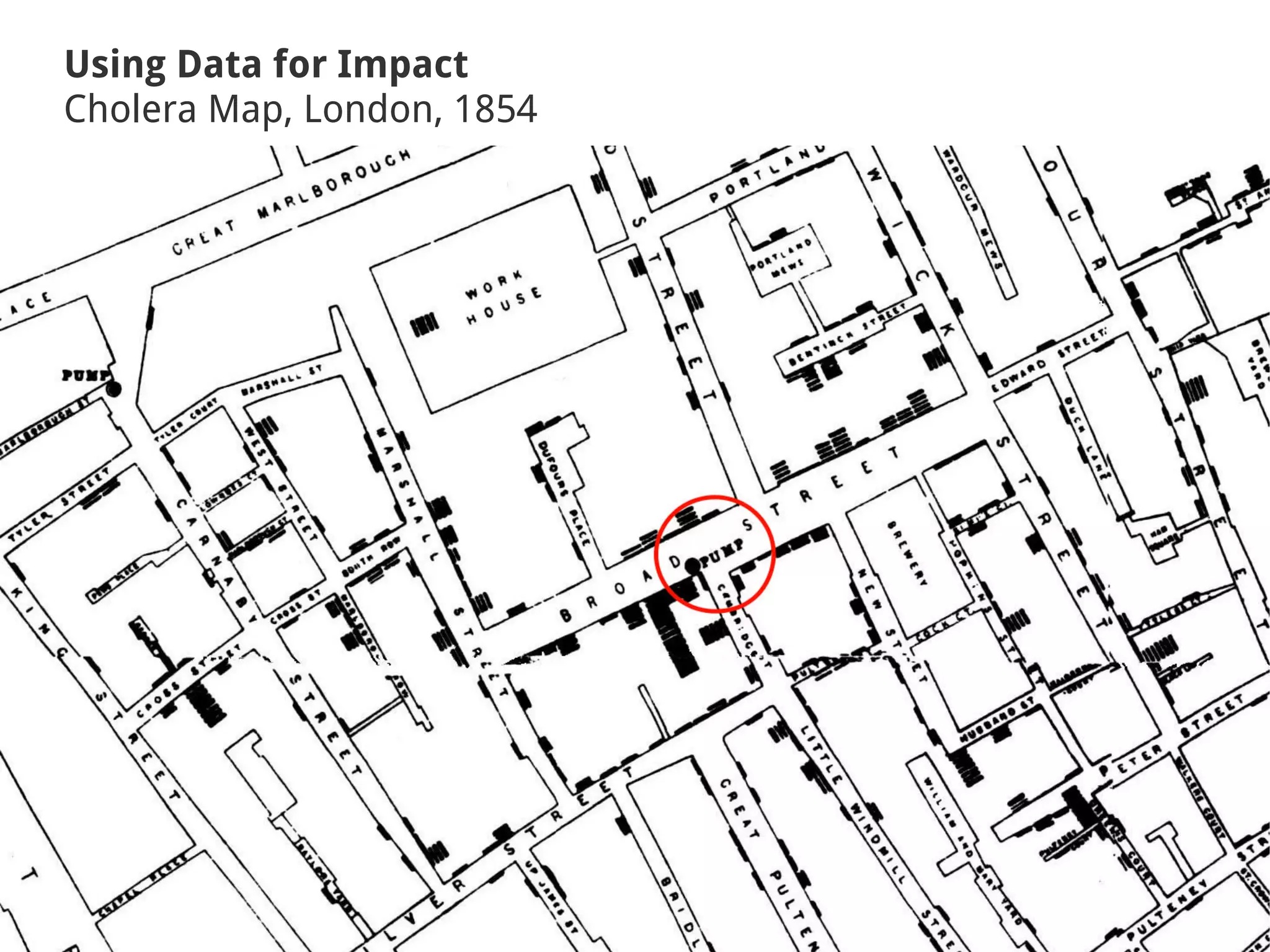
Using Data for Impact
Cholera Map, London, 1854
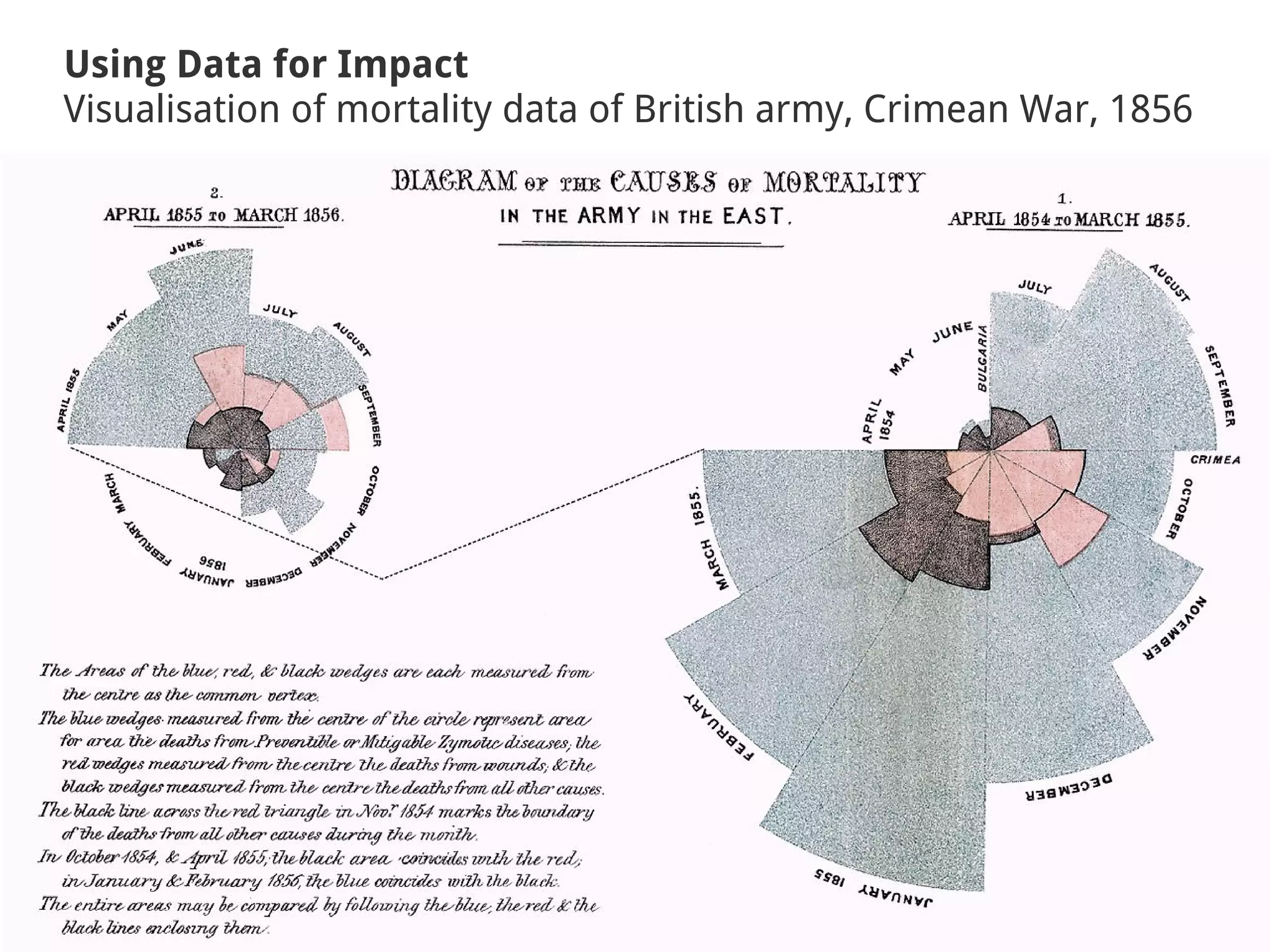
Using Data for Impact
Visualisation of mortality data of British army, Crimean War, 1856
Using Data for Impact
Open Street Map
Using Data for Impact
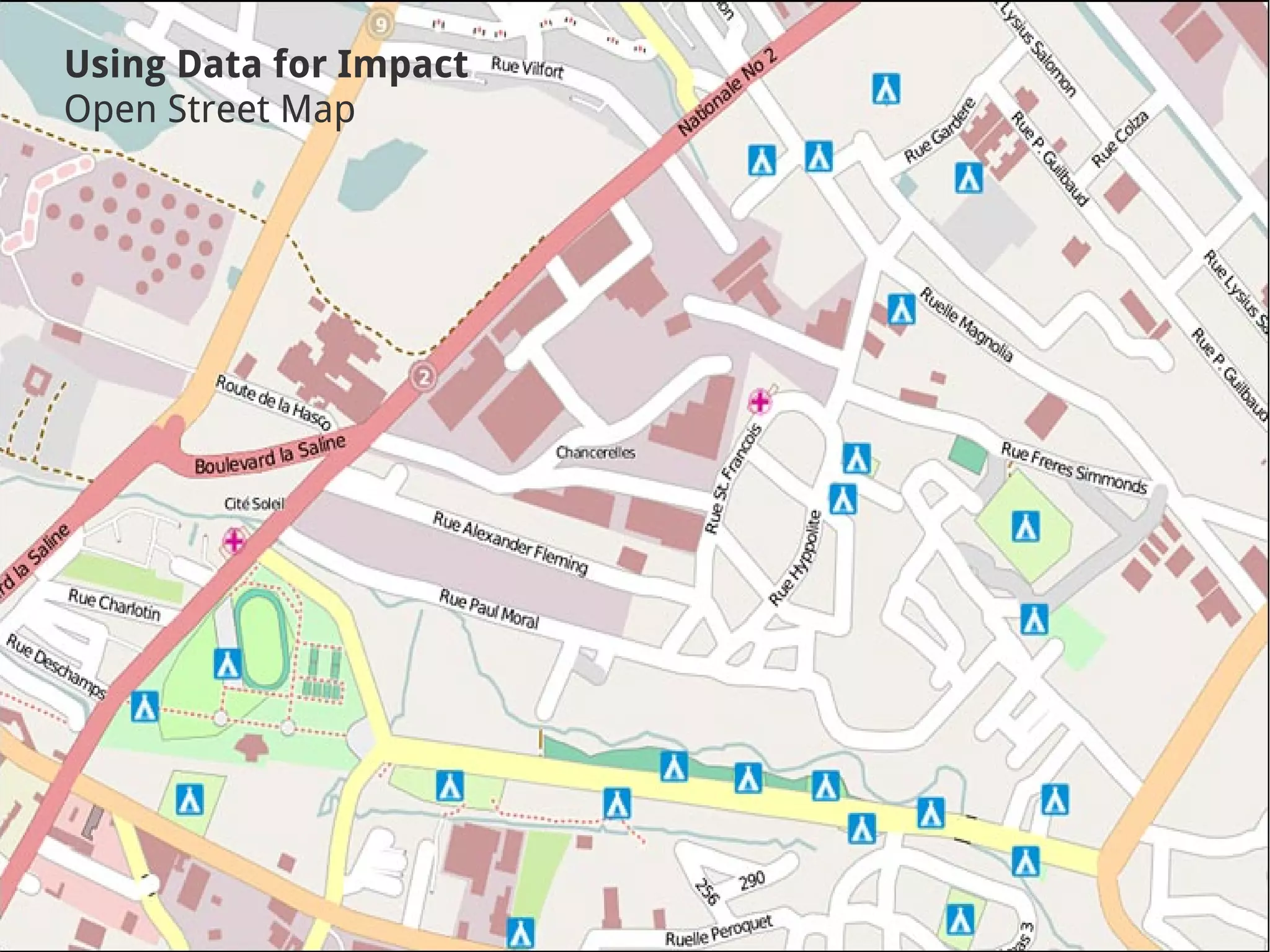
Open Street Map
Using Data for Impact
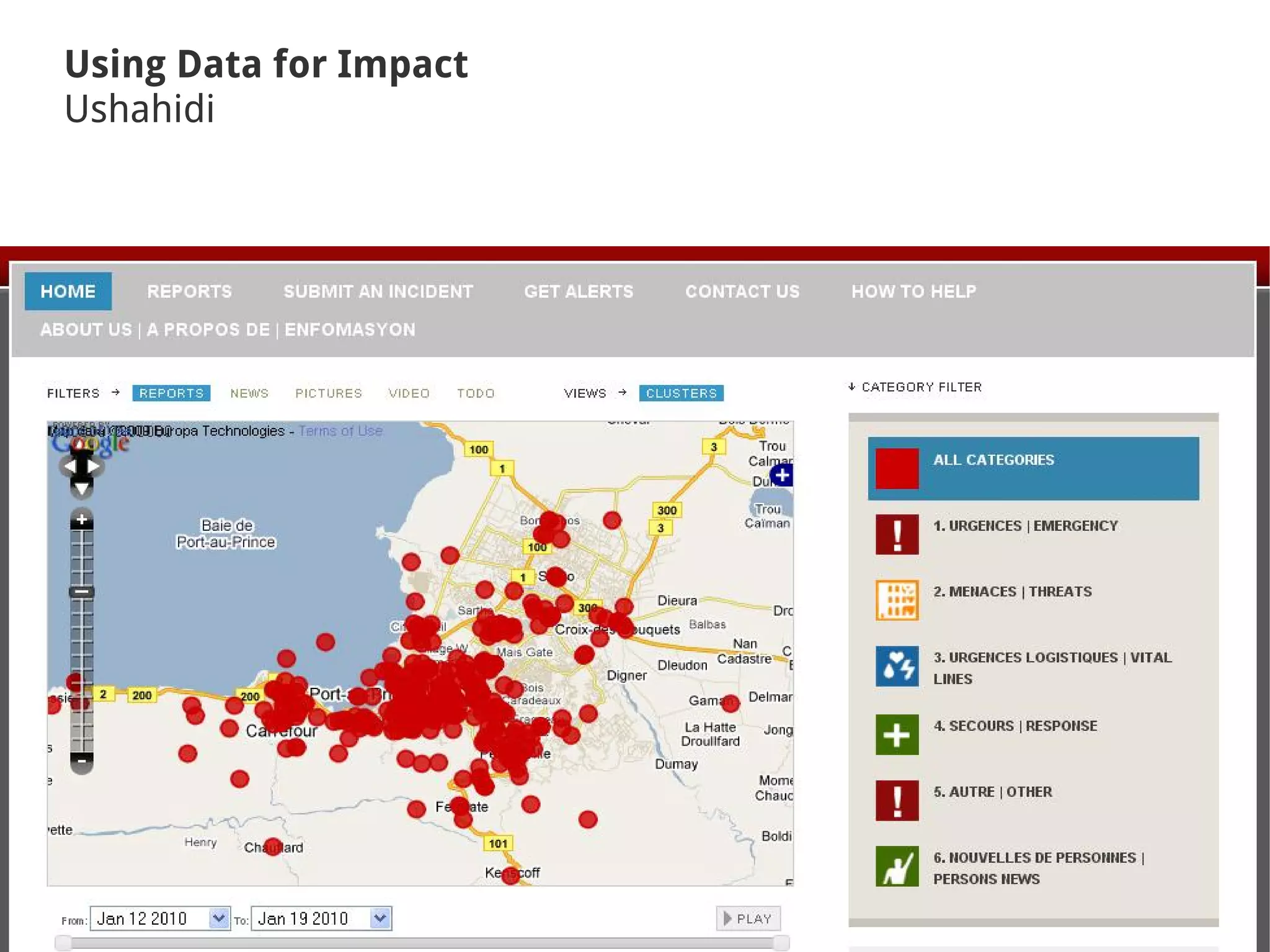
Ushahidi
Using Data for Impact
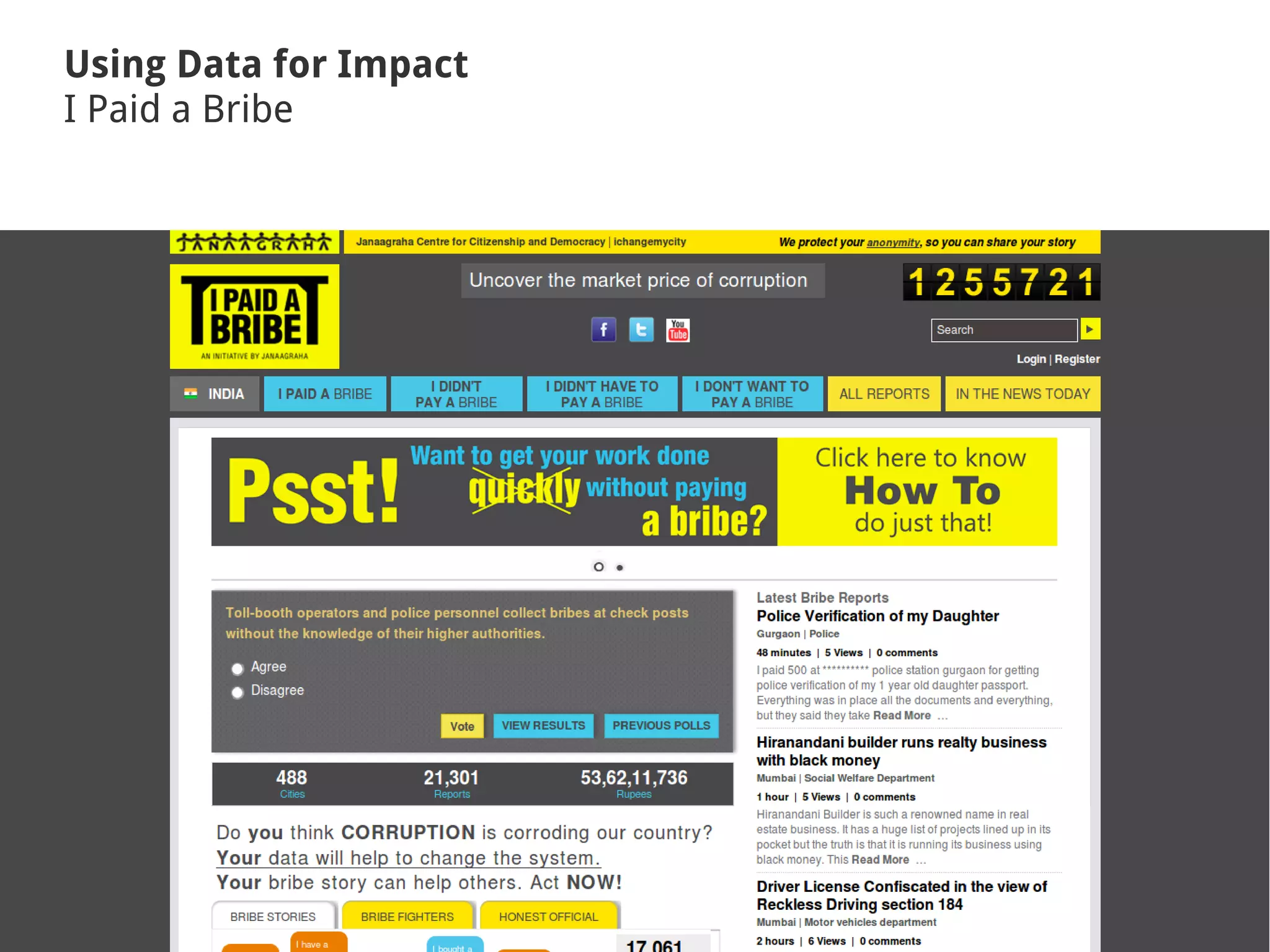
I Paid a Bribe
Using Data for Impact
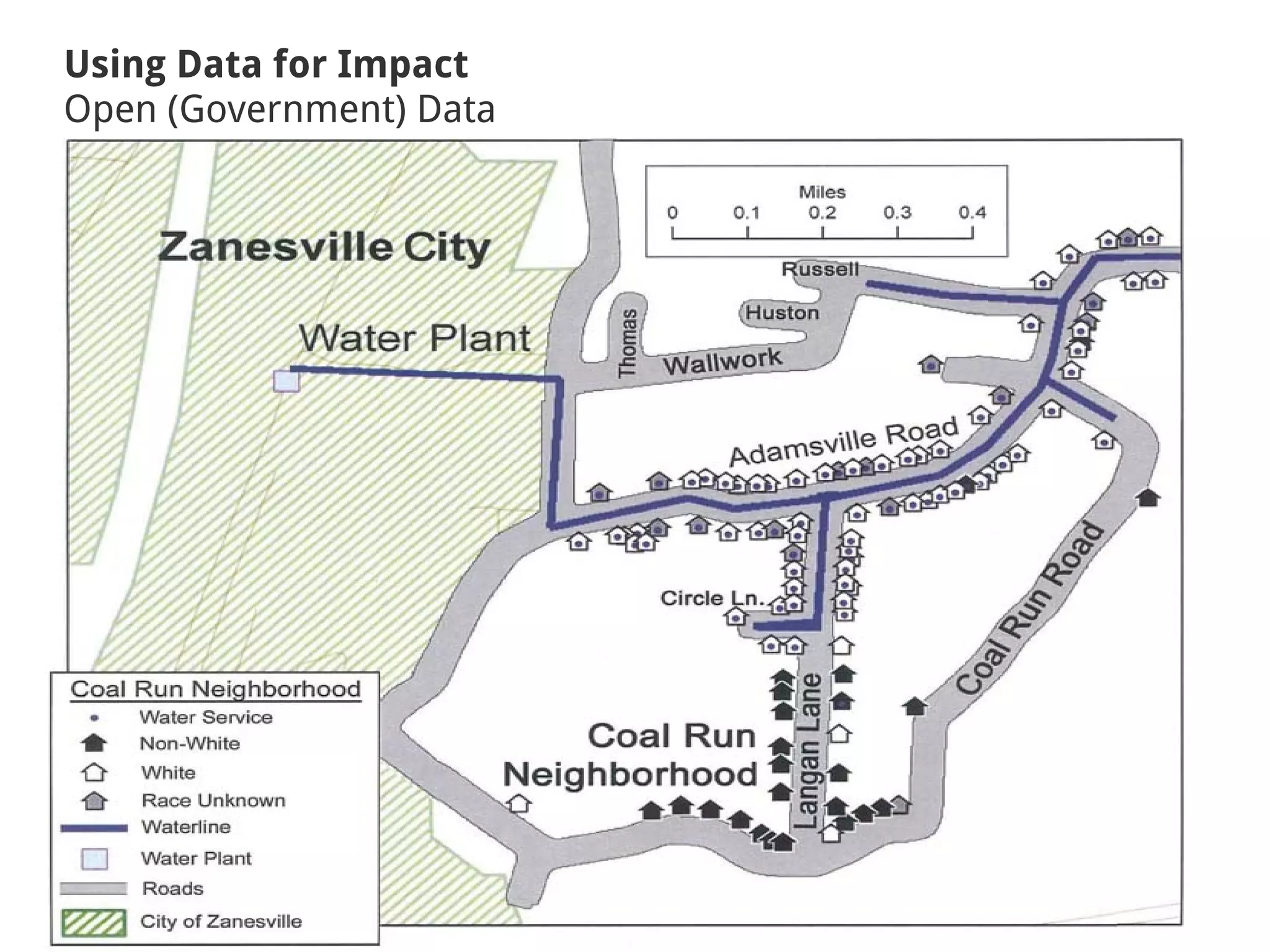
Open (Government) Data
Using Data for Impact
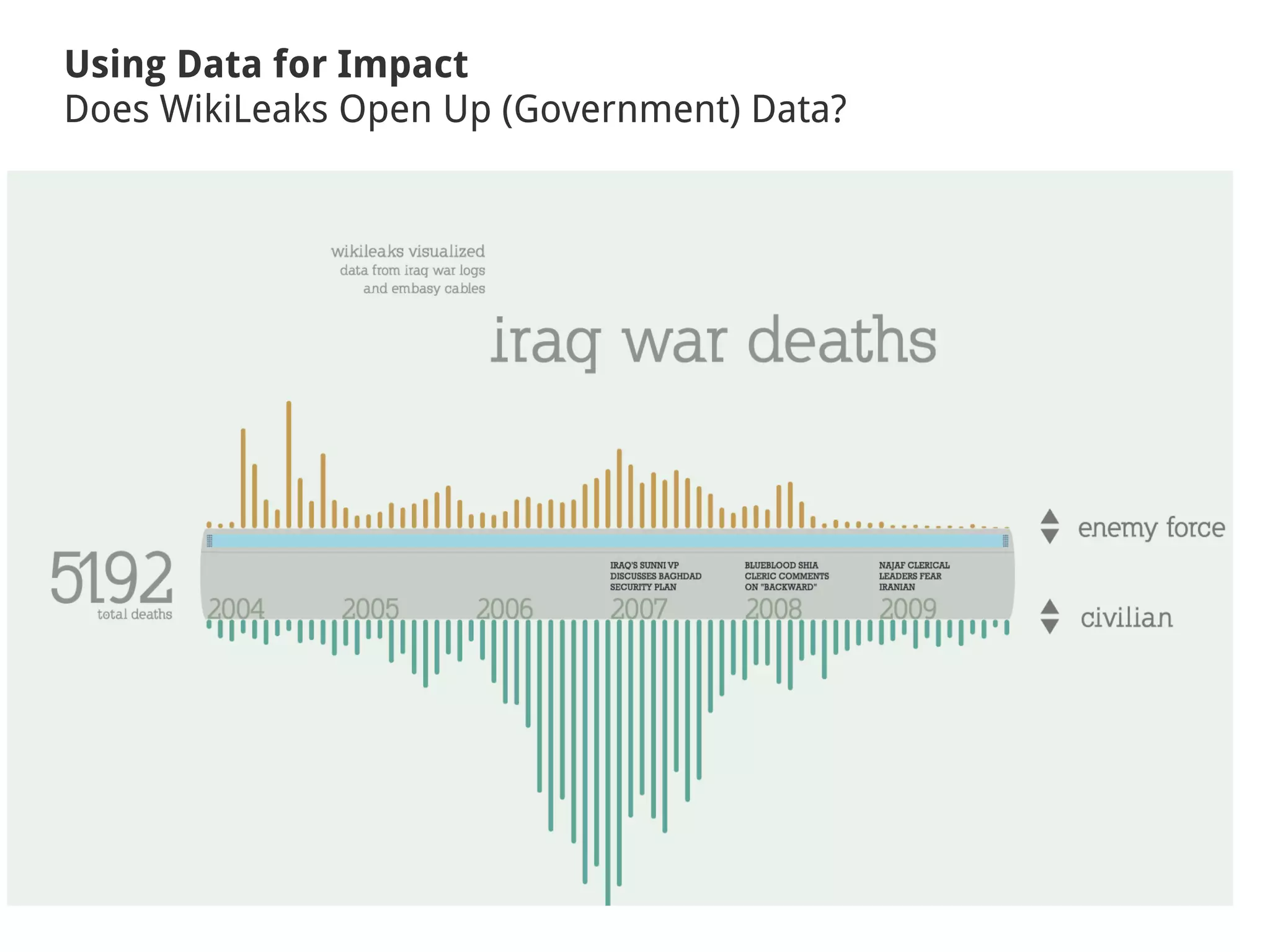
Does WikiLeaks Open Up (Government) Data?
What is Open (Government) Data?
Open Knowledge Foundation – Open Data Handbook
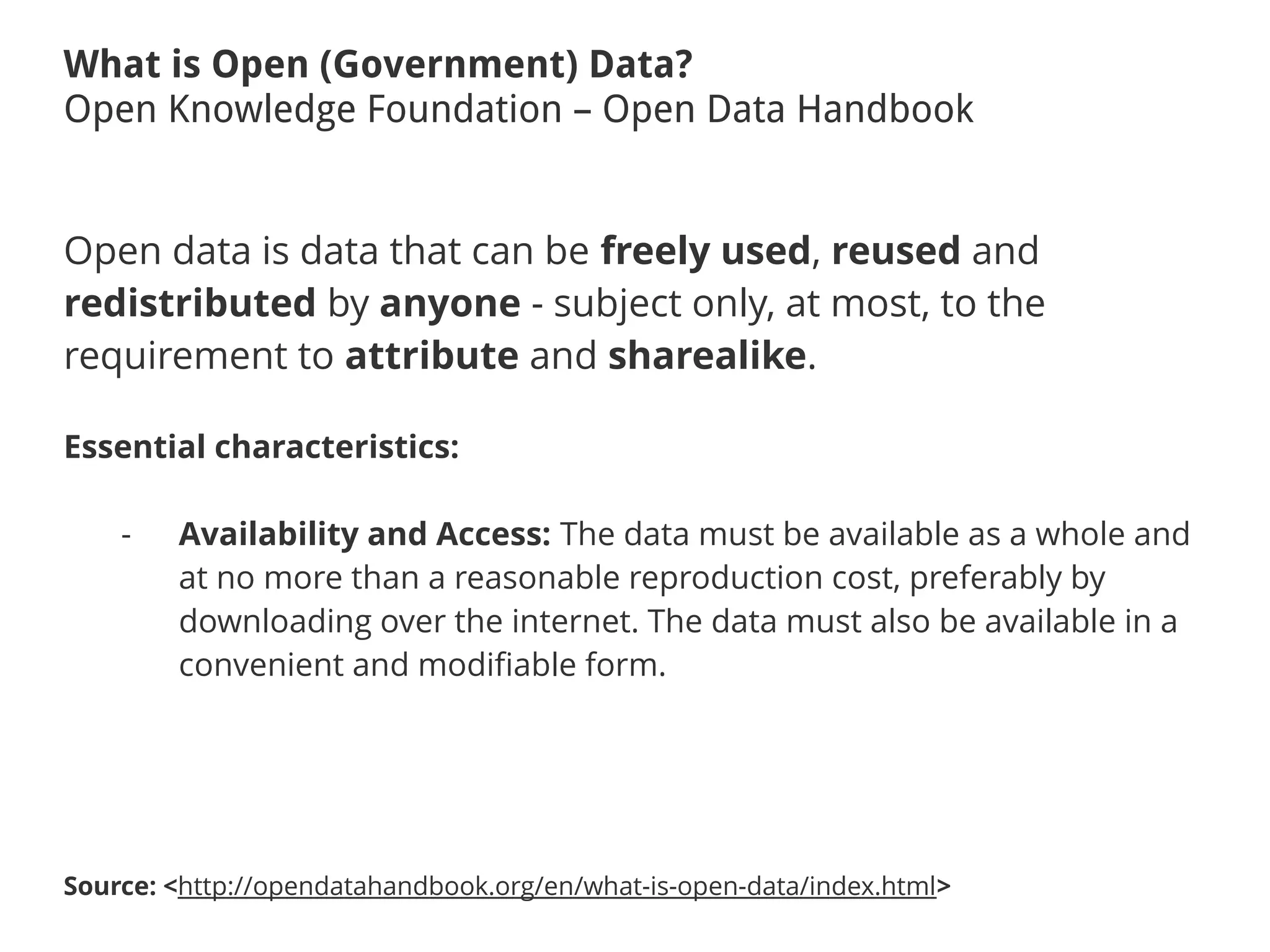
Open data is data that can be freely used, reused and
redistributed by anyone - subject only, at most, to the
requirement to attribute and sharealike.
Essential characteristics:
- Availability and Access: The data must be available as a whole and
at no more than a reasonable reproduction cost, preferably by
downloading over the internet. The data must also be available in a
convenient and modifiable form.
Source: <http://opendatahandbook.org/en/what-is-open-data/index.html>
What is Open (Government) Data?
Open Knowledge Foundation – Open Data Handbook
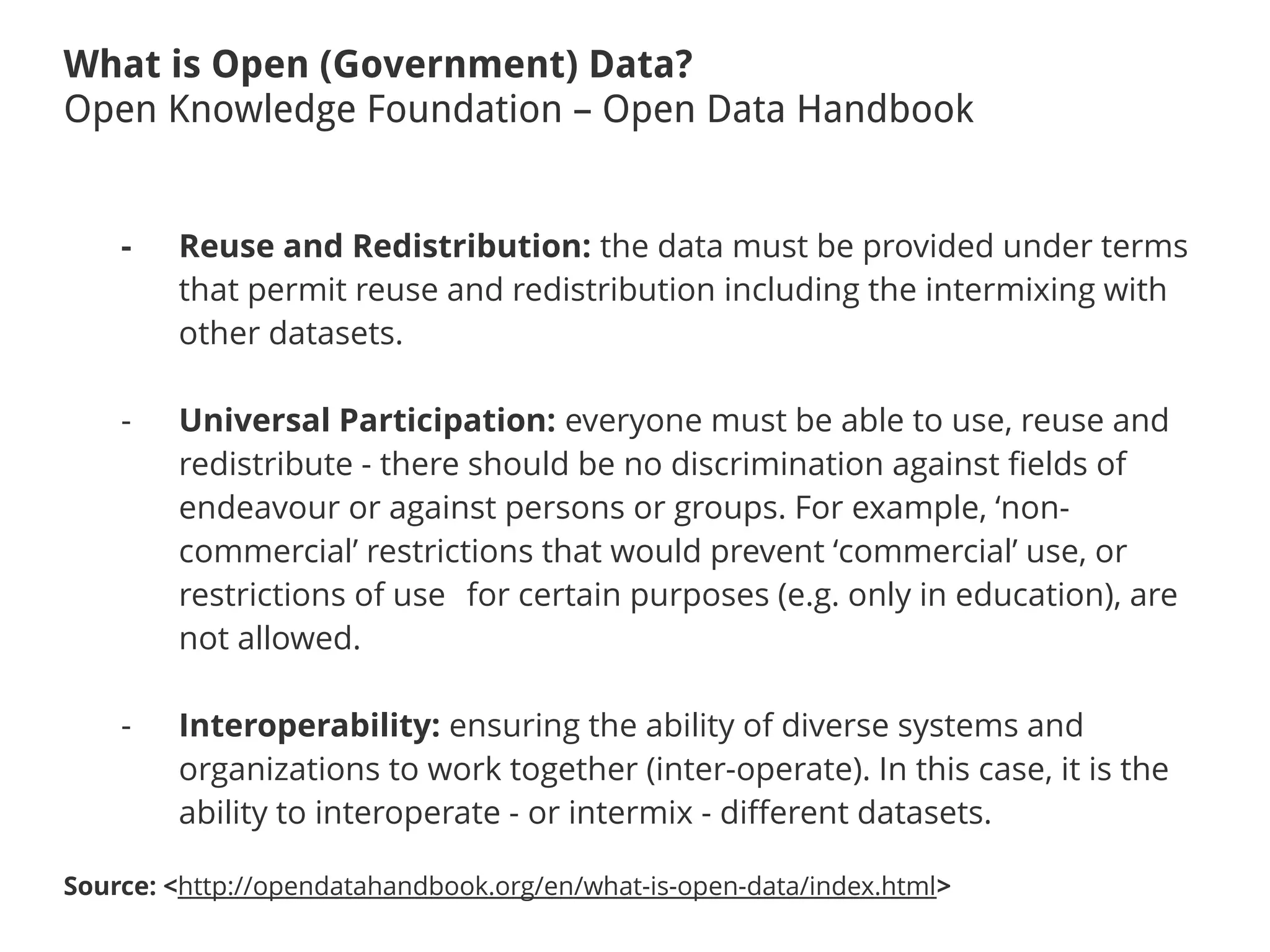
- Reuse and Redistribution: the data must be provided under terms
that permit reuse and redistribution including the intermixing with
other datasets.
- Universal Participation: everyone must be able to use, reuse and
redistribute - there should be no discrimination against fields of
endeavour or against persons or groups. For example, ‘non-
commercial’ restrictions that would prevent ‘commercial’ use, or
restrictions of use for certain purposes (e.g. only in education), are
not allowed.
- Interoperability: ensuring the ability of diverse systems and
organizations to work together (inter-operate). In this case, it is the
ability to interoperate - or intermix - different datasets.
Source: <http://opendatahandbook.org/en/what-is-open-data/index.html>
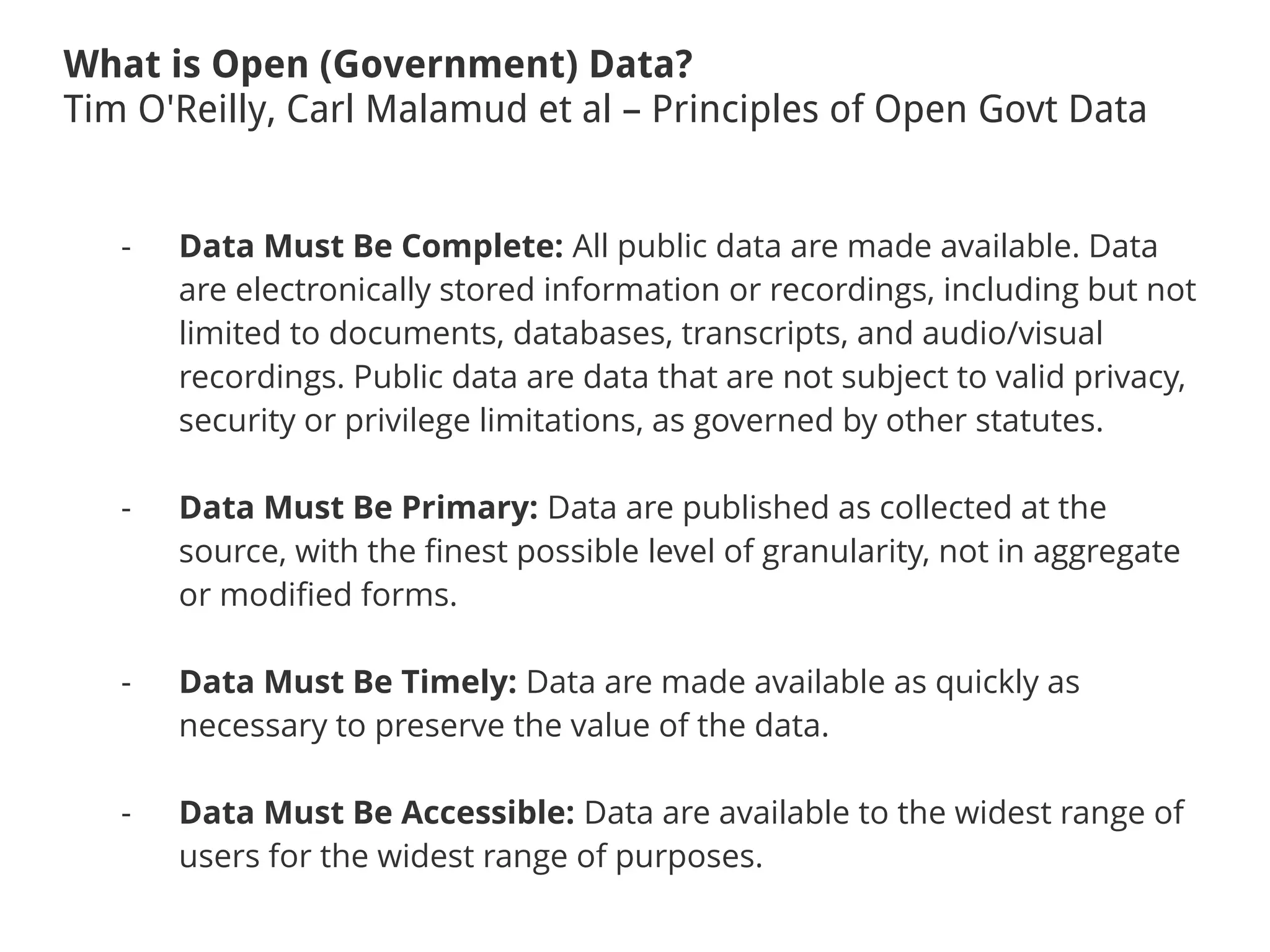
What is Open (Government) Data?
Tim O'Reilly, Carl Malamud et al – Principles of Open Govt Data
- Data Must Be Complete: All public data are made available. Data
are electronically stored information or recordings, including but not
limited to documents, databases, transcripts, and audio/visual
recordings. Public data are data that are not subject to valid privacy,
security or privilege limitations, as governed by other statutes.
- Data Must Be Primary: Data are published as collected at the
source, with the finest possible level of granularity, not in aggregate
or modified forms.
- Data Must Be Timely: Data are made available as quickly as
necessary to preserve the value of the data.
- Data Must Be Accessible: Data are available to the widest range of
users for the widest range of purposes.
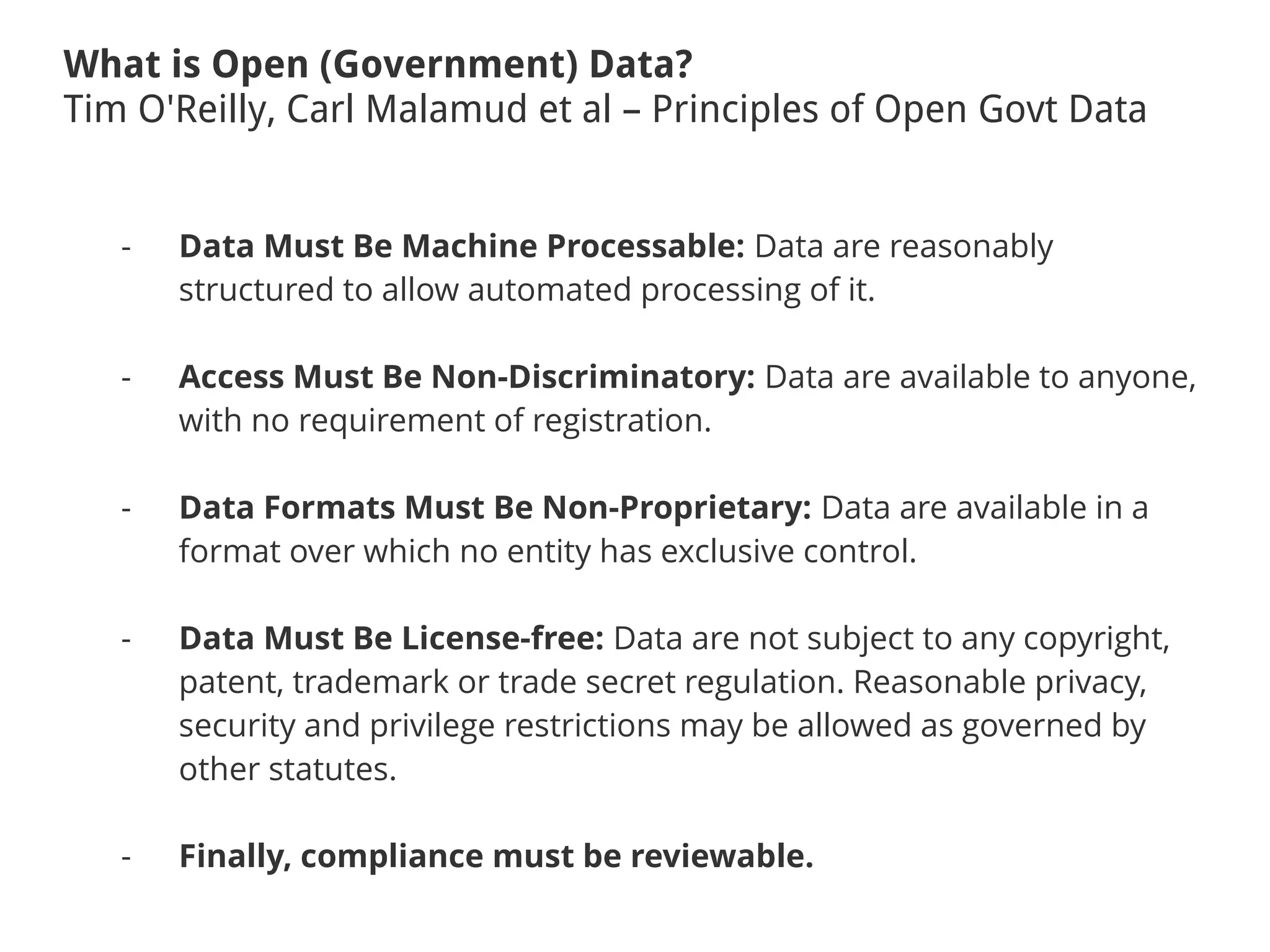
What is Open (Government) Data?
Tim O'Reilly, Carl Malamud et al – Principles of Open Govt Data
- Data Must Be Machine Processable: Data are reasonably
structured to allow automated processing of it.
- Access Must Be Non-Discriminatory: Data are available to anyone,
with no requirement of registration.
- Data Formats Must Be Non-Proprietary: Data are available in a
format over which no entity has exclusive control.
- Data Must Be License-free: Data are not subject to any copyright,
patent, trademark or trade secret regulation. Reasonable privacy,
security and privilege restrictions may be allowed as governed by
other statutes.
- Finally, compliance must be reviewable.
Open Data Projects
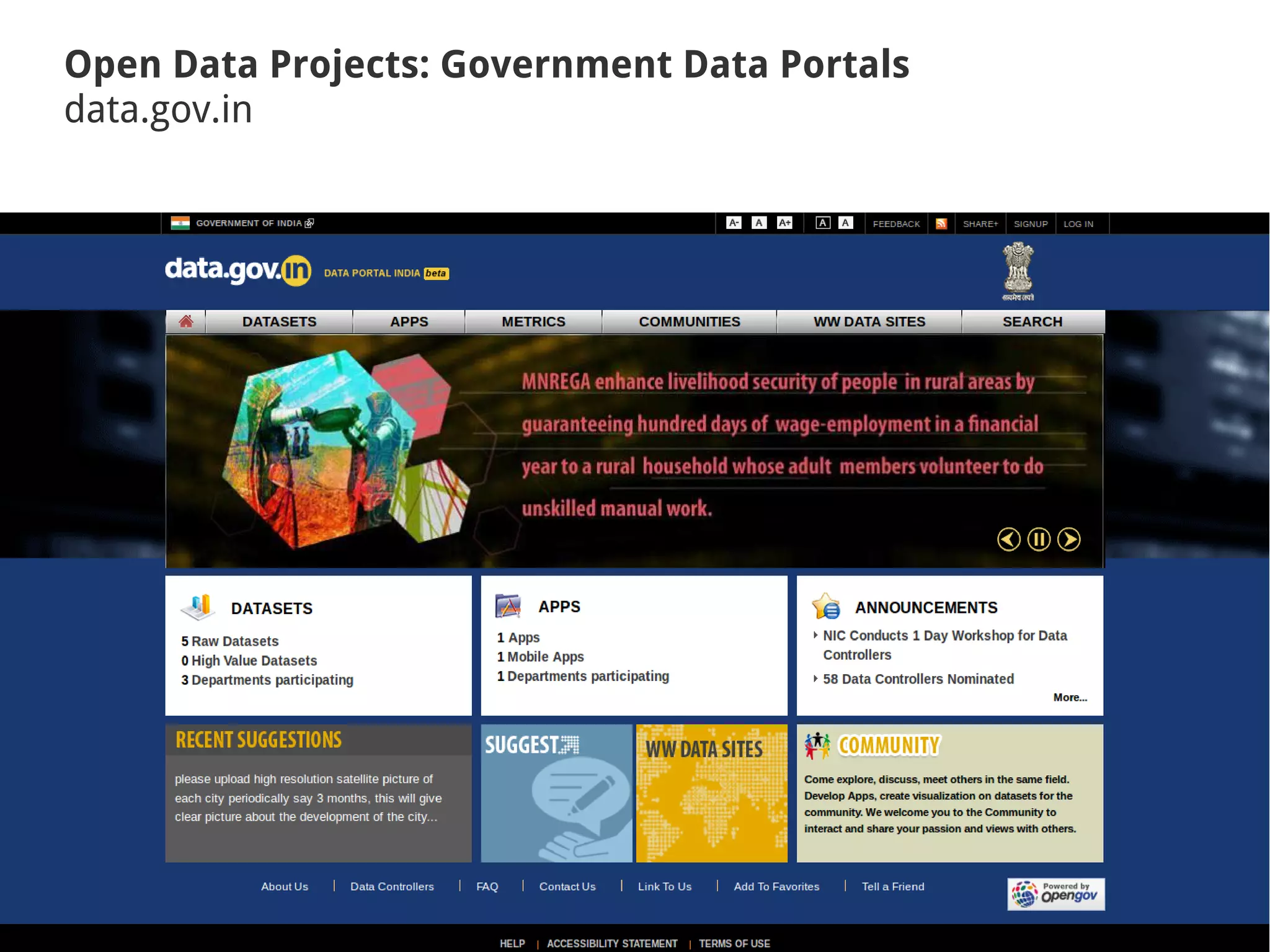
Open Data Projects: Government Data Portals
data.gov.in
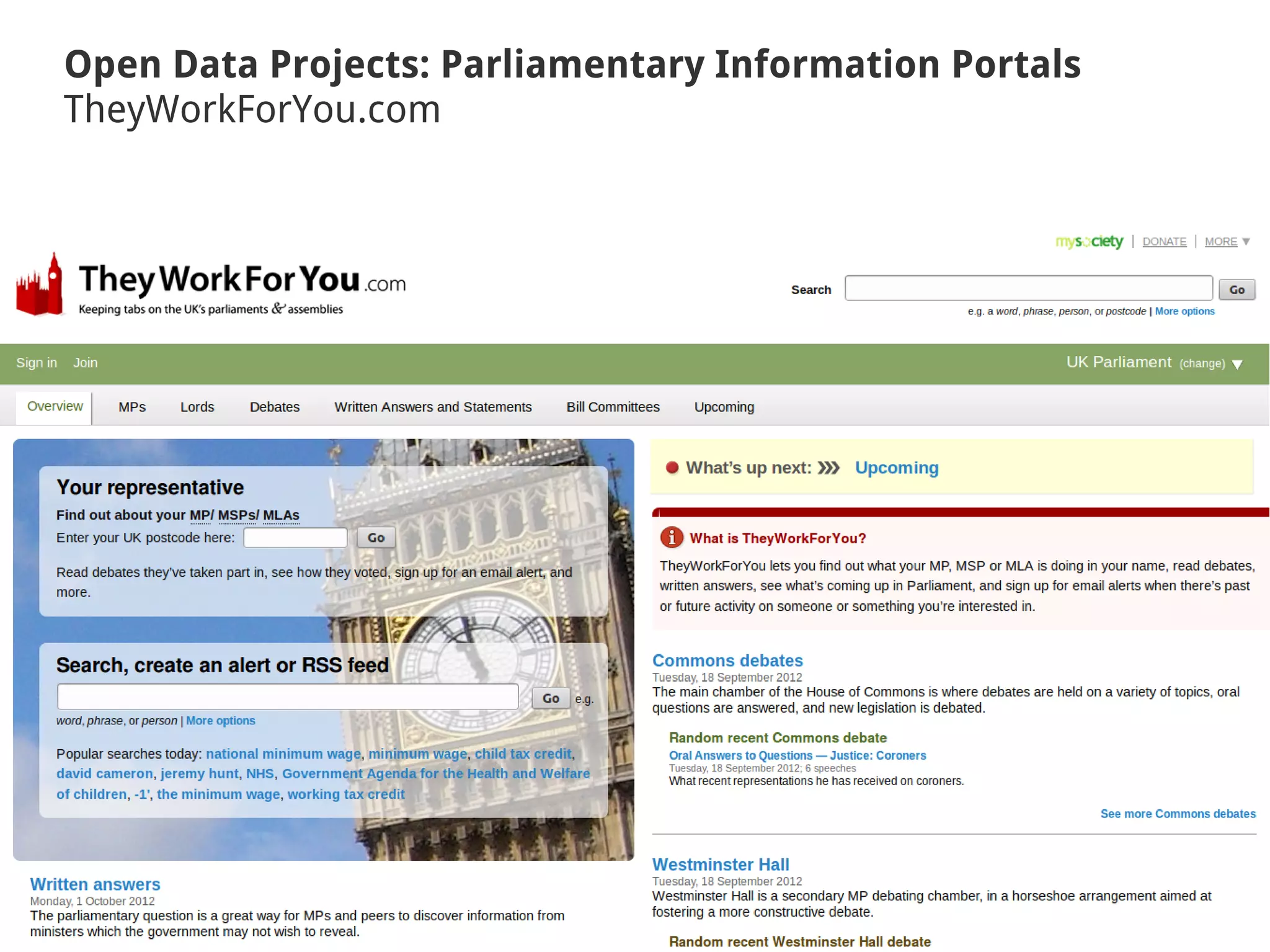
Open Data Projects: Parliamentary Information Portals
TheyWorkForYou.com
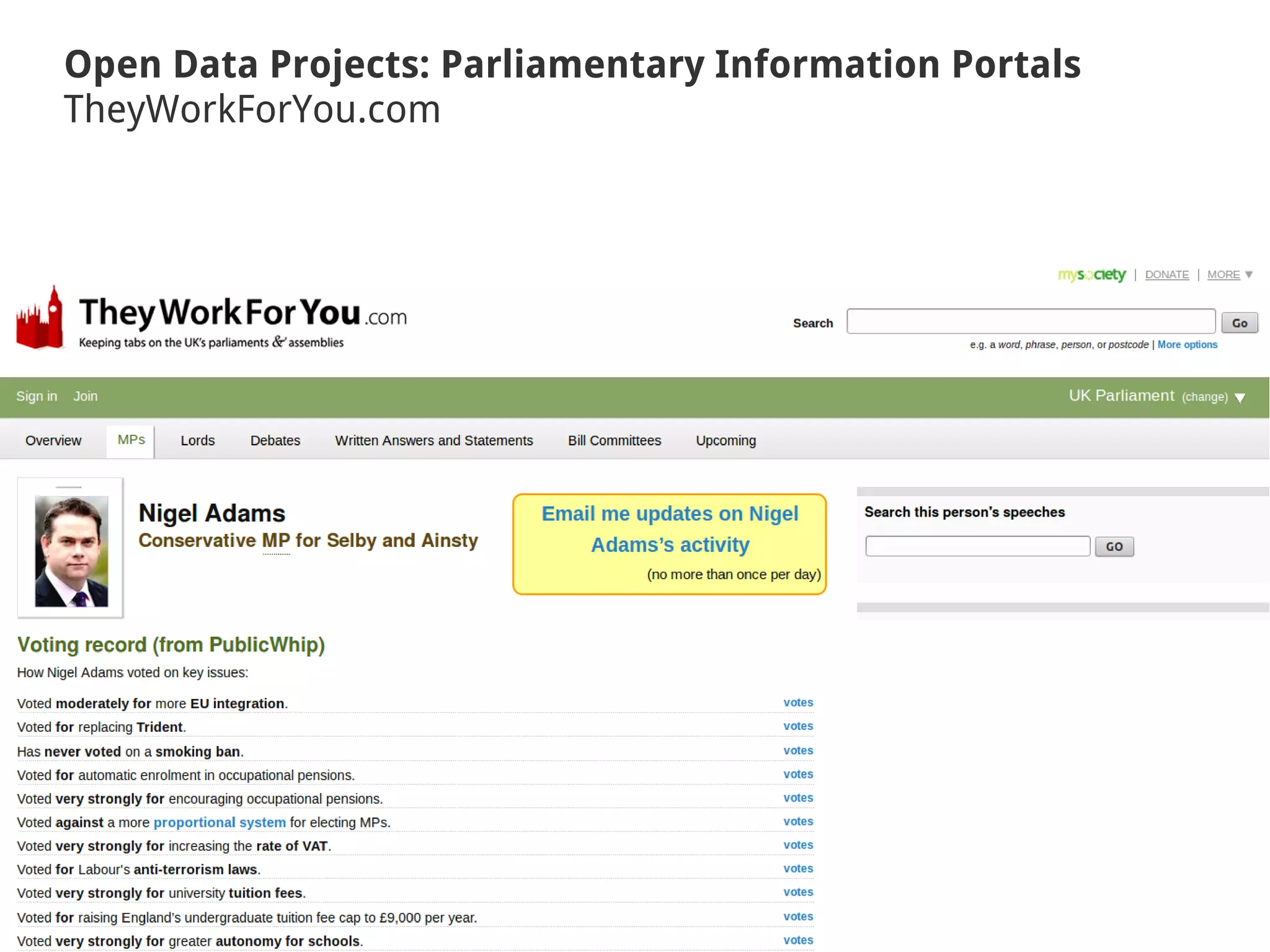
Open Data Projects: Parliamentary Information Portals
TheyWorkForYou.com
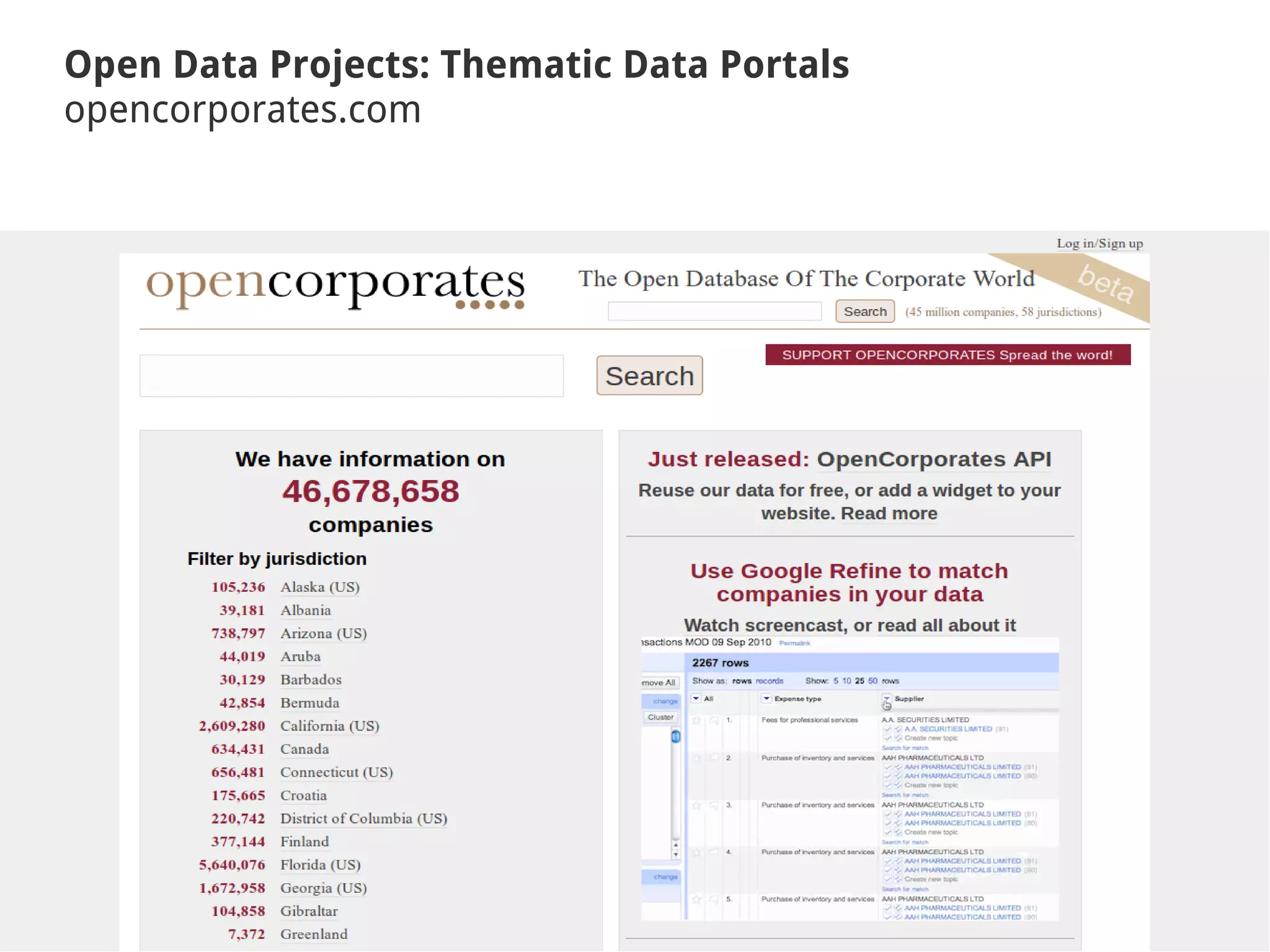
Open Data Projects: Thematic Data Portals
opencorporates.com
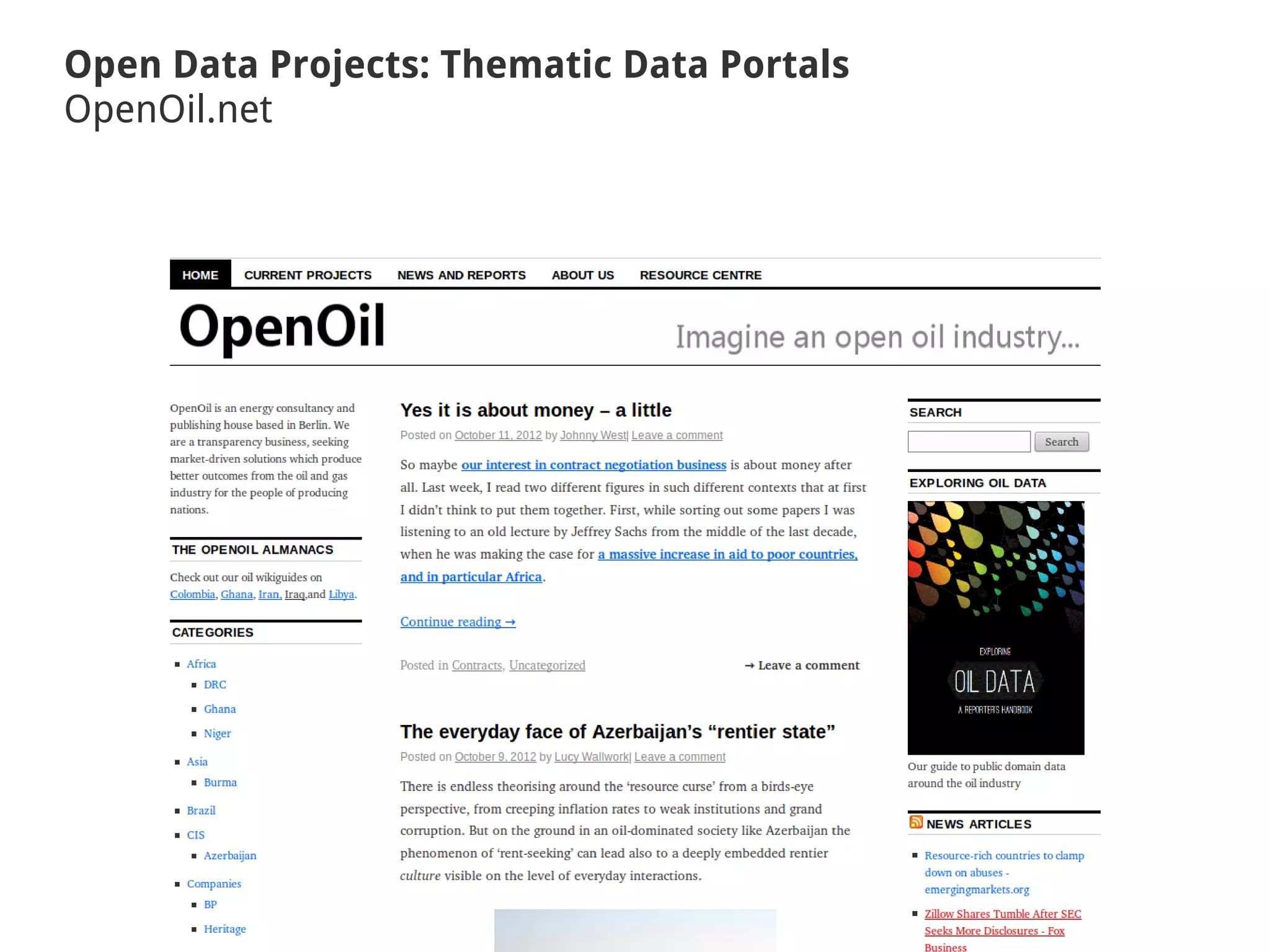
Open Data Projects: Thematic Data Portals
OpenOil.net
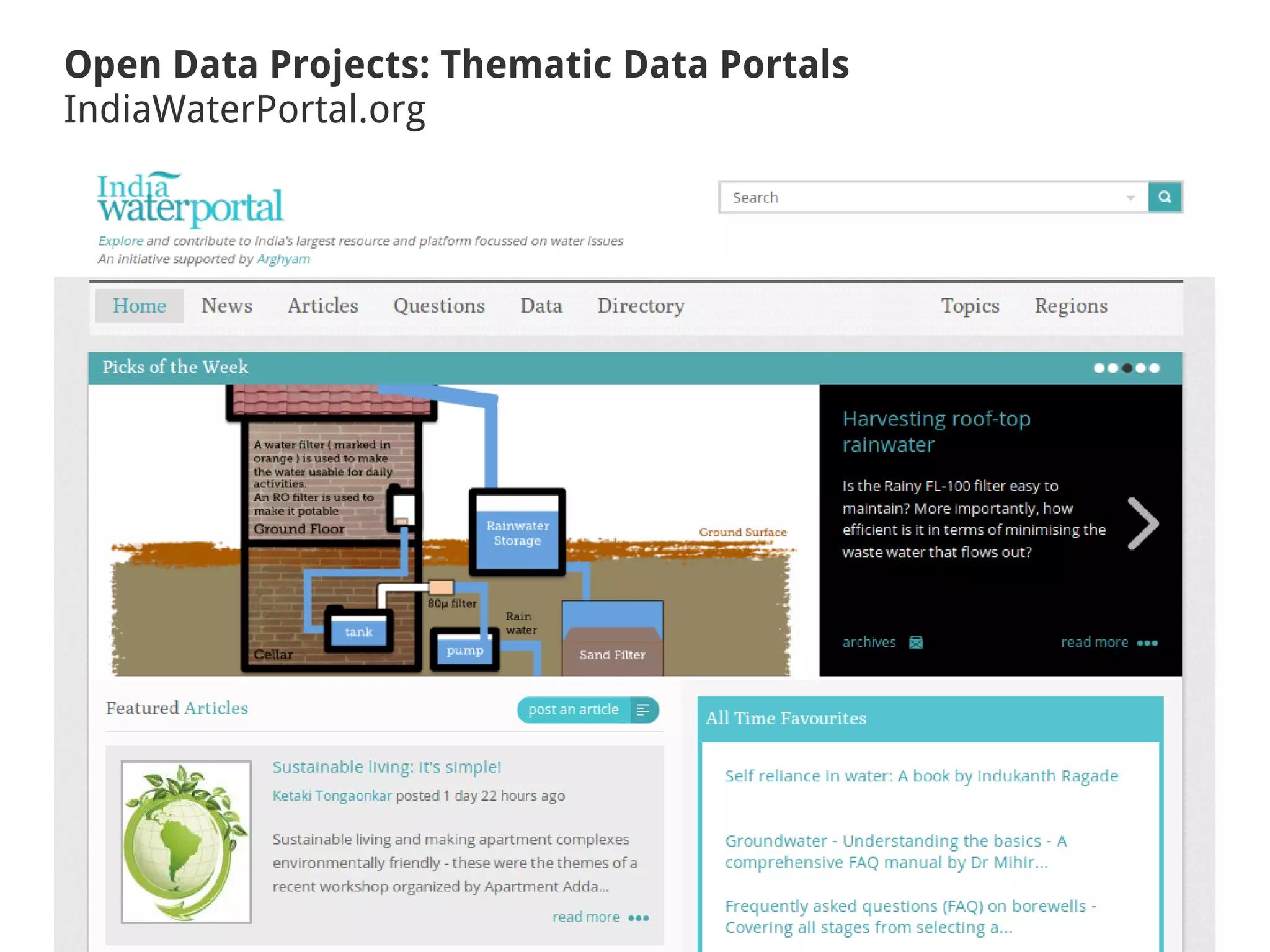
Open Data Projects: Thematic Data Portals
IndiaWaterPortal.org
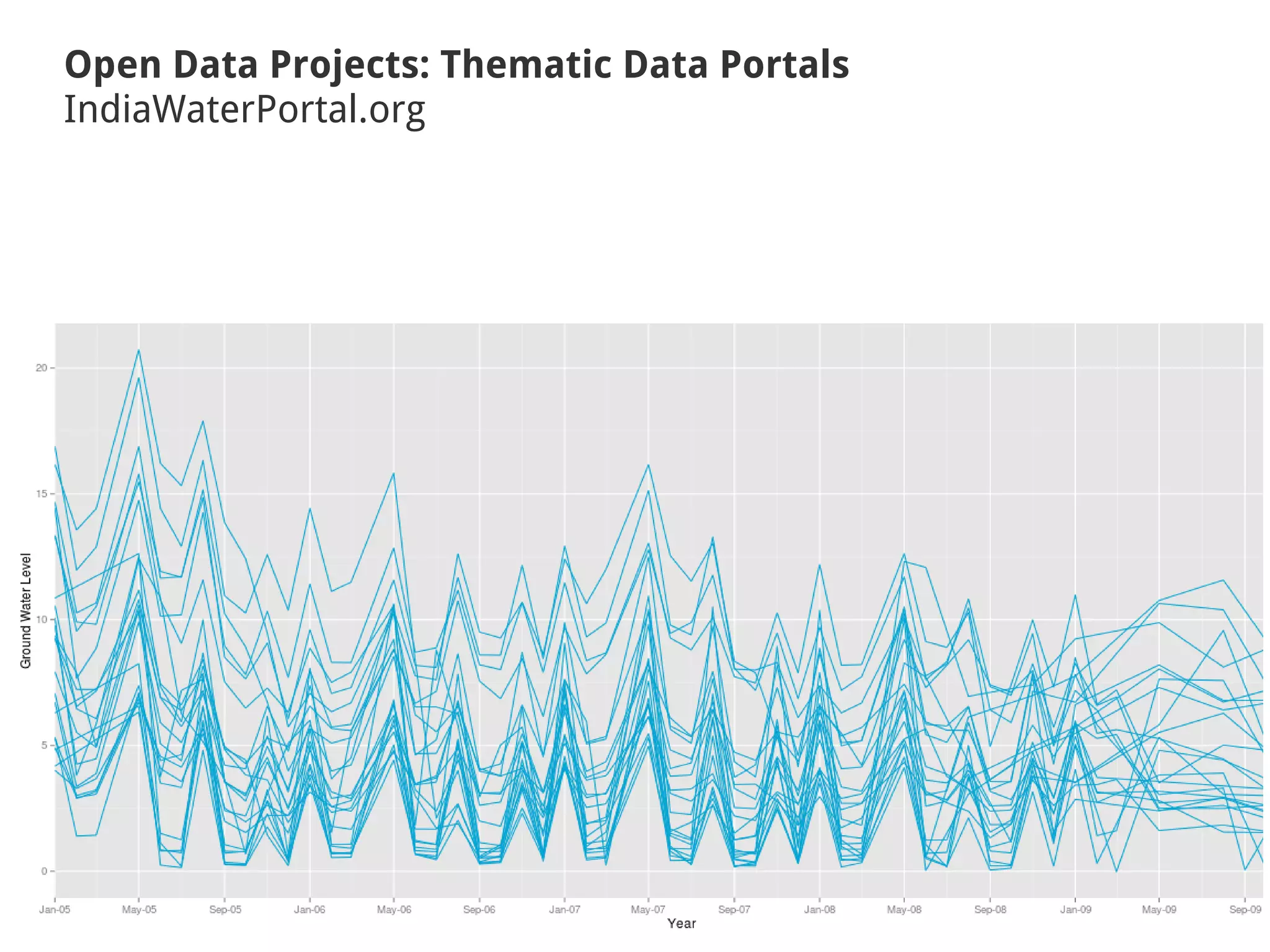
Open Data Projects: Thematic Data Portals
IndiaWaterPortal.org
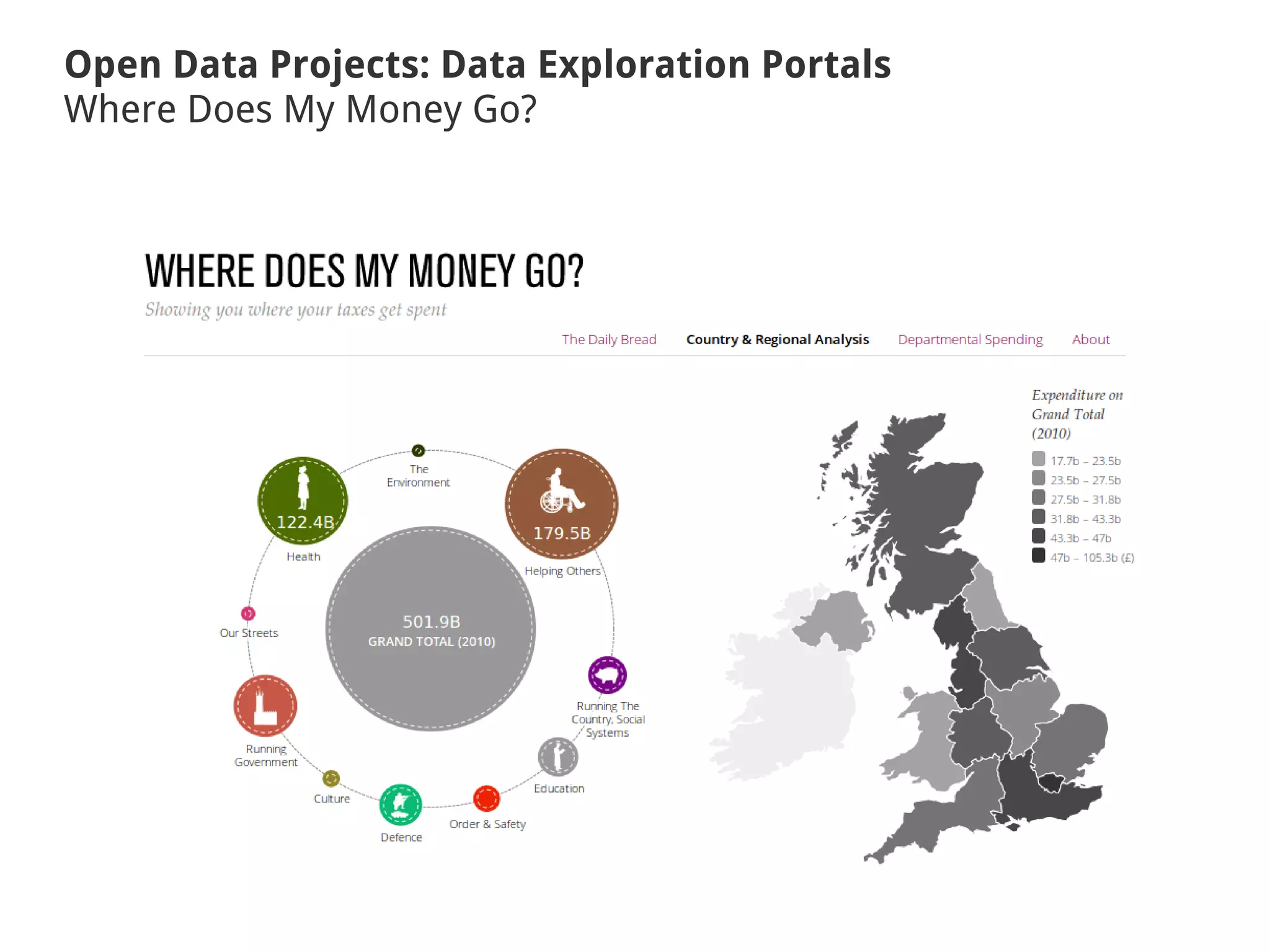
Open Data Projects: Data Exploration Portals
Where Does My Money Go?
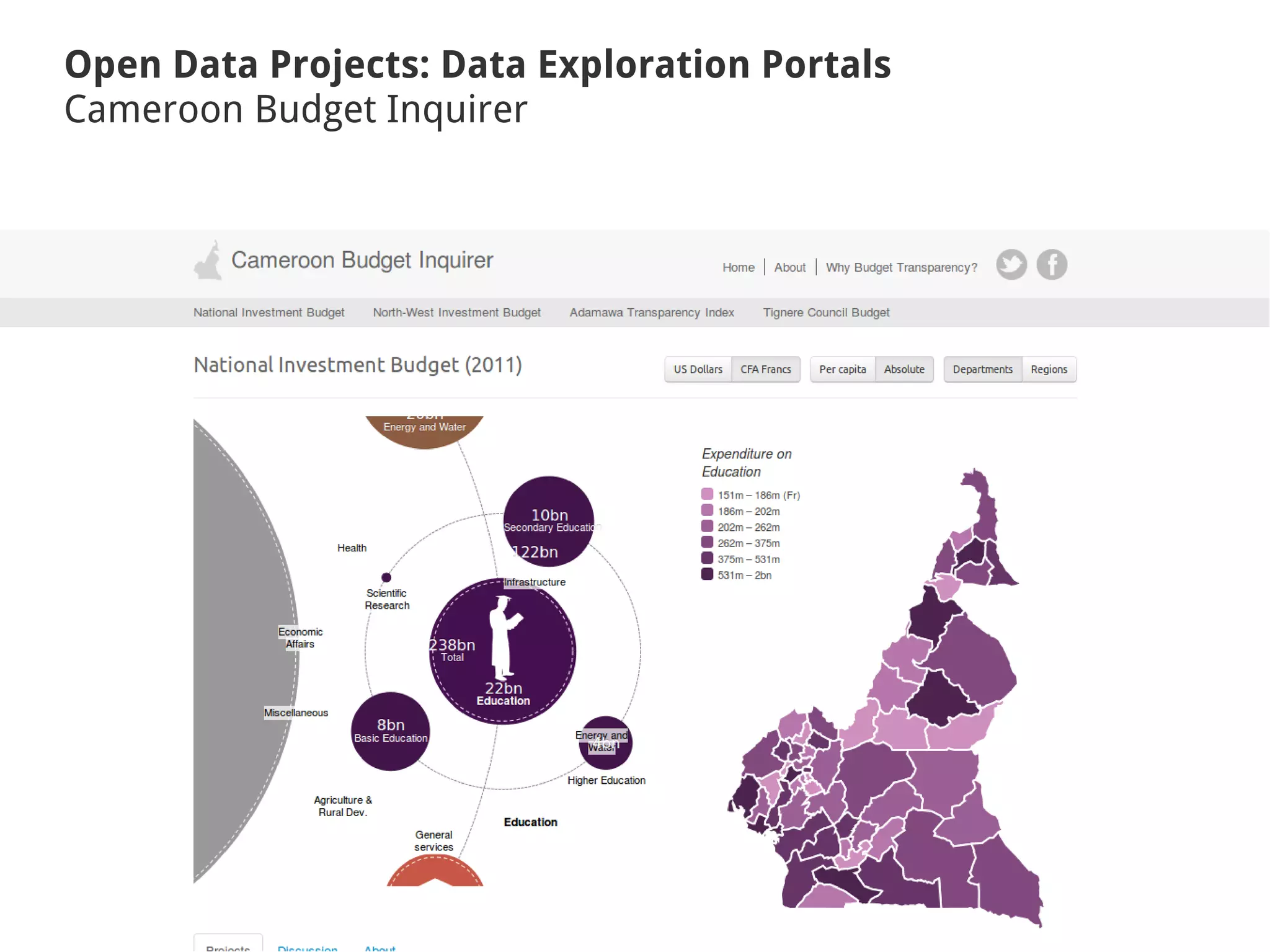
Open Data Projects: Data Exploration Portals
Cameroon Budget Inquirer
Open Data Projects: Data Exploration Portals
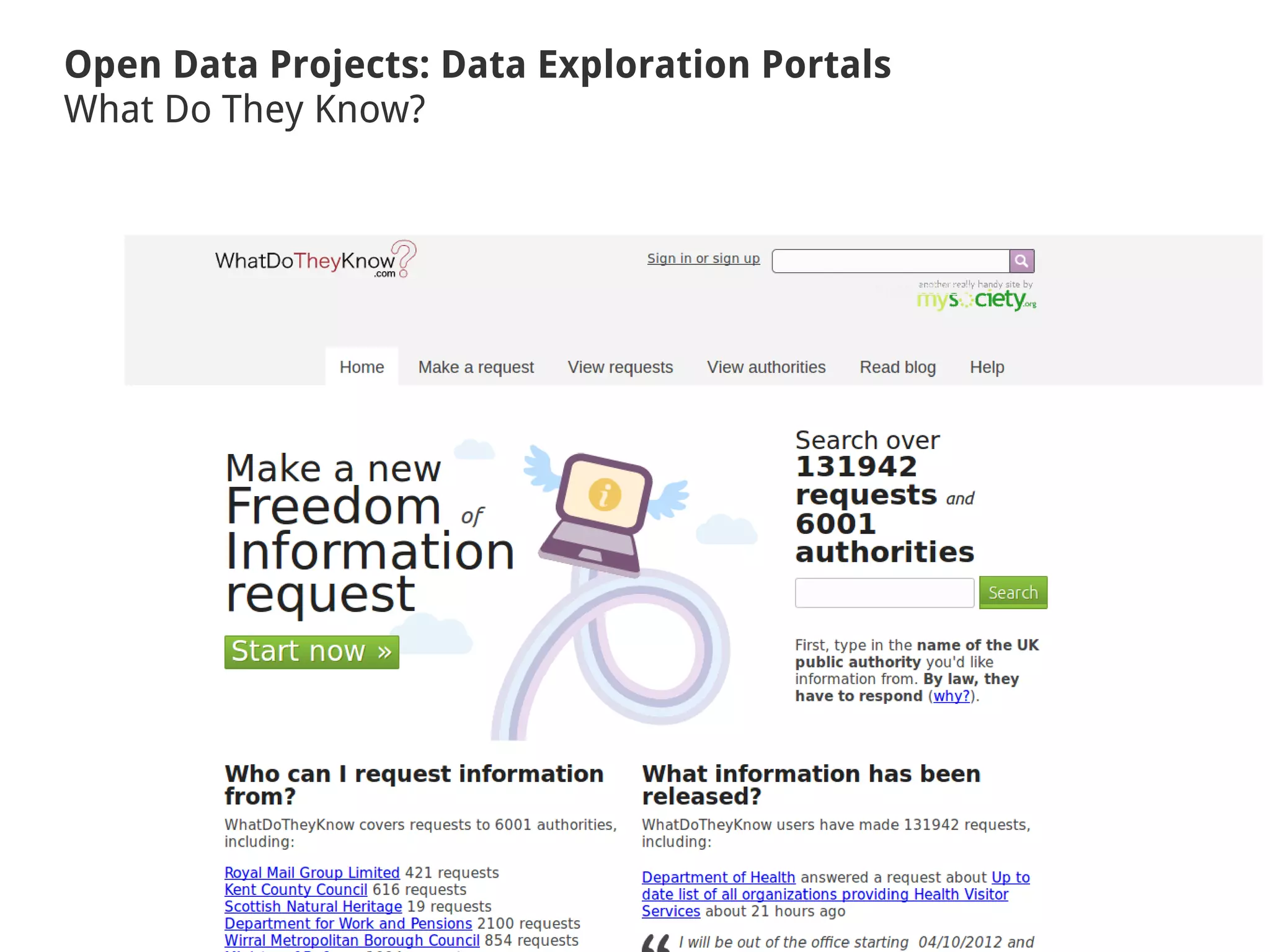
What Do They Know?
Open Data Projects: Data Exploration Portals
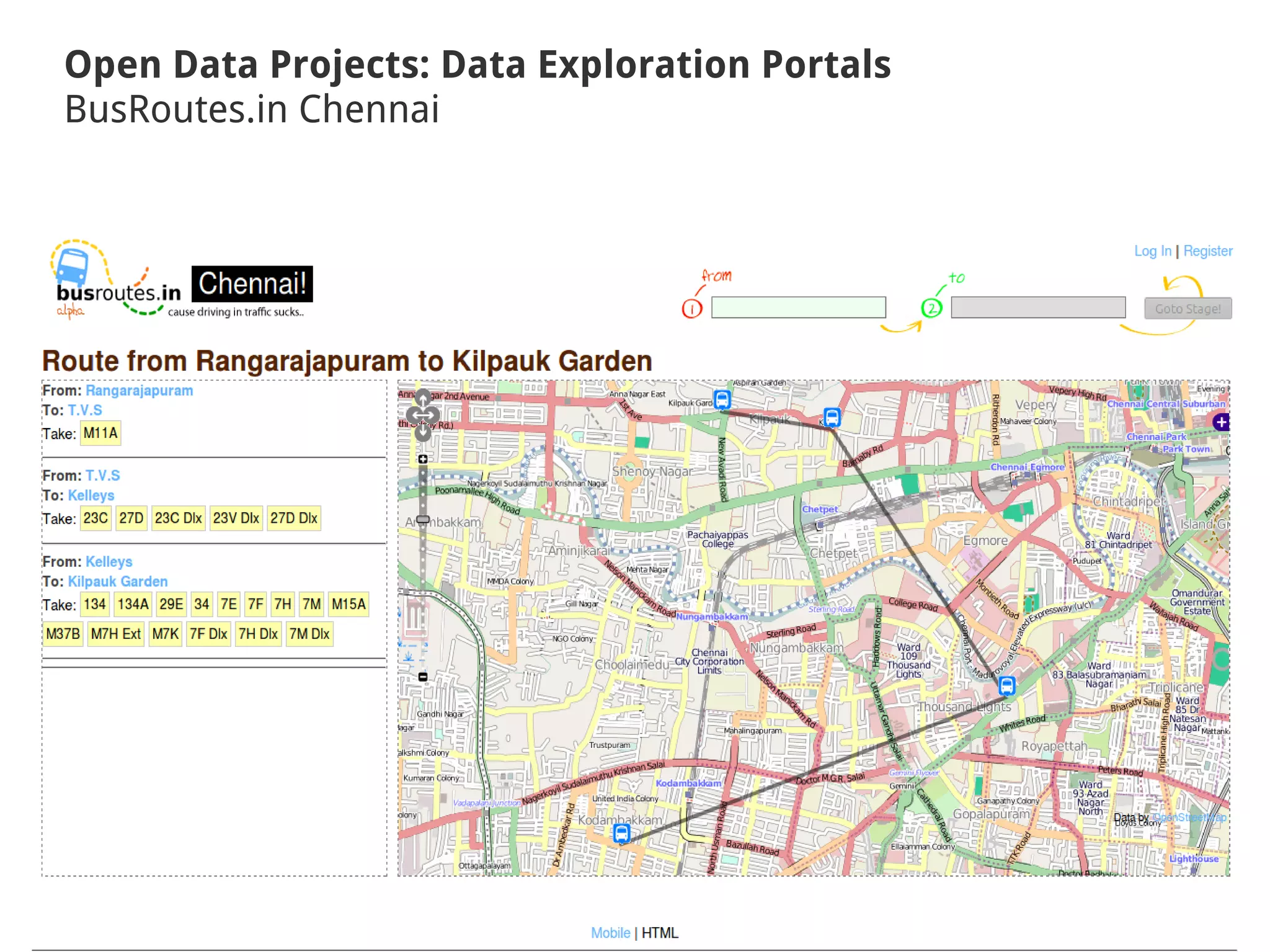
BusRoutes.in Chennai

Ashoka Future Forum - Workshop - Using Data for Impact #01

  • 1.
    Structure: - Introductions (15minutes) - Introduction to Using Data for Impact (15 minutes) - Tools and Methods for Working with Data (30 minutes) - Discussion (15 minutes) - Breakout Session (45 minutes) - Presentations and Discussion (30 minutes) Sunil Abraham Sumandro Chattapadhyay Using Data for Impact Ashoka Future Forum Pune, 29th June 2013
  • 2.
    Introduction to UsingData for Impact - Using Data for Impact - What is Open (Government) Data? - Open Data Projects
  • 3.
    Using Data forImpact Cholera Map, London, 1854
  • 4.
    Using Data forImpact Visualisation of mortality data of British army, Crimean War, 1856
  • 5.
    Using Data forImpact Open Street Map
  • 6.
    Using Data forImpact Open Street Map
  • 7.
    Using Data forImpact Ushahidi
  • 8.
    Using Data forImpact I Paid a Bribe
  • 9.
    Using Data forImpact Open (Government) Data
  • 10.
    Using Data forImpact Does WikiLeaks Open Up (Government) Data?
  • 11.
    What is Open(Government) Data? Open Knowledge Foundation – Open Data Handbook Open data is data that can be freely used, reused and redistributed by anyone - subject only, at most, to the requirement to attribute and sharealike. Essential characteristics: - Availability and Access: The data must be available as a whole and at no more than a reasonable reproduction cost, preferably by downloading over the internet. The data must also be available in a convenient and modifiable form. Source: <http://opendatahandbook.org/en/what-is-open-data/index.html>
  • 12.
    What is Open(Government) Data? Open Knowledge Foundation – Open Data Handbook - Reuse and Redistribution: the data must be provided under terms that permit reuse and redistribution including the intermixing with other datasets. - Universal Participation: everyone must be able to use, reuse and redistribute - there should be no discrimination against fields of endeavour or against persons or groups. For example, ‘non- commercial’ restrictions that would prevent ‘commercial’ use, or restrictions of use for certain purposes (e.g. only in education), are not allowed. - Interoperability: ensuring the ability of diverse systems and organizations to work together (inter-operate). In this case, it is the ability to interoperate - or intermix - different datasets. Source: <http://opendatahandbook.org/en/what-is-open-data/index.html>
  • 13.
    What is Open(Government) Data? Tim O'Reilly, Carl Malamud et al – Principles of Open Govt Data - Data Must Be Complete: All public data are made available. Data are electronically stored information or recordings, including but not limited to documents, databases, transcripts, and audio/visual recordings. Public data are data that are not subject to valid privacy, security or privilege limitations, as governed by other statutes. - Data Must Be Primary: Data are published as collected at the source, with the finest possible level of granularity, not in aggregate or modified forms. - Data Must Be Timely: Data are made available as quickly as necessary to preserve the value of the data. - Data Must Be Accessible: Data are available to the widest range of users for the widest range of purposes.
  • 14.
    What is Open(Government) Data? Tim O'Reilly, Carl Malamud et al – Principles of Open Govt Data - Data Must Be Machine Processable: Data are reasonably structured to allow automated processing of it. - Access Must Be Non-Discriminatory: Data are available to anyone, with no requirement of registration. - Data Formats Must Be Non-Proprietary: Data are available in a format over which no entity has exclusive control. - Data Must Be License-free: Data are not subject to any copyright, patent, trademark or trade secret regulation. Reasonable privacy, security and privilege restrictions may be allowed as governed by other statutes. - Finally, compliance must be reviewable.
  • 15.
  • 16.
    Open Data Projects:Government Data Portals data.gov.in
  • 17.
    Open Data Projects:Parliamentary Information Portals TheyWorkForYou.com
  • 18.
    Open Data Projects:Parliamentary Information Portals TheyWorkForYou.com
  • 19.
    Open Data Projects:Thematic Data Portals opencorporates.com
  • 20.
    Open Data Projects:Thematic Data Portals OpenOil.net
  • 21.
    Open Data Projects:Thematic Data Portals IndiaWaterPortal.org
  • 22.
    Open Data Projects:Thematic Data Portals IndiaWaterPortal.org
  • 23.
    Open Data Projects:Data Exploration Portals Where Does My Money Go?
  • 24.
    Open Data Projects:Data Exploration Portals Cameroon Budget Inquirer
  • 25.
    Open Data Projects:Data Exploration Portals What Do They Know?
  • 26.
    Open Data Projects:Data Exploration Portals BusRoutes.in Chennai