Hull Conference – 1st and 2nd November 2011
A restorative strategy for leading
             change
       Estelle Macdonald and Mark Finnis
What is one change that you
could make that would create
     the biggest results?
Key questions
  What   does organisational change look like
   on all levels?
  What are the challenges we face?
  What are the barriers and how do we
   break them down?
  How do we develop restorative leadership
   styles?
  What do they look like?
Relationships,Relationships,
       Relationships!!
     Build, maintain and repair
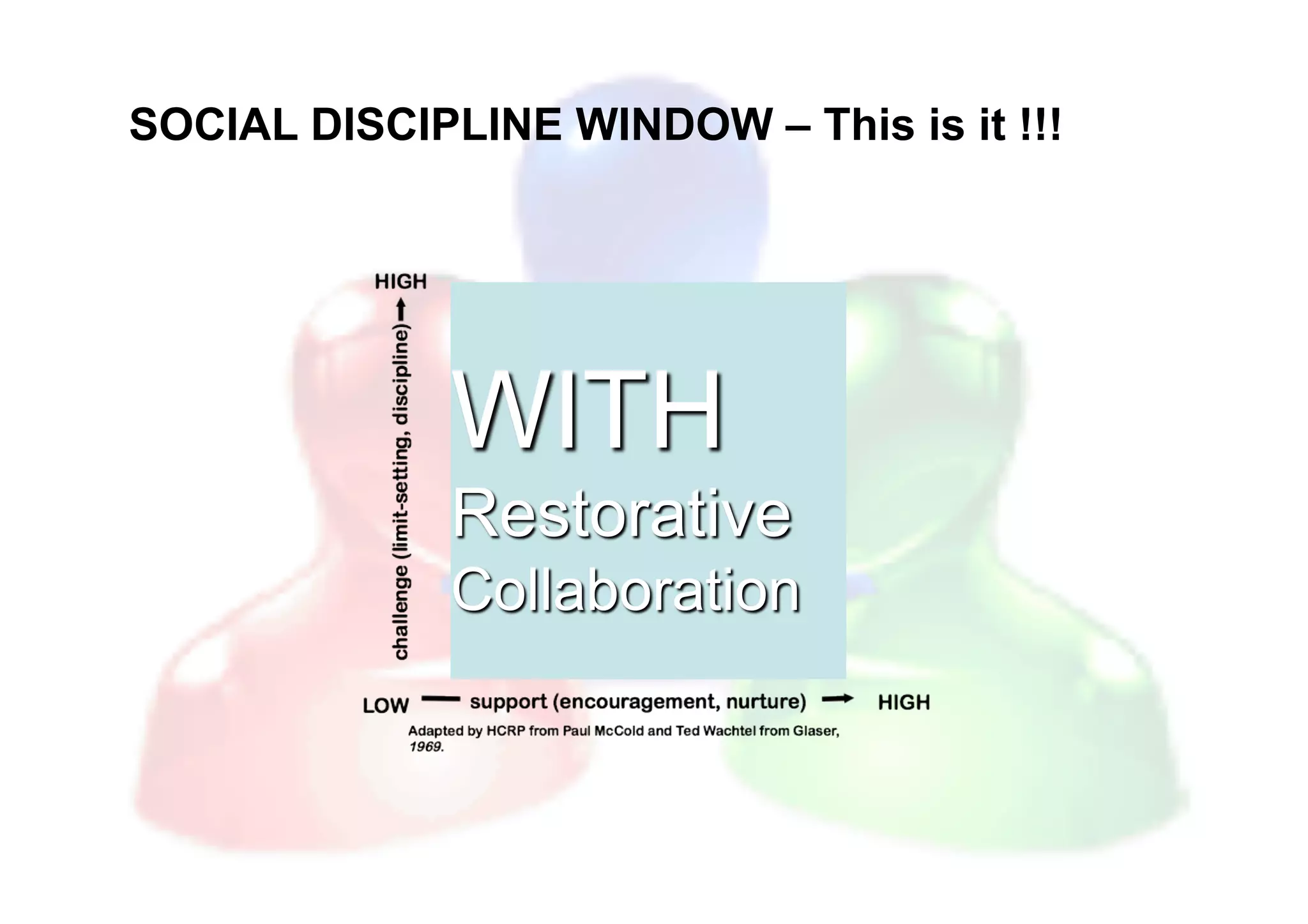
SOCIAL DISCIPLINE WINDOW – This is it !!!


                       WITH
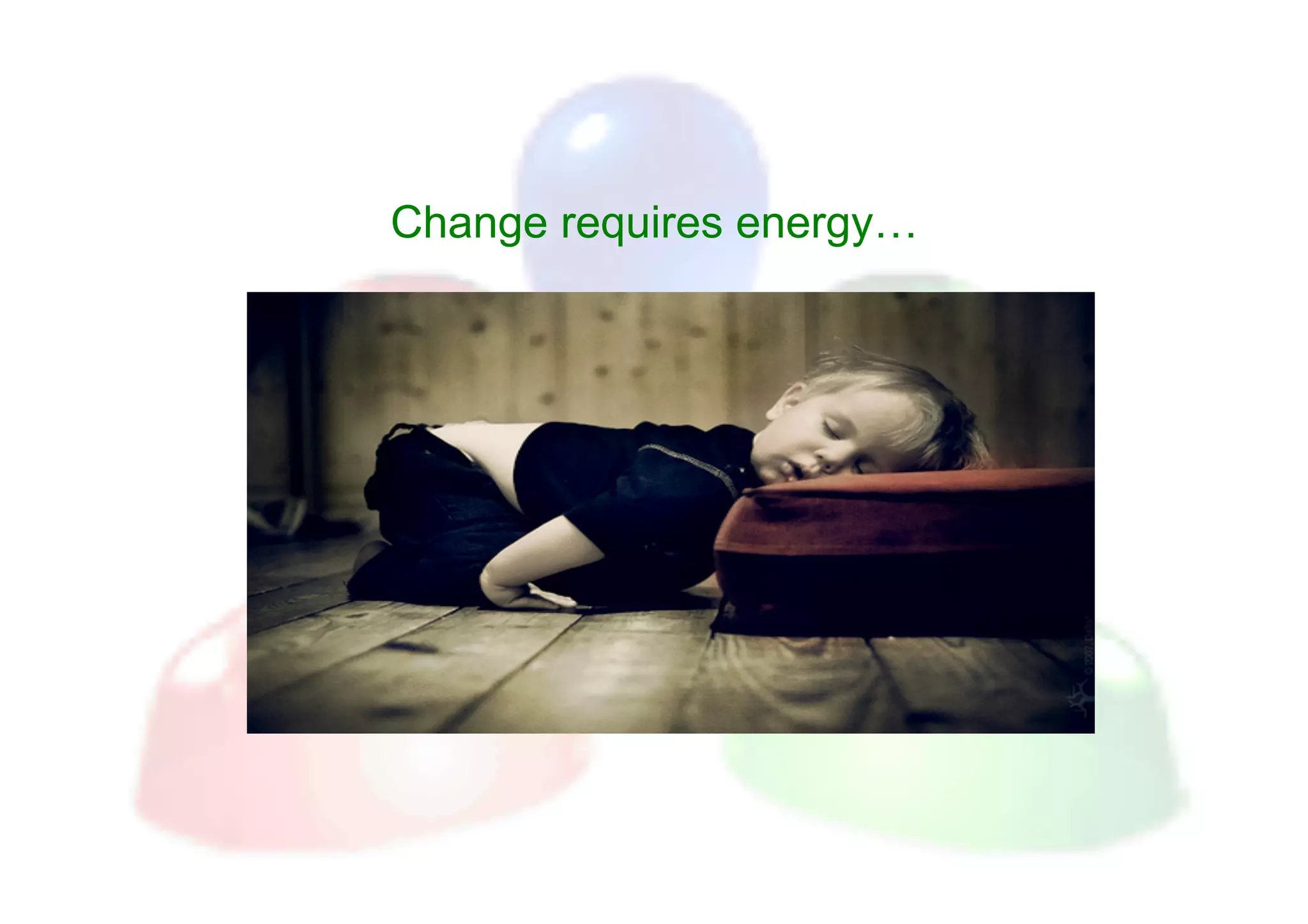
Change requires energy…
‘People don’t resist change: they resist
           being changed’
                Peter Senge
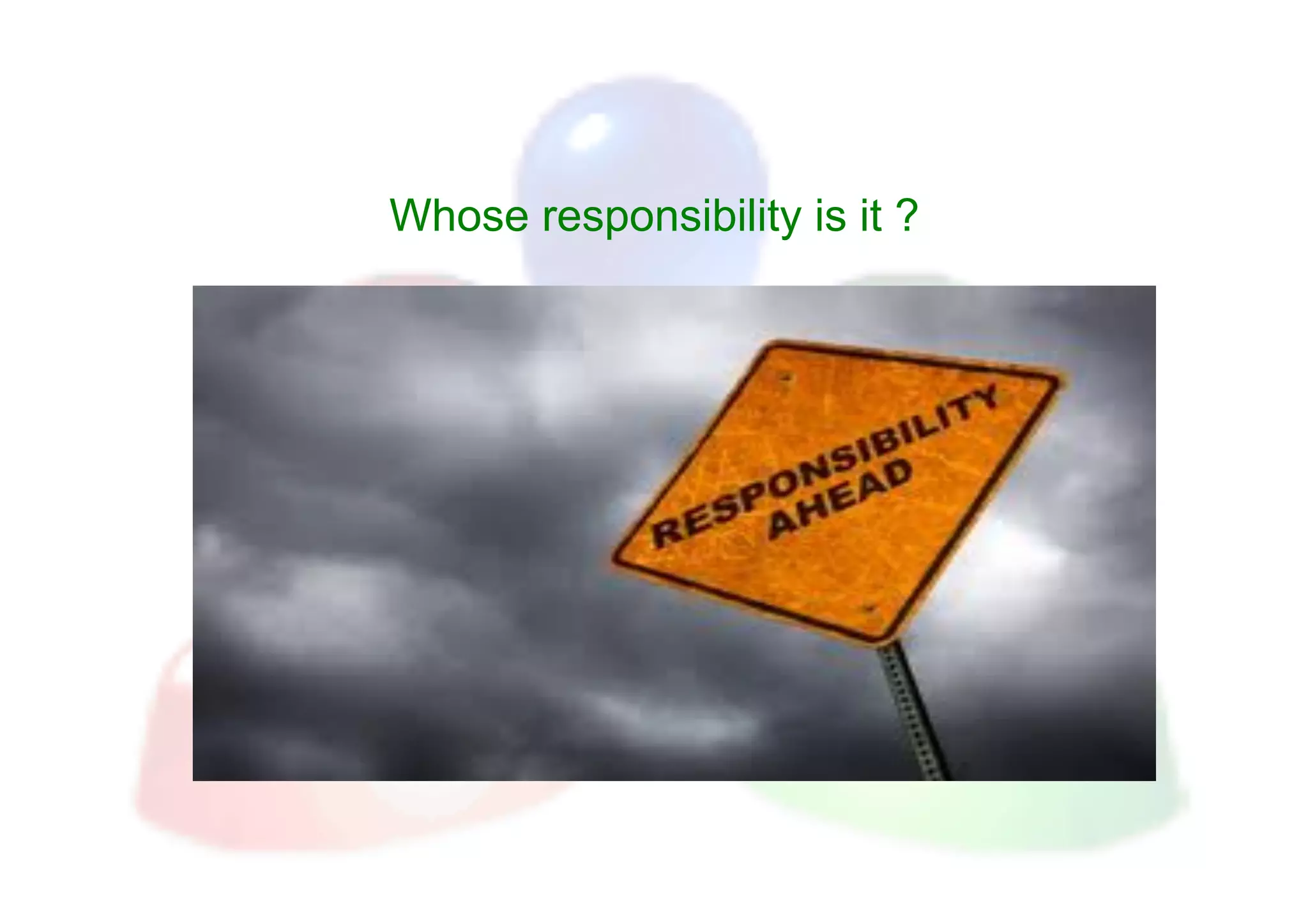
Whose responsibility is it ?
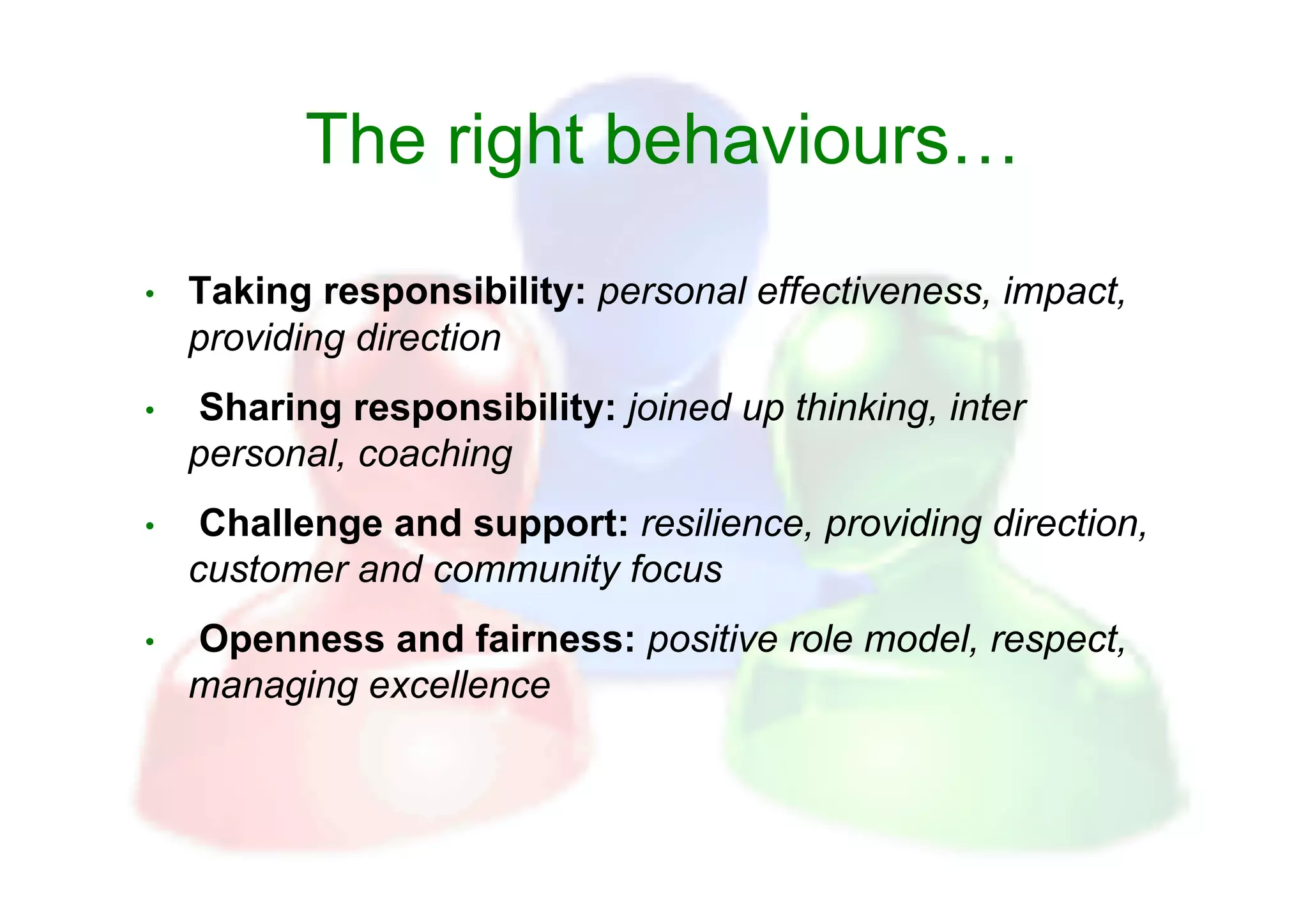
The right behaviours…
•    Taking responsibility: personal effectiveness, impact,
     providing direction
•     Sharing responsibility: joined up thinking, inter
     personal, coaching
•     Challenge and support: resilience, providing direction,
     customer and community focus
•    Openness and fairness: positive role model, respect,
     managing excellence
“For changes to be of any true value, they've
  got to be lasting and consistent.”
                          Anthony Robbins
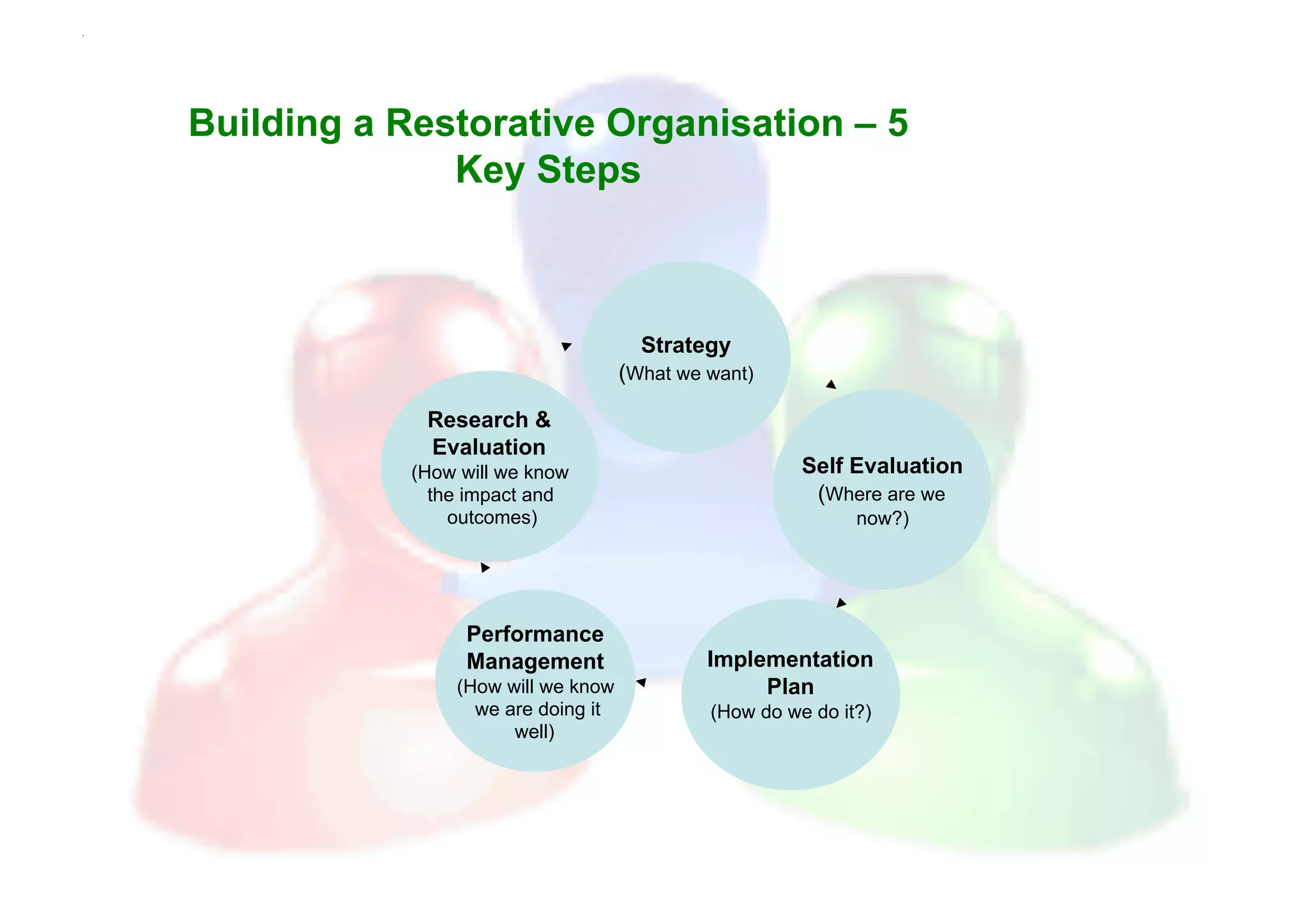
Building a Restorative Organisation – 5
              Key Steps


                                      Strategy
                                    (What we want)

             Research &
             Evaluation
            (How will we know                          Self Evaluation
              the impact and                            (Where are we
                outcomes)                                    now?)


                 Performance
                 Management                  Implementation
                (How will we know                 Plan
                  we are doing it            (How do we do it?)
                      well)
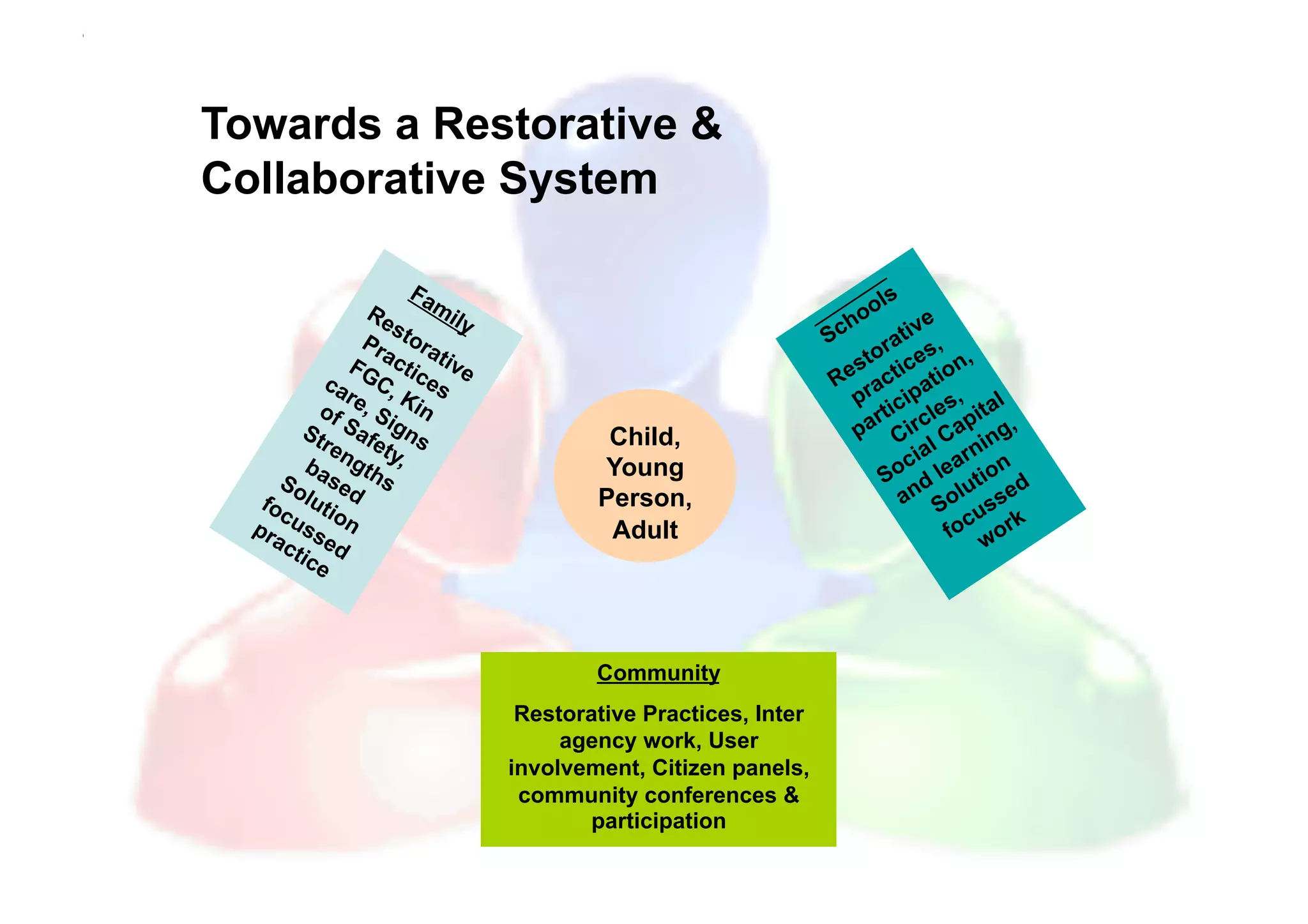
Towards a Restorative &
Collaborative System


                      Child,
                     Young
                     Person,
                      Adult


                     Community
              Restorative Practices, Inter
                  agency work, User
             involvement, Citizen panels,
              community conferences &
                     participation
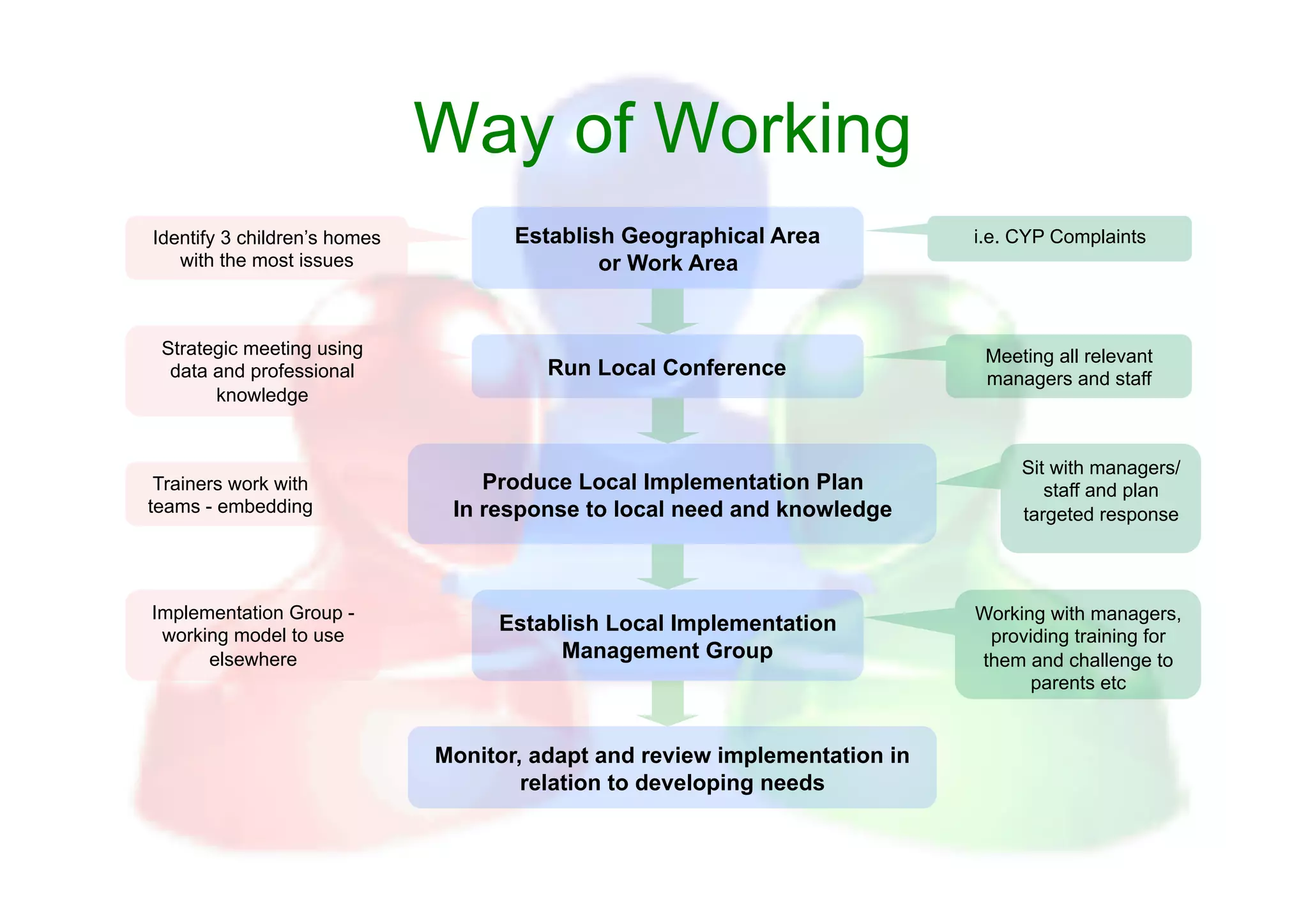
Way of Working
Identify 3 children’s homes          Establish Geographical Area            i.e. CYP Complaints
   with the most issues                      or Work Area


 Strategic meeting using                                                     Meeting all relevant
  data and professional                 Run Local Conference                 managers and staff
       knowledge


                                                                                 Sit with managers/
 Trainers work with               Produce Local Implementation Plan                 staff and plan
teams - embedding              In response to local need and knowledge           targeted response


Implementation Group -                                                      Working with managers,
 working model to use
                                   Establish Local Implementation
                                                                             providing training for
      elsewhere                         Management Group                    them and challenge to
                                                                                  parents etc


                              Monitor, adapt and review implementation in
                                      relation to developing needs
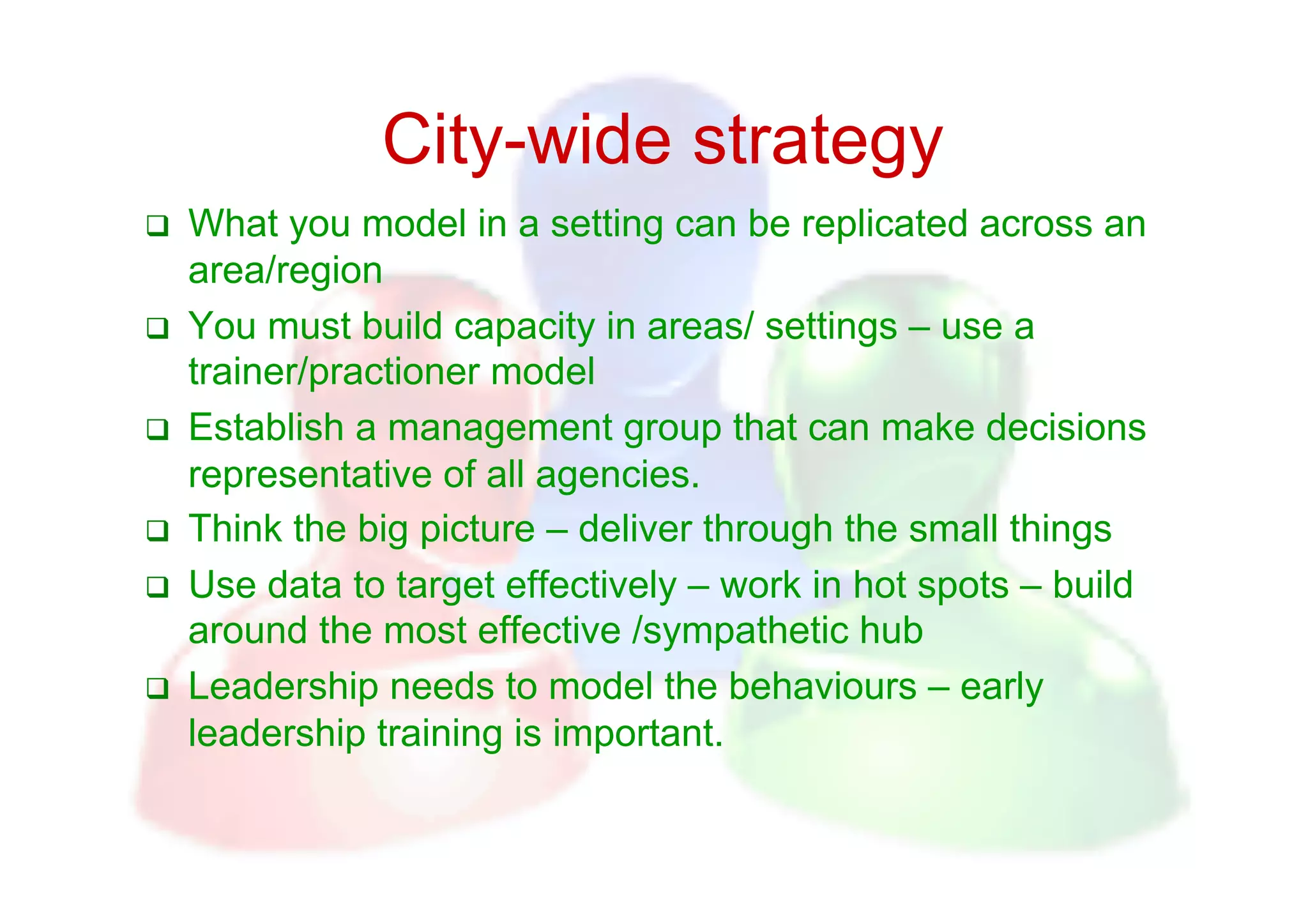
City-wide strategy
    What you model in a setting can be replicated across an
     area/region
    You must build capacity in areas/ settings – use a
     trainer/practioner model
    Establish a management group that can make decisions
     representative of all agencies.
    Think the big picture – deliver through the small things
    Use data to target effectively – work in hot spots – build
     around the most effective /sympathetic hub
    Leadership needs to model the behaviours – early
     leadership training is important.
Leadership that inspires…


“When the best leader’s work is done, the
  people say: we did it ourselves.”
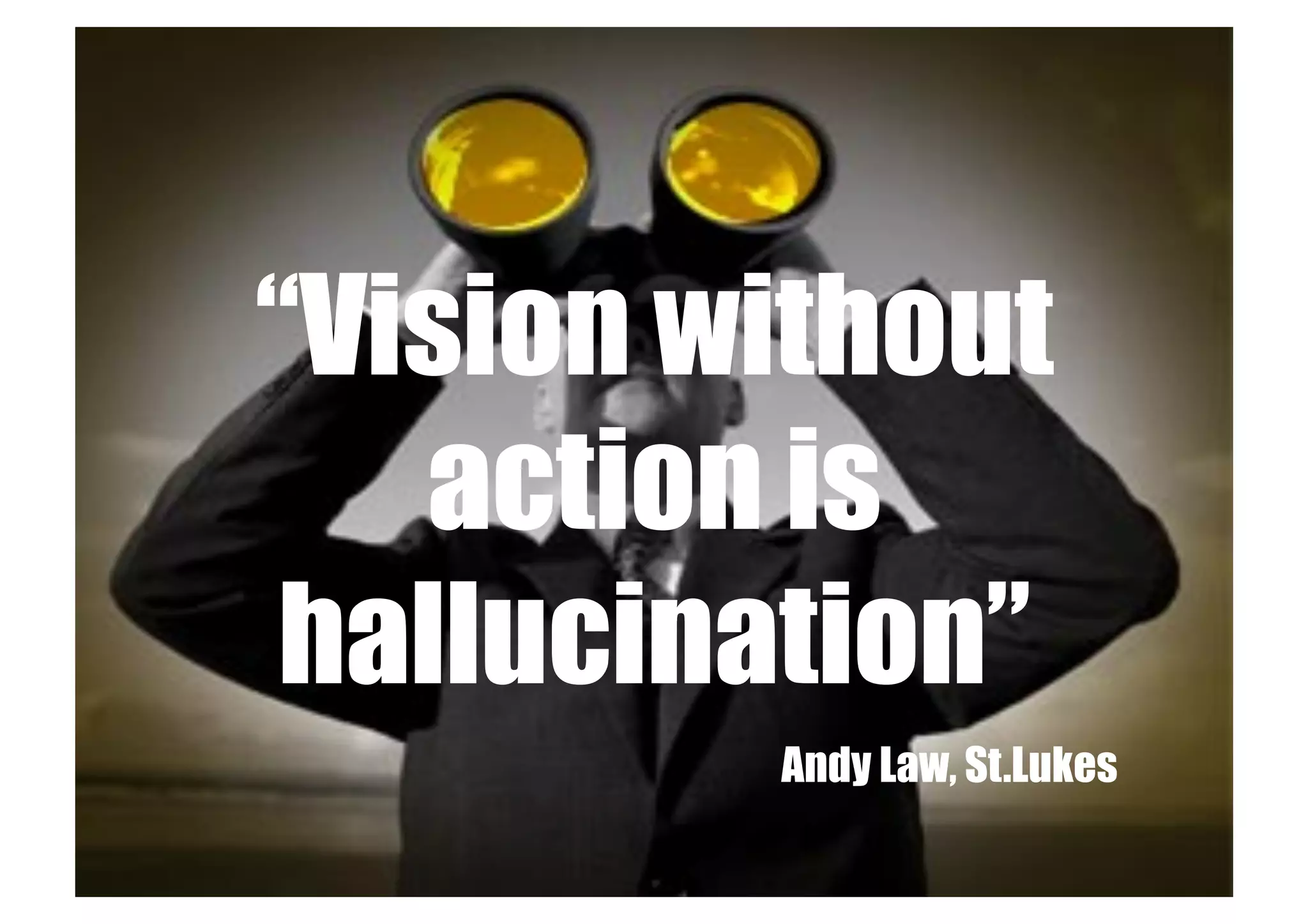
“Vision without
   action is
 hallucination”
         Andy Law, St.Lukes
Hull Centre for Restorative Practice
       Office : +44 (0)1482 594347

     estellemacdonald1@me.com
         markfinnis@mac.com
www.hullcentreforrestorativepractice.co.uk
     Twitter: @hullrestorative

A restorative strategy for leading change

  • 1.
    Hull Conference –1st and 2nd November 2011 A restorative strategy for leading change Estelle Macdonald and Mark Finnis
  • 3.
    What is onechange that you could make that would create the biggest results?
  • 4.
    Key questions   What does organisational change look like on all levels?   What are the challenges we face?   What are the barriers and how do we break them down?   How do we develop restorative leadership styles?   What do they look like?
  • 5.
    Relationships,Relationships, Relationships!! Build, maintain and repair
  • 6.
    SOCIAL DISCIPLINE WINDOW– This is it !!! WITH
  • 7.
  • 8.
    ‘People don’t resistchange: they resist being changed’ Peter Senge
  • 10.
  • 13.
    The right behaviours… •  Taking responsibility: personal effectiveness, impact, providing direction •  Sharing responsibility: joined up thinking, inter personal, coaching •  Challenge and support: resilience, providing direction, customer and community focus •  Openness and fairness: positive role model, respect, managing excellence
  • 14.
    “For changes tobe of any true value, they've got to be lasting and consistent.” Anthony Robbins
  • 15.
    Building a RestorativeOrganisation – 5 Key Steps Strategy (What we want) Research & Evaluation (How will we know Self Evaluation the impact and (Where are we outcomes) now?) Performance Management Implementation (How will we know Plan we are doing it (How do we do it?) well)
  • 16.
    Towards a Restorative& Collaborative System Child, Young Person, Adult Community Restorative Practices, Inter agency work, User involvement, Citizen panels, community conferences & participation
  • 17.
    Way of Working Identify3 children’s homes Establish Geographical Area i.e. CYP Complaints with the most issues or Work Area Strategic meeting using Meeting all relevant data and professional Run Local Conference managers and staff knowledge Sit with managers/ Trainers work with Produce Local Implementation Plan staff and plan teams - embedding In response to local need and knowledge targeted response Implementation Group - Working with managers, working model to use Establish Local Implementation providing training for elsewhere Management Group them and challenge to parents etc Monitor, adapt and review implementation in relation to developing needs
  • 18.
    City-wide strategy   What you model in a setting can be replicated across an area/region   You must build capacity in areas/ settings – use a trainer/practioner model   Establish a management group that can make decisions representative of all agencies.   Think the big picture – deliver through the small things   Use data to target effectively – work in hot spots – build around the most effective /sympathetic hub   Leadership needs to model the behaviours – early leadership training is important.
  • 19.
    Leadership that inspires… “Whenthe best leader’s work is done, the people say: we did it ourselves.”
  • 20.
    “Vision without action is hallucination” Andy Law, St.Lukes
  • 21.
    Hull Centre forRestorative Practice Office : +44 (0)1482 594347 estellemacdonald1@me.com markfinnis@mac.com www.hullcentreforrestorativepractice.co.uk Twitter: @hullrestorative