Presented By –
Pioneers(Rajalaxmi,
Rahul Jha, Rahul Kumar)
E-Choupal
 An initiative of ITC Limited.
 Conceived to tackle the challenges posed by the
  unique features of Indian agriculture - fragmented
  farms, weak infrastructure and the involvement of
  numerous intermediaries.
 Involves the installation of
  computers with Internet access
  in rural areas of India to offer
  farmers up-to-date marketing
  and agricultural information.
 Sanchalak –
 A literate in village is elected from among the village
  population. He acts as a mediator and retrieve the
  information on behalf of the farmer.
 The computer, typically housed in the farmer’s house.
 It is linked to the Internet via phone lines or by a VSAT
  connection.
 It serves an average of
  600 farmers in 10
  surrounding villages
  within about a
  5 kilometer radius.
 Benefits –
 Accurate weighing, faster processing time, and prompt
  payment.
 Access to a wide range of information, including
  market price knowledge, weather, scientific farming
  practices, farmer peer groups, soil-testing and market
  trends.
 Helps them decide when, where, and at what price to
  sell.
 Serves as both a social gathering place for exchange of
  information (choupal means gathering place in Hindi)
  and an e-commerce hub.
 Process –
 The farmer carries a sample to local kiosk and receives
  a spot quote from the sanchalak. If the farmer accepts
  the quote, he can transport the produce directly to an
  ITC collection center, and gets payment within two
  hours.
 Success data –
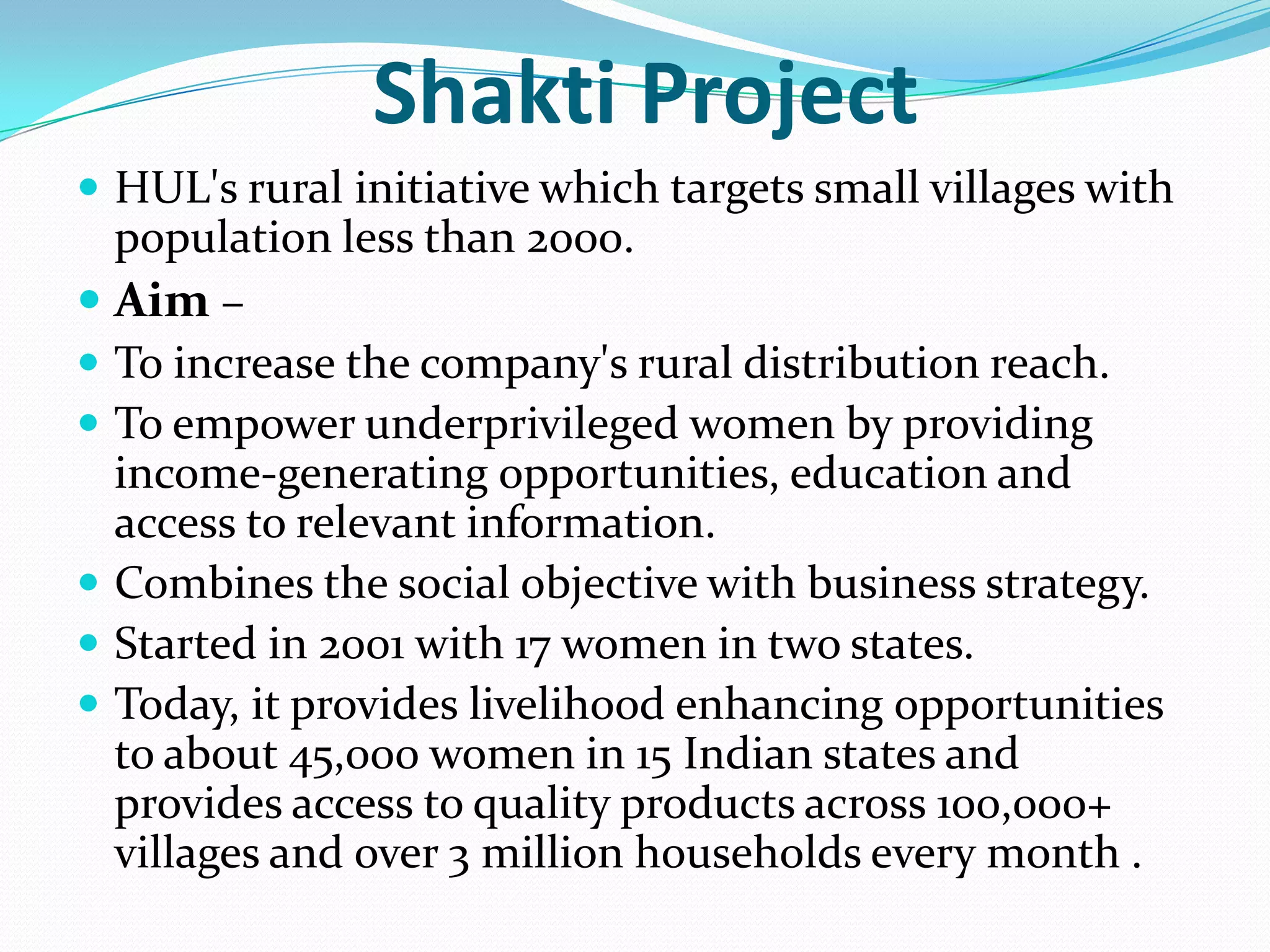
 Today this initiative of ITC
  has empowered the lives of
  people living in 10 states
  where 40000 villages have
  6500 e-choupals and
  around 4 million farmers
  have been empowered.
 Statement of a farmer - “Initially we were restricted
  to selling our produce in the local mandi. We had to go
  through middlemen and prices were low. ITC trained
  me to manage the Internet kiosk and I became the
  Sanchalak in my village. Today we are a community of
  e-farmers with access to daily prices of a variety of
  crops in India and abroad – this helps us to get the
  best price. We can also find out about many other
  important things – weather forecasts, the latest
  farming techniques, crop insurance, etc. e-Choupal
  has not only changed the quality of our lives, but our
  entire outlook.”
Shakti Project
 HUL's rural initiative which targets small villages with
  population less than 2000.
 Aim –
 To increase the company's rural distribution reach.
 To empower underprivileged women by providing
  income-generating opportunities, education and
  access to relevant information.
 Combines the social objective with business strategy.
 Started in 2001 with 17 women in two states.
 Today, it provides livelihood enhancing opportunities
  to about 45,000 women in 15 Indian states and
  provides access to quality products across 100,000+
  villages and over 3 million households every month .
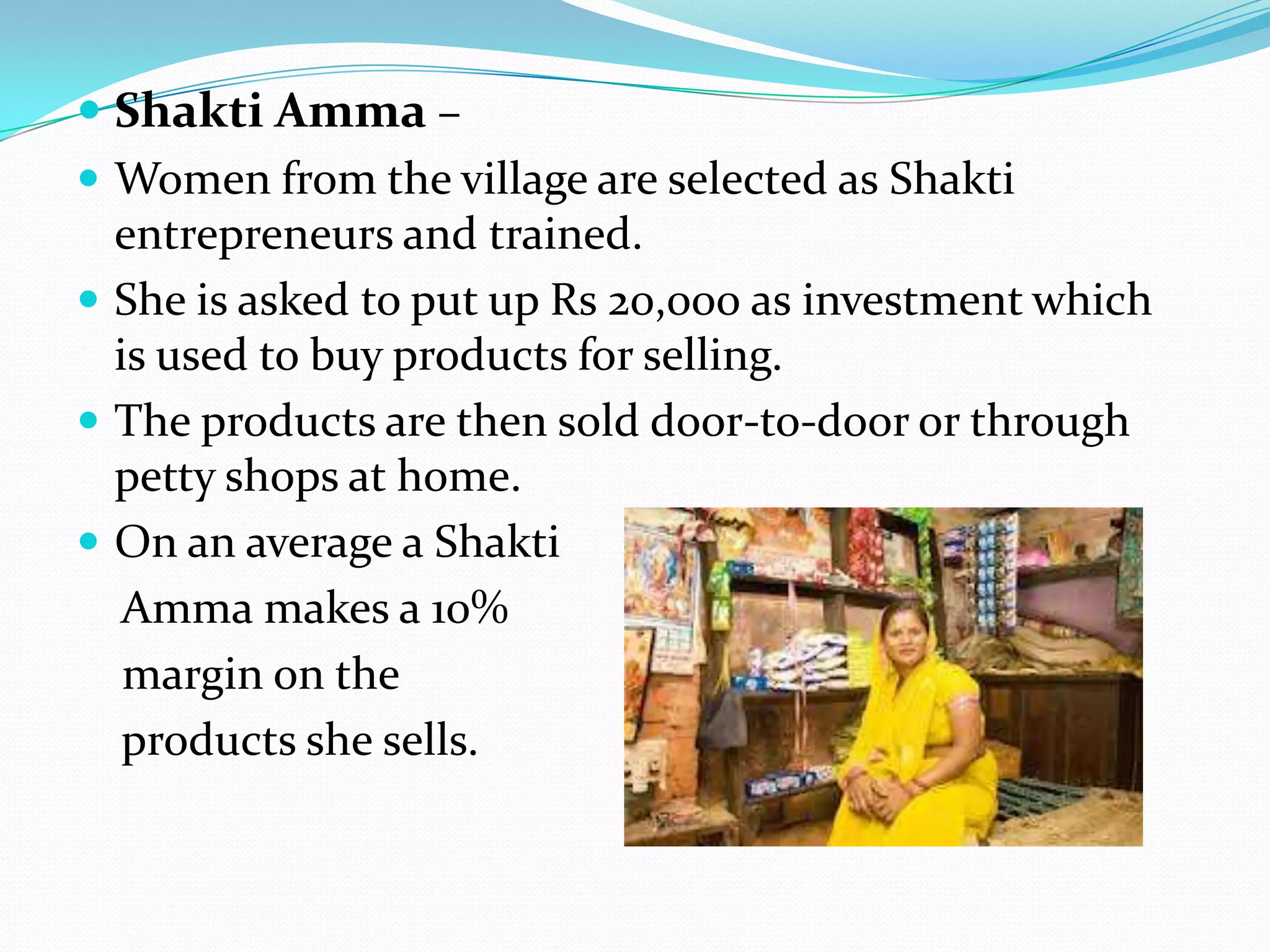
 Shakti Amma –
 Women from the village are selected as Shakti
  entrepreneurs and trained.
 She is asked to put up Rs 20,000 as investment which
  is used to buy products for selling.
 The products are then sold door-to-door or through
  petty shops at home.
 On an average a Shakti
   Amma makes a 10%
   margin on the
   products she sells.
 Shakti Vani –
 Works to improve the quality of life in rural India, by
  spreading awareness of best practices in health and
  hygiene.
 Trained communicators visit schools and village
  congregations to spread messages on sanitation, good
  hygiene practices and women empowerment.
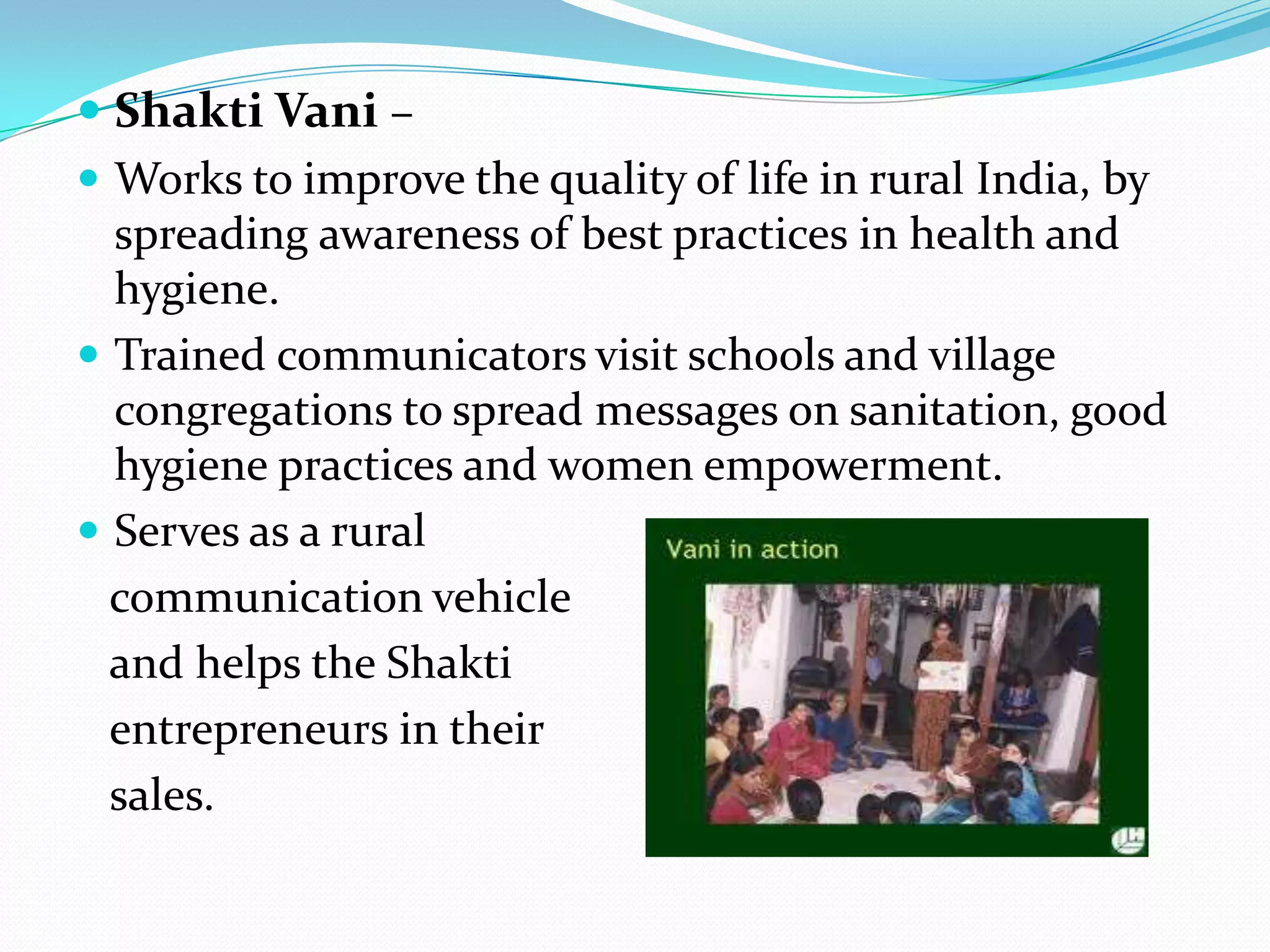
 Serves as a rural
  communication vehicle
  and helps the Shakti
  entrepreneurs in their
  sales.
 i-Shakti –
 an IT-enabled community portal established across
  the state of Andhra Pradesh in 2004.
 Designed to give rural people access to information via
  a network of village “kiosks” containing internet linked
  computers run by entrepreneurs.
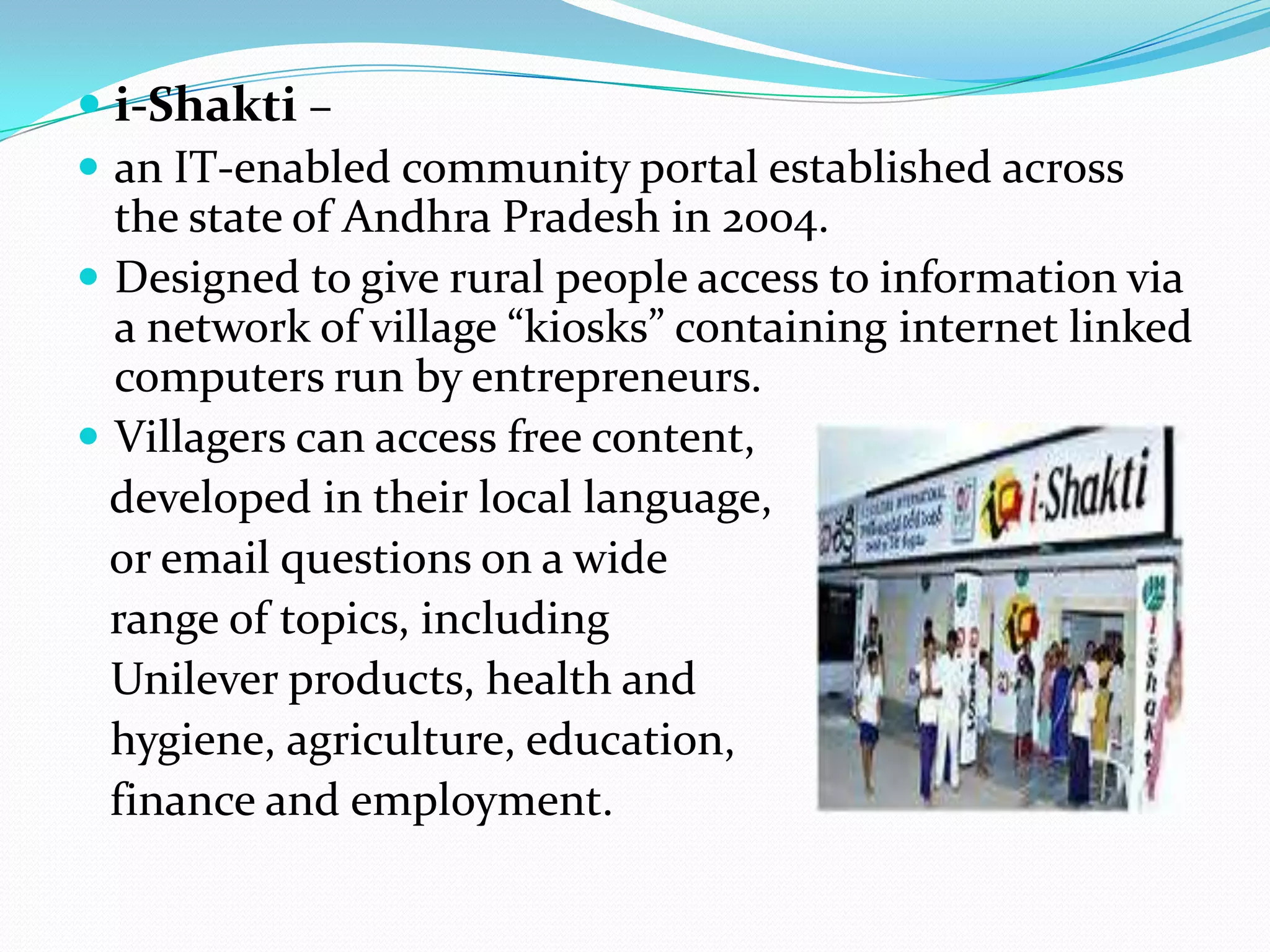
 Villagers can access free content,
  developed in their local language,
  or email questions on a wide
  range of topics, including
  Unilever products, health and
  hygiene, agriculture, education,
  finance and employment.
 Shaktimaan –
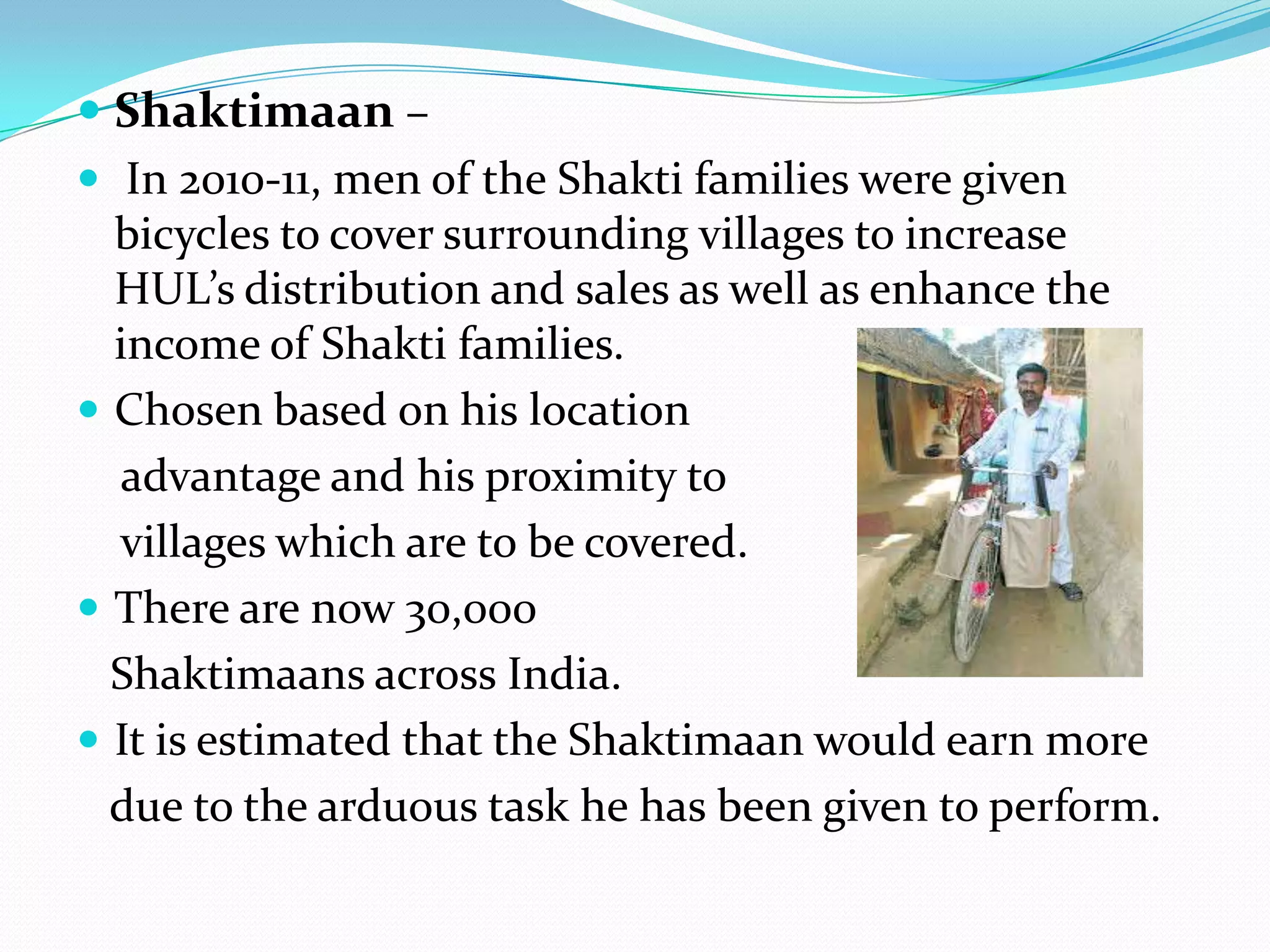
 In 2010-11, men of the Shakti families were given
  bicycles to cover surrounding villages to increase
  HUL’s distribution and sales as well as enhance the
  income of Shakti families.
 Chosen based on his location
  advantage and his proximity to
  villages which are to be covered.
 There are now 30,000
  Shaktimaans across India.
 It is estimated that the Shaktimaan would earn more
  due to the arduous task he has been given to perform.
A presentation on e choupal and shakti project

A presentation on e choupal and shakti project

  • 1.
  • 2.
    E-Choupal  An initiativeof ITC Limited.  Conceived to tackle the challenges posed by the unique features of Indian agriculture - fragmented farms, weak infrastructure and the involvement of numerous intermediaries.  Involves the installation of computers with Internet access in rural areas of India to offer farmers up-to-date marketing and agricultural information.
  • 3.
     Sanchalak – A literate in village is elected from among the village population. He acts as a mediator and retrieve the information on behalf of the farmer.  The computer, typically housed in the farmer’s house.  It is linked to the Internet via phone lines or by a VSAT connection.  It serves an average of 600 farmers in 10 surrounding villages within about a 5 kilometer radius.
  • 4.
     Benefits – Accurate weighing, faster processing time, and prompt payment.  Access to a wide range of information, including market price knowledge, weather, scientific farming practices, farmer peer groups, soil-testing and market trends.  Helps them decide when, where, and at what price to sell.  Serves as both a social gathering place for exchange of information (choupal means gathering place in Hindi) and an e-commerce hub.
  • 5.
     Process – The farmer carries a sample to local kiosk and receives a spot quote from the sanchalak. If the farmer accepts the quote, he can transport the produce directly to an ITC collection center, and gets payment within two hours.  Success data –  Today this initiative of ITC has empowered the lives of people living in 10 states where 40000 villages have 6500 e-choupals and around 4 million farmers have been empowered.
  • 6.
     Statement ofa farmer - “Initially we were restricted to selling our produce in the local mandi. We had to go through middlemen and prices were low. ITC trained me to manage the Internet kiosk and I became the Sanchalak in my village. Today we are a community of e-farmers with access to daily prices of a variety of crops in India and abroad – this helps us to get the best price. We can also find out about many other important things – weather forecasts, the latest farming techniques, crop insurance, etc. e-Choupal has not only changed the quality of our lives, but our entire outlook.”
  • 7.
    Shakti Project  HUL'srural initiative which targets small villages with population less than 2000.  Aim –  To increase the company's rural distribution reach.  To empower underprivileged women by providing income-generating opportunities, education and access to relevant information.  Combines the social objective with business strategy.  Started in 2001 with 17 women in two states.  Today, it provides livelihood enhancing opportunities to about 45,000 women in 15 Indian states and provides access to quality products across 100,000+ villages and over 3 million households every month .
  • 8.
     Shakti Amma–  Women from the village are selected as Shakti entrepreneurs and trained.  She is asked to put up Rs 20,000 as investment which is used to buy products for selling.  The products are then sold door-to-door or through petty shops at home.  On an average a Shakti Amma makes a 10% margin on the products she sells.
  • 9.
     Shakti Vani–  Works to improve the quality of life in rural India, by spreading awareness of best practices in health and hygiene.  Trained communicators visit schools and village congregations to spread messages on sanitation, good hygiene practices and women empowerment.  Serves as a rural communication vehicle and helps the Shakti entrepreneurs in their sales.
  • 10.
     i-Shakti – an IT-enabled community portal established across the state of Andhra Pradesh in 2004.  Designed to give rural people access to information via a network of village “kiosks” containing internet linked computers run by entrepreneurs.  Villagers can access free content, developed in their local language, or email questions on a wide range of topics, including Unilever products, health and hygiene, agriculture, education, finance and employment.
  • 11.
     Shaktimaan – In 2010-11, men of the Shakti families were given bicycles to cover surrounding villages to increase HUL’s distribution and sales as well as enhance the income of Shakti families.  Chosen based on his location advantage and his proximity to villages which are to be covered.  There are now 30,000 Shaktimaans across India.  It is estimated that the Shaktimaan would earn more due to the arduous task he has been given to perform.