Marketing FMCG to the Rural Customers 
Presented by: 
Group 15 
Gangotri V Naik (1311017) 
Makesh Kumar M (1311028) 
Priyadarshini K (1311035) 
Raja S K (1311040) 
Anurag Kumar (1311078)
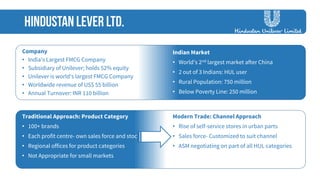
Company 
• India's Largest FMCG Company 
• Subsidiary of Unilever; holds 52% equity 
• Unilever is world's largest FMCG Company 
• Worldwide revenue of US$ 55 billion 
• Annual Turnover: INR 110 billion 
Indian Market 
• World’s 2nd largest market after China 
• 2 out of 3 Indians: HUL user 
• Rural Population: 750 million 
• Below Poverty Line: 250 million 
Traditional Approach: Product Category 
• 100+ brands 
• Each profit centre- own sales force and stockists 
• Regional offices for product categories 
• Not Appropriate for small markets 
Modern Trade: Channel Approach 
• Rise of self-service stores in urban parts 
• Sales force- Customized to suit channel 
• ASM negotiating on part of all HUL categories
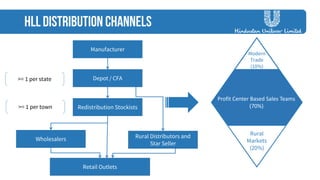
Manufacturer 
Depot / CFA 
Redistribution Stockists 
Retail Outlets 
Wholesalers 
>= 1 per state 
>= 1 per town 
Profit Center Based Sales Teams 
(70%) 
Modern 
Trade 
(10%) 
Rural 
Markets 
(20%) 
Rural Distributors and 
Star Seller
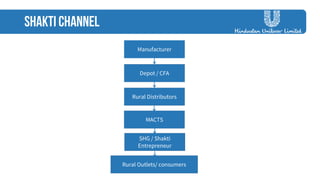
Manufacturer 
Depot / CFA 
Rural Distributors 
Rural Outlets/ consumers 
SHG / Shakti 
Entrepreneur 
MACTS
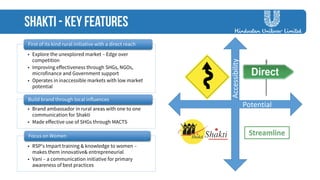
• Explore the unexplored market – Edge over 
competition 
• Improving effectiveness through SHGs, NGOs, 
microfinance and Government support 
• Operates in inaccessible markets with low market 
potential 
First of its kind rural initiative with a direct reach 
• Brand ambassador in rural areas with one to one 
communication for Shakti 
• Made effective use of SHGs through MACTS 
Build brand through local influences 
• RSP’s Impart training & knowledge to women – 
makes them innovative& entrepreneurial 
• Vani – a communication initiative for primary 
awareness of best practices 
Focus on Women 
Potential 
Accessibility
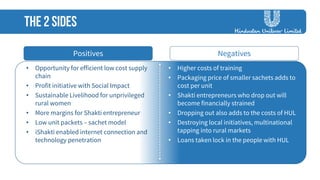
Positives 
• Opportunity for efficient low cost supply 
chain 
• Profit initiative with Social Impact 
• Sustainable Livelihood for unprivileged 
rural women 
• More margins for Shakti entrepreneur 
• Low unit packets – sachet model 
• iShakti enabled internet connection and 
technology penetration 
• Higher costs of training 
• Packaging price of smaller sachets adds to 
cost per unit 
• Shakti entrepreneurs who drop out will 
become financially strained 
• Dropping out also adds to the costs of HUL 
• Destroying local initiatives, multinational 
tapping into rural markets 
• Loans taken lock in the people with HUL 
Negatives
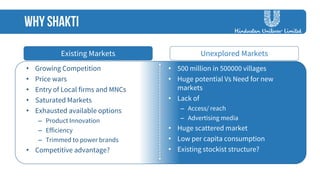
Existing Markets 
• Growing Competition 
• Price wars 
• Entry of Local firms and MNCs 
• Saturated Markets 
• Exhausted available options 
– Product Innovation 
– Efficiency 
– Trimmed to power brands 
• Competitive advantage? 
• 500 million in 500000 villages 
• Huge potential Vs Need for new 
markets 
• Lack of 
– Access/ reach 
– Advertising media 
• Huge scattered market 
• Low per capita consumption 
• Existing stockist structure? 
Unexplored Markets
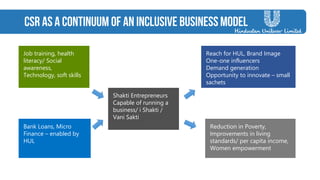
Reach for HUL, Brand Image 
One-one influencers 
Demand generation 
Opportunity to innovate – small 
sachets 
Shakti Entrepreneurs 
Capable of running a 
business/ i Shakti / 
Vani Sakti 
Job training, health 
literacy/ Social 
awareness, 
Technology, soft skills 
Bank Loans, Micro 
Finance – enabled by 
HUL 
Reduction in Poverty, 
Improvements in living 
standards/ per capita income, 
Women empowerment
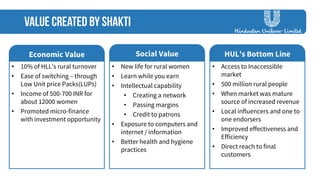
• 10% of HLL’s rural turnover 
• Ease of switching – through 
Low Unit price Packs(LUPs) 
• Income of 500-700 INR for 
about 12000 women 
• Promoted micro-finance 
with investment opportunity 
• New life for rural women 
• Learn while you earn 
• Intellectual capability 
• Creating a network 
• Passing margins 
• Credit to patrons 
• Exposure to computers and 
internet / information 
• Better health and hygiene 
practices 
• Access to Inaccessible 
market 
• 500 million rural people 
• When market was mature 
source of increased revenue 
• Local influencers and one to 
one endorsers 
• Improved effectiveness and 
Efficiency 
• Direct reach to final 
customers 
Economic Value Social Value HUL’s Bottom Line
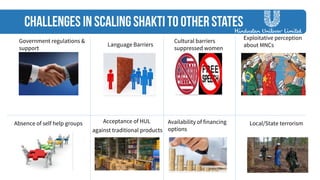
Government regulations & 
support 
Language Barriers 
Cultural barriers 
suppressed women 
Exploitative perception 
about MNCs 
Absence of self help groups Acceptance of HUL 
against traditional products 
Availability of financing 
options 
Local/State terrorism
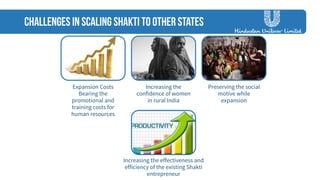
Expansion Costs 
Bearing the 
promotional and 
training costs for 
human resources 
Increasing the 
confidence of women 
in rural India 
Preserving the social 
motive while 
expansion 
Increasing the effectiveness and 
efficiency of the existing Shakti 
entrepreneur
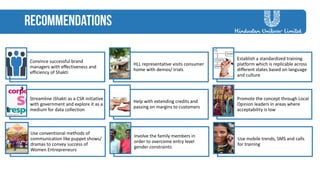
Convince successful brand managers with effectiveness and efficiency of Shakti 
HLL representative visits consumer home with demos/ trials 
Establish a standardized training platform which is replicable across different states based on language and culture 
Streamline iShaktias a CSR initiative with government and explore it as a medium for data collection 
Help with extending credits and passing on margins to customers 
Promote the concept through Local Opinion leaders in areas where acceptability is low 
Use conventional methods of communication like puppet shows/ dramas to convey success of Women Entrepreneurs 
Involve the family members in order to overcome entry level gender constraints 
Use mobile trends, SMS and calls for training
Unilever in India: Hindustan Lever's Project Shakti - Marketing FMCG to the Rural Consumer

Unilever in India: Hindustan Lever's Project Shakti - Marketing FMCG to the Rural Consumer

  • 1.
    Marketing FMCG tothe Rural Customers Presented by: Group 15 Gangotri V Naik (1311017) Makesh Kumar M (1311028) Priyadarshini K (1311035) Raja S K (1311040) Anurag Kumar (1311078)
  • 2.
    Company • India'sLargest FMCG Company • Subsidiary of Unilever; holds 52% equity • Unilever is world's largest FMCG Company • Worldwide revenue of US$ 55 billion • Annual Turnover: INR 110 billion Indian Market • World’s 2nd largest market after China • 2 out of 3 Indians: HUL user • Rural Population: 750 million • Below Poverty Line: 250 million Traditional Approach: Product Category • 100+ brands • Each profit centre- own sales force and stockists • Regional offices for product categories • Not Appropriate for small markets Modern Trade: Channel Approach • Rise of self-service stores in urban parts • Sales force- Customized to suit channel • ASM negotiating on part of all HUL categories
  • 3.
    Manufacturer Depot /CFA Redistribution Stockists Retail Outlets Wholesalers >= 1 per state >= 1 per town Profit Center Based Sales Teams (70%) Modern Trade (10%) Rural Markets (20%) Rural Distributors and Star Seller
  • 4.
    Manufacturer Depot /CFA Rural Distributors Rural Outlets/ consumers SHG / Shakti Entrepreneur MACTS
  • 5.
    • Explore theunexplored market – Edge over competition • Improving effectiveness through SHGs, NGOs, microfinance and Government support • Operates in inaccessible markets with low market potential First of its kind rural initiative with a direct reach • Brand ambassador in rural areas with one to one communication for Shakti • Made effective use of SHGs through MACTS Build brand through local influences • RSP’s Impart training & knowledge to women – makes them innovative& entrepreneurial • Vani – a communication initiative for primary awareness of best practices Focus on Women Potential Accessibility
  • 6.
    Positives • Opportunityfor efficient low cost supply chain • Profit initiative with Social Impact • Sustainable Livelihood for unprivileged rural women • More margins for Shakti entrepreneur • Low unit packets – sachet model • iShakti enabled internet connection and technology penetration • Higher costs of training • Packaging price of smaller sachets adds to cost per unit • Shakti entrepreneurs who drop out will become financially strained • Dropping out also adds to the costs of HUL • Destroying local initiatives, multinational tapping into rural markets • Loans taken lock in the people with HUL Negatives
  • 7.
    Existing Markets •Growing Competition • Price wars • Entry of Local firms and MNCs • Saturated Markets • Exhausted available options – Product Innovation – Efficiency – Trimmed to power brands • Competitive advantage? • 500 million in 500000 villages • Huge potential Vs Need for new markets • Lack of – Access/ reach – Advertising media • Huge scattered market • Low per capita consumption • Existing stockist structure? Unexplored Markets
  • 8.
    Reach for HUL,Brand Image One-one influencers Demand generation Opportunity to innovate – small sachets Shakti Entrepreneurs Capable of running a business/ i Shakti / Vani Sakti Job training, health literacy/ Social awareness, Technology, soft skills Bank Loans, Micro Finance – enabled by HUL Reduction in Poverty, Improvements in living standards/ per capita income, Women empowerment
  • 9.
    • 10% ofHLL’s rural turnover • Ease of switching – through Low Unit price Packs(LUPs) • Income of 500-700 INR for about 12000 women • Promoted micro-finance with investment opportunity • New life for rural women • Learn while you earn • Intellectual capability • Creating a network • Passing margins • Credit to patrons • Exposure to computers and internet / information • Better health and hygiene practices • Access to Inaccessible market • 500 million rural people • When market was mature source of increased revenue • Local influencers and one to one endorsers • Improved effectiveness and Efficiency • Direct reach to final customers Economic Value Social Value HUL’s Bottom Line
  • 10.
    Government regulations & support Language Barriers Cultural barriers suppressed women Exploitative perception about MNCs Absence of self help groups Acceptance of HUL against traditional products Availability of financing options Local/State terrorism
  • 11.
    Expansion Costs Bearingthe promotional and training costs for human resources Increasing the confidence of women in rural India Preserving the social motive while expansion Increasing the effectiveness and efficiency of the existing Shakti entrepreneur
  • 12.
    Convince successful brandmanagers with effectiveness and efficiency of Shakti HLL representative visits consumer home with demos/ trials Establish a standardized training platform which is replicable across different states based on language and culture Streamline iShaktias a CSR initiative with government and explore it as a medium for data collection Help with extending credits and passing on margins to customers Promote the concept through Local Opinion leaders in areas where acceptability is low Use conventional methods of communication like puppet shows/ dramas to convey success of Women Entrepreneurs Involve the family members in order to overcome entry level gender constraints Use mobile trends, SMS and calls for training