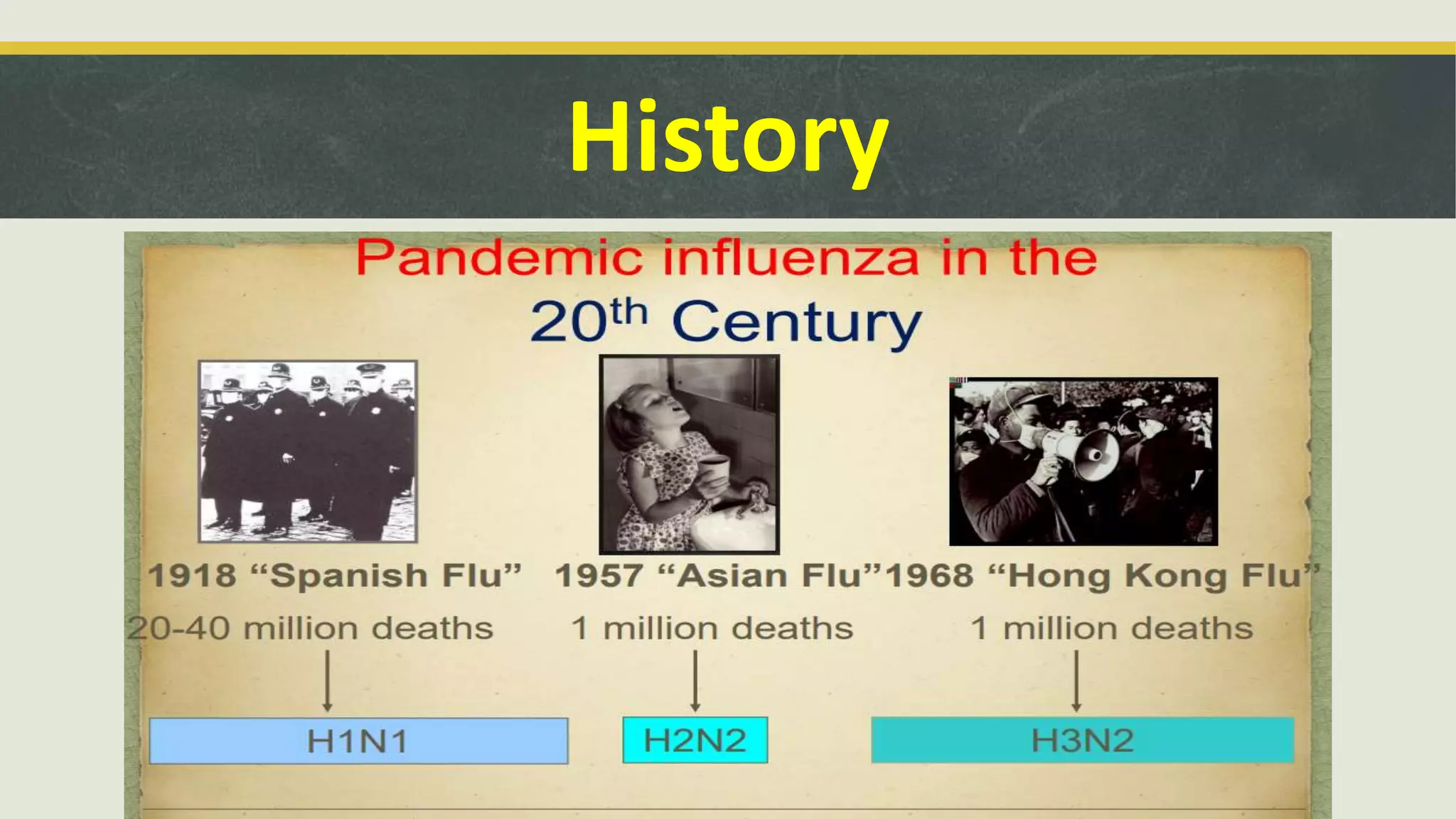
History
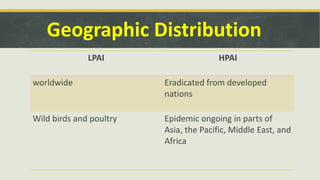
Geographic Distribution
LPAI HPAI
worldwide Eradicated from developed
nations
Wild birds and poultry Epidemic ongoing in parts of
Asia, the Pacific, Middle East, and
Africa
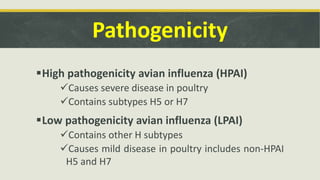
Pathogenicity
High pathogenicity avian influenza (HPAI)
Causes severe disease in poultry
Contains subtypes H5 or H7
Low pathogenicity avian influenza (LPAI)
Contains other H subtypes
Causes mild disease in poultry includes non-HPAI
H5 and H7
Antigenic Drift and Shift
Antigenic drift
Small changes in influenza virus due to point mutations
accumulated during virus replication
Antigenic shift
Abrupt change in virus subtype
Genetic reassortment between subtypes
Direct transfer of virus
Re-emergence of virus
Species Affected
 Wild birds
Waterfowl
Shorebirds
 Cage birds
 Poultry
 Mammals
Pigs, horses, mink, cats, dogs, ferrets, stone martens, palm civets,
and others
Avian
Influenza
in
Poultry
Transmission
In an infected flock, virus can spread in multiple ways:
Fecal-oral
Aerosol
Fomites
Mechanical vectors
Virus introduction:
Migratory birds
Infected poultry, pet birds
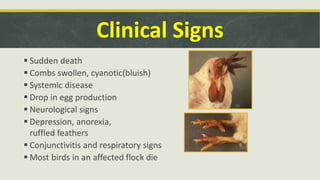
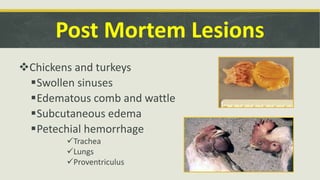
Clinical Signs
 Sudden death
 Combs swollen, cyanotic(bluish)
 Systemic disease
 Drop in egg production
 Neurological signs
 Depression, anorexia,
ruffled feathers
 Conjunctivitis and respiratory signs
 Most birds in an affected flock die
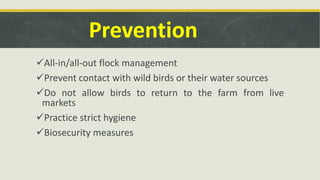
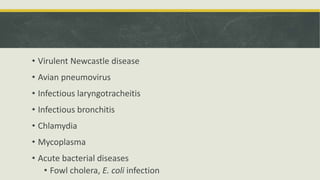
Post Mortem Lesions
Chickens and turkeys
Swollen sinuses
Edematous comb and wattle
Subcutaneous edema
Petechial hemorrhage
Trachea
Lungs
Proventriculus
Prevention
All-in/all-out flock management
Prevent contact with wild birds or their water sources
Do not allow birds to return to the farm from live
markets
Practice strict hygiene
Biosecurity measures
Differential
Diagnosis
• Virulent Newcastle disease
• Avian pneumovirus
• Infectious laryngotracheitis
• Infectious bronchitis
• Chlamydia
• Mycoplasma
• Acute bacterial diseases
• Fowl cholera, E. coli infection
Avian
Influenza
in
Human
•Inhalation:
Contaminated dust
Fine water droplets generated during slaughtering,
defeathering, eviscerating and preparing
•Contact with oral/nasal mucus membrane or conjunctiva:
Hand-transplantation of virus from contaminated surface
(poultry feces, respiratory secretions or other contaminated
products)
•Consumption of raw products:
Duck blood pudding & internal organs
Transmission
Cont….
Incubation Period
 Difficult to determine
2-17 days possible
 Symptoms usually appear in 2-5 days
World Health Organization
Recommends using incubation period of seven days for field investigations
and monitoring patient contact
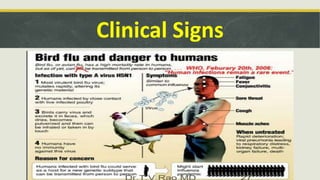
Clinical Signs
Diagnosis
 RT-PCR
Primary test to identify H5N1
 Antigen detection
 Virus isolation
WHO Reference Laboratories
 Serology
Microneutralization
Treatment
 Antiviral drugs
Amantadine
Rimantadine
Zanamivir
Oseltamivir
 Currently circulating H5N1 viruses may be resistant to amantadine,
rimantadine
Prevention
 People working with infected poultry
Follow good hygiene practices
Wear protective clothing (gloves, masks)
Consider antiviral prophylaxis
Be vaccinated against human influenza
Do not have contact with sick birds if experiencing symptoms of influenza
 Avoid wild bird contact
 Wear gloves while handling or cleaning wild birds
 Wash hands
 Cook game thoroughly
Control
 Biosecurity
Quarantine
Intensify disinfecting measures
 Monitoring/Surveillance
 Stamping Out / Depopulation
 DIVA Vaccination - only for LPAI and not for HPAI because it might prolong
the shedding of the virus
 Proper Disposal

A presentation on Avian Influenza

  • 1.
  • 2.
    Geographic Distribution LPAI HPAI worldwideEradicated from developed nations Wild birds and poultry Epidemic ongoing in parts of Asia, the Pacific, Middle East, and Africa
  • 3.
    Pathogenicity High pathogenicity avianinfluenza (HPAI) Causes severe disease in poultry Contains subtypes H5 or H7 Low pathogenicity avian influenza (LPAI) Contains other H subtypes Causes mild disease in poultry includes non-HPAI H5 and H7
  • 4.
    Antigenic Drift andShift Antigenic drift Small changes in influenza virus due to point mutations accumulated during virus replication Antigenic shift Abrupt change in virus subtype Genetic reassortment between subtypes Direct transfer of virus Re-emergence of virus
  • 5.
    Species Affected  Wildbirds Waterfowl Shorebirds  Cage birds  Poultry  Mammals Pigs, horses, mink, cats, dogs, ferrets, stone martens, palm civets, and others
  • 6.
  • 7.
    Transmission In an infectedflock, virus can spread in multiple ways: Fecal-oral Aerosol Fomites Mechanical vectors Virus introduction: Migratory birds Infected poultry, pet birds
  • 8.
    Clinical Signs  Suddendeath  Combs swollen, cyanotic(bluish)  Systemic disease  Drop in egg production  Neurological signs  Depression, anorexia, ruffled feathers  Conjunctivitis and respiratory signs  Most birds in an affected flock die
  • 9.
    Post Mortem Lesions Chickensand turkeys Swollen sinuses Edematous comb and wattle Subcutaneous edema Petechial hemorrhage Trachea Lungs Proventriculus
  • 10.
    Prevention All-in/all-out flock management Preventcontact with wild birds or their water sources Do not allow birds to return to the farm from live markets Practice strict hygiene Biosecurity measures
  • 11.
  • 12.
    • Virulent Newcastledisease • Avian pneumovirus • Infectious laryngotracheitis • Infectious bronchitis • Chlamydia • Mycoplasma • Acute bacterial diseases • Fowl cholera, E. coli infection
  • 13.
  • 14.
    •Inhalation: Contaminated dust Fine waterdroplets generated during slaughtering, defeathering, eviscerating and preparing •Contact with oral/nasal mucus membrane or conjunctiva: Hand-transplantation of virus from contaminated surface (poultry feces, respiratory secretions or other contaminated products) •Consumption of raw products: Duck blood pudding & internal organs Transmission
  • 15.
  • 16.
    Incubation Period  Difficultto determine 2-17 days possible  Symptoms usually appear in 2-5 days World Health Organization Recommends using incubation period of seven days for field investigations and monitoring patient contact
  • 17.
  • 18.
    Diagnosis  RT-PCR Primary testto identify H5N1  Antigen detection  Virus isolation WHO Reference Laboratories  Serology Microneutralization
  • 19.
    Treatment  Antiviral drugs Amantadine Rimantadine Zanamivir Oseltamivir Currently circulating H5N1 viruses may be resistant to amantadine, rimantadine
  • 20.
    Prevention  People workingwith infected poultry Follow good hygiene practices Wear protective clothing (gloves, masks) Consider antiviral prophylaxis Be vaccinated against human influenza Do not have contact with sick birds if experiencing symptoms of influenza  Avoid wild bird contact  Wear gloves while handling or cleaning wild birds  Wash hands  Cook game thoroughly
  • 21.
    Control  Biosecurity Quarantine Intensify disinfectingmeasures  Monitoring/Surveillance  Stamping Out / Depopulation  DIVA Vaccination - only for LPAI and not for HPAI because it might prolong the shedding of the virus  Proper Disposal