Download to read offline
![IJRET: International Journal of Research in Engineering and Technology eISSN: 2319-1163 | pISSN: 2321-7308
__________________________________________________________________________________________
Volume: 03 Special Issue: 04 | May-2014 | NCRTECE-2014, Available @ http://www.ijret.org 7
A FAST AND ROBUST HYBRID WATERMARKING SCHEME BASED ON
SCHUR AND SVD TRANSFORM
K.Meenakshi1
, Ch. Srinivasa Rao2
, K. Satya Prasad3
1
Research scholar, ECE Dept., JNTUCE, Kakinada, A.P, India
2
Professor of ECE, JNTUCE, Vizayanagaram, A.P, India
3
Professor, ECE Dept, JNTUCE, Kakinada, A.P, India
Abstract
This paper presents a robust watermarking for still digital images based on schur factorization and Singular Value Decomposition
(SVD). In this paper, image is decomposed into 8 8 blocks and after applying schur factorization, the stable largest eigen values of
the upper triangle is used as robust locations for embedding watermark. The matrix array formed by largest eigen values further
factorized by Singular Value Decomposition and singular values of these coefficients are modified with the singular values of
watermark. Later inverse SVD and inverse schur is applied to get watermarked image. The watermark is subjected to checkmark
watermarking evaluation software and it is found that the method is robust against number of attacks and highly imperceptible.
Keywords – Schur factorization, Singular Value Decomposition, Peak signal to noise ratio, CC.
-----------------------------------------------------------------------***----------------------------------------------------------------------
1. INTRODUCTION
With the rapid development of internet and multimedia, digital
data has become vulnerable to piracy at an alarming
proportion, which is a major concern to the multimedia
industry in general and the audio and video industry in
particular. In order to prevent the illegal copying and
distribution of multimedia documents such as audio, image and
video, several methods were proposed. An attractive method is
the process of embedding hidden information or logo into the
multimedia document known as Digital watermarking. This
logo is extracted from or detected for security purposes and for
claiming the ownership. In multimedia applications, embedded
watermarks should be invisible, robust, and have a high
capacity Invisibility refers to the distortion, introduced by the
watermark should be negligible and there must be no
distinction between watermarked and host image when viewed
by third person. Robustness is the resistance of an embedded
watermark against intentional and unintentional attacks such
as noise, filtering, blurring, sharpening, resampling, scaling,
rotation, cropping, and JPEG lossy compression.
Watermarking techniques are broadly classified into two
domains-Spatial domain and transform domain. In spatial
domain watermark is directly embedded by modifying pixels in
the image. Example is concealing logo in least significant bit
position. But these techniques suffer from vulnerability due to
intentional and unintentional attacks. An alternative is
transform domain technique; it uses transforms like Discrete
Wavelet Transform (DWT) [3],
Singular Value Decomposition (SVD) [7] and (Discrete
Fourier Transform (DFT)[2] and Contourlet transform (CT)
(10) to convert image from spatial domain to frequency
domain. The watermark is embedded in transform coefficients
and later inverse transform is used to get watermarked image.
These techniques are found to be superior compared to spatial
domain. In this domain, one can insert watermark in least
perpetually significant transform coefficients. Watermark can
be redistributed over different bands of transform coefficients.
This will improve the imperceptibility of the watermark and
lead to less visual degradation of watermarked image. Beside,
the watermark is distributed unevenly, so it is highly difficult
for the hacker to remove watermark. Recently in Ref. [9]
schur transform is used along with CT and SVD. The LL band
of original image after CT is factorized using SVD and that of
watermark after CT are decomposed by Schur Factorization.
The schur form of watermark is further factorized using SVD.
The modified coefficients of singular values of watermark are
embedded in the singular values of original image followed by
inverse SVD and inverse CT are used to obtain watermarked
image. The experimental results show that the scheme is
resistant against signal processing attacks such as median
filtering, salt and pepper noise, Gaussian noise, compression
and geometric attacks.
In ref [8] watermarked image is obtained by adding the
triangular matrix of the mark obtained after the Schur
decomposition to the DCT transform of the host image. They
proved the watermarking technique achieves high capacity.
The unitary matrix acts as secret key for the extraction of the
watermark. The results show that this scheme is robust against
attacks such as JPEG compression, colors reducing, adding](https://image.slidesharecdn.com/afastandrobusthybridwatermarkingschemebasedon-140824230634-phpapp01/85/A-fast-and-robust-hybrid-watermarking-scheme-based-on-1-320.jpg)
![IJRET: International Journal of Research in Engineering and Technology eISSN: 2319-1163 | pISSN: 2321-7308
__________________________________________________________________________________________
Volume: 03 Special Issue: 04 | May-2014 | NCRTECE-2014, Available @ http://www.ijret.org 7
A FAST AND ROBUST HYBRID WATERMARKING SCHEME BASED ON
SCHUR AND SVD TRANSFORM
K.Meenakshi1
, Ch. Srinivasa Rao2
, K. Satya Prasad3
1
Research scholar, ECE Dept., JNTUCE, Kakinada, A.P, India
2
Professor of ECE, JNTUCE, Vizayanagaram, A.P, India
3
Professor, ECE Dept, JNTUCE, Kakinada, A.P, India
Abstract
This paper presents a robust watermarking for still digital images based on schur factorization and Singular Value Decomposition
(SVD). In this paper, image is decomposed into 8 8 blocks and after applying schur factorization, the stable largest eigen values of
the upper triangle is used as robust locations for embedding watermark. The matrix array formed by largest eigen values further
factorized by Singular Value Decomposition and singular values of these coefficients are modified with the singular values of
watermark. Later inverse SVD and inverse schur is applied to get watermarked image. The watermark is subjected to checkmark
watermarking evaluation software and it is found that the method is robust against number of attacks and highly imperceptible.
Keywords – Schur factorization, Singular Value Decomposition, Peak signal to noise ratio, CC.
-----------------------------------------------------------------------***----------------------------------------------------------------------
1. INTRODUCTION
With the rapid development of internet and multimedia, digital
data has become vulnerable to piracy at an alarming
proportion, which is a major concern to the multimedia
industry in general and the audio and video industry in
particular. In order to prevent the illegal copying and
distribution of multimedia documents such as audio, image and
video, several methods were proposed. An attractive method is
the process of embedding hidden information or logo into the
multimedia document known as Digital watermarking. This
logo is extracted from or detected for security purposes and for
claiming the ownership. In multimedia applications, embedded
watermarks should be invisible, robust, and have a high
capacity Invisibility refers to the distortion, introduced by the
watermark should be negligible and there must be no
distinction between watermarked and host image when viewed
by third person. Robustness is the resistance of an embedded
watermark against intentional and unintentional attacks such
as noise, filtering, blurring, sharpening, resampling, scaling,
rotation, cropping, and JPEG lossy compression.
Watermarking techniques are broadly classified into two
domains-Spatial domain and transform domain. In spatial
domain watermark is directly embedded by modifying pixels in
the image. Example is concealing logo in least significant bit
position. But these techniques suffer from vulnerability due to
intentional and unintentional attacks. An alternative is
transform domain technique; it uses transforms like Discrete
Wavelet Transform (DWT) [3],
Singular Value Decomposition (SVD) [7] and (Discrete
Fourier Transform (DFT)[2] and Contourlet transform (CT)
(10) to convert image from spatial domain to frequency
domain. The watermark is embedded in transform coefficients
and later inverse transform is used to get watermarked image.
These techniques are found to be superior compared to spatial
domain. In this domain, one can insert watermark in least
perpetually significant transform coefficients. Watermark can
be redistributed over different bands of transform coefficients.
This will improve the imperceptibility of the watermark and
lead to less visual degradation of watermarked image. Beside,
the watermark is distributed unevenly, so it is highly difficult
for the hacker to remove watermark. Recently in Ref. [9]
schur transform is used along with CT and SVD. The LL band
of original image after CT is factorized using SVD and that of
watermark after CT are decomposed by Schur Factorization.
The schur form of watermark is further factorized using SVD.
The modified coefficients of singular values of watermark are
embedded in the singular values of original image followed by
inverse SVD and inverse CT are used to obtain watermarked
image. The experimental results show that the scheme is
resistant against signal processing attacks such as median
filtering, salt and pepper noise, Gaussian noise, compression
and geometric attacks.
In ref [8] watermarked image is obtained by adding the
triangular matrix of the mark obtained after the Schur
decomposition to the DCT transform of the host image. They
proved the watermarking technique achieves high capacity.
The unitary matrix acts as secret key for the extraction of the
watermark. The results show that this scheme is robust against
attacks such as JPEG compression, colors reducing, adding](https://image.slidesharecdn.com/afastandrobusthybridwatermarkingschemebasedon-140824230634-phpapp01/75/A-fast-and-robust-hybrid-watermarking-scheme-based-on-1-2048.jpg)
![IJRET: International Journal of Research in Engineering and Technology eISSN: 2319-1163 | pISSN: 2321-7308
__________________________________________________________________________________________
Volume: 03 Special Issue: 04 | May-2014 | NCRTECE-2014, Available @ http://www.ijret.org 8
noise, filtering, cropping, low rotations, and histogram
spreading. In ref [5, 6] the authors point schur is a fast
transform and robust to many attacks. They embedded
watermark in host image using quantization index modulation
and quantization index modulus modulation. They proved their
method robust against rotation, low pass filtering, median
filtering, resizing, salt & pepper noise. In SVD [7] singular
values of original image is modified with singular values of
watermark to obtain watermarked image . Later inverse SVD is
used for extracting original watermark. In Ref. [11] two new
properties of SVD on images are derived. The first property
utilizes the quantitative relationship between singular values
and power spectrum. The second property proves that under
the condition of losing equal power spectrum, the square-error
of the reconstructed image is much smaller when we reduce all
singular values proportionally instead of neglect the smaller
ones. Based on the two properties, a new data-hiding scheme is
proposed. It performs well as for robustness, for it satisfies
power-spectrum condition (PSC), and PSC-compliant
watermarks are proven to be most robust. Besides, the
proposed scheme has a good performance as for capacity and
adaptability.
The paper is organized as follows: The properties of SVD and
Schur transform are described in section ii. The watermark
embedding and extraction using proposed method is described
in Section iii. Simulation results and observations are
presented in section iv. Conclusion is given in section v.
2. METHODOLOGY
The proposed watermarking technique employs the hybrid
transforms of schur and SVD. A brief introduction of two
transforms is given below.
Singular Value Decomposition is a mathematical tool widely
used in image compression, retrieval and watermarking.
According to it, every real matrix A can be decomposed into a
product of three matrices,
A=UΣVT
1
If A is represented in matrix format:
1
2
1, 2, 1 2
.
0 0 0
0 0 0
.
0 0 0
0 0 0
T
N Nu u u v v v
r
2
The Singular Value Decomposition (SVD) of A can be written
as
rrr VUVUVUA ........222111 3
Where r is the rank of A (r <=N). The singular values above
rank r are zero. U and V are orthogonal matrices, satisfying the
condition UT
U= I, VT
V = I, and Σ = diag (λ1, λ2, ...). The
diagonal entries of Σ are called the singular values of A, the
columns of U are called the left singular vectors of A, and the
columns of V are called the right singular vectors of A.
In SVD, singular values represent the luminance of the image
layer and singular vectors represent the geometry of the image.
The main advantage of the SVD is the largest singular values
preserve most of the energy and are resistant to small
perturbations and there by immune to most of the signal
processing and image compression operations.[7]
Properties of Singular Value Decomposition:
1. Stability: The SVs have a strong stability since the variation
of both original and disturbed SVs cannot exceed 2-norm of
the difference between the original and modified matrices.
2. Invariance to geometric distortions: The SVD exhibits the
geometric invariance can be expressed in:
3. Translational invariance: Both the matrix A and its
translated counterpart has same singular values.
4. Scaling invariance: if maxA has singular values
,1, piSi then its scaled counterpart
S
A has singular
values is equal to Sri FFS where Fr and SF are the
scaling factors of rows and columns respectively.
5. Flip invariance: Both the matrix A and its flipped
counterparts have same singular values.
6. Transposition: Both matrix A and its transpose have same
singular values.
The main advantage of Singular Value Decomposition is it is
more resistant to scaling, translation and rotation attacks.
Schur transform: Given a square matrix A, if it has full rank
of linearly independent Eigen vectors, there exists an invertible
matrix P, such that 1
P AP
, where is a diagonal matrix.
But all square matrices are not diagonalizable. This deficiency
can be mitigated by schur factorization or QR factorization
.According to schur every invertible matrix may be expressed
as a product of unitary matrix U and upper triangle matrix T,
AUUT H
. In matrix T, the diagonal entries of T are the
Eigen values of A. This decomposition refers to the structure
of the matrix.](https://image.slidesharecdn.com/afastandrobusthybridwatermarkingschemebasedon-140824230634-phpapp01/85/A-fast-and-robust-hybrid-watermarking-scheme-based-on-2-320.jpg)
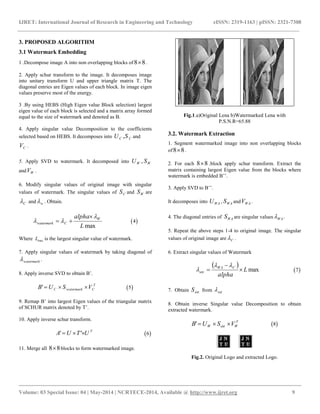
![IJRET: International Journal of Research in Engineering and Technology eISSN: 2319-1163 | pISSN: 2321-7308
__________________________________________________________________________________________
Volume: 03 Special Issue: 04 | May-2014 | NCRTECE-2014, Available @ http://www.ijret.org 11
Where MSE is mean squared error between the cover frame
F and the watermarked frame F .
2
1 1
1
M
i
N
J
ijij FF
MN
MSE 10
The watermark similarity measure is necessary to provide the
judgment of robustness of watermark. Therefore, a qualitative
measure used is cross correlation (CC) .
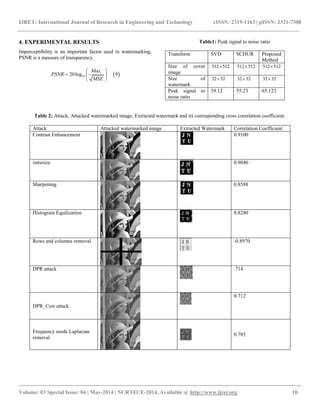
Fig 3 Robustness of proposed method compared with method
in Ref. [6], extracted watermark from D and U matrix of schur
Decomposition. (a) Contrast Enhancement (b) imresizing (c)
sharpening (d) Histogram Equilization(e) Row column
removal (f)DPR attack (g) DPR corr Attack . (h) Frequency
mode Laplacian removal.
The experimental results show that the proposed method is
providing high level of imperceptibility and robust to number
of attacks.
REFERENCES
[1]. Hsu, C. T., & Wu, J. L. (1999). Hidden digital watermarks
in images. IEEE Transactions on Image Processing, 8(1), 58–
68.
[2]. .Hernandez, M. Amado, F. Perez-Gonzalez, DCT-domain
watermarking techniques for still images- Detector
performance analysis and a new structure, IEEE Trans. Image
Process, Vol. 9 (1), pp. 55–68, Jan, 2000.
[3]. M. Barni, F. Bartolini, and A. Piva, “Improved wavelet-
based watermarking through pixel-wise masking,” IEEE
Transactions on Image Processing, vol. 10, no. 5, pp. 783–791,
2001.
[4]. J. K. Ó Ruanaidh, W. J. Dowling, and F. M. Boland,
"Phase watermarking of images", IEEE International
Conference on Image Processing, Lausanne, Switzerland,
September 1996.
[5]. B.Chandra Mohan and K.Veera Swamy” On the use of
Schur Decomposition for Copyright Protection of Digital
Images, International Journal of Computer and Electrical
Engineering, Vol. 2, No. 4, August, 2010
1793-8163.[
[6]. B.Chandra Mohan and K.Veera Swamy, ,S.Srinivasa
Kumar” A Comparative performance evaluation of SVD and
Schur Decompositions for Image Watermarking “International
Conference on VLSI, Communication & Instrumentation
(ICVCI) 2011 Proceedings published by International Journal
of Computer Applications® (IJCA)
[7].Yongdong, Wu, 2005. On the Security of an SVD based
ownership watermarking. IEEE transactions on Multimedia,
vol 7. no.4.
[8]. Henri Bruno Razafindradina, Nicolas Raft
Razafindrakoto, Paul Auguste Randriamitantsoa “Improved
Watermarking Scheme Using Discrete Cosine Transform and
Schur Decomposition “,IJCSN International Journal of
Computer Science and Network, Volume 2, Issue 4, August
2013 .
[9]. Liu, P., Yang, J., Wei, J., Chen, F.: A Novel Watermarking
Scheme in Contourlet Domain Based on Schur Factorization.
In: International Conference on Information Engineering and
Computer Sciences, pp. 1–4 (2010).
[10]. Yun-xia, Hong-bin zhang “Two properties of SVD and its
applications in data hiding,”Advanced Intelligent Computing
Theories and Applications. With Aspects of Theoretical and
Methodological Issues](https://image.slidesharecdn.com/afastandrobusthybridwatermarkingschemebasedon-140824230634-phpapp01/85/A-fast-and-robust-hybrid-watermarking-scheme-based-on-5-320.jpg)

This paper introduces a hybrid watermarking technique for digital images utilizing Schur factorization and Singular Value Decomposition (SVD), aimed at ensuring robustness and imperceptibility. It details the methodology for embedding and extracting the watermark, showing promising results against various attacks while maintaining high-quality image integrity. Experimental results indicate the proposed method effectively preserves imperceptibility with a peak signal-to-noise ratio (PSNR) of 65.123, demonstrating substantial resilience to common watermarking challenges.


