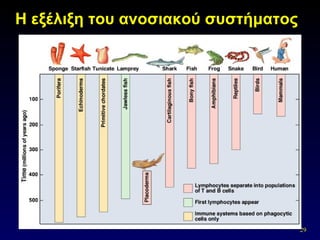
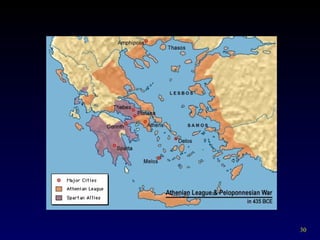

Ο Πανεπιστημιακός δάσκαλος και Πνευμονολόγος Εντατικολόγος Γιώργος Μπαλτόπουλος έχει ιδιαίτερα ξεχωριστή μεταδοτικότητα είτε μιλάει σε ειδικούς γιατρούς σε συνέδρια είτε όπως θα διαπιστώσετε εσείς που δεν κατέχετε λεπτομέρειες της επιστήμης.
Μικρόβια εναντίον ανθρώπου:Αγώνας για την επιβίωση Το Acinetobacter και ο Άγιος Λουκάς Καθηγητής Γεώργιος Ι. Μπαλτόπουλος Τμήμα Νοσηλευτικής Πανεπιστημίου Αθηνών Διευθυντής Πανεπιστημιακής ΜΕΘ ΓΠΝ ΚΑΤ Λεμεσός,Κύπρος 200 8
2.
Μικρόβια και άλλαέμβια: βίοι παράλληλοι ; 3.5 billion Gram(-)bacteria 3.4 billion Fungi 1.7 billion 65 million 250,000 70 Gram(+)bacteria Mammals Humans Antibiotic Era Πολυκύτταροι οργανισμοί ‘‘ evolutionary big bang ’’ 6 00 million
3.
M ικρόβια και άνθρωπος Πολύ λίγα μικρόβια είναι πάντοτε παθογόνα Πολλά μικρόβια είναι δυνητικά παθογόνα Τα περισσότερα μικρόβια δεν είναι παθογόνα
4.
Πηγές παθογόνων στιςλοιμώξεις Αναπτυγμένες χώρες Μικροβιακή χλωρίδα (ενδογενείς) κυρίως Περιβάλλον (εξωγενείς) Υπό ανάπτυξη / πτωχές Περιβάλλον (εξωγενείς) κυρίως Μικροβιακή χλωρίδα (ενδογενείς)
5.
Εξωγενείς λοιμώξεις Έχουνμειωθεί δραματικά τα τελευταία χρόνια λόγω: Βελτίωσης των κανόνων υγιεινής Εμβολιασμών Προγραμμάτων ελέγχου λοιμώξεων Παραμένουν σε έξαρση κυρίως στις αναπτυσσόμενες χώρες: Πνευμονία κοινότητας Διαρροϊκά σύνδρομα Ελονοσία Φυματίωση
Μικροβιακό φορτίο τηςφυσιολογικής μικροβιακής χλωρίδας Περιοχή Φορτίο Ρινικές εκκρίσεις 10 5 / ml Οδοντική πλάκα 10 11 / g Σίελος 10 8 / ml Στόμαχος 10 3 / ml Λεπτό έντερο 10 4 / ml Παχύ έντερο 10 11 / g Κολπικές εκκρίσεις 10 9 / g Ουροδόχος κύστη <10 3 / ml Περιγεννητική περιοχή 10 6 / cm 2 Δέρμα άλλων περιοχών 10 3 / cm 2
8.
Η τέχνη τουπολέμου It is said that one who knows the enemy and knows himself will not be endangered in a hundred engagements . Αυτός που γνωρίζει τον εχθρό και τον εαυτό του, δεν θα κινδυνέψει ούτε σε εκατό συμπλοκές………… The combat of the victorious is like the sudden release of a pent-up torrent down a thousand-fathom gorge. This is the strategic disposition of force . Η μάχη του νικητή είναι σαν το άνοιγμα του φράγματος ενός χειμάρρου σε μια χαράδρα χιλίων μέτρων. Αυτή είναι η στρατηγική διάθεσης της δύναμης. Sun Tzu The Art of War
9.
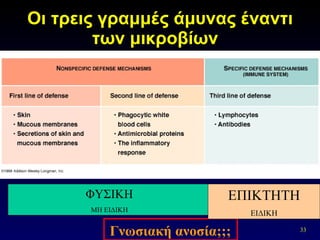
Πως την γλιτώνουμεαπό τους μικροοργανισμούς; Τους αποφεύγουμε Καθαρό νερό, πλύσιμο χεριών, αντικειμένων και φαγώσιμων, αποφυγή των ασθενών Τους πολεμάμε Ανοσιακό σύστημα Κρυβόμαστε Ανατομικοί και μηχανικοί φραγμοί Χρησιμοποιούμε τον εγκέφαλο μας Φάρμακα
Πως δουλεύει τοανοσιακό σύστημα Βρίσκει τα παθογόνα και τα καταστρέφει προσέχοντας να μην καταστρέψει και τον εαυτό του ( make the self/nonself discrimination )
13.
Πως αντιμετωπίζεται έναμικρόβιο όταν ξεφεύγει από την φυσική ανοσία Με την επίκτητη ανοσία Το ανοσιακό σύστημα μπορεί να αναγνωρίσει κάθε τι στο «σύμπαν» και βεβαίως τον εαυτό μας, τον οποίο προφυλάσσει. Αναγνωρίζει κάθε τι ξένο και το καταστρέφει. Η φυσική ανοσία αφορά όλα τα όντα και είναι παράλληλη της εξέλιξης των όντων Η επίκτητη ανοσία αφορά το άτομο και είναι παράλληλη της εξέλιξης (ενηλικίωσης) του ατόμου
14.
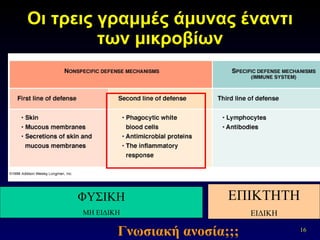
Οι τρεις γραμμέςάμυνας έναντι των μικροβίων ΦΥΣΙΚΗ ΜΗ ΕΙΔΙΚΗ ΕΠΙΚΤΗΤΗ ΕΙΔΙΚΗ Γνωσιακή ανοσία;;;
15.
Η πρώτη γραμμήάμυνας Δέρμα (Φραγμός) Επιδερμίδα (πάχος 10-30 κυττάρων) pH 3-5 (αναστέλλει την ανάπτυξη) Ιδρώτας - λυσοζύμη ( πέψη βακτηριακού τοιχώματος) Δερμίδα 15-40 φορές πιο παχιά από την επιδερμίδα Υποδόριο Πύλες εισόδου των μικροβίων Πεπτικό Σίελος Όξινο περιβάλλον Αναπνευστικό Βλεννοκροσσωτό σύστημα Μακροφάγα Ουρογεννητικό Κολπικές εκκρίσεις – όξινες και κολλώδεις Ούρα-όξινα
16.
Οι τρεις γραμμέςάμυνας έναντι των μικροβίων ΦΥΣΙΚΗ ΜΗ ΕΙΔΙΚΗ ΕΠΙΚΤΗΤΗ ΕΙΔΙΚΗ Γνωσιακή ανοσία;;;
17.
Ουδετερόφιλα:φαγοκυττάρωση, θανάτωση, πέψη Φαγοκυττάρωση-φαγόσωμα 20 s NADPH Oxidase, O − 2 και H 2 O 2 , HO • , Ο 3 , Myeloperoxidase - Mediated Halogenation , ΝΟ Ειδικά κοκκία 20 s Αζουρόφιλα κοκκία 20 s Κοκκία ζελατινάσης Λυσοσώματα 5 min Εκκριτικά κοκκία Annu. Rev. Immunol. 2005. 23:197–223
18.
Μη φαγοκυτταρικά κύτταραΗ θανάτωση του μικροβίου δεν είναι το ίδιο με την φαγοκυττάρωση Ηωσινόφιλα – δρουν έναντι παράσιτων προσκολώνται σε αυτά και αδρανοποιούν τα ένζυμα τους Κύτταρα φυσικοί δολοφόνοι – καταστρέφουν μολυσμένα και καρκινικά κύτταρα Καταστρέφουν την μεμβράνη τους Perforin Vesicle Cell membrane Target cell Nucleus Killer cell
19.
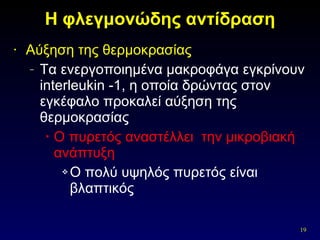
Η φλεγμονώδης αντίδρασηΑύξηση της θερμοκρασίας Τα ενεργοποιημένα μακροφάγα εγκρίνουν interleukin -1 , η οποία δρώντας στον εγκέφαλο προκαλεί αύξηση της θερμοκρασίας Ο πυρετός αναστέλλει την μικροβιακή ανάπτυξη Ο πολύ υψηλός πυρετός είναι βλαπτικός
20.
Λοίμωξη με Aeromonas hydrophila Ascosfaera Apis Κυψέλες μελισσών Μεταβολή της θερμοκρασίας Σαύρα Diposaurus dorsalis: από 38 σε 40 ο C (Kluger et al 1975) Χρυσόψαρο: από 28 σε 32.7 ο C (Covert and Reynolds 1977) Αυξάνει την επιβίωση από 25% σε 67% και από 64% σε 100%, αντίστοιχα το ίδιο ισχύει και για πολλά αλλά είδη Hasday JD, Singh IS. Cell Stress & Chaperones(2000) 5 (5), 4 7 1–480
21.
Περιτονίτιδα από Kpneumoniae 100 CFU K pneumoniae Στέλεχος Caroli Ενδοπεριτοναϊκά Θερμοκρασία Περιβάλλοντος: 23 ο C Πυρήνα: 36.5–37 ο C Θερμοκρασία Περιβάλλοντος: 35.5 ο C Πυρήνα: 39–39.5 ο C Θερμοκρασία Περιβάλλοντος: 35.5 ο C Πυρήνα: 39–39.5 ο C Θερμοκρασία Περιβάλλοντος: 23 ο C Πυρήνα: 36.5–37 ο C Hasday JD, Singh IS. Cell Stress & Chaperones(2000) 5 (5), 471–480
22.
Οι τρεις γραμμέςάμυνας έναντι των μικροβίων ΦΥΣΙΚΗ ΜΗ ΕΙΔΙΚΗ ΕΠΙΚΤΗΤΗ ΕΙΔΙΚΗ Γνωσιακή ανοσία;;;
ΕΠΙΚΤΗΤΗ ΑΝΟΣΙΑ Ενεργητικήανοσία - προηγούμενη έκθεση Ανατομικές θέσεις οργάνωσης Λεμφαδένες Σπλήνας Λεμφικός ιστός βλεννογόνων (αμυγδαλές, αδενοειδείς εκβλαστήσεις, πλάκες Payer και διάχυτος λεμφικός ιστός στο βλεννογόνο του εντέρου) Παθητική ανοσία – προσφέρεται (πλακούντας, οροί -ανοσοσφαιρίνες)
25.
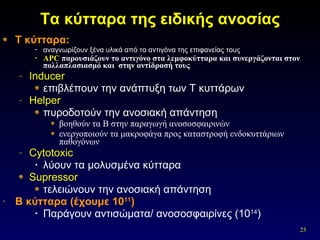
Τα κύτταρα τηςειδικής ανοσίας T κύτταρα: αναγνωρίζουν ξένα υλικά από τα αντιγόνα της επιφανείας τους APC παρουσιάζουν το αντιγόνο στα λεμφοκύτταρα και συνεργάζονται στον πολλαπλασιασμό και στην αντίδρασή τους Inducer επιβλέπουν την ανάπτυξη των T κυττάρων Helper πυροδοτούν την ανοσιακή απάντηση βοηθούν τα Β στην παραγωγή ανοσοσφαιρινών ενεργοποιούν τα μακροφάγα προς καταστροφή ενδοκυττάριων παθογόνων Cytotoxic λύουν τα μολυσμένα κύτταρα Supressor τελειώνουν την ανοσιακή απάντηση B κύτταρα (έχουμε 10 11 ) Παράγουν αντισώματα/ ανοσοσφαιρίνες (10 14 )
26.
Η ανοσιακή μνήμη: Αφού μάθει (primary response), το θυμάται για πάντα (secondary response) Τη δεύτερη φορά το κάνει αλλιώς… σε σχέση με την παραγωγή αντισωμάτων : Ταχεία & Μεγαλύτερη παραγωγή ανοσοσφαιρινών Διαφορετικού τύπου αντίσωμα (ανοσοσφαιρίνη) Λειτουργικότερη ανοσοσφαιρίνη (higher binding strength)
27.
Οι 12 αντι-ανοσιακοίμικροβιακοί μηχανισμοί I S ex comes before disease ( acquire virulence genes ), S ense environment and S witch virulence genes on and off , S wim to site of infection , S tick to site of infection , S cavenge nutrients ( especially iron ), S urvive stress , S tealth ( avoid immune system ), S trike-back ( damage host tissues ), S ubvert host cell cytoskeletal and signalling pathways , S pread through cells and organs , S catter Cell 2006; 124: 767–782
28.
Οι 12 αντι-ανοσιακοίμικροβιακοί μηχανισμοί II S ex comes before disease ( acquire virulence genes ), S ense environment and S witch virulence genes on and off , S wim to site of infection , S tick to site of infection , S cavenge nutrients ( especially iron ), S urvive stress , S tealth ( avoid immune system ), S trike-back ( damage host tissues ), S ubvert host cell cytoskeletal and signalling pathways , S pread through cells and organs , S catter Cell 2006; 124: 767–782
Οι συμμαχίες: τα μικρόβια του εντέρου Δισεκατομμύρια μικροοργανισμοί ζουν στο έντερο Το ανθρώπινο σώμα έχει 10πλάσιο αριθμό βακτηριδίων (10 14 ) από ότι ευκαρυωτικά κύτταρα (10 13 ). Μικρόβια του εντέρου/ κοπράνων : 400 είδη βακτηριδίων ( 30 - 40 είδη = 99 % ) Bacteroides, Bifidobacterium, Clostridium,Enterococcus, Eubacterium, Fusobacterium, Peptostreptococcus, Ruminococcus, Lactobacillus and Escherichia Western lifestyle Lactobacillus Lactobacillus plantarum, Lactobacillus rhamnosus and Lactobacillus paracasei ssp paracasei GALT ( Gut Associated Lymphocytic Tissue ) αντιπροσωπεύει το μεγαλύτερο λεμφοκυτταρικό σύστημα του οργανισμού
32.
THE MICROFLORA ORGANGustafsson B 1985. The future of germ-free research. Alan R. Liss. New York
33.
Οι τρεις γραμμέςάμυνας έναντι των μικροβίων ΦΥΣΙΚΗ ΜΗ ΕΙΔΙΚΗ ΕΠΙΚΤΗΤΗ ΕΙΔΙΚΗ Γνωσιακή ανοσία;;;
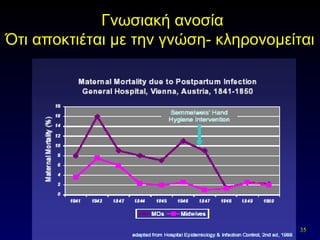
Γνωσιακή ανοσία Ότιαποκτιέται με την γνώση- κληρονομείται Εμβόλια Ανοσοσφαιρίνες κ.α.
39.
Γνωσιακή ανοσία Ότιαποκτήθηκε με την γνώση-τι κερδίσαμε; Subacute sclerosing panencephilitis (SSPE)
40.
Γνωσιακή ανοσία Ότιαποκτήθηκε με την γνώση-τι κερδίσαμε; Θνητότητα από λοιμώξεις στις ΗΠΑ Current Opinion in Critical Care 2004, 10:250–264
41.
Οι μεγάλοι σταθμοί-ΙστορίαLouis Pasteur (1822-1895) Στις 6/7/ 1886, εμβολίασε τον 9 χρονο Joseph Meister με αντιλυσσικό εμβόλιο , μετά από δάγκωμα σκύλου με λύσσα 2 μέρες πριν. Το παιδί έζησε και όταν μεγάλωσε ήταν ο θυρωρός του Ιδρύματος Pasteur .Το 1940, όταν οι κατακτητές Γερμανοί τον διέταξαν να ανοίξει την κρύπτη του Pasteur το αρνήθηκε και αυτοκτόνησε!! Robert Koch (1843-1910) Άνθρακας, φυματίωση, φυματινοαντίδραση Νόμπελ 1905 Emil Adolf von Behring (1854 – 1917) Μαθητής του Koch . Με τους Kitasato και Wernike ανακάλυψαν την διφθεριδική και αντιτετανική αντιτοξίνη για θεραπεία Βραβείο Νόμπελ 1901
42.
Οι μεγάλοι σταθμοί-ΙστορίαPaul Ehrlich (1854 – 1915) Θεωρεία Κλειδιού- Κλειδαριάς για τα αντιγόνα-αντισώματα Βραβείο Νόμπελ 1908 Elie Metchnikoff (1845-1916) Περιγραφή της φαγοκυττάρωση ς Βραβείο Νόμπελ 1908 Niels K. Jerne (1912-1994) Το σύστημα MHC και η ωρίμανση των Τα κύτταρων Βραβείο Νόμπελ 1984
43.
Οι μεγάλοι σταθμοί-ΙστορίαSusumu Tonegawa (b. 1939) Κλωνοποίηση του γονιδίου των ανοσοσφαιρινών- Η ποικιλότητα των αντισωμάτων Βραβείο Νόμπελ 1987 Peter C. Doherty and Rolf M. Zinkernagel Η ειδικότητα της κυτταρικής ανοσίας Βραβείο Νόμπελ 1996 1901-1996: 11 Βραβεία Νόμπελ για το χώρο της ανοσολογίας
44.
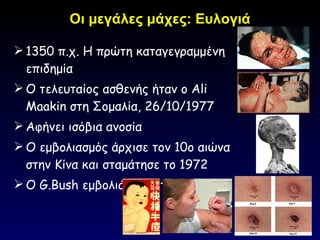
Οι μεγάλες μάχες:Ευλογιά 1350 π.χ. Η πρώτη καταγεγραμμένη επιδημία Ο τελευταίος ασθενής ήταν ο Ali Maakin στη Σομαλία, 26/10/1977 Αφήνει ισόβια ανοσία Ο εμβολιασμός άρχισε τον 10ο αιώνα στην Κίνα και σταμάτησε το 1972 Ο G.Bush εμβολιάστηκε to 1992 !!
45.
Οι μεγάλες μάχες:Ευλογιά-Εμβολιασμός L α dy Mary Wortley Montagu (1689-1762) , Σύζυγος του πρέσβη της Βρετανίας στη Κωνσταντινούπολη Εμβολίασε τα παιδιά της το 1717 και 1721 Edward Jenner ( 1749 - 1823 ) Εμβολίασε τον 8χρονο James Phipps (1796) και τον γιο του (1789) . Sarah Nelmes’ hand
46.
Οι μεγάλες μάχες:Ευλογιά-Εμβολιασμός Γαλλοπρωσσικός Πόλεμος (1870-71). Θάνατοι από την επιδημία Ευλογιάς Ο εμβολιασμένος Γερμανικός στρατός είχε μόνο 278 νεκρούς Ο μη εμβολιασμένος Γαλλικός στρατός είχε 23 . 400 νεκρούς
47.
1521: 3.500.000 εκατομμύριαΑζτέκοι πέθαναν από ευλογιά How the Aztec Empire was defeated by the Spanish In 1519, Hernando Cortes sailed to Mexico to conquer the rich Aztec Empire. When Cortes and his soldiers reached the capital of the Aztecs, Moctezuma, their king welcomed Cortes as an honored guest. Tensions mounted between the Aztecs and the Spaniards. In the battle that broke out, Moctezuma was killed. Soon after, the Spanish were forced to retreat. Cortes returned and began a siege of the city. Then, a smallpox epidemic killed most of the Aztecs . The survivor surrendered in 1521.
48.
10 χρόνια μετάκαι οι Ίνκας από ευλογιά έχασαν!! How the Inca Empire was defeated by the Spanish Francisco Pizarro and a small group of conquistadors came to the Inca Empire in 1531. There, a smallpox epidemic had killed many Incas . Pizarro took advantage of the chaos in the empire. He invited Atahualpa, the emperor, to a friendly meeting and then had him imprisoned. Atahualpa arranged for a ransom that added up to almost 20 tons of gold and silver. This was said to be the largest ransom in history. However, Pizarro did not honor his end of the bargain. He rejected the Inca ransom and ordered Atahualpa killed, with that the Inca Empire was defeated.
49.
Μικρόβια εναντίον ανθρώπων Οι μεγάλες μάχες: The Black Death The medieval pandemic that later came to be called the "Black Death" killed an estimated 17-28 million Europeans (from 30 to 40% of the total population) between the years 1347 and 1351 ( 1 ). Black Death was first reported in Central Asia between 1339 and 1340, then in the Genoese city of Caffa, where Black Death Mongol cadavers were hurled as bacteriological weapons over the city walls in 1346 ( 2 ). Epidemics reached Europe when Genoese vessels docked in Messina, Genoa, and Marseilles in November 1347. Yersinia pestis is considered to be the most likely agent of Black Death, based mainly on historical clinical records of bubonic and pulmonary forms of the disease ( 3 ). However, as the high levels of mortality and transmissibility associated with the Black Death were not observed during the third plague pandemic ( 4 , 5 ), alternative etiologies have been proposed. Moreover, the spread of transmission of the disease as well as the supposed densities of rats and fleas made unlikely for several authors the role of Y. pestis ( 5 ). The alternatives have included the anthrax agent Bacillus anthracis , the typhus agent Rickettsia prowazekii , Mycobacterium tuberculosis , and hemorrhagic fever ( 6-8 ). Confirmation of Y. pestis as the agent of the Black Death would end this controversy and improve our understanding of Y. pestis epidemics in light of the current reemergence of this infectious disease ( 9 , 10 ).
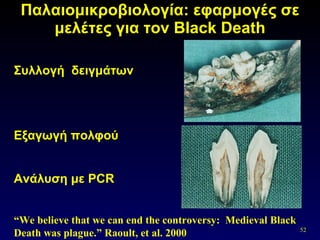
Παλαιομικροβιολογία: εφαρμογές σεμελέτες για τον Black Death Συλλογή δειγμάτων Εξαγωγή πολφού Ανάλυση με PCR “ We believe that we can end the controversy: Medieval Black Death was plague.” Raoult, et al. 2000
53.
Μικρόβια εναντίον ανθρώπων Οι μεγάλες μάχες: Πανδημίες γρίπης τον 20ο αιώνα 1920 1940 1960 1980 2000 H1N1 1918: “Spanish Flu” 20-40 million deaths WHO H2N2 1957: “Asian Flu” 1 million deaths H3N2 1968: “Hong Kong Flu” 1 million deaths
Λοιμώξεις στη ΜΕΘ& Acinetobacter Baumani 1 στους 2 ασθενείς της ΜΕΘ θα παρουσιάσει λοίμωξη 1 στους 2 θα παρουσιάσει Gram (-) λοίμωξη 1 στους 2 θα παρουσιάσει λοίμωξη από Acinetobacter και από τους τελευταίους αυτούς το 15% θα καταλήξει 25/05/008 -28/07/08 : 20 ασθενείς (3)
57.
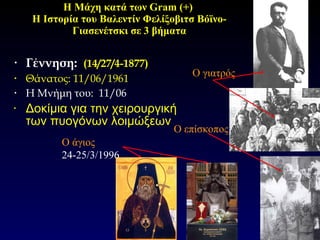
Η Μάχη κατάτων Gram (+) H Ιστορία του Βαλεντίν Φελίξοβιτσ Βόϊνο-Γιασενέτσκι σε 3 βήματα Γέννηση: (14/27 /4 -1877) Θάνατος: 1 1/06/1961 Η Μνήμη του: 11/06 Δοκίμια για την χειρουργική των πυογόνων λοιμώξεων Ο γιατρός Ο επίσκοπος Ο άγιος 24-25/3/1996
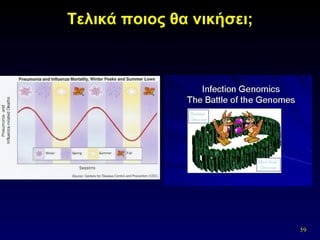
Τελικά ποιος θανικήσει; Ευχαριστώ για την προσοχή σας 1 x ΔΓ, ΔΑ 2
Editor's Notes
#18 Figure 1 Transmission electron micrograph of a human neutrophil. Inset is an image taken from a neutrophil 20 s after the phagocytosis of latex particles opsonized with IgG (V, vacuole). The section was stained for myeloperoxidase (MPO) to reveal the electron-dense product in the azurophil granules, some of which can be seen degranulating into the phagocytic vacuole (arrows). Bar = 1 µ m. (Figure from 17.)
#21 Starks (Starks et al 2000) recently reported that honeybees increase hive-wide temperature following infection of the hive with the heat-sensitive pathogenic fungus Ascosphaera apis. This temperature increase, achieved through a communal increase in wing muscle activity by the adult bees, kills the fungal pathogen and preserves viability of the bee larvae. In this case, the febrile response has been adapted to a hive animal in which survival of the species depends on survival of the hive rather than viability of individuals. The assumption that fever is protective during infections is well supported by studies in diverse animal species. In 2 studies of ectothermic vertebrates, increases in core temperature from 38 to 408C in the lizard Diposaurus dorsalis (Kluger et al 1975) and from 28 to 32.78C in goldfish (Covert and Reynolds 1977) improves survival from 25% to 67% and from 64% to 100%, respectively, during infection with the same gram-negative pathogen, Aeromonas hydrophila. Similar results were found in infected sockeye salmon, rainbow trout, crickets, and grasshoppers (reviewed) (Kluger 1991).
#41 Mortality from infectious diseases in the United States of America fell from close to 800 deaths in 100,000 population per year to approximately 70 deaths in 100,000 population. Note that the greatest decrease coincides with the widespread introduction of effective public health measures, and precedes the introduction of antibiotics, and the development of intensive care units in the second half of the twentieth century. Adapted from [8].
#48 How the Aztec and Inca empires were defeated by the Spanish
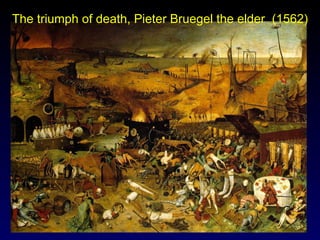
#52 The triumph of death, Pieter Bruegel the elder (1562) Features Sponsored by Fine Art Supplies and Craft Materials Feature Archive November, 2000 Notorious Portraits By John Malyon Overflattering Portraits I : Napoleon Overflattering Portraits II : Van Dyck and Holbein Grotesques and Horrors Illness and Deformity Madmen Read the first part of this article from last month Illness and Deformity Illness In 1346, an armed conflict broke out between Tartars and Genoese traders in the city of Caffa, in Crimea on the Black Sea. Plague had broken out in the area, and as the Tartars lay siege to the city they placed the corpses of plague victims on catapults and launched them over the city walls. The Genoese began to die off from the plague and retreated back to Genoa, taking the disease with them. This, according to legend, is how the Black Death came to Europe. Between 1347 and 1352, it was as if the end of the world had arrived. Twenty-five million - one person in three - are thought to have died in this first outbreak or the plague. Siena is known to have lost 60% of its population. There were recurring outbreaks on a smaller scale for centuries. In fact, many historians consider the creative outpouring of the Renaissance to be a more or less direct result of the massive economic, social and psychological upheavals caused by the Black Death. The argument is too complex to go into here, but I can explain it by analogy: When Gary Busey totalled his Harley-Davidson and nearly died, afterward he was able to replace it with a much faster bike. Same principle at work. Strangely, there doesn't seem to be much direct chronicling of the Black Death in art of that time (Gros documented Napoleon's famous visit to the pesthouse at Jaffa, but that was almost 500 years later). Despite the seeming newsworthiness of the coming of the plague, painting and sculpture were dedicated almost exclusively to distant religious subjects until well into the next century. Manuscript illustrations (such as the example at right), while in most cases not as polished as paintings of the era, are a better source of pictures of daily life. One indirect effect of the plague was the rise in popularity of Saint Sebastian. He had been tied to a tree by Diocletian's soldiers and shot with arrows - he miraculously survived, but is traditionally represented as pierced with many arrows . He became a patron saint of plague victims, presumably because one of the main symptoms of the disease is the presence of stabbing pains in the body. One important image tying Sebastian to the Black Death, dating from 150 years after the first outbreak, is Josse Lieferinxe's panel, Saint Sebastian Interceding for the Plague Stricken . A second effect of the plague was the frequent use of extremely morbid imagery. Death was ever-present and could strike down anyone with little forewarning. Death incarnate makes many appearances in paintings of the period, and apocalyptic images like Pieter Bruegel's 1562 nightmare The Triumph of Death and Albrecht Dürer's Four Horsemen of the Apocalpyse were common.