
United States History I The First Americans: Origins and Migrations
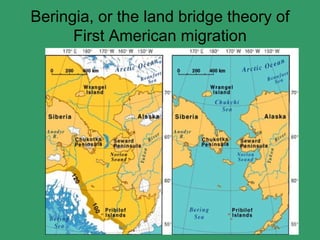
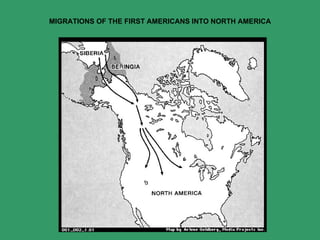
Migratory Patterns Archaeologists and anthropolgists believe the first peoples to inhabit the Americas, also known as  Paleo-Indians , migrated from Asia to North America via a land bridge, called  Beringia Paleo-Indians migrated to the Americas during the last Ice Age about 1.6 mil B.C. to about 8000 B.C. Paleo-Indians were hunters-and-gatherers and may have migrated to the Americas following animals
Beringia, or the land bridge theory of First American migration
MIGRATIONS OF THE FIRST AMERICANS INTO NORTH AMERICA
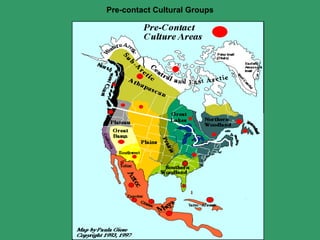
Pre-contact Cultural Groups
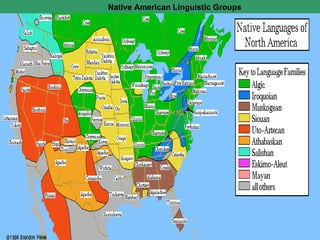
Native American Linguistic Groups
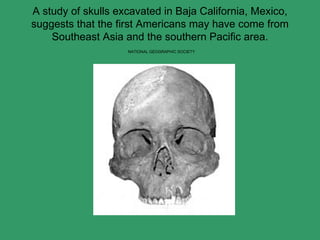
A study of skulls excavated in Baja California, Mexico, suggests that the first Americans may have come from Southeast Asia and the southern Pacific area.   NATIONAL GEOGRAPHIC SOCIETY
hunting-and-gathering societies discovery of spearheads and charred bones at Paleo-Indian sites supports the thesis that the First Americans were hunters-and-gatherers Early Americans hunted deer, mastadon, and rabbits Paleo-Indians also fished and gathered fruits, nuts, roots, and berries
Neolithic Settlement about 7000 B.C. native peoples began settling on the land and farming by 5000 B.C. maize (corn), beans, and avocados were being grown with agriculture comes permanent settlement on land and the proliferation of agrarian practices and techniques
Characteristics of Agrarian Settlement division of labor specialization of tasks emergence of class, or caste, distinctions development of political hierarchy population growth development of more highly advanced culture, economics, politics, society, and technology
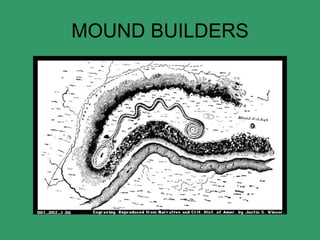
MOUND BUILDERS
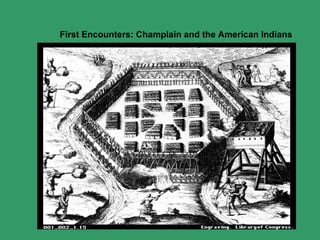
First Encounters: Champlain and the American Indians

Us History I Day 1

  • 1.
    United States HistoryI The First Americans: Origins and Migrations
  • 2.
    Migratory Patterns Archaeologistsand anthropolgists believe the first peoples to inhabit the Americas, also known as Paleo-Indians , migrated from Asia to North America via a land bridge, called Beringia Paleo-Indians migrated to the Americas during the last Ice Age about 1.6 mil B.C. to about 8000 B.C. Paleo-Indians were hunters-and-gatherers and may have migrated to the Americas following animals
  • 3.
    Beringia, or theland bridge theory of First American migration
  • 4.
    MIGRATIONS OF THEFIRST AMERICANS INTO NORTH AMERICA
  • 5.
  • 6.
  • 7.
    A study ofskulls excavated in Baja California, Mexico, suggests that the first Americans may have come from Southeast Asia and the southern Pacific area. NATIONAL GEOGRAPHIC SOCIETY
  • 8.
    hunting-and-gathering societies discoveryof spearheads and charred bones at Paleo-Indian sites supports the thesis that the First Americans were hunters-and-gatherers Early Americans hunted deer, mastadon, and rabbits Paleo-Indians also fished and gathered fruits, nuts, roots, and berries
  • 9.
    Neolithic Settlement about7000 B.C. native peoples began settling on the land and farming by 5000 B.C. maize (corn), beans, and avocados were being grown with agriculture comes permanent settlement on land and the proliferation of agrarian practices and techniques
  • 10.
    Characteristics of AgrarianSettlement division of labor specialization of tasks emergence of class, or caste, distinctions development of political hierarchy population growth development of more highly advanced culture, economics, politics, society, and technology
  • 11.
  • 12.
    First Encounters: Champlainand the American Indians