Introduction
There were many different Native American tribes and those with
similar roles formed a main tribe or nation. Each had its own
language, religion and customs.
For the most part the tribes lived peacefully believing that nature
was sacred and was to be shared. However, the coming of the
Europeans and the removal of their land led to clash between the
different tribes and between the Indians and whites.
By the end of the nineteenth century the Indians had lost their
fight to preserve their traditional way of life and those that had
survived the battles were confined to reservations.
Each of the main Plains' tribes
Apache :Nomadic           Navajo: Semi-Nomadic
Hunter-gatherer           Hunter-Farmer
Arapaho: Nomadic          Nez Perce: Semi-Nomadic
Hunters                   Hunter gatherer
Blackfoot: Nomadic        Pawnee: Semi-Nomadic
Hunter-Gatherer           Hunter-Farmer
Cherokee: Static          Shawnee: Nomadic
Hunter-farmer             Hunter-Farmer
Cheyenne: Nomadic         Shoshone: Nomadic
Hunter-Gatherer           Hunter-gatherer
Comanche: Nomadic         Sioux: Nomadic
Hunter-Gatherer           Hunter
Crow: Nomadic
Hunter-Gatherer
Apache

Made up of several different groups
Lived in extended family units
Usual shelter was a dome-shaped lodge called a wickiup
Polygamy was allowed but rarely practised
Reliant on the buffalo
Frequent disputes with the Comanche's led to their weakening in the
1700s
Traded with the Pueblos in Mexico or raided Spanish villages for goods
and horses
1861 conflict between Apaches led by Concise and Americans in protest
at being forced onto reservations
1874 a group of Apaches led by Geronimo escaped capture and fled to
Mexico
1886 Geronimo forced to surrender and taken to Fort Marion in Florida
Arapaho

Usual shelter was a tipi
Women were in charge of the home and owned the tipi
Men were in charge of hunting for food and protecting the camp
Reliant on the buffalo
Perform Sun Dance in the summer
Frequent conflicts with Shoshone and Pawnee tribes
1864 Arapaho were among those slaughtered in the Sand Creek
Massacre
1867 placed on Oklahoma reservation
1876 Northern Arapaho placed on Wind River reservation in Wyoming
1889 Active in bringing about the Ghost Dance movement
Blackfoot

Made up of several different groups
Usual shelter was a tipi
Women were in charge of the home and owned the tipi
Men were in charge of hunting for food and protecting the camp
Polygamy was usual
Reliant on the buffalo
Performed Sun Dance in the summer
Mid 1800s many killed by smallpox
1870 200 killed in the Marias Massacre
Cherokee

Made up of seven different clans
Usual shelter was cane and mud plaster huts
Women were in charge of the home and land
Men were in charge of hunting for food and protecting the camp
Grew corn, beans, squash, and sunflowers
Used canoes
1821 Sequoyah invented the Cherokee alphabet
1838-9 moved west to Oklahoma (Trail of Tears - 4000+ died on the 800
mile journey)
Cheyenne

Made up of ten different bands
Allied with Arapaho and Sioux
Usual shelter was a tipi
Women were in charge of the home and owned the tipi
Men were in charge of hunting for food and protecting the camp
Reliant on the buffalo
1864 Cheyenne were among those slaughtered in the Sand Creek
Massacre
1876 Northern Cheyenne took part in the Battle of the Little Bighorn
1877 Many forced to Oklahoma those that resisted were shot
Comanche

Established around 1700 after breaking away from Shoshone
Led by Peace Chief and War Chief
Usual shelter was a tipi
Women were in charge of the home and owned the tipi
Men were in charge of hunting for food and protecting the camp
Reliant on the buffalo
Frequent conflicts with Apache and Spanish
50% killed by smallpox and cholera in the mid 1800s
1874-5 Took part in the Buffalo War (Red River War) in protest at the
numbers of buffalo being slaughtered
By 1879 most were on Fort Sill reservation
Crow

Established around 1700 after breaking away from the Sioux
Two groups - Mountain Crow and River Crow
Usual shelter was a tipi
Women were in charge of the home and owned the tipi
Men were in charge of hunting for food and protecting the camp
Reliant on the buffalo
Frequent conflict with Sioux, Shoshone and Blackfoot
1851 Given 35 million acres of land
1868 Land reduced to 8 million acres
1870 Placed on reservation in Oklahoma
Navajo

Moved to south-west around 1500
Usual shelter was a Hogan (round stick house covered with mud or
hides)
Women were in charge of the home and owned the Hogan
Men were in charge of hunting for food and protecting the camp
Kept sheep and women spun and wove wool into cloth
Traded with the Spanish
Frequent conflict with Spanish
Conflict with Americans following Mexican War 1849
1863 American force under Kit Carson killed Navajo sheep
1863-4 Forced to move 300 miles to Fort Sumner (The Long Walk) many
died on the way
1869 Placed on reservation and given 30,000 sheep by US government
Naz Perce

Made up of two groups - Upper and Lower Nez Perce
Name given by the French on account of the tribe piercing
their noses
Usual shelter originally a longhouse but later used tipis
Women were in charge of the home
Men were in charge of hunting for food and protecting the
camp
Made canoes and fished for salmon
Frequent conflict with Crow and Shoshone
1863 Allocated land reduced by 7 million acres
1877 Under Chief Joseph actively resisted being moved to
reservation (Nez Perce War)
Defeated at the Battle of Bear Paw Mountains
Pawnee

Made up of four different bands
Usual shelter was an earth lodge but used
tipis when hunting
Women were in charge of the home
Men were in charge of hunting for food and
protecting the camp
Many killed by smallpox and cholera in the
mid 1800s
1825 recognised supremacy of US
government
1830-1860 - gave up increasing amounts of
land to US government
Many Pawnee became scouts for the US
government
1876 Moved to Oklahoma reservation
Shawnee

Made up of five different groups
Allied with Cherokee
Usual shelter was a wikkum or wigwam (small round dwelling)
Women were in charge of the home and farming corn
Men were in charge of hunting for food and protecting the camp
Used canoes
1740-1760 Caught up in the conflict between the French and British
over Ohio
Some fought for the British in the War of Independence while others
remained neutral
Tecumseh led resistance against American expansion but was killed in
1813
Black Hoof led resistance against Indian removal until his death in 1831
1832 Shawnee tribe were living on reservations
Shoshone

Made up of seven different groups
Usual shelter was a tipi but some lived in brushwood
shelters
Women were in charge of the home and owned the
tipi
Men were in charge of hunting for food and
protecting the camp
Reliant on the buffalo
Driven from their land by Mormon settlement of Utah
1862 Bear Hunter led a series of raids on Mormon
livestock
1863 Bear Hunter and 250 Shoshone killed in Bear
River Massacre
After 1863 remaining Shoshone moved to Fort Hall
reservation
Sioux
Made up of seven different groups
Largest Indian tribe
Usual shelter was a tipi
Women were in charge of the home and owned the tipi
Men were in charge of hunting for food and protecting the
camp
Reliant on the buffalo
Performed the Sun Dance in the summer
1862 Group led by Little Crow massacred 800 settlers in
Minnesota
1866-68 Red Cloud led resistance to white settlement along
the Bozeman Trail (Red Cloud's War)
1876 Took part in the Battle of the Little Bighorn
1890 Finally defeated at Battle of Wounded Knee

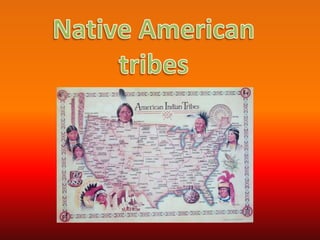
Native american tribes

  • 2.
    Introduction There were manydifferent Native American tribes and those with similar roles formed a main tribe or nation. Each had its own language, religion and customs. For the most part the tribes lived peacefully believing that nature was sacred and was to be shared. However, the coming of the Europeans and the removal of their land led to clash between the different tribes and between the Indians and whites. By the end of the nineteenth century the Indians had lost their fight to preserve their traditional way of life and those that had survived the battles were confined to reservations.
  • 3.
    Each of themain Plains' tribes Apache :Nomadic Navajo: Semi-Nomadic Hunter-gatherer Hunter-Farmer Arapaho: Nomadic Nez Perce: Semi-Nomadic Hunters Hunter gatherer Blackfoot: Nomadic Pawnee: Semi-Nomadic Hunter-Gatherer Hunter-Farmer Cherokee: Static Shawnee: Nomadic Hunter-farmer Hunter-Farmer Cheyenne: Nomadic Shoshone: Nomadic Hunter-Gatherer Hunter-gatherer Comanche: Nomadic Sioux: Nomadic Hunter-Gatherer Hunter Crow: Nomadic Hunter-Gatherer
  • 4.
    Apache Made up ofseveral different groups Lived in extended family units Usual shelter was a dome-shaped lodge called a wickiup Polygamy was allowed but rarely practised Reliant on the buffalo Frequent disputes with the Comanche's led to their weakening in the 1700s Traded with the Pueblos in Mexico or raided Spanish villages for goods and horses 1861 conflict between Apaches led by Concise and Americans in protest at being forced onto reservations 1874 a group of Apaches led by Geronimo escaped capture and fled to Mexico 1886 Geronimo forced to surrender and taken to Fort Marion in Florida
  • 5.
    Arapaho Usual shelter wasa tipi Women were in charge of the home and owned the tipi Men were in charge of hunting for food and protecting the camp Reliant on the buffalo Perform Sun Dance in the summer Frequent conflicts with Shoshone and Pawnee tribes 1864 Arapaho were among those slaughtered in the Sand Creek Massacre 1867 placed on Oklahoma reservation 1876 Northern Arapaho placed on Wind River reservation in Wyoming 1889 Active in bringing about the Ghost Dance movement
  • 6.
    Blackfoot Made up ofseveral different groups Usual shelter was a tipi Women were in charge of the home and owned the tipi Men were in charge of hunting for food and protecting the camp Polygamy was usual Reliant on the buffalo Performed Sun Dance in the summer Mid 1800s many killed by smallpox 1870 200 killed in the Marias Massacre
  • 7.
    Cherokee Made up ofseven different clans Usual shelter was cane and mud plaster huts Women were in charge of the home and land Men were in charge of hunting for food and protecting the camp Grew corn, beans, squash, and sunflowers Used canoes 1821 Sequoyah invented the Cherokee alphabet 1838-9 moved west to Oklahoma (Trail of Tears - 4000+ died on the 800 mile journey)
  • 8.
    Cheyenne Made up often different bands Allied with Arapaho and Sioux Usual shelter was a tipi Women were in charge of the home and owned the tipi Men were in charge of hunting for food and protecting the camp Reliant on the buffalo 1864 Cheyenne were among those slaughtered in the Sand Creek Massacre 1876 Northern Cheyenne took part in the Battle of the Little Bighorn 1877 Many forced to Oklahoma those that resisted were shot
  • 9.
    Comanche Established around 1700after breaking away from Shoshone Led by Peace Chief and War Chief Usual shelter was a tipi Women were in charge of the home and owned the tipi Men were in charge of hunting for food and protecting the camp Reliant on the buffalo Frequent conflicts with Apache and Spanish 50% killed by smallpox and cholera in the mid 1800s 1874-5 Took part in the Buffalo War (Red River War) in protest at the numbers of buffalo being slaughtered By 1879 most were on Fort Sill reservation
  • 10.
    Crow Established around 1700after breaking away from the Sioux Two groups - Mountain Crow and River Crow Usual shelter was a tipi Women were in charge of the home and owned the tipi Men were in charge of hunting for food and protecting the camp Reliant on the buffalo Frequent conflict with Sioux, Shoshone and Blackfoot 1851 Given 35 million acres of land 1868 Land reduced to 8 million acres 1870 Placed on reservation in Oklahoma
  • 11.
    Navajo Moved to south-westaround 1500 Usual shelter was a Hogan (round stick house covered with mud or hides) Women were in charge of the home and owned the Hogan Men were in charge of hunting for food and protecting the camp Kept sheep and women spun and wove wool into cloth Traded with the Spanish Frequent conflict with Spanish Conflict with Americans following Mexican War 1849 1863 American force under Kit Carson killed Navajo sheep 1863-4 Forced to move 300 miles to Fort Sumner (The Long Walk) many died on the way 1869 Placed on reservation and given 30,000 sheep by US government
  • 12.
    Naz Perce Made upof two groups - Upper and Lower Nez Perce Name given by the French on account of the tribe piercing their noses Usual shelter originally a longhouse but later used tipis Women were in charge of the home Men were in charge of hunting for food and protecting the camp Made canoes and fished for salmon Frequent conflict with Crow and Shoshone 1863 Allocated land reduced by 7 million acres 1877 Under Chief Joseph actively resisted being moved to reservation (Nez Perce War) Defeated at the Battle of Bear Paw Mountains
  • 13.
    Pawnee Made up offour different bands Usual shelter was an earth lodge but used tipis when hunting Women were in charge of the home Men were in charge of hunting for food and protecting the camp Many killed by smallpox and cholera in the mid 1800s 1825 recognised supremacy of US government 1830-1860 - gave up increasing amounts of land to US government Many Pawnee became scouts for the US government 1876 Moved to Oklahoma reservation
  • 14.
    Shawnee Made up offive different groups Allied with Cherokee Usual shelter was a wikkum or wigwam (small round dwelling) Women were in charge of the home and farming corn Men were in charge of hunting for food and protecting the camp Used canoes 1740-1760 Caught up in the conflict between the French and British over Ohio Some fought for the British in the War of Independence while others remained neutral Tecumseh led resistance against American expansion but was killed in 1813 Black Hoof led resistance against Indian removal until his death in 1831 1832 Shawnee tribe were living on reservations
  • 15.
    Shoshone Made up ofseven different groups Usual shelter was a tipi but some lived in brushwood shelters Women were in charge of the home and owned the tipi Men were in charge of hunting for food and protecting the camp Reliant on the buffalo Driven from their land by Mormon settlement of Utah 1862 Bear Hunter led a series of raids on Mormon livestock 1863 Bear Hunter and 250 Shoshone killed in Bear River Massacre After 1863 remaining Shoshone moved to Fort Hall reservation
  • 16.
    Sioux Made up ofseven different groups Largest Indian tribe Usual shelter was a tipi Women were in charge of the home and owned the tipi Men were in charge of hunting for food and protecting the camp Reliant on the buffalo Performed the Sun Dance in the summer 1862 Group led by Little Crow massacred 800 settlers in Minnesota 1866-68 Red Cloud led resistance to white settlement along the Bozeman Trail (Red Cloud's War) 1876 Took part in the Battle of the Little Bighorn 1890 Finally defeated at Battle of Wounded Knee