A New Market Structure for Integrating Stochastic Renewable Generation in a Transmission Grid Stephen Lee Senior Technical Executive  Power Delivery & Utilization, EPRI [email_address] November 2008
Outline Mandatory penetration of wind power may not be economical High penetration of wind power will create higher risk of blackouts How to prevent these problems? A New Market Structure Port of Entry + Storage Virtual Service Aggregator Balancing Authority CO2 Charge and Public Benefit Funds Conclusions
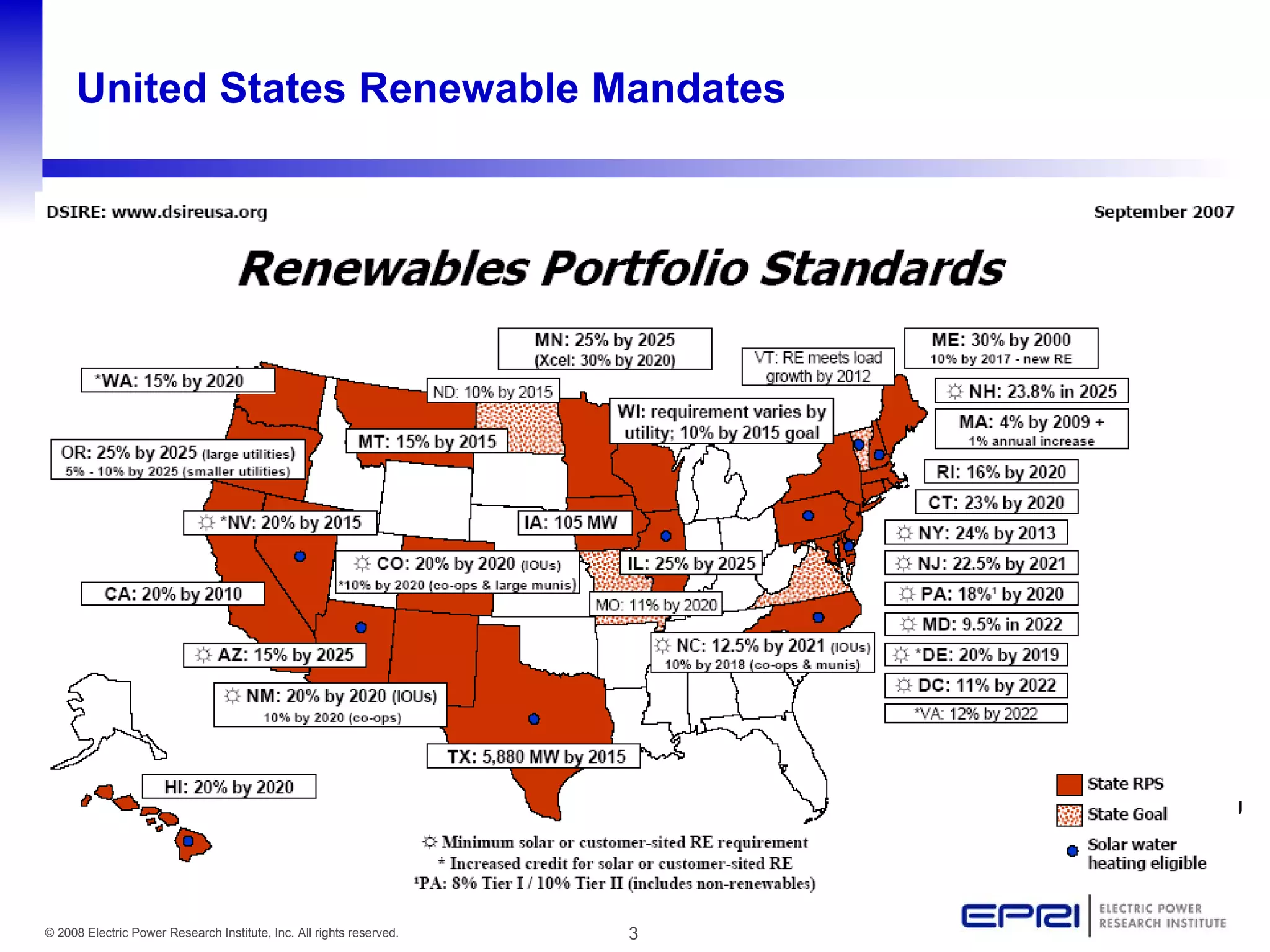
United States Renewable Mandates Solar water heating (SWH) eligible
Mandatory penetration of wind power may not be economical Utilities are forced to buy whatever amount of wind energy produced under the mandate No cost penalty is placed on wind power for backup capacity, load following, operating reserve, frequency regulation Transmission companies have no incentive to build new transmission to integrate wind power Storage plants are considered power plants and are not profitable to build Transmission companies have no incentive to build storage plants
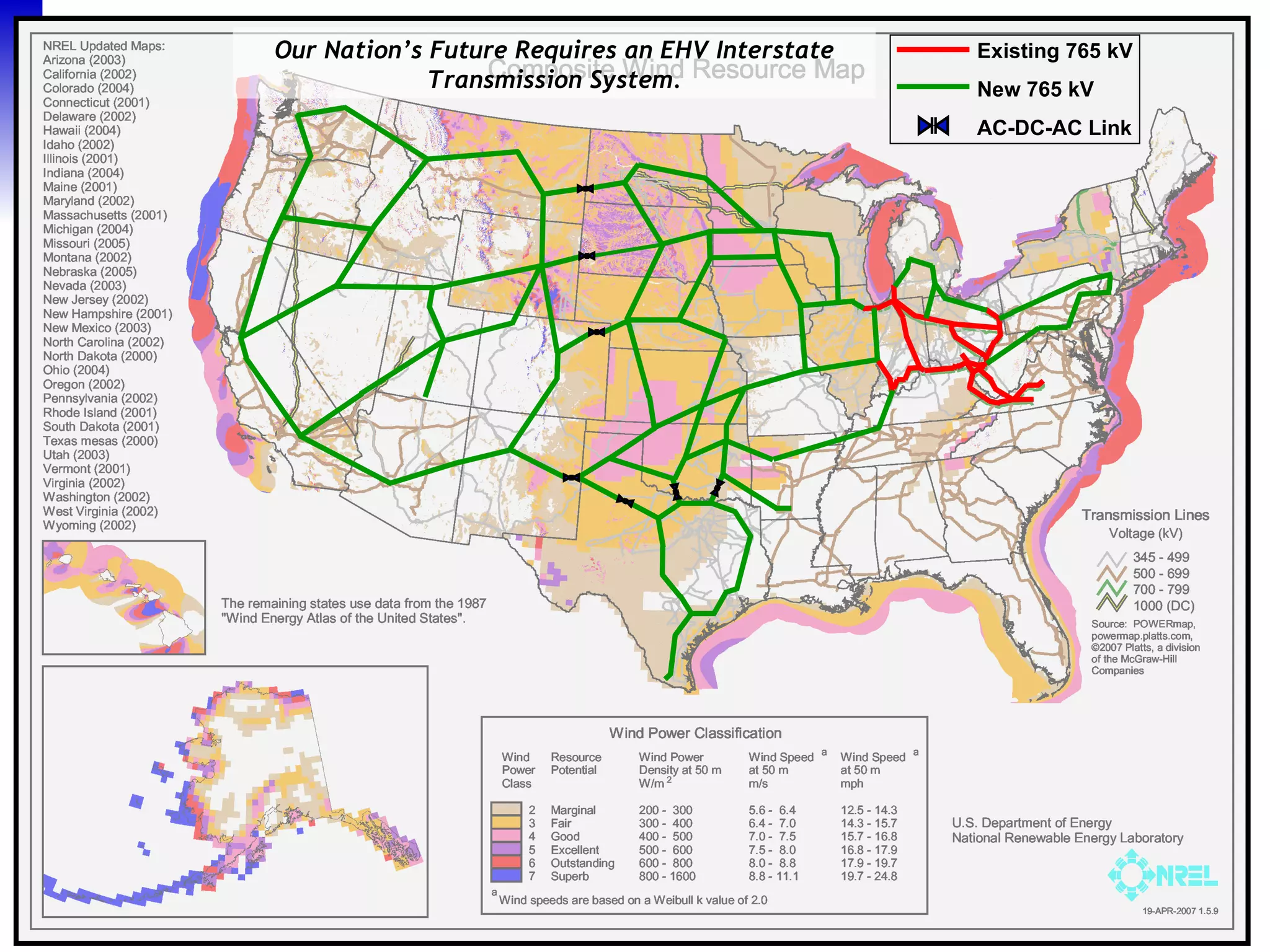
Our Nation’s Future Requires an EHV Interstate Transmission System. Existing 765 kV New 765 kV AC-DC-AC Link
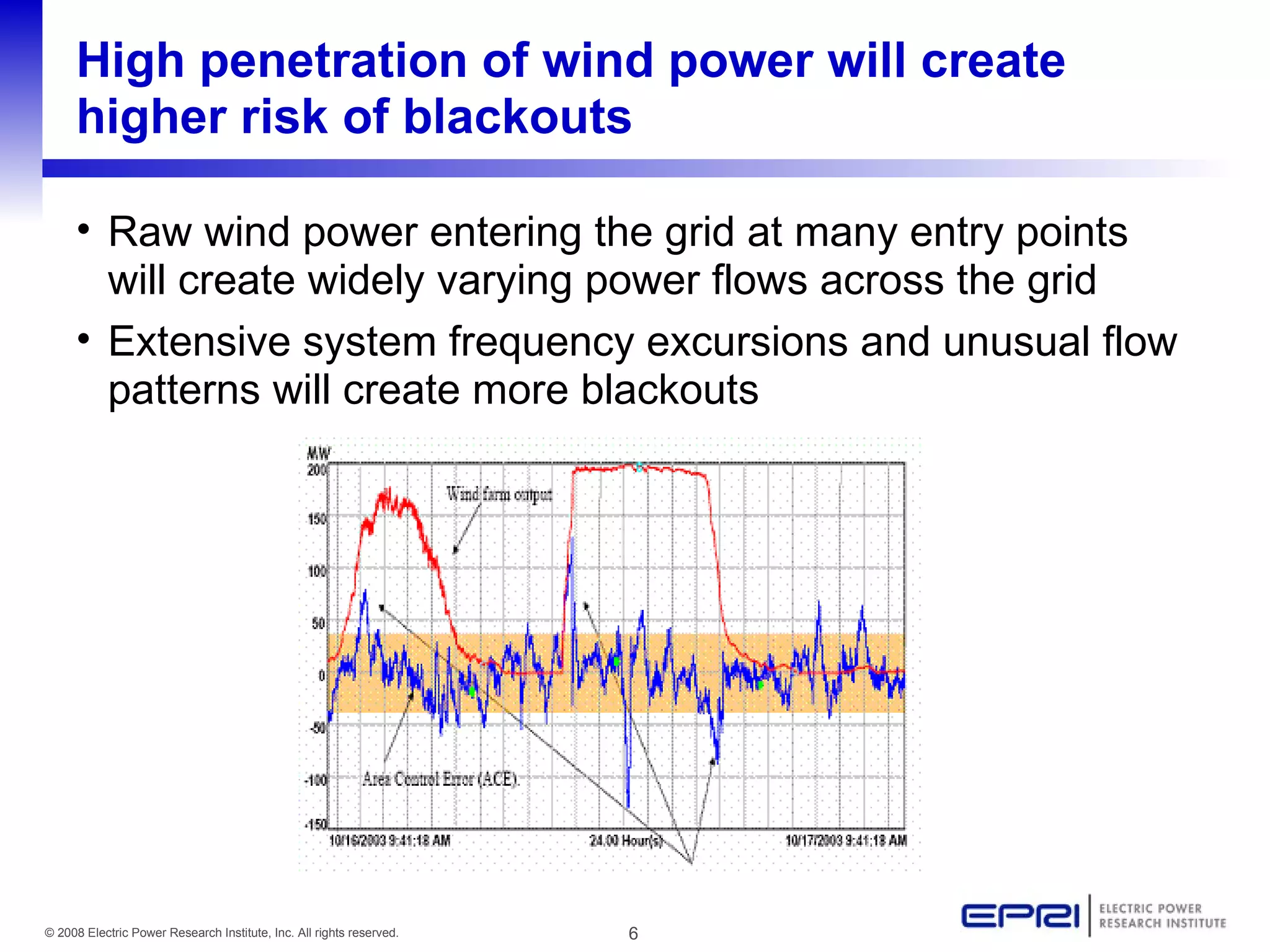
High penetration of wind power will create higher risk of blackouts Raw wind power entering the grid at many entry points will create widely varying power flows across the grid Extensive system frequency excursions and unusual flow patterns will create more blackouts
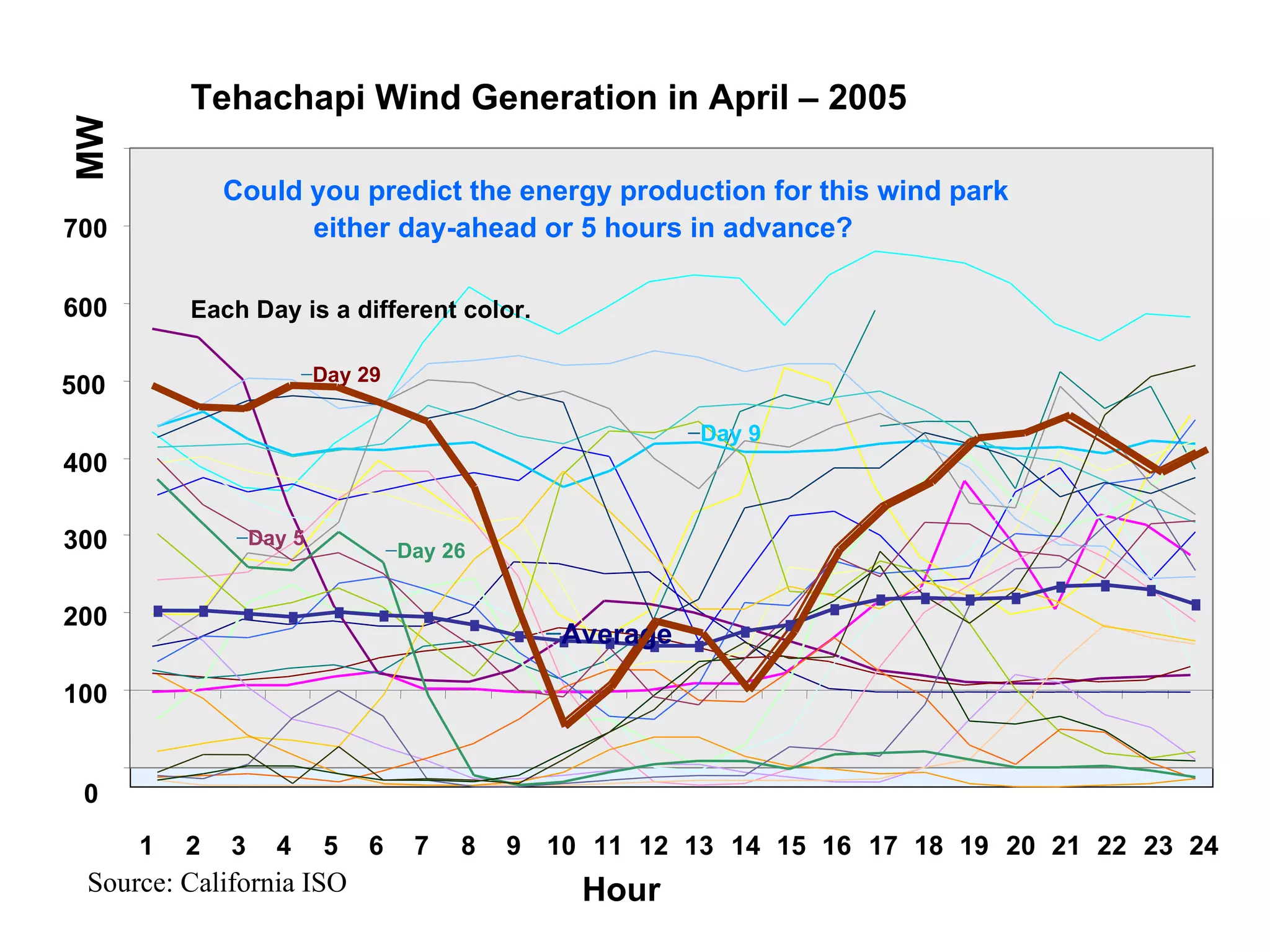
Source: California ISO Tehachapi Wind Generation in April – 2005 0 100 200 300 400 500 600 700 1 2 3 4 5 6 7 8 9 10 11 12 13 14 15 16 17 18 19 20 21 22 23 24 Hour MW Could you predict the energy production for this wind park  either day-ahead or 5 hours in advance? Average Each Day is a different color. Day 29 Day 5 Day 26 Day 9
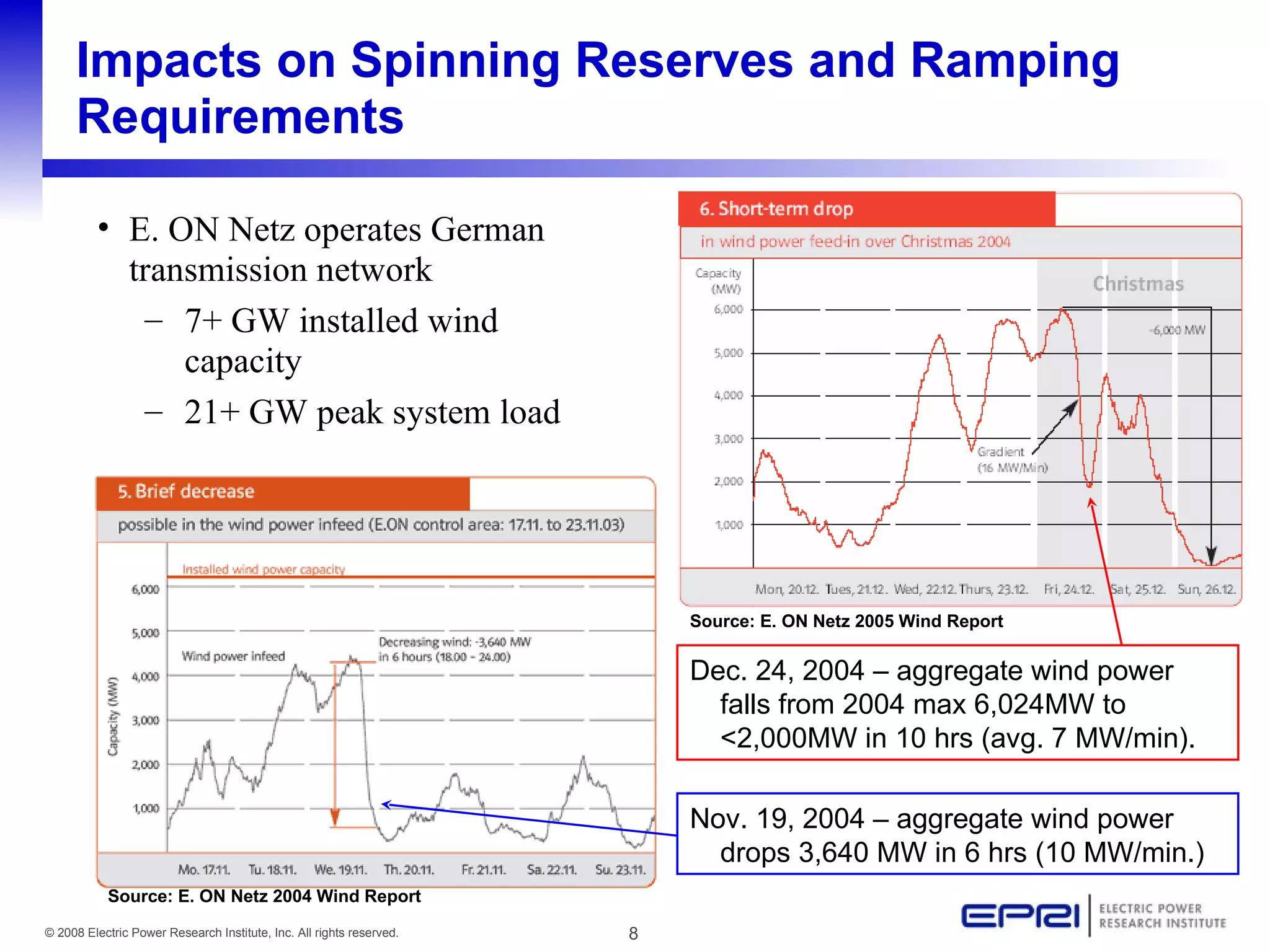
Impacts on Spinning Reserves and Ramping Requirements E. ON Netz operates German transmission network 7+ GW installed wind capacity 21+ GW peak system load Source: E. ON Netz 2004 Wind Report Source: E. ON Netz 2005 Wind Report Dec. 24, 2004 – aggregate wind power falls from 2004 max 6,024MW to <2,000MW in 10 hrs (avg. 7 MW/min). Nov. 19, 2004 – aggregate wind power drops 3,640 MW in 6 hrs (10 MW/min.)
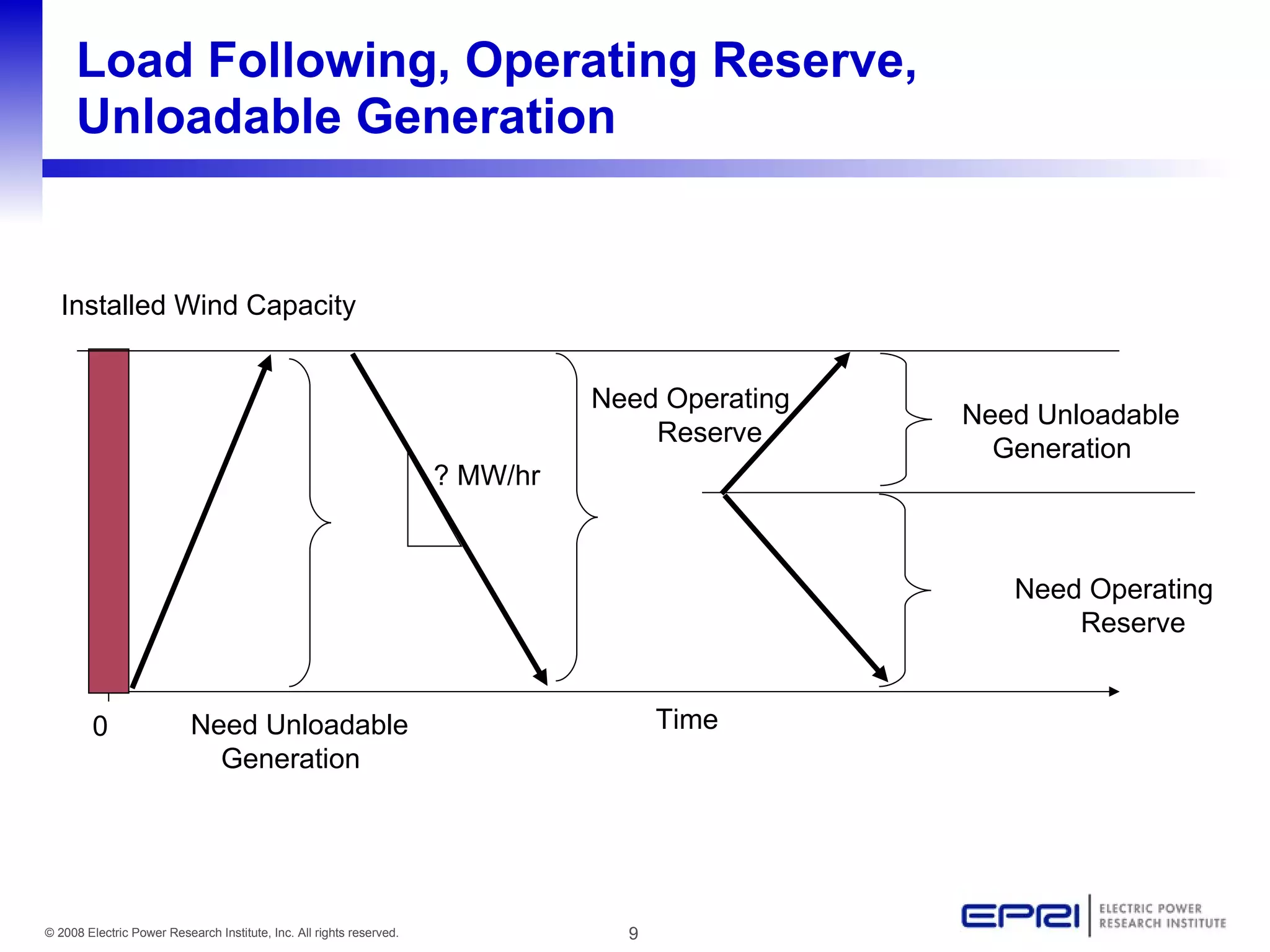
Load Following, Operating Reserve, Unloadable Generation Installed Wind Capacity Need Operating  Reserve Need Unloadable  Generation Need Unloadable  Generation Need Operating  Reserve 0 Time ? MW/hr
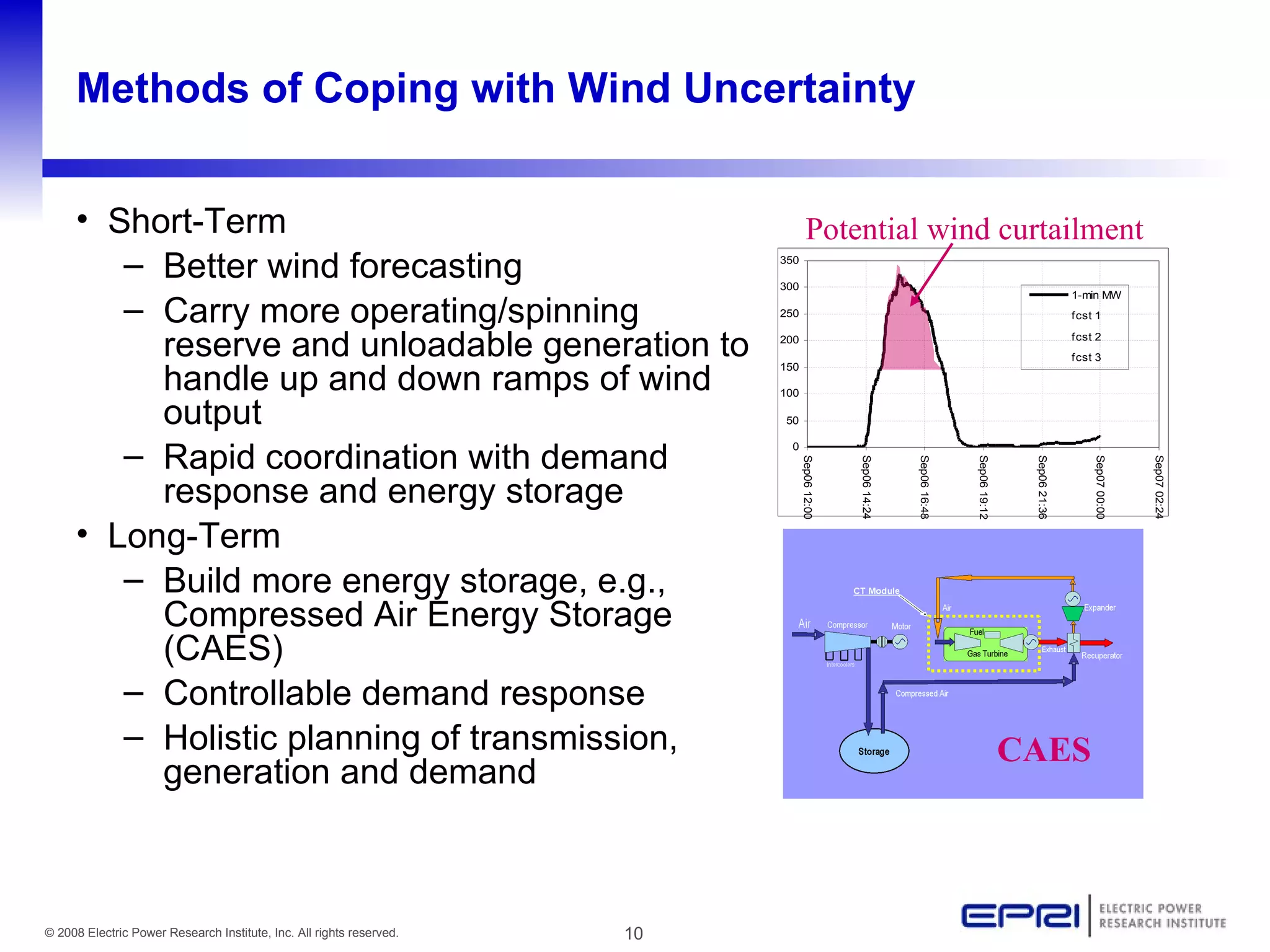
Methods of Coping with Wind Uncertainty Short-Term Better wind forecasting Carry more operating/spinning reserve and unloadable generation to handle up and down ramps of wind output Rapid coordination with demand response and energy storage Long-Term Build more energy storage, e.g., Compressed Air Energy Storage (CAES) Controllable demand response Holistic planning of transmission, generation and demand Potential wind curtailment CAES
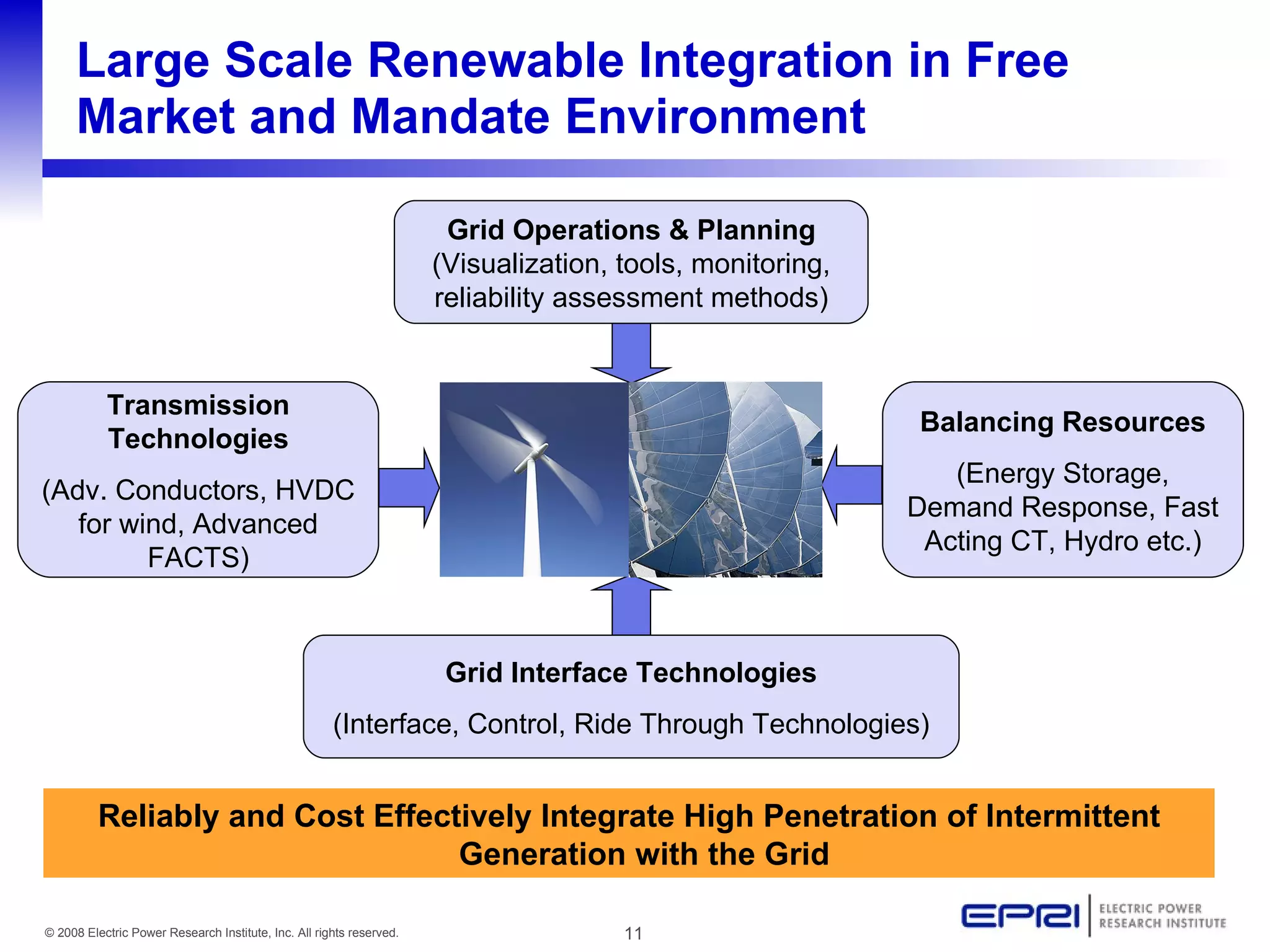
Large Scale Renewable Integration in Free Market and Mandate Environment Grid Operations & Planning (Visualization, tools, monitoring, reliability assessment methods) Balancing Resources (Energy Storage, Demand Response, Fast Acting CT, Hydro etc.) Transmission Technologies (Adv. Conductors, HVDC for wind, Advanced FACTS) Grid Interface Technologies (Interface, Control, Ride Through Technologies) Reliably and Cost Effectively Integrate High Penetration of Intermittent Generation with the Grid
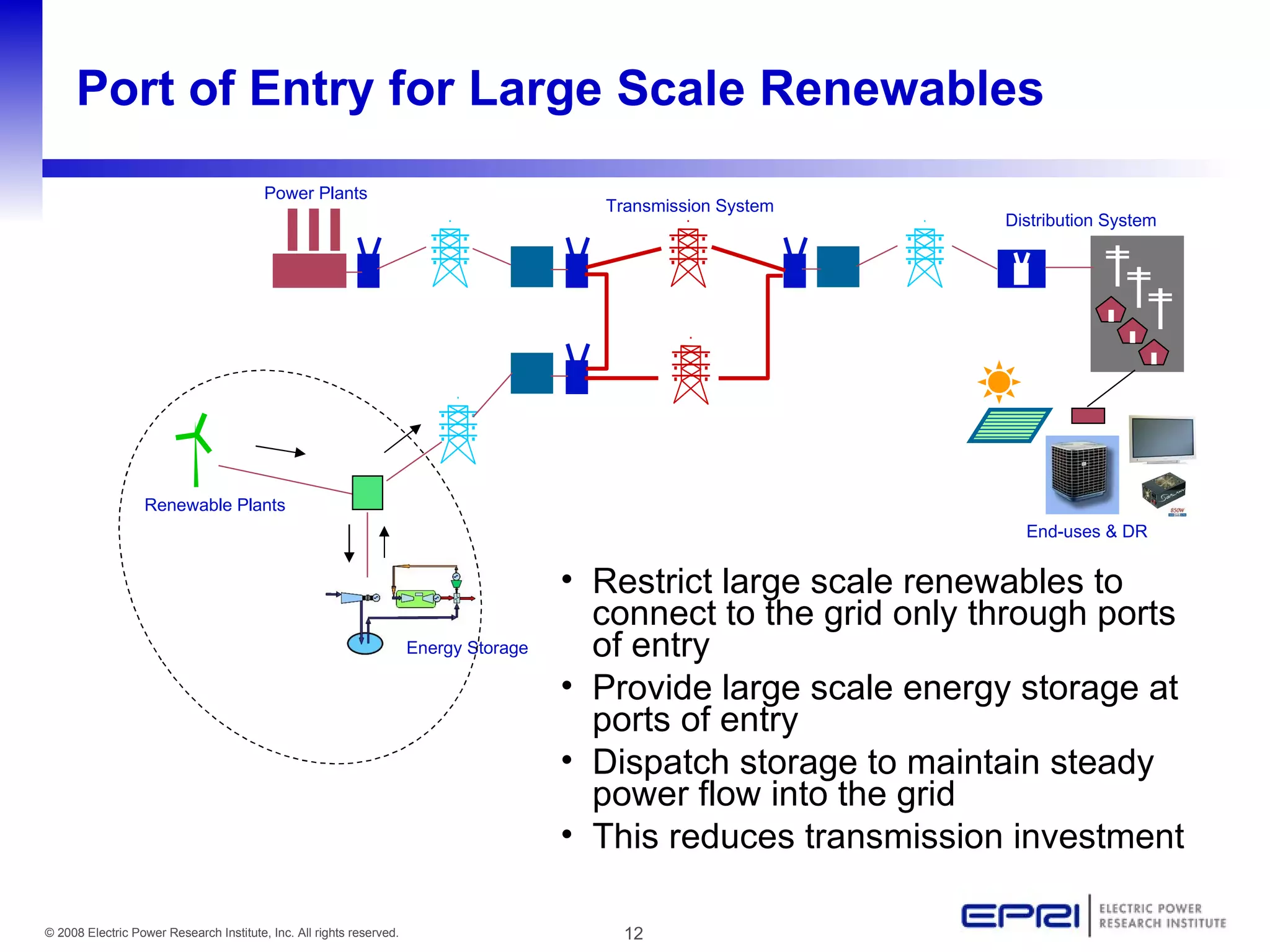
Port of Entry for Large Scale Renewables Restrict large scale renewables to connect to the grid only through ports of entry Provide large scale energy storage at ports of entry Dispatch storage to maintain steady power flow into the grid This reduces transmission investment End-uses & DR Distribution System Transmission System Power Plants Renewable Plants Energy Storage
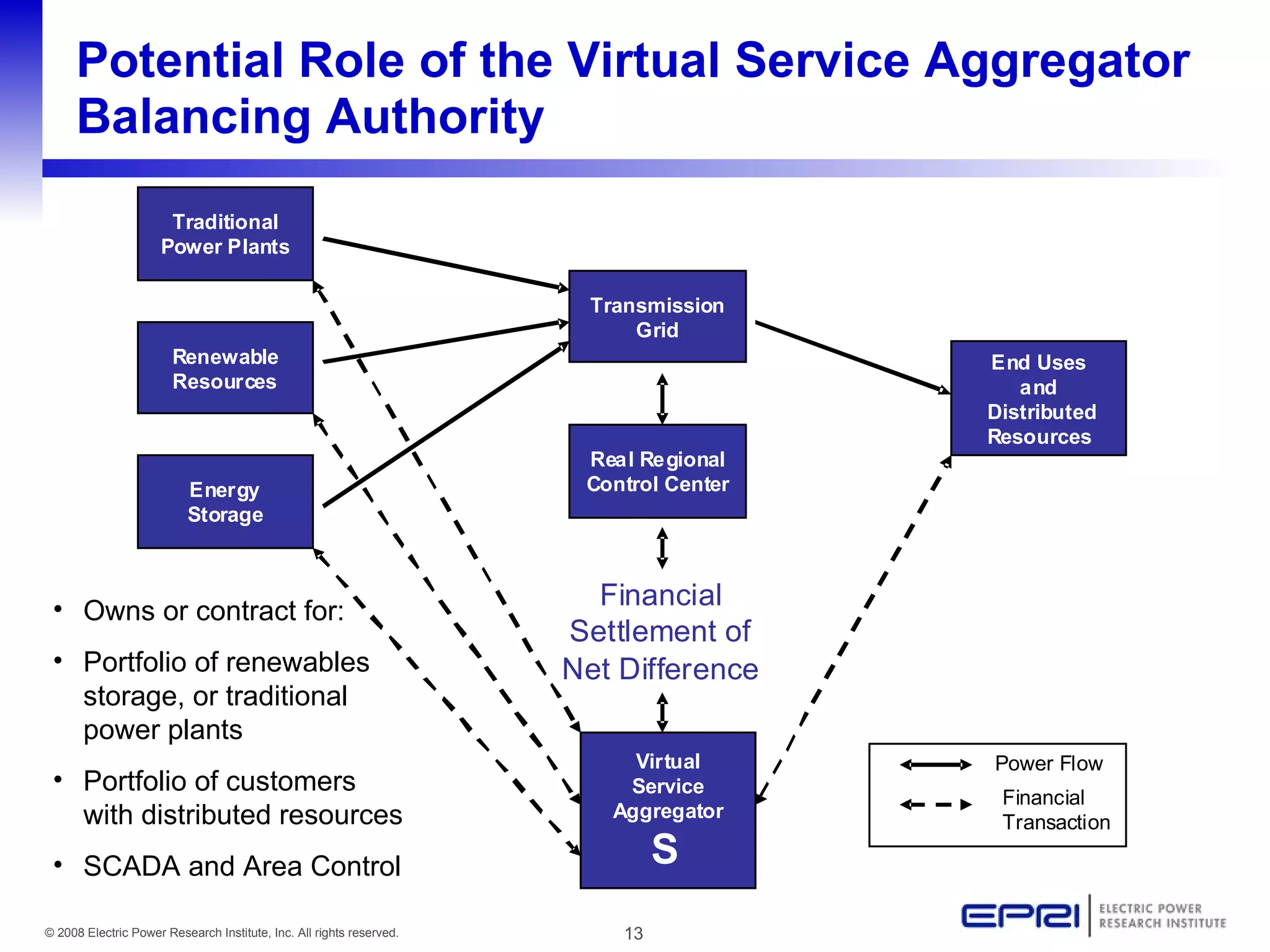
Potential Role of the Virtual Service Aggregator Balancing Authority Owns or contract for: Portfolio of renewables storage, or traditional power plants Portfolio of customers with distributed resources SCADA and Area Control
Virtual Service Aggregator Balancing Authority Direct measurements and control of  All generation and storage sources in its portfolio All customer demand in its portfolio All distributed generation or storage in its portfolio Maintenance energy balance like a Control Area Area Control Error charged by the ISO/RTO Separate SCADA and control system Integrated with the main EMS of ISO/RTO
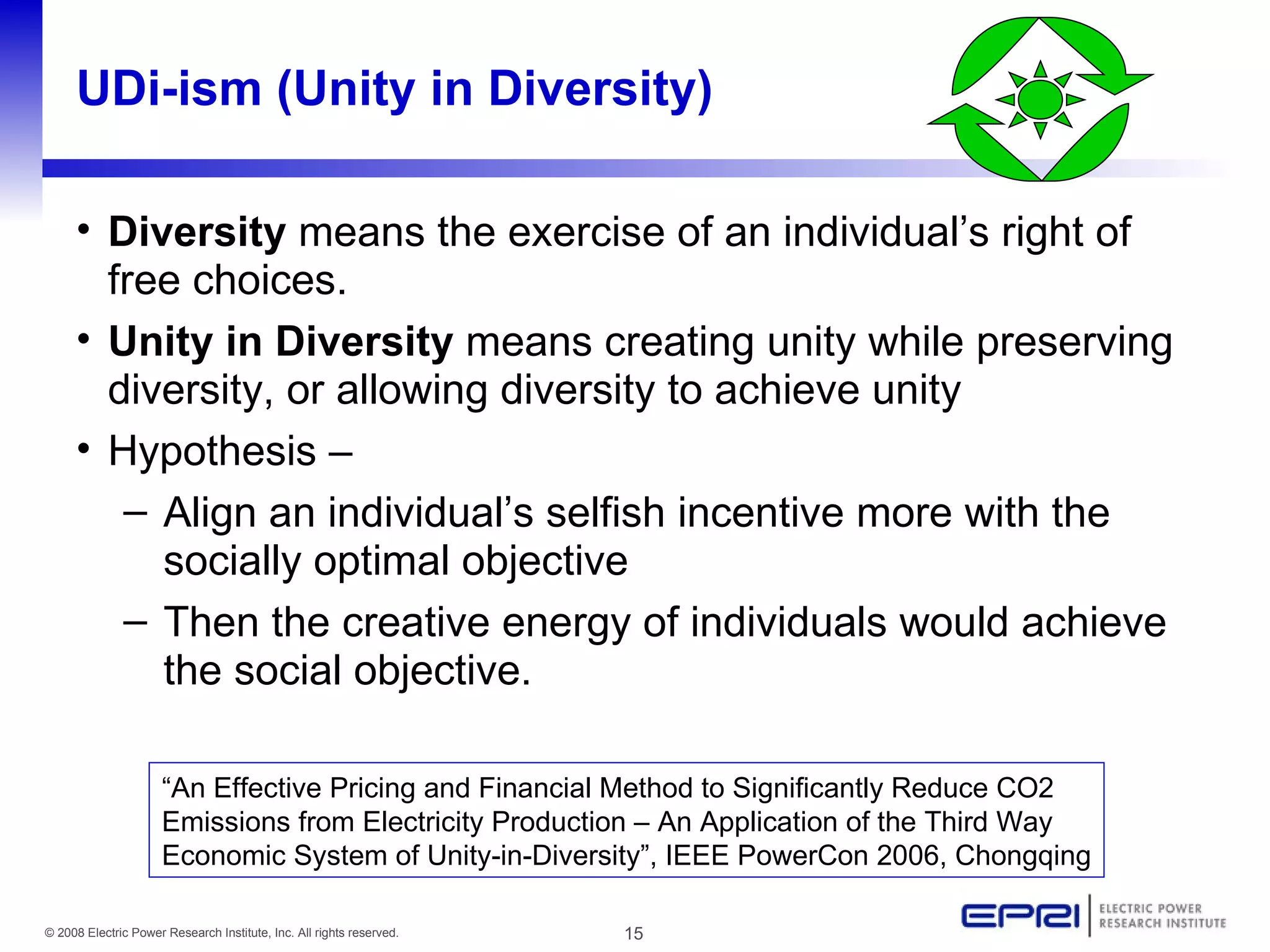
UDi-ism (Unity in Diversity) Diversity  means the exercise of an individual’s right of free choices.  Unity in Diversity  means creating unity while  preserving  diversity ,  or allowing diversity  to achieve  unity Hypothesis –  Align an individual’s selfish incentive more with the socially optimal objective Then the creative energy of individuals would achieve the social objective. “ An Effective Pricing and Financial Method to Significantly Reduce CO2 Emissions from Electricity Production – An Application of the Third Way Economic System of Unity-in-Diversity”, IEEE PowerCon 2006, Chongqing
 
 
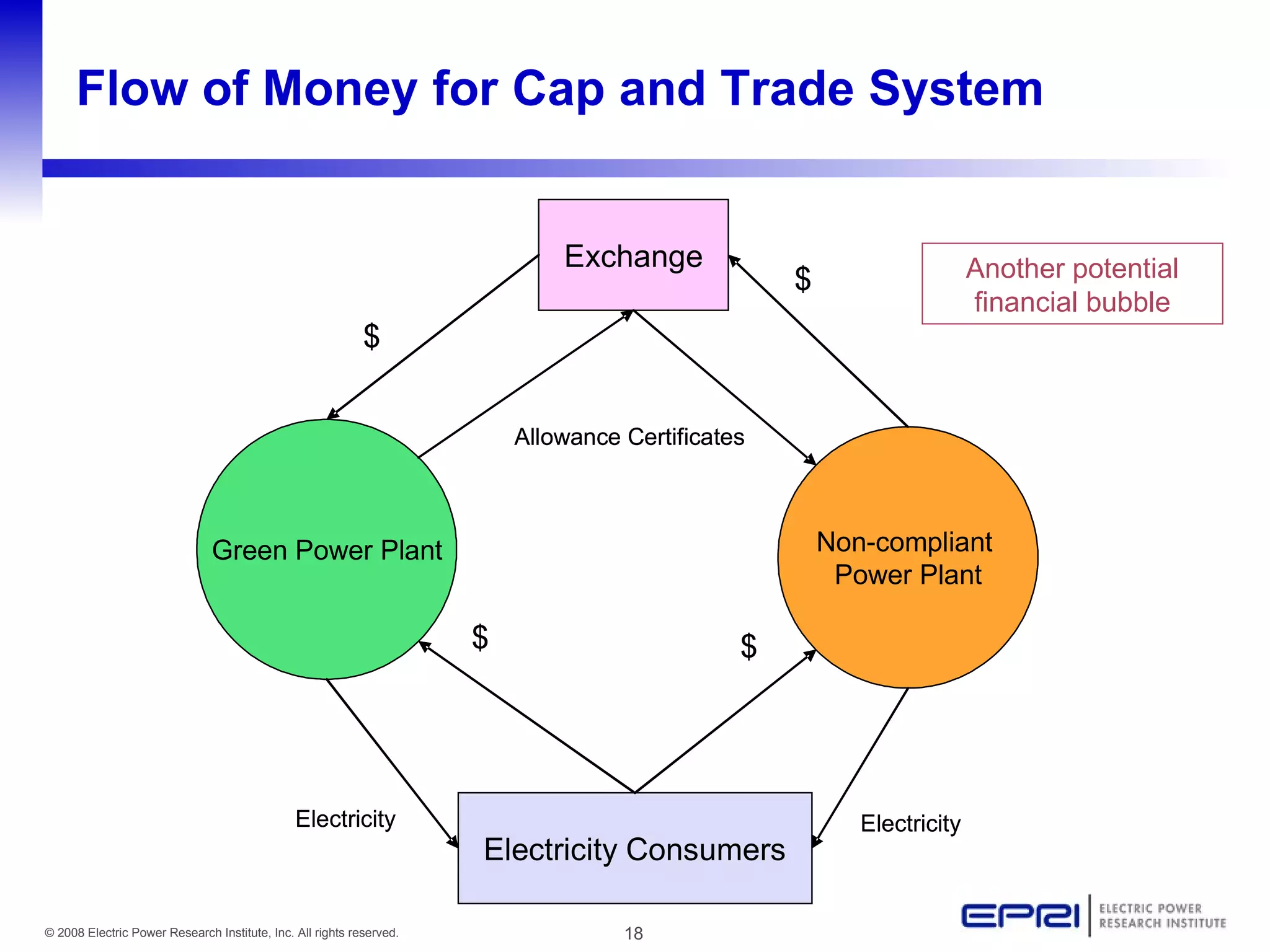
Flow of Money for Cap and Trade System Another potential financial bubble
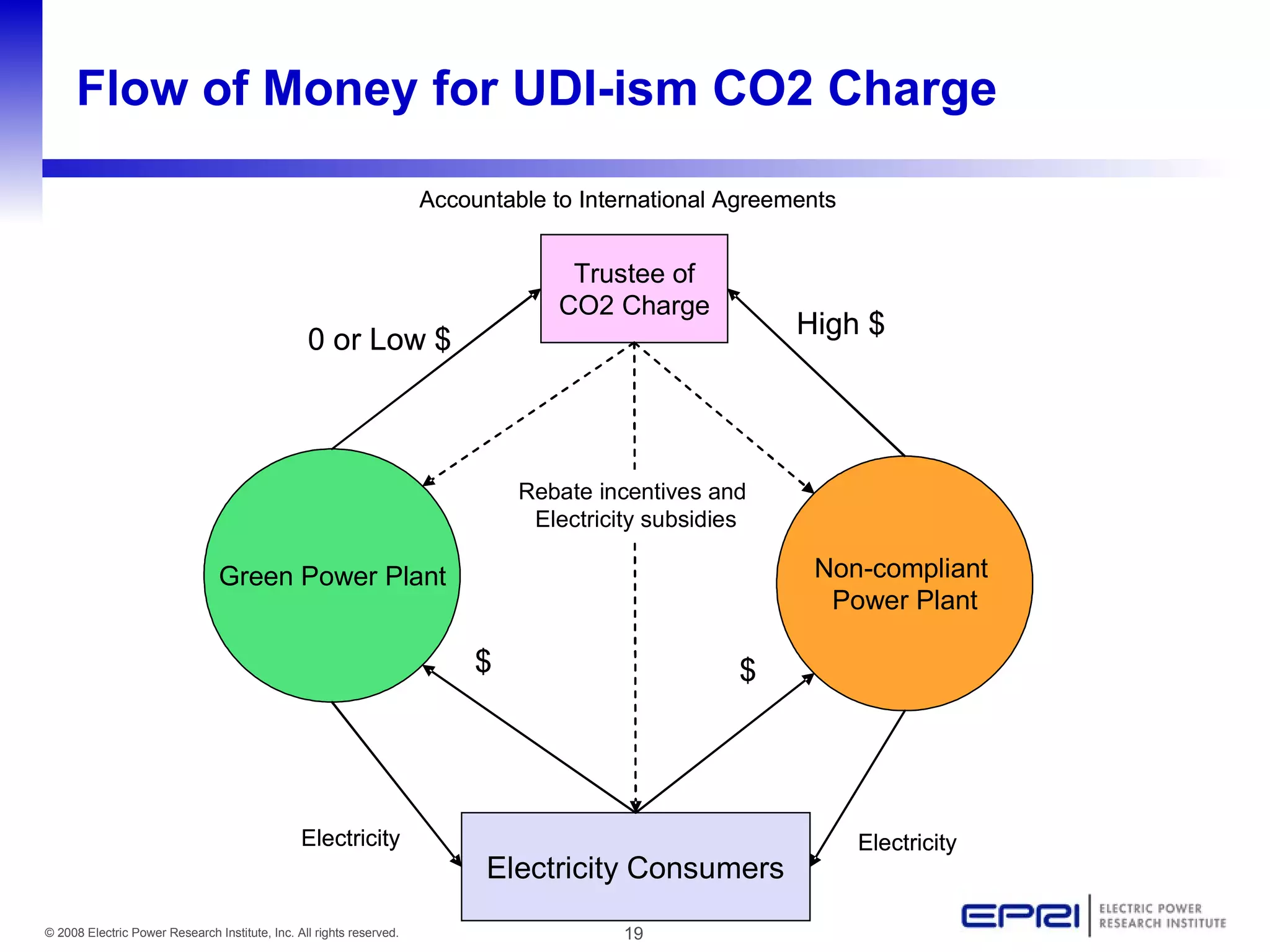
Flow of Money for UDI-ism CO2 Charge
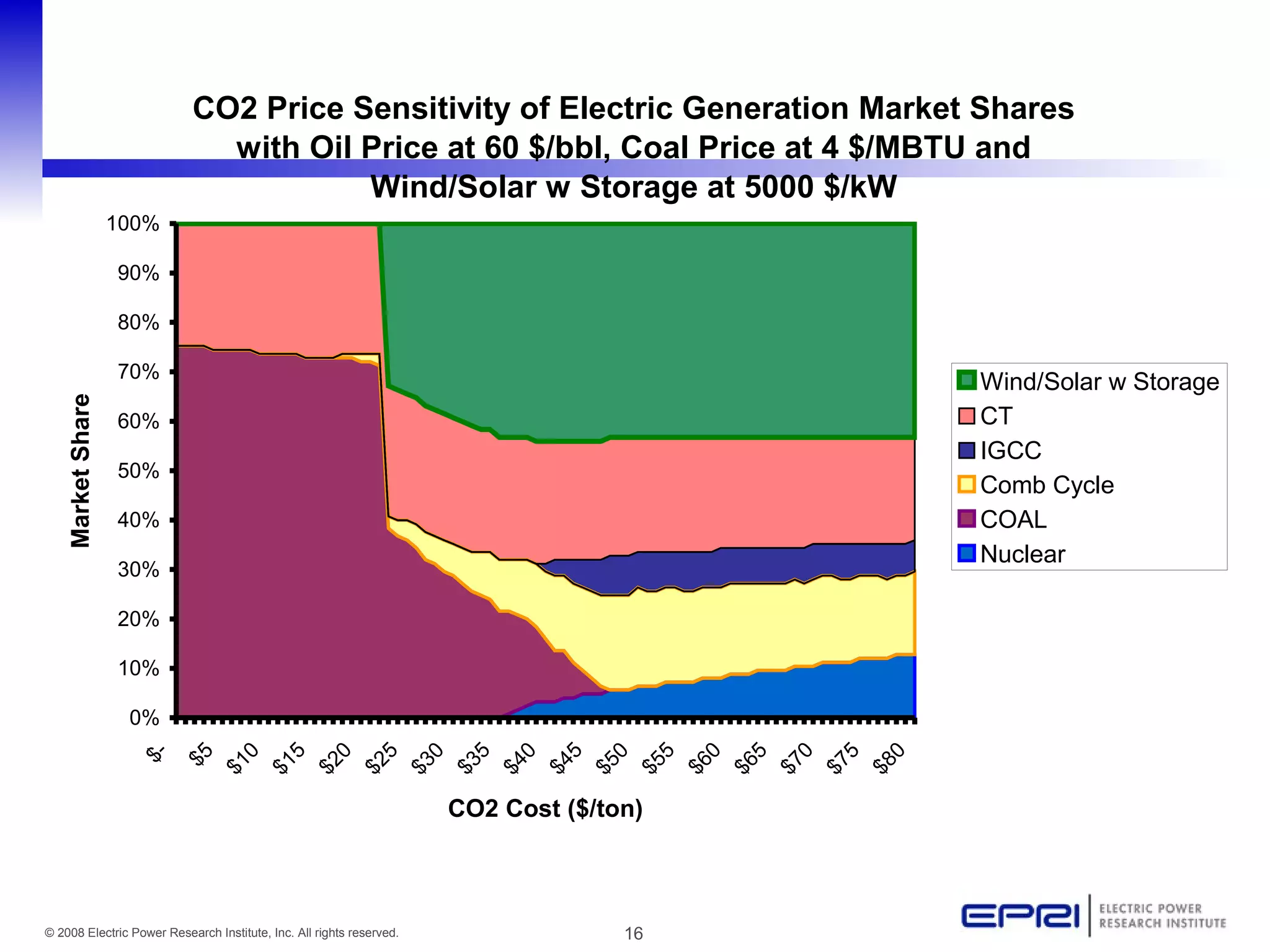
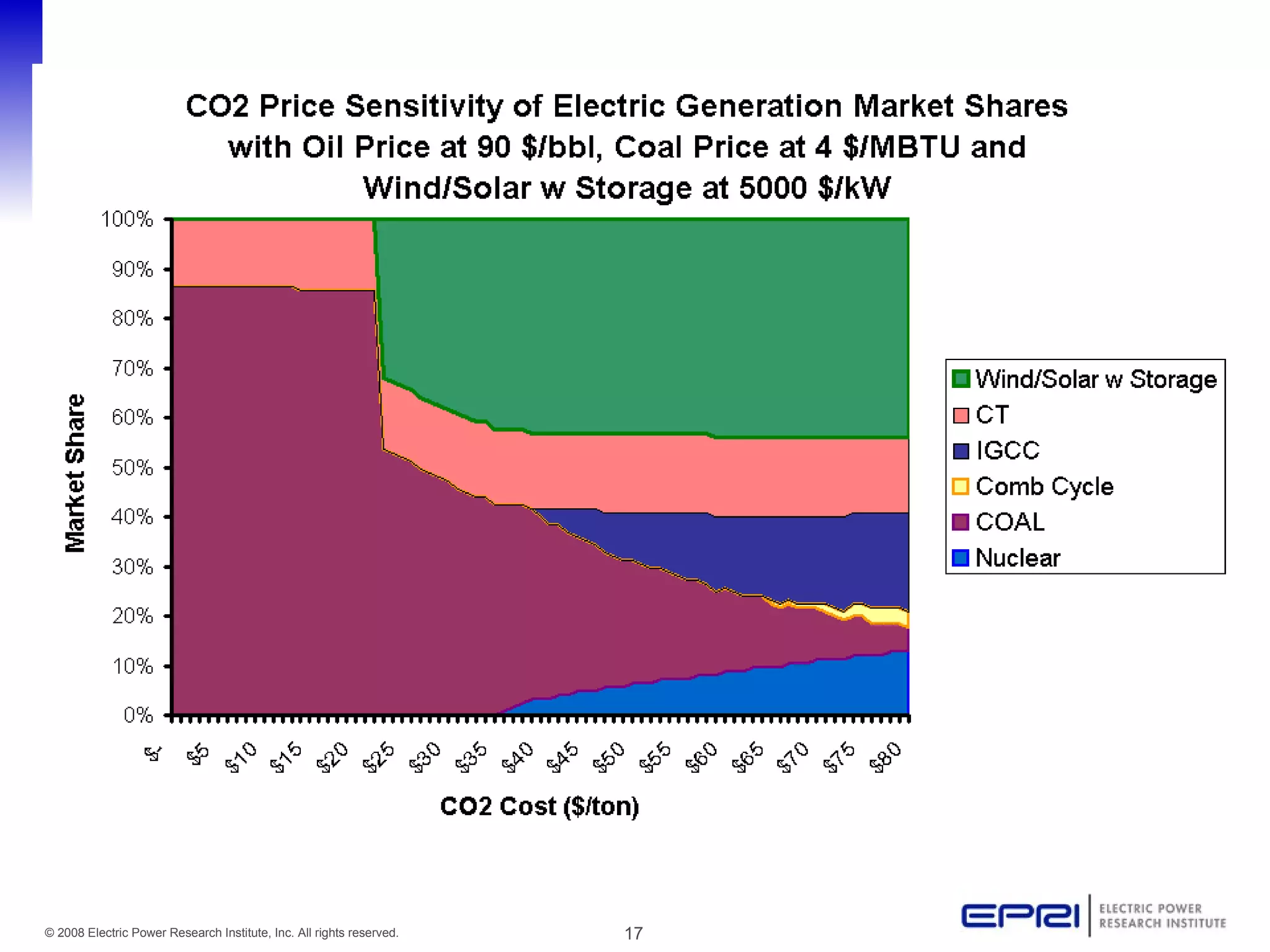
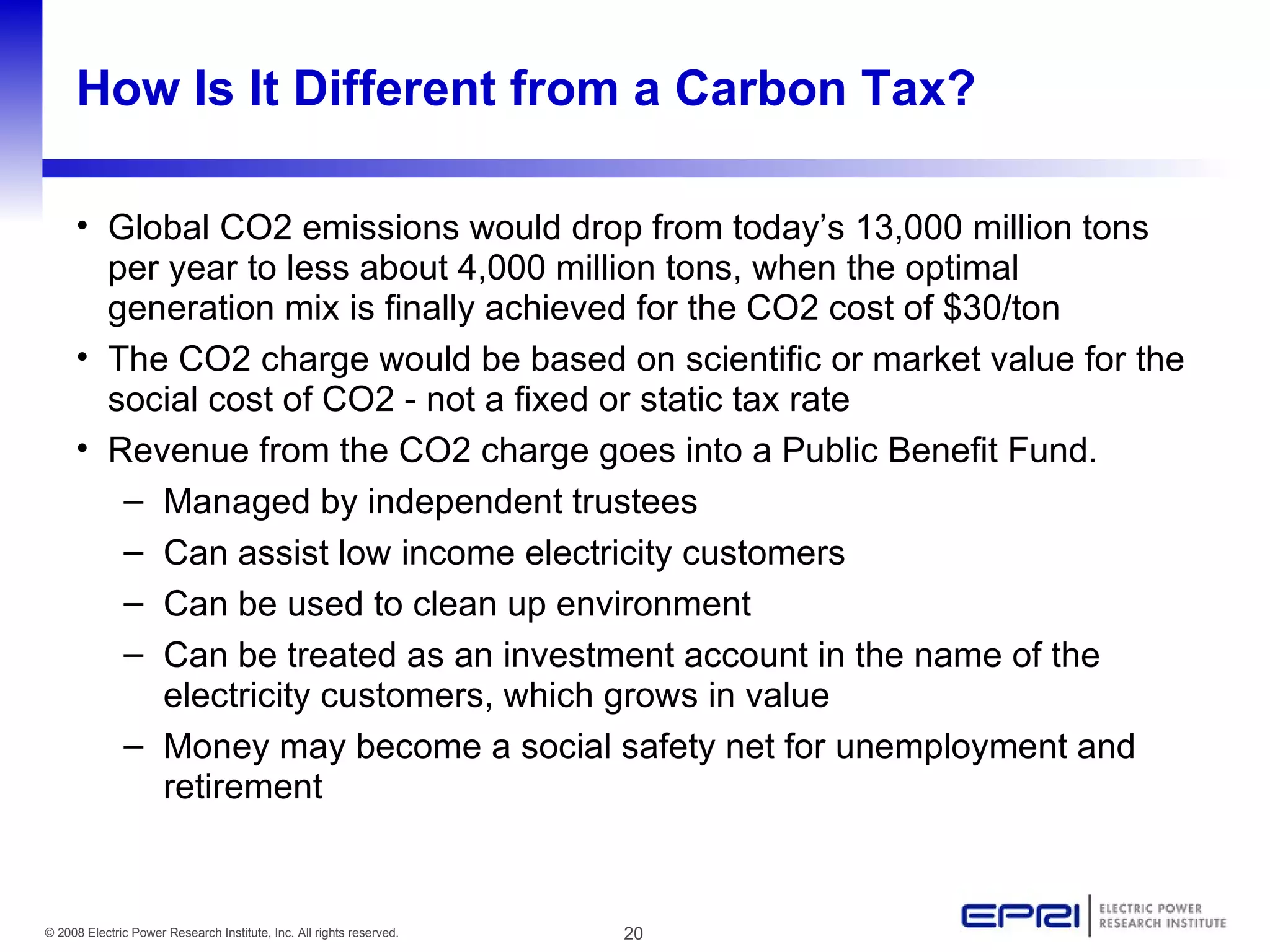
How Is It Different from a Carbon Tax? Global CO2 emissions would drop from today’s 13,000 million tons per year to less about 4,000 million tons, when the optimal generation mix is finally achieved for the CO2 cost of $30/ton The CO2 charge would be based on scientific or market value for the social cost of CO2 - not a fixed or static tax  rate Revenue from the CO2 charge goes into a Public Benefit Fund.  Managed by independent trustees Can assist low income electricity customers Can be used to clean up environment Can be treated as an investment account in the name of the electricity customers, which grows in value Money may become a social safety net for unemployment and retirement
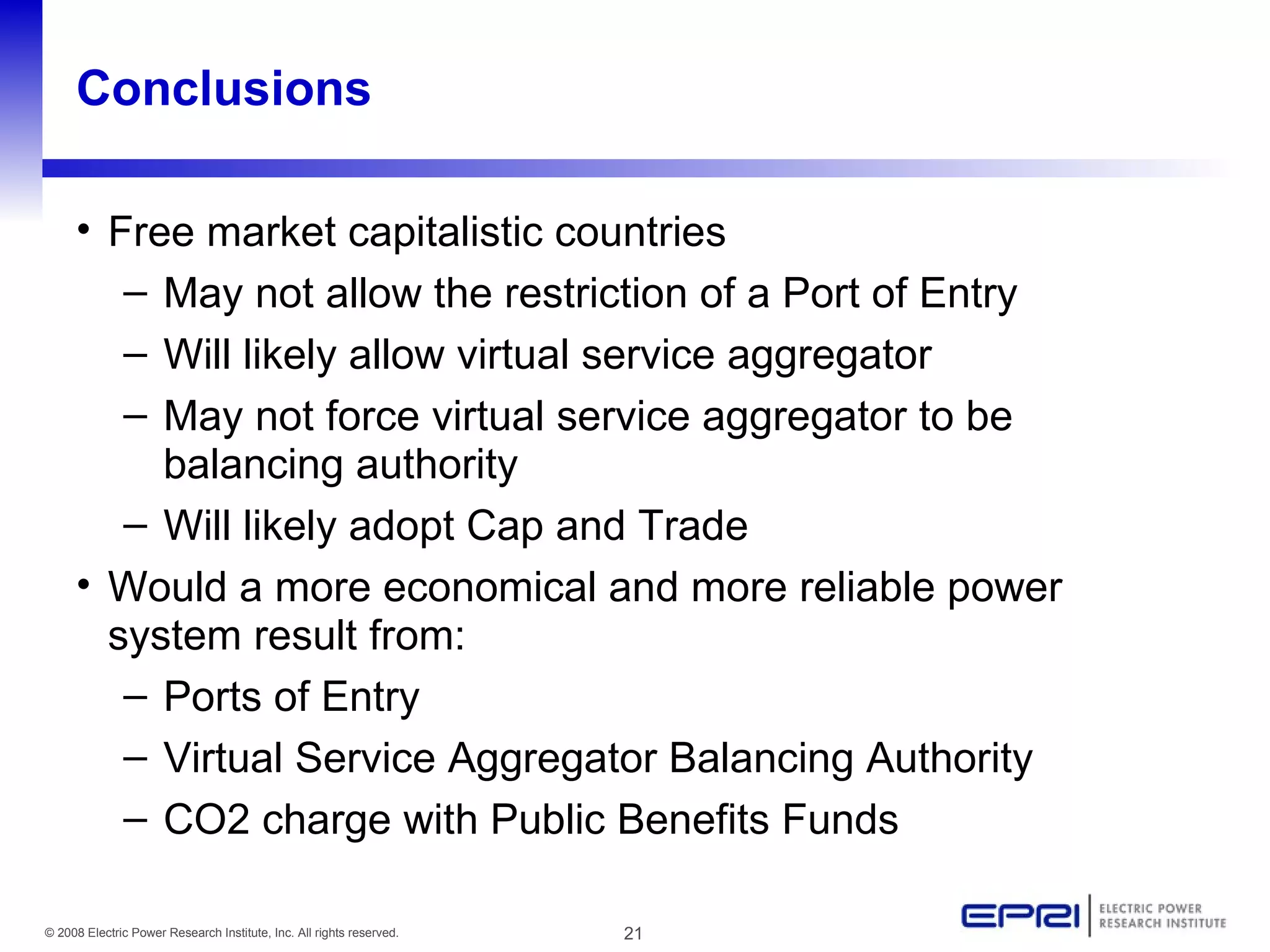
Conclusions Free market capitalistic countries  May not allow the restriction of a Port of Entry Will likely allow virtual service aggregator May not force virtual service aggregator to be balancing authority Will likely adopt Cap and Trade Would a more economical and more reliable power system result from: Ports of Entry Virtual Service Aggregator Balancing Authority CO2 charge with Public Benefits Funds
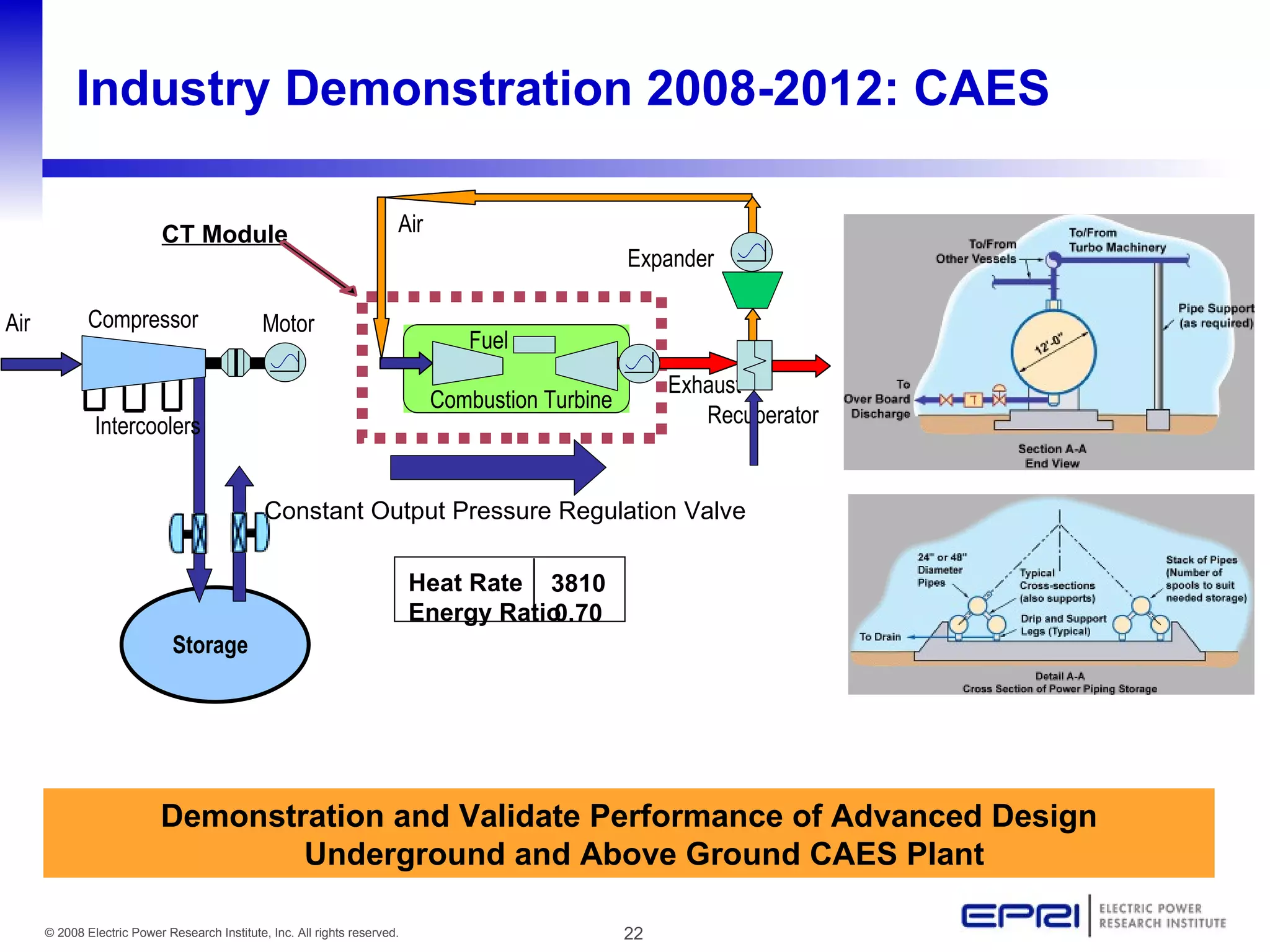
Industry Demonstration 2008-2012: CAES Demonstration and Validate Performance of Advanced Design Underground and Above Ground CAES Plant CT Module Exhaust Air Compressor Combustion Turbine Motor Storage Air Intercoolers Recuperator Fuel Expander Storage Heat Rate Energy Ratio 3810 0.70 Constant Output Pressure Regulation Valve
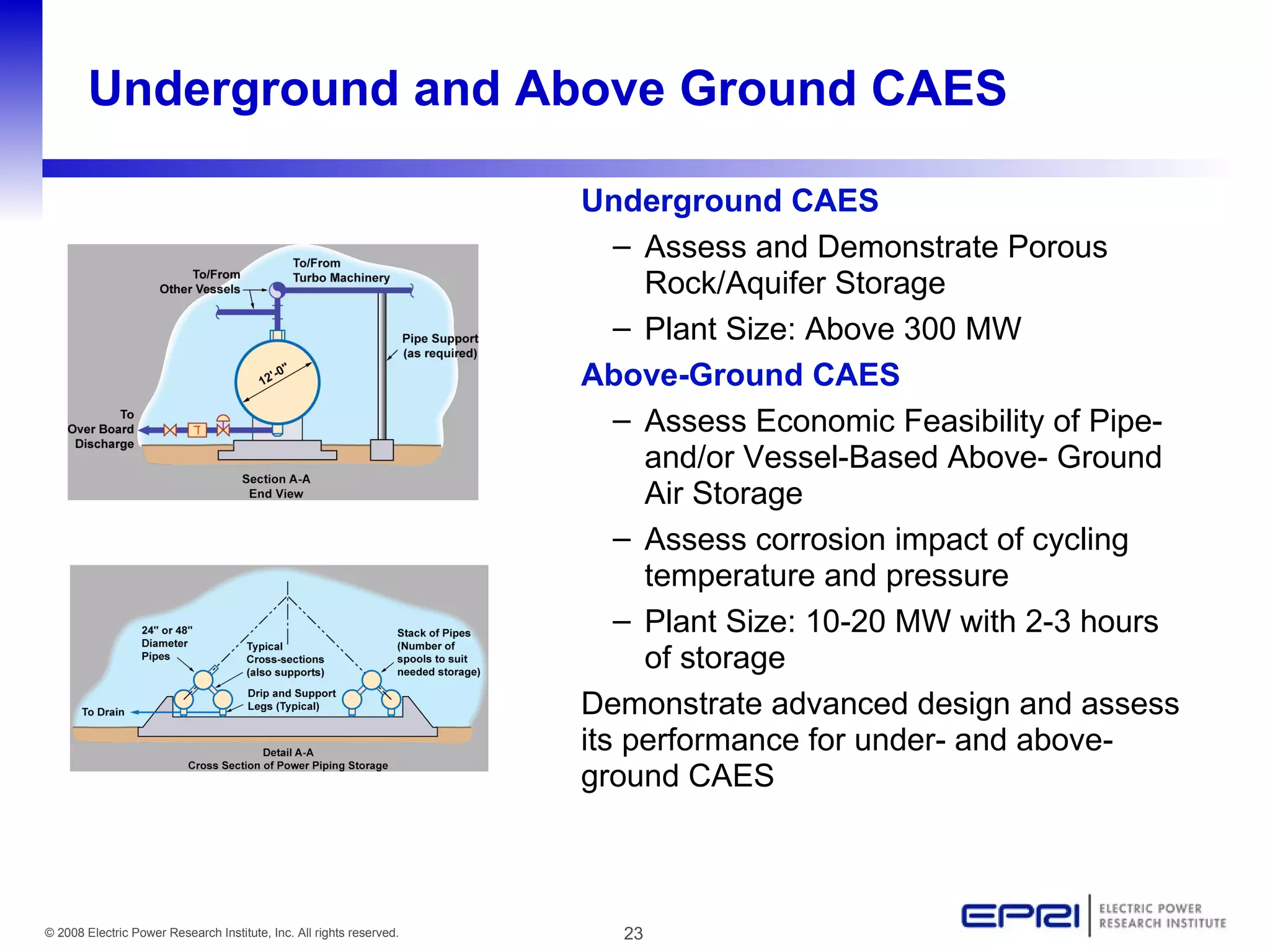
Underground and Above Ground CAES Underground CAES Assess and Demonstrate Porous Rock/Aquifer Storage Plant Size: Above 300 MW Above-Ground CAES Assess Economic Feasibility of Pipe- and/or Vessel-Based Above- Ground Air Storage Assess corrosion impact of cycling temperature and pressure Plant Size: 10-20 MW with 2-3 hours of storage Demonstrate advanced design and assess its performance for under- and above-ground CAES

Connecting Renewable Generation To A Transmission Grid

  • 1.
    A New MarketStructure for Integrating Stochastic Renewable Generation in a Transmission Grid Stephen Lee Senior Technical Executive Power Delivery & Utilization, EPRI [email_address] November 2008
  • 2.
    Outline Mandatory penetrationof wind power may not be economical High penetration of wind power will create higher risk of blackouts How to prevent these problems? A New Market Structure Port of Entry + Storage Virtual Service Aggregator Balancing Authority CO2 Charge and Public Benefit Funds Conclusions
  • 3.
    United States RenewableMandates Solar water heating (SWH) eligible
  • 4.
    Mandatory penetration ofwind power may not be economical Utilities are forced to buy whatever amount of wind energy produced under the mandate No cost penalty is placed on wind power for backup capacity, load following, operating reserve, frequency regulation Transmission companies have no incentive to build new transmission to integrate wind power Storage plants are considered power plants and are not profitable to build Transmission companies have no incentive to build storage plants
  • 5.
    Our Nation’s FutureRequires an EHV Interstate Transmission System. Existing 765 kV New 765 kV AC-DC-AC Link
  • 6.
    High penetration ofwind power will create higher risk of blackouts Raw wind power entering the grid at many entry points will create widely varying power flows across the grid Extensive system frequency excursions and unusual flow patterns will create more blackouts
  • 7.
    Source: California ISOTehachapi Wind Generation in April – 2005 0 100 200 300 400 500 600 700 1 2 3 4 5 6 7 8 9 10 11 12 13 14 15 16 17 18 19 20 21 22 23 24 Hour MW Could you predict the energy production for this wind park either day-ahead or 5 hours in advance? Average Each Day is a different color. Day 29 Day 5 Day 26 Day 9
  • 8.
    Impacts on SpinningReserves and Ramping Requirements E. ON Netz operates German transmission network 7+ GW installed wind capacity 21+ GW peak system load Source: E. ON Netz 2004 Wind Report Source: E. ON Netz 2005 Wind Report Dec. 24, 2004 – aggregate wind power falls from 2004 max 6,024MW to <2,000MW in 10 hrs (avg. 7 MW/min). Nov. 19, 2004 – aggregate wind power drops 3,640 MW in 6 hrs (10 MW/min.)
  • 9.
    Load Following, OperatingReserve, Unloadable Generation Installed Wind Capacity Need Operating Reserve Need Unloadable Generation Need Unloadable Generation Need Operating Reserve 0 Time ? MW/hr
  • 10.
    Methods of Copingwith Wind Uncertainty Short-Term Better wind forecasting Carry more operating/spinning reserve and unloadable generation to handle up and down ramps of wind output Rapid coordination with demand response and energy storage Long-Term Build more energy storage, e.g., Compressed Air Energy Storage (CAES) Controllable demand response Holistic planning of transmission, generation and demand Potential wind curtailment CAES
  • 11.
    Large Scale RenewableIntegration in Free Market and Mandate Environment Grid Operations & Planning (Visualization, tools, monitoring, reliability assessment methods) Balancing Resources (Energy Storage, Demand Response, Fast Acting CT, Hydro etc.) Transmission Technologies (Adv. Conductors, HVDC for wind, Advanced FACTS) Grid Interface Technologies (Interface, Control, Ride Through Technologies) Reliably and Cost Effectively Integrate High Penetration of Intermittent Generation with the Grid
  • 12.
    Port of Entryfor Large Scale Renewables Restrict large scale renewables to connect to the grid only through ports of entry Provide large scale energy storage at ports of entry Dispatch storage to maintain steady power flow into the grid This reduces transmission investment End-uses & DR Distribution System Transmission System Power Plants Renewable Plants Energy Storage
  • 13.
    Potential Role ofthe Virtual Service Aggregator Balancing Authority Owns or contract for: Portfolio of renewables storage, or traditional power plants Portfolio of customers with distributed resources SCADA and Area Control
  • 14.
    Virtual Service AggregatorBalancing Authority Direct measurements and control of All generation and storage sources in its portfolio All customer demand in its portfolio All distributed generation or storage in its portfolio Maintenance energy balance like a Control Area Area Control Error charged by the ISO/RTO Separate SCADA and control system Integrated with the main EMS of ISO/RTO
  • 15.
    UDi-ism (Unity inDiversity) Diversity means the exercise of an individual’s right of free choices. Unity in Diversity means creating unity while preserving diversity , or allowing diversity to achieve unity Hypothesis – Align an individual’s selfish incentive more with the socially optimal objective Then the creative energy of individuals would achieve the social objective. “ An Effective Pricing and Financial Method to Significantly Reduce CO2 Emissions from Electricity Production – An Application of the Third Way Economic System of Unity-in-Diversity”, IEEE PowerCon 2006, Chongqing
  • 16.
  • 17.
  • 18.
    Flow of Moneyfor Cap and Trade System Another potential financial bubble
  • 19.
    Flow of Moneyfor UDI-ism CO2 Charge
  • 20.
    How Is ItDifferent from a Carbon Tax? Global CO2 emissions would drop from today’s 13,000 million tons per year to less about 4,000 million tons, when the optimal generation mix is finally achieved for the CO2 cost of $30/ton The CO2 charge would be based on scientific or market value for the social cost of CO2 - not a fixed or static tax rate Revenue from the CO2 charge goes into a Public Benefit Fund. Managed by independent trustees Can assist low income electricity customers Can be used to clean up environment Can be treated as an investment account in the name of the electricity customers, which grows in value Money may become a social safety net for unemployment and retirement
  • 21.
    Conclusions Free marketcapitalistic countries May not allow the restriction of a Port of Entry Will likely allow virtual service aggregator May not force virtual service aggregator to be balancing authority Will likely adopt Cap and Trade Would a more economical and more reliable power system result from: Ports of Entry Virtual Service Aggregator Balancing Authority CO2 charge with Public Benefits Funds
  • 22.
    Industry Demonstration 2008-2012:CAES Demonstration and Validate Performance of Advanced Design Underground and Above Ground CAES Plant CT Module Exhaust Air Compressor Combustion Turbine Motor Storage Air Intercoolers Recuperator Fuel Expander Storage Heat Rate Energy Ratio 3810 0.70 Constant Output Pressure Regulation Valve
  • 23.
    Underground and AboveGround CAES Underground CAES Assess and Demonstrate Porous Rock/Aquifer Storage Plant Size: Above 300 MW Above-Ground CAES Assess Economic Feasibility of Pipe- and/or Vessel-Based Above- Ground Air Storage Assess corrosion impact of cycling temperature and pressure Plant Size: 10-20 MW with 2-3 hours of storage Demonstrate advanced design and assess its performance for under- and above-ground CAES