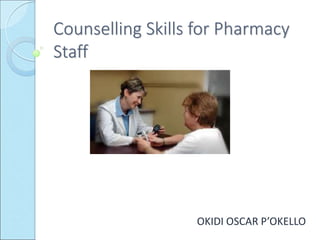
Counselling Skills for Pharmacy
Staff
OKIDI OSCAR P’OKELLO
What is Counselling?
 Counselling involves giving patients
information and guidance on their
medicines and allowing them to make
informed decisions.
 Guidance; is the help given to an
individual to enable him/her make
whatever adjustments or
readjustments necessary in order that
he may achieve individually and
socially desirable satisfaction in all of
his activities.
Aims of counselling patients
 The aims of counselling patients are to:
◦ Encourage patients to identify any problems
they perceive with medicines and also any
solutions to these problems.
◦ Encourage patients to develop their own action
plan for taking/using medicines correctly.
◦ Gain an understanding of the patient’s
perspective.
◦ Respect the patient’s beliefs and be non-
judgemental of their use (or non-use) of
medicines.
 If patients do not take their medicines
correctly, they will not benefit from them.
Why should we Counsel
Patients?
 Provide advice on the side-effects they may
experience from their medication.
 Advice on how to use their medicine the first
time they receive it.
 Important to check they are using it properly on
subsequent visits to the pharmacy.
 Medicines may interact with other drugs the
patient is taking, and also with certain foods or
drinks.
 Many patients are receiving substandard
care because they find their medicines difficult
to take or hard to remember, because they
don’t have anyone to talk to about their
medicines, or because they have complicated
Importance of patient counseling
 Reducing medication errors
 Increasing patients’ understanding and
management of their medical condition
 Minimizing incidence of adverse drug
reactions and drug–drug interactions
 Improving patient outcomes and satisfaction
with care
 Improves compliance and adherence
 Reduces health care cost
 It is a psychological therapy.
 It enables patients/clients release stres
s and anxiety
Opportunities for Counselling
 Pharmacists and pharmacy
technicians should take a prominent
and proactive role in counselling.
 The main opportunity for counselling
is at the end of the dispensing
process, or when a medicine is being
sold.
Qualities of a good counsellor
 Knowledgeable about the product
being dispensed or sold
 Excellent communication skills
(good listener, non-judgemental,
accept client’s feelings, pay attention)
 Should solve the problem for the
patient.
 Patience
 Flexibility
 Warmth
Qualities of a good counsellor
 Tact (be polite in what you say or do)
 Sensitivity
 Empathetic with patients/clients
 Confidentiality
 Personal integrity
Counseling skills
 Attending behavior
 Interviewing
 Active listening
 Probing skills
 Reflecting feelings
 Praise appropriate practices
 Talking skills
 Summarizing and paraphrasing
Information/advice to include
when Counselling
 Name, strength, and dosage form.
 How to take or use the medicine
 When to take or use the medicine
 How much to take or use
 How long to continue to take it
 What to expect,
◦ e.g. immediate relief, no effect for several days
 Why the medicine is being taken or used
 What to do if something goes wrong,
◦ e.g. if a dose is missed
 How to recognise side-effects and minimise their incidence
 Lifestyle changes which need to be made
 Potential precautions, contraindications, drug-drug
interactions including non-prescription and herbal drugs
 Dietary changes which need to be made
 Proper storage
 Prescription refill information
Information/advice to include
when Counselling
 Don’t break an enteric coated tablet f
or easy swallowing
 With medications in suspension form,
“Shake the Bottle” has to be followed.
 How to remove medicine from the pa
ck and use e.g. blister, strip pack.
 How to fit in the dropper assembly an
d use.
 To specify whether the medicine is for
internal or external use
Consideration of the Medicine
 Consider counselling if the drug has:
◦ A narrow therapeutic index
◦ The potential to interact with another drug
or food
◦ The potential to cause side-effects
◦ Special storage conditions
 Counselling should also be done if it
is recommended by a reference
source, such as the BNF.
Consideration of the Patient
(1)
 Is the patient known at the pharmacy,
and had previous problems with drug
therapy?
 What counselling have they previously
received?
 What are the patient’s comprehension
levels?
 What level of support do they have or
need?
 How old is the patient?
 Are they pregnant or breastfeeding?
 Do they have any disabilities?
 Are they known to be poorly compliant?
Consideration of the Patient
(2)
 When a patient who has brought in a
prescription wants to also buy an ‘over-the-
counter’ medicine that you know will interact
with the medicine on prescription
◦ E.g. a patient on warfarin who wants to buy
aspirin
 If a patient brings in a prescription for more
than one medicine and asks for one or more
of them not to be dispensed
◦ Indicates poor compliance
 If a patient wants to buy an OTC medicine
to relieve the side-effects of a prescription
medicine
◦ E.g a patient taking diclofenac who wants to buy
something to treat indigestion
Consideration of the Patient
(3)
 Patients with terminal illness and rel
atives of patients e.g. HIV/AIDS and c
ancer
 Patients who are on medication for t
he rest of their life.
 Family planning clients
 Women with abortions
 Weak personalities
 Addicted clients
Aids to Counselling
 Patient Information Leaflets (PILs)
◦ In the UK we must give a leaflet out with
every medicine dispensed
◦ If these are not available, consider writing
your own information leaflets on how to use
ear drops, eye drops, pessaries,
suppositories, inhalers etc
 Placebo devices
◦ E.g. placebo inhalers
◦ Useful for demonstrating correct inhaler
technique to patients, and for checking that
patients are using them correctly on
subsequent visits
Stages in the Counselling
Process
 The following steps should be
followed:
1. Introduction
2. Process content
3. Conclusion
1.Introduction
 Review the patient’s record
 Obtain drug related information such as
allergies, use of herbals etc.
 Assess the patients understanding of the
reasons for therapy
 Assess any actual and/or potential
concerns or problems of importance to the
patient.
2.Process Content
Medication information exchange
◦ Use language that the patient
understands
◦ Use appropriate counseling aids
◦ Present facts and concepts in simple
words and in logical order
◦ Use open ended questions
3. Conclusion
 Check patient understanding
(feedback)
 Summarize by emphasizing key
points
 Give opportunity to the patient to put
forward any concept
 Help the patient to plain follow-up
Summary of counseling process
 There are six elements to the counseling p
rocess in pharmacy practice. They are easy
to remember with the memory aid GATHER
 G: Greet the patient/client
 A: Ask the patient/client about him/herself
 T: Tell patient/client about proper use of m
edicines
 H: Help patient/client to understand the in
structions
 E: Explain how to use the medicine
 R: Return for follow up.
Barriers to effective
counseling
 Physical barriers for example uncomf
ortable sitting arrangement
 Difference in social and cultural backg
round for example beliefs
 Non verbal communication for exampl
e showing signs of disgust
 Barriers caused by patients/clients e.g
. lack of interest in being counseled
 Lack of trust and confidence between
counselor and client.
 Language barrier
Conclusion
 Counselling is an important part of the role of a
pharmacy staff which benefits the patient
 Counselling must be structured, and the key
information should be given so it is easily understood
 Counselling should be used to reinforce the label and
compliance and warn against the potential for
interactions
 Some groups need special counselling
◦ Elderly, parents of ill children etc
 Sometimes the amount of information given has to be
limited to avoid confusion
 Patient understanding must be checked
 Counselling is NOT a lecture
◦ Patients must be given the chance to ask questions
END

9. Counselling.ppt

  • 1.
    Counselling Skills forPharmacy Staff OKIDI OSCAR P’OKELLO
  • 2.
    What is Counselling? Counselling involves giving patients information and guidance on their medicines and allowing them to make informed decisions.  Guidance; is the help given to an individual to enable him/her make whatever adjustments or readjustments necessary in order that he may achieve individually and socially desirable satisfaction in all of his activities.
  • 4.
    Aims of counsellingpatients  The aims of counselling patients are to: ◦ Encourage patients to identify any problems they perceive with medicines and also any solutions to these problems. ◦ Encourage patients to develop their own action plan for taking/using medicines correctly. ◦ Gain an understanding of the patient’s perspective. ◦ Respect the patient’s beliefs and be non- judgemental of their use (or non-use) of medicines.  If patients do not take their medicines correctly, they will not benefit from them.
  • 5.
    Why should weCounsel Patients?  Provide advice on the side-effects they may experience from their medication.  Advice on how to use their medicine the first time they receive it.  Important to check they are using it properly on subsequent visits to the pharmacy.  Medicines may interact with other drugs the patient is taking, and also with certain foods or drinks.  Many patients are receiving substandard care because they find their medicines difficult to take or hard to remember, because they don’t have anyone to talk to about their medicines, or because they have complicated
  • 6.
    Importance of patientcounseling  Reducing medication errors  Increasing patients’ understanding and management of their medical condition  Minimizing incidence of adverse drug reactions and drug–drug interactions  Improving patient outcomes and satisfaction with care  Improves compliance and adherence  Reduces health care cost  It is a psychological therapy.  It enables patients/clients release stres s and anxiety
  • 7.
    Opportunities for Counselling Pharmacists and pharmacy technicians should take a prominent and proactive role in counselling.  The main opportunity for counselling is at the end of the dispensing process, or when a medicine is being sold.
  • 8.
    Qualities of agood counsellor  Knowledgeable about the product being dispensed or sold  Excellent communication skills (good listener, non-judgemental, accept client’s feelings, pay attention)  Should solve the problem for the patient.  Patience  Flexibility  Warmth
  • 9.
    Qualities of agood counsellor  Tact (be polite in what you say or do)  Sensitivity  Empathetic with patients/clients  Confidentiality  Personal integrity
  • 10.
    Counseling skills  Attendingbehavior  Interviewing  Active listening  Probing skills  Reflecting feelings  Praise appropriate practices  Talking skills  Summarizing and paraphrasing
  • 11.
    Information/advice to include whenCounselling  Name, strength, and dosage form.  How to take or use the medicine  When to take or use the medicine  How much to take or use  How long to continue to take it  What to expect, ◦ e.g. immediate relief, no effect for several days  Why the medicine is being taken or used  What to do if something goes wrong, ◦ e.g. if a dose is missed  How to recognise side-effects and minimise their incidence  Lifestyle changes which need to be made  Potential precautions, contraindications, drug-drug interactions including non-prescription and herbal drugs  Dietary changes which need to be made  Proper storage  Prescription refill information
  • 12.
    Information/advice to include whenCounselling  Don’t break an enteric coated tablet f or easy swallowing  With medications in suspension form, “Shake the Bottle” has to be followed.  How to remove medicine from the pa ck and use e.g. blister, strip pack.  How to fit in the dropper assembly an d use.  To specify whether the medicine is for internal or external use
  • 13.
    Consideration of theMedicine  Consider counselling if the drug has: ◦ A narrow therapeutic index ◦ The potential to interact with another drug or food ◦ The potential to cause side-effects ◦ Special storage conditions  Counselling should also be done if it is recommended by a reference source, such as the BNF.
  • 14.
    Consideration of thePatient (1)  Is the patient known at the pharmacy, and had previous problems with drug therapy?  What counselling have they previously received?  What are the patient’s comprehension levels?  What level of support do they have or need?  How old is the patient?  Are they pregnant or breastfeeding?  Do they have any disabilities?  Are they known to be poorly compliant?
  • 15.
    Consideration of thePatient (2)  When a patient who has brought in a prescription wants to also buy an ‘over-the- counter’ medicine that you know will interact with the medicine on prescription ◦ E.g. a patient on warfarin who wants to buy aspirin  If a patient brings in a prescription for more than one medicine and asks for one or more of them not to be dispensed ◦ Indicates poor compliance  If a patient wants to buy an OTC medicine to relieve the side-effects of a prescription medicine ◦ E.g a patient taking diclofenac who wants to buy something to treat indigestion
  • 16.
    Consideration of thePatient (3)  Patients with terminal illness and rel atives of patients e.g. HIV/AIDS and c ancer  Patients who are on medication for t he rest of their life.  Family planning clients  Women with abortions  Weak personalities  Addicted clients
  • 17.
    Aids to Counselling Patient Information Leaflets (PILs) ◦ In the UK we must give a leaflet out with every medicine dispensed ◦ If these are not available, consider writing your own information leaflets on how to use ear drops, eye drops, pessaries, suppositories, inhalers etc  Placebo devices ◦ E.g. placebo inhalers ◦ Useful for demonstrating correct inhaler technique to patients, and for checking that patients are using them correctly on subsequent visits
  • 18.
    Stages in theCounselling Process  The following steps should be followed: 1. Introduction 2. Process content 3. Conclusion
  • 19.
    1.Introduction  Review thepatient’s record  Obtain drug related information such as allergies, use of herbals etc.  Assess the patients understanding of the reasons for therapy  Assess any actual and/or potential concerns or problems of importance to the patient.
  • 20.
    2.Process Content Medication informationexchange ◦ Use language that the patient understands ◦ Use appropriate counseling aids ◦ Present facts and concepts in simple words and in logical order ◦ Use open ended questions
  • 21.
    3. Conclusion  Checkpatient understanding (feedback)  Summarize by emphasizing key points  Give opportunity to the patient to put forward any concept  Help the patient to plain follow-up
  • 22.
    Summary of counselingprocess  There are six elements to the counseling p rocess in pharmacy practice. They are easy to remember with the memory aid GATHER  G: Greet the patient/client  A: Ask the patient/client about him/herself  T: Tell patient/client about proper use of m edicines  H: Help patient/client to understand the in structions  E: Explain how to use the medicine  R: Return for follow up.
  • 23.
    Barriers to effective counseling Physical barriers for example uncomf ortable sitting arrangement  Difference in social and cultural backg round for example beliefs  Non verbal communication for exampl e showing signs of disgust  Barriers caused by patients/clients e.g . lack of interest in being counseled  Lack of trust and confidence between counselor and client.  Language barrier
  • 24.
    Conclusion  Counselling isan important part of the role of a pharmacy staff which benefits the patient  Counselling must be structured, and the key information should be given so it is easily understood  Counselling should be used to reinforce the label and compliance and warn against the potential for interactions  Some groups need special counselling ◦ Elderly, parents of ill children etc  Sometimes the amount of information given has to be limited to avoid confusion  Patient understanding must be checked  Counselling is NOT a lecture ◦ Patients must be given the chance to ask questions
  • 25.