PREAMBLE OF INDIAN CONSTITUTION
WHY IS IT SO IMPORTANT?
DIFFICULT CIRCUMSTANCES FACED BY THE INDIAN
CONSTITUTION MAKERS
VALUES OF OUR INDIAN CONSTITUTION
PREAMBLE OF INDIAN CONSTITUTION
 The    constitution begins with a short statement of
  its basic values.
 This is called the preamble to the constitution.

 It contains the philosophy on which our
  constitution has been built.
 It provides a standard to examine and evaluate
  any law and action of the government, to find out
  whether it is good or bad.
 It is the soul of the Indian Constitution.
SIGNIFICANCE/ IMPORTANCE OF PREAMBLE
 The preamble is like an introduction or preface of a book.
 As an introduction is it not a part of the contents but it
  explains the purpose and objectives with which the
  document has been written.
 As such the preamble provides the guidelines of the
  constitution.
 The preamble, in brief, explains the objectives of the
  Constitution in two ways,
     1. about the structure of the governance
     2. about the ideals to be achieved in independent India
 The preamble is considered the key of the constitution.
PROBLEMS FACED BY THE CONSTITUTION
MAKERS IN INDIA
 The making of the constitution for a huge and diverse
  country like India was not an easy task. At that time the
  people of India were emerging from the status of subjects to
  that of citizen.
 The country was born through a partition on the base of
  religious differences. This was a horrible experience for the
  people of India and Pakistan.
 More than 10 lakh people were killed on both sides of the
  border in partition related violence.
 The British had left it to the rulers of princely states to decide
  whether they wanted to merge with India or Pakistan or
  remain independent.
 Anxiety about the present and future of the state.
VALUES OF THE CONSTITUTION IN INDIA

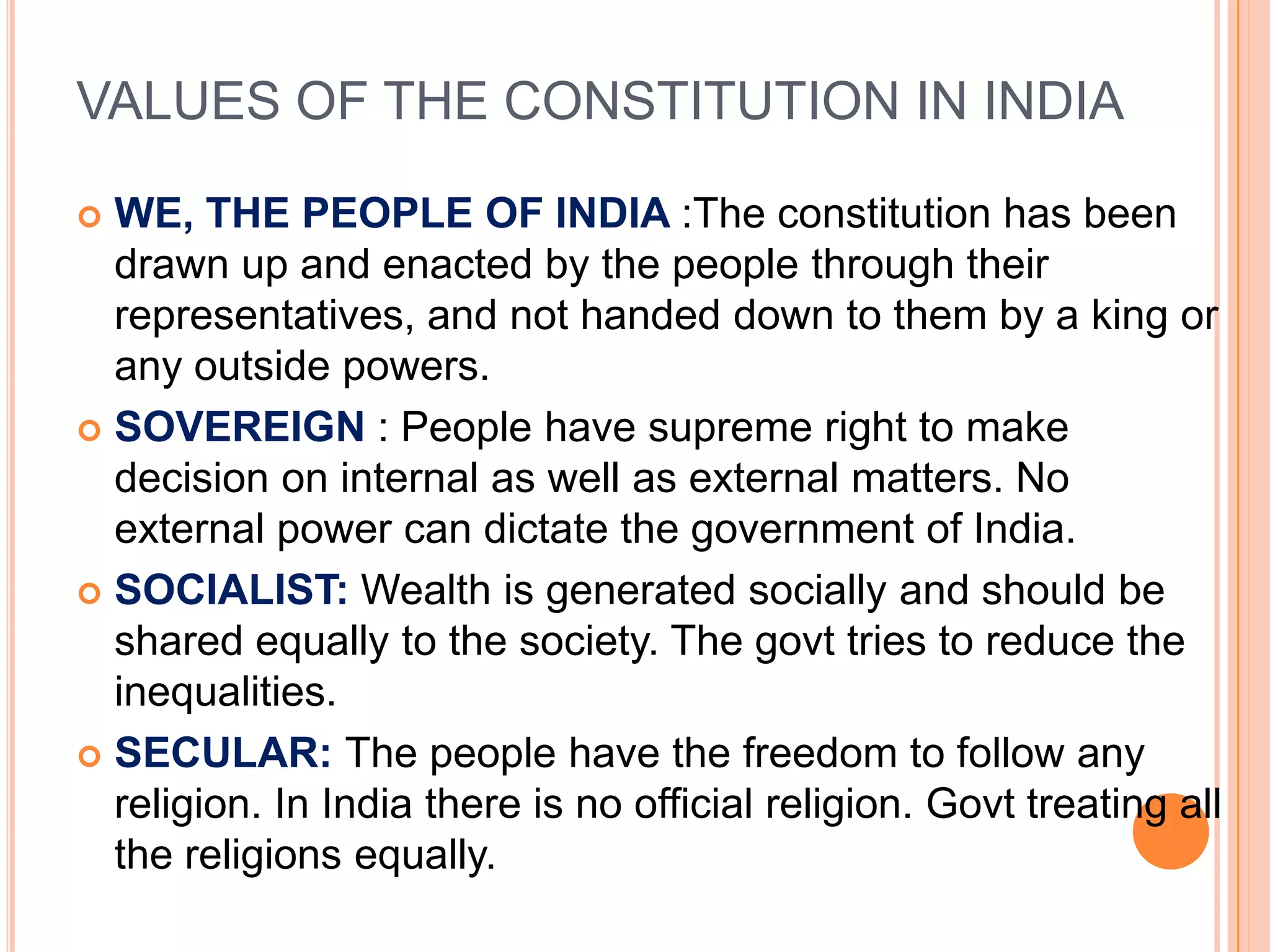
 WE, THE PEOPLE OF INDIA :The constitution has been
  drawn up and enacted by the people through their
  representatives, and not handed down to them by a king or
  any outside powers.
 SOVEREIGN : People have supreme right to make
  decision on internal as well as external matters. No
  external power can dictate the government of India.
 SOCIALIST: Wealth is generated socially and should be
  shared equally to the society. The govt tries to reduce the
  inequalities.
 SECULAR: The people have the freedom to follow any
  religion. In India there is no official religion. Govt treating all
  the religions equally.
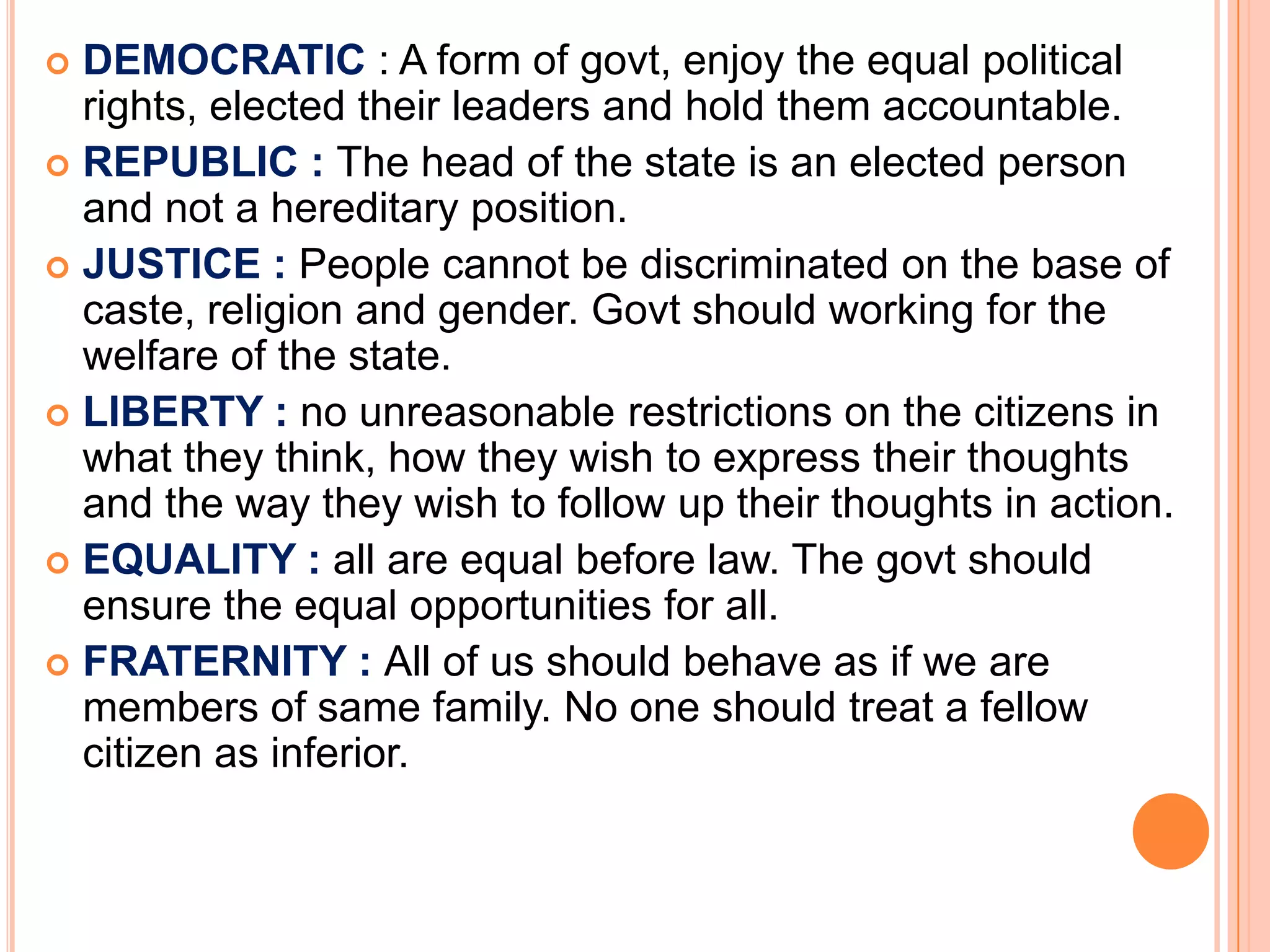
 DEMOCRATIC : A form of govt, enjoy the equal political
  rights, elected their leaders and hold them accountable.
 REPUBLIC : The head of the state is an elected person
  and not a hereditary position.
 JUSTICE : People cannot be discriminated on the base of
  caste, religion and gender. Govt should working for the
  welfare of the state.
 LIBERTY : no unreasonable restrictions on the citizens in
  what they think, how they wish to express their thoughts
  and the way they wish to follow up their thoughts in action.
 EQUALITY : all are equal before law. The govt should
  ensure the equal opportunities for all.
 FRATERNITY : All of us should behave as if we are
  members of same family. No one should treat a fellow
  citizen as inferior.
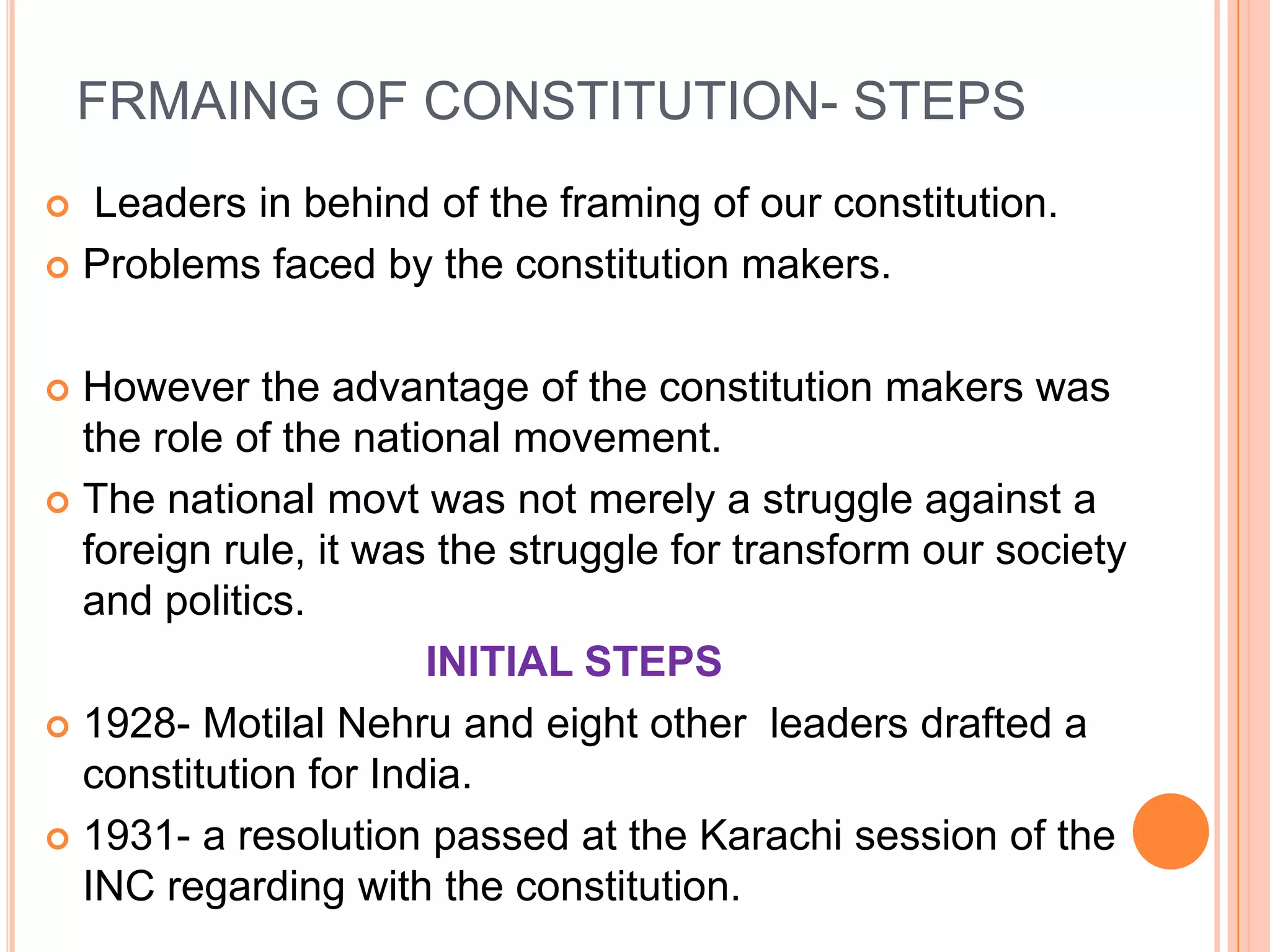
FRMAING OF CONSTITUTION- STEPS
 Leaders in behind of the framing of our constitution.
 Problems faced by the constitution makers.


 However the advantage of the constitution makers was
  the role of the national movement.
 The national movt was not merely a struggle against a
  foreign rule, it was the struggle for transform our society
  and politics.
                      INITIAL STEPS
 1928- Motilal Nehru and eight other leaders drafted a
  constitution for India.
 1931- a resolution passed at the Karachi session of the
  INC regarding with the constitution.
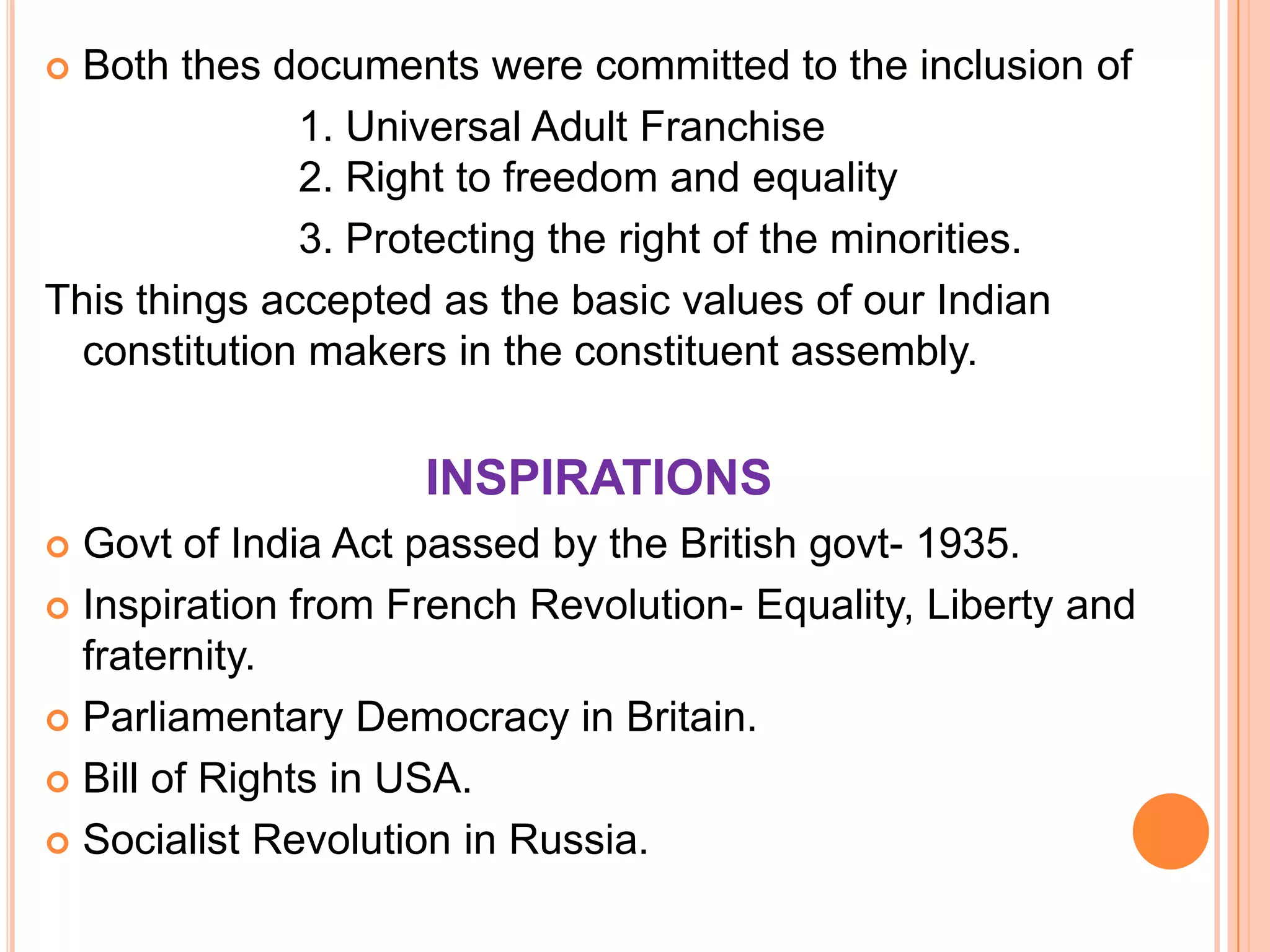
 Both thes documents were committed to the inclusion of
              1. Universal Adult Franchise
              2. Right to freedom and equality
              3. Protecting the right of the minorities.
This things accepted as the basic values of our Indian
  constitution makers in the constituent assembly.


                    INSPIRATIONS
 Govt of India Act passed by the British govt- 1935.
 Inspiration from French Revolution- Equality, Liberty and
  fraternity.
 Parliamentary Democracy in Britain.

 Bill of Rights in USA.

 Socialist Revolution in Russia.
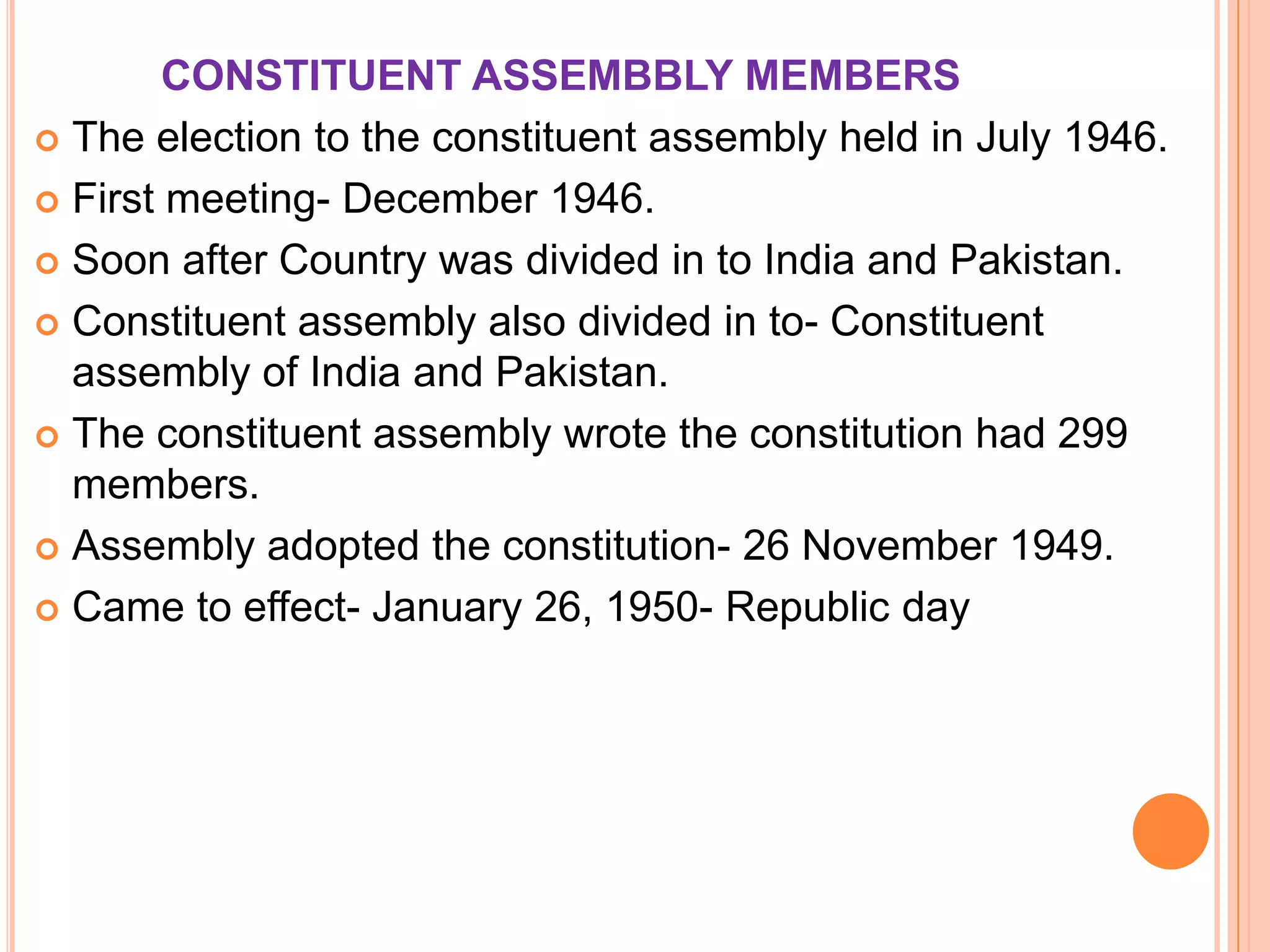
CONSTITUENT ASSEMBBLY MEMBERS
 The election to the constituent assembly held in July 1946.

 First meeting- December 1946.

 Soon after Country was divided in to India and Pakistan.

 Constituent assembly also divided in to- Constituent
  assembly of India and Pakistan.
 The constituent assembly wrote the constitution had 299
  members.
 Assembly adopted the constitution- 26 November 1949.

 Came to effect- January 26, 1950- Republic day
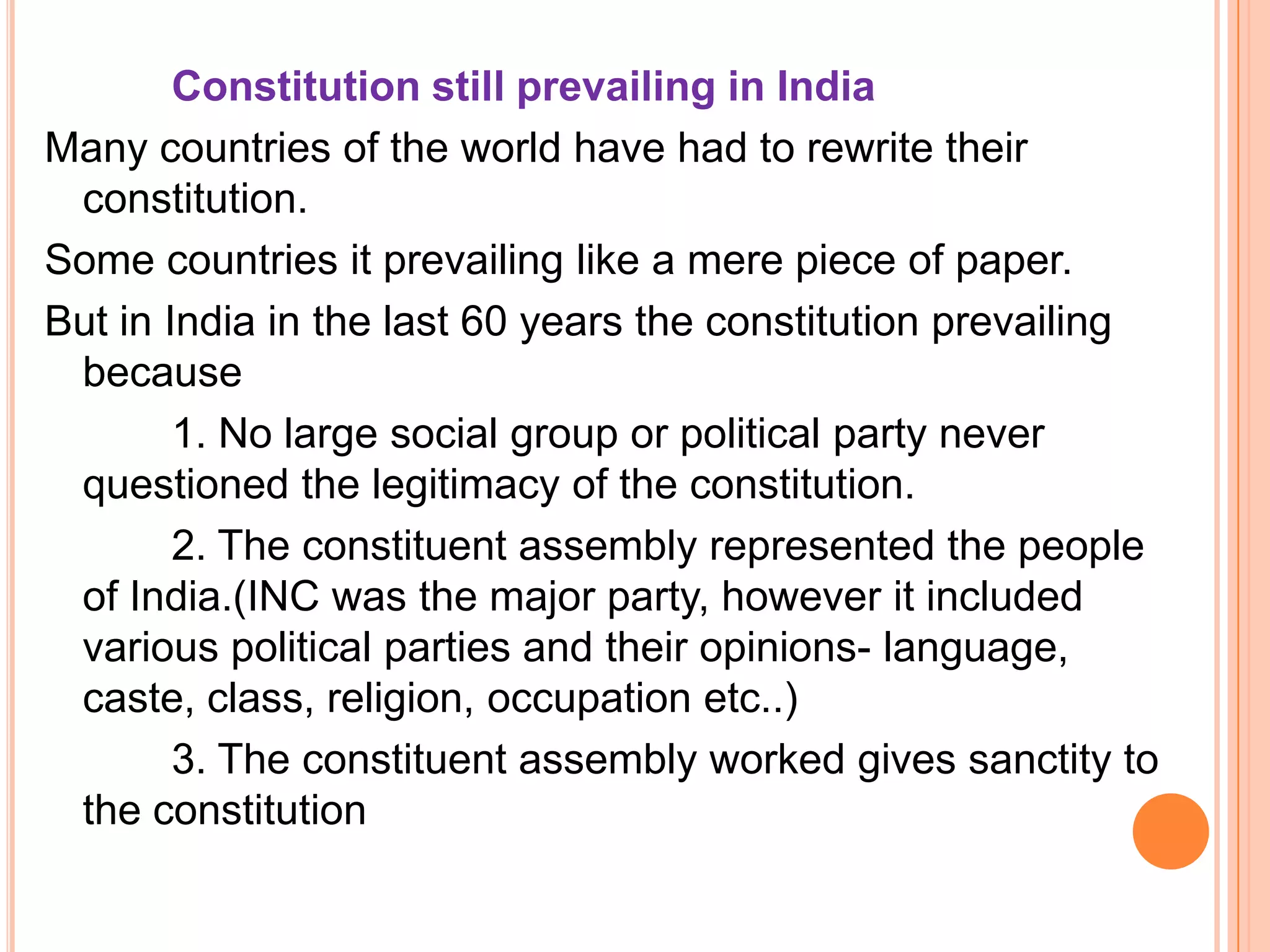
Constitution still prevailing in India
Many countries of the world have had to rewrite their
 constitution.
Some countries it prevailing like a mere piece of paper.
But in India in the last 60 years the constitution prevailing
 because
        1. No large social group or political party never
 questioned the legitimacy of the constitution.
        2. The constituent assembly represented the people
 of India.(INC was the major party, however it included
 various political parties and their opinions- language,
 caste, class, religion, occupation etc..)
        3. The constituent assembly worked gives sanctity to
 the constitution
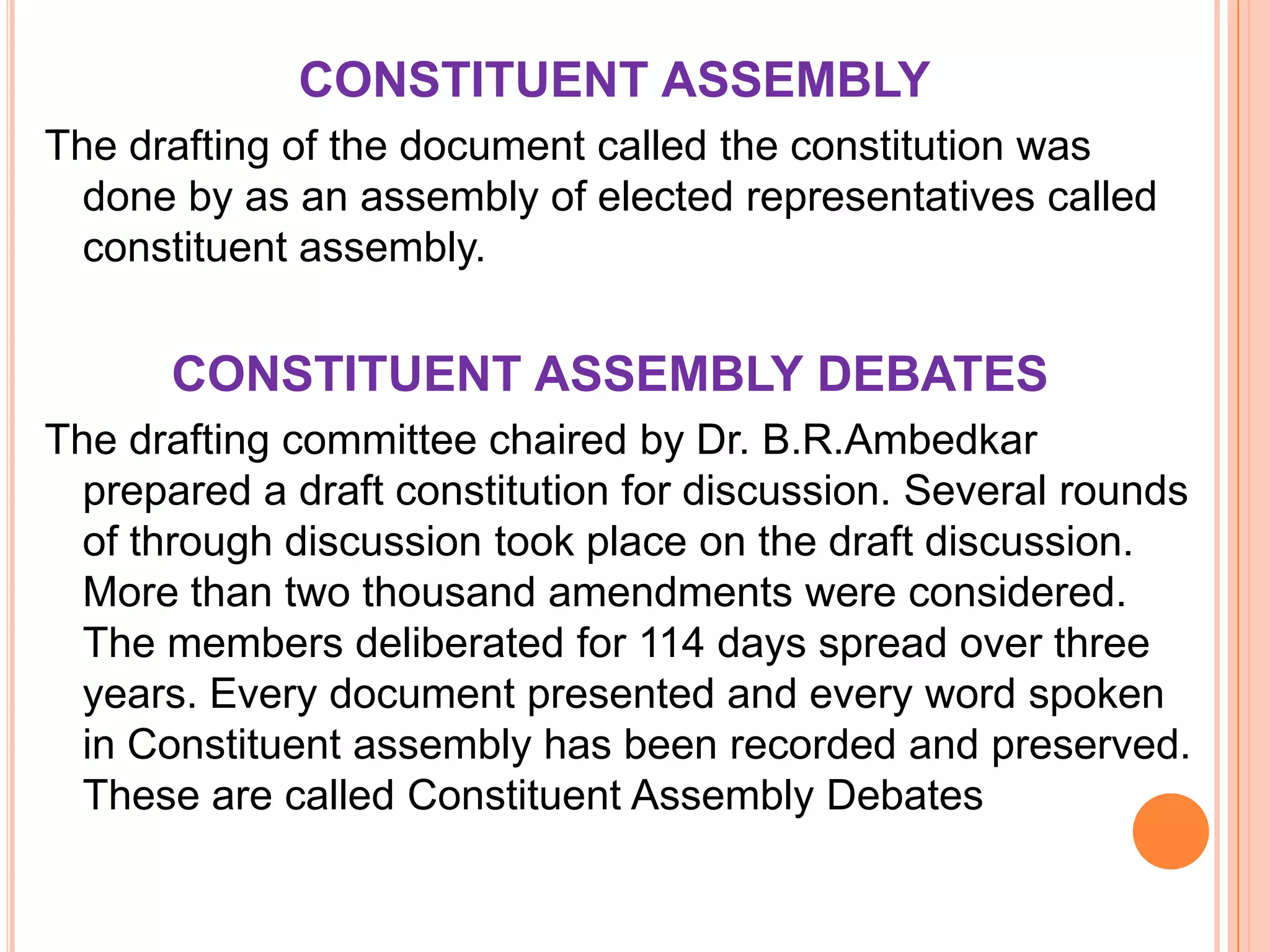
CONSTITUENT ASSEMBLY
The drafting of the document called the constitution was
  done by as an assembly of elected representatives called
  constituent assembly.


      CONSTITUENT ASSEMBLY DEBATES
The drafting committee chaired by Dr. B.R.Ambedkar
  prepared a draft constitution for discussion. Several rounds
  of through discussion took place on the draft discussion.
  More than two thousand amendments were considered.
  The members deliberated for 114 days spread over three
  years. Every document presented and every word spoken
  in Constituent assembly has been recorded and preserved.
  These are called Constituent Assembly Debates

9 civics 26.8.11

  • 1.
    PREAMBLE OF INDIANCONSTITUTION WHY IS IT SO IMPORTANT? DIFFICULT CIRCUMSTANCES FACED BY THE INDIAN CONSTITUTION MAKERS VALUES OF OUR INDIAN CONSTITUTION
  • 2.
    PREAMBLE OF INDIANCONSTITUTION  The constitution begins with a short statement of its basic values.  This is called the preamble to the constitution.  It contains the philosophy on which our constitution has been built.  It provides a standard to examine and evaluate any law and action of the government, to find out whether it is good or bad.  It is the soul of the Indian Constitution.
  • 3.
    SIGNIFICANCE/ IMPORTANCE OFPREAMBLE  The preamble is like an introduction or preface of a book.  As an introduction is it not a part of the contents but it explains the purpose and objectives with which the document has been written.  As such the preamble provides the guidelines of the constitution.  The preamble, in brief, explains the objectives of the Constitution in two ways, 1. about the structure of the governance 2. about the ideals to be achieved in independent India  The preamble is considered the key of the constitution.
  • 4.
    PROBLEMS FACED BYTHE CONSTITUTION MAKERS IN INDIA  The making of the constitution for a huge and diverse country like India was not an easy task. At that time the people of India were emerging from the status of subjects to that of citizen.  The country was born through a partition on the base of religious differences. This was a horrible experience for the people of India and Pakistan.  More than 10 lakh people were killed on both sides of the border in partition related violence.  The British had left it to the rulers of princely states to decide whether they wanted to merge with India or Pakistan or remain independent.  Anxiety about the present and future of the state.
  • 5.
    VALUES OF THECONSTITUTION IN INDIA  WE, THE PEOPLE OF INDIA :The constitution has been drawn up and enacted by the people through their representatives, and not handed down to them by a king or any outside powers.  SOVEREIGN : People have supreme right to make decision on internal as well as external matters. No external power can dictate the government of India.  SOCIALIST: Wealth is generated socially and should be shared equally to the society. The govt tries to reduce the inequalities.  SECULAR: The people have the freedom to follow any religion. In India there is no official religion. Govt treating all the religions equally.
  • 6.
     DEMOCRATIC :A form of govt, enjoy the equal political rights, elected their leaders and hold them accountable.  REPUBLIC : The head of the state is an elected person and not a hereditary position.  JUSTICE : People cannot be discriminated on the base of caste, religion and gender. Govt should working for the welfare of the state.  LIBERTY : no unreasonable restrictions on the citizens in what they think, how they wish to express their thoughts and the way they wish to follow up their thoughts in action.  EQUALITY : all are equal before law. The govt should ensure the equal opportunities for all.  FRATERNITY : All of us should behave as if we are members of same family. No one should treat a fellow citizen as inferior.
  • 7.
    FRMAING OF CONSTITUTION-STEPS  Leaders in behind of the framing of our constitution.  Problems faced by the constitution makers.  However the advantage of the constitution makers was the role of the national movement.  The national movt was not merely a struggle against a foreign rule, it was the struggle for transform our society and politics. INITIAL STEPS  1928- Motilal Nehru and eight other leaders drafted a constitution for India.  1931- a resolution passed at the Karachi session of the INC regarding with the constitution.
  • 8.
     Both thesdocuments were committed to the inclusion of 1. Universal Adult Franchise 2. Right to freedom and equality 3. Protecting the right of the minorities. This things accepted as the basic values of our Indian constitution makers in the constituent assembly. INSPIRATIONS  Govt of India Act passed by the British govt- 1935.  Inspiration from French Revolution- Equality, Liberty and fraternity.  Parliamentary Democracy in Britain.  Bill of Rights in USA.  Socialist Revolution in Russia.
  • 9.
    CONSTITUENT ASSEMBBLY MEMBERS The election to the constituent assembly held in July 1946.  First meeting- December 1946.  Soon after Country was divided in to India and Pakistan.  Constituent assembly also divided in to- Constituent assembly of India and Pakistan.  The constituent assembly wrote the constitution had 299 members.  Assembly adopted the constitution- 26 November 1949.  Came to effect- January 26, 1950- Republic day
  • 10.
    Constitution still prevailingin India Many countries of the world have had to rewrite their constitution. Some countries it prevailing like a mere piece of paper. But in India in the last 60 years the constitution prevailing because 1. No large social group or political party never questioned the legitimacy of the constitution. 2. The constituent assembly represented the people of India.(INC was the major party, however it included various political parties and their opinions- language, caste, class, religion, occupation etc..) 3. The constituent assembly worked gives sanctity to the constitution
  • 11.
    CONSTITUENT ASSEMBLY The draftingof the document called the constitution was done by as an assembly of elected representatives called constituent assembly. CONSTITUENT ASSEMBLY DEBATES The drafting committee chaired by Dr. B.R.Ambedkar prepared a draft constitution for discussion. Several rounds of through discussion took place on the draft discussion. More than two thousand amendments were considered. The members deliberated for 114 days spread over three years. Every document presented and every word spoken in Constituent assembly has been recorded and preserved. These are called Constituent Assembly Debates