Pgs. 238-237 For Student Use Only
Ornithologist: Scientist who studies birds Study birds when most active at dawn Need to be observant to study birds Binoculars Records
Need to watch many things: How the bird acts What the bird looks like Patters or colors Where and what does it feed on Need to be specific so others can identify bird
Look for: Crown Nape Mantle Back Rump Tail Coverts Tail feathers Flank Look for: Belly Breast Wing Covers Throat Ear coverts Chin Bill Forehead
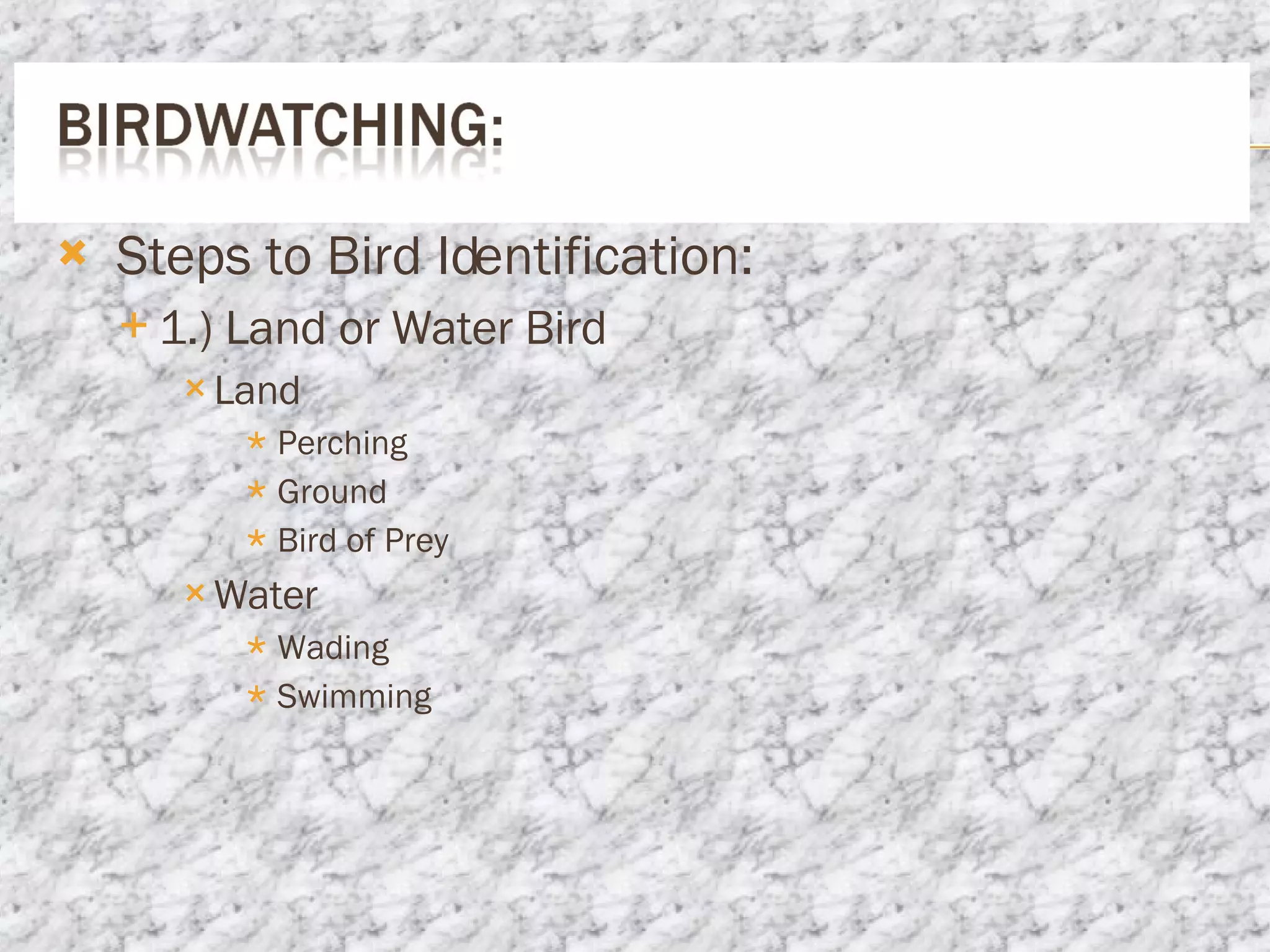
Steps to Bird Identification: 1.) Land or Water Bird Land Perching Ground Bird of Prey Water Wading Swimming
Steps to Bird Identification: 2.) Know habitats Look in forests, by ponds, and brushy substances
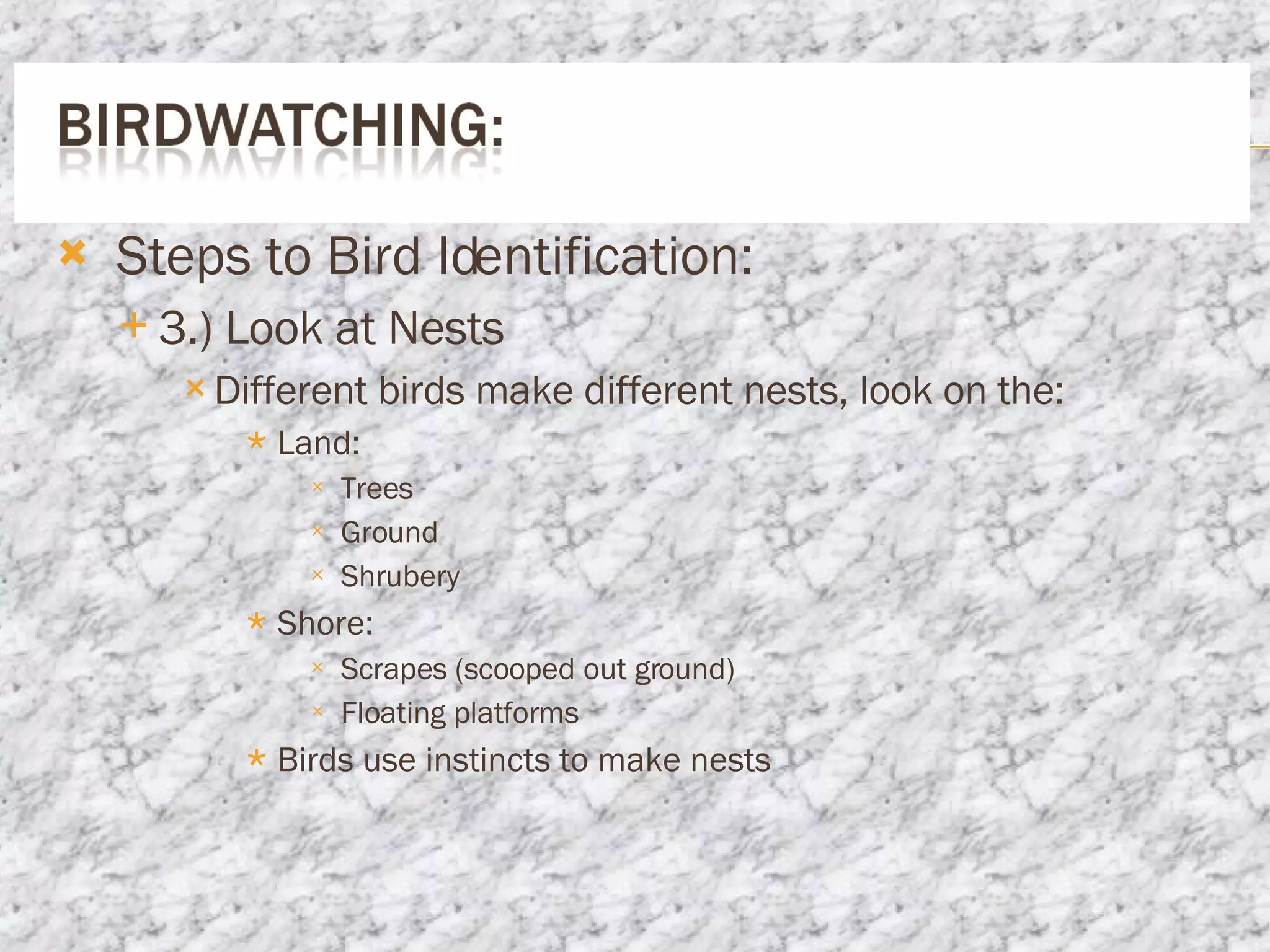
Steps to Bird Identification: 3.) Look at Nests Different birds make different nests, look on the: Land: Trees Ground Shrubery Shore: Scrapes (scooped out ground) Floating platforms Birds use instincts to make nests
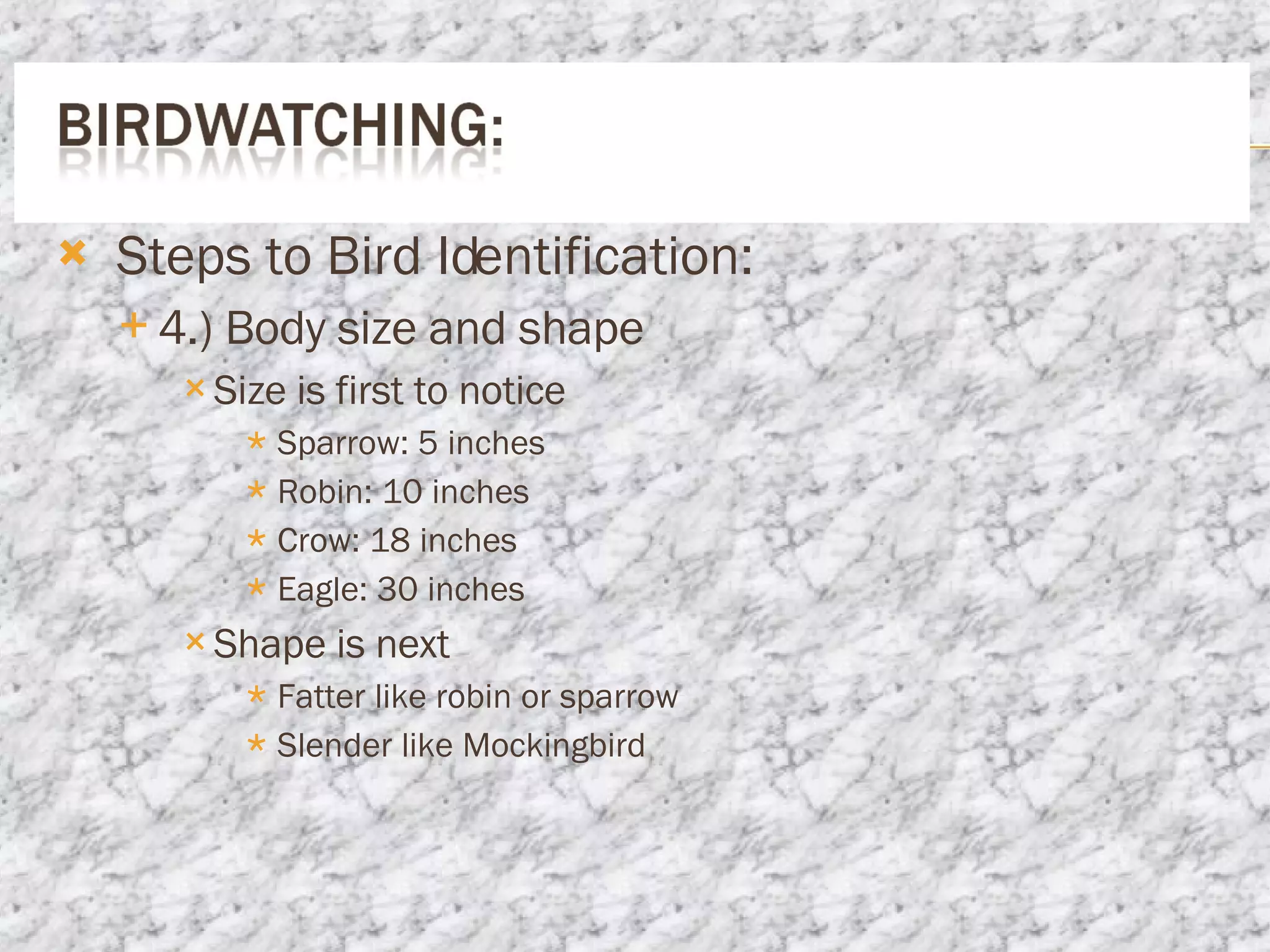
Steps to Bird Identification: 4.) Body size and shape Size is first to notice Sparrow: 5 inches Robin: 10 inches Crow: 18 inches Eagle: 30 inches Shape is next Fatter like robin or sparrow Slender like Mockingbird
Steps to Bird Identification: 5.) Bill Shapes Herbivores: plant eating Short stout beaks- seed eating Crossing points- remove seeds Long delicate beaks- nectar eating Serrated beaks- cutting fruit Carnivores: meat eating Pouched bill- scooping and holding prey Long, spearing beaks- get fish Long, probing beaks- get crestaceans Heavy bills- search for insects Hinged jaw- catch insects

8th Grade Chapter 6 Lesson 3

  • 1.
    Pgs. 238-237 ForStudent Use Only
  • 2.
    Ornithologist: Scientist whostudies birds Study birds when most active at dawn Need to be observant to study birds Binoculars Records
  • 3.
    Need to watchmany things: How the bird acts What the bird looks like Patters or colors Where and what does it feed on Need to be specific so others can identify bird
  • 4.
    Look for: CrownNape Mantle Back Rump Tail Coverts Tail feathers Flank Look for: Belly Breast Wing Covers Throat Ear coverts Chin Bill Forehead
  • 5.
    Steps to BirdIdentification: 1.) Land or Water Bird Land Perching Ground Bird of Prey Water Wading Swimming
  • 6.
    Steps to BirdIdentification: 2.) Know habitats Look in forests, by ponds, and brushy substances
  • 7.
    Steps to BirdIdentification: 3.) Look at Nests Different birds make different nests, look on the: Land: Trees Ground Shrubery Shore: Scrapes (scooped out ground) Floating platforms Birds use instincts to make nests
  • 8.
    Steps to BirdIdentification: 4.) Body size and shape Size is first to notice Sparrow: 5 inches Robin: 10 inches Crow: 18 inches Eagle: 30 inches Shape is next Fatter like robin or sparrow Slender like Mockingbird
  • 9.
    Steps to BirdIdentification: 5.) Bill Shapes Herbivores: plant eating Short stout beaks- seed eating Crossing points- remove seeds Long delicate beaks- nectar eating Serrated beaks- cutting fruit Carnivores: meat eating Pouched bill- scooping and holding prey Long, spearing beaks- get fish Long, probing beaks- get crestaceans Heavy bills- search for insects Hinged jaw- catch insects