Derived Data Types
What you’ll learn:
o What are derived data types
o Structures
o Unions
o Enumerations
What are Derived Data types ?
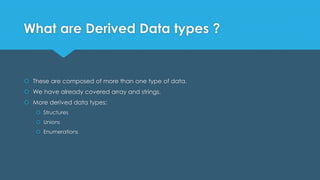
 These are composed of more than one type of data.
 We have already covered array and strings.
 More derived data types:
 Structures
 Unions
 Enumerations
Structure
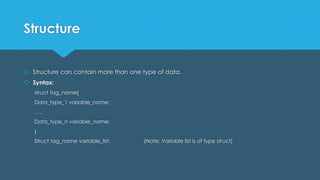
 Structure can contain more than one type of data.
 Syntax:
struct tag_name{
Data_type_1 variable_name;
…..
Data_type_n variable_name;
}
Struct tag_name variable_list; (Note: Variable list is of type struct)
Union
 Special data type that enables us to store different types of data in the same memory
location, i.e. memory is shared between these variables.
 Only one member occupies memory at a given time.
 Efficient way of using same memory location.
 Prevents memory fragmentation.
Enumeration
 Consists of a set of named integer constants.
 Syntax:
enum tag_name{
……enum-list------
}

8.derived data types

  • 1.
    Derived Data Types Whatyou’ll learn: o What are derived data types o Structures o Unions o Enumerations
  • 2.
    What are DerivedData types ?  These are composed of more than one type of data.  We have already covered array and strings.  More derived data types:  Structures  Unions  Enumerations
  • 3.
    Structure  Structure cancontain more than one type of data.  Syntax: struct tag_name{ Data_type_1 variable_name; ….. Data_type_n variable_name; } Struct tag_name variable_list; (Note: Variable list is of type struct)
  • 4.
    Union  Special datatype that enables us to store different types of data in the same memory location, i.e. memory is shared between these variables.  Only one member occupies memory at a given time.  Efficient way of using same memory location.  Prevents memory fragmentation.
  • 5.
    Enumeration  Consists ofa set of named integer constants.  Syntax: enum tag_name{ ……enum-list------ }