8 PHYSICAL REGIONS
PROJECT

By: Beau Smith
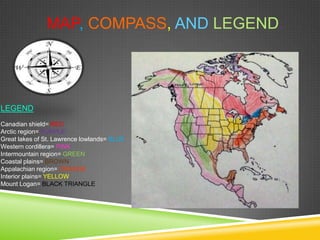
MAP, COMPASS, AND LEGEND.

LEGEND
Canadian shield= RED
Arctic region= PURPLE
Great lakes of St. Lawrence lowlands= BLUE
Western cordillera= PINK
Intermountain region= GREEN
Coastal plains= BROWN
Appalachian region= ORANGE
Interior plains= YELLOW
Mount Logan= BLACK TRIANGLE
CANADIAN SHIELD

 Topography: Barren rock surfaces, retreated glaciers, trees, rivers

flowing, rivers flowing into James bay and Hudson's bay, swamps, rivers,
muskegs, lakes.
 Climate: Weather varies, seasonal climate in southern region, cold

winters and long days in northern region.
 Vegetation: Covered by boreal forests, smaller trees, don’t grow north of

tree line because not a lot of precipitation and no permafrost.
 Economic activity: Storehouse for valuable minerals, metal mining,

mining, transportation, lumber.
 Environmental concerns: Lumber resources, extraction and use of

minerals and metal.
ARCTIC REGION
 Topography: flat, mountains covered by glaciers, mountains far north








formed by folding.
Climate: being farther away from equator makes it have colder weather,
winters are 10 months, desert because it has no precipitation, climate is
severe.
Vegetation: trees have trouble growing because the weather is too cold,
small plants cling to ground for warmth, not a lot of life forms, small plants
dominate
Environmental activity: extraction of mineral resources, commercial
fishing, hunting, natural gas an oil distributed all over the world.
Environmental concerns: climate change, chemicals in the wind an ocean
current, not a lot of organisms that people can eat.
GREAT LAKES OF ST. LAWRENCE
LOWLANDS
 Topography: hills and deep river valleys, flat plains, rivers, rolling

landscape caused by glaciation.
 Climate: continental climate, humid, lakes are warm in winter by

storing heat, cooler temperature in the lakes during summer.
 Vegetation: very fertile soil, mixed forest, soil and climate allow

trees to grow, lots of trees.
 Economic activity: farming, fishing, dairy farming, transportation,

mining, fertile soil
 Environmental concerns: pollution, cargo ship channels, low water

level, water withdraws.
WESTERN CORDILLERA
 Topography: west rivers flow through to the pacific ocean, new

mountains, high mountains, all rivers flow east.
 Climate: parts of region are the wettest on earth, rain shadows,

influenced by a closeness of a body of water, moderated by the
water from pacific ocean.
 Vegetation: changes between the sides of mountains, one side

moist with trees, other side is dry and grows cactus trees and
grasses, not a lot of precipitation on the dryer side.
 Economic activity: fishing, lumber, mining, hunting, farming,

transportation, mountains supply natural gasses.
 Environmental concerns: acid rain, water pollution.
INTERMOUNTAIN REGION
 Topography: streams, cattle ranching, rivers, irrigation,

plateaus, all water flows into brackish lakes.
 Climate: southern parts have short winters and little
rain, northern parts have little rain but climate is more
moderate with moist winters and not so dry summers.
 Vegetation: higher elevations are covered in pine
forest, sparse grassland, plants that survive in deserts
live here.
 Economic activity: lumber, forestation, agriculture.
 Environmental concerns: pollution.
COASTAL PLAINS

 Topography: 200 meters above sea level, aquatic life forms, flat or

gentle rolling land, fertile agriculture land, swamps and marshes,
long rivers.
 Climate: varies, tropical climate, cold snowy winters, hot and

humid summers, prone to hurricanes.
 Vegetation: soils are very sandy, original vegetation's were pine

forests, lush jungles are developed.
 Economic activity: fertile land for farming, fishing in rivers, rivers

provide, transportation.
 Environmental concerns: erosion, tsunami, hurricanes, pollution.
APPALACHIAN REGION

 Topography: many different mountain ranges, oil, coal

and gas, found in sedimentary rock, river, valleys, hills
formed many years ago.
 Climate: affected by 2 ocean climates, both sun and
rain equally, varieties of fish, breeding ground for fish.
 Economic activity: coal, gas, oil, breeding ground for
fish, farming, transportation.
 Environmental concern: coal mining, groundwater,
landfills.
INTERIOR PLAINS
 Topography: gently rolling land, higher in elevation, interior plains

go to arctic ocean.
 Climate: long hot summers, cool winters, continental climate,

climate of extremes, the more north you go the colder it gets.
 Vegetation: covered with deciduous trees, tall grass, became

grassland because the trees only grew in the valleys, boreal
forest grew.
 Economic activity: wheat farming, farming.
 Environmental concerns: landfills, pollution, tornadoes, farm

pollutants.
MY 8 PHYSICAL REGIONS PROJECT

8 physical regions project beau smith

  • 1.
  • 2.
    MAP, COMPASS, ANDLEGEND. LEGEND Canadian shield= RED Arctic region= PURPLE Great lakes of St. Lawrence lowlands= BLUE Western cordillera= PINK Intermountain region= GREEN Coastal plains= BROWN Appalachian region= ORANGE Interior plains= YELLOW Mount Logan= BLACK TRIANGLE
  • 3.
    CANADIAN SHIELD  Topography:Barren rock surfaces, retreated glaciers, trees, rivers flowing, rivers flowing into James bay and Hudson's bay, swamps, rivers, muskegs, lakes.  Climate: Weather varies, seasonal climate in southern region, cold winters and long days in northern region.  Vegetation: Covered by boreal forests, smaller trees, don’t grow north of tree line because not a lot of precipitation and no permafrost.  Economic activity: Storehouse for valuable minerals, metal mining, mining, transportation, lumber.  Environmental concerns: Lumber resources, extraction and use of minerals and metal.
  • 4.
    ARCTIC REGION  Topography:flat, mountains covered by glaciers, mountains far north     formed by folding. Climate: being farther away from equator makes it have colder weather, winters are 10 months, desert because it has no precipitation, climate is severe. Vegetation: trees have trouble growing because the weather is too cold, small plants cling to ground for warmth, not a lot of life forms, small plants dominate Environmental activity: extraction of mineral resources, commercial fishing, hunting, natural gas an oil distributed all over the world. Environmental concerns: climate change, chemicals in the wind an ocean current, not a lot of organisms that people can eat.
  • 5.
    GREAT LAKES OFST. LAWRENCE LOWLANDS  Topography: hills and deep river valleys, flat plains, rivers, rolling landscape caused by glaciation.  Climate: continental climate, humid, lakes are warm in winter by storing heat, cooler temperature in the lakes during summer.  Vegetation: very fertile soil, mixed forest, soil and climate allow trees to grow, lots of trees.  Economic activity: farming, fishing, dairy farming, transportation, mining, fertile soil  Environmental concerns: pollution, cargo ship channels, low water level, water withdraws.
  • 6.
    WESTERN CORDILLERA  Topography:west rivers flow through to the pacific ocean, new mountains, high mountains, all rivers flow east.  Climate: parts of region are the wettest on earth, rain shadows, influenced by a closeness of a body of water, moderated by the water from pacific ocean.  Vegetation: changes between the sides of mountains, one side moist with trees, other side is dry and grows cactus trees and grasses, not a lot of precipitation on the dryer side.  Economic activity: fishing, lumber, mining, hunting, farming, transportation, mountains supply natural gasses.  Environmental concerns: acid rain, water pollution.
  • 7.
    INTERMOUNTAIN REGION  Topography:streams, cattle ranching, rivers, irrigation, plateaus, all water flows into brackish lakes.  Climate: southern parts have short winters and little rain, northern parts have little rain but climate is more moderate with moist winters and not so dry summers.  Vegetation: higher elevations are covered in pine forest, sparse grassland, plants that survive in deserts live here.  Economic activity: lumber, forestation, agriculture.  Environmental concerns: pollution.
  • 8.
    COASTAL PLAINS  Topography:200 meters above sea level, aquatic life forms, flat or gentle rolling land, fertile agriculture land, swamps and marshes, long rivers.  Climate: varies, tropical climate, cold snowy winters, hot and humid summers, prone to hurricanes.  Vegetation: soils are very sandy, original vegetation's were pine forests, lush jungles are developed.  Economic activity: fertile land for farming, fishing in rivers, rivers provide, transportation.  Environmental concerns: erosion, tsunami, hurricanes, pollution.
  • 9.
    APPALACHIAN REGION  Topography:many different mountain ranges, oil, coal and gas, found in sedimentary rock, river, valleys, hills formed many years ago.  Climate: affected by 2 ocean climates, both sun and rain equally, varieties of fish, breeding ground for fish.  Economic activity: coal, gas, oil, breeding ground for fish, farming, transportation.  Environmental concern: coal mining, groundwater, landfills.
  • 10.
    INTERIOR PLAINS  Topography:gently rolling land, higher in elevation, interior plains go to arctic ocean.  Climate: long hot summers, cool winters, continental climate, climate of extremes, the more north you go the colder it gets.  Vegetation: covered with deciduous trees, tall grass, became grassland because the trees only grew in the valleys, boreal forest grew.  Economic activity: wheat farming, farming.  Environmental concerns: landfills, pollution, tornadoes, farm pollutants.
  • 11.
    MY 8 PHYSICALREGIONS PROJECT