Dry Bean Production Tips
Meghan Moran, OMAFRA Canola & Dry Bean Specialist
meghan.moran@ontario.ca 519-546-1725
Health Benefits of Dry Edible Beans
• Folate, B-vitamins, potassium, iron, protein
• Low in fat
• 2x the fiber of cereals
• Prevent blood glucose spike
• Help control diabetes
• Reduce risk of cardiovascular diseases
• Increase satiety (feeling full)
• Anti-cancer and anti-obesity factors under
investigation
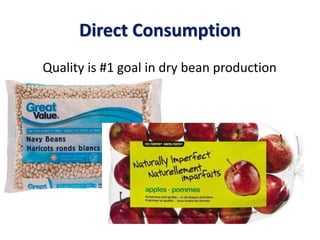
Direct Consumption
Quality is #1 goal in dry bean production
Global Product
Safety and acceptance in end use markets
• Bean varieties
• Maximum residue limits and GM presence
• Pesticide products
• 80-90% of Ontario beans are exported
• Global bean production 2010 = 23.2 million tonnes
• 7 dry bean dealers in Ontario
Making Money with Dry Beans
High quality, high yielding beans.
Follow the recipe.
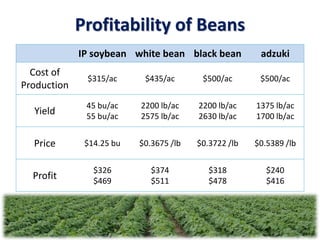
Profitability of Beans
IP soybean white bean black bean adzuki
Cost of
Production
$315/ac $435/ac $500/ac $500/ac
Yield
45 bu/ac
55 bu/ac
2200 lb/ac
2575 lb/ac
2200 lb/ac
2630 lb/ac
1375 lb/ac
1700 lb/ac
Price $14.25 bu $0.3675 /lb $0.3722 /lb $0.5389 /lb
Profit
$326
$469
$374
$511
$318
$478
$240
$416
Choosing to Grow Beans
Cost of Production indicates:
• Level of risk
• Level of work/ time in the field
• Must have the right field for beans
• Best if have your own sprayer
Field Selection
• Drainage
• Avoid clay
• Good soil structure, no compaction
• Previous crop/rotation – root disease and mould
• Herbicide history – see Guide to Weed Control
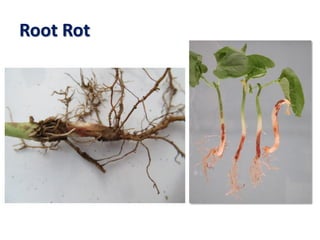
Root Rot
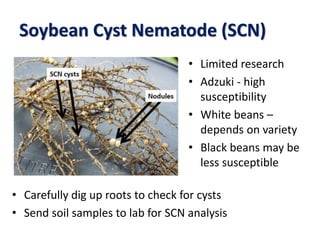
Soybean Cyst Nematode (SCN)
• Limited research
• Adzuki - high
susceptibility
• White beans –
depends on variety
• Black beans may be
less susceptible
• Carefully dig up roots to check for cysts
• Send soil samples to lab for SCN analysis
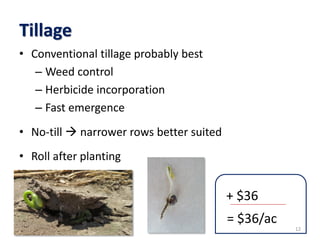
Tillage
• Conventional tillage probably best
– Weed control
– Herbicide incorporation
– Fast emergence
• No-till  narrower rows better suited
• Roll after planting
12
+ $36
= $36/ac
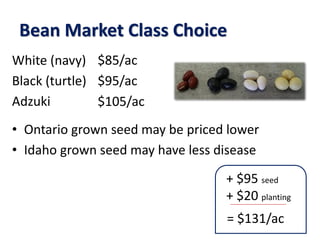
Bean Market Class Choice
White (navy)
Black (turtle)
Adzuki
• Ontario grown seed may be priced lower
• Idaho grown seed may have less disease
+ $95 seed
+ $20 planting
= $131/ac
$85/ac
$95/ac
$105/ac
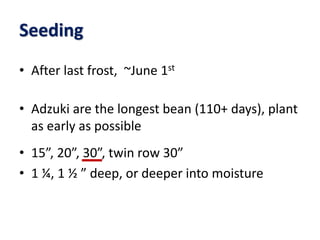
Seeding
• After last frost, ~June 1st
• Adzuki are the longest bean (110+ days), plant
as early as possible
• 15”, 20”, 30”, twin row 30”
• 1 ¼, 1 ½ ” deep, or deeper into moisture
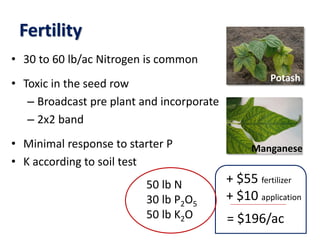
Fertility
• 30 to 60 lb/ac Nitrogen is common
• Toxic in the seed row
– Broadcast pre plant and incorporate
– 2x2 band
• Minimal response to starter P
• K according to soil test
+ $55 fertilizer
+ $10 application
= $196/ac
50 lb N
30 lb P2O5
50 lb K2O
Manganese
Potash
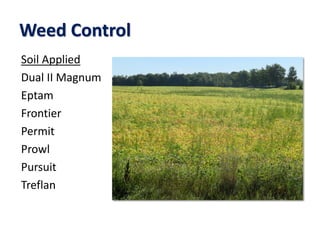
Weed Control
Soil Applied
Dual II Magnum
Eptam
Frontier
Permit
Prowl
Pursuit
Treflan
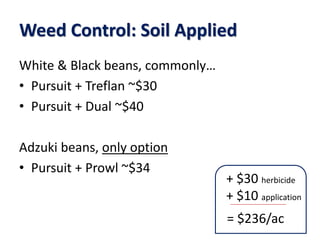
Weed Control: Soil Applied
White & Black beans, commonly…
• Pursuit + Treflan ~$30
• Pursuit + Dual ~$40
Adzuki beans, only option
• Pursuit + Prowl ~$34
+ $30 herbicide
+ $10 application
= $236/ac
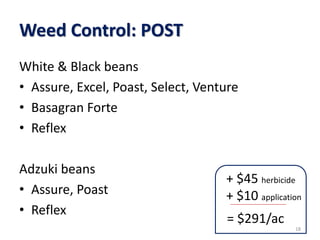
White & Black beans
• Assure, Excel, Poast, Select, Venture
• Basagran Forte
• Reflex
Adzuki beans
• Assure, Poast
• Reflex
Weed Control: POST
18
+ $45 herbicide
+ $10 application
= $291/ac
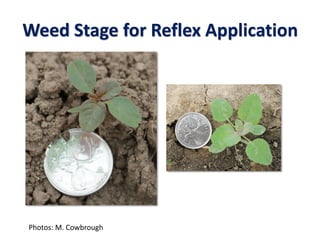
Weed Stage for Reflex Application
Photos: M. Cowbrough
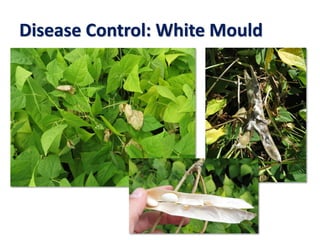
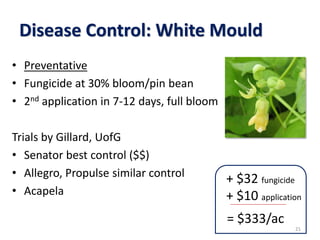
Disease Control: White Mould
• Preventative
• Fungicide at 30% bloom/pin bean
• 2nd application in 7-12 days, full bloom
Trials by Gillard, UofG
• Senator best control ($$)
• Allegro, Propulse similar control
• Acapela
2121
+ $32 fungicide
+ $10 application
= $333/ac
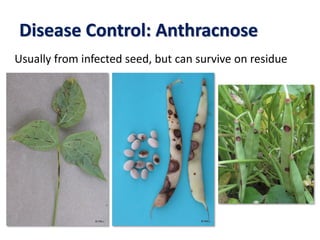
Disease Control: Anthracnose
Usually from infected seed, but can survive on residue
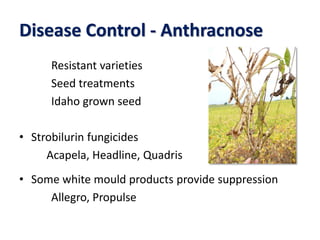
Disease Control - Anthracnose
Resistant varieties
Seed treatments
Idaho grown seed
• Strobilurin fungicides
Acapela, Headline, Quadris
• Some white mould products provide suppression
Allegro, Propulse
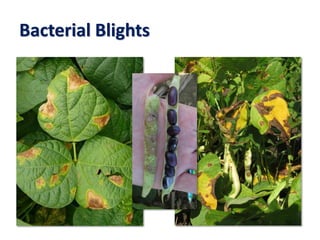
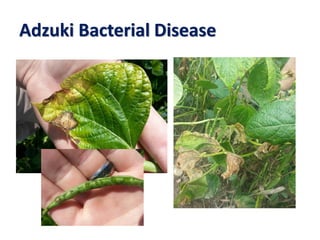
Bacterial Blights
Adzuki Bacterial Disease
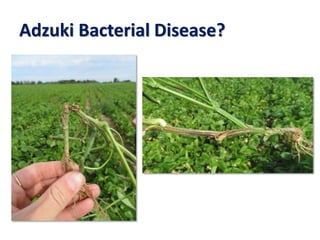
Adzuki Bacterial Disease?
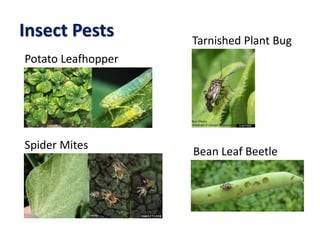
Insect Pests
Potato Leafhopper
Spider Mites
Tarnished Plant Bug
Bean Leaf Beetle
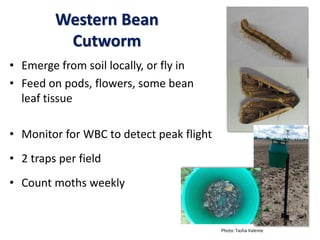
Western Bean
Cutworm
• Emerge from soil locally, or fly in
• Feed on pods, flowers, some bean
leaf tissue
• Monitor for WBC to detect peak flight
• 2 traps per field
• Count moths weekly
Photo: Tasha Valente
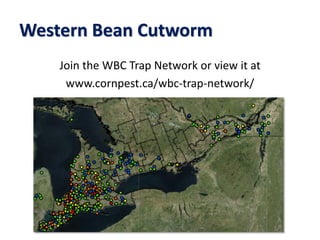
Western Bean Cutworm
Join the WBC Trap Network or view it at
www.cornpest.ca/wbc-trap-network/
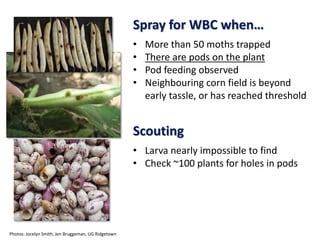
Photos: Jocelyn Smith, Jen Bruggeman, UG Ridgetown
Spray for WBC when…
• More than 50 moths trapped
• There are pods on the plant
• Pod feeding observed
• Neighbouring corn field is beyond
early tassle, or has reached threshold
Scouting
• Larva nearly impossible to find
• Check ~100 plants for holes in pods
WBC Control Products
• Control is effective if applied during early pod feeding
• Pod feeding should begin 10-20 days after peak flight
• Larvae in soil during day, feed on new pods each night
• Good pod coverage required
• Spray in evening
• Rotate chemistry
Registered for WBC:
Matador
Coragen
Voliam Xpress
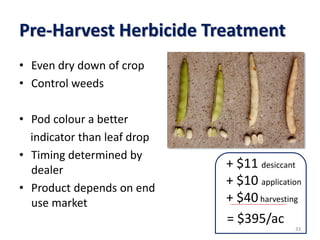
Pre-Harvest Herbicide Treatment
• Even dry down of crop
• Control weeds
• Pod colour a better
indicator than leaf drop
• Timing determined by
dealer
• Product depends on end
use market
333333
+ $11 desiccant
+ $10 application
+ $40harvesting
= $395/ac
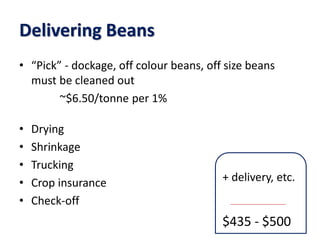
Delivering Beans
• “Pick” - dockage, off colour beans, off size beans
must be cleaned out
~$6.50/tonne per 1%
• Drying
• Shrinkage
• Trucking
• Crop insurance
• Check-off
$435 - $500
+ delivery, etc.
Summary – Setting Up for Success
1. Using your best field –drainage, soil health
2. Good rotations – soybeans & canola
contribute to disease issues
3. Prepare for lots of field activity
4. Focus on quality – don’t cut corners
Meghan Moran, OMAFRA Canola & Dry Bean Specialist
meghan.moran@ontario.ca 519-546-1725

8. Dry Bean Production! - Meghan Moran

  • 1.
    Dry Bean ProductionTips Meghan Moran, OMAFRA Canola & Dry Bean Specialist meghan.moran@ontario.ca 519-546-1725
  • 3.
    Health Benefits ofDry Edible Beans • Folate, B-vitamins, potassium, iron, protein • Low in fat • 2x the fiber of cereals • Prevent blood glucose spike • Help control diabetes • Reduce risk of cardiovascular diseases • Increase satiety (feeling full) • Anti-cancer and anti-obesity factors under investigation
  • 4.
    Direct Consumption Quality is#1 goal in dry bean production
  • 5.
    Global Product Safety andacceptance in end use markets • Bean varieties • Maximum residue limits and GM presence • Pesticide products • 80-90% of Ontario beans are exported • Global bean production 2010 = 23.2 million tonnes • 7 dry bean dealers in Ontario
  • 6.
    Making Money withDry Beans High quality, high yielding beans. Follow the recipe.
  • 7.
    Profitability of Beans IPsoybean white bean black bean adzuki Cost of Production $315/ac $435/ac $500/ac $500/ac Yield 45 bu/ac 55 bu/ac 2200 lb/ac 2575 lb/ac 2200 lb/ac 2630 lb/ac 1375 lb/ac 1700 lb/ac Price $14.25 bu $0.3675 /lb $0.3722 /lb $0.5389 /lb Profit $326 $469 $374 $511 $318 $478 $240 $416
  • 8.
    Choosing to GrowBeans Cost of Production indicates: • Level of risk • Level of work/ time in the field • Must have the right field for beans • Best if have your own sprayer
  • 9.
    Field Selection • Drainage •Avoid clay • Good soil structure, no compaction • Previous crop/rotation – root disease and mould • Herbicide history – see Guide to Weed Control
  • 10.
  • 11.
    Soybean Cyst Nematode(SCN) • Limited research • Adzuki - high susceptibility • White beans – depends on variety • Black beans may be less susceptible • Carefully dig up roots to check for cysts • Send soil samples to lab for SCN analysis
  • 12.
    Tillage • Conventional tillageprobably best – Weed control – Herbicide incorporation – Fast emergence • No-till  narrower rows better suited • Roll after planting 12 + $36 = $36/ac
  • 13.
    Bean Market ClassChoice White (navy) Black (turtle) Adzuki • Ontario grown seed may be priced lower • Idaho grown seed may have less disease + $95 seed + $20 planting = $131/ac $85/ac $95/ac $105/ac
  • 14.
    Seeding • After lastfrost, ~June 1st • Adzuki are the longest bean (110+ days), plant as early as possible • 15”, 20”, 30”, twin row 30” • 1 ¼, 1 ½ ” deep, or deeper into moisture
  • 15.
    Fertility • 30 to60 lb/ac Nitrogen is common • Toxic in the seed row – Broadcast pre plant and incorporate – 2x2 band • Minimal response to starter P • K according to soil test + $55 fertilizer + $10 application = $196/ac 50 lb N 30 lb P2O5 50 lb K2O Manganese Potash
  • 16.
    Weed Control Soil Applied DualII Magnum Eptam Frontier Permit Prowl Pursuit Treflan
  • 17.
    Weed Control: SoilApplied White & Black beans, commonly… • Pursuit + Treflan ~$30 • Pursuit + Dual ~$40 Adzuki beans, only option • Pursuit + Prowl ~$34 + $30 herbicide + $10 application = $236/ac
  • 18.
    White & Blackbeans • Assure, Excel, Poast, Select, Venture • Basagran Forte • Reflex Adzuki beans • Assure, Poast • Reflex Weed Control: POST 18 + $45 herbicide + $10 application = $291/ac
  • 19.
    Weed Stage forReflex Application Photos: M. Cowbrough
  • 20.
  • 21.
    Disease Control: WhiteMould • Preventative • Fungicide at 30% bloom/pin bean • 2nd application in 7-12 days, full bloom Trials by Gillard, UofG • Senator best control ($$) • Allegro, Propulse similar control • Acapela 2121 + $32 fungicide + $10 application = $333/ac
  • 22.
    Disease Control: Anthracnose Usuallyfrom infected seed, but can survive on residue
  • 23.
    Disease Control -Anthracnose Resistant varieties Seed treatments Idaho grown seed • Strobilurin fungicides Acapela, Headline, Quadris • Some white mould products provide suppression Allegro, Propulse
  • 24.
  • 25.
  • 26.
  • 27.
    Insect Pests Potato Leafhopper SpiderMites Tarnished Plant Bug Bean Leaf Beetle
  • 28.
    Western Bean Cutworm • Emergefrom soil locally, or fly in • Feed on pods, flowers, some bean leaf tissue • Monitor for WBC to detect peak flight • 2 traps per field • Count moths weekly Photo: Tasha Valente
  • 29.
    Western Bean Cutworm Jointhe WBC Trap Network or view it at www.cornpest.ca/wbc-trap-network/
  • 30.
    Photos: Jocelyn Smith,Jen Bruggeman, UG Ridgetown Spray for WBC when… • More than 50 moths trapped • There are pods on the plant • Pod feeding observed • Neighbouring corn field is beyond early tassle, or has reached threshold Scouting • Larva nearly impossible to find • Check ~100 plants for holes in pods
  • 31.
    WBC Control Products •Control is effective if applied during early pod feeding • Pod feeding should begin 10-20 days after peak flight • Larvae in soil during day, feed on new pods each night • Good pod coverage required • Spray in evening • Rotate chemistry Registered for WBC: Matador Coragen Voliam Xpress
  • 33.
    Pre-Harvest Herbicide Treatment •Even dry down of crop • Control weeds • Pod colour a better indicator than leaf drop • Timing determined by dealer • Product depends on end use market 333333 + $11 desiccant + $10 application + $40harvesting = $395/ac
  • 34.
    Delivering Beans • “Pick”- dockage, off colour beans, off size beans must be cleaned out ~$6.50/tonne per 1% • Drying • Shrinkage • Trucking • Crop insurance • Check-off $435 - $500 + delivery, etc.
  • 35.
    Summary – SettingUp for Success 1. Using your best field –drainage, soil health 2. Good rotations – soybeans & canola contribute to disease issues 3. Prepare for lots of field activity 4. Focus on quality – don’t cut corners
  • 36.
    Meghan Moran, OMAFRACanola & Dry Bean Specialist meghan.moran@ontario.ca 519-546-1725