BCA 5th SEM 
DEEPAK SHARMA 
12KSSB6031
 Errors are the wrong that can make a program go wrong. It is 
therefore important to detect and manage properly all the possible 
error condition in the program so that the program will not 
terminate or crash during execution. There are 2 types of Errors. 
Namely, 
 Compile-time errors 
 Run-time errors 
 Compile-time errors:- All syntax errors will be detected and 
displayed by the java compiler and therefore these errors are 
known as compile time errors 
 Run-time errors :- Run time errors are type of errors which are 
occurred by dividing an integer by zero, trying to cast an instance 
of a class to one of its sub class.
 Error occurred in execution time. 
 Abnormal termination of program. 
 Wrong execution result. 
 Provide an exception handling mechanism in 
language system. 
 Improve the reliability of application program. 
 Allow simple program code for exception check 
and handling into source.
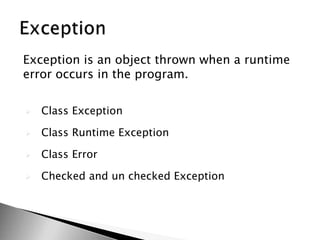
Exception is an object thrown when a runtime 
error occurs in the program. 
 Class Exception 
 Class Runtime Exception 
 Class Error 
 Checked and un checked Exception
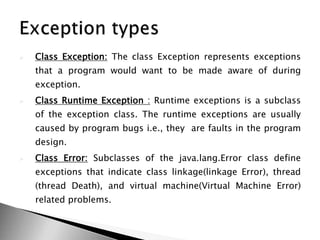
 Class Exception: The class Exception represents exceptions 
that a program would want to be made aware of during 
exception. 
 Class Runtime Exception : Runtime exceptions is a subclass 
of the exception class. The runtime exceptions are usually 
caused by program bugs i.e., they are faults in the program 
design. 
 Class Error: Subclasses of the java.lang.Error class define 
exceptions that indicate class linkage(linkage Error), thread 
(thread Death), and virtual machine(Virtual Machine Error) 
related problems.
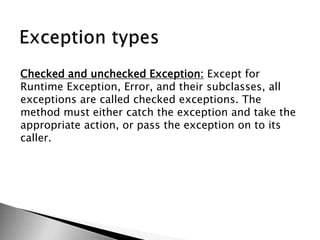
Checked and unchecked Exception: Except for 
Runtime Exception, Error, and their subclasses, all 
exceptions are called checked exceptions. The 
method must either catch the exception and take the 
appropriate action, or pass the exception on to its 
caller.
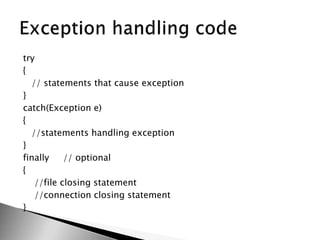
try 
{ 
// statements that cause exception 
} 
catch(Exception e) 
{ 
//statements handling exception 
} 
finally // optional 
{ 
//file closing statement 
//connection closing statement 
}
public static void main(String str[]) 
{ 
int y=0; 
int x=1; 
//a division by 0 occurs here. 
int z=x/y; 
System.out.println(“ After division”); 
}
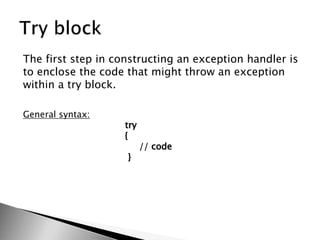
The first step in constructing an exception handler is 
to enclose the code that might throw an exception 
within a try block. 
General syntax:
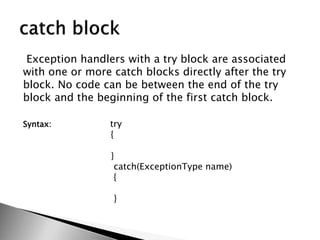
Exception handlers with a try block are associated 
with one or more catch blocks directly after the try 
block. No code can be between the end of the try 
block and the beginning of the first catch block. 
Syntax: try 
{ 
} 
catch(ExceptionType name) 
{ 
}
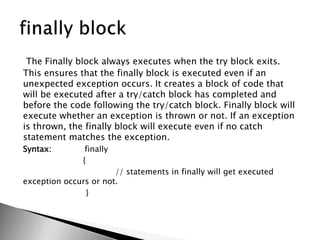
The Finally block always executes when the try block exits. 
This ensures that the finally block is executed even if an 
unexpected exception occurs. It creates a block of code that 
will be executed after a try/catch block has completed and 
before the code following the try/catch block. Finally block will 
execute whether an exception is thrown or not. If an exception 
is thrown, the finally block will execute even if no catch 
statement matches the exception. 
Syntax: finally 
{ 
// statements in finally will get executed 
exception occurs or not. 
}
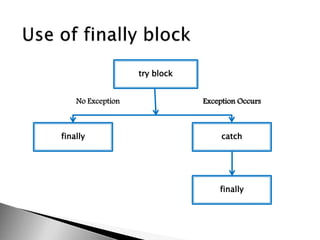
try block 
No Exception Exception Occurs 
finally catch 
finally
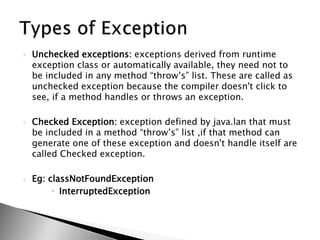
 Unchecked exceptions: exceptions derived from runtime 
exception class or automatically available, they need not to 
be included in any method “throw’s” list. These are called as 
unchecked exception because the compiler doesn't click to 
see, if a method handles or throws an exception. 
 Checked Exception: exception defined by java.lan that must 
be included in a method “throw’s” list ,if that method can 
generate one of these exception and doesn't handle itself are 
called Checked exception. 
 Eg: classNotFoundException 
 InterruptedException
THANK YOU

7.error management and exception handling

  • 1.
    BCA 5th SEM DEEPAK SHARMA 12KSSB6031
  • 2.
     Errors arethe wrong that can make a program go wrong. It is therefore important to detect and manage properly all the possible error condition in the program so that the program will not terminate or crash during execution. There are 2 types of Errors. Namely,  Compile-time errors  Run-time errors  Compile-time errors:- All syntax errors will be detected and displayed by the java compiler and therefore these errors are known as compile time errors  Run-time errors :- Run time errors are type of errors which are occurred by dividing an integer by zero, trying to cast an instance of a class to one of its sub class.
  • 3.
     Error occurredin execution time.  Abnormal termination of program.  Wrong execution result.  Provide an exception handling mechanism in language system.  Improve the reliability of application program.  Allow simple program code for exception check and handling into source.
  • 4.
    Exception is anobject thrown when a runtime error occurs in the program.  Class Exception  Class Runtime Exception  Class Error  Checked and un checked Exception
  • 5.
     Class Exception:The class Exception represents exceptions that a program would want to be made aware of during exception.  Class Runtime Exception : Runtime exceptions is a subclass of the exception class. The runtime exceptions are usually caused by program bugs i.e., they are faults in the program design.  Class Error: Subclasses of the java.lang.Error class define exceptions that indicate class linkage(linkage Error), thread (thread Death), and virtual machine(Virtual Machine Error) related problems.
  • 6.
    Checked and uncheckedException: Except for Runtime Exception, Error, and their subclasses, all exceptions are called checked exceptions. The method must either catch the exception and take the appropriate action, or pass the exception on to its caller.
  • 7.
    try { //statements that cause exception } catch(Exception e) { //statements handling exception } finally // optional { //file closing statement //connection closing statement }
  • 8.
    public static voidmain(String str[]) { int y=0; int x=1; //a division by 0 occurs here. int z=x/y; System.out.println(“ After division”); }
  • 9.
    The first stepin constructing an exception handler is to enclose the code that might throw an exception within a try block. General syntax:
  • 10.
    Exception handlers witha try block are associated with one or more catch blocks directly after the try block. No code can be between the end of the try block and the beginning of the first catch block. Syntax: try { } catch(ExceptionType name) { }
  • 11.
    The Finally blockalways executes when the try block exits. This ensures that the finally block is executed even if an unexpected exception occurs. It creates a block of code that will be executed after a try/catch block has completed and before the code following the try/catch block. Finally block will execute whether an exception is thrown or not. If an exception is thrown, the finally block will execute even if no catch statement matches the exception. Syntax: finally { // statements in finally will get executed exception occurs or not. }
  • 12.
    try block NoException Exception Occurs finally catch finally
  • 13.
     Unchecked exceptions:exceptions derived from runtime exception class or automatically available, they need not to be included in any method “throw’s” list. These are called as unchecked exception because the compiler doesn't click to see, if a method handles or throws an exception.  Checked Exception: exception defined by java.lan that must be included in a method “throw’s” list ,if that method can generate one of these exception and doesn't handle itself are called Checked exception.  Eg: classNotFoundException  InterruptedException
  • 14.