UNIVERSITY OF FOOD INDUSTRY- HOCHIMINH CITY 
BIOLOGY 
1
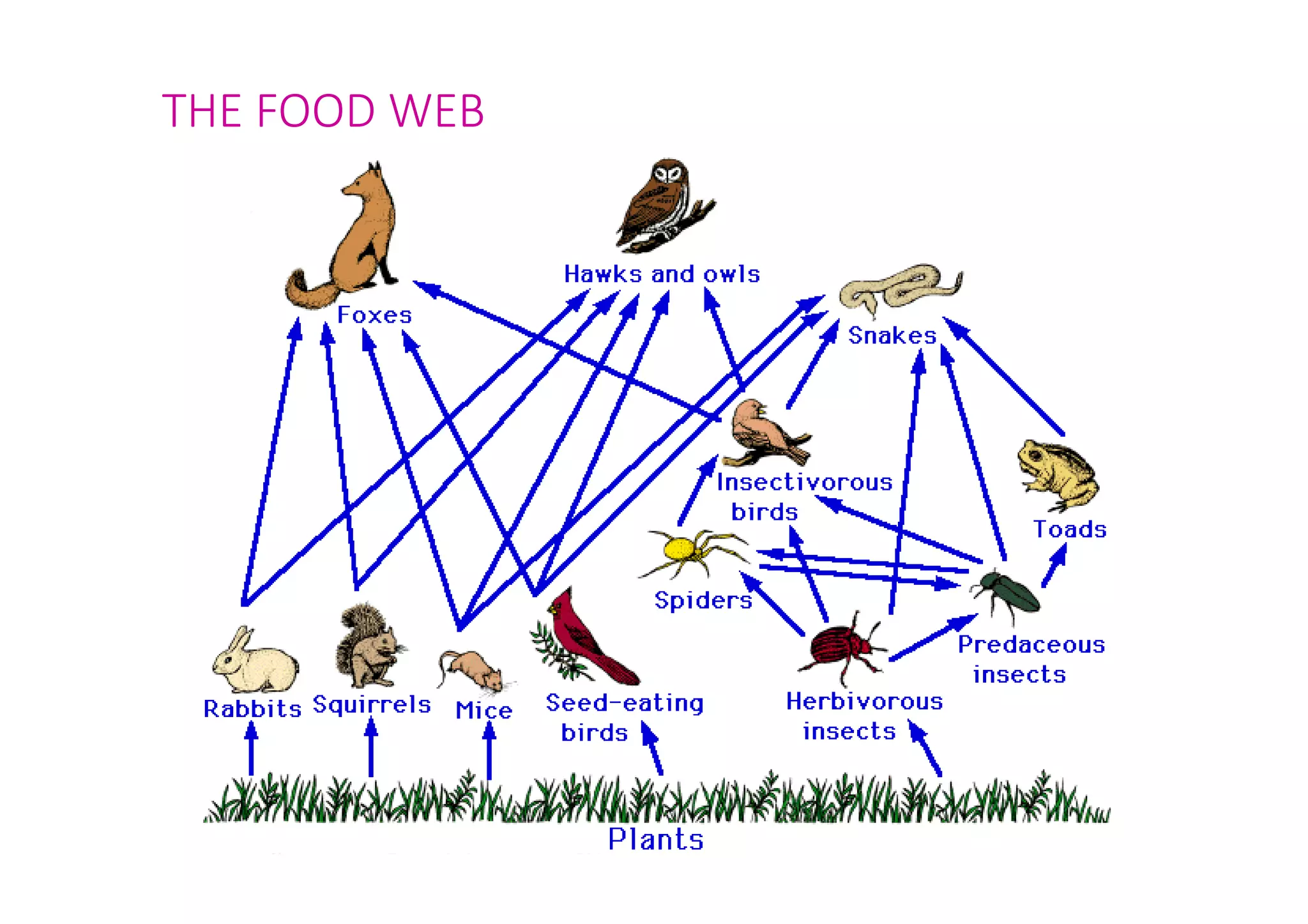
THE FOOD WEB
7.1 Photosynthesis and Life 
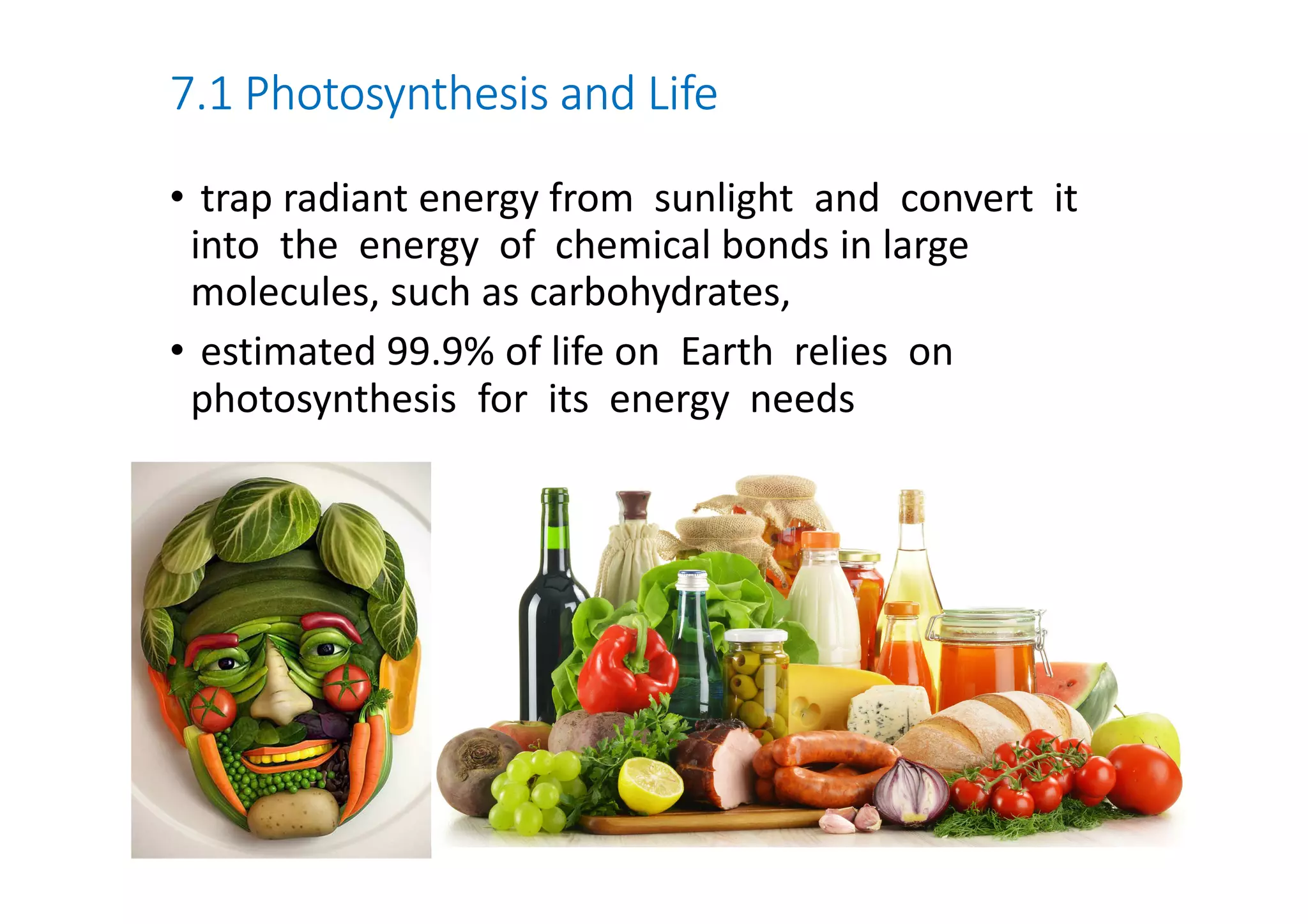
• trap radiant energy from sunlight and convert it 
into the energy of chemical bonds in large 
molecules, such as carbohydrates, 
• estimated 99.9% of life on Earth relies on 
photosynthesis for its energy needs
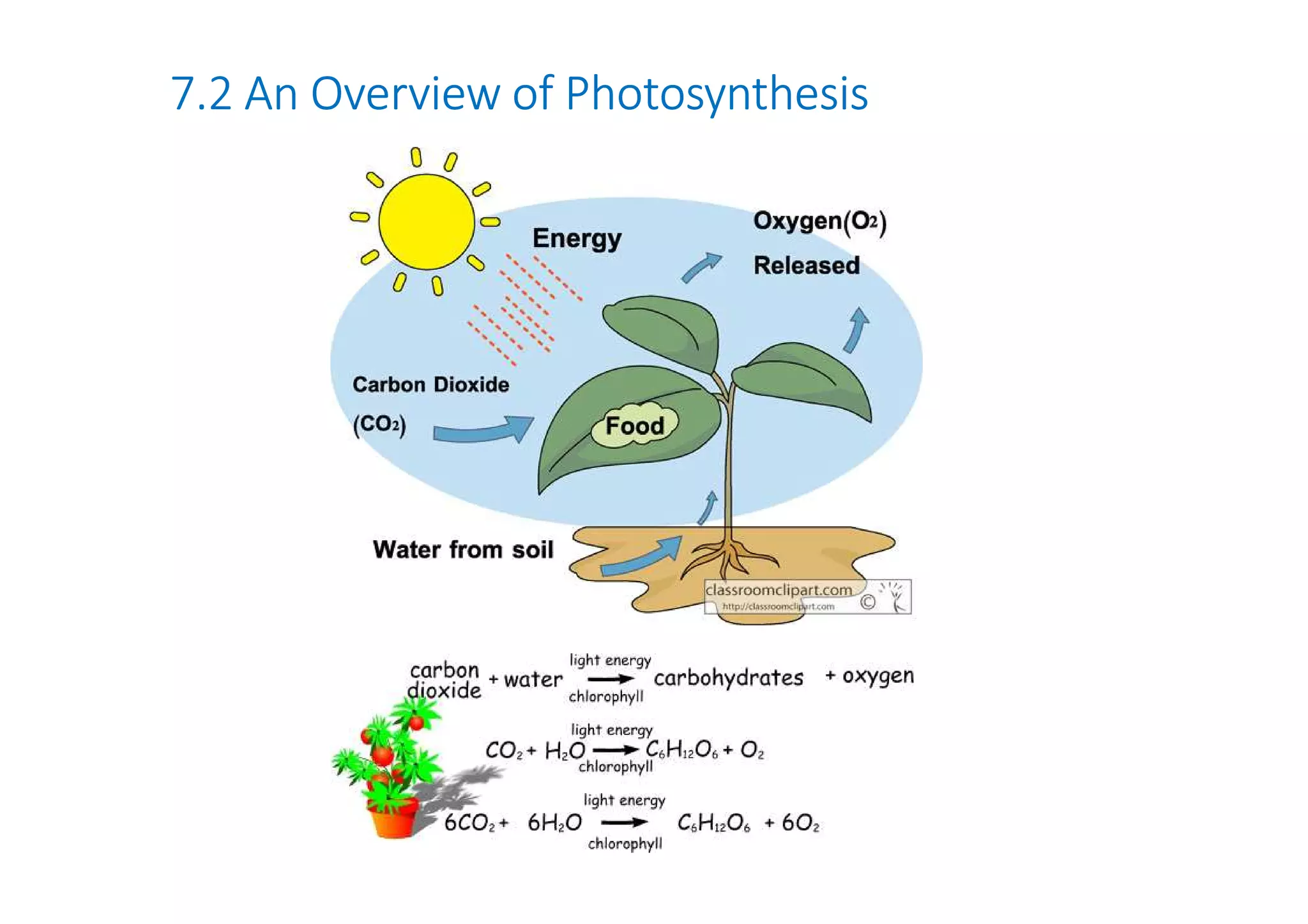
7.2 An Overview of Photosynthesis
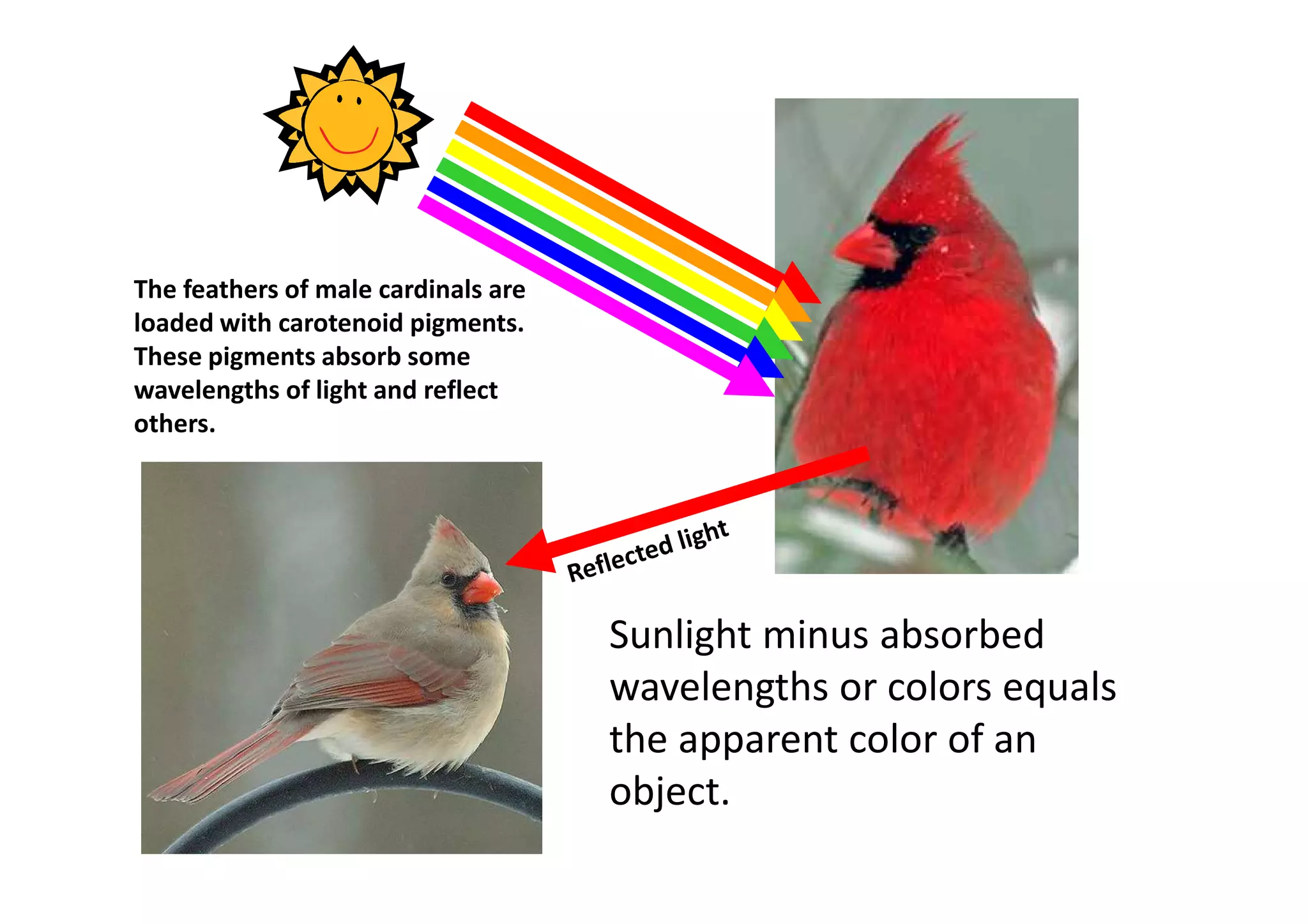
Sunlight minus absorbed 
wavelengths or colors equals 
the apparent color of an 
object. 
The feathers of male cardinals are 
loaded with carotenoid pigments. 
These pigments absorb some 
wavelengths of light and reflect 
others.
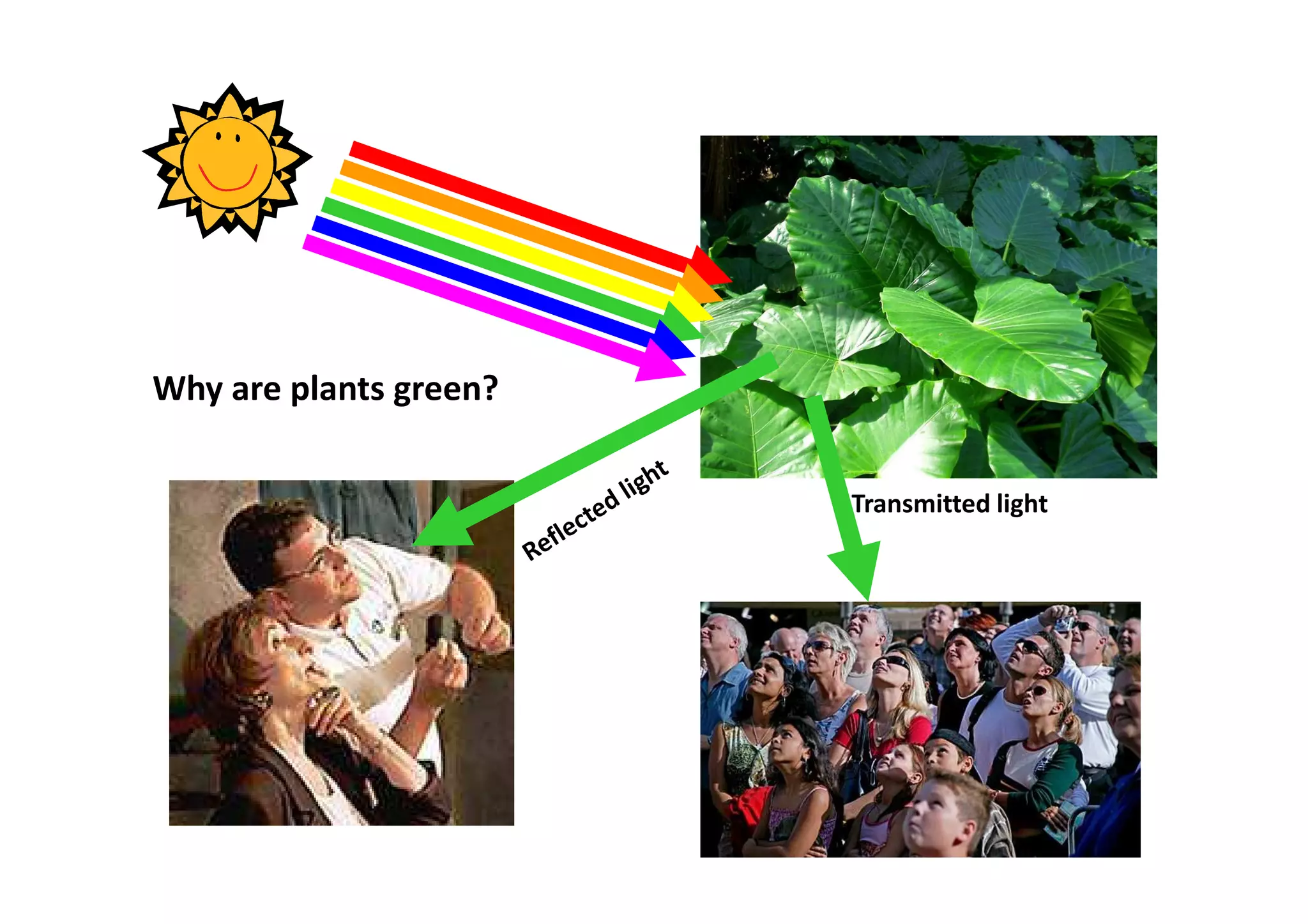
Why are plants green? 
Transmitted light
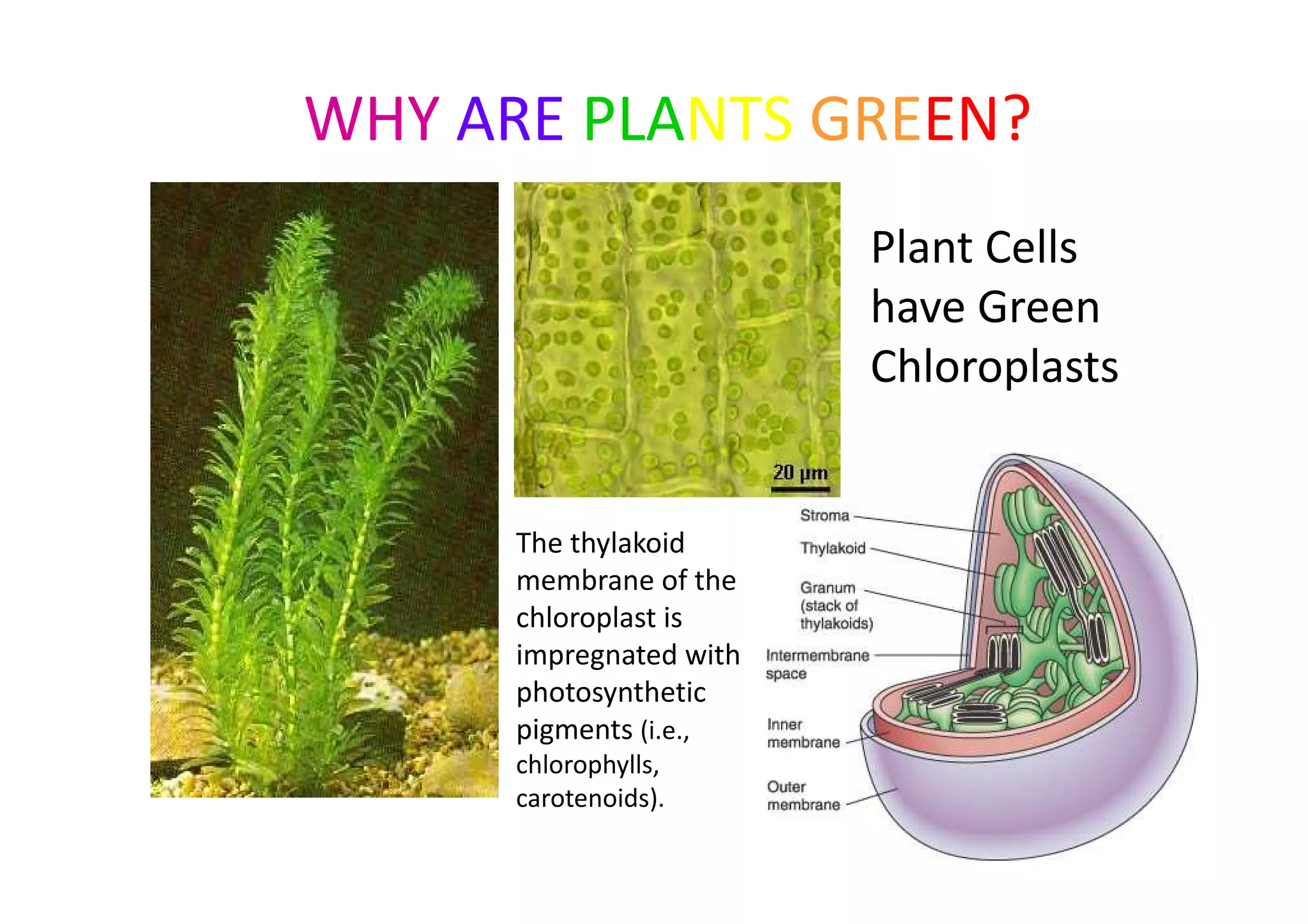
WHY ARE PLANTS GREEN? 
Plant Cells 
have Green 
Chloroplasts 
The thylakoid 
membrane of the 
chloroplast is 
impregnated with 
photosynthetic 
pigments (i.e., 
chlorophylls, 
carotenoids).
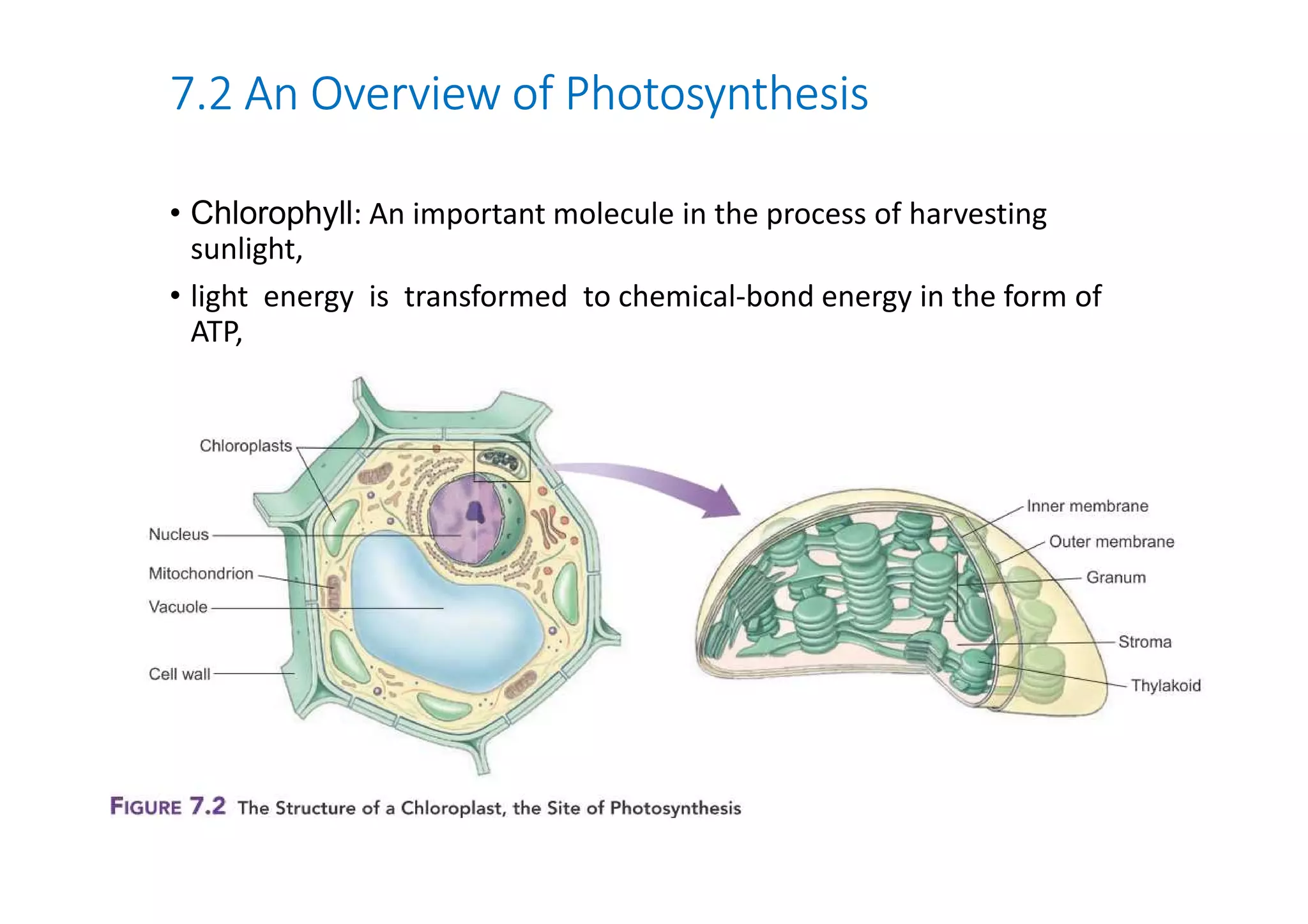
7.2 An Overview of Photosynthesis 
• Chlorophyll: An important molecule in the process of harvesting 
sunlight, 
• light energy is transformed to chemical-bond energy in the form of 
ATP,
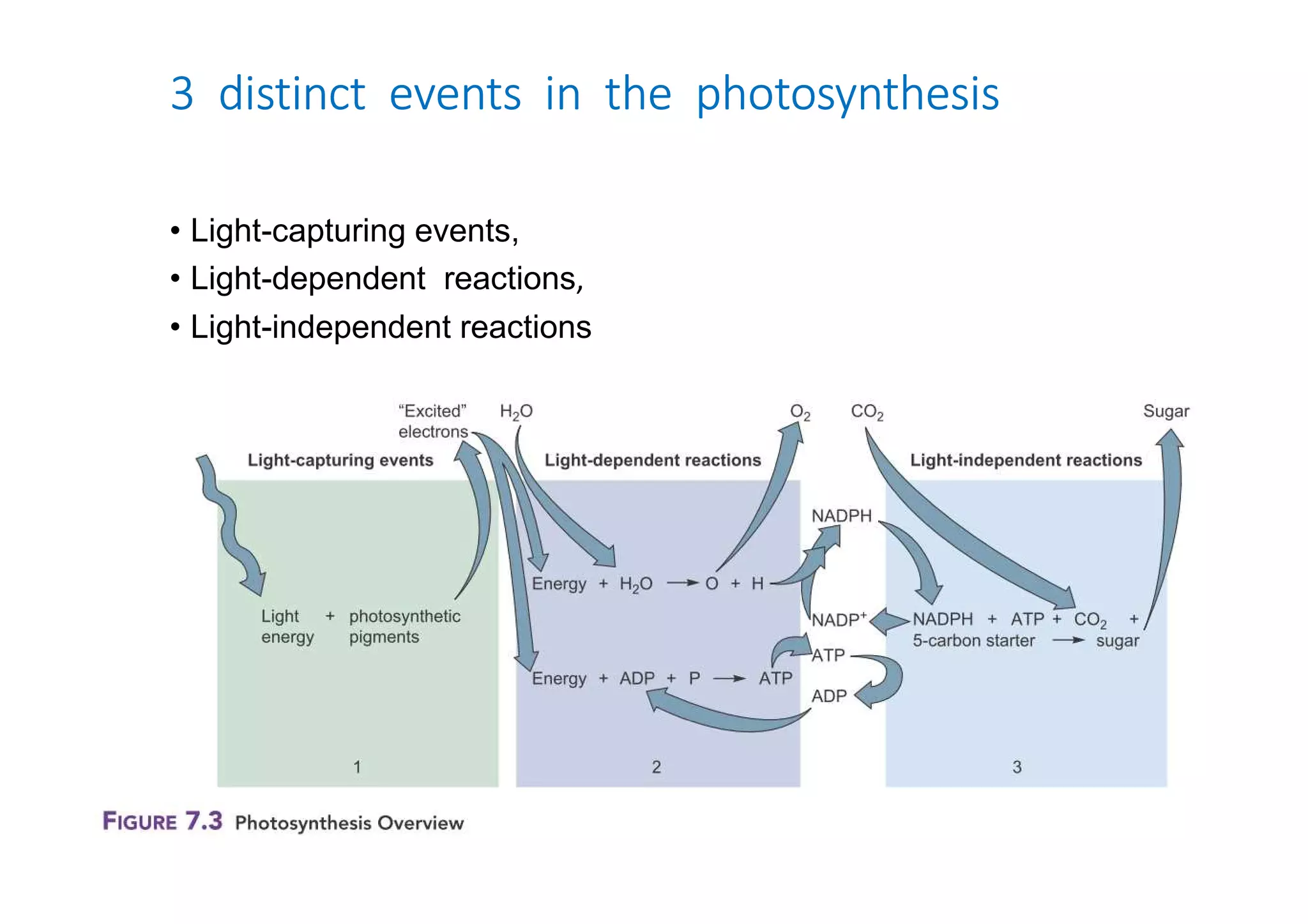
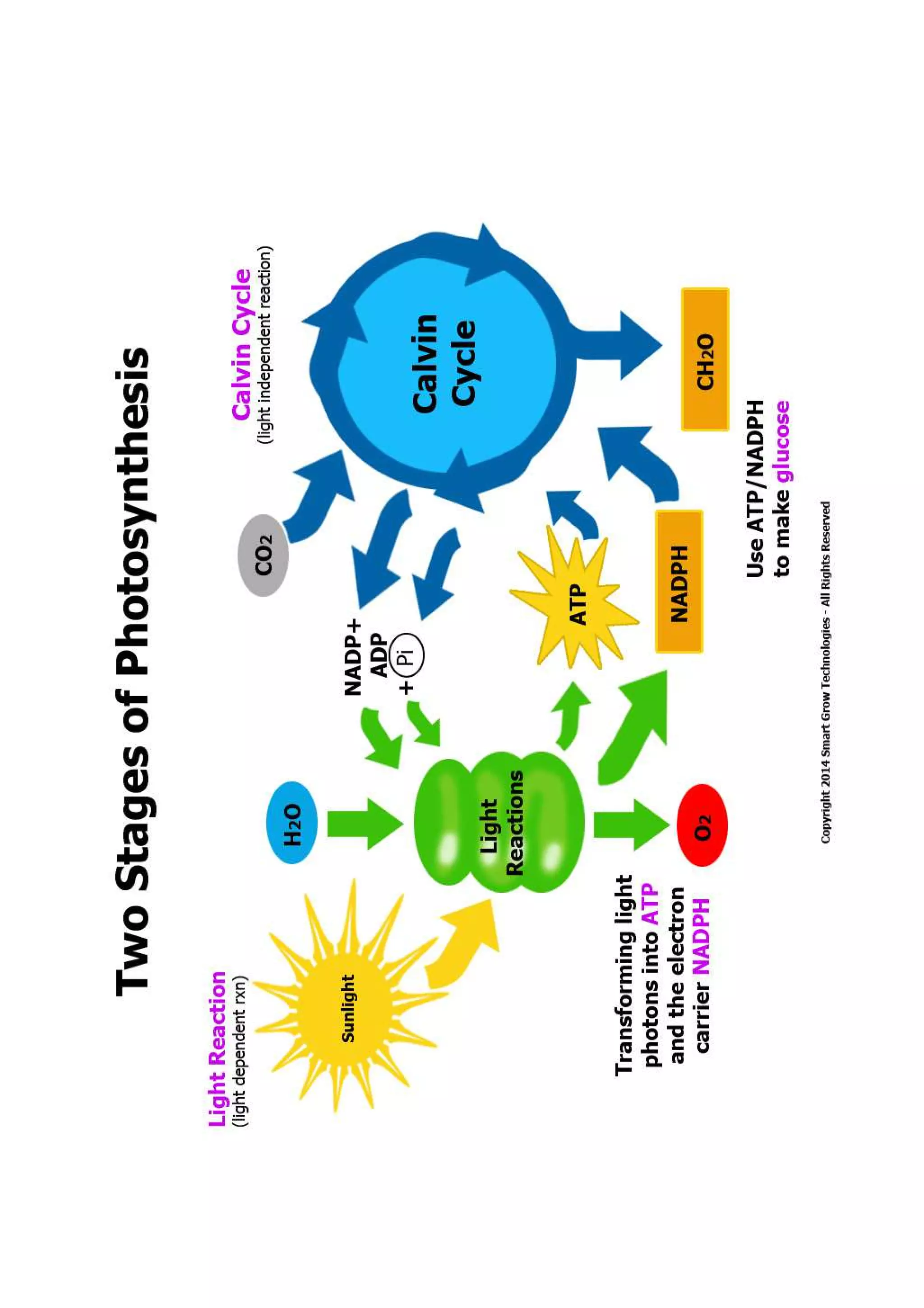
3 distinct events in the photosynthesis 
• Light-capturing events, 
• Light-dependent reactions, 
• Light-independent reactions
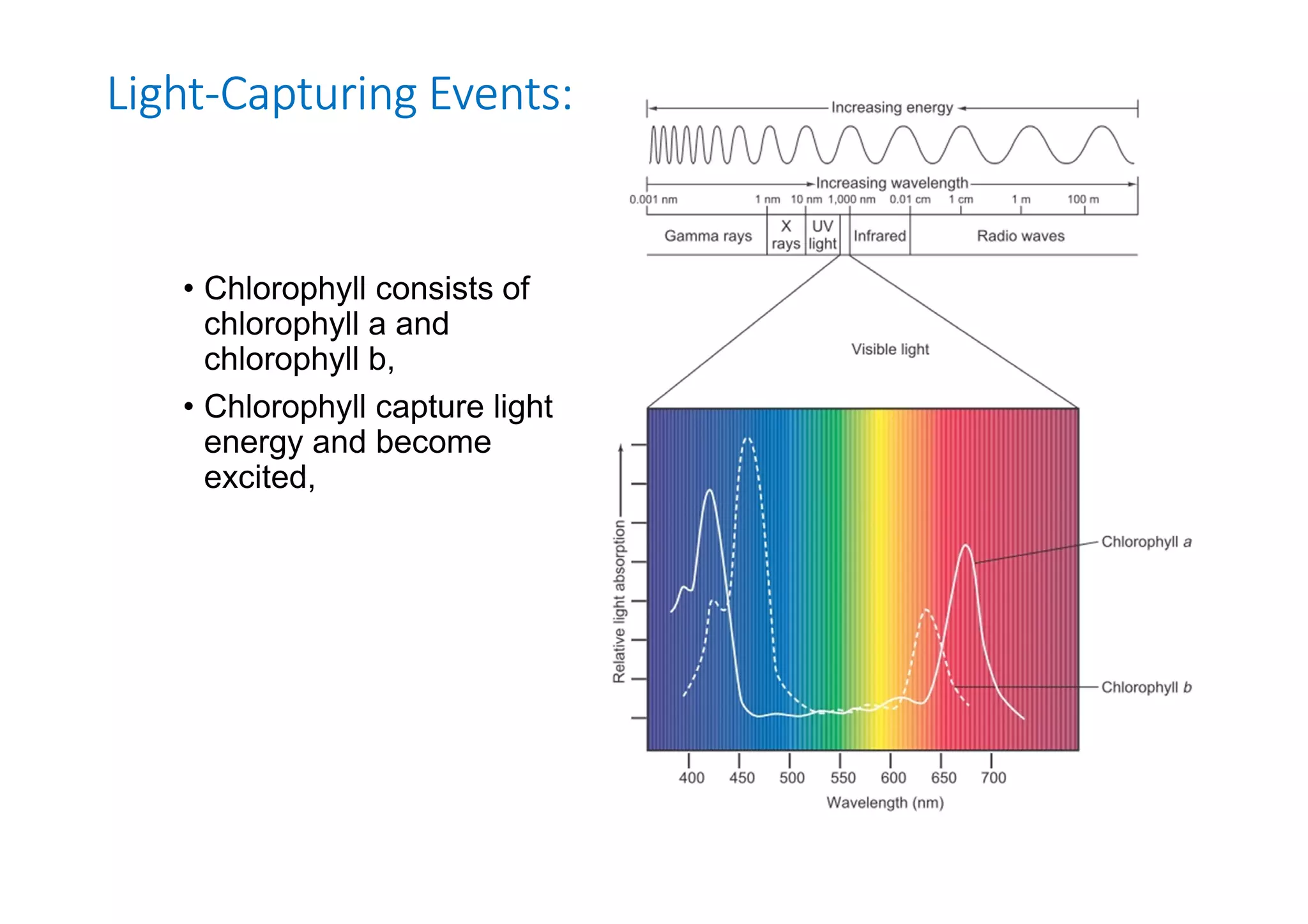
Light-Capturing Events: 
• Chlorophyll consists of 
chlorophyll a and 
chlorophyll b, 
• Chlorophyll capture light 
energy and become 
excited,
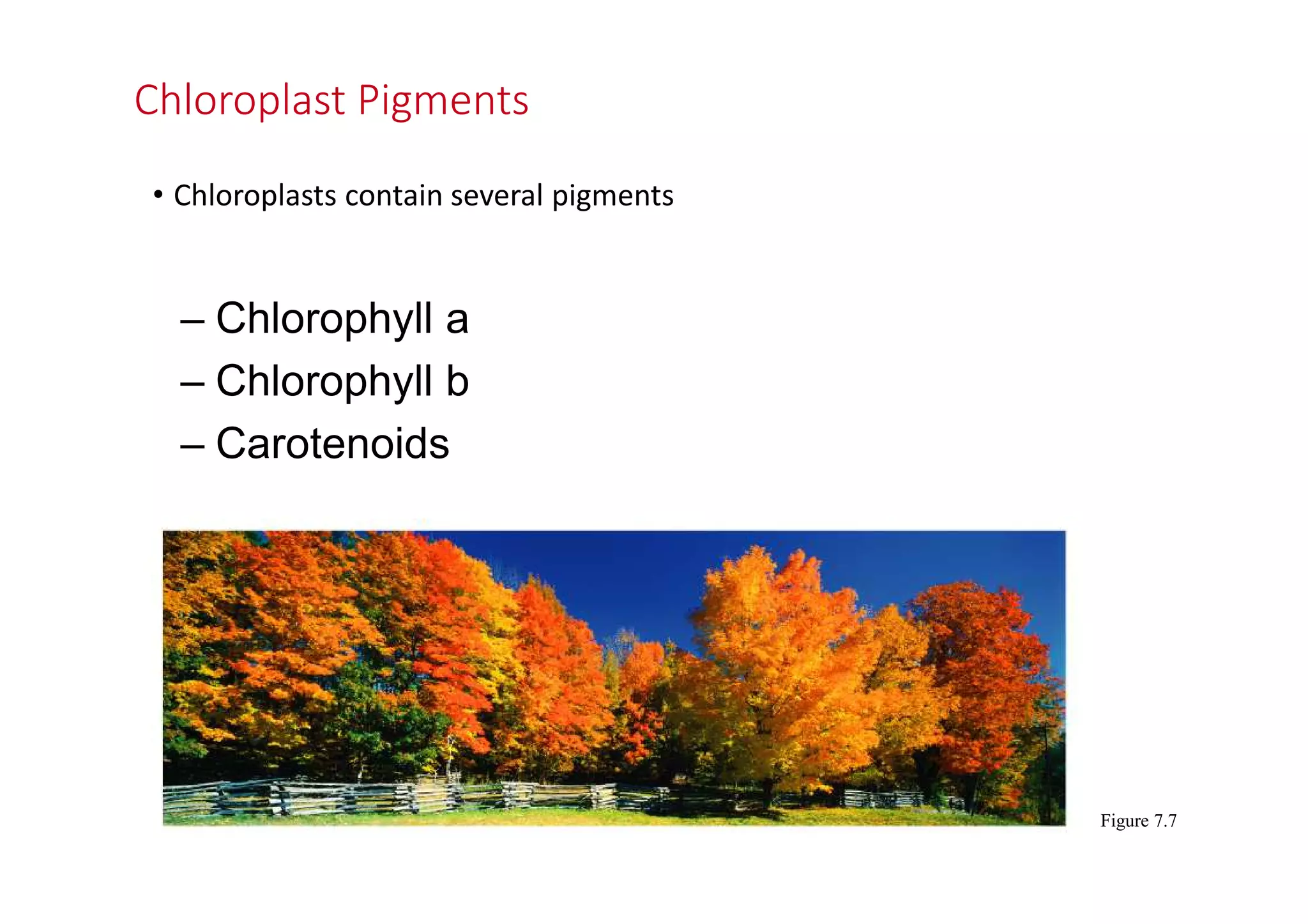
Chloroplast Pigments 
• Chloroplasts contain several pigments 
– Chlorophyll a 
– Chlorophyll b 
– Carotenoids 
Figure 7.7
Chlorophyll a & b 
•Chl a has a methyl 
group 
•Chl b has a carbonyl 
group 
Porphyrin ring 
delocalized e- 
Phytol tail
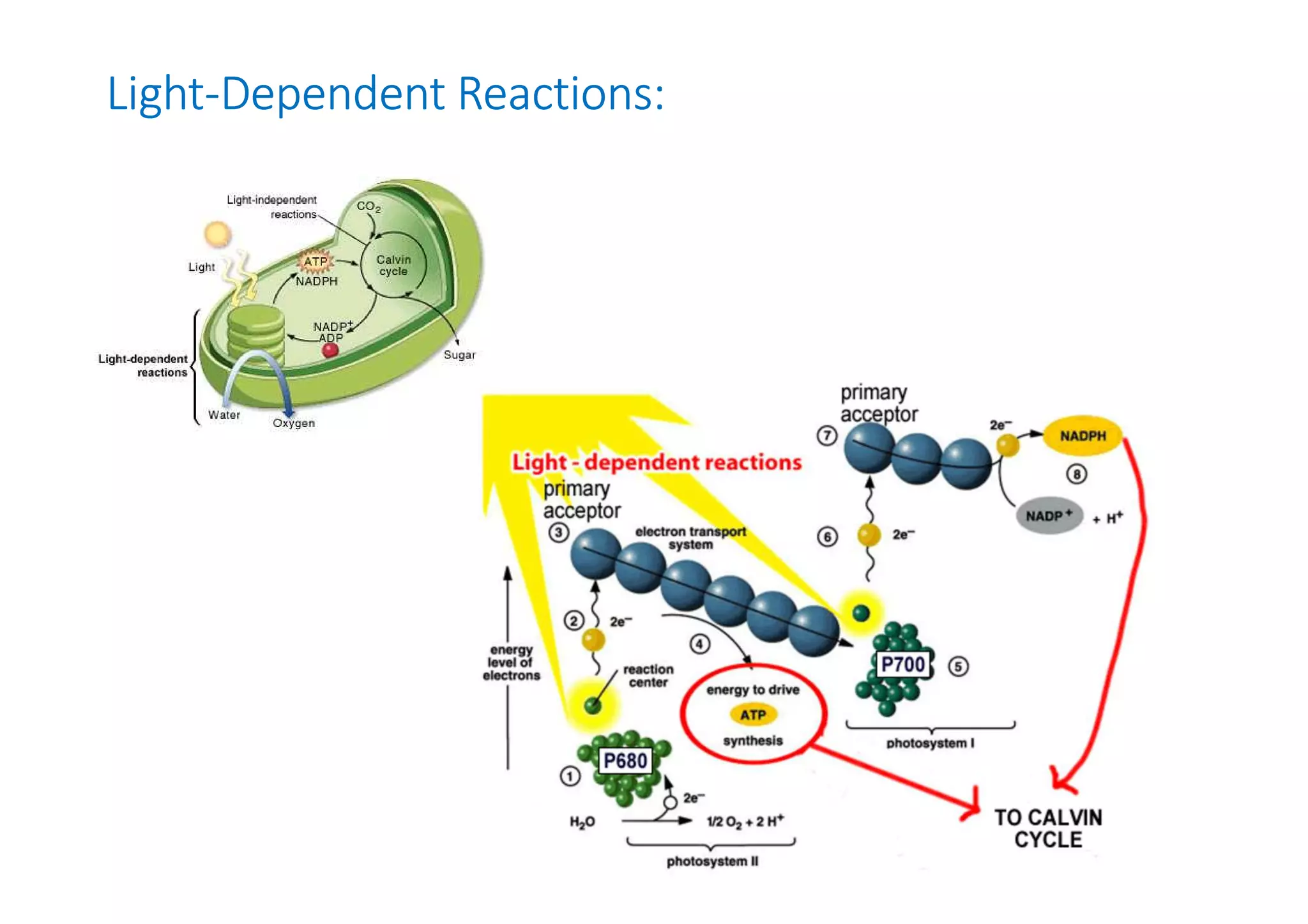
Light-Dependent Reactions:
Water-splitting 
photosystem 
NADPH-producing 
photosystem 
ATP 
mill 
• Two types of photosystems 
cooperate in the light reactions
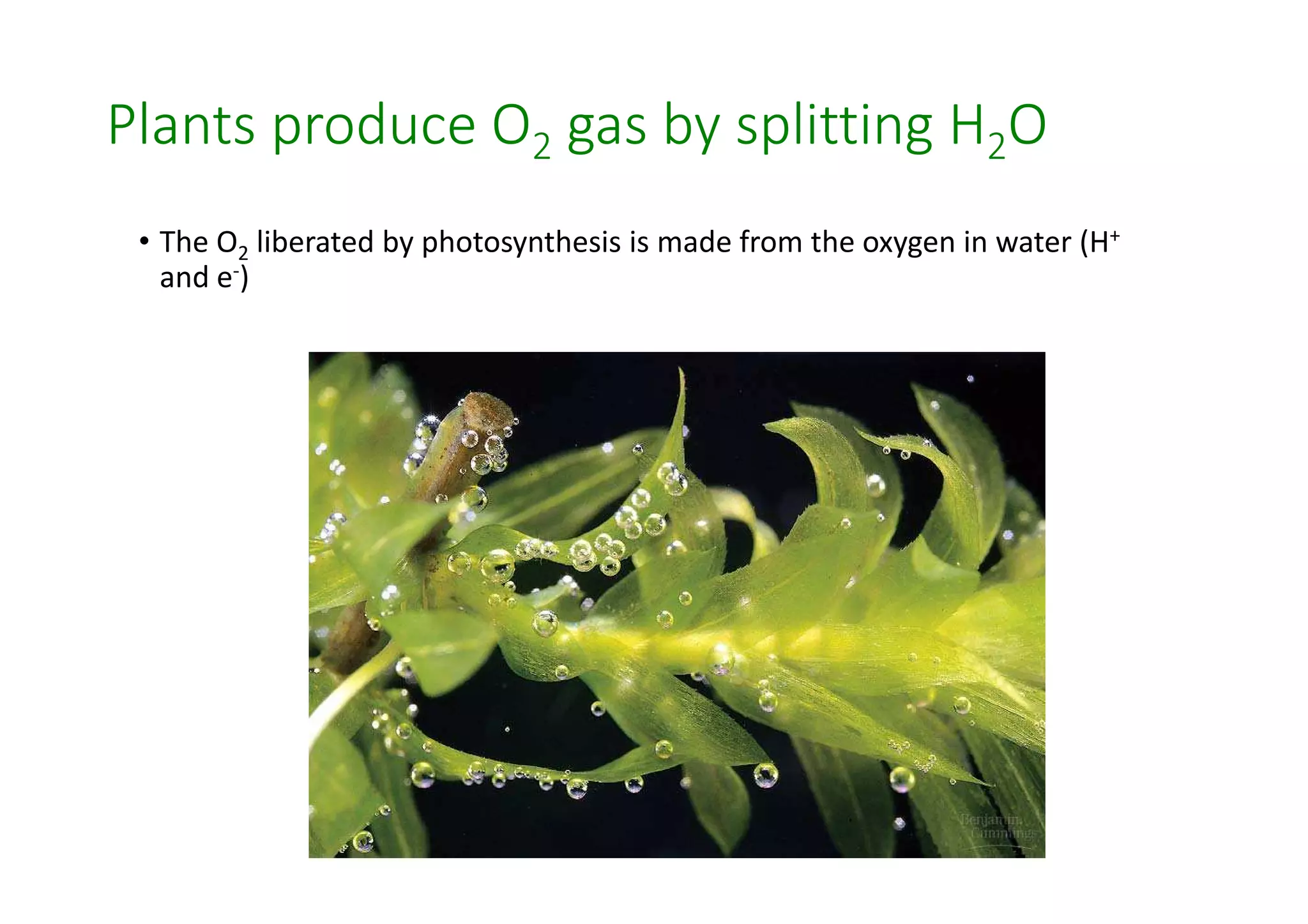
Plants produce O2 gas by splitting H2O 
• The O2 liberated by photosynthesis is made from the oxygen in water (H+ 
and e-)
Light-Independent Reactions
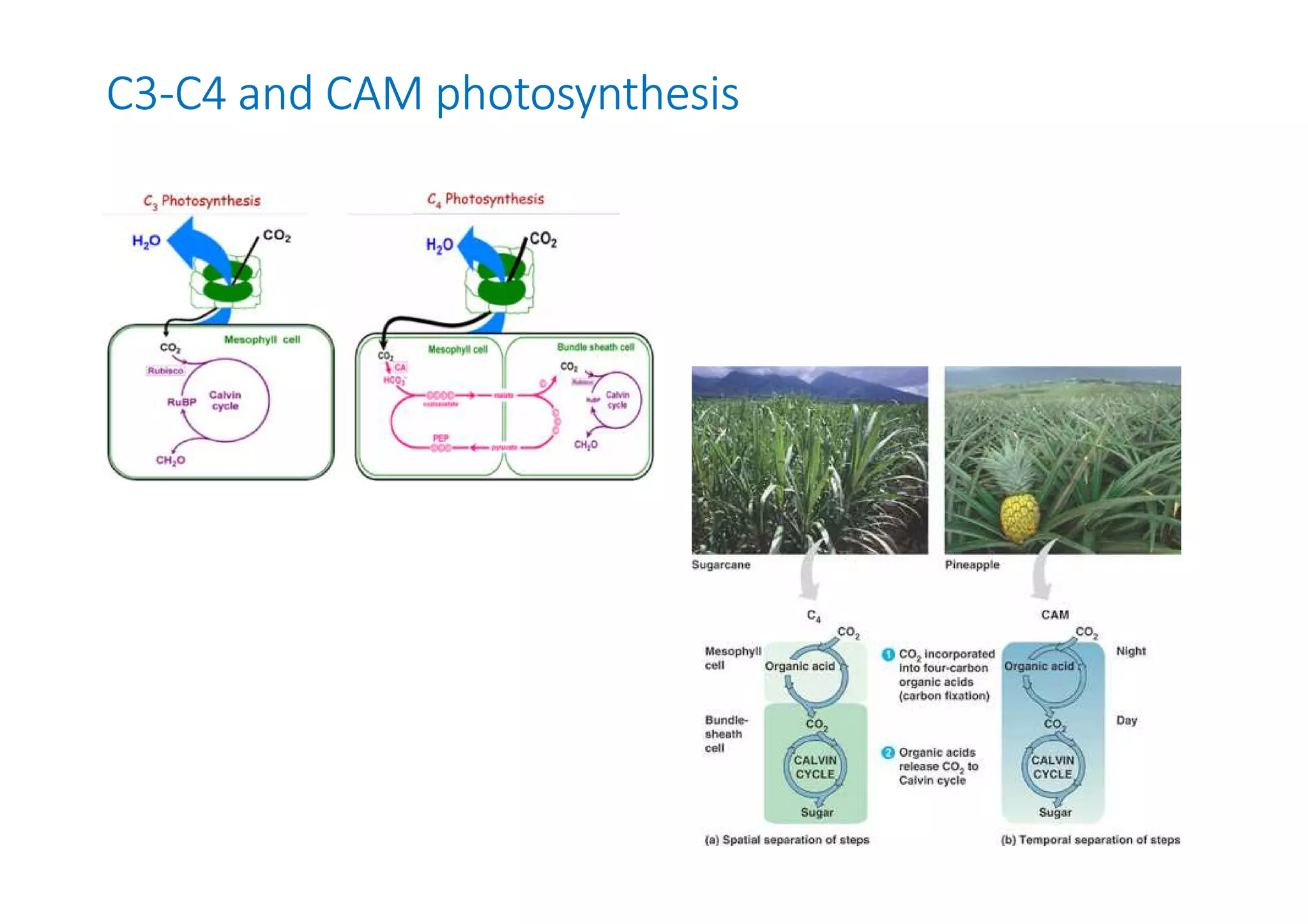
C3-C4 and CAM photosynthesis
7.4 Other Aspects of Plant Metabolism
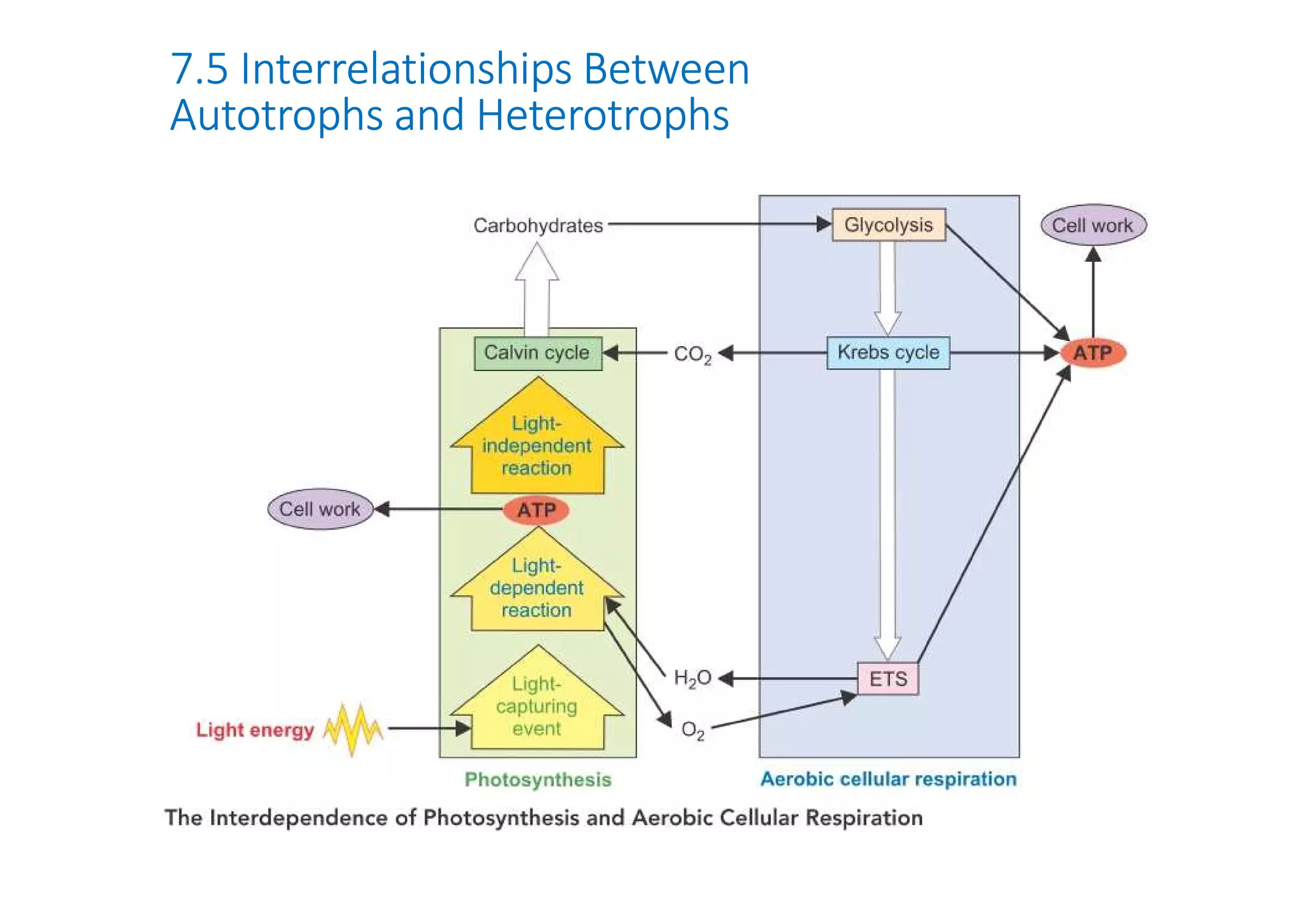
7.5 Interrelationships Between 
Autotrophs and Heterotrophs
Be ready for next lesson!

6th lesson