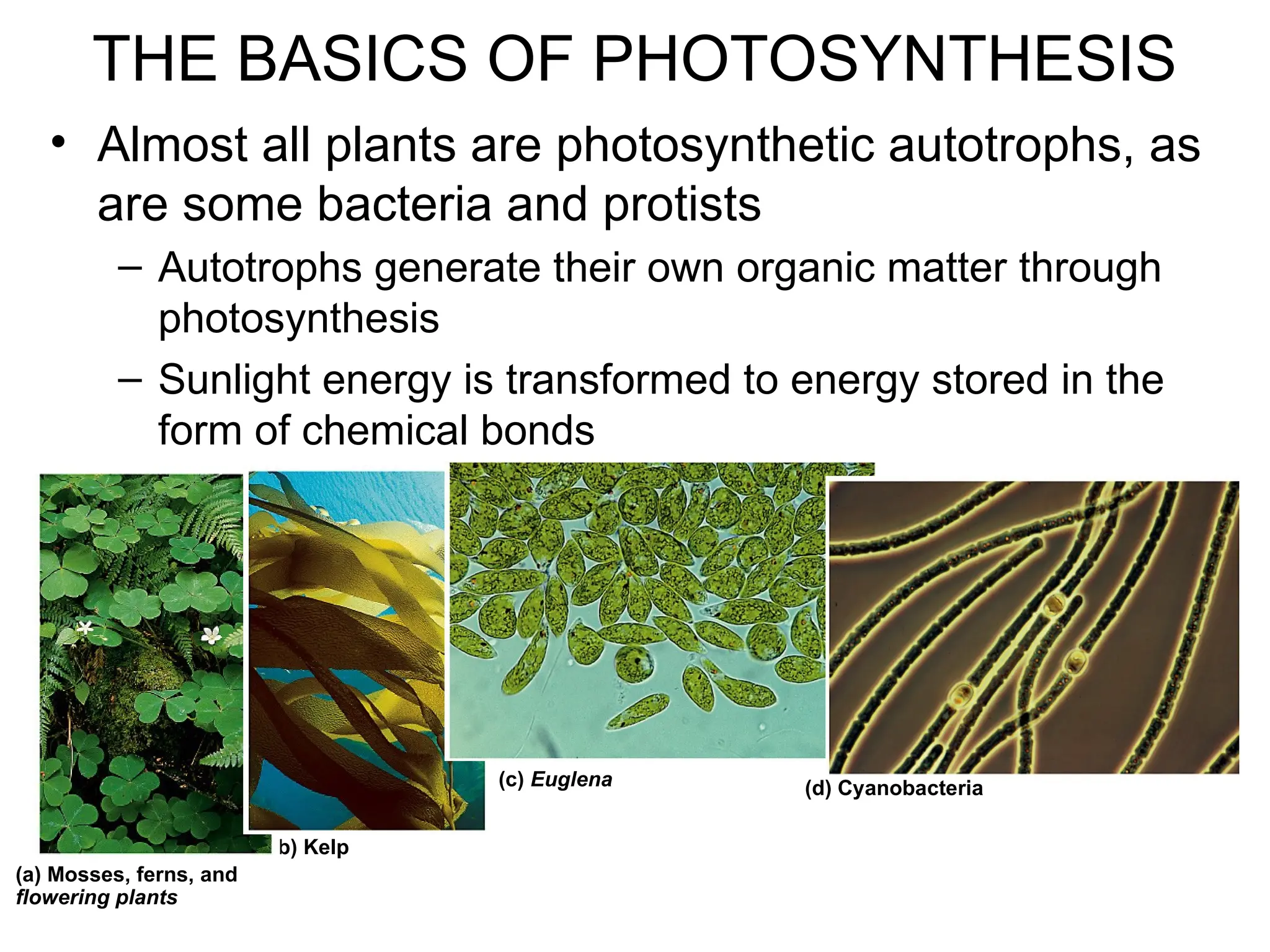
• Almost all plants are photosynthetic autotrophs, as
are some bacteria and protists
– Autotrophs generate their own organic matter through
photosynthesis
– Sunlight energy is transformed to energy stored in the
form of chemical bonds
(a) Mosses, ferns, and
flowering plants
(b) Kelp
(c) Euglena (d) Cyanobacteria
THE BASICS OF PHOTOSYNTHESIS
Light Energy Harvested by Plants &
Other Photosynthetic Autotrophs
6 CO2 + 6 H2O + light energy → C6H12O6 + 6 O2
WHY
WHY ARE
ARE PLA
PLANTS
NTS GRE
GREEN?
EN?
Plant Cells
have Green
Chloroplasts
The thylakoid
membrane of the
chloroplast is
impregnated with
photosynthetic
pigments (i.e.,
chlorophylls,
carotenoids).
• Chloroplasts
absorb light
energy and
convert it to
chemical energy
Light
Reflected
light
Absorbed
light
Transmitted
light
Chloroplast
THE COLOR OF LIGHT SEEN IS THE
COLOR NOT ABSORBED
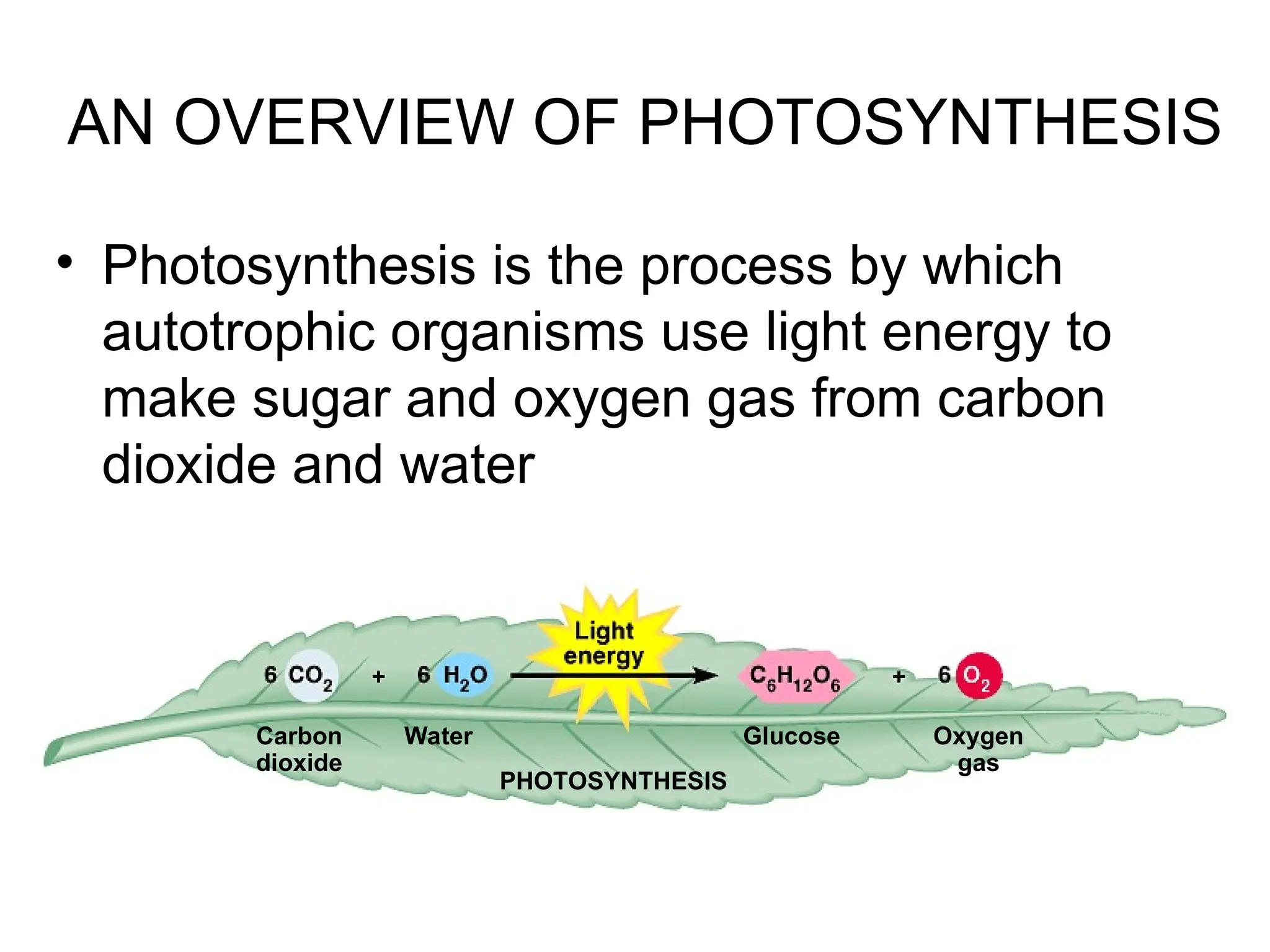
• Photosynthesis is the process by which
autotrophic organisms use light energy to
make sugar and oxygen gas from carbon
dioxide and water
AN OVERVIEW OF PHOTOSYNTHESIS
Carbon
dioxide
Water Glucose Oxygen
gas
PHOTOSYNTHESIS
• The Calvin cycle makes
sugar from carbon
dioxide
– ATP generated by the light
reactions provides the energy
for sugar synthesis
– The NADPH produced by the
light reactions provides the
electrons for the reduction of
carbon dioxide to glucose
Light
Chloroplast
Light
reactions
Calvin
cycle
NADP
ADP
+ P
• The light reactions
convert solar
energy to chemical
energy
– Produce ATP & NADPH
AN OVERVIEW OF PHOTOSYNTHESIS
PHOTOSYNTHESIS
• Sunlight provides
ENERGY
CO2 + H2O produces
Glucose + Oxygen
6CO2 + 6H2O
C6H12O6 + 6O2
Steps of Photosynthesis
• Light hits reaction centers of
chlorophyll, found in chloroplasts
• Chlorophyll vibrates and causes water
to break apart.
• Oxygen is released into air
• Hydrogen remains in chloroplast
attached to NADPH
• “THE LIGHT REACTION”
Steps of Photosynthesis
• The DARK Reactions= Calvin Cycle
• CO2 from atmosphere is joined to H
from water molecules (NADPH) to form
glucose
• Glucose can be converted into other
molecules with yummy flavors!
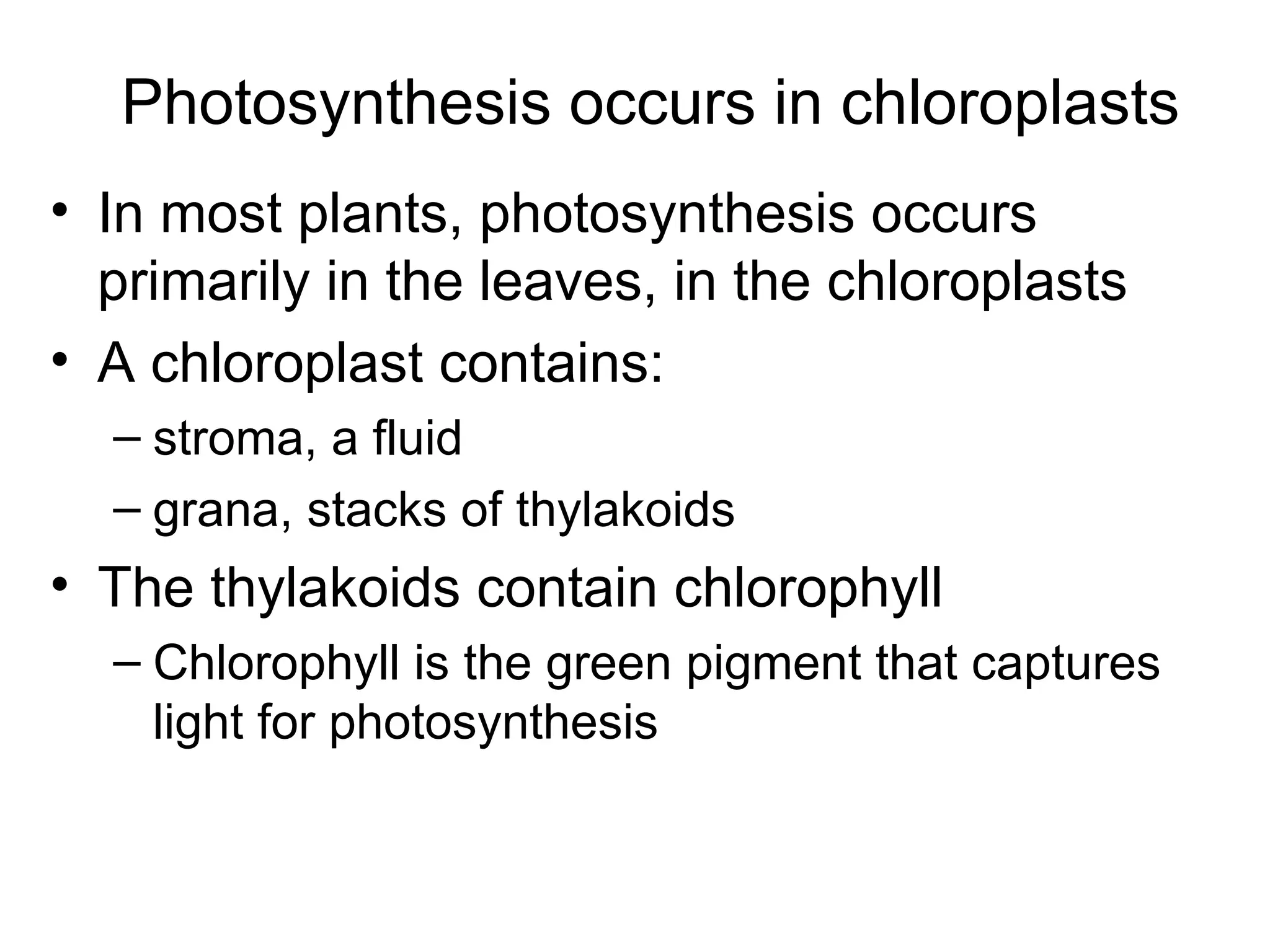
• In most plants, photosynthesis occurs
primarily in the leaves, in the chloroplasts
• A chloroplast contains:
– stroma, a fluid
– grana, stacks of thylakoids
• The thylakoids contain chlorophyll
– Chlorophyll is the green pigment that captures
light for photosynthesis
Photosynthesis occurs in chloroplasts
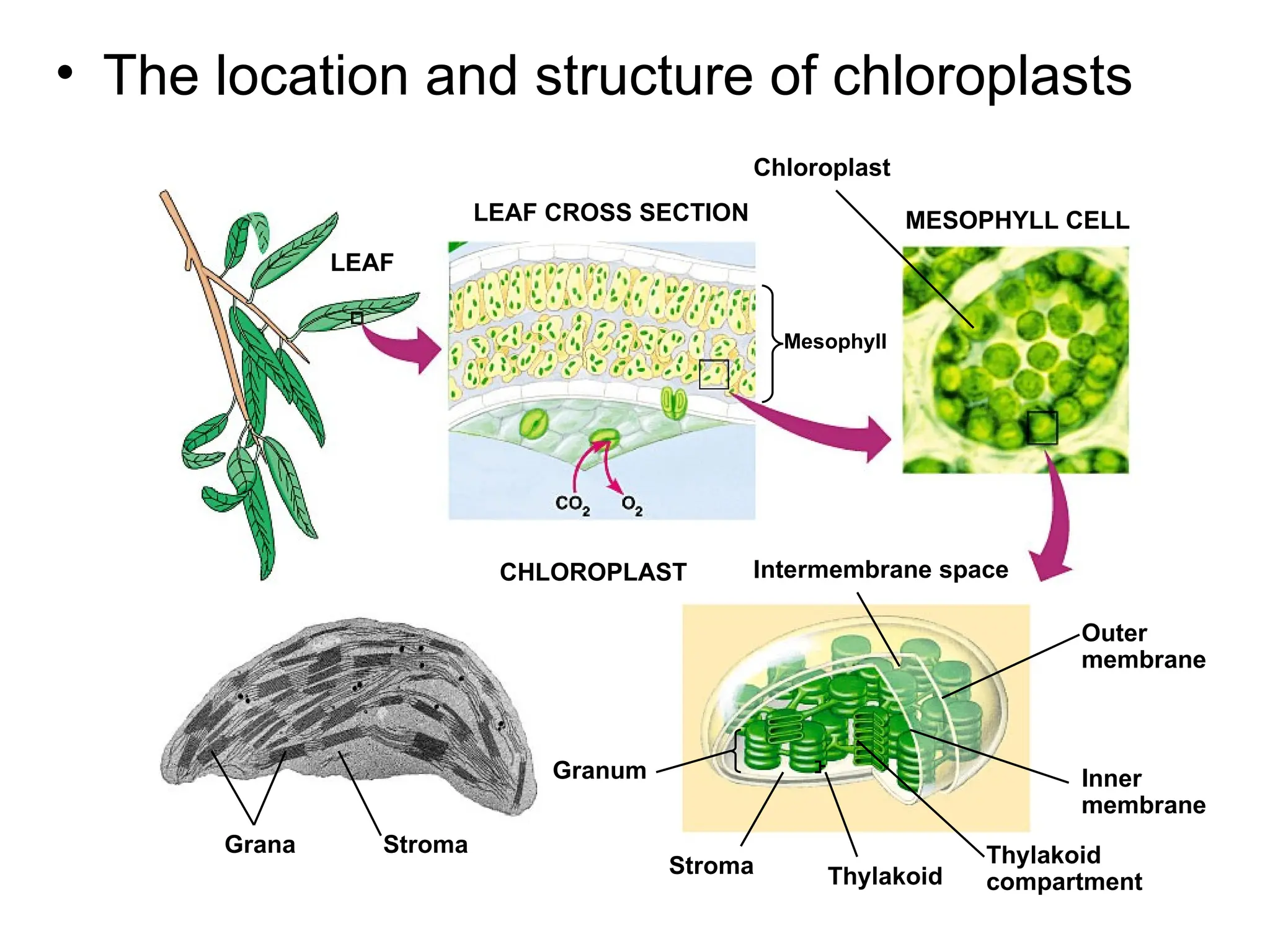
• The location and structure of chloroplasts
LEAF CROSS SECTION MESOPHYLL CELL
LEAF
Chloroplast
Mesophyll
CHLOROPLAST Intermembrane space
Outer
membrane
Inner
membrane
Thylakoid
compartment
Thylakoid
Stroma
Granum
Stroma
Grana
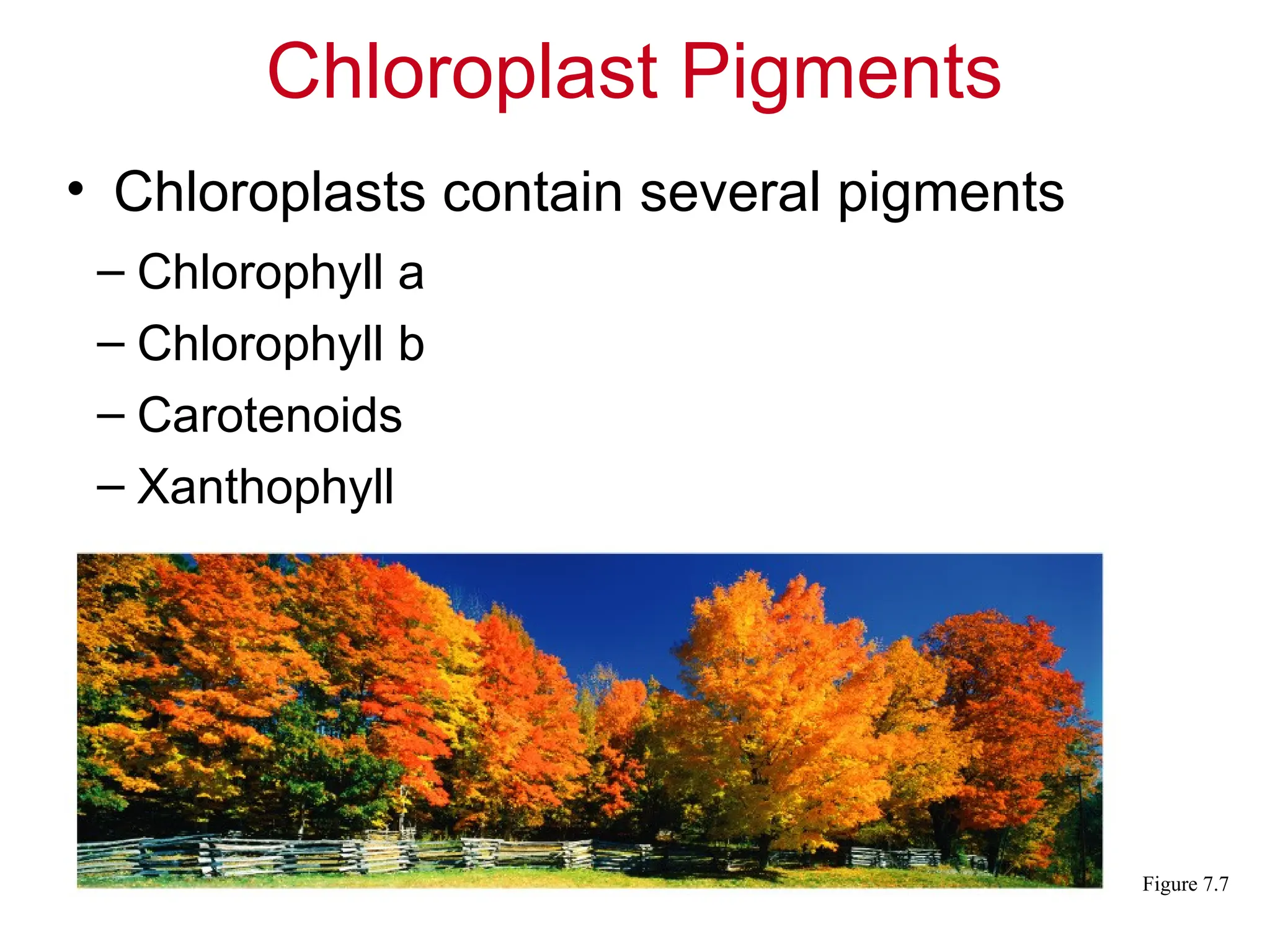
• Chloroplasts contain several pigments
Chloroplast Pigments
– Chlorophyll a
– Chlorophyll b
– Carotenoids
– Xanthophyll
Figure 7.7
Summary—Light Dependent
Reactions
a. Overall input
light energy, H2
O.
b. Overall output
ATP, NADPH, O2
.
Summary—Light Independent
Reactions
a. Overall input
CO2
, ATP, NADPH.
b. Overall output
glucose.
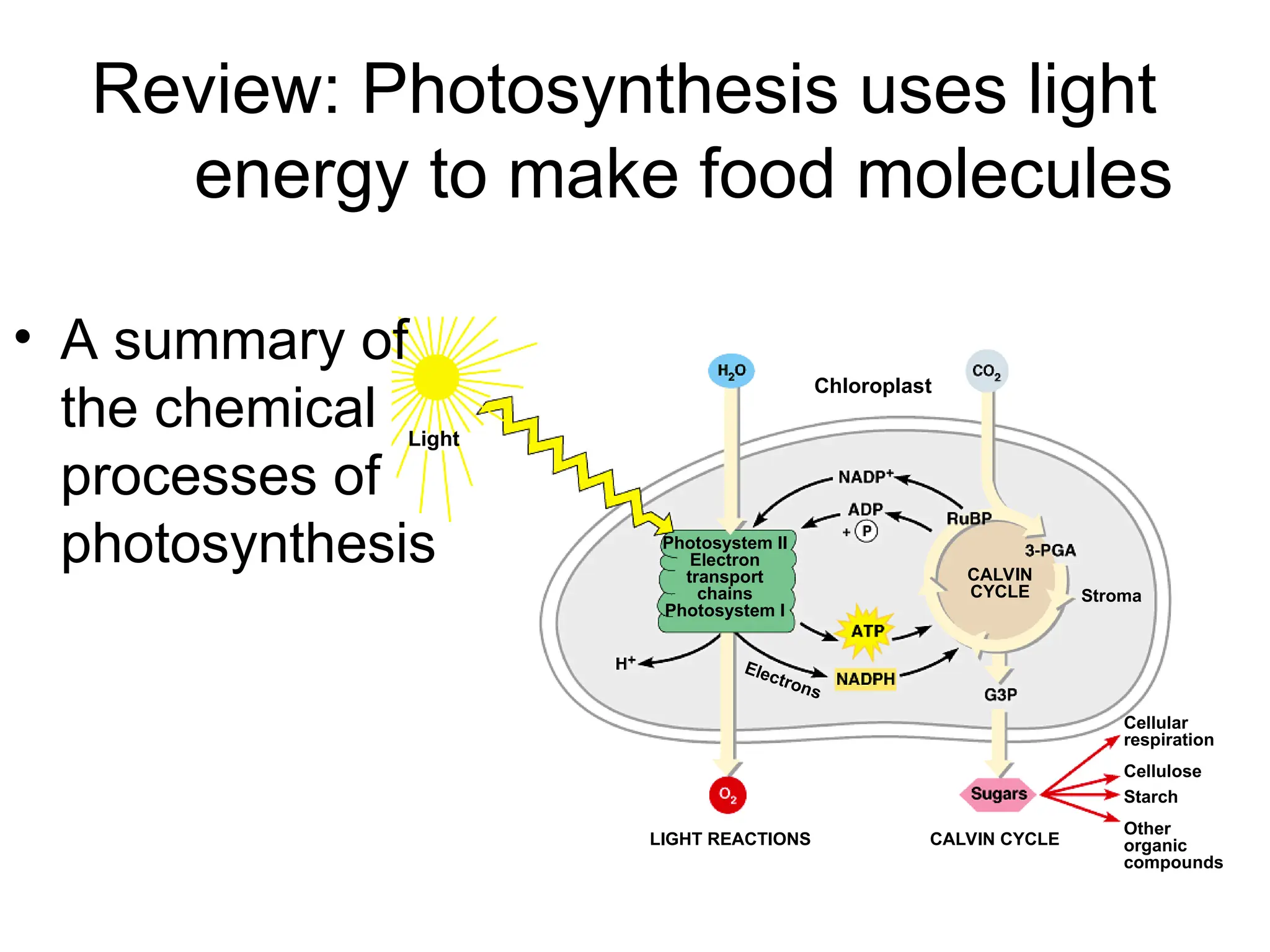
Review: Photosynthesis uses light
energy to make food molecules
Light
Chloroplast
Photosystem II
Electron
transport
chains
Photosystem I
CALVIN
CYCLE Stroma
Electrons
LIGHT REACTIONS CALVIN CYCLE
Cellular
respiration
Cellulose
Starch
Other
organic
compounds
• A summary of
the chemical
processes of
photosynthesis

the basis of photosynthesis and their steps

  • 1.
    • Almost allplants are photosynthetic autotrophs, as are some bacteria and protists – Autotrophs generate their own organic matter through photosynthesis – Sunlight energy is transformed to energy stored in the form of chemical bonds (a) Mosses, ferns, and flowering plants (b) Kelp (c) Euglena (d) Cyanobacteria THE BASICS OF PHOTOSYNTHESIS
  • 2.
    Light Energy Harvestedby Plants & Other Photosynthetic Autotrophs 6 CO2 + 6 H2O + light energy → C6H12O6 + 6 O2
  • 3.
    WHY WHY ARE ARE PLA PLANTS NTSGRE GREEN? EN? Plant Cells have Green Chloroplasts The thylakoid membrane of the chloroplast is impregnated with photosynthetic pigments (i.e., chlorophylls, carotenoids).
  • 4.
    • Chloroplasts absorb light energyand convert it to chemical energy Light Reflected light Absorbed light Transmitted light Chloroplast THE COLOR OF LIGHT SEEN IS THE COLOR NOT ABSORBED
  • 5.
    • Photosynthesis isthe process by which autotrophic organisms use light energy to make sugar and oxygen gas from carbon dioxide and water AN OVERVIEW OF PHOTOSYNTHESIS Carbon dioxide Water Glucose Oxygen gas PHOTOSYNTHESIS
  • 6.
    • The Calvincycle makes sugar from carbon dioxide – ATP generated by the light reactions provides the energy for sugar synthesis – The NADPH produced by the light reactions provides the electrons for the reduction of carbon dioxide to glucose Light Chloroplast Light reactions Calvin cycle NADP ADP + P • The light reactions convert solar energy to chemical energy – Produce ATP & NADPH AN OVERVIEW OF PHOTOSYNTHESIS
  • 7.
    PHOTOSYNTHESIS • Sunlight provides ENERGY CO2+ H2O produces Glucose + Oxygen 6CO2 + 6H2O C6H12O6 + 6O2
  • 8.
    Steps of Photosynthesis •Light hits reaction centers of chlorophyll, found in chloroplasts • Chlorophyll vibrates and causes water to break apart. • Oxygen is released into air • Hydrogen remains in chloroplast attached to NADPH • “THE LIGHT REACTION”
  • 9.
    Steps of Photosynthesis •The DARK Reactions= Calvin Cycle • CO2 from atmosphere is joined to H from water molecules (NADPH) to form glucose • Glucose can be converted into other molecules with yummy flavors!
  • 10.
    • In mostplants, photosynthesis occurs primarily in the leaves, in the chloroplasts • A chloroplast contains: – stroma, a fluid – grana, stacks of thylakoids • The thylakoids contain chlorophyll – Chlorophyll is the green pigment that captures light for photosynthesis Photosynthesis occurs in chloroplasts
  • 11.
    • The locationand structure of chloroplasts LEAF CROSS SECTION MESOPHYLL CELL LEAF Chloroplast Mesophyll CHLOROPLAST Intermembrane space Outer membrane Inner membrane Thylakoid compartment Thylakoid Stroma Granum Stroma Grana
  • 12.
    • Chloroplasts containseveral pigments Chloroplast Pigments – Chlorophyll a – Chlorophyll b – Carotenoids – Xanthophyll Figure 7.7
  • 13.
    Summary—Light Dependent Reactions a. Overallinput light energy, H2 O. b. Overall output ATP, NADPH, O2 .
  • 14.
    Summary—Light Independent Reactions a. Overallinput CO2 , ATP, NADPH. b. Overall output glucose.
  • 15.
    Review: Photosynthesis useslight energy to make food molecules Light Chloroplast Photosystem II Electron transport chains Photosystem I CALVIN CYCLE Stroma Electrons LIGHT REACTIONS CALVIN CYCLE Cellular respiration Cellulose Starch Other organic compounds • A summary of the chemical processes of photosynthesis