Module 6
Licence Category A, B1, B2 and B3
Materials and Hardware
6.6 Pipes and Unions
Prepared By Mahmud Jadallah
mahmud.jadallah@yahoo.com
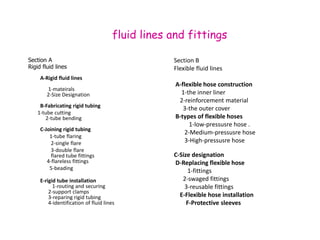
fluid lines and fittings
Section A
Rigid fluid lines
A-Rigid fluid lines
1-mateirals
2-Size Designation
B-Fabricating rigid tubing
1-tube cutting
2-tube bending
C-Joining rigid tubing
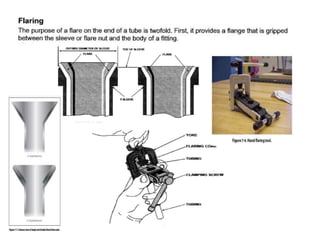
1-tube flaring
2-single flare
3-double flare
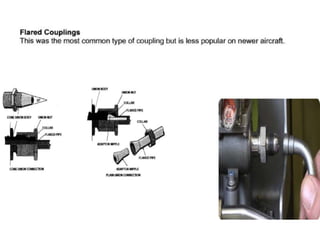
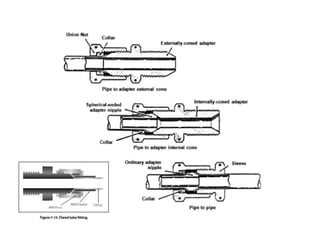
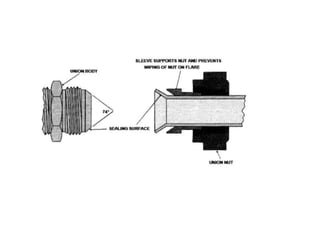
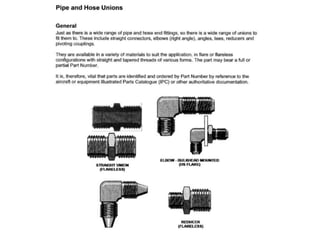
flared tube fittings
4-flareless fittings
5-beading
E-rigid tube installation
1-routing and securing
2-support clamps
3-reparing rigid tubing
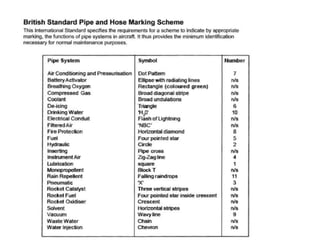
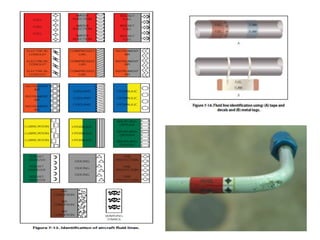
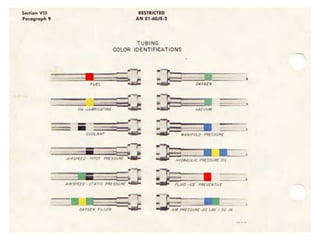
4-identification of fluid lines
Section B
Flexible fluid lines
A-flexible hose construction
1-the inner liner
2-reinforcement material
3-the outer cover
B-types of flexible hoses
1-low-pressusre hose .
2-Medium-pressusre hose
3-High-pressusre hose
C-Size designation
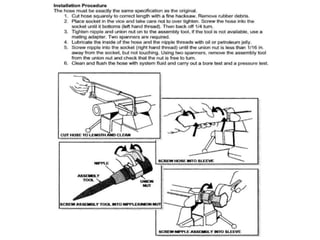
D-Replacing flexible hose
1-fittings
2-swaged fittings
3-reusable fittings
E-Flexible hose installation
F-Protective sleeves
Pipes and Unions
Objective
Identification of, and types of rigid and flexible pipes and their connectors used in
aircraft
Standard unions for aircraft hydraulic, fuel, oil, pneumatic and air
system pipes
6.6 Pipes and Unions
General
Pipes and hoses can be called upon to carry a wide variety of different fluids
within an aircraft, including fuel, hydraulic and engine oils, de-icing fluids,
pitot and static air.
Rigid pipelines are, generally, made from stainless steel, Tungum (Trade name
for a high tensile, copper alloy) and aluminium alloy.
Flexible hoses are obtained from the aircraft manufacturer using the
aircraft's Illustrated Parts Catalogue (I PC).
Safety
Before commencing any work on installed pipes and hoses it is essential that
adequate safety measures are taken.
Therefore:
• Always ensure sources of pressure are isolated and control switches or levers
are clearly placarded before disassembly.
• Allow residual pressure to dissipate and exercise extreme caution when
loosening couplings.
• Always wear eye protection when disassembling connections, working near
pressurised systems and leak checking after reconnections.
• Wear suitable protective gloves and barrier creams when working with fluids.
• Spillages should always be cleaned up. Large spillages may require specialist
assistance from the fire brigade.
• Blank all connections when pipes are removed. If it is possible that the system
will be operated before a replacement pipe is installed, fit pressure blanks and
torque tighten them.
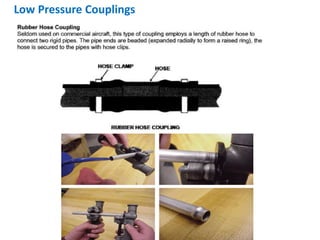
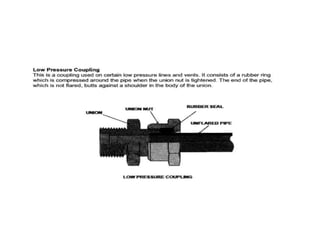
Low Pressure Couplings
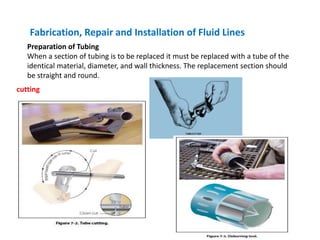
Fabrication, Repair and Installation of Fluid Lines
Preparation of Tubing
When a section of tubing is to be replaced it must be replaced with a tube of the
identical material, diameter, and wall thickness. The replacement section should
be straight and round.
cutting
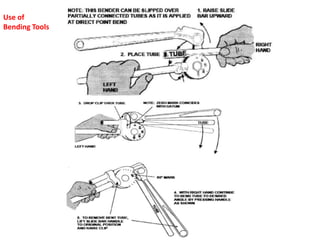
Use of
Bending Tools
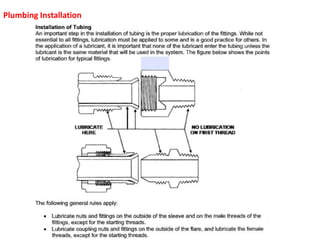
Plumbing Installation
Class work
ESSAY QUESTIONS ?
Q.1-What are The materials used for the manufacture of pipes ?
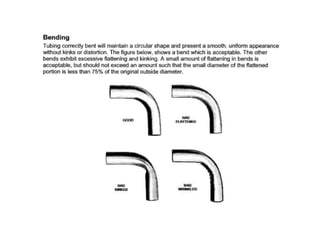
Q.2- Name the improper rigid tube bends ?
Q.3 There are many applications involving the use of Pipes in aircraft
engineering , MENTION FIVE examples ?
Q.4-What are Five tools are used for Pipes Fabrication ?
Flexible Hoses
General
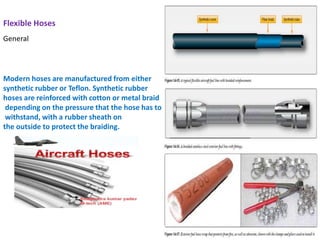
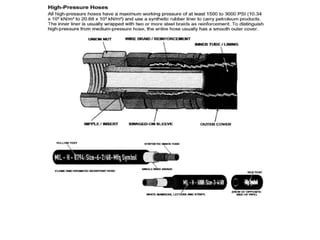
Modern hoses are manufactured from either
synthetic rubber or Teflon. Synthetic rubber
hoses are reinforced with cotton or metal braid
depending on the pressure that the hose has to
withstand, with a rubber sheath on
the outside to protect the braiding.
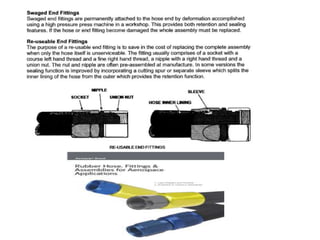
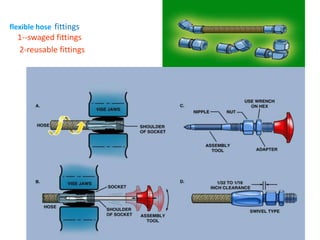
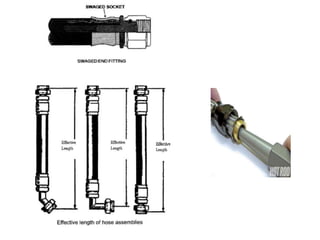
flexible hose fittings
1--swaged fittings
2-reusable fittings
Class work
ESSAY QUESTIONS ?
Q.1-What are The materials used for the manufacture of hose ?
Q.2- Name types of flexible hoses?
Q.3 What is purpose of lay line?
Q.4-What are safety precautions when routing fluid lines?
ANY QUESTIONS?

6.6 pipes and unions

  • 1.
    Module 6 Licence CategoryA, B1, B2 and B3 Materials and Hardware 6.6 Pipes and Unions Prepared By Mahmud Jadallah mahmud.jadallah@yahoo.com
  • 3.
    fluid lines andfittings Section A Rigid fluid lines A-Rigid fluid lines 1-mateirals 2-Size Designation B-Fabricating rigid tubing 1-tube cutting 2-tube bending C-Joining rigid tubing 1-tube flaring 2-single flare 3-double flare flared tube fittings 4-flareless fittings 5-beading E-rigid tube installation 1-routing and securing 2-support clamps 3-reparing rigid tubing 4-identification of fluid lines Section B Flexible fluid lines A-flexible hose construction 1-the inner liner 2-reinforcement material 3-the outer cover B-types of flexible hoses 1-low-pressusre hose . 2-Medium-pressusre hose 3-High-pressusre hose C-Size designation D-Replacing flexible hose 1-fittings 2-swaged fittings 3-reusable fittings E-Flexible hose installation F-Protective sleeves
  • 4.
    Pipes and Unions Objective Identificationof, and types of rigid and flexible pipes and their connectors used in aircraft Standard unions for aircraft hydraulic, fuel, oil, pneumatic and air system pipes
  • 5.
    6.6 Pipes andUnions General Pipes and hoses can be called upon to carry a wide variety of different fluids within an aircraft, including fuel, hydraulic and engine oils, de-icing fluids, pitot and static air. Rigid pipelines are, generally, made from stainless steel, Tungum (Trade name for a high tensile, copper alloy) and aluminium alloy. Flexible hoses are obtained from the aircraft manufacturer using the aircraft's Illustrated Parts Catalogue (I PC).
  • 6.
    Safety Before commencing anywork on installed pipes and hoses it is essential that adequate safety measures are taken. Therefore: • Always ensure sources of pressure are isolated and control switches or levers are clearly placarded before disassembly. • Allow residual pressure to dissipate and exercise extreme caution when loosening couplings. • Always wear eye protection when disassembling connections, working near pressurised systems and leak checking after reconnections. • Wear suitable protective gloves and barrier creams when working with fluids. • Spillages should always be cleaned up. Large spillages may require specialist assistance from the fire brigade. • Blank all connections when pipes are removed. If it is possible that the system will be operated before a replacement pipe is installed, fit pressure blanks and torque tighten them.
  • 17.
  • 19.
    Fabrication, Repair andInstallation of Fluid Lines Preparation of Tubing When a section of tubing is to be replaced it must be replaced with a tube of the identical material, diameter, and wall thickness. The replacement section should be straight and round. cutting
  • 21.
  • 27.
  • 28.
    Class work ESSAY QUESTIONS? Q.1-What are The materials used for the manufacture of pipes ? Q.2- Name the improper rigid tube bends ? Q.3 There are many applications involving the use of Pipes in aircraft engineering , MENTION FIVE examples ? Q.4-What are Five tools are used for Pipes Fabrication ?
  • 29.
    Flexible Hoses General Modern hosesare manufactured from either synthetic rubber or Teflon. Synthetic rubber hoses are reinforced with cotton or metal braid depending on the pressure that the hose has to withstand, with a rubber sheath on the outside to protect the braiding.
  • 36.
    flexible hose fittings 1--swagedfittings 2-reusable fittings
  • 58.
    Class work ESSAY QUESTIONS? Q.1-What are The materials used for the manufacture of hose ? Q.2- Name types of flexible hoses? Q.3 What is purpose of lay line? Q.4-What are safety precautions when routing fluid lines?
  • 59.