Course code : ETE463 (Data Structures and Algorithms)
PRESENTED BY:
Abdullah Al Hasib (2014-2-55-003)
Ariful Islam Muhin(2014-2-55-)
Jobayer Sarkar (2014-2-55-004)
Sudeb Das (2014-2-55-023)
Kh.Efta Khairul Alam Dhanna (2014-2-55-015)
Jubair Ibna Latif (2014-2-55-018)
PRESENTED TO:
Dr. Mohammad Arifuzzaman
Agenda
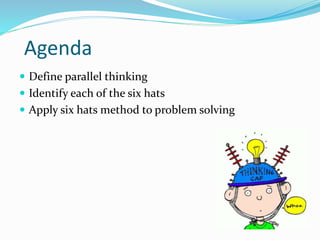
 Define parallel thinking
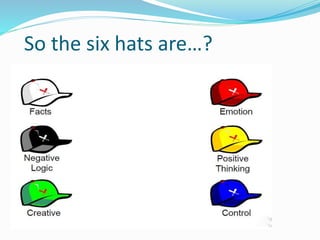
 Identify each of the six hats
 Apply six hats method to problem solving
Parallel Thinking
 At any moment everyone is looking in the same
direction.
 Each thinker puts forward his or her thoughts in
parallel with the thoughts of others
 Guides thought processes in one direction at a time so
we can effectively analyze issues, generate new ideas,
and make better decisions.
 Constructive alternative to arguments
So the six hats are…?
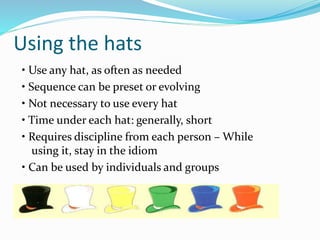
Using the hats
• Use any hat, as often as needed
• Sequence can be preset or evolving
• Not necessary to use every hat
• Time under each hat: generally, short
• Requires discipline from each person – While
using it, stay in the idiom
• Can be used by individuals and groups
Blue Hat
Managing the Thinking Process
• Control of thinking & the process
• Instructions for thinking
• The organization of thinking
• Control of the other hats
• Begin & end session with blue hat
• Discipline and focus
• Facilitator, session leader’s role
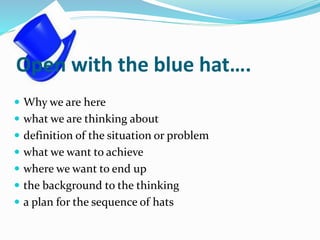
Open with the blue hat….
 Why we are here
 what we are thinking about
 definition of the situation or problem
 what we want to achieve
 where we want to end up
 the background to the thinking
 a plan for the sequence of hats
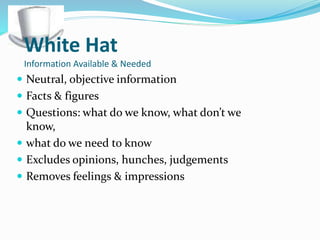
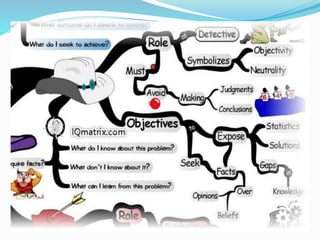
White Hat
Information Available & Needed
 Neutral, objective information
 Facts & figures
 Questions: what do we know, what don’t we
know,
 what do we need to know
 Excludes opinions, hunches, judgements
 Removes feelings & impressions
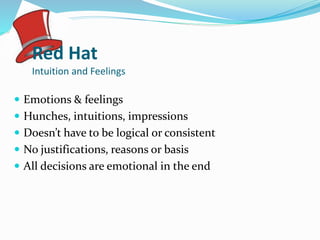
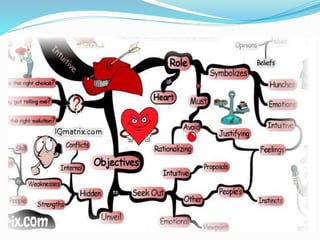
Red Hat
Intuition and Feelings
 Emotions & feelings
 Hunches, intuitions, impressions
 Doesn’t have to be logical or consistent
 No justifications, reasons or basis
 All decisions are emotional in the end
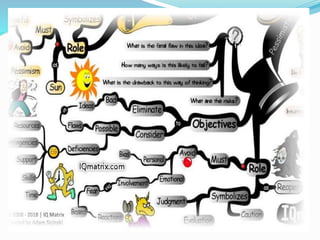
Black Hat
Caution, Difficulties, and Problems
 Cautious and careful
 Logical negative – why it won’t work
 Critical judgment, pessimistic view
 Separates logical negative from emotional
 Focus on errors, evidence, conclusions
 Logical & truthful, but not necessarily fair
Yellow Hat
Benefits and Feasibility
 Positive & speculative
 Positive thinking, optimism, opportunity
 Benefits
 Best-case scenarios
 Exploration
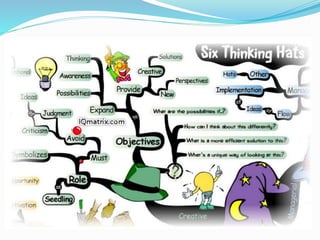
Green Hat
Alternatives and Creative Ideas
 New ideas, concepts, perceptions
 Deliberate creation of new ideas
 Alternatives and more alternatives
 New approaches to problems
 Creative & lateral thinking
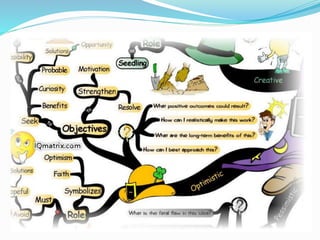
…and close with the blue hat
 What we have achieved
 Outcome
 Conclusion
 Design
 Solution
 Next steps
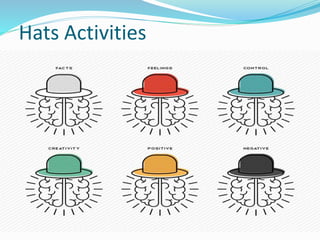
Hats Activities
Single Hat and Sequence Use
 The hats can be used singly at any point in thinking. In
general, this is the major use. The hats are used as a
convenience for directing thinking and for switching
thinking.
 Simple sequences of two or three hats may be used
together for a particular purpose. For example, the
yellow hat followed by the black hat may be used to
assess an idea. The black hat followed by the green
hat may be used to improve a design.
Evaluation Sequence
To discover the positive aspects and negative
aspects of an idea. You use the yellow hat
before the black hat. You could follow up with
the green hat (new ideas) and red hat
(feelings) thinking. Examples: Consider positive
and negative
 Not doing homework one night.
 Swapping toys with friends.
Caution Sequence
Looking critically at situations. You are first
considering facts with the white hat. Then use
the black hat to discover difficulties. This can
be followed up with some blue hat or red hat
thinking.
Examples: consider the consequences
 Throwing most of your lunch in the bin
everyday.
 Not letting someone know where you are going.
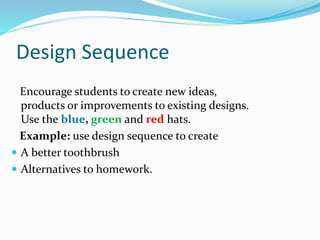
Design Sequence
Encourage students to create new ideas,
products or improvements to existing designs.
Use the blue, green and red hats.
Example: use design sequence to create
 A better toothbrush
 Alternatives to homework.
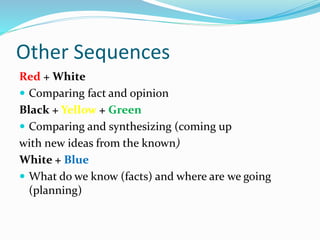
Other Sequences
Red + White
 Comparing fact and opinion
Black + Yellow + Green
 Comparing and synthesizing (coming up
with new ideas from the known)
White + Blue
 What do we know (facts) and where are we going
(planning)
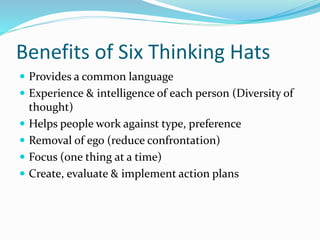
Benefits of Six Thinking Hats
 Provides a common language
 Experience & intelligence of each person (Diversity of
thought)
 Helps people work against type, preference
 Removal of ego (reduce confrontation)
 Focus (one thing at a time)
 Create, evaluate & implement action plans
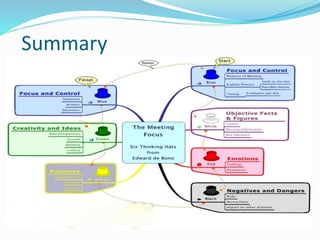
Summary
References
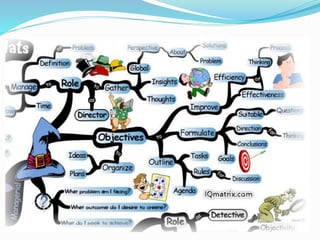
 https://blog.iqmatrix.com/six-thinking-hats
 https://widemediaupdate.blogspot.com/2018/03/six-
thinking-hats.html?m=1
 https://www.mindtools.com/pages/article/newTED_0
7.htm
 http://www.debonogroup.com/six_thinking_hats.php
 https://en.wikipedia.org/wiki/Six_Thinking_Hats
Thank you

Analysis of-6-hat-thinking-for-problem-solving

  • 1.
    Course code :ETE463 (Data Structures and Algorithms) PRESENTED BY: Abdullah Al Hasib (2014-2-55-003) Ariful Islam Muhin(2014-2-55-) Jobayer Sarkar (2014-2-55-004) Sudeb Das (2014-2-55-023) Kh.Efta Khairul Alam Dhanna (2014-2-55-015) Jubair Ibna Latif (2014-2-55-018) PRESENTED TO: Dr. Mohammad Arifuzzaman
  • 2.
    Agenda  Define parallelthinking  Identify each of the six hats  Apply six hats method to problem solving
  • 3.
    Parallel Thinking  Atany moment everyone is looking in the same direction.  Each thinker puts forward his or her thoughts in parallel with the thoughts of others  Guides thought processes in one direction at a time so we can effectively analyze issues, generate new ideas, and make better decisions.  Constructive alternative to arguments
  • 4.
    So the sixhats are…?
  • 5.
    Using the hats •Use any hat, as often as needed • Sequence can be preset or evolving • Not necessary to use every hat • Time under each hat: generally, short • Requires discipline from each person – While using it, stay in the idiom • Can be used by individuals and groups
  • 6.
    Blue Hat Managing theThinking Process • Control of thinking & the process • Instructions for thinking • The organization of thinking • Control of the other hats • Begin & end session with blue hat • Discipline and focus • Facilitator, session leader’s role
  • 8.
    Open with theblue hat….  Why we are here  what we are thinking about  definition of the situation or problem  what we want to achieve  where we want to end up  the background to the thinking  a plan for the sequence of hats
  • 9.
    White Hat Information Available& Needed  Neutral, objective information  Facts & figures  Questions: what do we know, what don’t we know,  what do we need to know  Excludes opinions, hunches, judgements  Removes feelings & impressions
  • 11.
    Red Hat Intuition andFeelings  Emotions & feelings  Hunches, intuitions, impressions  Doesn’t have to be logical or consistent  No justifications, reasons or basis  All decisions are emotional in the end
  • 13.
    Black Hat Caution, Difficulties,and Problems  Cautious and careful  Logical negative – why it won’t work  Critical judgment, pessimistic view  Separates logical negative from emotional  Focus on errors, evidence, conclusions  Logical & truthful, but not necessarily fair
  • 15.
    Yellow Hat Benefits andFeasibility  Positive & speculative  Positive thinking, optimism, opportunity  Benefits  Best-case scenarios  Exploration
  • 17.
    Green Hat Alternatives andCreative Ideas  New ideas, concepts, perceptions  Deliberate creation of new ideas  Alternatives and more alternatives  New approaches to problems  Creative & lateral thinking
  • 19.
    …and close withthe blue hat  What we have achieved  Outcome  Conclusion  Design  Solution  Next steps
  • 20.
  • 21.
    Single Hat andSequence Use  The hats can be used singly at any point in thinking. In general, this is the major use. The hats are used as a convenience for directing thinking and for switching thinking.  Simple sequences of two or three hats may be used together for a particular purpose. For example, the yellow hat followed by the black hat may be used to assess an idea. The black hat followed by the green hat may be used to improve a design.
  • 22.
    Evaluation Sequence To discoverthe positive aspects and negative aspects of an idea. You use the yellow hat before the black hat. You could follow up with the green hat (new ideas) and red hat (feelings) thinking. Examples: Consider positive and negative  Not doing homework one night.  Swapping toys with friends.
  • 23.
    Caution Sequence Looking criticallyat situations. You are first considering facts with the white hat. Then use the black hat to discover difficulties. This can be followed up with some blue hat or red hat thinking. Examples: consider the consequences  Throwing most of your lunch in the bin everyday.  Not letting someone know where you are going.
  • 24.
    Design Sequence Encourage studentsto create new ideas, products or improvements to existing designs. Use the blue, green and red hats. Example: use design sequence to create  A better toothbrush  Alternatives to homework.
  • 25.
    Other Sequences Red +White  Comparing fact and opinion Black + Yellow + Green  Comparing and synthesizing (coming up with new ideas from the known) White + Blue  What do we know (facts) and where are we going (planning)
  • 26.
    Benefits of SixThinking Hats  Provides a common language  Experience & intelligence of each person (Diversity of thought)  Helps people work against type, preference  Removal of ego (reduce confrontation)  Focus (one thing at a time)  Create, evaluate & implement action plans
  • 27.
  • 28.
    References  https://blog.iqmatrix.com/six-thinking-hats  https://widemediaupdate.blogspot.com/2018/03/six- thinking-hats.html?m=1 https://www.mindtools.com/pages/article/newTED_0 7.htm  http://www.debonogroup.com/six_thinking_hats.php  https://en.wikipedia.org/wiki/Six_Thinking_Hats
  • 29.