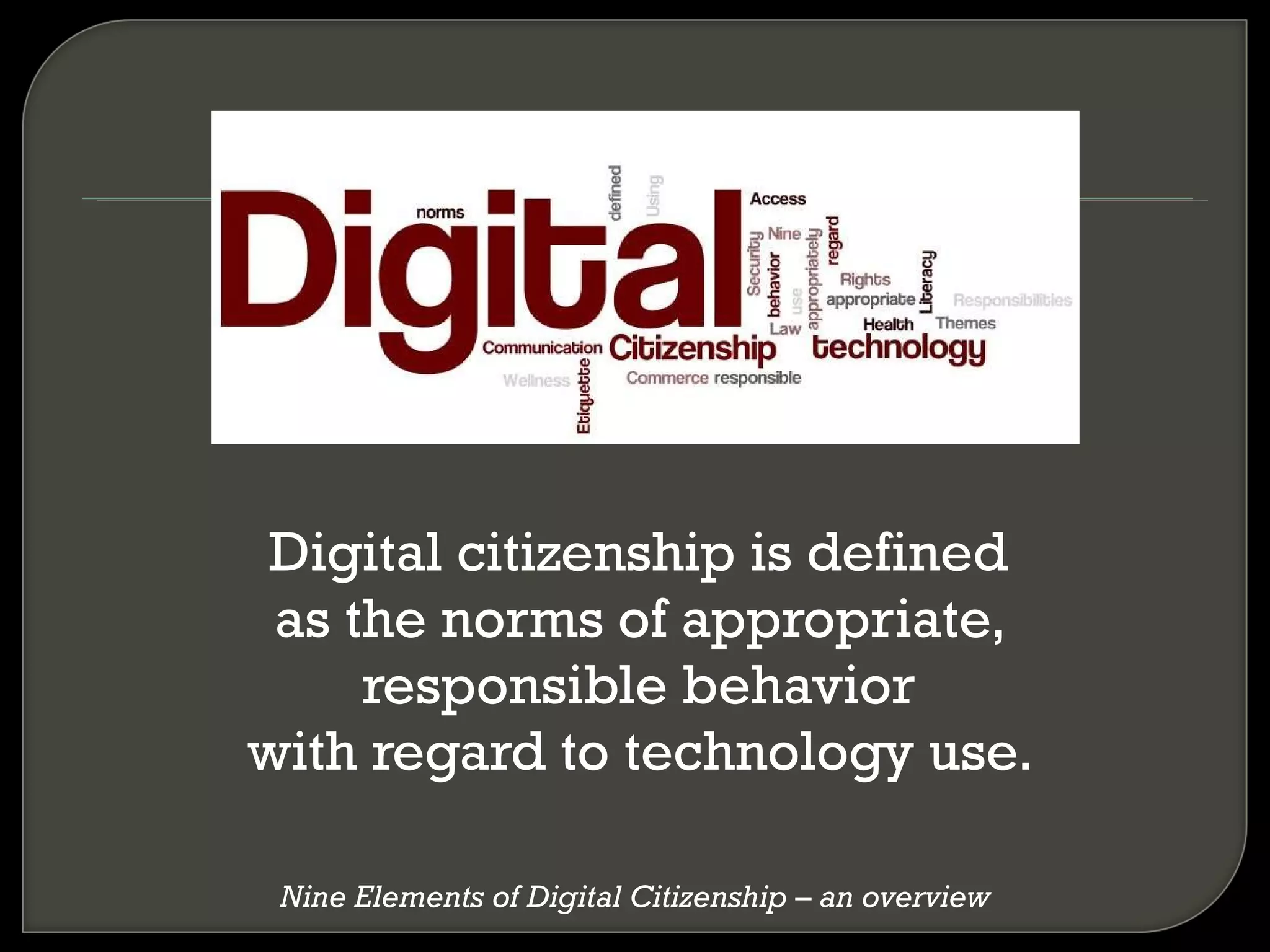
Digital citizenship is defined  as the norms of appropriate,  responsible behavior  with regard to technology use.  Nine Elements of Digital Citizenship – an overview
Digital Access Digital Commerce Digital Communication Digital Literacy Digital Etiquette Digital Law Digital Rights and Responsibilities Digital Health and Wellness Digital Security Nine Elements of Digital Citizenship
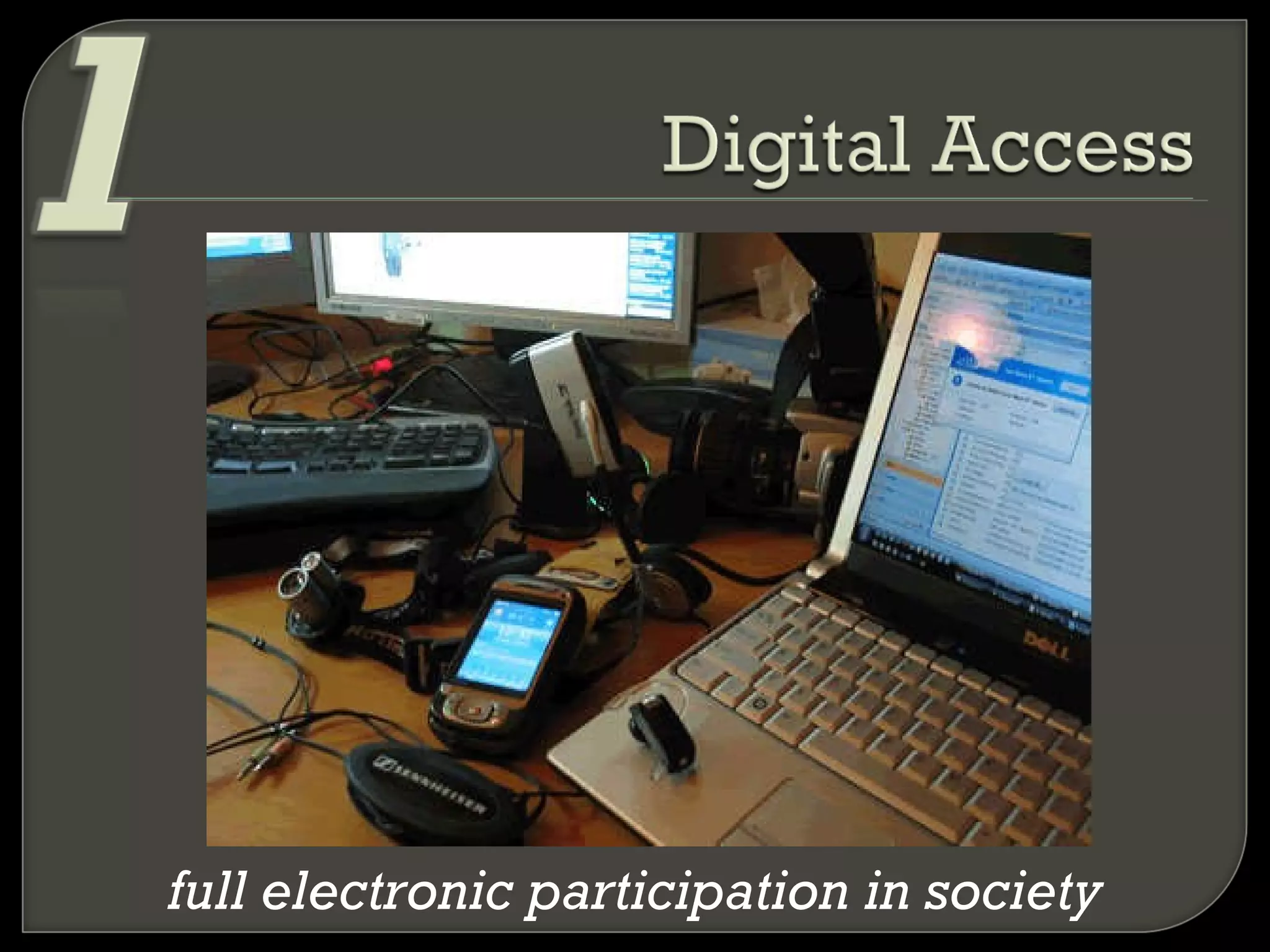
full electronic participation in society
Do all Canadians  have access to technology? Do Canadians have access to technology at home or in their community? Open computer labs After school/work access in libraries High speed access as opposed to dial- up. Digital Access Definition: Full electronic participation in society.
$$ buying and selling online $$ EBAY iTunes Amazon
Online purchasing has become an important factor in Canadian lives. More Canadians are shopping online, with sales in 2007 rising to $12.8 billion. Do they buy online understanding the potential risks? - Scams, identity theft, viruses, spyware… - Protecting Privacy (credit card info, bank numbers, or personal data to insecure sites.) Digital Commerce  Definition: The buying and selling of goods online.
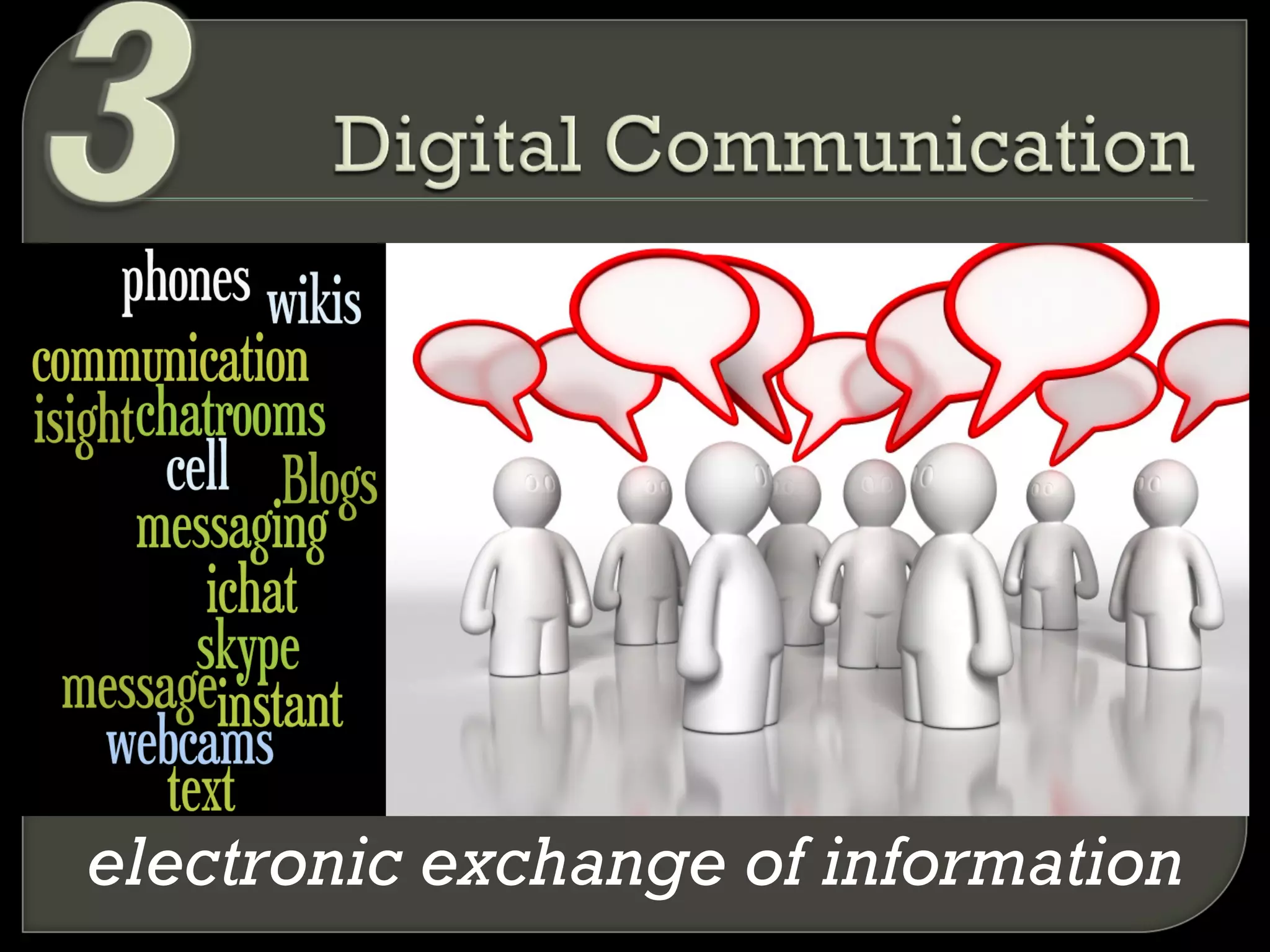
electronic exchange of information
Texting has become the preferred method of communication, how does this change interpersonal communication. Cell phones can be a major distraction in class but some phones allow access to applications and Internet access that could improve learning. How do we teach communication methods in a digital society? Digital Communication definition: the electronic exchange of information
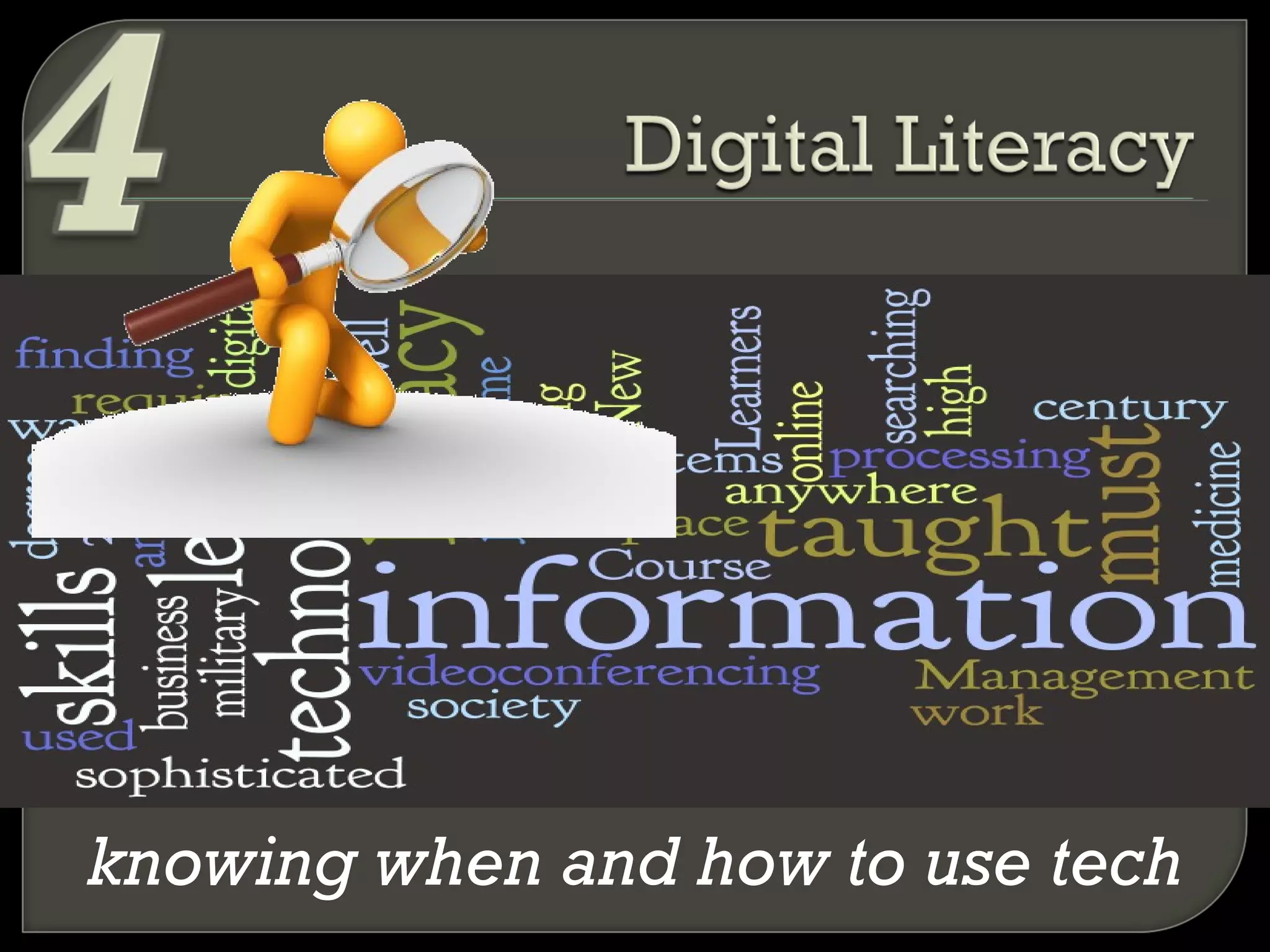
knowing when and how to use tech
Technology infused  learning is becoming common place; however, teaching how to use technology appropriately has not kept pace. Instruction on inappropriate and appropriate use has to be taught as well as the technology itself. Digital Literacy Definition: The capability to use digital technology and knowing when and how to use it.
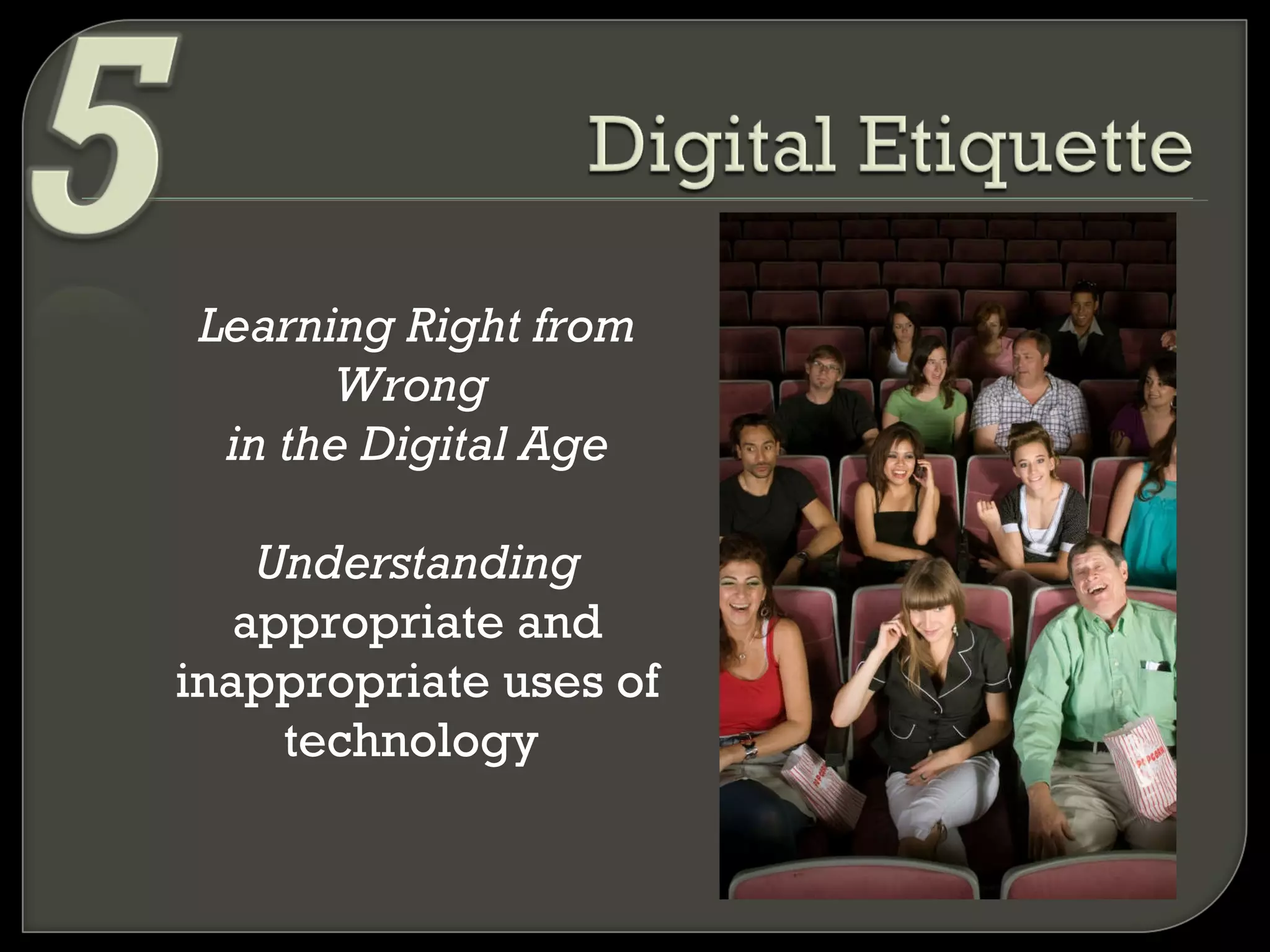
Learning Right from Wrong  in the Digital Age Understanding appropriate and inappropriate uses of technology
Demonstrate proper digital etiquette…. understand the subtle and not so subtle rules when using technology.  Know how your use of technology effects others. Examples: Understand that what is said in text or on a social networking site might be seen (and misunderstood) by others. Know when and how to use handheld devices whether their in school, work, or in public settings. Digital Etiquette Definition: The standard of conduct expected by other digital technology users.
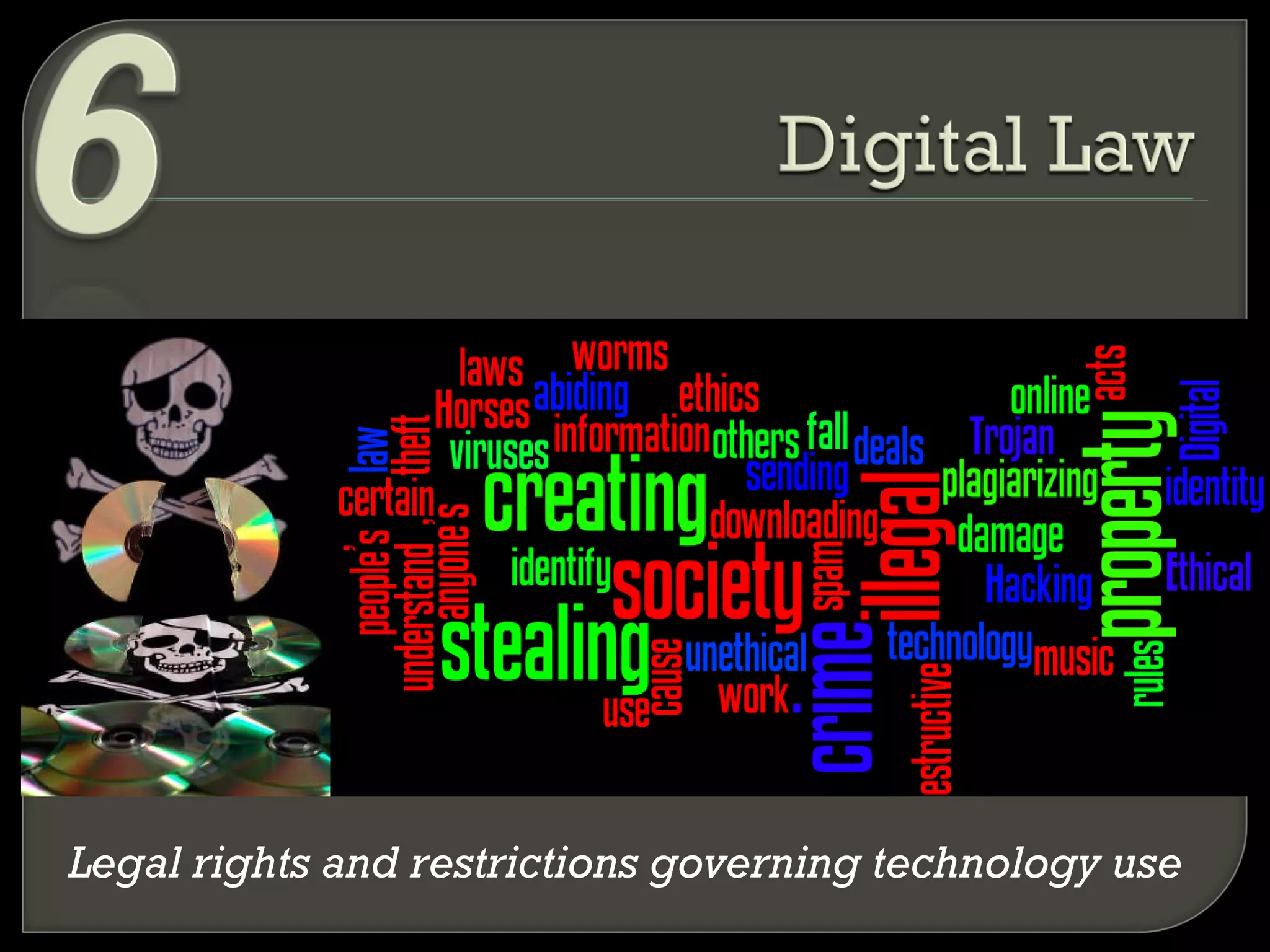
Legal rights and restrictions governing technology use
Are you using technology the way that it was intended or are you infringing on the rights of others? Do you know Copyright procedures in your workplace or school or in general? Examples: Using file sharing sites Pirating software Subverting Digital Rights Management (DRM) tech. Hacking into systems Stealing someone’s identity Digital Law The legal rights and restrictions governing technology use.
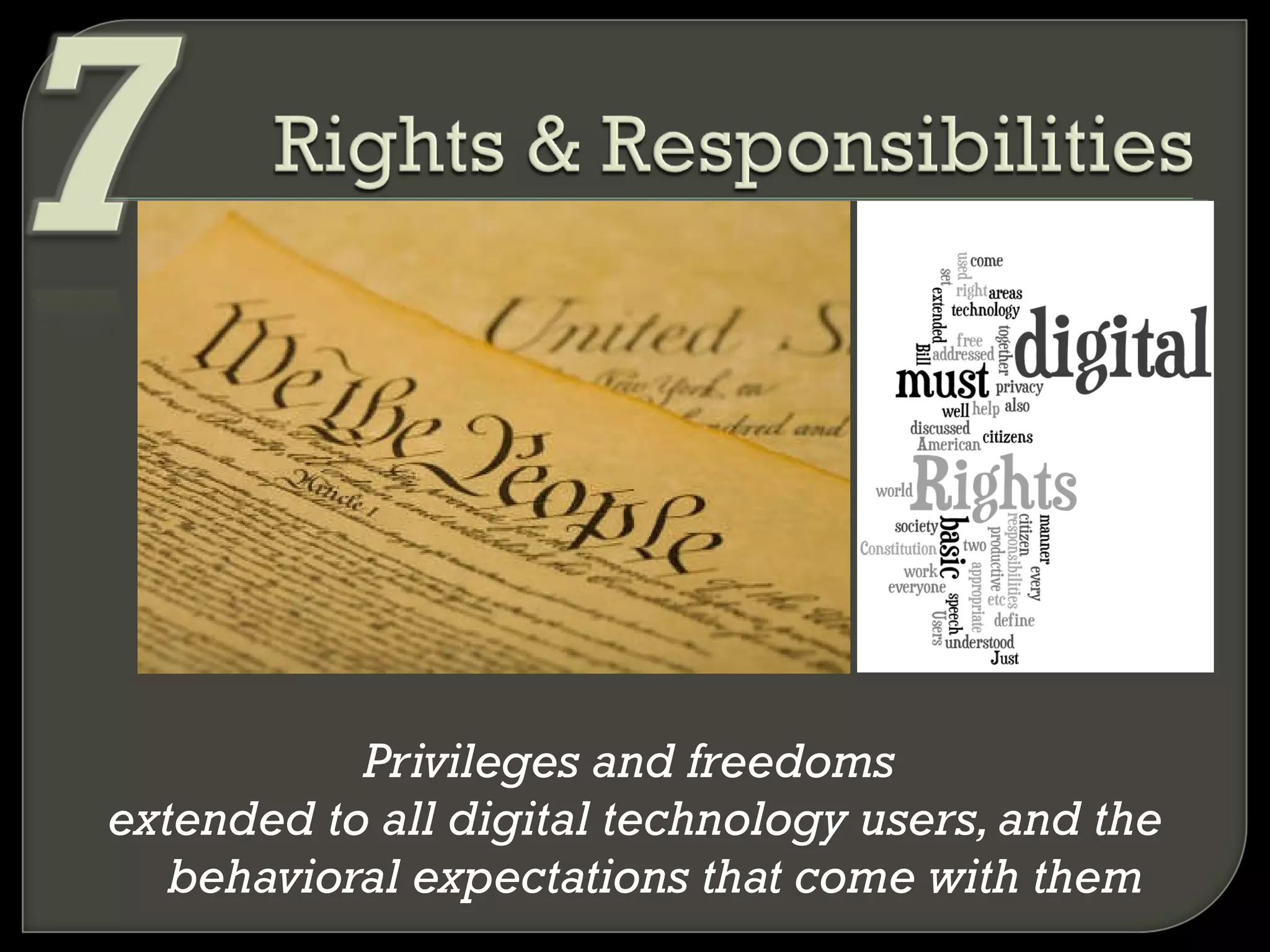
Privileges and freedoms  extended to all digital technology users, and the behavioral expectations that come with them
Do you have a clear understanding of the behavior that is required from you? Examples: Acceptable use policies, terms of use. Using online material ethically, citing sources and requesting permission. Reporting cyberbullies, threats and other inappropriate use.  Google – adheres to  basic good-citizenship tenets such as “do no harm” Rights and Responsibilities The privileges and freedoms extended to all digital technology users, and the behavioral expectations that come with them.
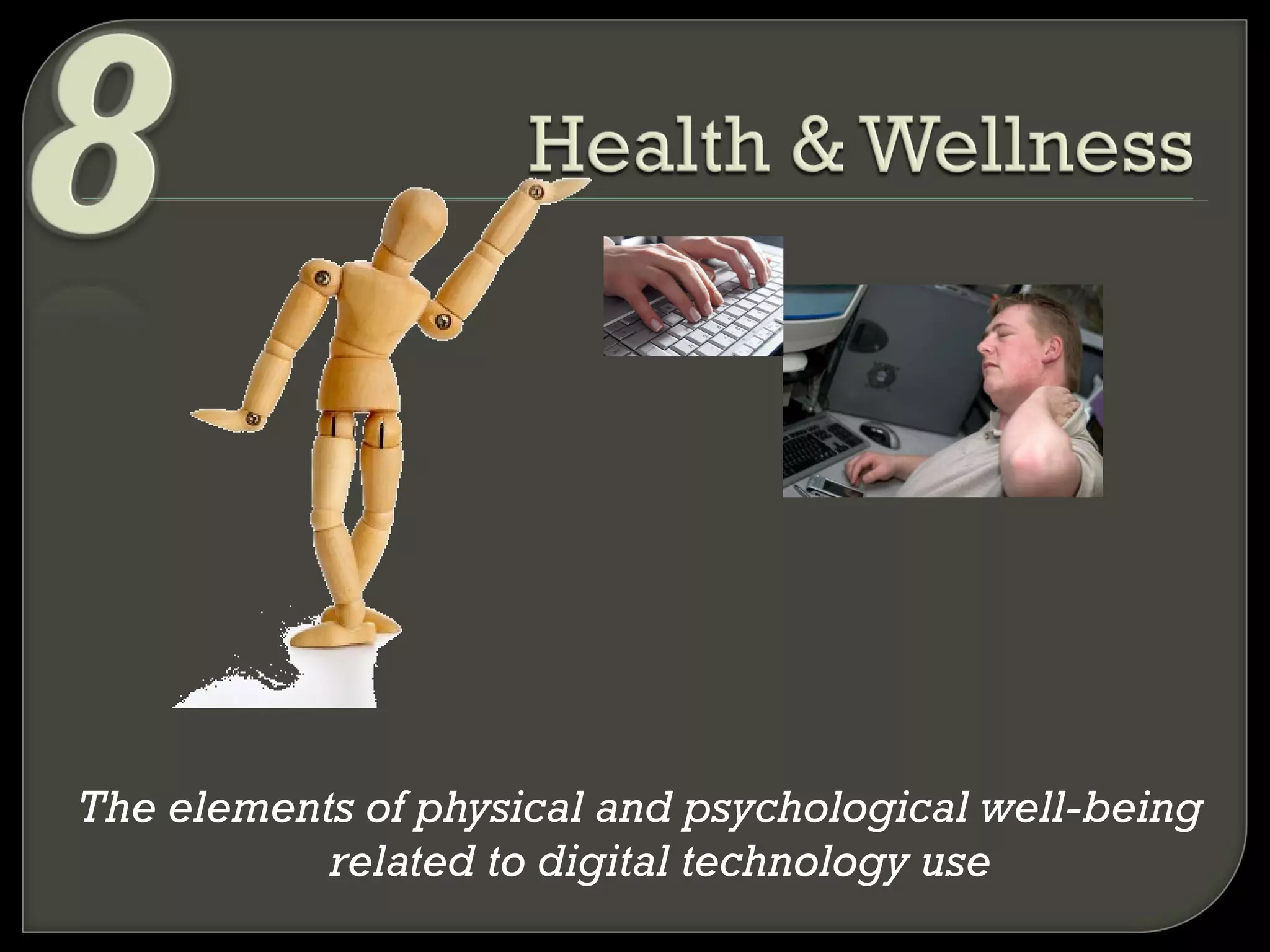
The elements of physical and psychological well-being related to digital technology use
Examples: Carpel Tunnel Syndrome Eyestrain, poor posture Internet addiction Digital Health and Wellness The elements of physical and psychological well-being related to digital technology use.
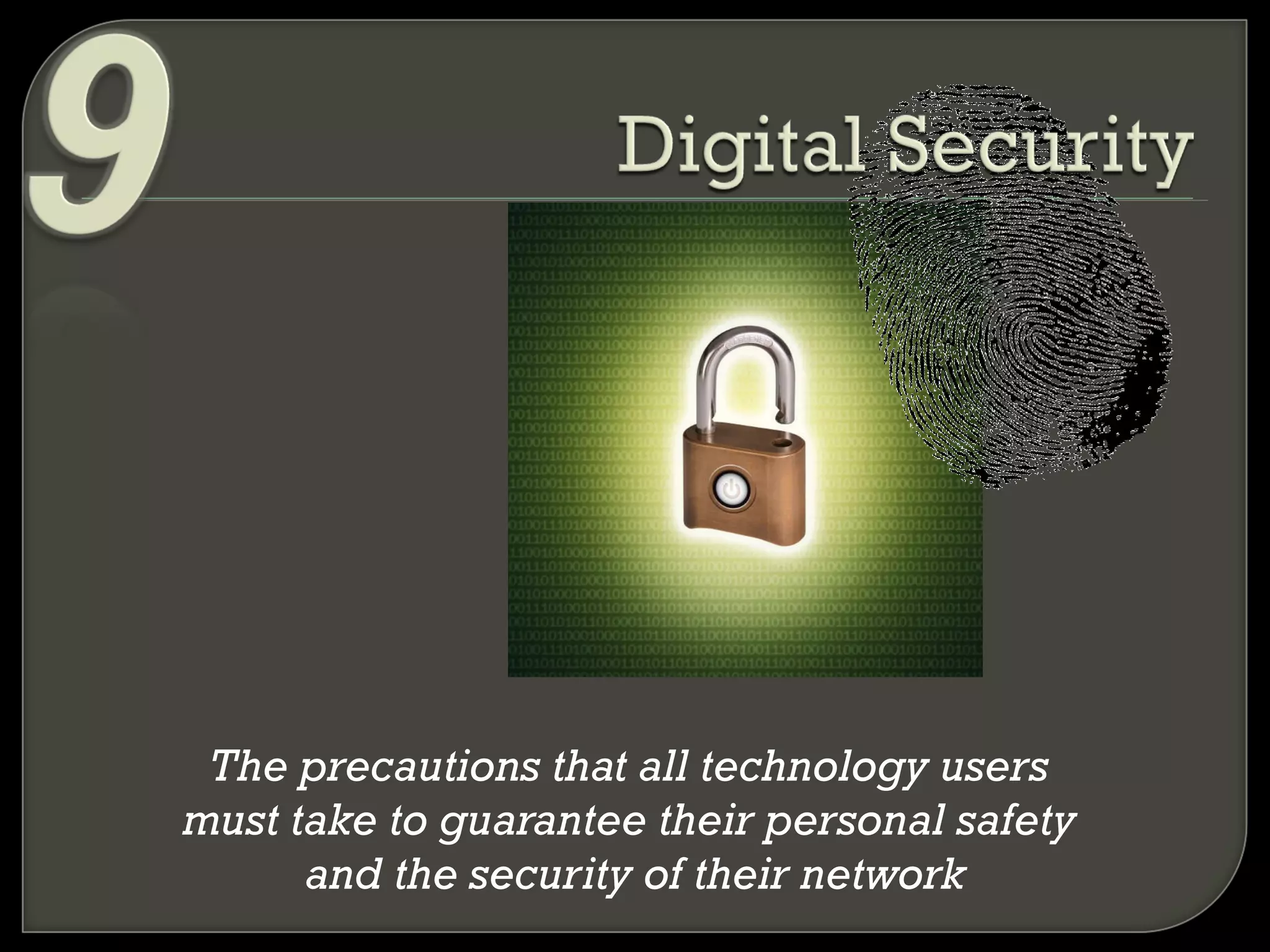
The precautions that all technology users  must take to guarantee their personal safety  and the security of their network
Learn how to protect your data. Virus protection software Firewalls Backups Password- protecting, not sharing, changing, different passwords for different interactions. Https sites Digital Security The precautions that all technology users must take to guarantee their personal safety of their network.
Protecting hardware and network security Protecting personal security, identity theft, phishing, online stalking. Protecting school security: hackers, viruses Protecting community security: terrorist threats Digital Security Issues
By embracing technology and encouraging C@P Users to explore its various forms, we also have a responsibility to demonstrate how to use technology  in a responsible manner.
iSafe http://isafe.org http://www.nsd.org/digitalcitizens   Cyber-Safe Kids, Cyber-Savvy Teens Nancy E. Willard istockphoto istockphoto.com

DigitalCitizenshipPresentation

  • 1.
    Digital citizenship isdefined as the norms of appropriate, responsible behavior with regard to technology use. Nine Elements of Digital Citizenship – an overview
  • 2.
    Digital Access DigitalCommerce Digital Communication Digital Literacy Digital Etiquette Digital Law Digital Rights and Responsibilities Digital Health and Wellness Digital Security Nine Elements of Digital Citizenship
  • 3.
  • 4.
    Do all Canadians have access to technology? Do Canadians have access to technology at home or in their community? Open computer labs After school/work access in libraries High speed access as opposed to dial- up. Digital Access Definition: Full electronic participation in society.
  • 5.
    $$ buying andselling online $$ EBAY iTunes Amazon
  • 6.
    Online purchasing hasbecome an important factor in Canadian lives. More Canadians are shopping online, with sales in 2007 rising to $12.8 billion. Do they buy online understanding the potential risks? - Scams, identity theft, viruses, spyware… - Protecting Privacy (credit card info, bank numbers, or personal data to insecure sites.) Digital Commerce Definition: The buying and selling of goods online.
  • 7.
  • 8.
    Texting has becomethe preferred method of communication, how does this change interpersonal communication. Cell phones can be a major distraction in class but some phones allow access to applications and Internet access that could improve learning. How do we teach communication methods in a digital society? Digital Communication definition: the electronic exchange of information
  • 9.
    knowing when andhow to use tech
  • 10.
    Technology infused learning is becoming common place; however, teaching how to use technology appropriately has not kept pace. Instruction on inappropriate and appropriate use has to be taught as well as the technology itself. Digital Literacy Definition: The capability to use digital technology and knowing when and how to use it.
  • 11.
    Learning Right fromWrong in the Digital Age Understanding appropriate and inappropriate uses of technology
  • 12.
    Demonstrate proper digitaletiquette…. understand the subtle and not so subtle rules when using technology. Know how your use of technology effects others. Examples: Understand that what is said in text or on a social networking site might be seen (and misunderstood) by others. Know when and how to use handheld devices whether their in school, work, or in public settings. Digital Etiquette Definition: The standard of conduct expected by other digital technology users.
  • 13.
    Legal rights andrestrictions governing technology use
  • 14.
    Are you usingtechnology the way that it was intended or are you infringing on the rights of others? Do you know Copyright procedures in your workplace or school or in general? Examples: Using file sharing sites Pirating software Subverting Digital Rights Management (DRM) tech. Hacking into systems Stealing someone’s identity Digital Law The legal rights and restrictions governing technology use.
  • 15.
    Privileges and freedoms extended to all digital technology users, and the behavioral expectations that come with them
  • 16.
    Do you havea clear understanding of the behavior that is required from you? Examples: Acceptable use policies, terms of use. Using online material ethically, citing sources and requesting permission. Reporting cyberbullies, threats and other inappropriate use. Google – adheres to basic good-citizenship tenets such as “do no harm” Rights and Responsibilities The privileges and freedoms extended to all digital technology users, and the behavioral expectations that come with them.
  • 17.
    The elements ofphysical and psychological well-being related to digital technology use
  • 18.
    Examples: Carpel TunnelSyndrome Eyestrain, poor posture Internet addiction Digital Health and Wellness The elements of physical and psychological well-being related to digital technology use.
  • 19.
    The precautions thatall technology users must take to guarantee their personal safety and the security of their network
  • 20.
    Learn how toprotect your data. Virus protection software Firewalls Backups Password- protecting, not sharing, changing, different passwords for different interactions. Https sites Digital Security The precautions that all technology users must take to guarantee their personal safety of their network.
  • 21.
    Protecting hardware andnetwork security Protecting personal security, identity theft, phishing, online stalking. Protecting school security: hackers, viruses Protecting community security: terrorist threats Digital Security Issues
  • 22.
    By embracing technologyand encouraging C@P Users to explore its various forms, we also have a responsibility to demonstrate how to use technology in a responsible manner.
  • 23.
    iSafe http://isafe.org http://www.nsd.org/digitalcitizens Cyber-Safe Kids, Cyber-Savvy Teens Nancy E. Willard istockphoto istockphoto.com

Editor's Notes

  • #7 Sometimes this element is the most difficult for teachers to address in the classroom. Some teachers feel that this is not their responsibility to teach students to be informed, careful consumers. Because online purchasing is becoming the norm, students should be taught to understand this process. Anyone who is actively working, playing, or purchasing items online is a member not only of a digital community but of an economic community as well. Students need to understand that their actrions online can folow them throughout their life ( running up credit card debt).