DEVELOPING IT SOLUTIONS IN
ORGANIZATION
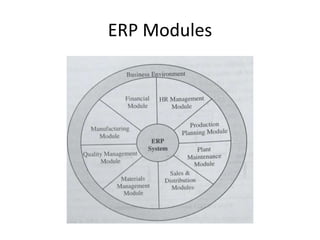
ERP Modules
System Development Life Cycle (SDLC)
• Development of Information System for
solving business problems is Information
System or Application Development’
• Systems are designed and implemented using
a systematic development process – Systems
Analysis & Design
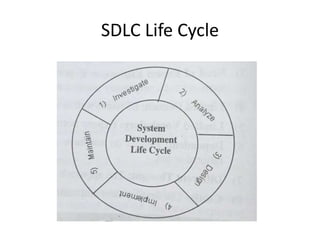
SDLC Life Cycle
Steps in SDLC
1)Investigate
2)Analyze
3)Design
4)Implement
5)Maintain
1.INVESTIGATION
Investigation
1) Is there a business problem?
2) Reason of problem?
3) Will new & improved Information System
solve the problem?
4) Which is most feasible Information System
solution to problem?
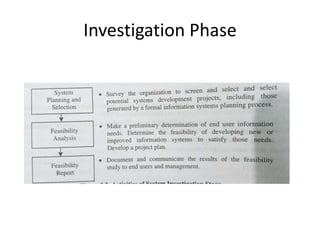
Investigation Phase
Feasibility /Analysis Study
• Analysis of risk, costs and benefits to each
alternative solution of problem
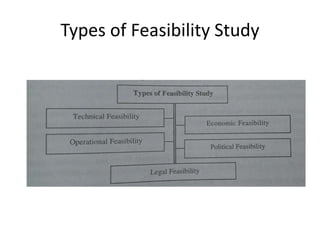
Types of Feasibility Study
Technical Feasibility
• Suggested technology exists? Acquired?
• Recommended solution handle sufficient data
required for new solution?
• Offer responses to enquiries from number of
users from different locations
• System expandable?
• Technical guarantee for accuracy ,reliability
and security?
Economic Feasibility
• Cost Benefit Analysis
• Cost of hardware ,software ,license ,personnel
,office space etc vis a vis benefits
• Recovery of costs?
Operational Feasibility
• Can people work with new system?
• Supported by Management & Users?
• Current methods acceptable to all?
• Change impact customers?
• Change slow down performance in any area?
Legal Feasibility
• Copyright , IPR infringement ?
• License ?
2. ANALYSIS
SYSTEM ANALYSIS
• What to do?
• How to do?
• Systematic investigation of real or planned
system to determine function of the system &
how they relate to each other and to any
other system
• In software development , requirement phase
is most crucial .
• User controlled stage
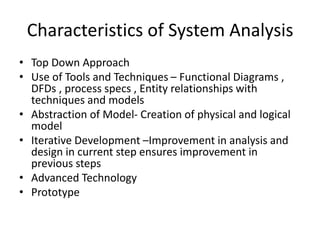
Characteristics of System Analysis
• Top Down Approach
• Use of Tools and Techniques – Functional Diagrams ,
DFDs , process specs , Entity relationships with
techniques and models
• Abstraction of Model- Creation of physical and logical
model
• Iterative Development –Improvement in analysis and
design in current step ensures improvement in
previous steps
• Advanced Technology
• Prototype
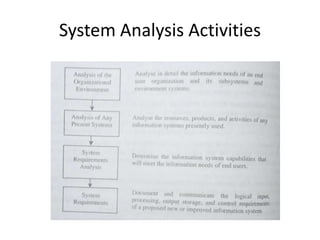
System Analysis Activities
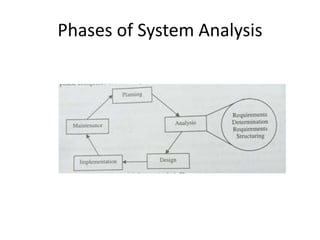
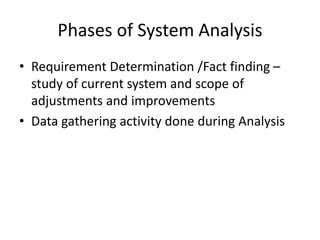
Phases of System Analysis
• Requirement Determination /Fact finding –
study of current system and scope of
adjustments and improvements
• Data gathering activity done during Analysis
Data Flow Diagram (DFD)
• Graphical representation of data flow through
an Information System is called DFD
• Used for problem understanding and Analysis
of system
• Depicts flow of data through the system
• DFD captures the transformation of input data
to produce output data
• DFD reflects movements of data through the
different transformation in the system
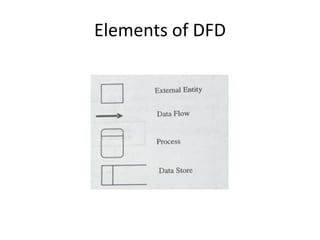
Elements of DFD
• 1.Process –Activity performed according to incoming
data flow or conditions – represented as ‘circle’ or
‘rectangle’
• 2Data Flow – Input /Output of data – represented by
‘solid line with arrow”
• 3 External Entity – Another department . A business,
person ,machine can be used to send or receive data to
and from the system . Represented by ‘square’
• 4.Data Store – Data is stored in ‘data store’ –
represented by ‘open ended box’, inventory of data
Elements of DFD
Levels of DFD
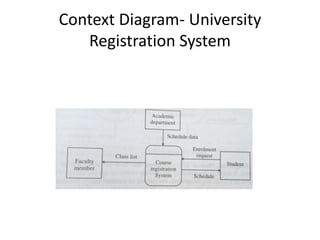
• 1.Context Diagram –highest level in DFD –
single process representing entire system
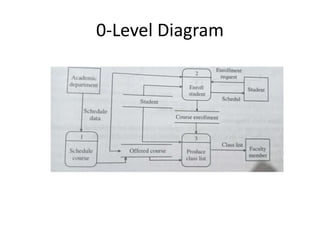
• 2. O Level Diagram – All process models have
only one level 0 DFD
Context Diagram- University
Registration System
0-Level Diagram
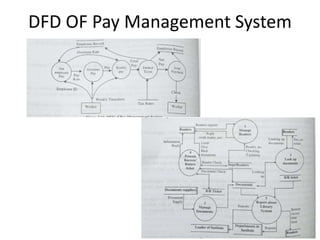
DFD OF Pay Management System

5.Developing IT Solution.pptx

  • 1.
    DEVELOPING IT SOLUTIONSIN ORGANIZATION
  • 2.
  • 3.
    System Development LifeCycle (SDLC) • Development of Information System for solving business problems is Information System or Application Development’ • Systems are designed and implemented using a systematic development process – Systems Analysis & Design
  • 4.
  • 5.
  • 6.
  • 7.
    Investigation 1) Is therea business problem? 2) Reason of problem? 3) Will new & improved Information System solve the problem? 4) Which is most feasible Information System solution to problem?
  • 8.
  • 9.
    Feasibility /Analysis Study •Analysis of risk, costs and benefits to each alternative solution of problem
  • 10.
  • 11.
    Technical Feasibility • Suggestedtechnology exists? Acquired? • Recommended solution handle sufficient data required for new solution? • Offer responses to enquiries from number of users from different locations • System expandable? • Technical guarantee for accuracy ,reliability and security?
  • 12.
    Economic Feasibility • CostBenefit Analysis • Cost of hardware ,software ,license ,personnel ,office space etc vis a vis benefits • Recovery of costs?
  • 13.
    Operational Feasibility • Canpeople work with new system? • Supported by Management & Users? • Current methods acceptable to all? • Change impact customers? • Change slow down performance in any area?
  • 14.
    Legal Feasibility • Copyright, IPR infringement ? • License ?
  • 15.
  • 16.
    SYSTEM ANALYSIS • Whatto do? • How to do? • Systematic investigation of real or planned system to determine function of the system & how they relate to each other and to any other system • In software development , requirement phase is most crucial . • User controlled stage
  • 17.
    Characteristics of SystemAnalysis • Top Down Approach • Use of Tools and Techniques – Functional Diagrams , DFDs , process specs , Entity relationships with techniques and models • Abstraction of Model- Creation of physical and logical model • Iterative Development –Improvement in analysis and design in current step ensures improvement in previous steps • Advanced Technology • Prototype
  • 18.
  • 19.
  • 20.
    Phases of SystemAnalysis • Requirement Determination /Fact finding – study of current system and scope of adjustments and improvements • Data gathering activity done during Analysis
  • 21.
    Data Flow Diagram(DFD) • Graphical representation of data flow through an Information System is called DFD • Used for problem understanding and Analysis of system • Depicts flow of data through the system • DFD captures the transformation of input data to produce output data • DFD reflects movements of data through the different transformation in the system
  • 22.
    Elements of DFD •1.Process –Activity performed according to incoming data flow or conditions – represented as ‘circle’ or ‘rectangle’ • 2Data Flow – Input /Output of data – represented by ‘solid line with arrow” • 3 External Entity – Another department . A business, person ,machine can be used to send or receive data to and from the system . Represented by ‘square’ • 4.Data Store – Data is stored in ‘data store’ – represented by ‘open ended box’, inventory of data
  • 23.
  • 24.
    Levels of DFD •1.Context Diagram –highest level in DFD – single process representing entire system • 2. O Level Diagram – All process models have only one level 0 DFD
  • 25.
  • 26.
  • 27.
    DFD OF PayManagement System