System Development
Life Cycle
Vinod Kumar Sharma
Core Faculty
RTI Jaipur
PGDBA (Finance) and CISA (USA)
What is SDLC
 A Framework
 That describes the activities performed
 At each stage of
 A software development project
Approaches to Audit of System
Development Process
 Concurrent Audit
 Postimplementation Audit
 General Audit
Normative Models of the System
Development Process
 System Development Life Cycle Approach
 Sociotechnical Design Approach
 Political Approach
 Soft-systems Approach
 Prototyping Approach
 Contingency Approach
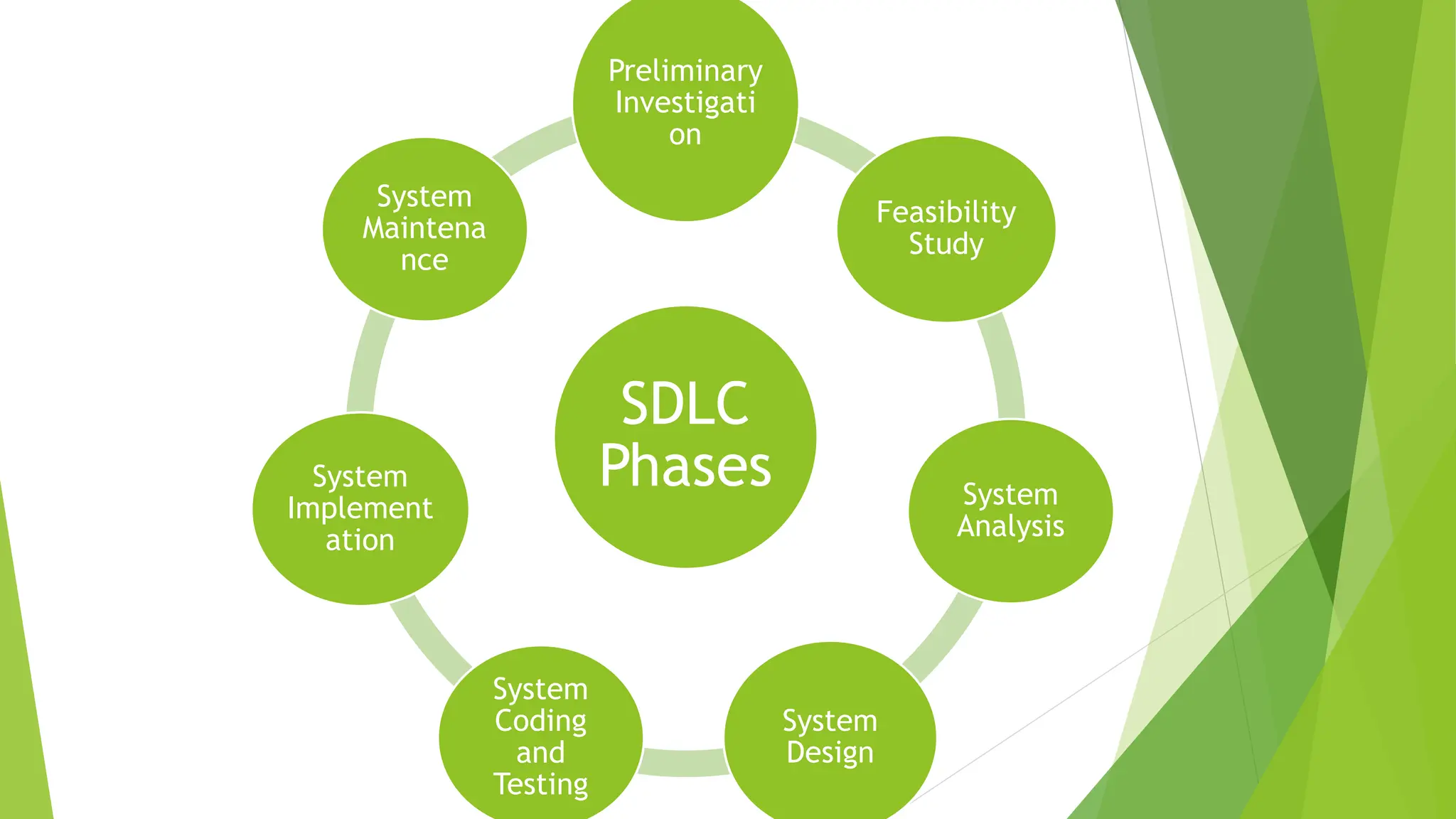
SDLC
Phases
Preliminary
Investigati
on
Feasibility
Study
System
Analysis
System
Design
System
Coding
and
Testing
System
Implement
ation
System
Maintena
nce
Phase-I
Preliminary Investigation
Phase-I
Preliminary
Tasks
 What is the problem
 Determine if a new system is needed
 Whether an alternative system will solve the
problem
Results
 Need for improving the existing system is
recognised
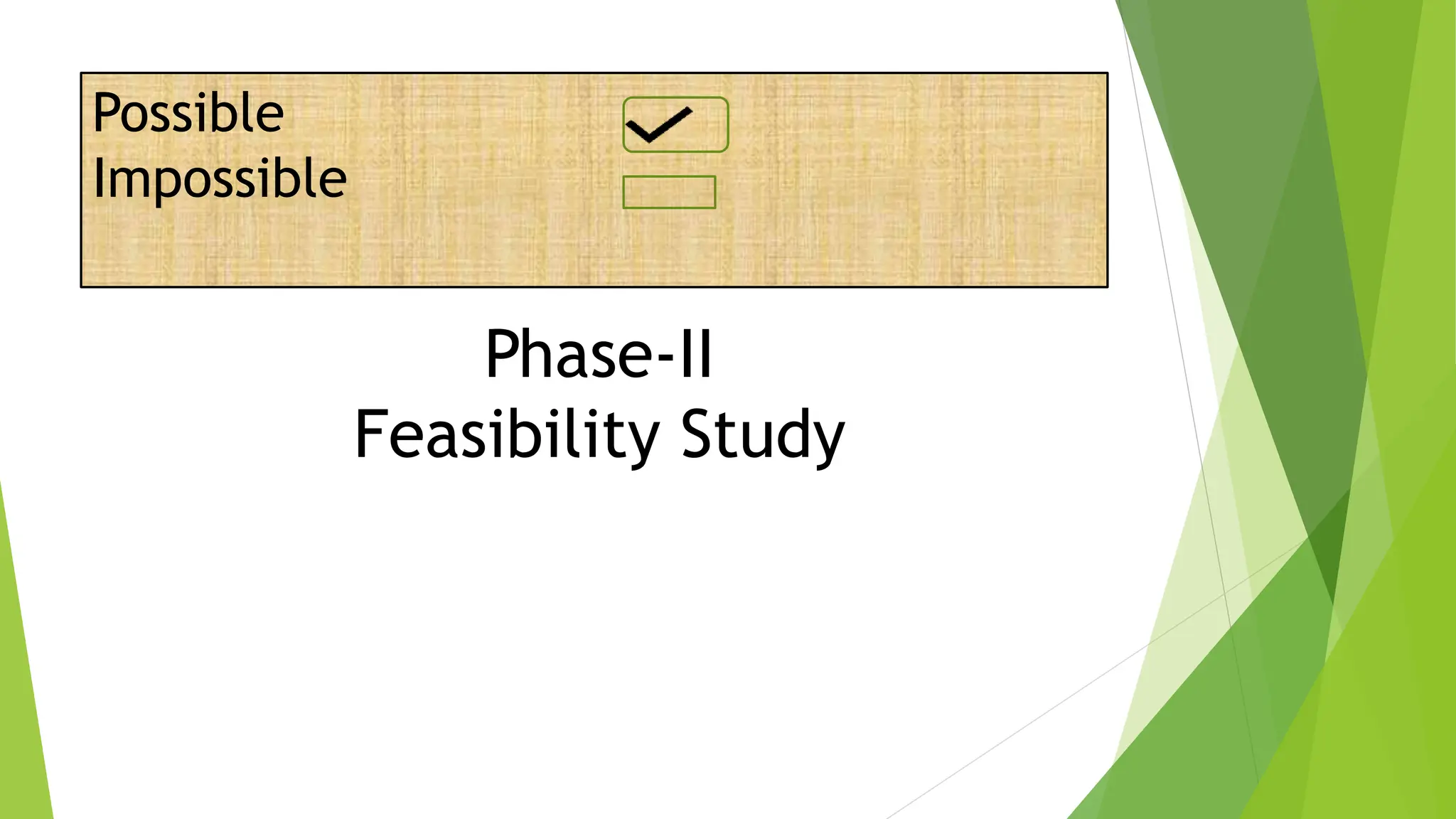
Possible
Impossible
Phase-II
Feasibility Study
Phase-II
Feasibility Study
Tasks
 Evaluate alternatives based upon
 Economic Feasibility-Do benefits justify costs-Net Present
Value
 Technical Feasibility-Is reliable technology and training
available
 Operational Feasibility-Will the management and users
support it
 Value anlaysis
Phase-3
System Analysis
Tasks
 Detailed study of various operations
performed by the system
 Studying the existing organisational history,
structure, and culture
 Define boundaries of the candidate system
 Data collection or data gathering
Phase-3
System Analysis
Tools
 Data flow diagrams
 Interviews
 Onsite observations
 Questionnaires
 Data dictionaries
Phase-3
System Analysis
 Results
 SRS (Software Requirement Specification)
document is finalised which includes:
 Functional and non-functional requirements
 What the system will do and what it is not
expected to do
 Information about other systems with which
system must interface
Phase-4
System Design
 Most creative and challenging phase
 Translates the performance requirements into design
specifications
Tasks
 How should the problem be solved
 Organisational and job designs prepared
 Information processing systems design
 Design of the database
 Design of the user interface
 Physical design
 Input data and master files are designed
 Output formats are designed
Phase-4
System Design
Results
 Detailed System Document
 Procedural flowcharts
 Record layouts
 Report layouts
 Workable plan for implementing candidate system
Phase-5
System Coding and Testing
Phase-5
System Coding and Testing
 Build the system to the design specifications
 Develop the software
 Acquire the hardware
 Test the system for acceptance
 Program Testing (Unit testing)
 System Testing
 User Acceptance Testing
 Quality Assurance Testing
Phase-6
System Implementation
Phase-6
System Implementation
 Covert from old system to new system
 Compile final documentation
 Evaluate the new system
Phase-6
System Implementation
 Types of Conversion
 Direct/plunge/crash approach-entire new system
completely replaces entire old system, in one
step
 Parallel approach-both systems are operated side
by side until the new system proves itself
 Pilot approach-launched new system for only one
group within the business
 Phased/incremental approach-individual parts of
new system are gradually phased-in over time
Phase-7
System Maintenance
 Keeping everything running
Phase-7
System Maintenance
 Types of Maintenance
 Correction of new bugs found (corrective)
 System adjustments to environmental changes and
users’ changing needs (adaptive)
 Enhancing the performance, changes to use better
techniques when they become available
(perfective)
Thank you

SDLC life cycle model for 2021 regulation OOSE