© ABCi 2019
What is an Ease/Benefit Matrix?
An ease/benefit matrix is a tool that can help to
prioritise solutions by comparing two factors:
• How easy is this do to?
• How big a benefit or impact will we achieve?
What are the benefits of using this tool?
It ensures that resources are directed to solutions that are likely to have the greatest impact and are the
easiest to implement. This is a team activity so any decisions made are based on team consensus.
When would you use this tool?
After you have generated a lot of solutions, for
instance as part of a brainstorming session, and
want to prioritise them into a workable order.
How do you do it?
Step 1: Give everyone post-it notes to generate possible solutions. Encourage the team to think of any
possible solutions (there should be no constraints at this point). (see ‘Brainstorming’ or ‘Nominal
Group Technique’ Skills for Improvement guides). You might want to group these into themes (see
‘Affinity Diagrams’ Skills for Improvement guide)
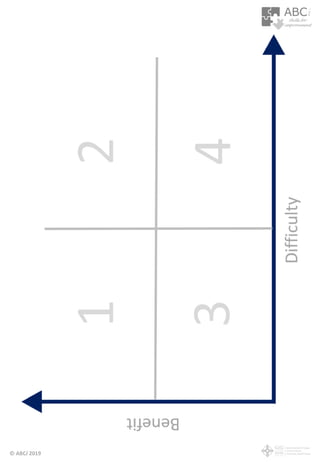
Step 2: Following discussion, the generated post-it notes should then be allocated into one of the four
boxes of the ease/benefit matrix - see layout on next page.
Step 3: Use the matrix as a guide to make decisions about which solutions to tackle first. Focus your
ideas on the post-it notes in box 1 (top right) as these will be the easiest to implement and will give you
the most benefit. These are also known as ‘quick wins’ or ‘low hanging fruit’ and will give confidence to
the team when successfully implemented.
Step 4: You might also want to start working on your ideas in box 2. These are longer term actions and
might include working with multiple stakeholders or creating a business case for any investment you
may need.
Step 5: The ideas in box 3 are sometimes useful to address on as these can be issues that have been
identified as being important to the team and can start early momentum for change; however do not
attribute too many resources to these ideas at this point.
Step 6: The ideas in box 4 are difficult to implement and gain little benefit, do not touch!
What resources do I need?
• Flipchart paper
• Pens
• Post-it notes
Ease/Benefit
Matrix
ABC
improvement
iSkills for
Who needs to be involved?
This is a team activity so those with expert knowledge of
the area in question should contribute their experiences and
ideas.
© ABCi 2019

5 s4 i ease benefit matrix final

  • 1.
    © ABCi 2019 Whatis an Ease/Benefit Matrix? An ease/benefit matrix is a tool that can help to prioritise solutions by comparing two factors: • How easy is this do to? • How big a benefit or impact will we achieve? What are the benefits of using this tool? It ensures that resources are directed to solutions that are likely to have the greatest impact and are the easiest to implement. This is a team activity so any decisions made are based on team consensus. When would you use this tool? After you have generated a lot of solutions, for instance as part of a brainstorming session, and want to prioritise them into a workable order. How do you do it? Step 1: Give everyone post-it notes to generate possible solutions. Encourage the team to think of any possible solutions (there should be no constraints at this point). (see ‘Brainstorming’ or ‘Nominal Group Technique’ Skills for Improvement guides). You might want to group these into themes (see ‘Affinity Diagrams’ Skills for Improvement guide) Step 2: Following discussion, the generated post-it notes should then be allocated into one of the four boxes of the ease/benefit matrix - see layout on next page. Step 3: Use the matrix as a guide to make decisions about which solutions to tackle first. Focus your ideas on the post-it notes in box 1 (top right) as these will be the easiest to implement and will give you the most benefit. These are also known as ‘quick wins’ or ‘low hanging fruit’ and will give confidence to the team when successfully implemented. Step 4: You might also want to start working on your ideas in box 2. These are longer term actions and might include working with multiple stakeholders or creating a business case for any investment you may need. Step 5: The ideas in box 3 are sometimes useful to address on as these can be issues that have been identified as being important to the team and can start early momentum for change; however do not attribute too many resources to these ideas at this point. Step 6: The ideas in box 4 are difficult to implement and gain little benefit, do not touch! What resources do I need? • Flipchart paper • Pens • Post-it notes Ease/Benefit Matrix ABC improvement iSkills for Who needs to be involved? This is a team activity so those with expert knowledge of the area in question should contribute their experiences and ideas.
  • 2.