Learning
Objectives
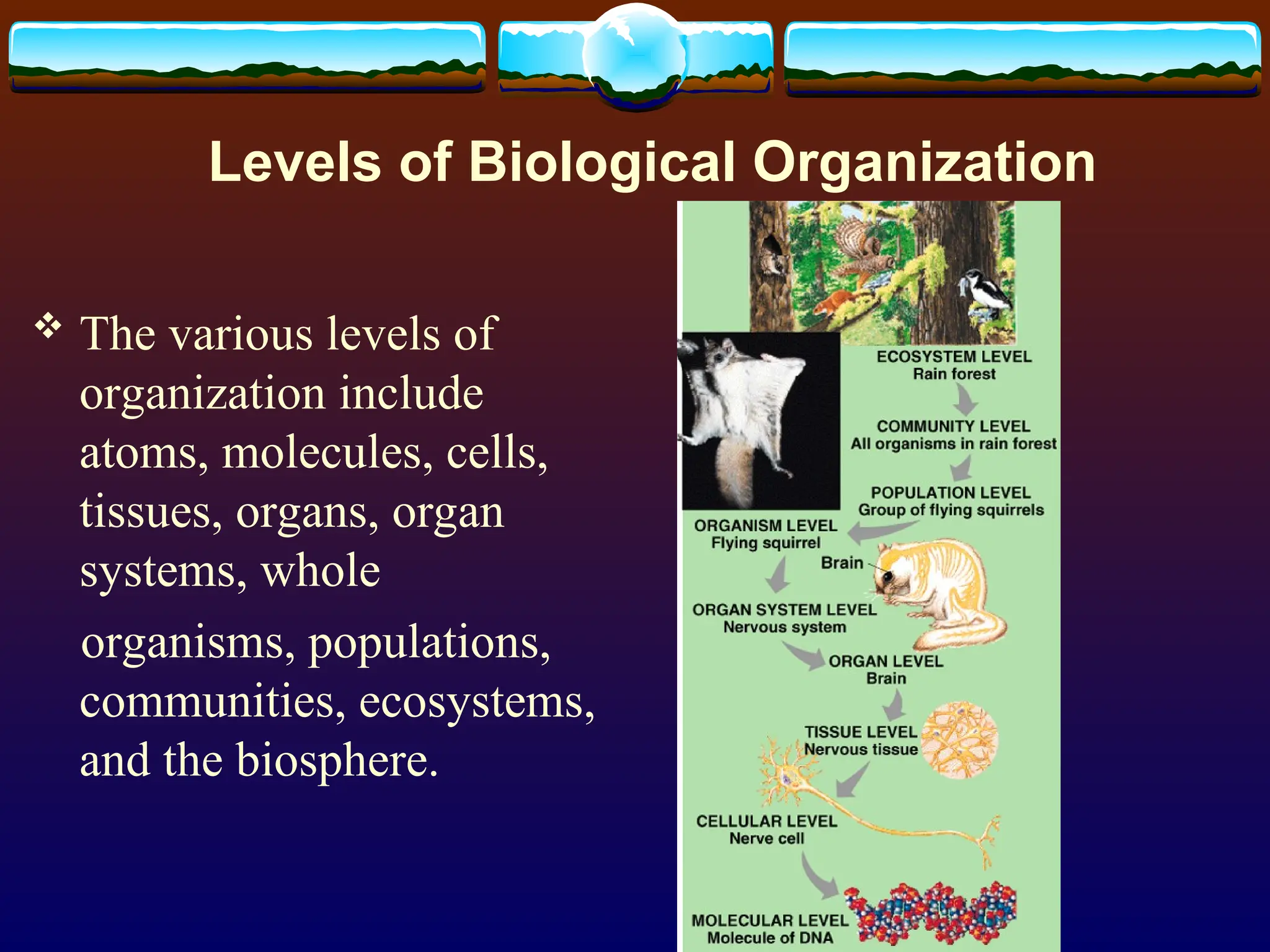
Levels of Biological Organization
 The various levels of
organization include
atoms, molecules, cells,
tissues, organs, organ
systems, whole
organisms, populations,
communities, ecosystems,
and the biosphere.
Molecular Level:Atoms (molecules)
 Atoms are the smallest unit
of matter that have the
chemical properties of a
particular chemical element.
 Molecules the smallest
particle of a substance that
retains all the properties of
the substance and is
composed of one or more
atoms
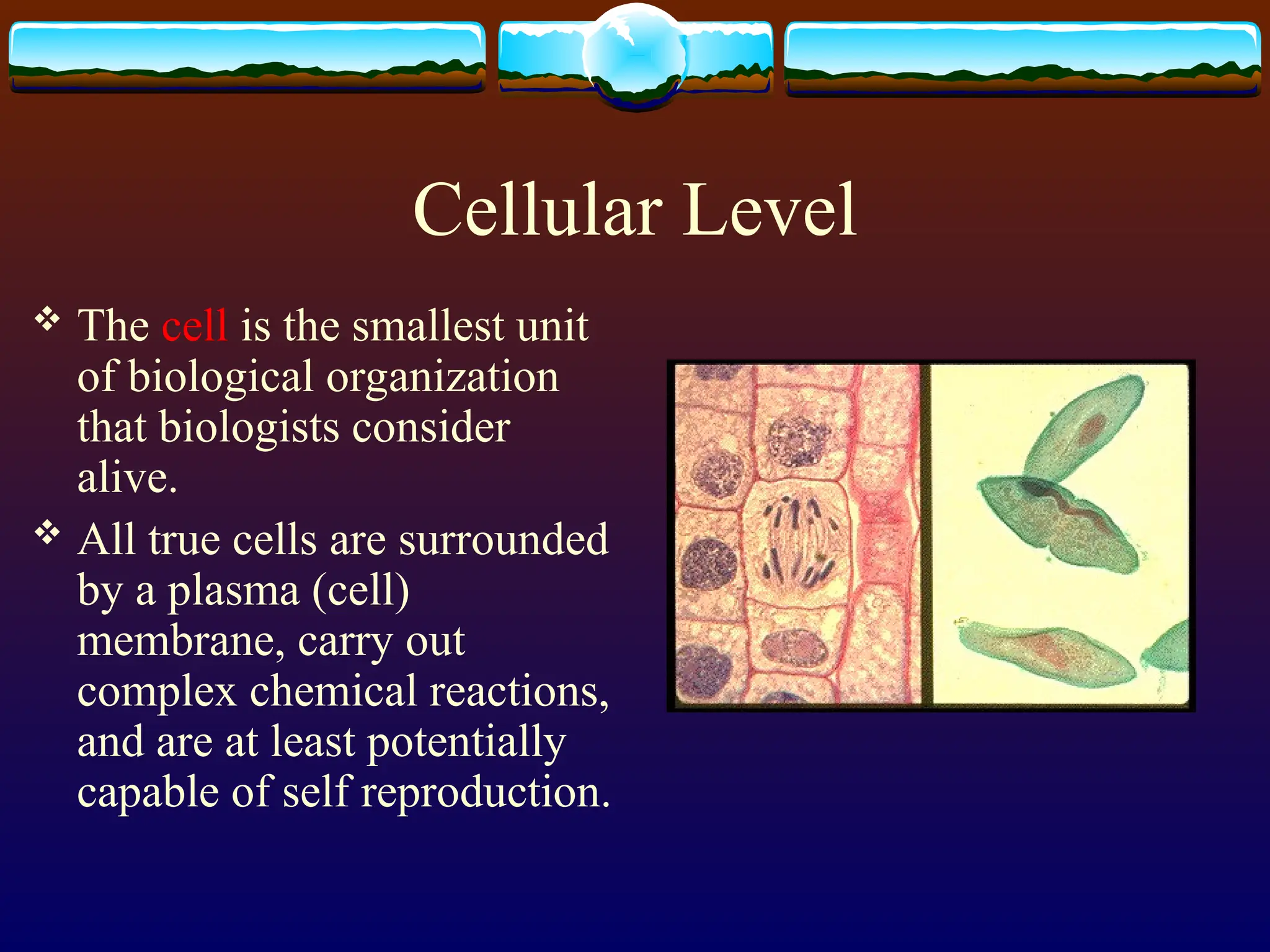
Cellular Level
 The cell is the smallest unit
of biological organization
that biologists consider
alive.
 All true cells are surrounded
by a plasma (cell)
membrane, carry out
complex chemical reactions,
and are at least potentially
capable of self reproduction.
Tissue Level
A tissue is a group
of distinct and
similar cells that
carry out a specific
set of functions.
Organ Level
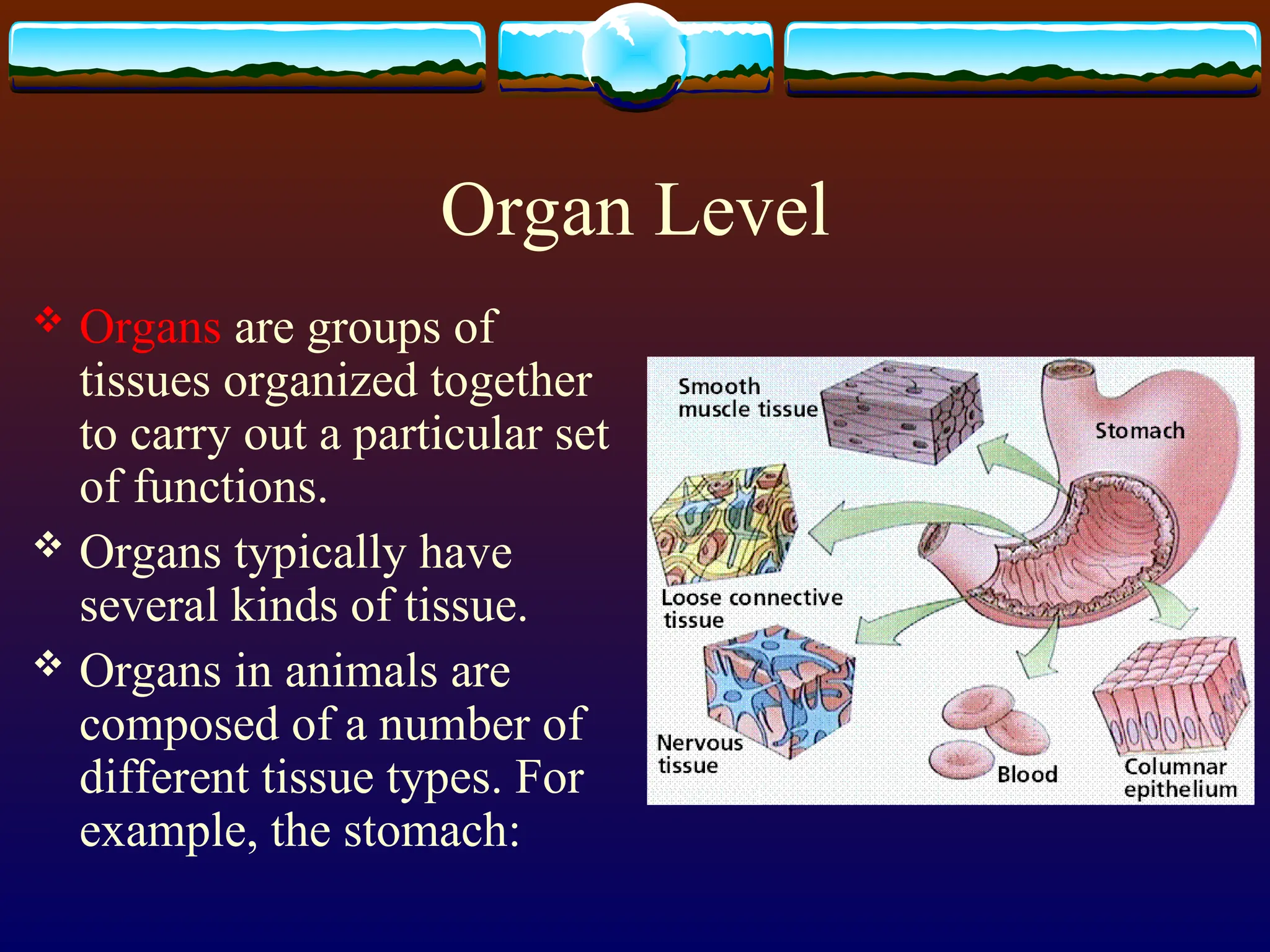
 Organs are groups of
tissues organized together
to carry out a particular set
of functions.
 Organs typically have
several kinds of tissue.
 Organs in animals are
composed of a number of
different tissue types. For
example, the stomach:
Organ System Level
 Multicellular organisms,
especially animals typically are
organized into organ systems,
groups of organs that function
together to carry out broad sets
of functions. For instance an
organ system in humans is the
digestive system.
 Some of the organs in the
digestive system are the stomach,
liver, small intestine, pancreas.
Organs
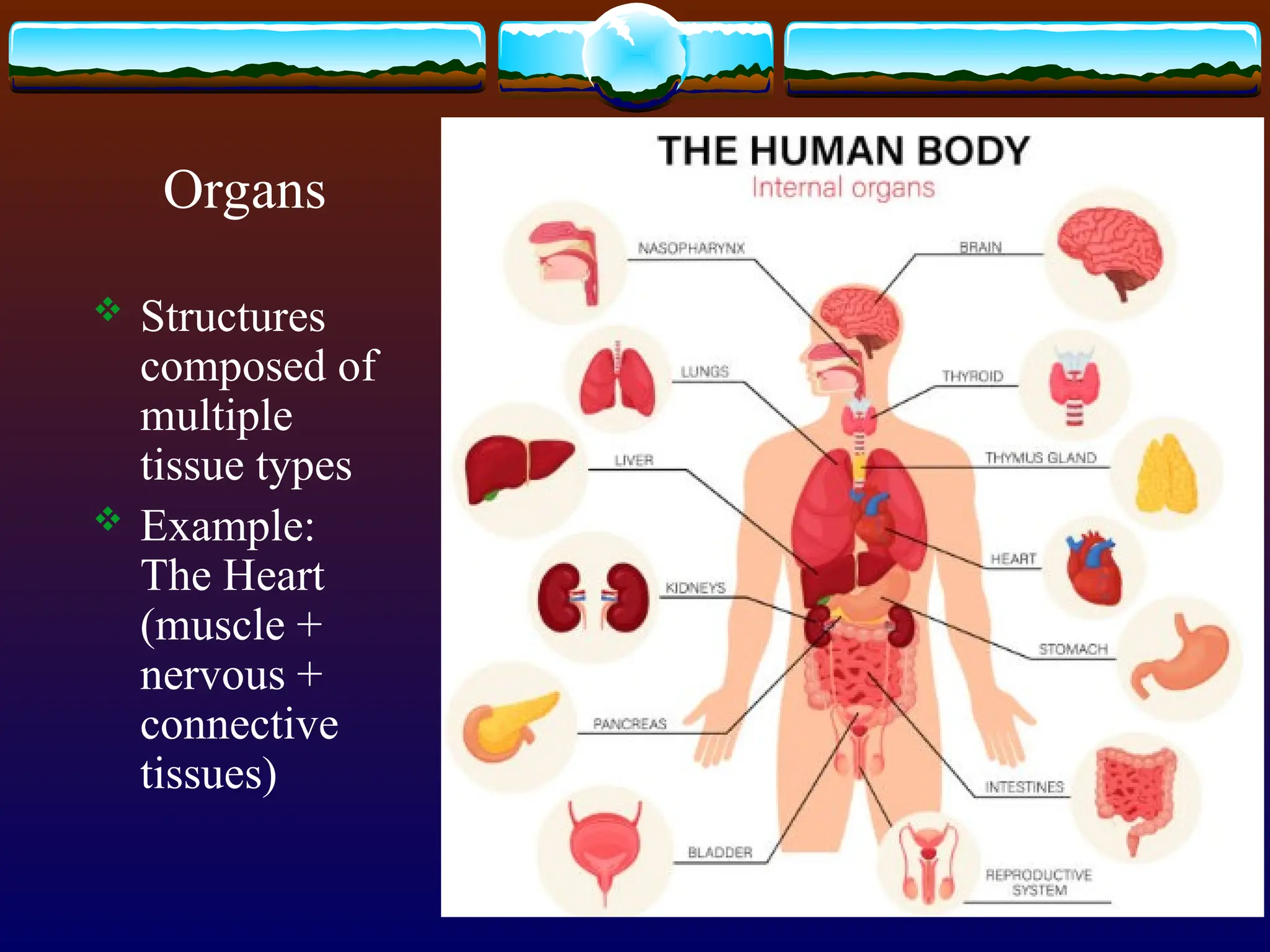
 Structures
composed of
multiple
tissue types
 Example:
The Heart
(muscle +
nervous +
connective
tissues)
Organ
Systems
 Groups of organs performing a
common function
 Example: Digestive system – mouth,
stomach, intestines
Organism Level
 The organism or individual is
that level of biological
organization that has its own
distinct existence as a
complex, self reproducing unit.
 We are multi-cellular
organisms in that we are made
of many highly specialized
cells which cannot exist
independently of other cells in
the organism.
Population Level
 A population is group of freely
interacting and breeding
individuals of the same
species. For example, all the
bull frogs in a pond can be
considered a population of
bullfrogs. Typically
populations are subdivided into
smaller groups: a pack of
wolves, pride of lions, colony
of ants.
A pack of wolves
Population
→
Community
 Population: All individuals of a species
in an area
 Community: All different species in an
area
Community Level
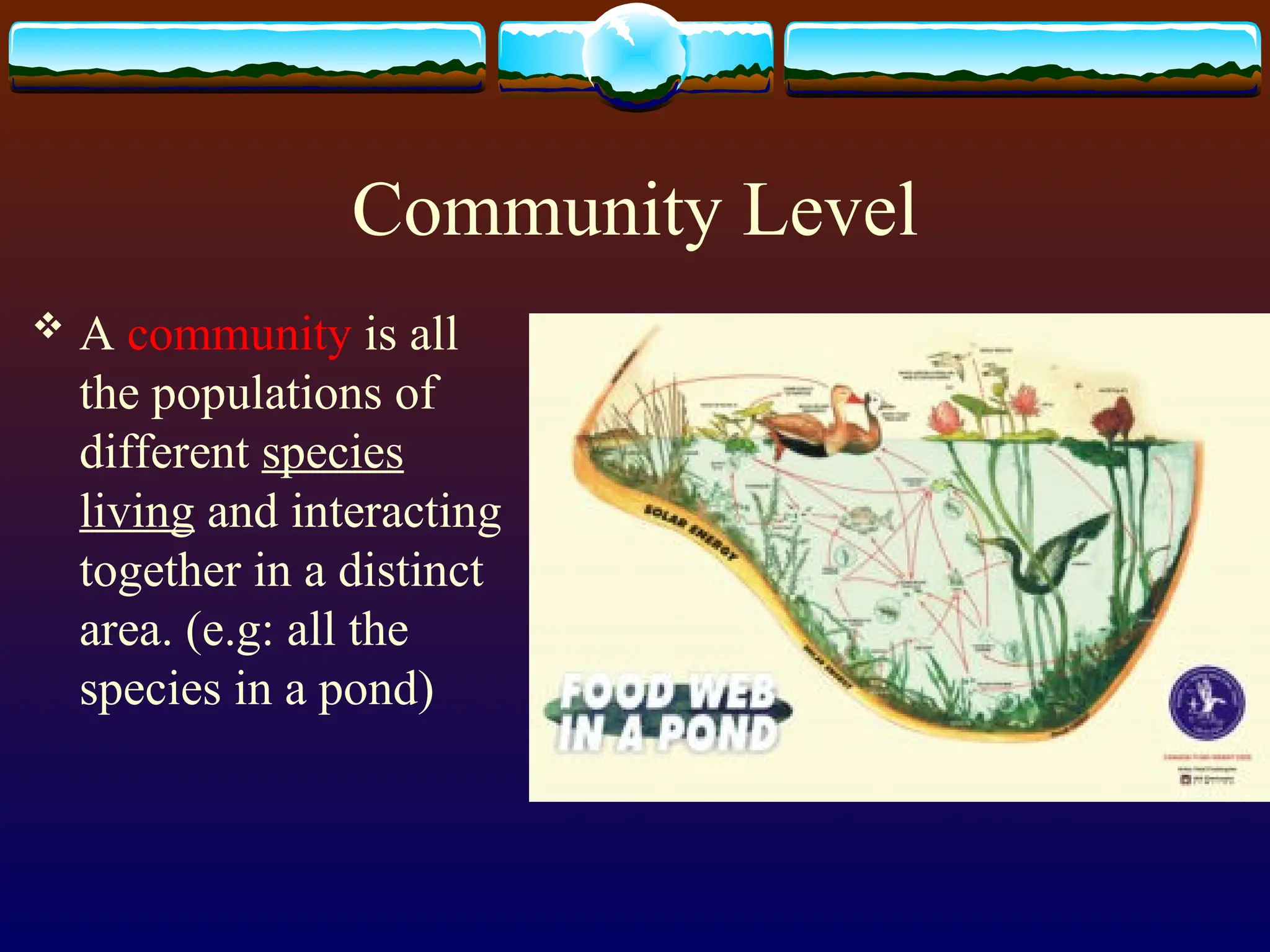
 A community is all
the populations of
different species
living and interacting
together in a distinct
area. (e.g: all the
species in a pond)
Ecosystems (Biomes)
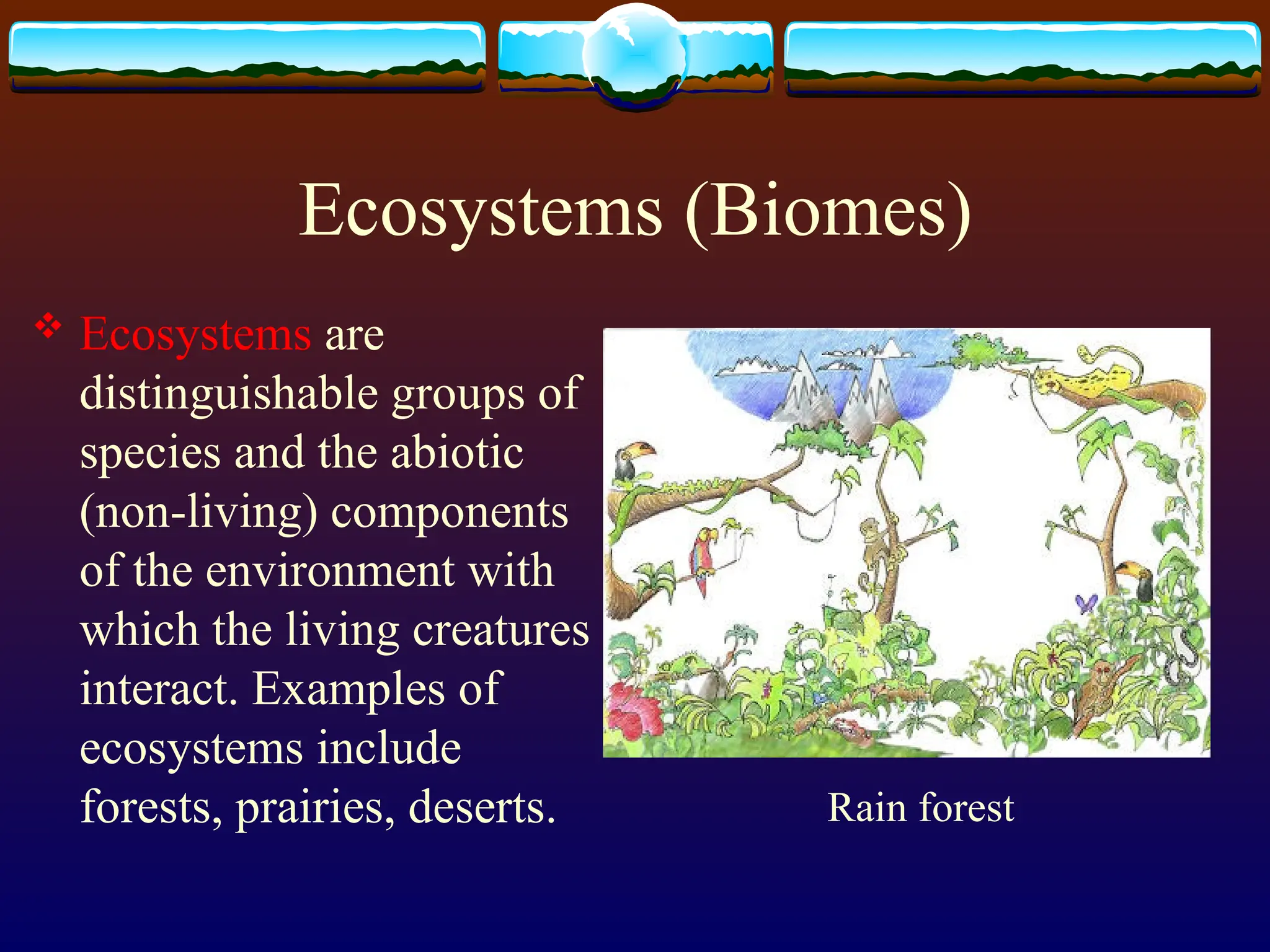
 Ecosystems are
distinguishable groups of
species and the abiotic
(non-living) components
of the environment with
which the living creatures
interact. Examples of
ecosystems include
forests, prairies, deserts. Rain forest
Biosphere
 The biosphere is the region on,
below, and above the Earth's
surface where life exists.
Living things can be found
well into the atmosphere, the
deepest parts of the ocean, and
at least in some areas,
microbes live in rock several
kilometers below the surface
of the earth.
levels of biological organization....ppt

levels of biological organization....ppt

  • 4.
  • 5.
    Levels of BiologicalOrganization  The various levels of organization include atoms, molecules, cells, tissues, organs, organ systems, whole organisms, populations, communities, ecosystems, and the biosphere.
  • 7.
    Molecular Level:Atoms (molecules) Atoms are the smallest unit of matter that have the chemical properties of a particular chemical element.  Molecules the smallest particle of a substance that retains all the properties of the substance and is composed of one or more atoms
  • 8.
    Cellular Level  Thecell is the smallest unit of biological organization that biologists consider alive.  All true cells are surrounded by a plasma (cell) membrane, carry out complex chemical reactions, and are at least potentially capable of self reproduction.
  • 9.
    Tissue Level A tissueis a group of distinct and similar cells that carry out a specific set of functions.
  • 10.
    Organ Level  Organsare groups of tissues organized together to carry out a particular set of functions.  Organs typically have several kinds of tissue.  Organs in animals are composed of a number of different tissue types. For example, the stomach:
  • 11.
    Organ System Level Multicellular organisms, especially animals typically are organized into organ systems, groups of organs that function together to carry out broad sets of functions. For instance an organ system in humans is the digestive system.  Some of the organs in the digestive system are the stomach, liver, small intestine, pancreas.
  • 12.
    Organs  Structures composed of multiple tissuetypes  Example: The Heart (muscle + nervous + connective tissues)
  • 13.
    Organ Systems  Groups oforgans performing a common function  Example: Digestive system – mouth, stomach, intestines
  • 14.
    Organism Level  Theorganism or individual is that level of biological organization that has its own distinct existence as a complex, self reproducing unit.  We are multi-cellular organisms in that we are made of many highly specialized cells which cannot exist independently of other cells in the organism.
  • 15.
    Population Level  Apopulation is group of freely interacting and breeding individuals of the same species. For example, all the bull frogs in a pond can be considered a population of bullfrogs. Typically populations are subdivided into smaller groups: a pack of wolves, pride of lions, colony of ants. A pack of wolves
  • 16.
    Population → Community  Population: Allindividuals of a species in an area  Community: All different species in an area
  • 17.
    Community Level  Acommunity is all the populations of different species living and interacting together in a distinct area. (e.g: all the species in a pond)
  • 18.
    Ecosystems (Biomes)  Ecosystemsare distinguishable groups of species and the abiotic (non-living) components of the environment with which the living creatures interact. Examples of ecosystems include forests, prairies, deserts. Rain forest
  • 19.
    Biosphere  The biosphereis the region on, below, and above the Earth's surface where life exists. Living things can be found well into the atmosphere, the deepest parts of the ocean, and at least in some areas, microbes live in rock several kilometers below the surface of the earth.