Modelling Simple Light
Properties
8.1 waves, particles, reflection, absorption, transmission
Is Light made of particles or is it a wave?
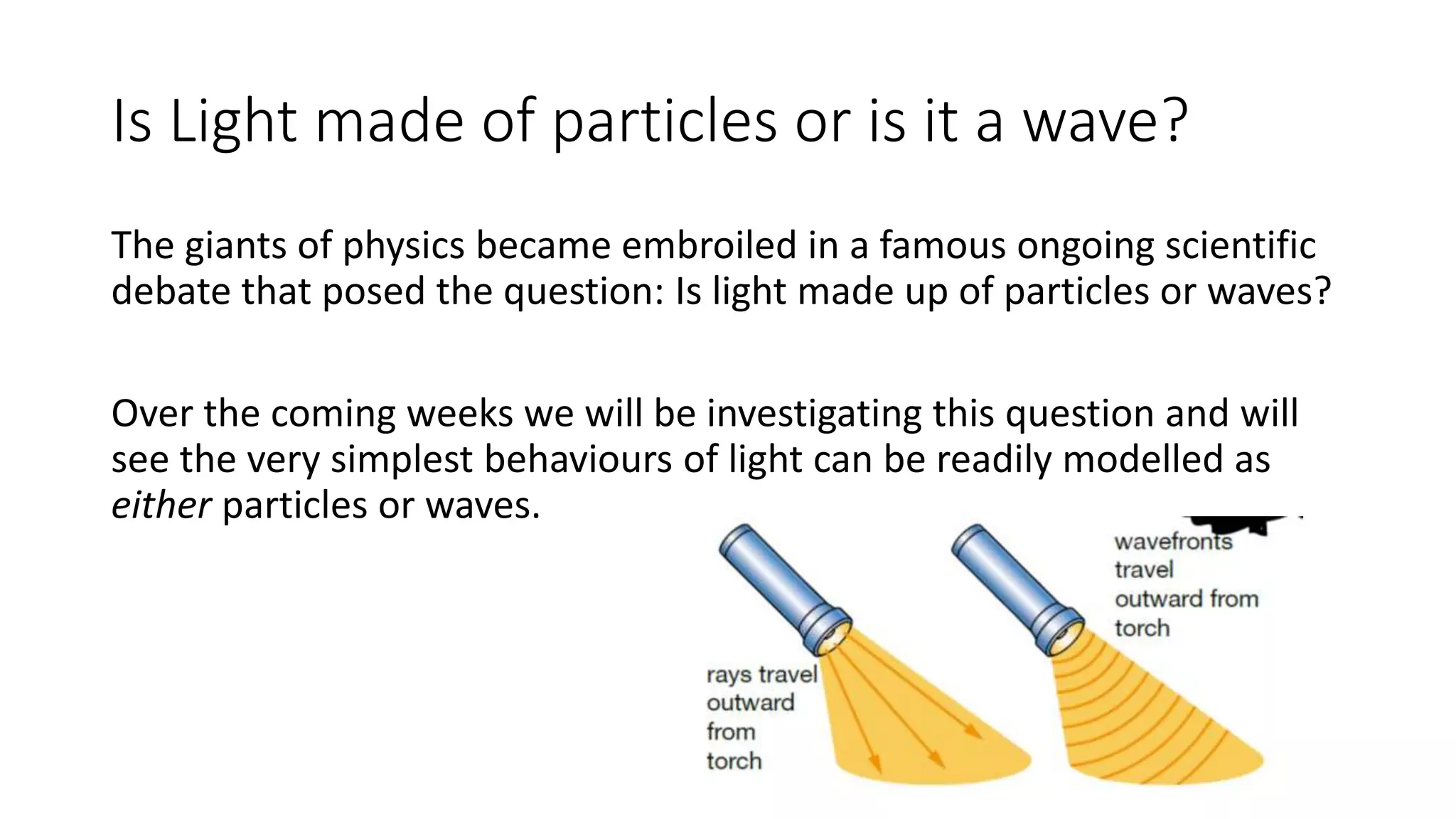
The giants of physics became embroiled in a famous ongoing scientific
debate that posed the question: Is light made up of particles or waves?
Over the coming weeks we will be investigating this question and will
see the very simplest behaviours of light can be readily modelled as
either particles or waves.
Light Travels in Straight Lines
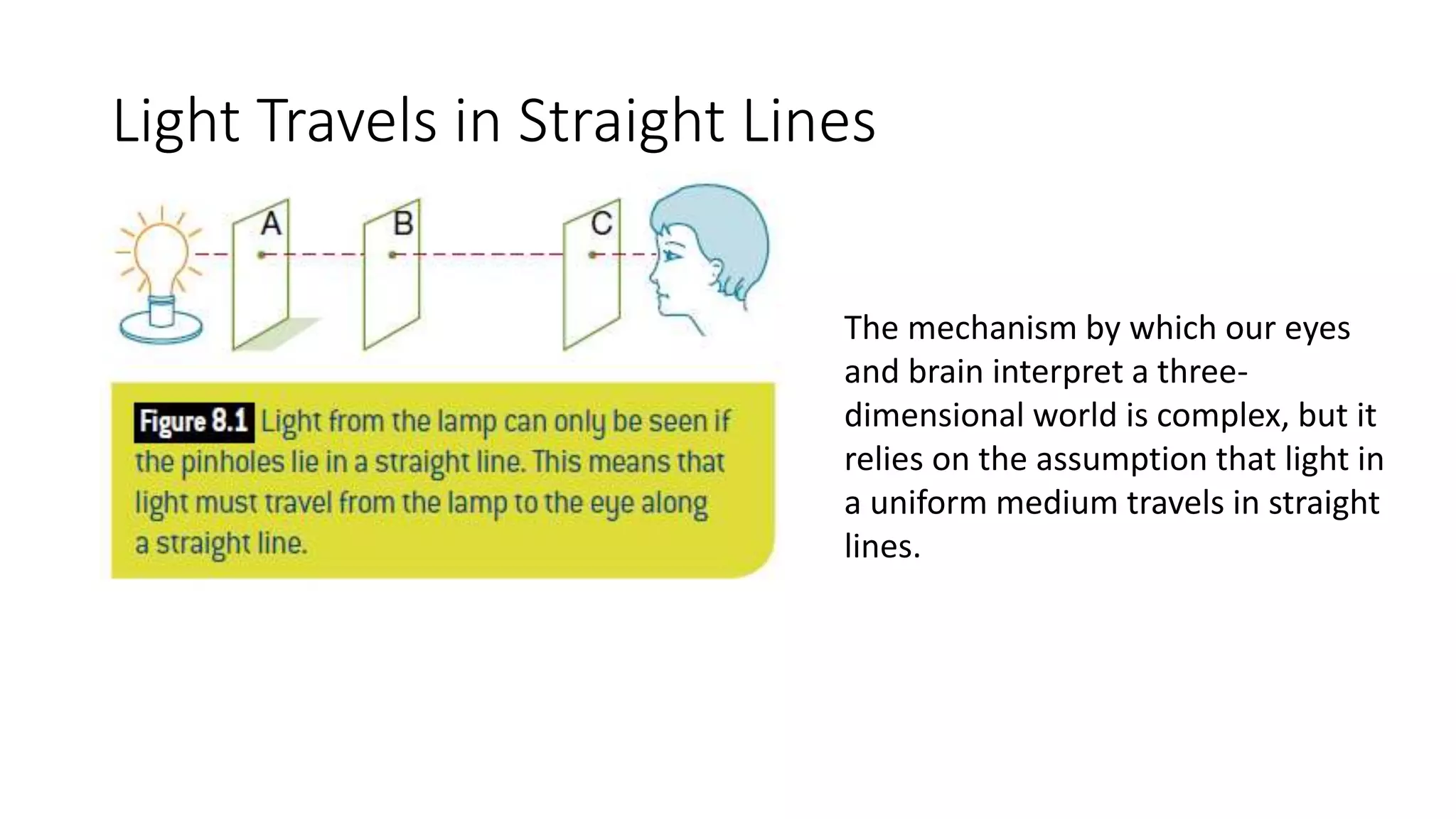
The mechanism by which our eyes
and brain interpret a three-
dimensional world is complex, but it
relies on the assumption that light in
a uniform medium travels in straight
lines.
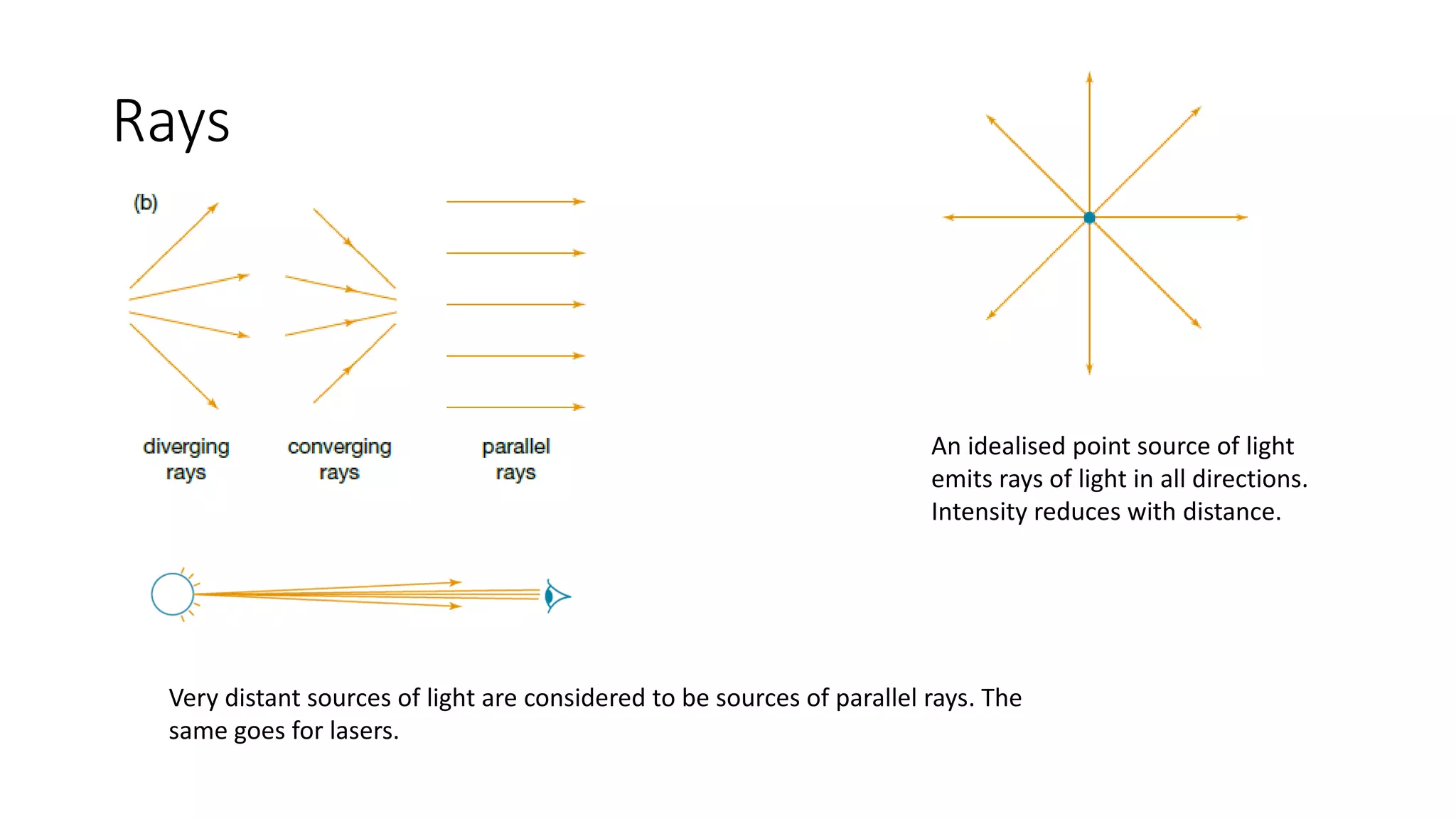
A Model - Rays
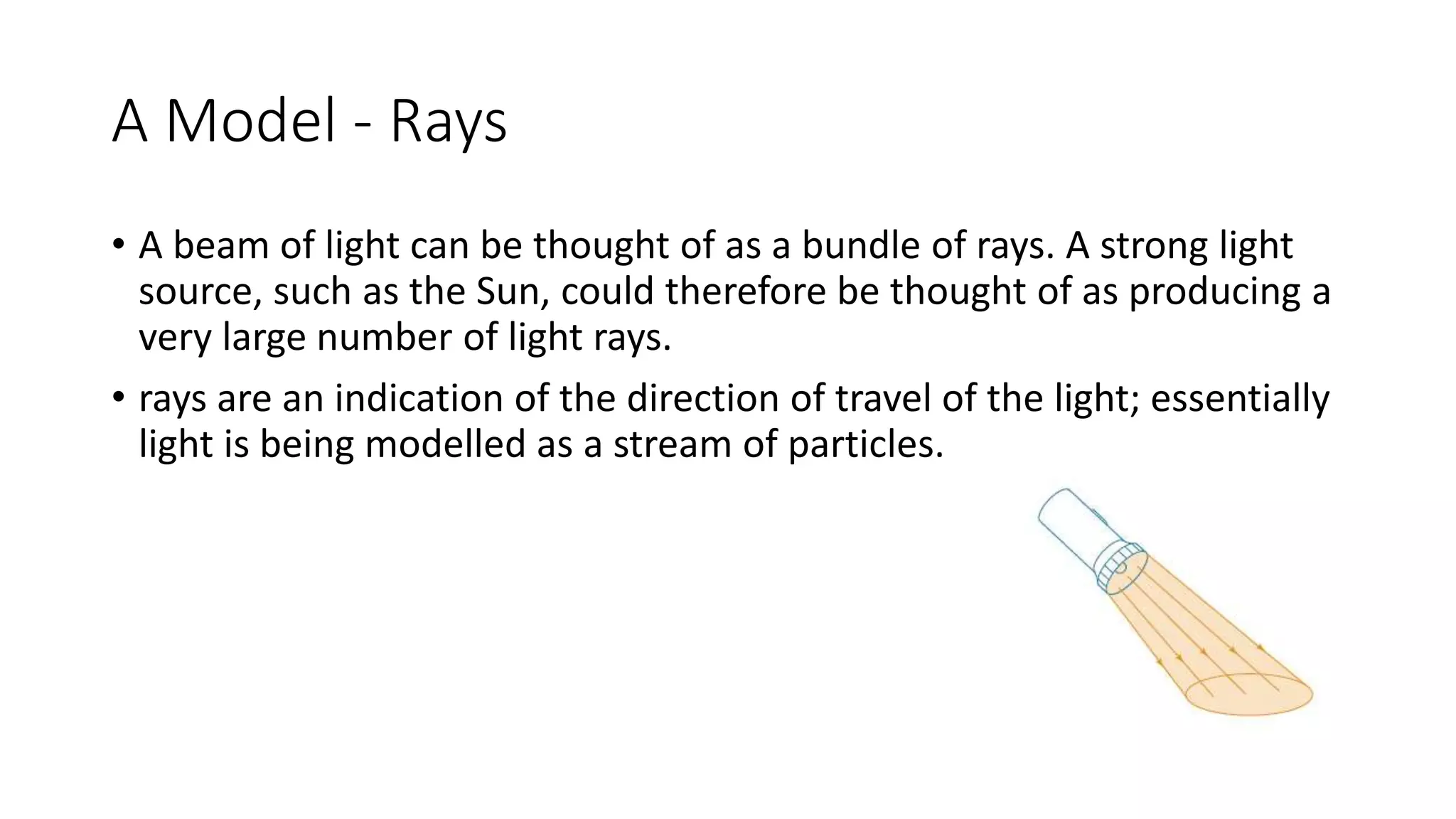
• A beam of light can be thought of as a bundle of rays. A strong light
source, such as the Sun, could therefore be thought of as producing a
very large number of light rays.
• rays are an indication of the direction of travel of the light; essentially
light is being modelled as a stream of particles.
Rays
An idealised point source of light
emits rays of light in all directions.
Intensity reduces with distance.
Very distant sources of light are considered to be sources of parallel rays. The
same goes for lasers.
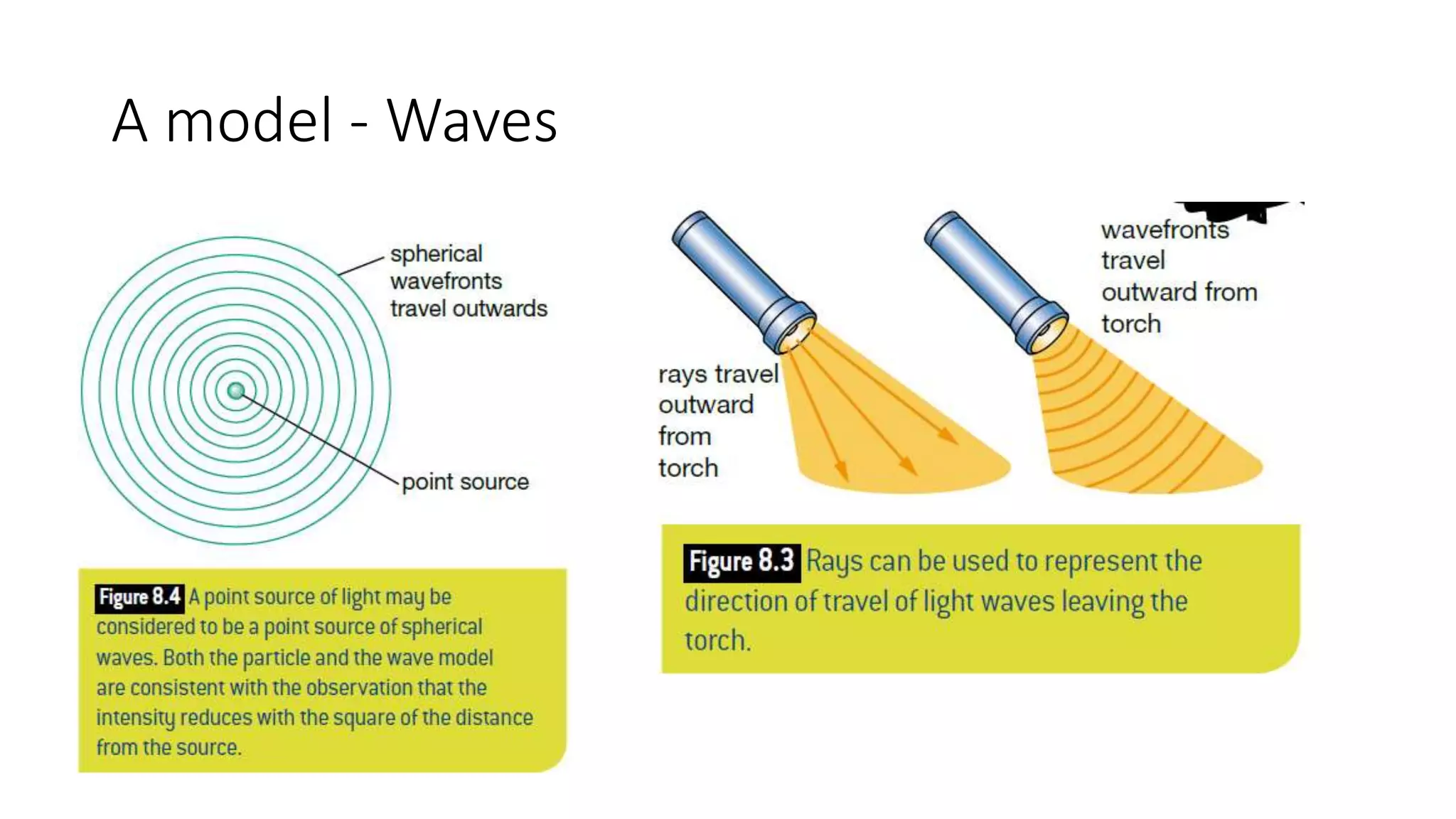
A model - Waves
Reflection
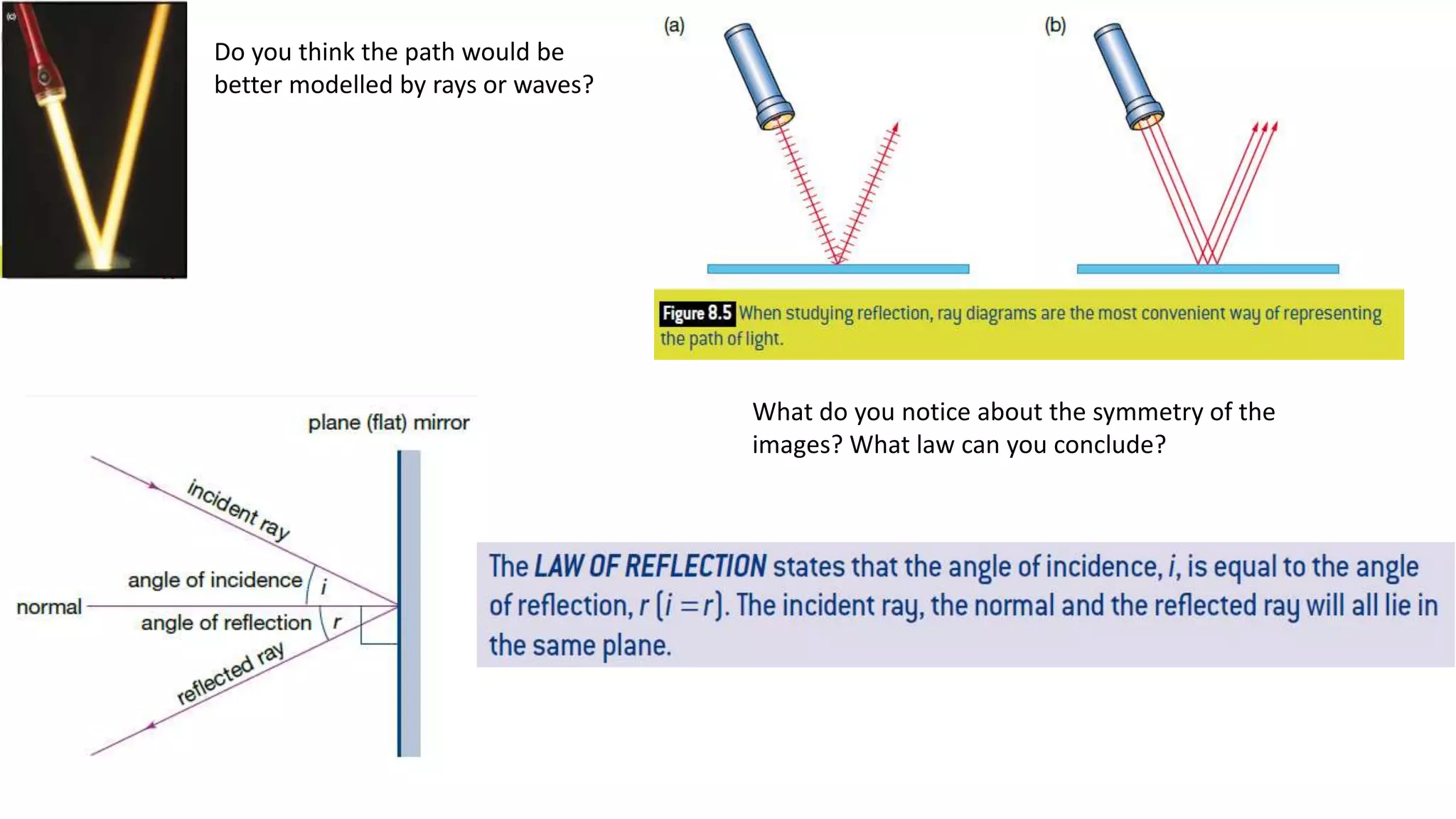
Do you think the path would be
better modelled by rays or waves?
What do you notice about the symmetry of the
images? What law can you conclude?
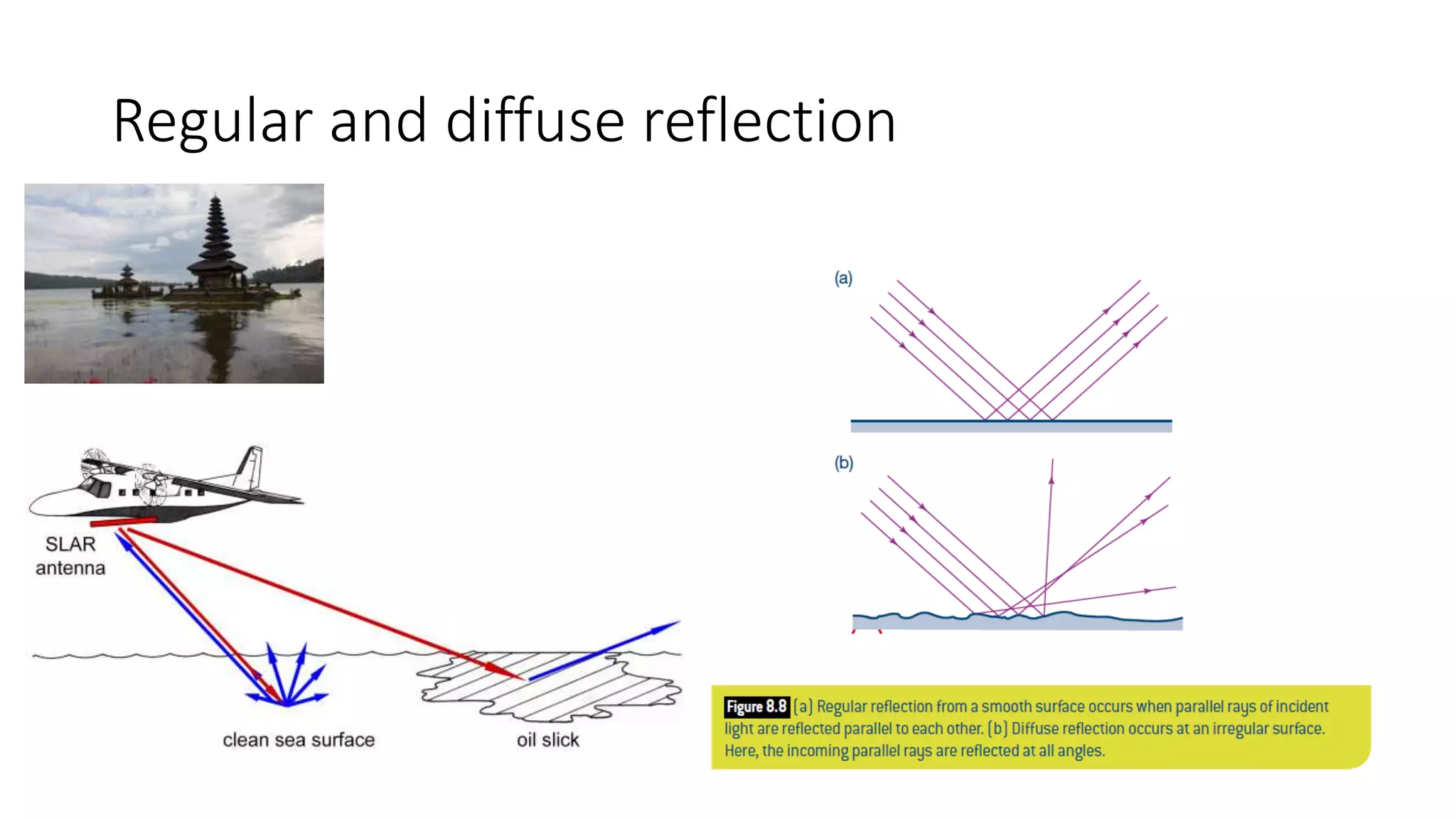
Regular and diffuse reflection
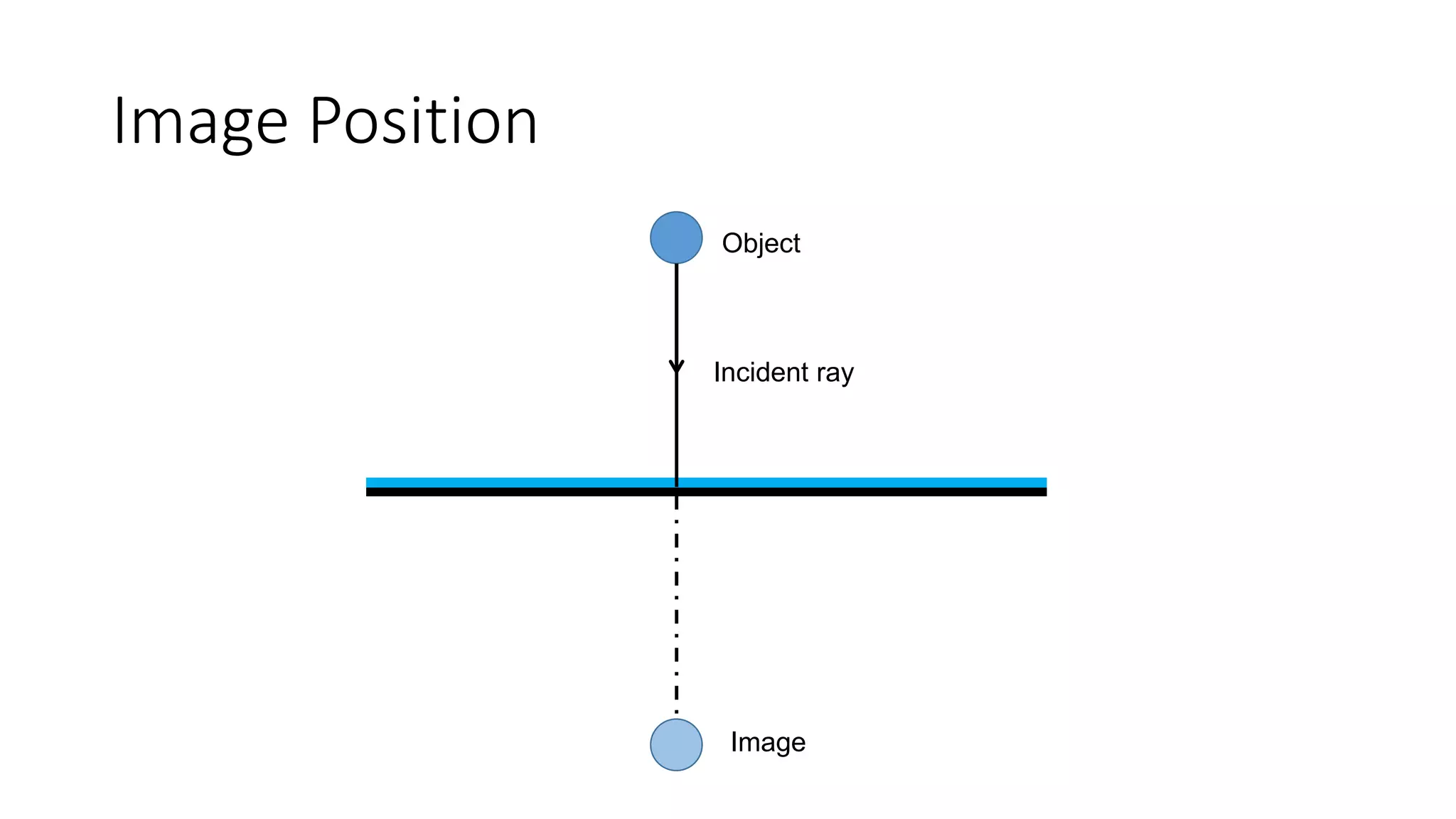
Image Position
Object
Incident ray
Image
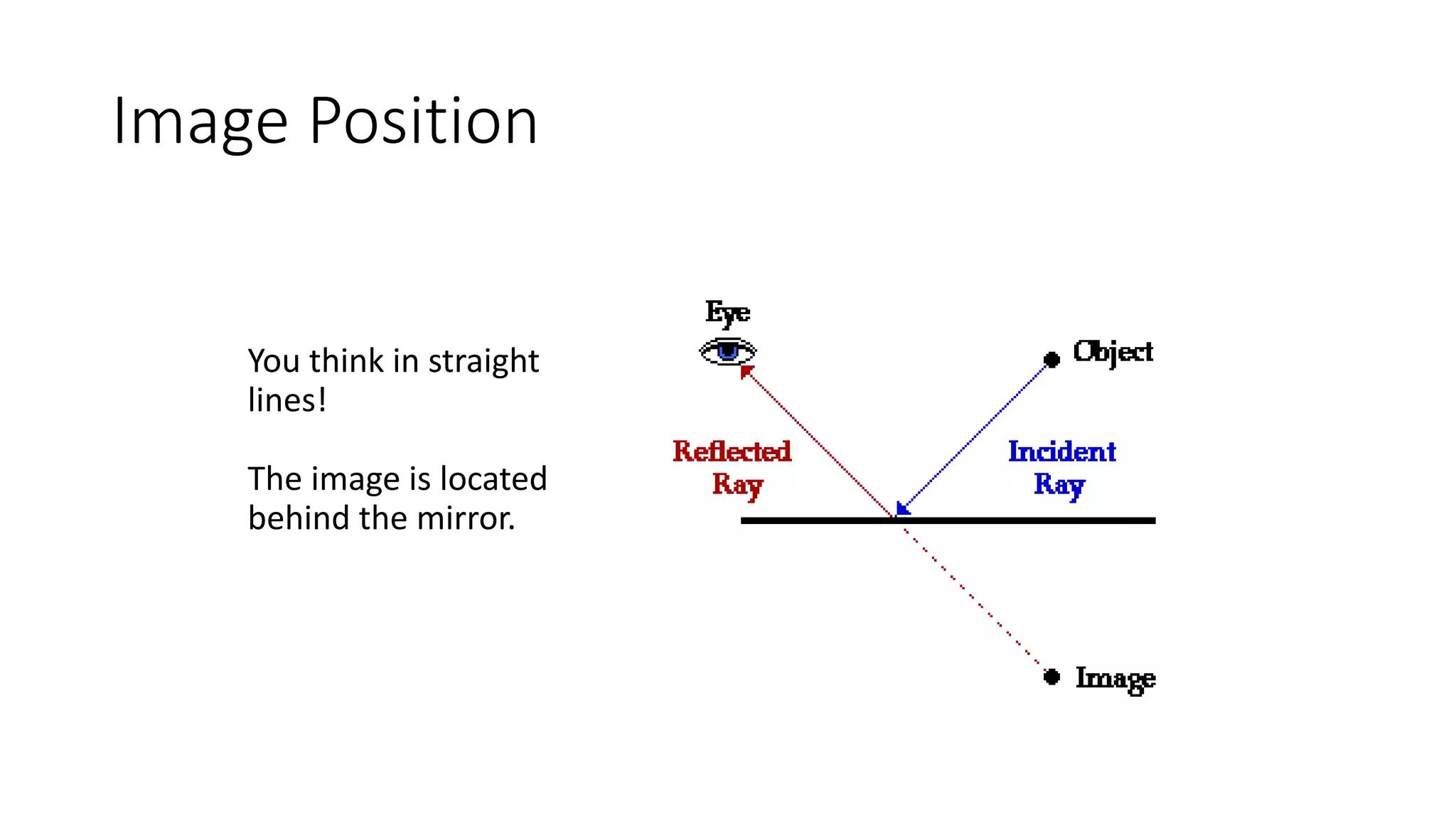
Image Position
You think in straight
lines!
The image is located
behind the mirror.
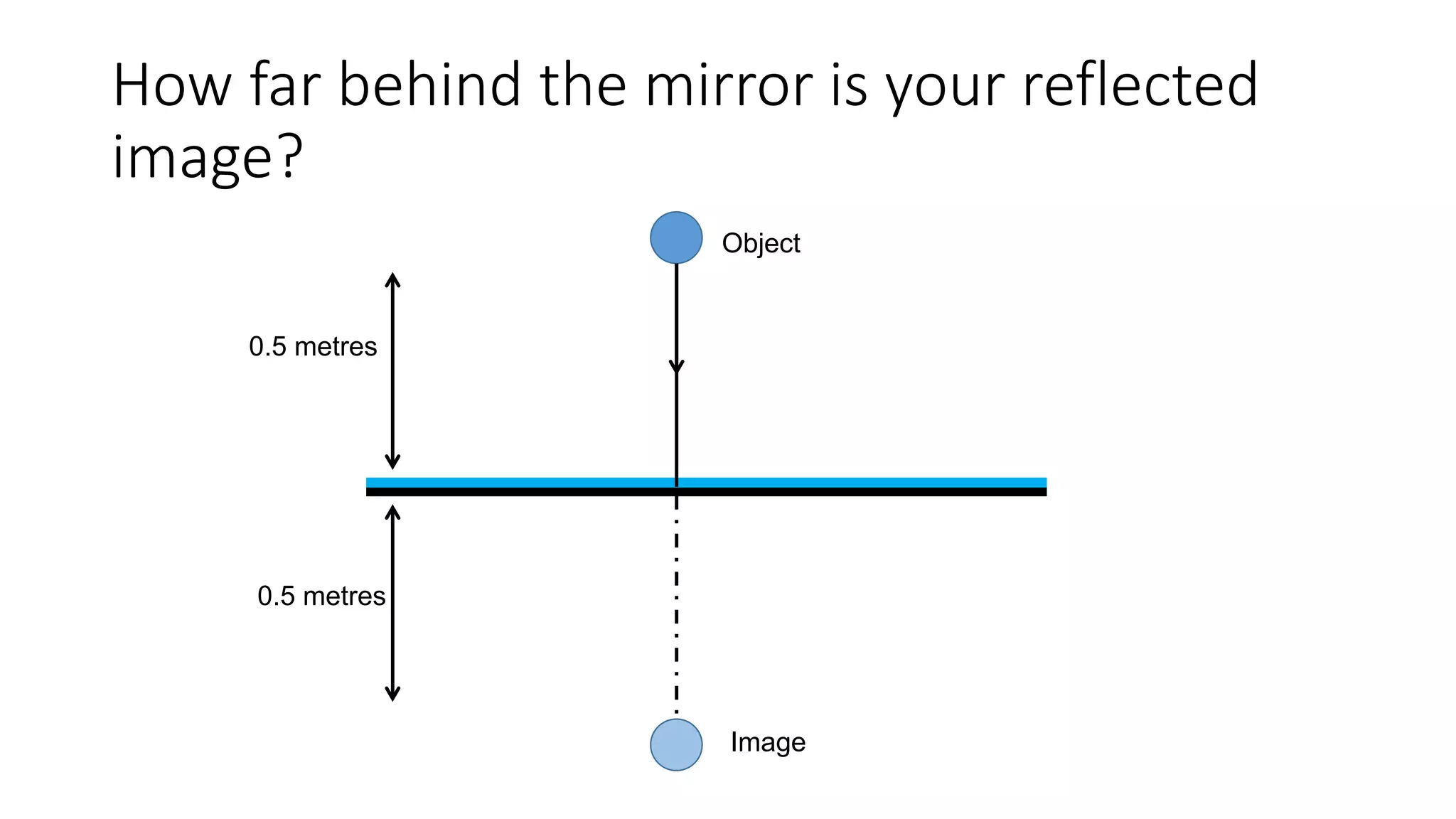
How far behind the mirror is your reflected
image?
Object
0.5 metres
Image
0.5 metres
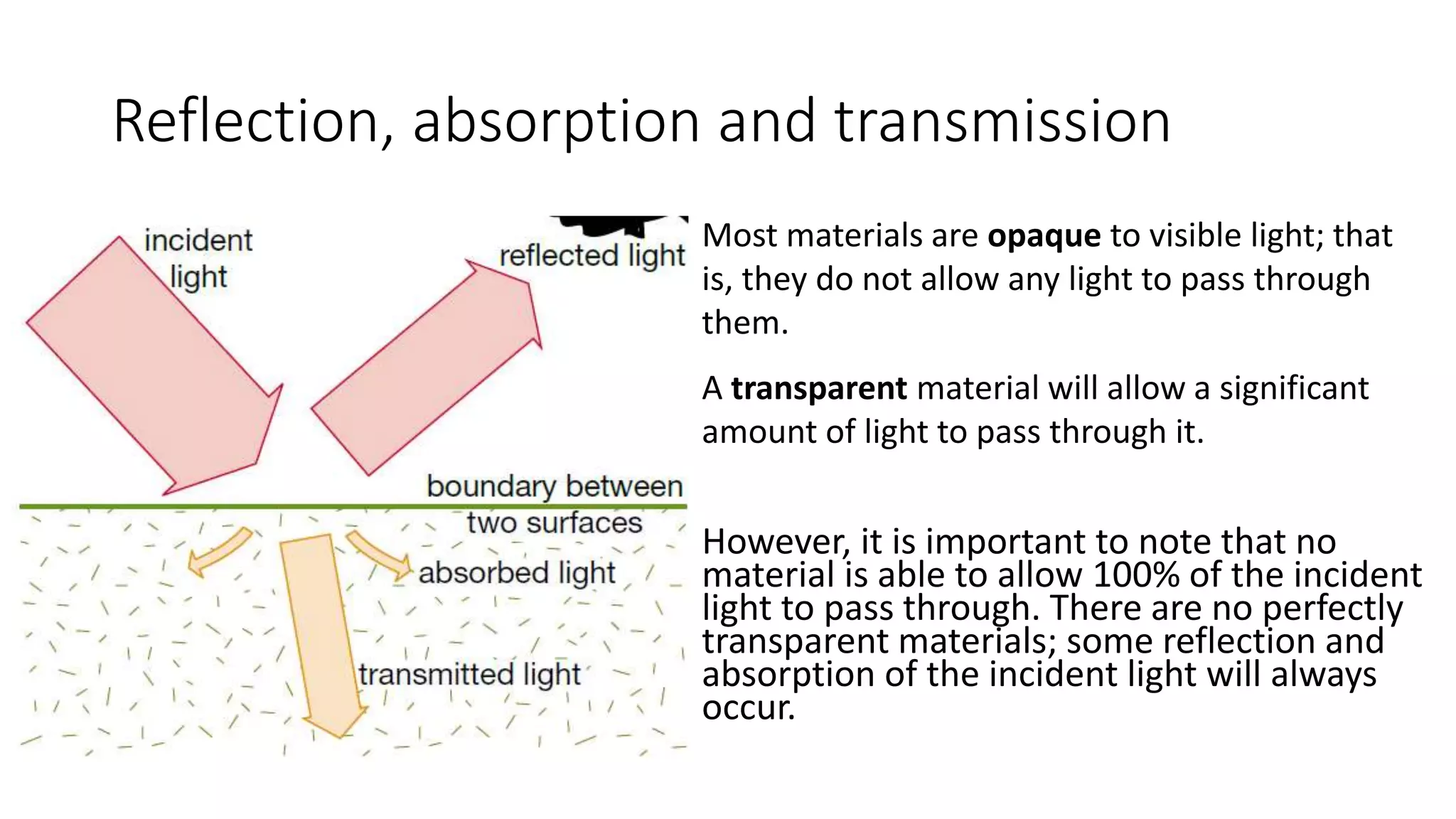
Reflection, absorption and transmission
However, it is important to note that no
material is able to allow 100% of the incident
light to pass through. There are no perfectly
transparent materials; some reflection and
absorption of the incident light will always
occur.
A transparent material will allow a significant
amount of light to pass through it.
Most materials are opaque to visible light; that
is, they do not allow any light to pass through
them.
Summary

4 modelling simple light properties (waves, particles, reflection, absorbtion, transmission) (8.1)

  • 1.
    Modelling Simple Light Properties 8.1waves, particles, reflection, absorption, transmission
  • 2.
    Is Light madeof particles or is it a wave? The giants of physics became embroiled in a famous ongoing scientific debate that posed the question: Is light made up of particles or waves? Over the coming weeks we will be investigating this question and will see the very simplest behaviours of light can be readily modelled as either particles or waves.
  • 3.
    Light Travels inStraight Lines The mechanism by which our eyes and brain interpret a three- dimensional world is complex, but it relies on the assumption that light in a uniform medium travels in straight lines.
  • 4.
    A Model -Rays • A beam of light can be thought of as a bundle of rays. A strong light source, such as the Sun, could therefore be thought of as producing a very large number of light rays. • rays are an indication of the direction of travel of the light; essentially light is being modelled as a stream of particles.
  • 5.
    Rays An idealised pointsource of light emits rays of light in all directions. Intensity reduces with distance. Very distant sources of light are considered to be sources of parallel rays. The same goes for lasers.
  • 6.
    A model -Waves
  • 7.
  • 8.
    Do you thinkthe path would be better modelled by rays or waves? What do you notice about the symmetry of the images? What law can you conclude?
  • 9.
  • 10.
  • 11.
    Image Position You thinkin straight lines! The image is located behind the mirror.
  • 12.
    How far behindthe mirror is your reflected image? Object 0.5 metres Image 0.5 metres
  • 13.
    Reflection, absorption andtransmission However, it is important to note that no material is able to allow 100% of the incident light to pass through. There are no perfectly transparent materials; some reflection and absorption of the incident light will always occur. A transparent material will allow a significant amount of light to pass through it. Most materials are opaque to visible light; that is, they do not allow any light to pass through them.
  • 14.