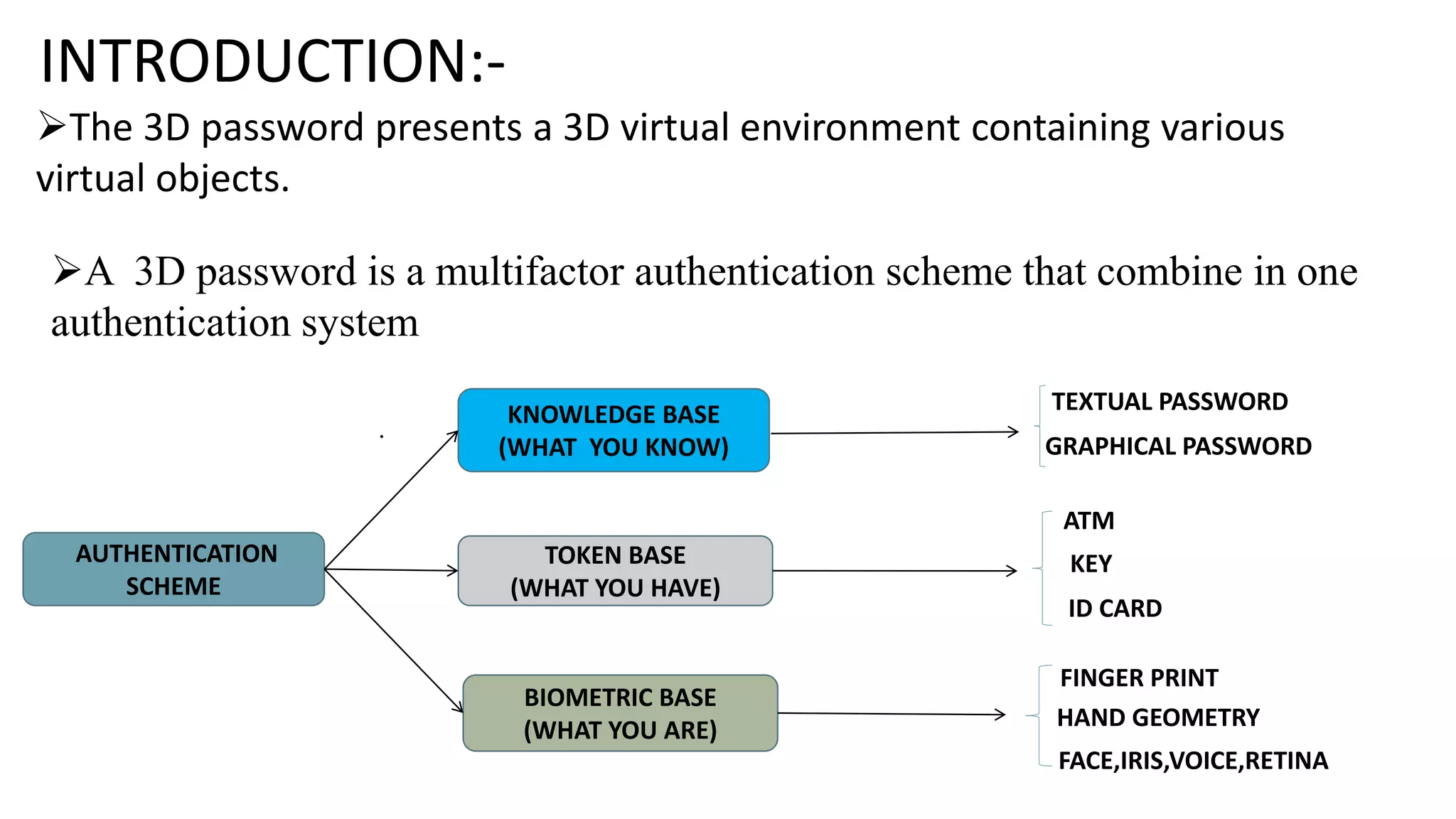
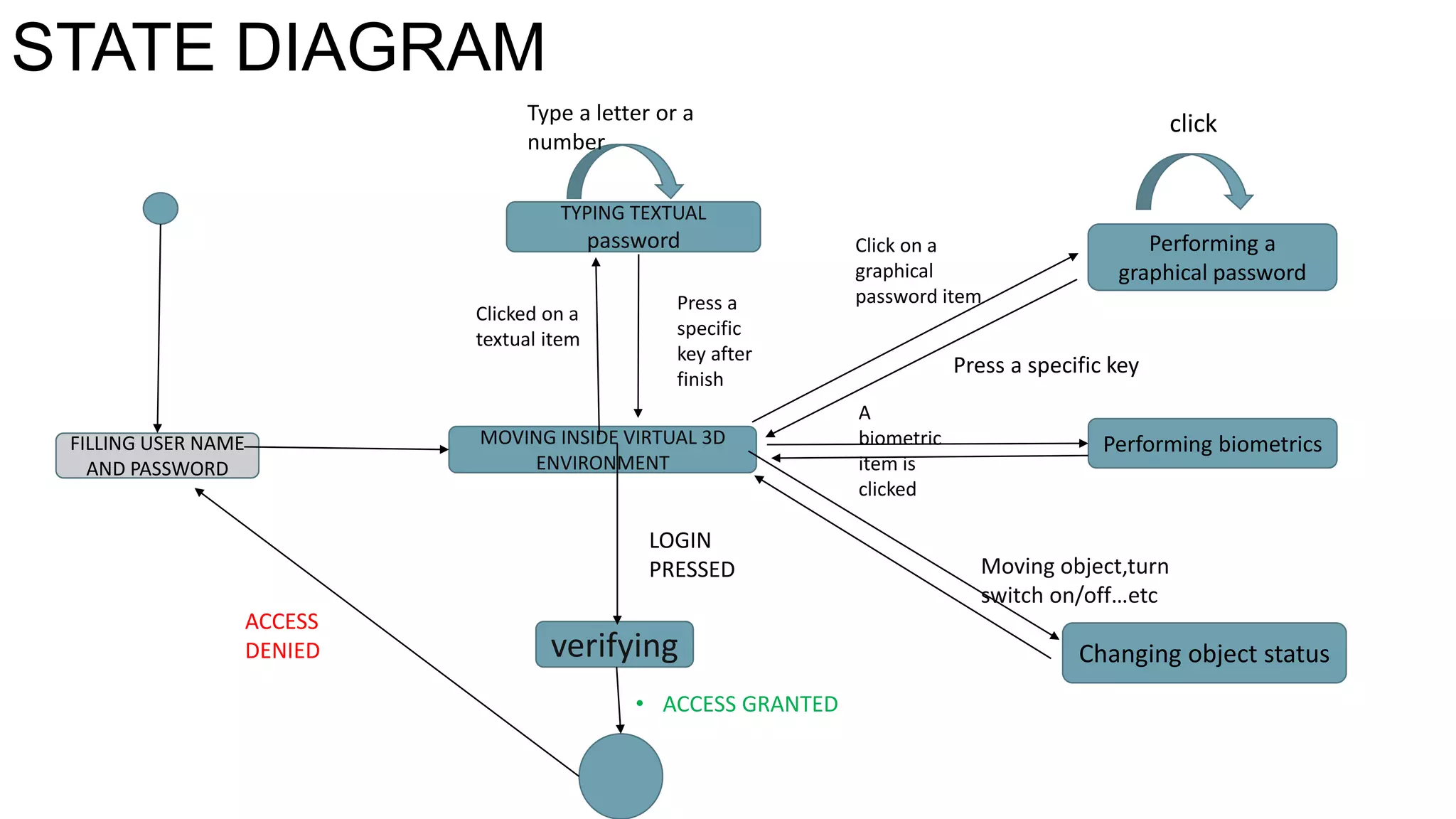
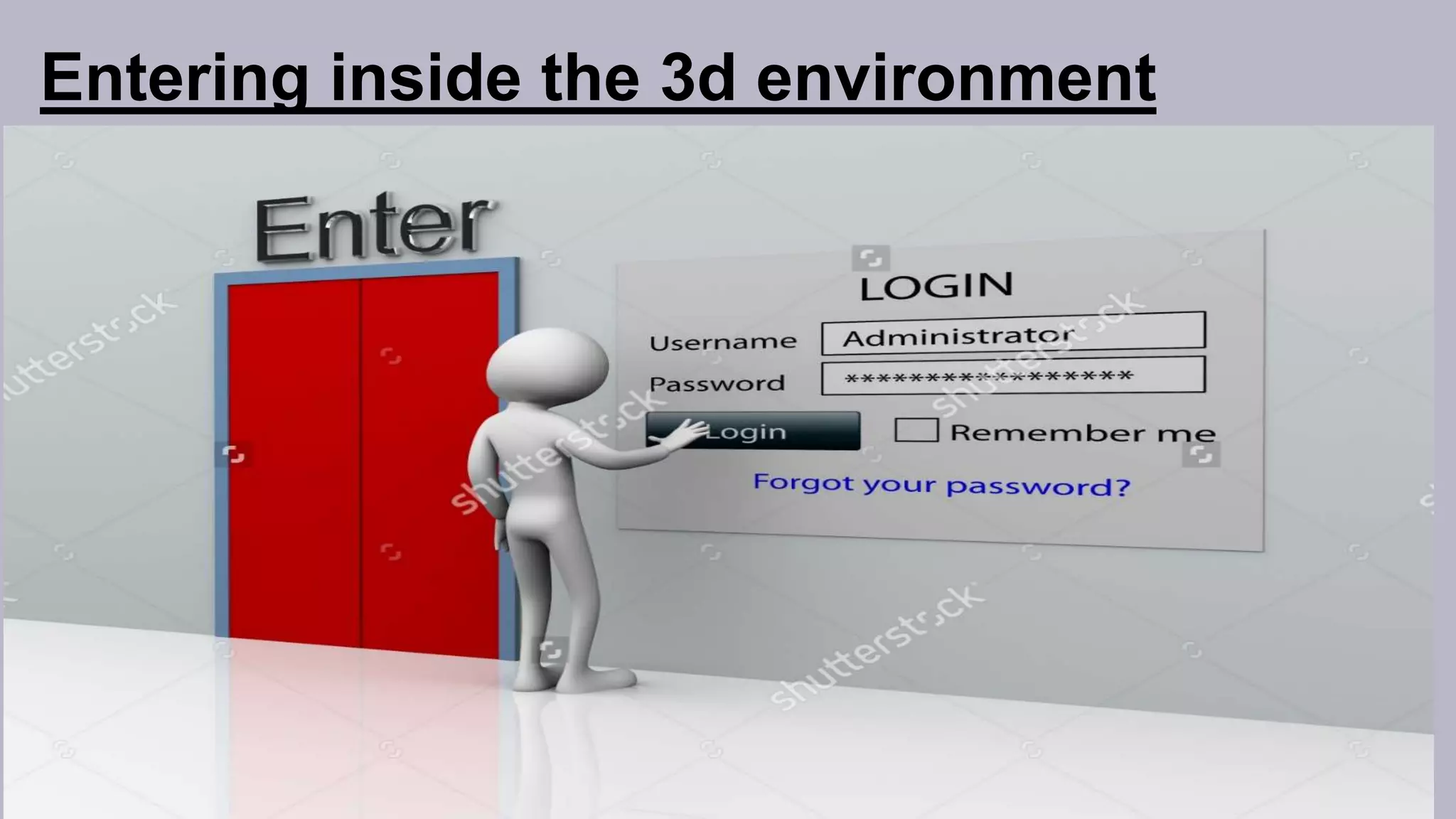
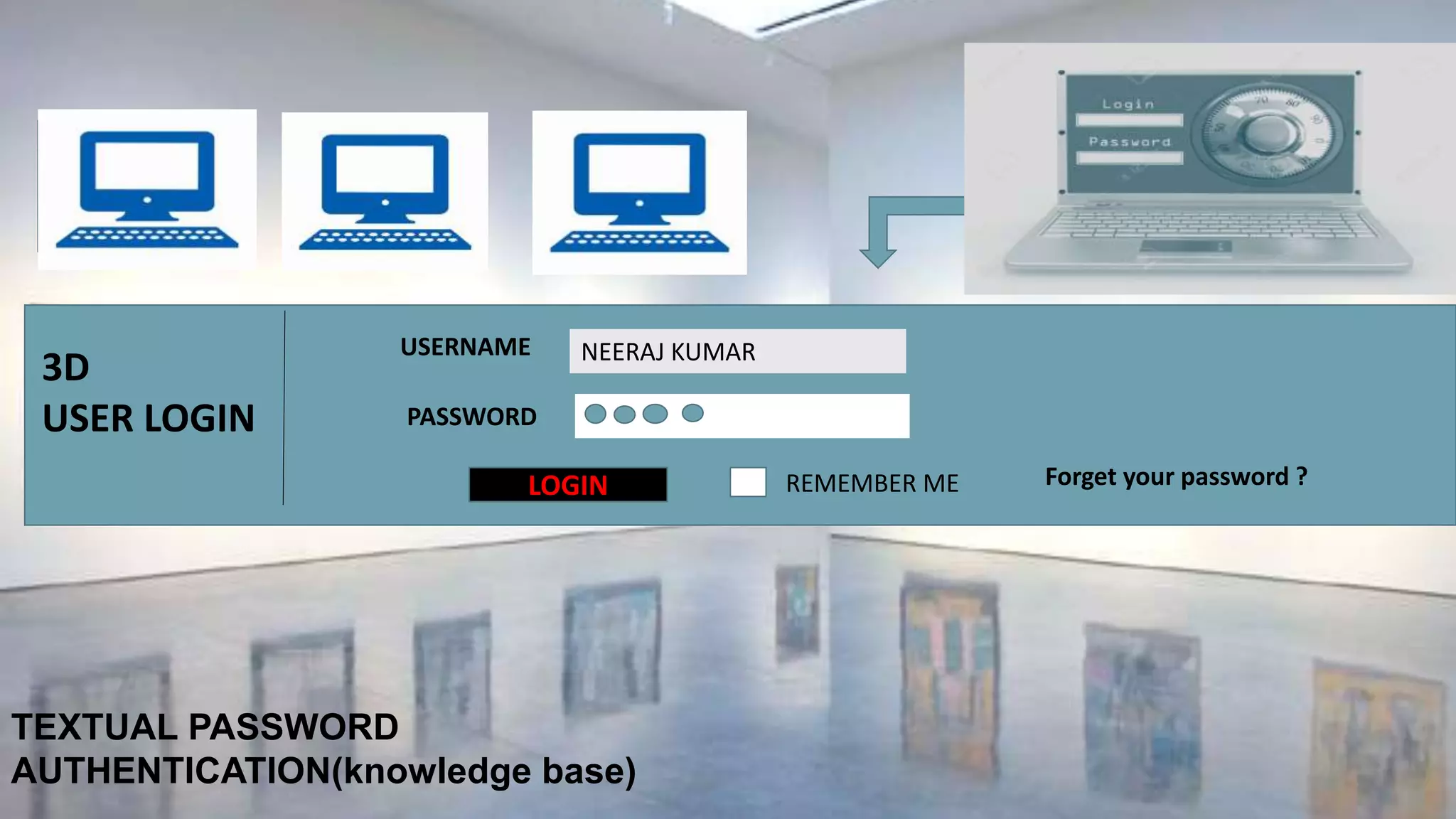
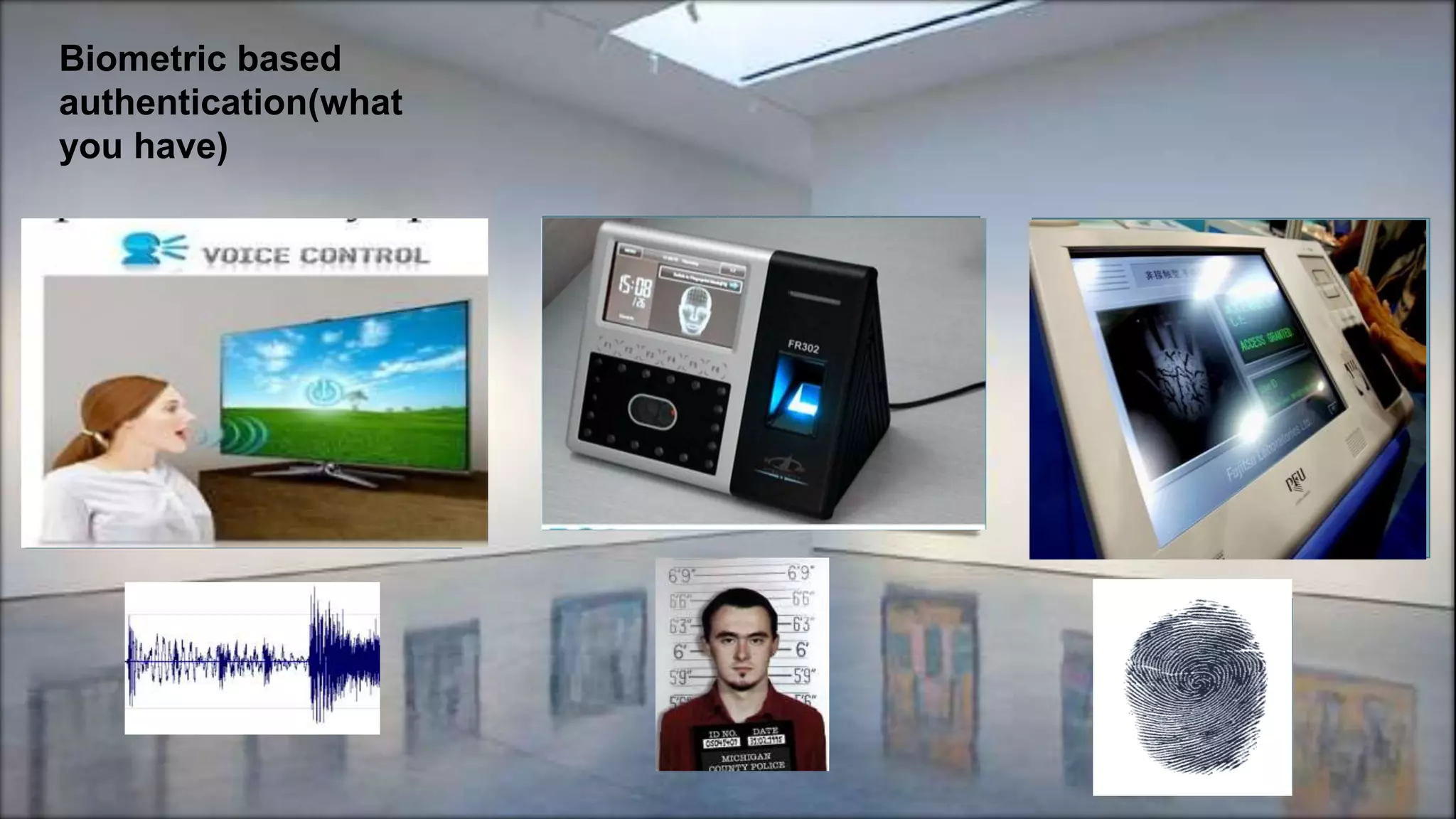
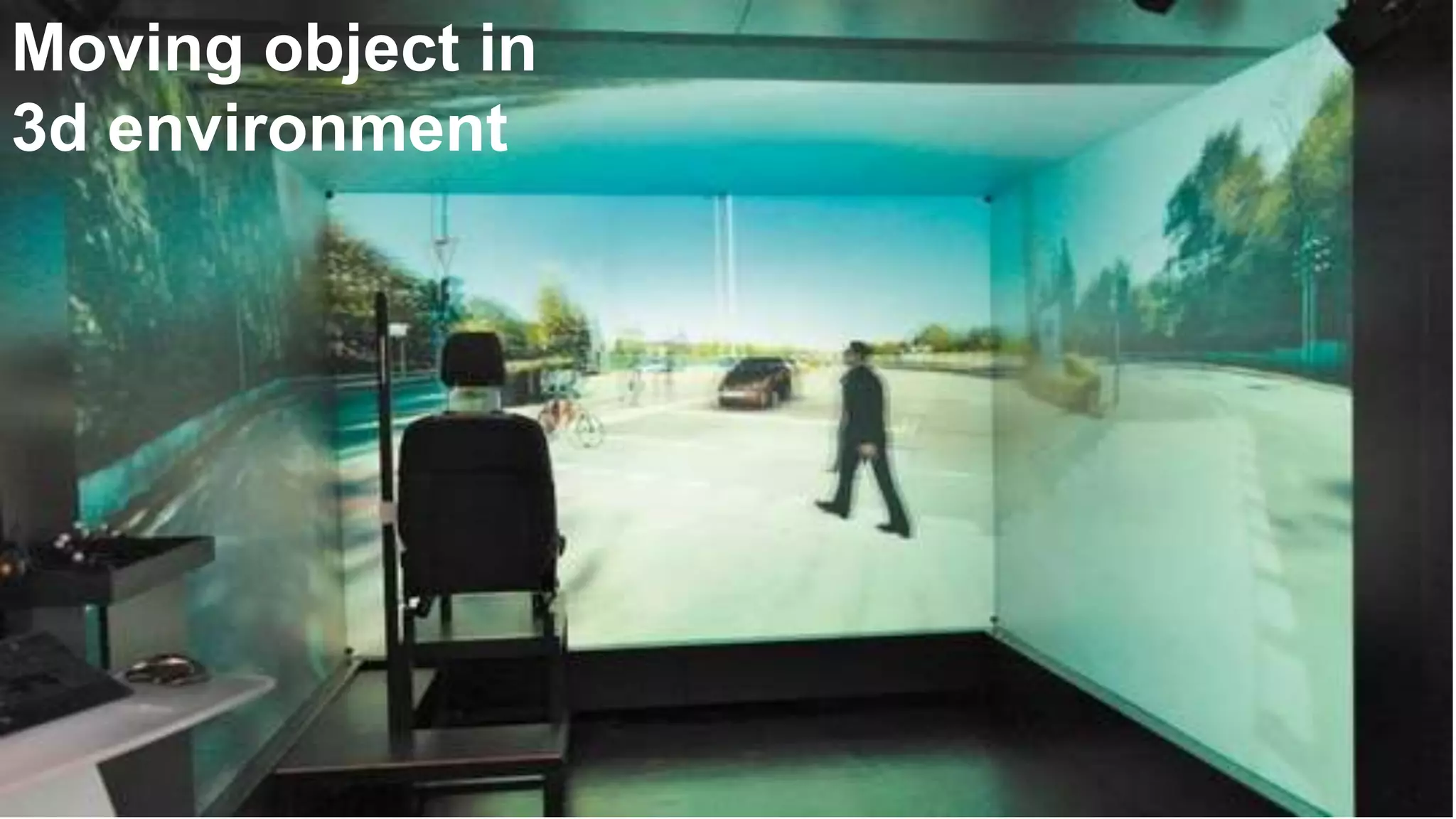
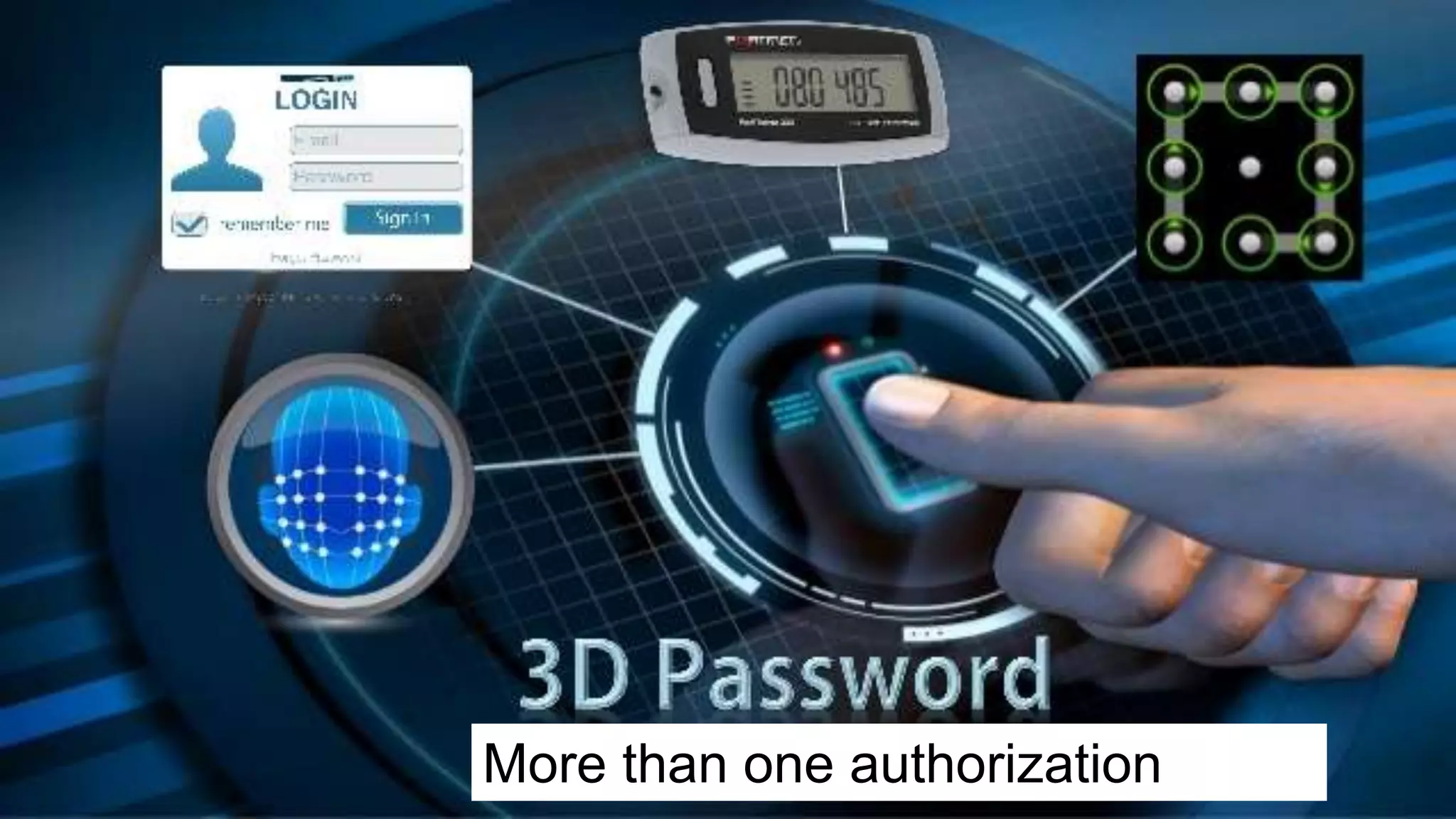
3D passwords provide a more secure authentication method by combining multiple factors of authentication in a 3D virtual environment. Users must navigate the virtual environment and interact with virtual objects to login, combining knowledge-based authentication through movement and object selection with potential biometric or token-based authentication. This makes 3D passwords more difficult to crack than traditional textual passwords through brute force or dictionary attacks, while still allowing users to easily remember and change their password. However, 3D password schemes also have some disadvantages such as potential difficulties for blind users and increased development complexity.