Pre-operative Preparation
Introduction
• Definition
Surgery has been defined as a legalised
and controlled assault on a human being
with a therapeutic intent, and with consent
obtained under duress imposed by pain,
suffering or fear of death
Classification
• Classified as:
• - Elective
• - Emergency
Elective surgery
Surgical intervention that is planned for a
given date and time to suit both patient
and surgeon following a work-up and
preparation
Pre-operative care
• Involves
- Operative risk assessment
- Informed consent
- Correction of Nutrition, blood volume,
electrolyte and fluid deficiencies
- Prophylaxis against possible infection
- assessment of likely immediate and long
term complications
Risk assessment
• Defined as “reduction of harm to the
organisation”
• Improves quality and reduces harm to the
patient
• Also referred to as Clinical risk reduction
• This is an approach designed to improve the
quality of care and which places special
emphasis on the occasions on which patients
are harmed or disturbed by their treatment.
Risk assessment
• Prophylactic measures
- Prevention against infective endocarditis
- Chemoprophylaxis against surgical
infection
- Prophylaxis against deep vein thrombosis
- Prevention of renal failure
Prevention against endocarditis
• At risk patients include
- Diabetics
- Alcoholics
- Immune compromised
- Cardiac abnormalities
* streptococci, staphylococci, and enteric
bacteria are common pathogens
Prevention against endocarditis
• Procedures include:
- Dental surgery
- Gastro-intestinal surgery
- Genito-Urinary surgery
- Fracture management
- Liver biopsy
- Endoscopic surgery
Prevention against endocarditis
• Antimicrobial therapy includes
- Intravenous amoxycillin
- Vancomycin
- Teicoplanin
- Clindamycin
- Amoxycillin and gentamicin in those who
had previous endocarditis or prosthetic
valves
Prevention against Surgical
infection
• Clinical conditions include
- Orthopedic operations
- Neurosurgical operation
- Breast surgery
- Biliary surgery
- Colorectal surgery
- Vascular surgery
Prevention against surgical
infections
When and how
- Single dose administered 2hours before
surgery or at the time of induction, im/iv is
sufficient
- Antibiotic prophylaxis should not be used
in clean operations
Prophylaxis against deep vein
thrombosis
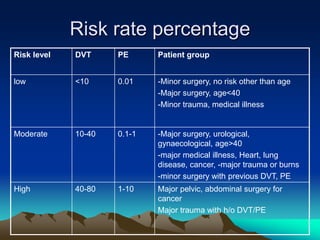
• Prophylaxis against DVT/PE should be
given according to the degree of risk , at
least until discharge from hospital.
Risk rate percentage
Risk level DVT PE Patient group
low <10 0.01 -Minor surgery, no risk other than age
-Major surgery, age<40
-Minor trauma, medical illness
Moderate 10-40 0.1-1 -Major surgery, urological,
gynaecological, age>40
-major medical illness, Heart, lung
disease, cancer, -major trauma or burns
-minor surgery with previous DVT, PE
High 40-80 1-10 Major pelvic, abdominal surgery for
cancer
Major trauma with h/o DVT/PE
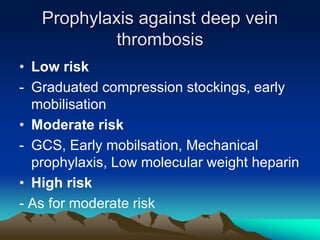
Prophylaxis against deep vein
thrombosis
• Low risk
- Graduated compression stockings, early
mobilisation
• Moderate risk
- GCS, Early mobilsation, Mechanical
prophylaxis, Low molecular weight heparin
• High risk
- As for moderate risk
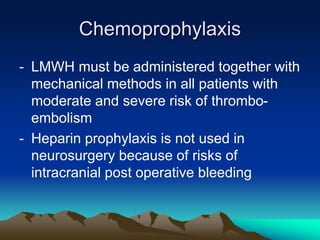
Chemoprophylaxis
- LMWH must be administered together with
mechanical methods in all patients with
moderate and severe risk of thrombo-
embolism
- Heparin prophylaxis is not used in
neurosurgery because of risks of
intracranial post operative bleeding
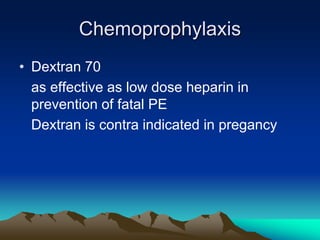
Chemoprophylaxis
• Dextran 70
as effective as low dose heparin in
prevention of fatal PE
Dextran is contra indicated in pregancy
Chemoprophylaxis
• Other agents
Aspirin ( anti platelet0
Hydroxycholoroquine
Mechanical methods
• Graduated compressions stockings
• Intermittent pneumatic compression
• Foot impulse technology
Prevention of Renal failure
• Causes
- Persistent hypovolaemia
- Myoglobinuria
- Jaundice
Correction of other defects
• Nutrition
• Electrolyte
• Blood pressure
• Hypovolaemia
Conclusion
• The aim of history, examination is to
assess risks that the patient may have
• Informed consent presents the same risks
back to the patient making him/her aware
of the challenges that may be present and
giving options available and taking the
best available option
• Investigations weighs the severity of the
risks
Conclusion
• With the history taken, examination done
and the investigations results available, a
plan is laid done on the best surgical,
medical management of the patient
• Do not operate on a patient without
adequate pre operative care.
• It increases morbidity and mortality
The end!

30. Pre-operative Preparation.ppt

  • 1.
  • 2.
    Introduction • Definition Surgery hasbeen defined as a legalised and controlled assault on a human being with a therapeutic intent, and with consent obtained under duress imposed by pain, suffering or fear of death
  • 3.
    Classification • Classified as: •- Elective • - Emergency
  • 4.
    Elective surgery Surgical interventionthat is planned for a given date and time to suit both patient and surgeon following a work-up and preparation
  • 5.
    Pre-operative care • Involves -Operative risk assessment - Informed consent - Correction of Nutrition, blood volume, electrolyte and fluid deficiencies - Prophylaxis against possible infection - assessment of likely immediate and long term complications
  • 6.
    Risk assessment • Definedas “reduction of harm to the organisation” • Improves quality and reduces harm to the patient • Also referred to as Clinical risk reduction • This is an approach designed to improve the quality of care and which places special emphasis on the occasions on which patients are harmed or disturbed by their treatment.
  • 7.
    Risk assessment • Prophylacticmeasures - Prevention against infective endocarditis - Chemoprophylaxis against surgical infection - Prophylaxis against deep vein thrombosis - Prevention of renal failure
  • 8.
    Prevention against endocarditis •At risk patients include - Diabetics - Alcoholics - Immune compromised - Cardiac abnormalities * streptococci, staphylococci, and enteric bacteria are common pathogens
  • 9.
    Prevention against endocarditis •Procedures include: - Dental surgery - Gastro-intestinal surgery - Genito-Urinary surgery - Fracture management - Liver biopsy - Endoscopic surgery
  • 10.
    Prevention against endocarditis •Antimicrobial therapy includes - Intravenous amoxycillin - Vancomycin - Teicoplanin - Clindamycin - Amoxycillin and gentamicin in those who had previous endocarditis or prosthetic valves
  • 11.
    Prevention against Surgical infection •Clinical conditions include - Orthopedic operations - Neurosurgical operation - Breast surgery - Biliary surgery - Colorectal surgery - Vascular surgery
  • 12.
    Prevention against surgical infections Whenand how - Single dose administered 2hours before surgery or at the time of induction, im/iv is sufficient - Antibiotic prophylaxis should not be used in clean operations
  • 13.
    Prophylaxis against deepvein thrombosis • Prophylaxis against DVT/PE should be given according to the degree of risk , at least until discharge from hospital.
  • 14.
    Risk rate percentage Risklevel DVT PE Patient group low <10 0.01 -Minor surgery, no risk other than age -Major surgery, age<40 -Minor trauma, medical illness Moderate 10-40 0.1-1 -Major surgery, urological, gynaecological, age>40 -major medical illness, Heart, lung disease, cancer, -major trauma or burns -minor surgery with previous DVT, PE High 40-80 1-10 Major pelvic, abdominal surgery for cancer Major trauma with h/o DVT/PE
  • 15.
    Prophylaxis against deepvein thrombosis • Low risk - Graduated compression stockings, early mobilisation • Moderate risk - GCS, Early mobilsation, Mechanical prophylaxis, Low molecular weight heparin • High risk - As for moderate risk
  • 16.
    Chemoprophylaxis - LMWH mustbe administered together with mechanical methods in all patients with moderate and severe risk of thrombo- embolism - Heparin prophylaxis is not used in neurosurgery because of risks of intracranial post operative bleeding
  • 17.
    Chemoprophylaxis • Dextran 70 aseffective as low dose heparin in prevention of fatal PE Dextran is contra indicated in pregancy
  • 18.
    Chemoprophylaxis • Other agents Aspirin( anti platelet0 Hydroxycholoroquine
  • 19.
    Mechanical methods • Graduatedcompressions stockings • Intermittent pneumatic compression • Foot impulse technology
  • 20.
    Prevention of Renalfailure • Causes - Persistent hypovolaemia - Myoglobinuria - Jaundice
  • 21.
    Correction of otherdefects • Nutrition • Electrolyte • Blood pressure • Hypovolaemia
  • 22.
    Conclusion • The aimof history, examination is to assess risks that the patient may have • Informed consent presents the same risks back to the patient making him/her aware of the challenges that may be present and giving options available and taking the best available option • Investigations weighs the severity of the risks
  • 23.
    Conclusion • With thehistory taken, examination done and the investigations results available, a plan is laid done on the best surgical, medical management of the patient • Do not operate on a patient without adequate pre operative care. • It increases morbidity and mortality
  • 24.