3 Tips for Decision
Making in Management
How to Create an Effective
Decision-Making Process, even in a
Complex Work Environment
Debbie Narver
Bsc MBA MScIB
Decision-Making Skills for
Managers
My unique system for developing
management skills is based on:
• My 16 years of experience as a team
leader and manager
• Expertise from my MBA, including
specialized research
• Consulting with all types and sizes of
organizations
Why do Managers need a Decision-
Making Process?
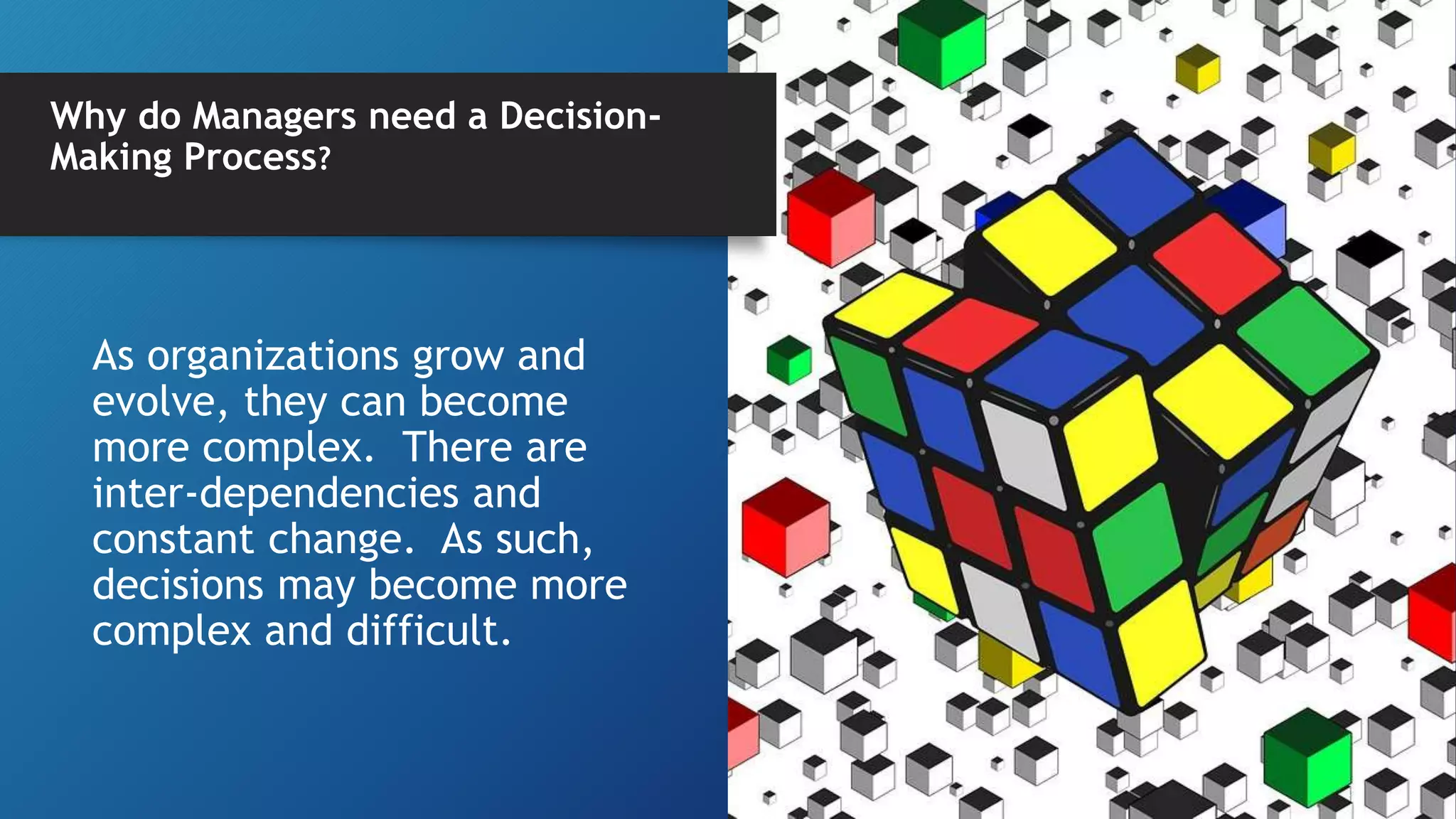
As organizations grow and
evolve, they can become
more complex. There are
inter-dependencies and
constant change. As such,
decisions may become more
complex and difficult.
Managing in Complexity
When dealing with complex and/or
high impact decisions, we can’t just
rely on the obvious. We can’t afford
to just react in the moment. We need
an effective decision-making process
to guide us.
The reality is that we all use some process to make
decisions. Some of those processes are conscious and
intentional. Some are unconscious and reactive. The
latter can be dangerous, as it is based an unconscious
beliefs and emotions that may not align with the reality of
the situation.
Having a Decision-Making Process ensures that we
approach decisions consciously.
Natural ability versus Decision Making Process
How to Develop Your Decision-
Making Process
A decision-making process does not have to
be cumbersome and onerous. Just putting
together some simple procedures and
guidelines can help to ensure you always
make decisions consciously. It can be as
simple as a check list. Decision trees and
flow charts can help with more complex
decisions.
Good decisions rely on good information. So having input from others
can be very important. It also helps to involve people in making
decisions that will impact them. And people are more likely to
support a decision that they were involved in.
However, there are times when you must make decisions on your
own. So it is important that you first understand the purpose of your
decision, and whom it will impact.
Also consider things such as the requirements for confidentiality,
protecting the privacy of individuals, your organizational protocols,
collective agreements, etc.
Do you need to involve others?
3 Tips for an Effective Decision-making
process
Assess type of
decision-making
Gather required
information
Analyze and
evaluate options
1. Assess the type of decision-making
• Be aware of the type of decisions that you make on a day to day
basis. For routine and/or urgent decisions, develop some simple
tools such as check lists, decision trees or flow charts.
• Decide if, when and how you need to engage others. This is
especially helpful for complex decisions.
2. Gather Required Information
• Ensure that you have the information that you need to make
effective decisions. But obviously, this needs to be balanced
against your time constraints.
• Be proactive in identifying the information that you need for
routine decisions (reports, charts, observations……). Stay aware
of the trends that influence more strategic type of decisions.
• Getting input from others will provide you with valuable
information, and also allow others to feel involved and their
opinions valued.
3. Analyze and evaluate options
• When possible, identify several options and dig into them
• There are different tools you can use, such as:
• SWOT analysis
• Decision Matrix (simple and complex)
• Scenario development
• Be open minded and creative!
Choose the best
path
Build your decision-making skills with
NMC Strategic Manager
Strategic-manager.teachable.com

3 tips for decision-making in management

  • 1.
    3 Tips forDecision Making in Management How to Create an Effective Decision-Making Process, even in a Complex Work Environment Debbie Narver Bsc MBA MScIB
  • 2.
    Decision-Making Skills for Managers Myunique system for developing management skills is based on: • My 16 years of experience as a team leader and manager • Expertise from my MBA, including specialized research • Consulting with all types and sizes of organizations
  • 3.
    Why do Managersneed a Decision- Making Process? As organizations grow and evolve, they can become more complex. There are inter-dependencies and constant change. As such, decisions may become more complex and difficult.
  • 4.
    Managing in Complexity Whendealing with complex and/or high impact decisions, we can’t just rely on the obvious. We can’t afford to just react in the moment. We need an effective decision-making process to guide us.
  • 5.
    The reality isthat we all use some process to make decisions. Some of those processes are conscious and intentional. Some are unconscious and reactive. The latter can be dangerous, as it is based an unconscious beliefs and emotions that may not align with the reality of the situation. Having a Decision-Making Process ensures that we approach decisions consciously. Natural ability versus Decision Making Process
  • 6.
    How to DevelopYour Decision- Making Process A decision-making process does not have to be cumbersome and onerous. Just putting together some simple procedures and guidelines can help to ensure you always make decisions consciously. It can be as simple as a check list. Decision trees and flow charts can help with more complex decisions.
  • 7.
    Good decisions relyon good information. So having input from others can be very important. It also helps to involve people in making decisions that will impact them. And people are more likely to support a decision that they were involved in. However, there are times when you must make decisions on your own. So it is important that you first understand the purpose of your decision, and whom it will impact. Also consider things such as the requirements for confidentiality, protecting the privacy of individuals, your organizational protocols, collective agreements, etc. Do you need to involve others?
  • 8.
    3 Tips foran Effective Decision-making process Assess type of decision-making Gather required information Analyze and evaluate options
  • 9.
    1. Assess thetype of decision-making • Be aware of the type of decisions that you make on a day to day basis. For routine and/or urgent decisions, develop some simple tools such as check lists, decision trees or flow charts. • Decide if, when and how you need to engage others. This is especially helpful for complex decisions.
  • 10.
    2. Gather RequiredInformation • Ensure that you have the information that you need to make effective decisions. But obviously, this needs to be balanced against your time constraints. • Be proactive in identifying the information that you need for routine decisions (reports, charts, observations……). Stay aware of the trends that influence more strategic type of decisions. • Getting input from others will provide you with valuable information, and also allow others to feel involved and their opinions valued.
  • 11.
    3. Analyze andevaluate options • When possible, identify several options and dig into them • There are different tools you can use, such as: • SWOT analysis • Decision Matrix (simple and complex) • Scenario development • Be open minded and creative!
  • 12.
    Choose the best path Buildyour decision-making skills with NMC Strategic Manager Strategic-manager.teachable.com