WORK FLOW
+
THE INTERVIEW
WEEK 3
SHANNON WALSH
THE ART OF THE
INTERVIEW
RELATIONSHIPS& RELATIONS
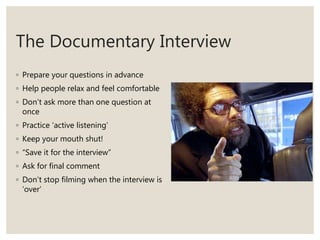
The Documentary Interview
◦ Prepare your questions in advance
◦ Help people relax and feel comfortable
◦ Don’t ask more than one question at
once
◦ Practice ‘active listening’
◦ Keep your mouth shut!
◦ “Save it for the interview”
◦ Ask for final comment
◦ Don’t stop filming when the interview is
‘over’
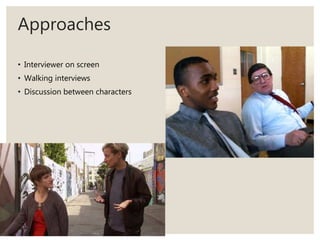
Approaches
• Interviewer on screen
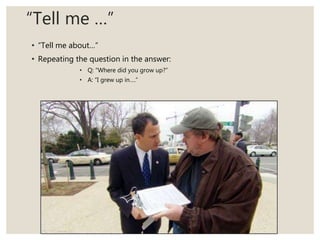
• Walking interviews
• Discussion between characters
“Tell me …”
• “Tell me about…”
• Repeating the question in the answer:
• Q: “Where did you grow up?”
• A: “I grew up in….”
Avoid leading questions,
& questions with ‘Yes’ and ‘No’
responses
Example of leading questions that give bad answers:
Q: “Is it difficult as a new immigrant in Vancouver”?
A: “It’s not too bad.
Q: “You’ve been here for six months now?”
A: “Yes”
Q: “You said you come from the Philippines?”
A: “Yes, that’s right.”
How could this have been done differently?
Use Open Ended Questions
• Tell me what it is like to …?
• How long have you…?
• How did you feel..?
• Tell me about when….?
• Prepare a questions list before hand
• Develop themes so your questions flow, but don’t get stuck on your
questions
• Be prepared, but also spontaneous
• Ask easy questions first and go towards harder or more emotional
questions later
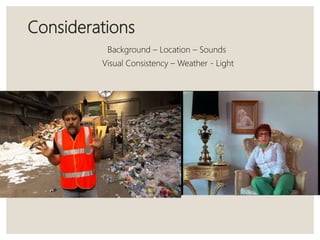
Considerations
Background – Location – Sounds
Visual Consistency – Weather - Light
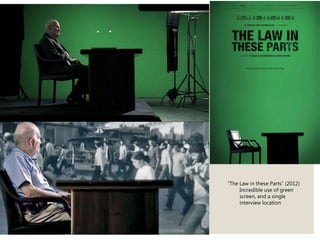
“The Law in these Parts” (2012)
Incredible use of green
screen, and a single
interview location
DOCUMENTARY
WORK FLOW
Preproduction to post production
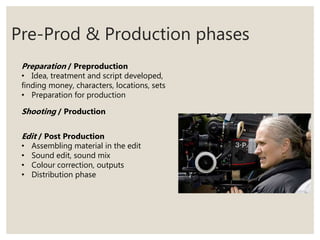
Pre-Prod & Production phases
Preparation / Preproduction
• Idea, treatment and script developed,
finding money, characters, locations, sets
• Preparation for production
Shooting / Production
Edit / Post Production
• Assembling material in the edit
• Sound edit, sound mix
• Colour correction, outputs
• Distribution phase
Preproduction
Research
• As extensive as possible
Writing
• Proposal & Treatment, Story Development, Script writing
Casting
• Finding your character(s)
Pre-Production People
• Producer – financial and organizational, sometimes creative
• Executive Producer – distant, financial or ‘rights’
• Line Producer – Organizer of on set production
• Associate Producer – coordinating lab and technical
personnel
• Script Writer
• Researcher & Visual archivist
• Production Assistants
This is the phase we will
be primarily working on
this term.
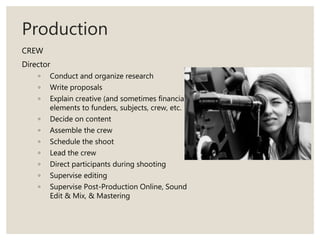
Production
CREW
Director
◦ Conduct and organize research
◦ Write proposals
◦ Explain creative (and sometimes financial)
elements to funders, subjects, crew, etc.
◦ Decide on content
◦ Assemble the crew
◦ Schedule the shoot
◦ Lead the crew
◦ Direct participants during shooting
◦ Supervise editing
◦ Supervise Post-Production Online, Sound
Edit & Mix, & Mastering
Production
CREW
Director of Photography
• Orders camera equipment
• Tests and adjusts equipment
• Masters all technical elements
• Answers to director, but takes initiative when shooting handheld or
other necessary situations
• Scouting locations, ensuring electricity requirements
• Lighting aesthetics and set ups
• Deciding camera positioning and ‘look’ in collaboration with the director
• Making all camera movements
• Listens and is sensitive to situation and human behaviour
Production
CREW
Sound Person
• Chooses right equipment for situation
• Checks equipment in advance
• Is aware of not causing shadows or getting microphone into frame
• Keeps mic close to sound source even during handheld shooting
• Hears sound inequities and finds solutions whenever possible
• Recording location sound and wild sound on own initiative
• Alerts DP and director if sound is un-usable and must be reshot
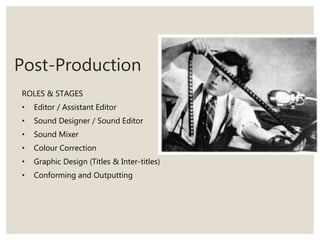
Post-Production
ROLES & STAGES
• Editor / Assistant Editor
• Sound Designer / Sound Editor
• Sound Mixer
• Colour Correction
• Graphic Design (Titles & Inter-titles)
• Conforming and Outputting
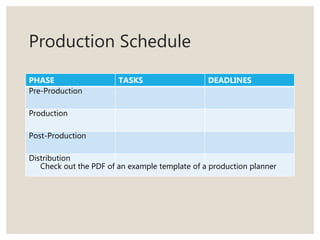
Production Schedule
PHASE TASKS DEADLINES
Pre-Production
Production
Post-Production
Distribution
Check out the PDF of an example template of a production planner
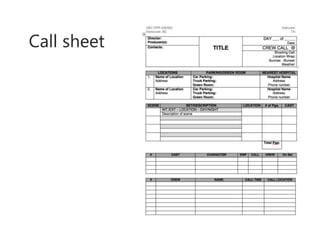
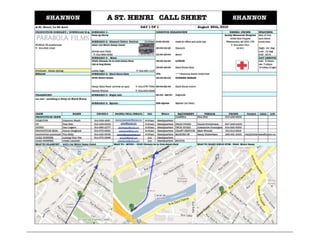
Call sheet
3 the interview_workflow

3 the interview_workflow

  • 1.
  • 2.
    THE ART OFTHE INTERVIEW RELATIONSHIPS& RELATIONS
  • 3.
    The Documentary Interview ◦Prepare your questions in advance ◦ Help people relax and feel comfortable ◦ Don’t ask more than one question at once ◦ Practice ‘active listening’ ◦ Keep your mouth shut! ◦ “Save it for the interview” ◦ Ask for final comment ◦ Don’t stop filming when the interview is ‘over’
  • 4.
    Approaches • Interviewer onscreen • Walking interviews • Discussion between characters
  • 5.
    “Tell me …” •“Tell me about…” • Repeating the question in the answer: • Q: “Where did you grow up?” • A: “I grew up in….”
  • 6.
    Avoid leading questions, &questions with ‘Yes’ and ‘No’ responses Example of leading questions that give bad answers: Q: “Is it difficult as a new immigrant in Vancouver”? A: “It’s not too bad. Q: “You’ve been here for six months now?” A: “Yes” Q: “You said you come from the Philippines?” A: “Yes, that’s right.” How could this have been done differently?
  • 7.
    Use Open EndedQuestions • Tell me what it is like to …? • How long have you…? • How did you feel..? • Tell me about when….? • Prepare a questions list before hand • Develop themes so your questions flow, but don’t get stuck on your questions • Be prepared, but also spontaneous • Ask easy questions first and go towards harder or more emotional questions later
  • 8.
    Considerations Background – Location– Sounds Visual Consistency – Weather - Light
  • 9.
    “The Law inthese Parts” (2012) Incredible use of green screen, and a single interview location
  • 11.
  • 12.
    Pre-Prod & Productionphases Preparation / Preproduction • Idea, treatment and script developed, finding money, characters, locations, sets • Preparation for production Shooting / Production Edit / Post Production • Assembling material in the edit • Sound edit, sound mix • Colour correction, outputs • Distribution phase
  • 13.
    Preproduction Research • As extensiveas possible Writing • Proposal & Treatment, Story Development, Script writing Casting • Finding your character(s) Pre-Production People • Producer – financial and organizational, sometimes creative • Executive Producer – distant, financial or ‘rights’ • Line Producer – Organizer of on set production • Associate Producer – coordinating lab and technical personnel • Script Writer • Researcher & Visual archivist • Production Assistants This is the phase we will be primarily working on this term.
  • 14.
    Production CREW Director ◦ Conduct andorganize research ◦ Write proposals ◦ Explain creative (and sometimes financial) elements to funders, subjects, crew, etc. ◦ Decide on content ◦ Assemble the crew ◦ Schedule the shoot ◦ Lead the crew ◦ Direct participants during shooting ◦ Supervise editing ◦ Supervise Post-Production Online, Sound Edit & Mix, & Mastering
  • 15.
    Production CREW Director of Photography •Orders camera equipment • Tests and adjusts equipment • Masters all technical elements • Answers to director, but takes initiative when shooting handheld or other necessary situations • Scouting locations, ensuring electricity requirements • Lighting aesthetics and set ups • Deciding camera positioning and ‘look’ in collaboration with the director • Making all camera movements • Listens and is sensitive to situation and human behaviour
  • 16.
    Production CREW Sound Person • Choosesright equipment for situation • Checks equipment in advance • Is aware of not causing shadows or getting microphone into frame • Keeps mic close to sound source even during handheld shooting • Hears sound inequities and finds solutions whenever possible • Recording location sound and wild sound on own initiative • Alerts DP and director if sound is un-usable and must be reshot
  • 17.
    Post-Production ROLES & STAGES •Editor / Assistant Editor • Sound Designer / Sound Editor • Sound Mixer • Colour Correction • Graphic Design (Titles & Inter-titles) • Conforming and Outputting
  • 18.
    Production Schedule PHASE TASKSDEADLINES Pre-Production Production Post-Production Distribution Check out the PDF of an example template of a production planner
  • 19.

Editor's Notes

  • #11 Barbara Walters interview