














3 Myths about digital conversion
Tom Voirol
Global head of user experience
3 Myths
1. Conversion means buying
2. Content must be about us
3. Improving conversion is expensive
1. Conversion means buying
A conversion is
an action desirable to you
which a person has taken
as a result of using your
digital properties.
How we define conversion
1. Conversion means buying
0
1000
2000
3000
4000
5000
6000
7000
8000
Test drive requests
2012 2013 2014
1. Conversion means buying
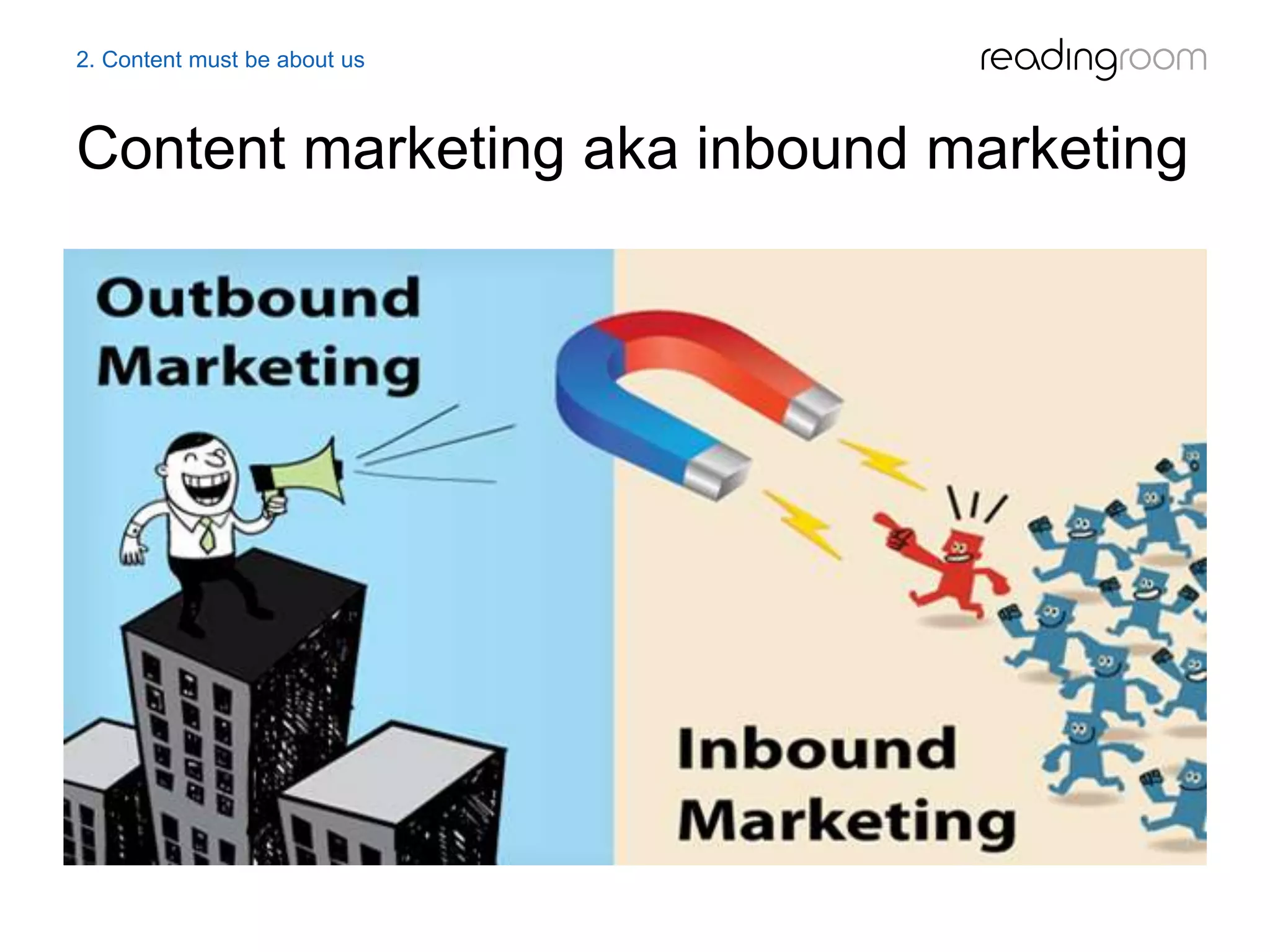
2. Content must be about us
Content marketing aka inbound marketing
2. Content must be about us
Aka permission marketing
2. Content must be about us
It’s an invitation
2. Content must be about us
Not to a salesperson, though
2. Content must be about us
http://moz.com/about/team/randfish
We Imagine Content Marketing Works
Like This…
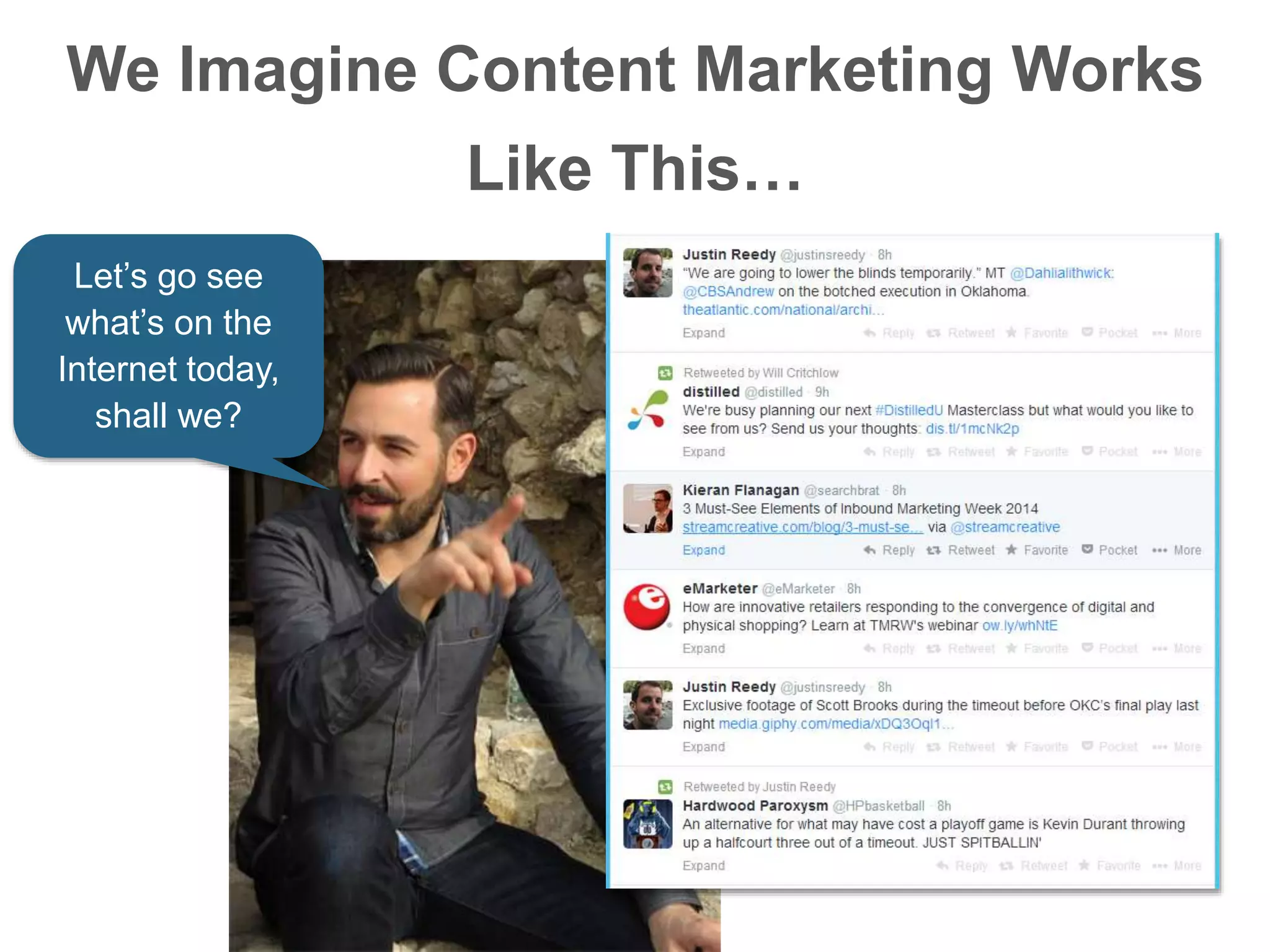
Let’s go see
what’s on the
Internet today,
shall we?
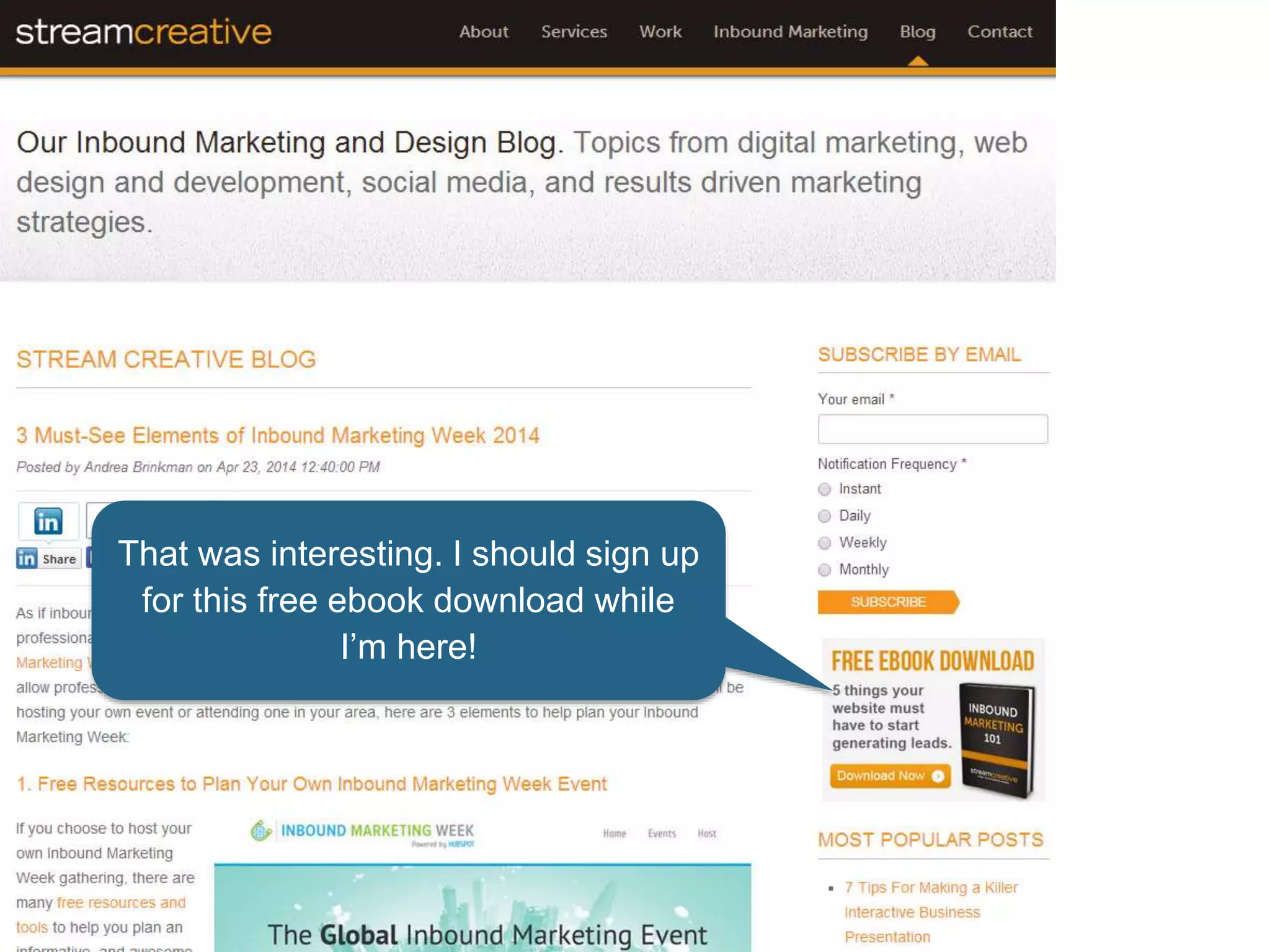
That was interesting. I should sign up
for this free ebook download while
I’m here!
And I’ll just fill out their contact form
with my information….
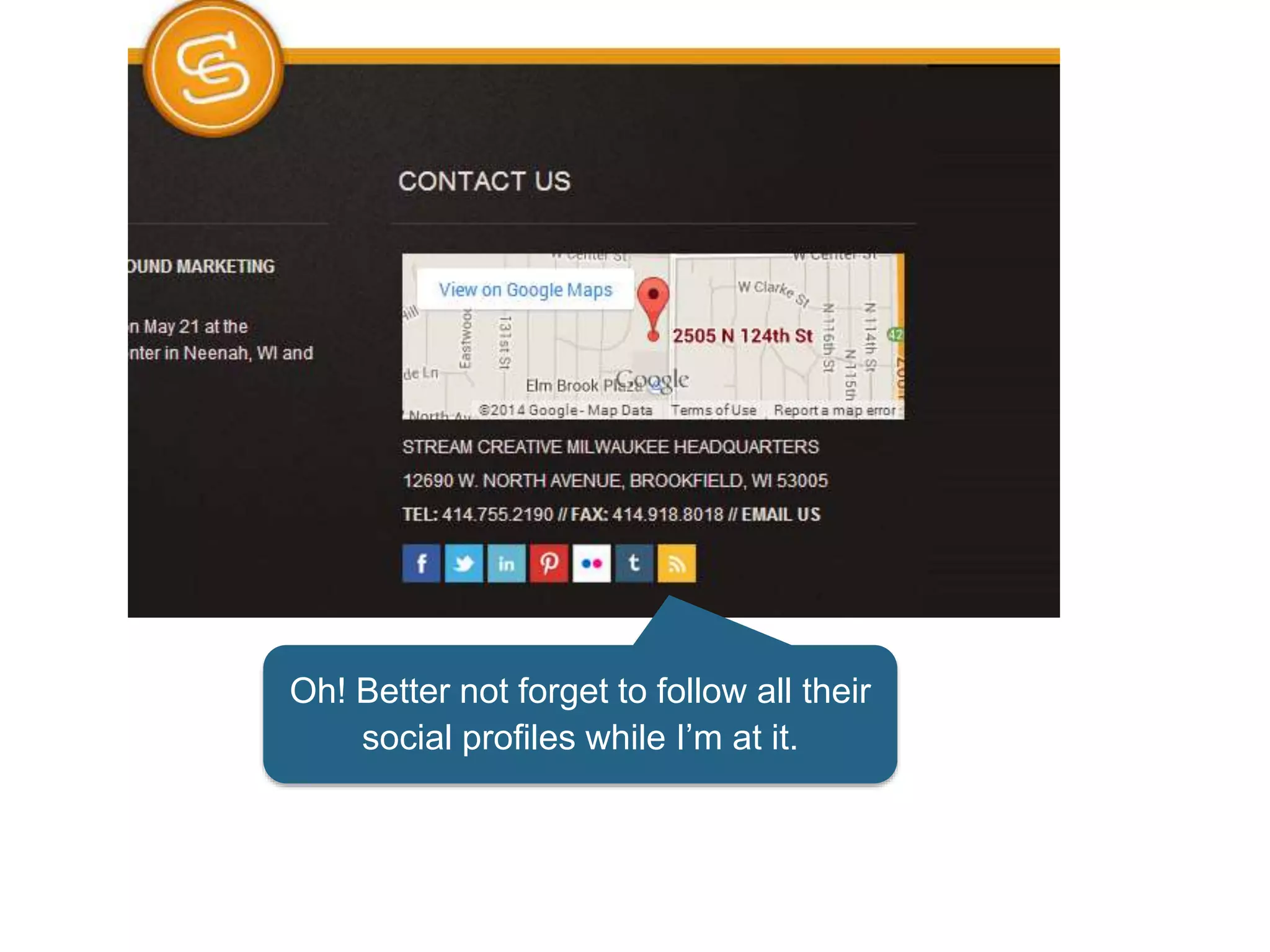
Oh! Better not forget to follow all their
social profiles while I’m at it.
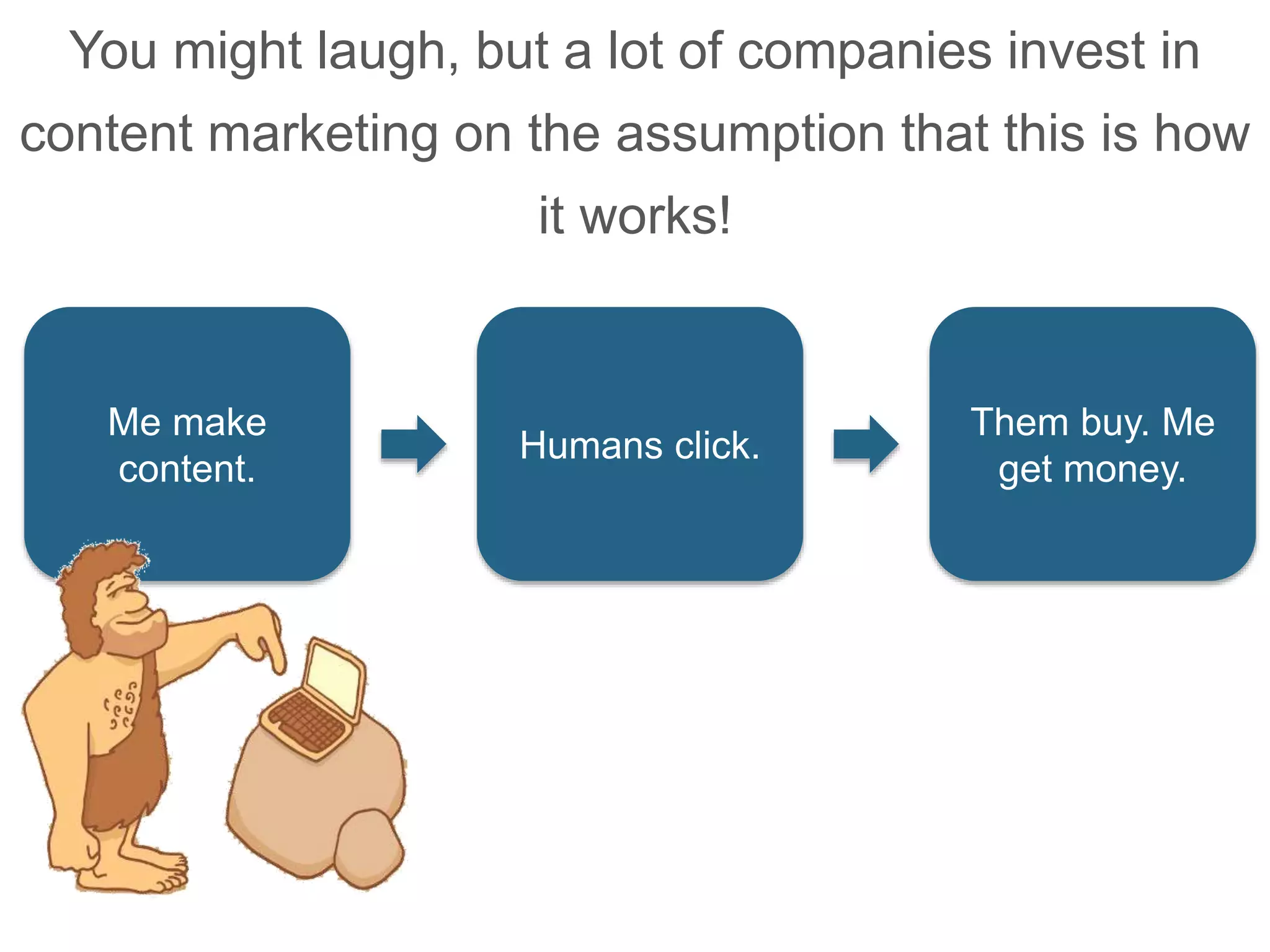
You might laugh, but a lot of companies invest in
content marketing on the assumption that this is how
it works!
Me make
content.
Humans click.
Them buy. Me
get money.
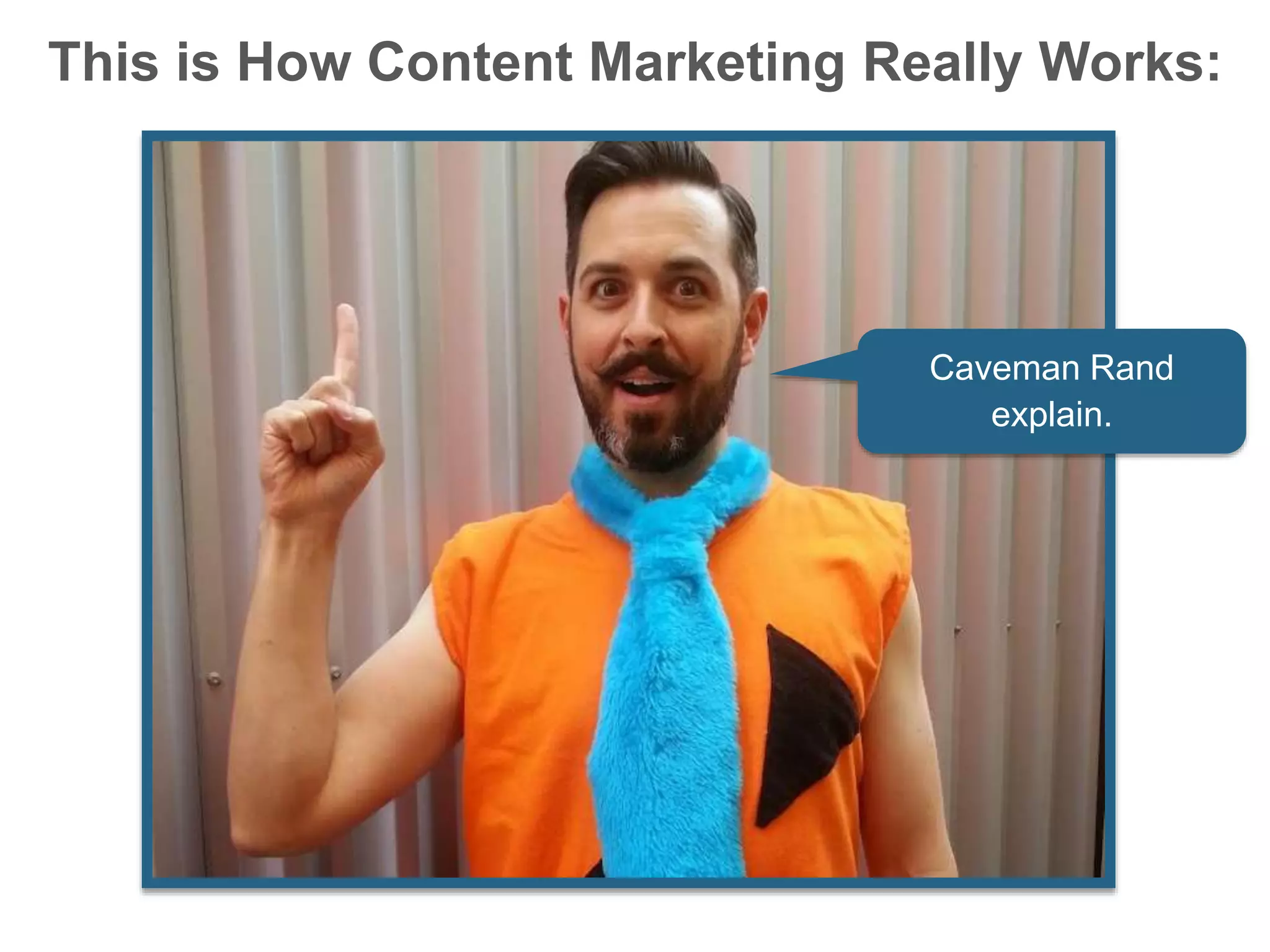
This is How Content Marketing Really Works:
Caveman Rand
explain.
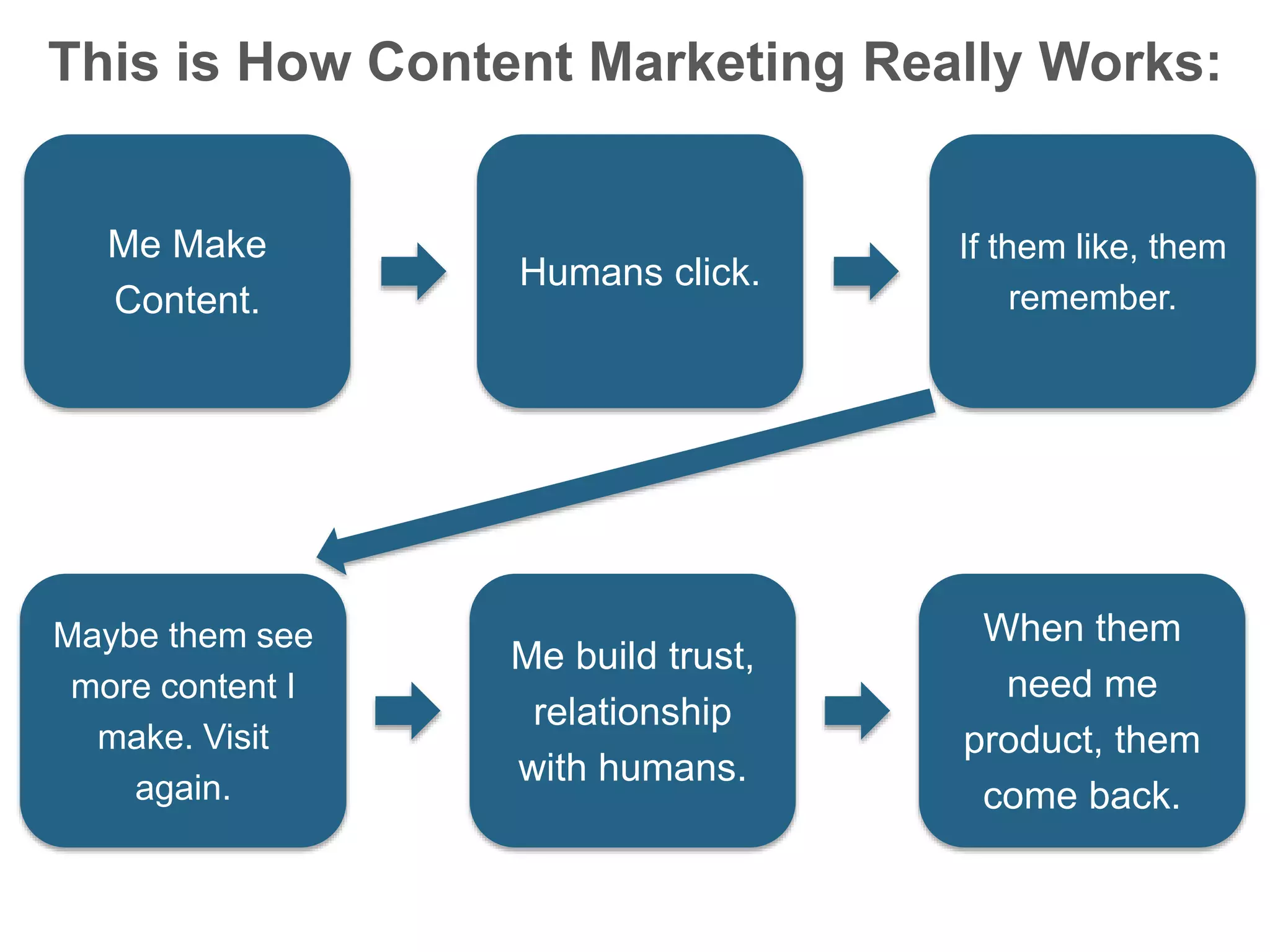
This is How Content Marketing Really Works:
Me Make
Content.
Humans click.
If them like, them
remember.
Maybe them see
more content I
make. Visit
again.
Me build trust,
relationship
with humans.
When them
need me
product, them
come back.
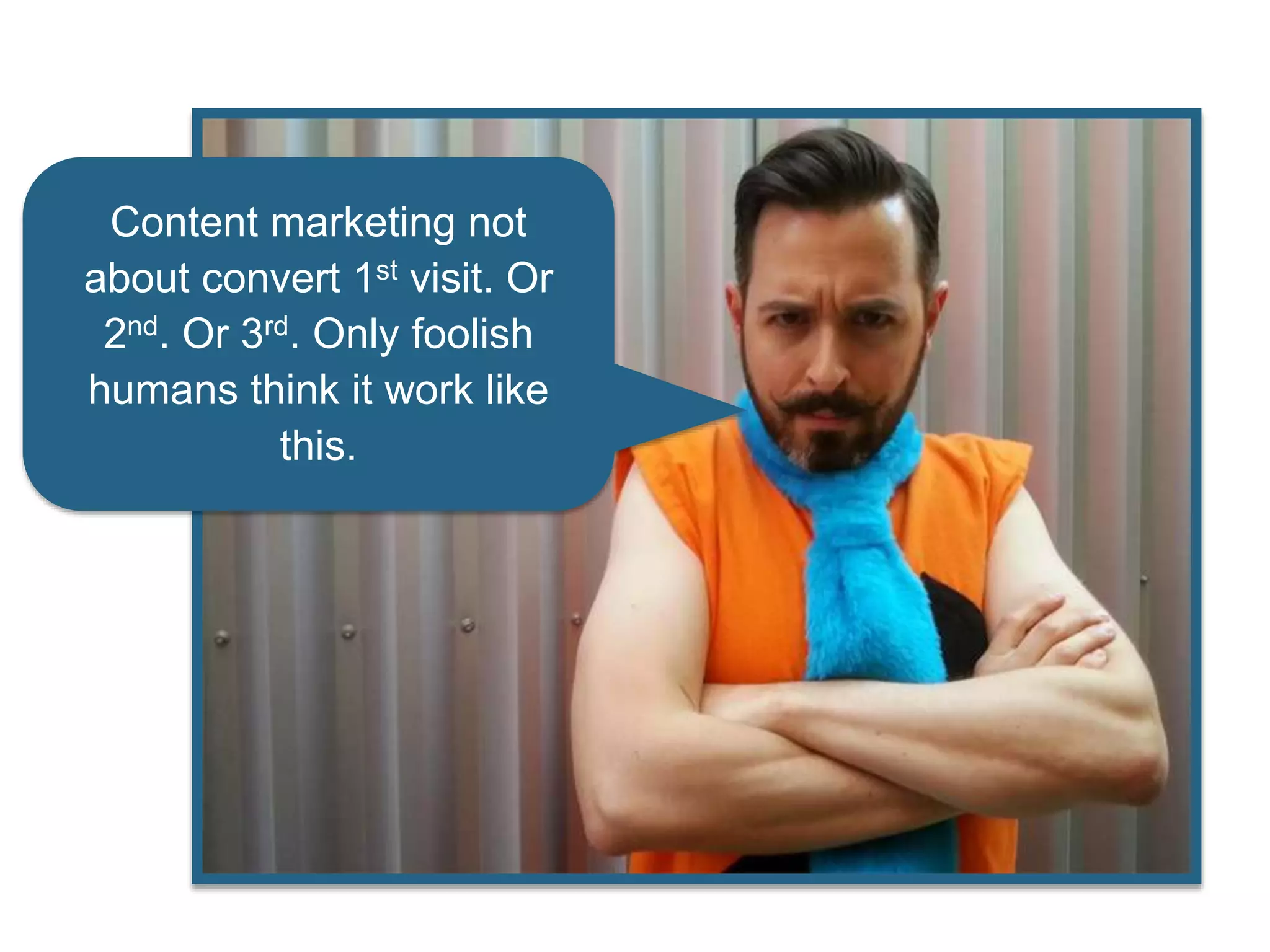
Content marketing not
about convert 1st visit. Or
2nd. Or 3rd. Only foolish
humans think it work like
this.
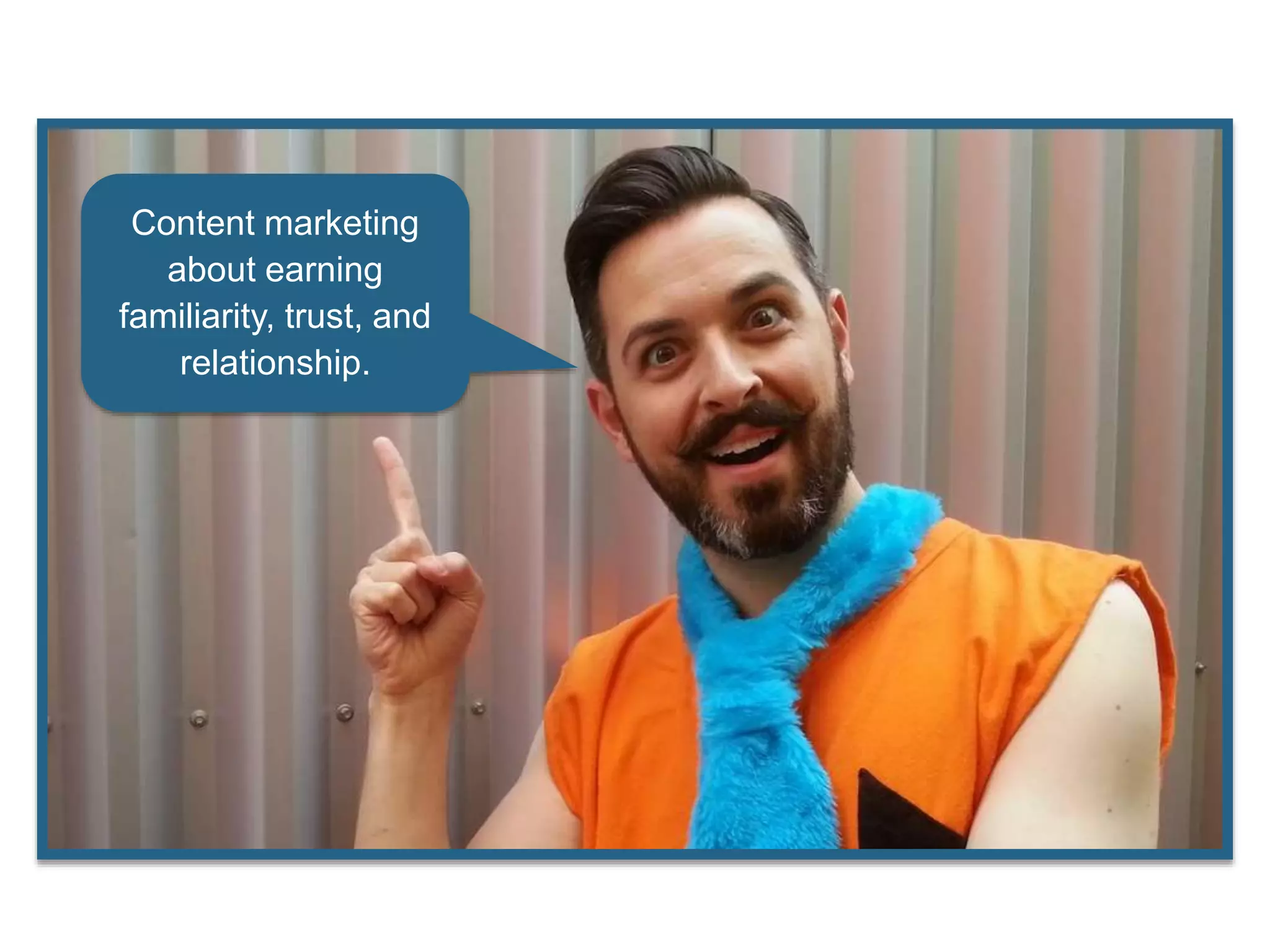
Content marketing
about earning
familiarity, trust, and
relationship.
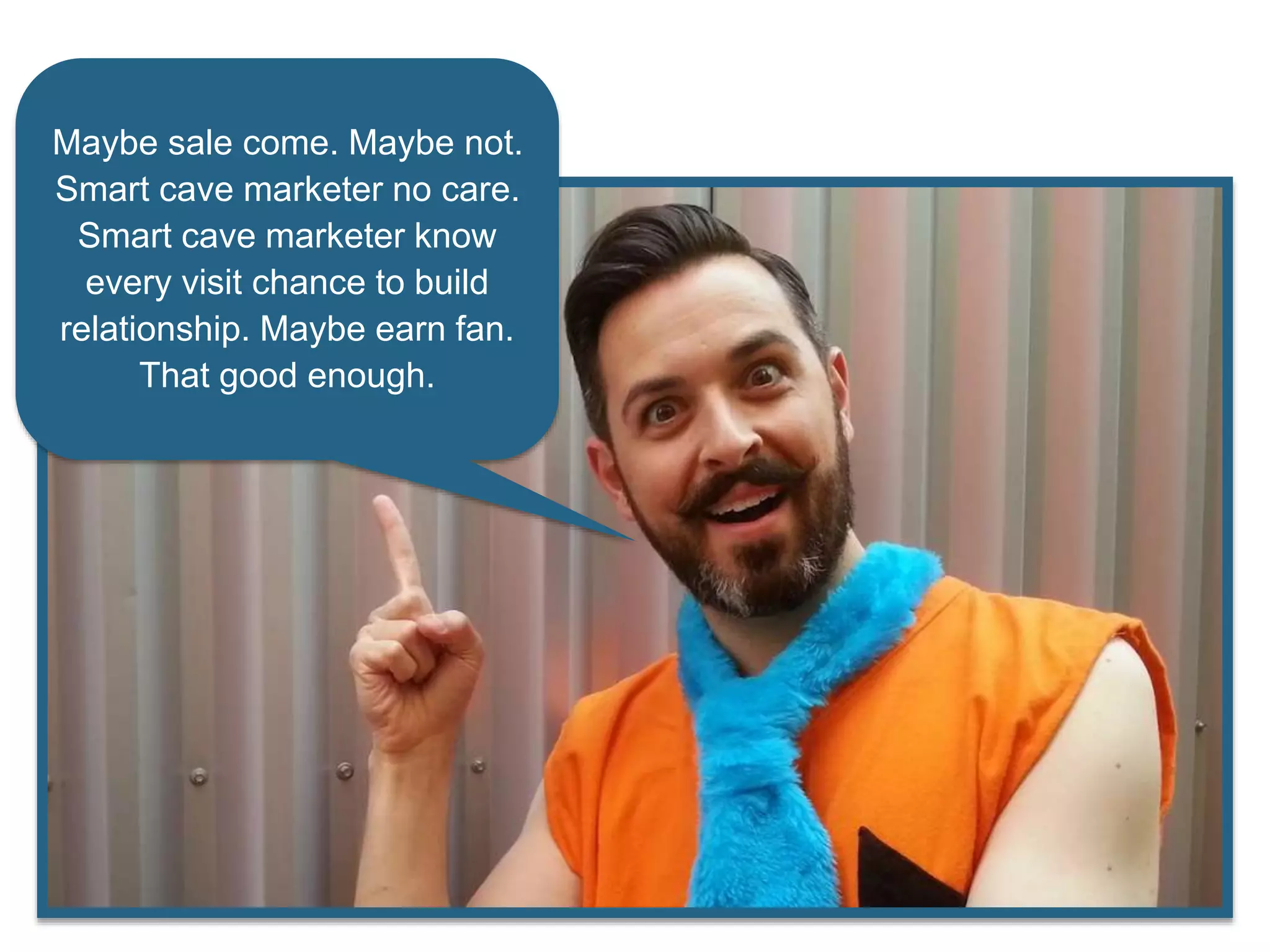
Maybe sale come. Maybe not.
Smart cave marketer no care.
Smart cave marketer know
every visit chance to build
relationship. Maybe earn fan.
That good enough.
2. Content must be about us
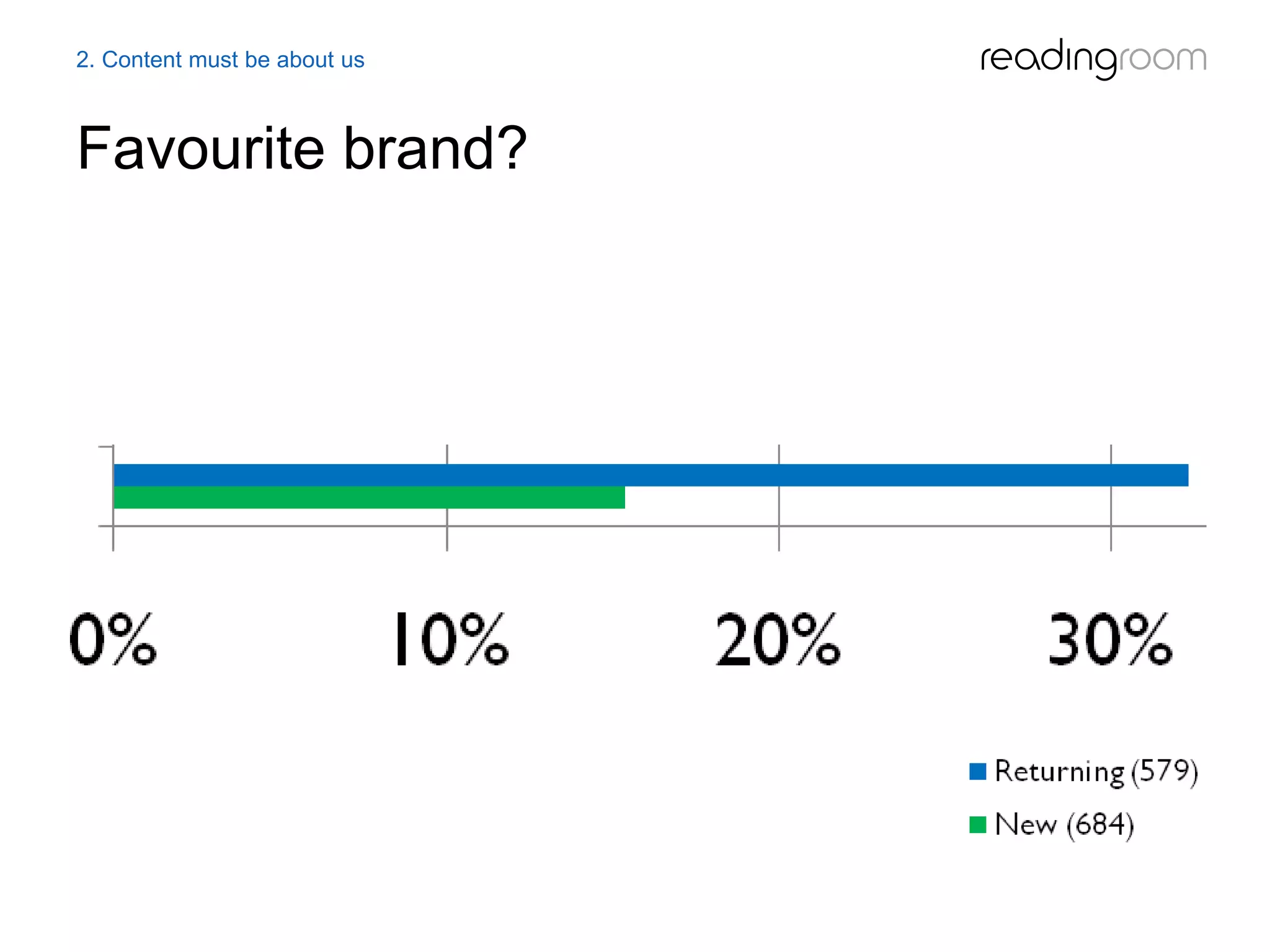
Favourite brand?
2. Content must be about us
3. Improving conversion is expensive
A/B testing
Multivariate testing
3. Improving conversion is expensive
Digital audit
3. Improving conversion is expensive
Digital roadmap
3. Improving conversion is expensive
3 myths about digital conversion

3 myths about digital conversion

Editor's Notes

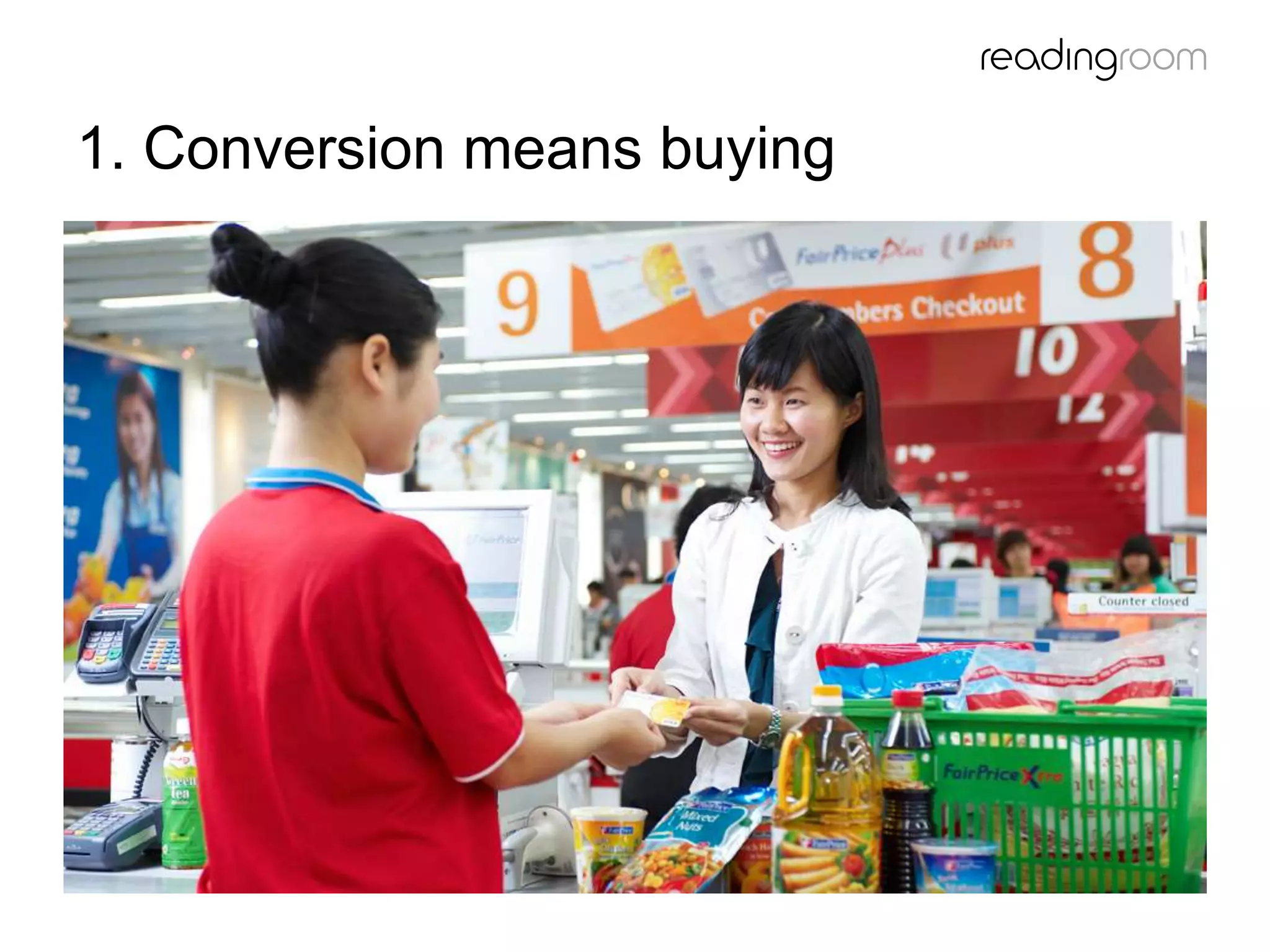
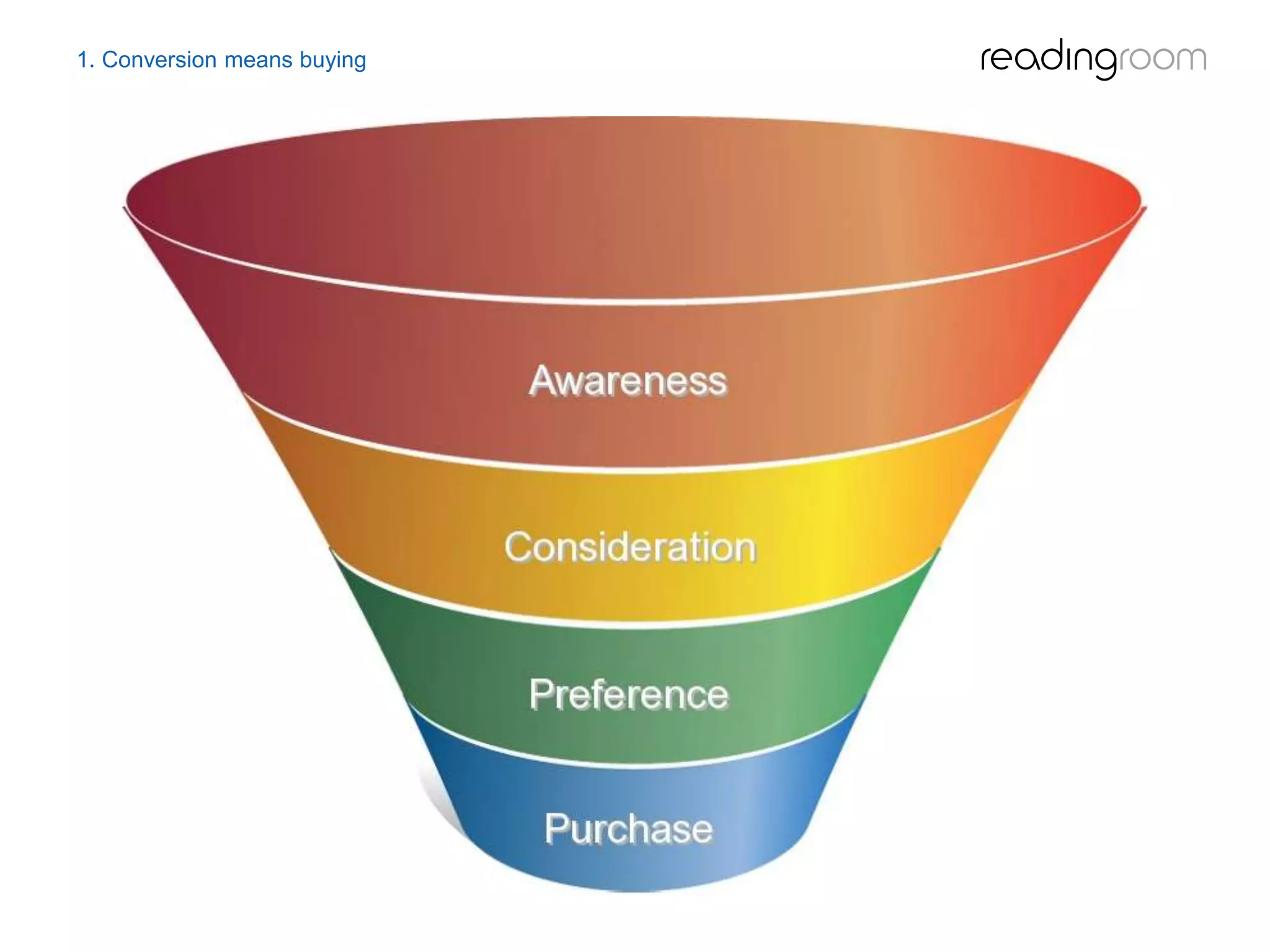
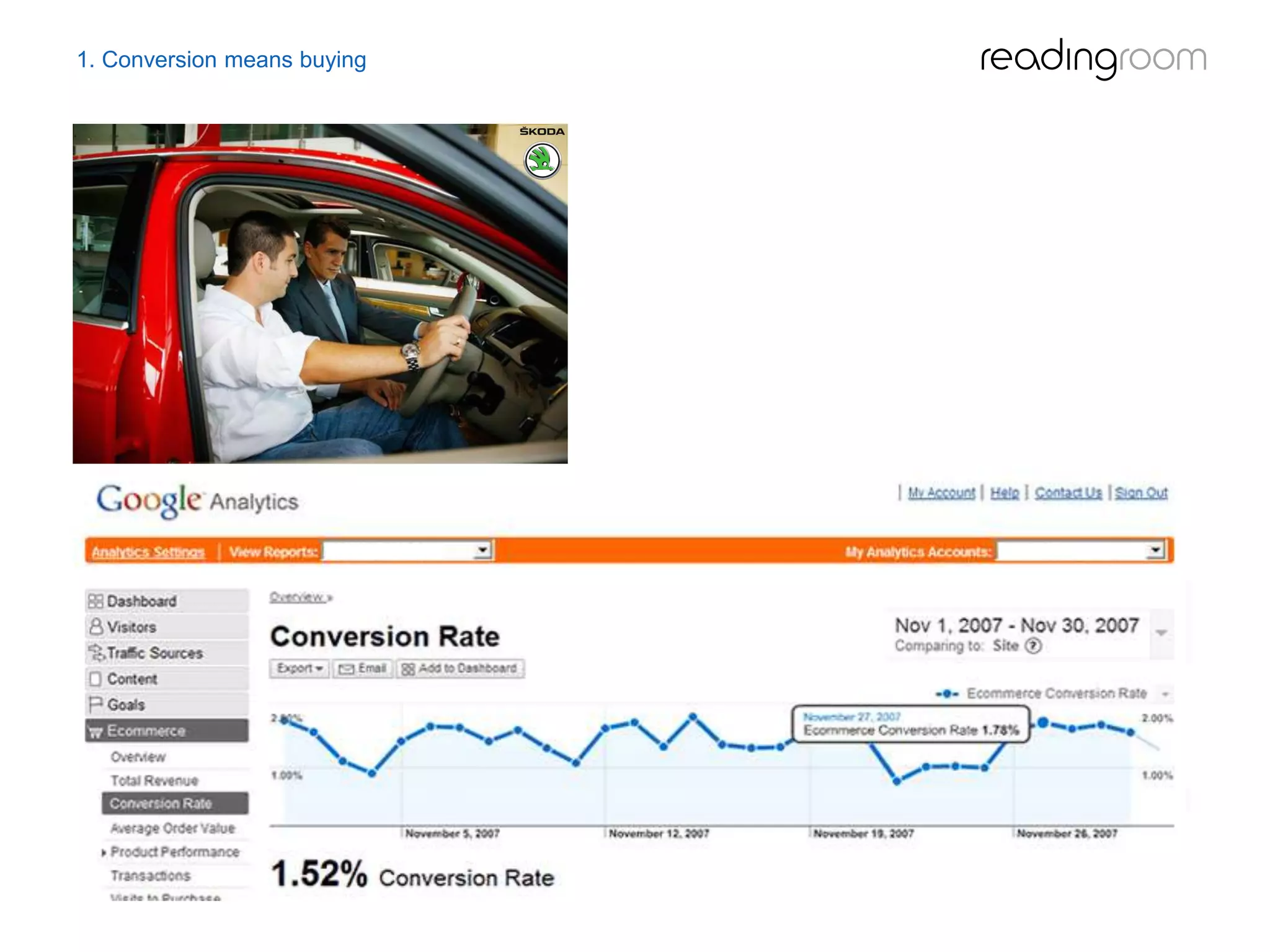
  • #5 When we hear conversion, most of us think purchase
  • #6 As marketers, we are conditioned to think in terms of the sales funnel
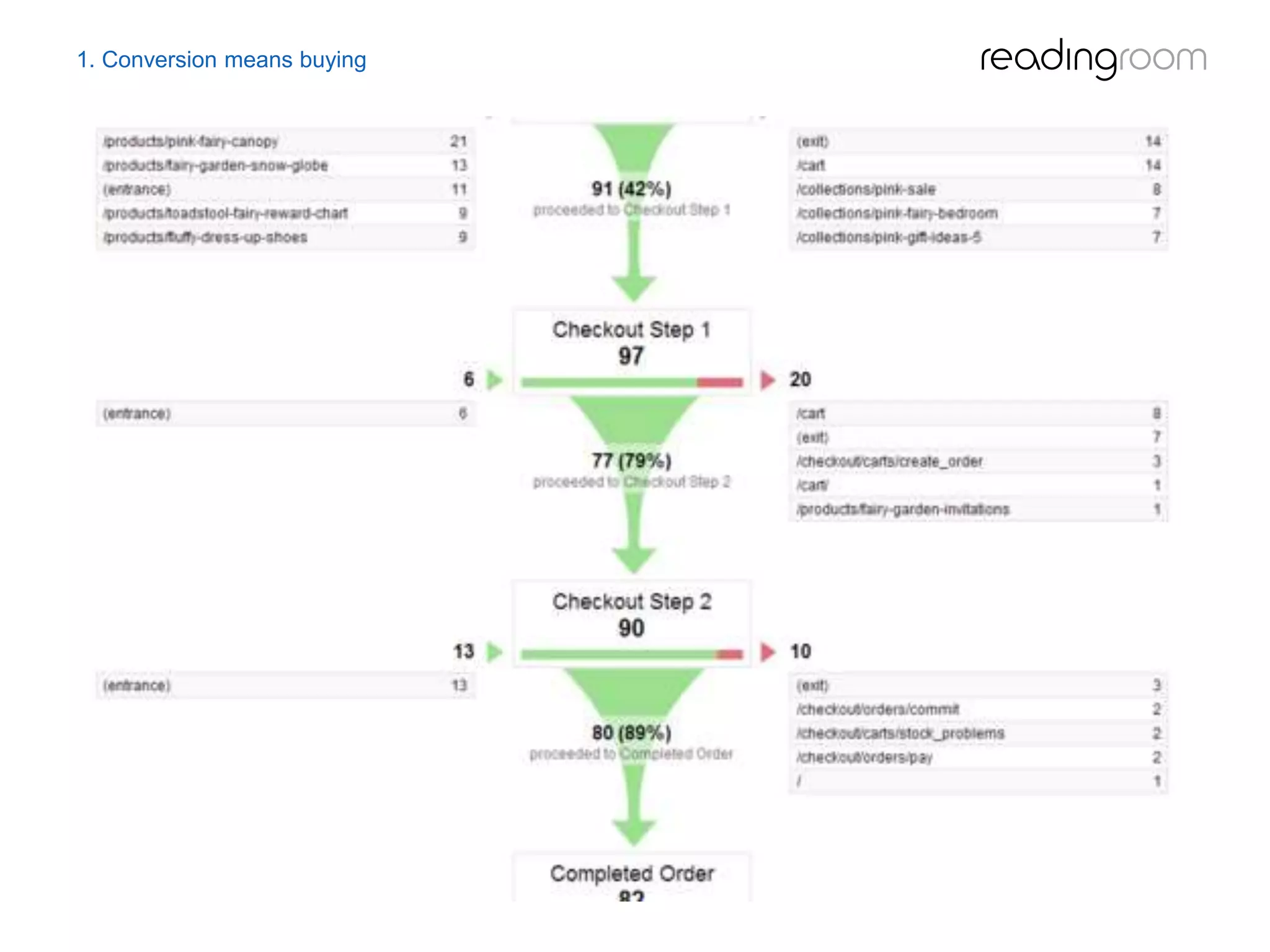
  • #7 And indeed, we can track what looks like the sales funnel in tools like Google Analytics
  • #8 But what if you’re not selling online?
  • #9 Or if you’re not selling any product as such?
  • #10 Or if you are, but increasing revenue isn’t your primary goal?
  • #11 The good news is, conversion is quite independent from buying and selling. It is defined as…
  • #12 So it’s best to start by thinking about what your strategic objectives are.
  • #13 It could be that you want to attract a younger clientele
  • #14 It might be wanting to change the public perception of the organisation
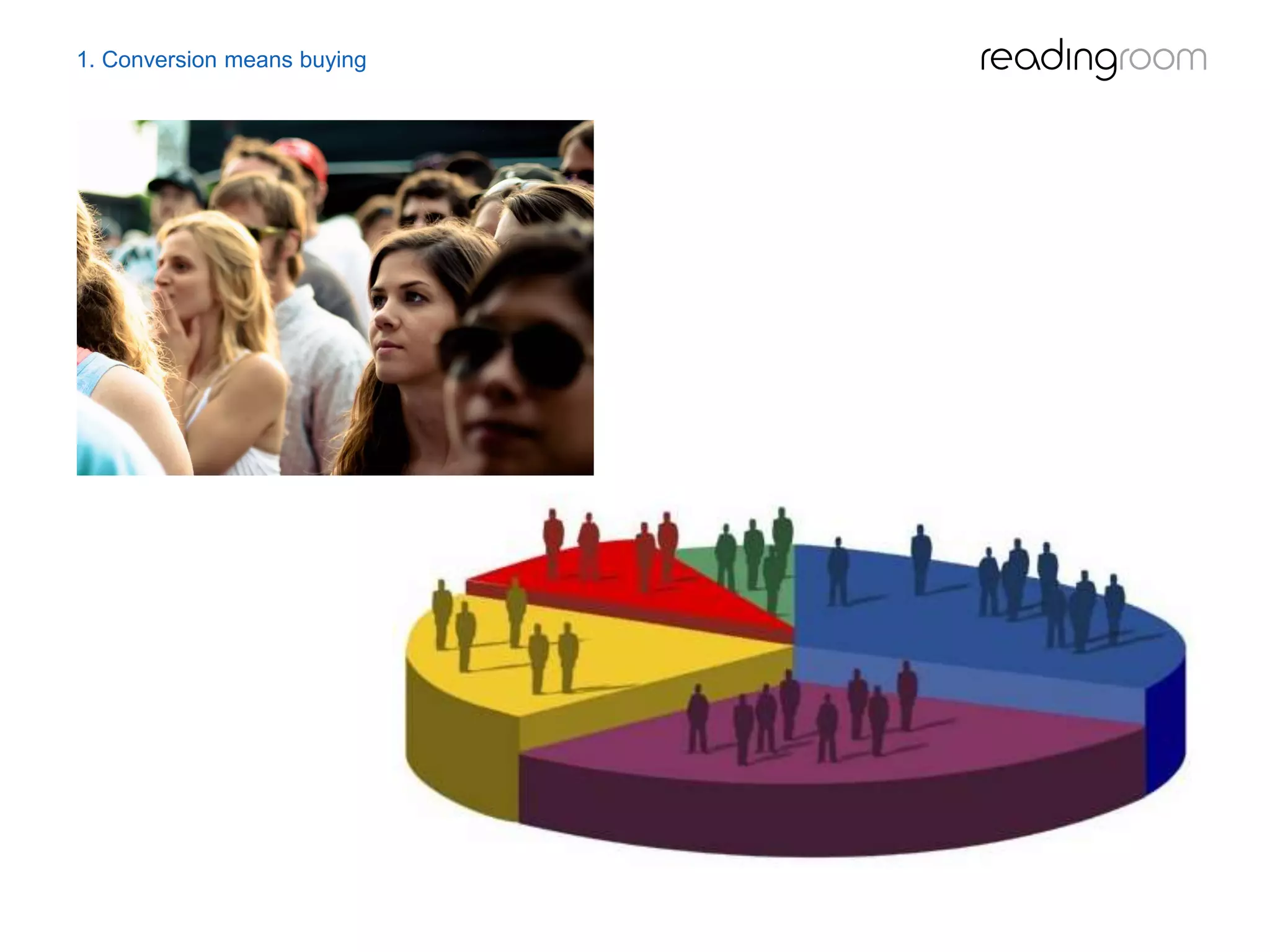
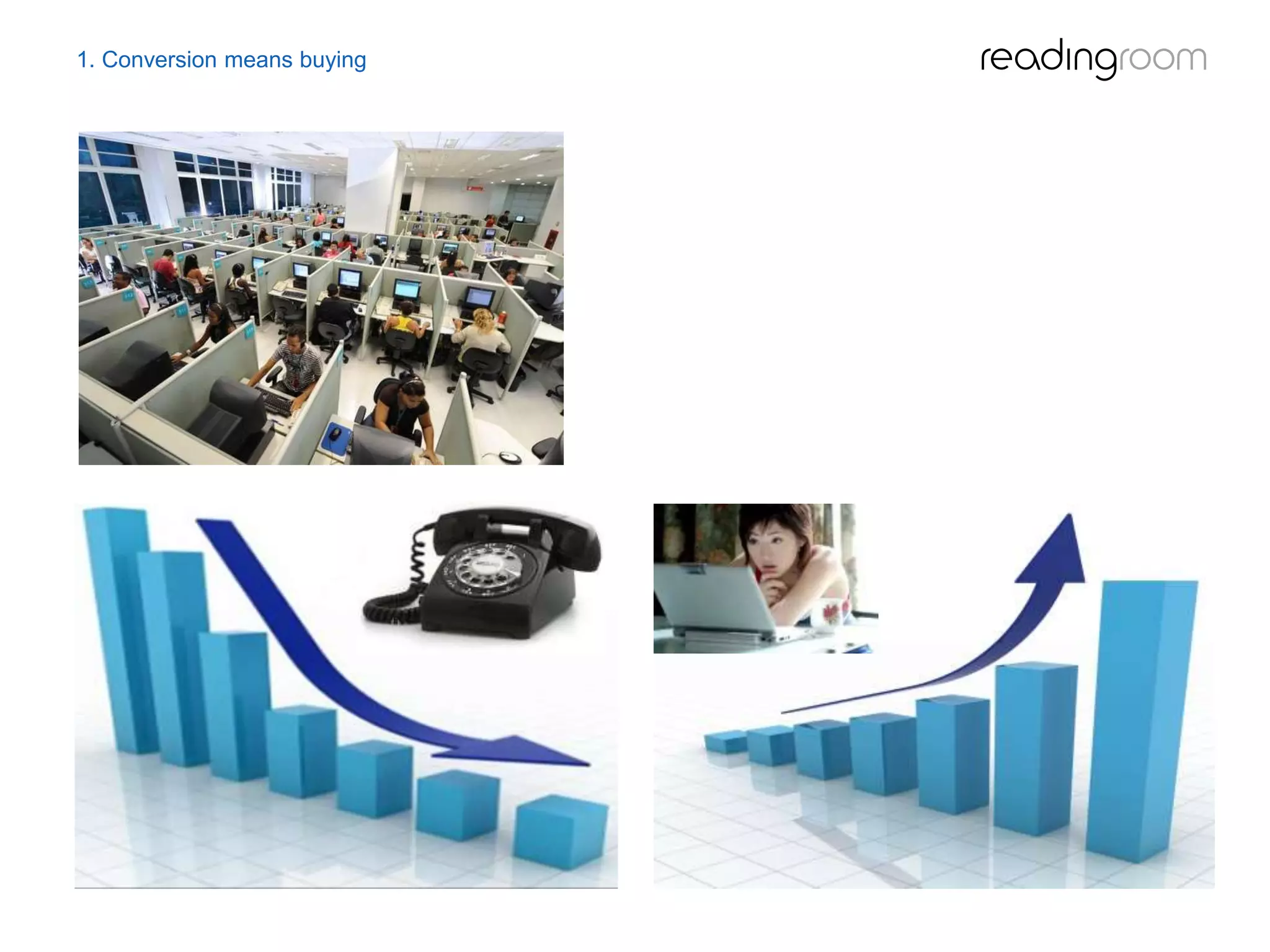
  • #15 It might be to reduce contact centre cost
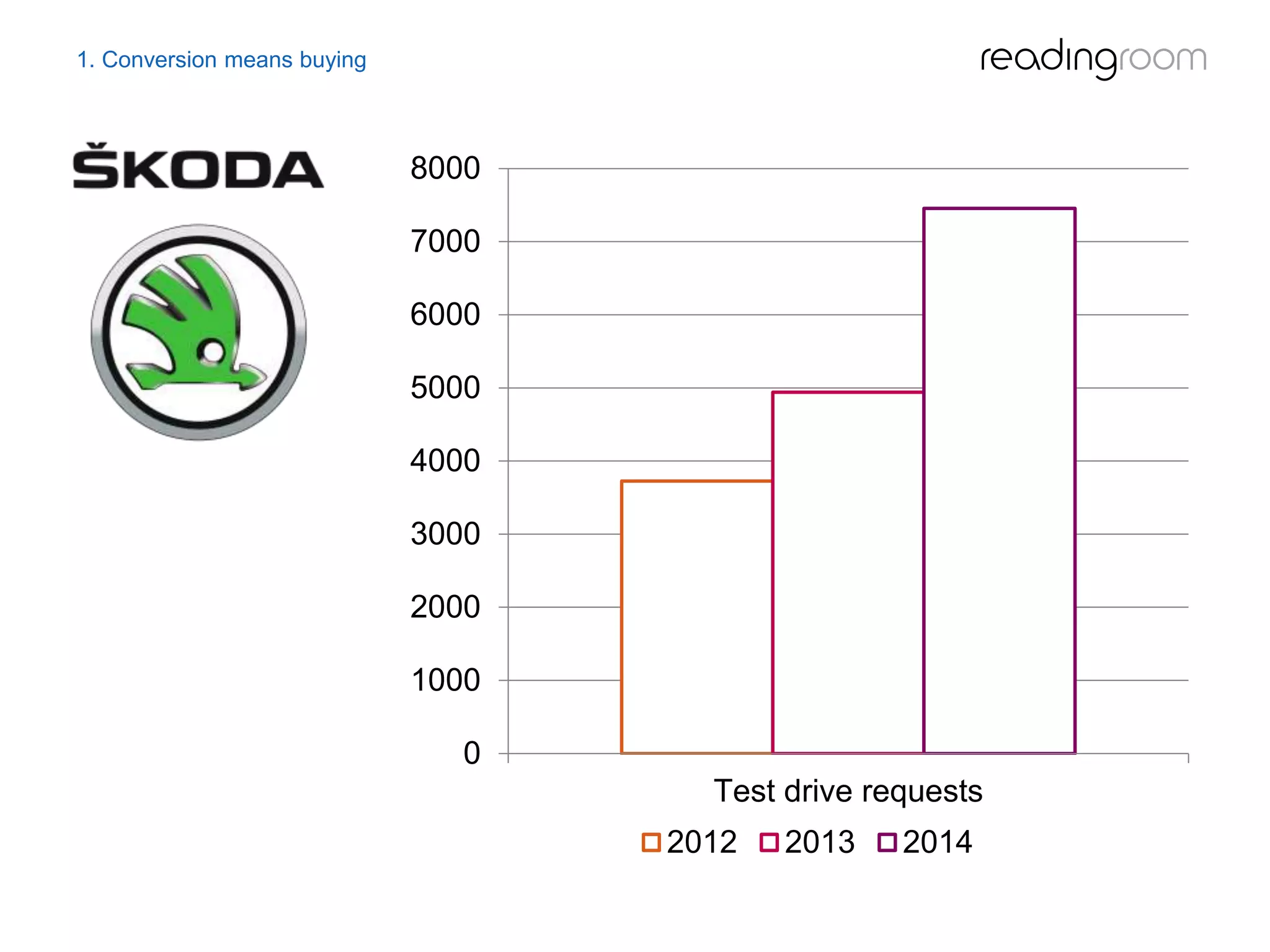
  • #16 Or it might be to get people to book a test drive
  • #17 Whatever your strategic goal, you want to find a way to measure it.
  • #18 So for the younger clientele we’re looking for a way to determine demographics at time of interest or at time of purchase.
  • #19 For a business wanting to change the public’s perception you’ll probably fall back on classic marketing research.
  • #20 For the company wanting to reduce call centre cost you’d correlate the decrease in call volume with an increase in the consumption of the self-help pages of your website.
  • #21 And with the car maker who wants people to book test drives, you set that up as a conversion goal in GA
  • #22 We managed to almost double the number of test drives over the course of two years
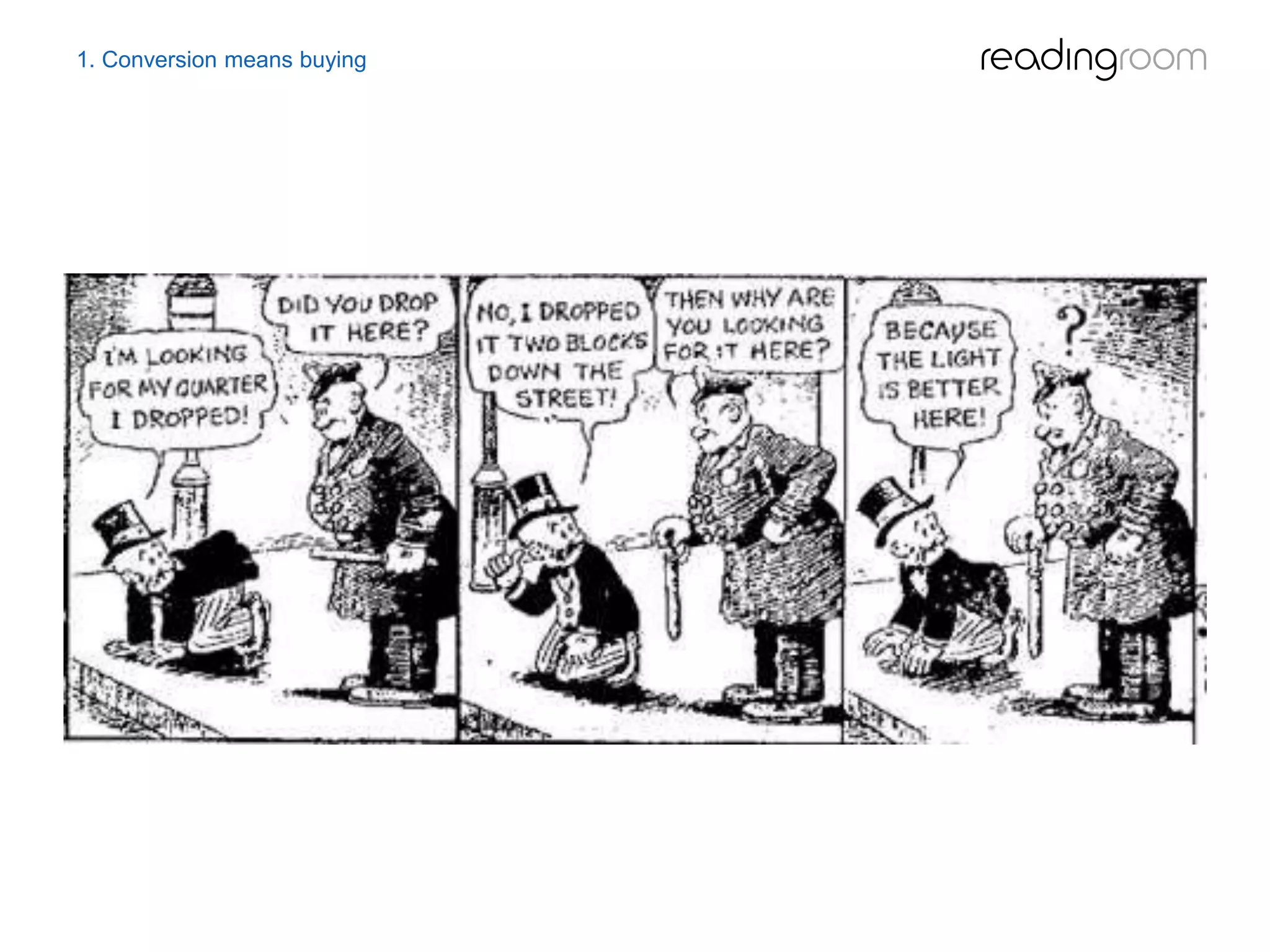
  • #23 Don’t just rely on Google Analytics, though. It’s very easy to fall into this trap where you measure what’s easy to measure, not what tells you whether you’re actually on track to reach your goals.
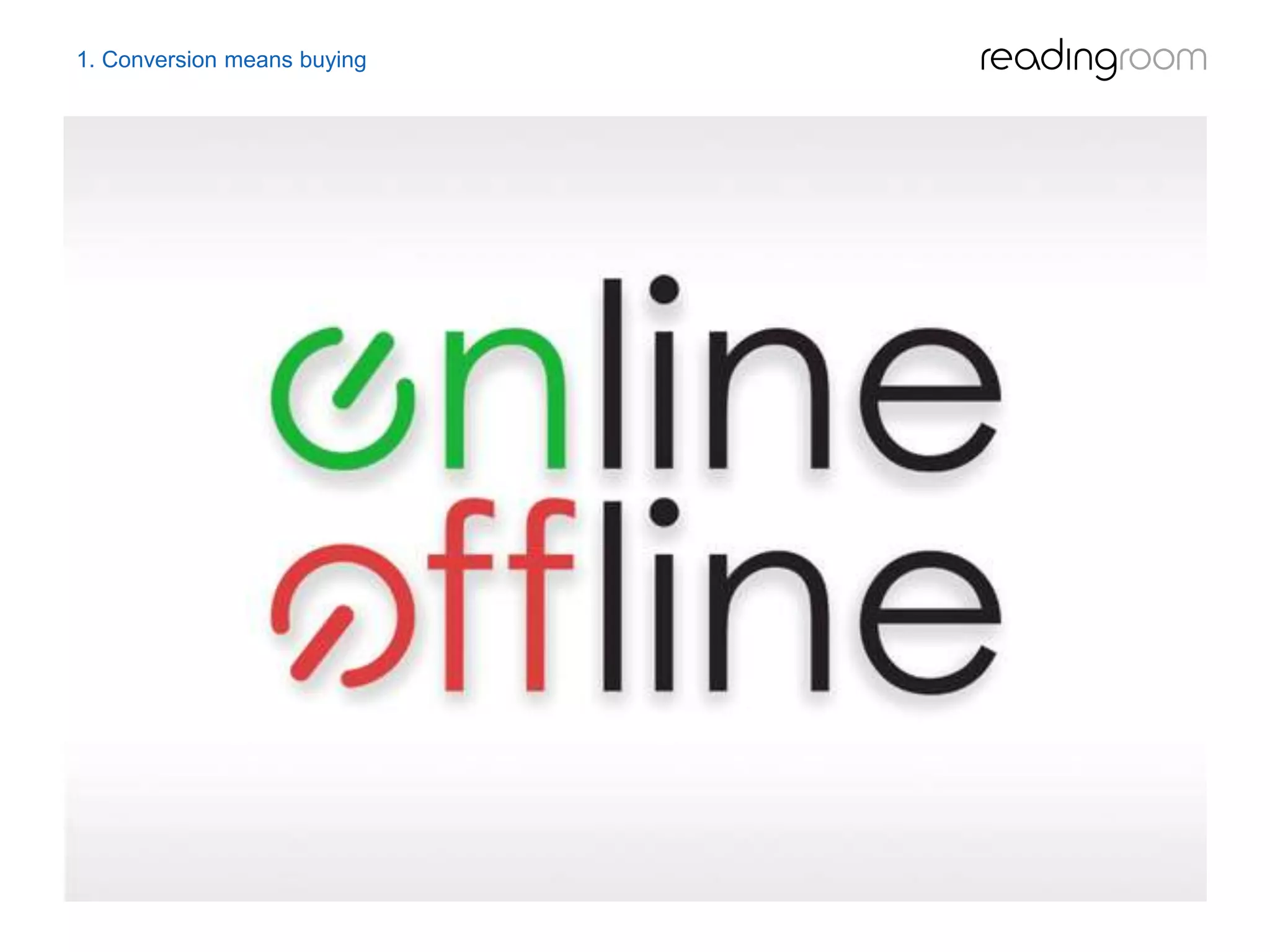
  • #24 Those measurements can be online or offline or a combination of both. The Skoda marketing team take reports from all of their agencies and amalgamate them to give them an overall marketing performance dashboard.
  • #27 Many marketers have cottoned on to content marketing, also known as inbound marketing, as a great source of engagement.
  • #28 Seth Godin calls it permission marketing, because rather than blasting messages at the public, you ask their permission to become part of their conversation
  • #29 The goal is to get people to give you permission to be part of their mindspace.
  • #30 If your content is advertising, or always just about you and your products, you are less likely to gain that permission
  • #31 Millennials in particular, and people in general, care about relationships and usefulness Unless you provide that usefulness, people are less likely to consider you when it comes to whatever conversion means to you
  • #32 Rand Fishkin, founder of Moz, says it better than I could
  • #39 Steps 3-5: This can take a very long time
  • #43 You may think “if this takes a long time, why shouldn’t I spend my marketing budget on something that yields quick results? Because content marketing done right changes the landscape and creates sustained brand value.
  • #44 So if you are a mortgage provider, your content shouldn’t just be about mortgages. Think about all the emotional aspects of finding a house, buying a house, selling a house, moving, and write about these
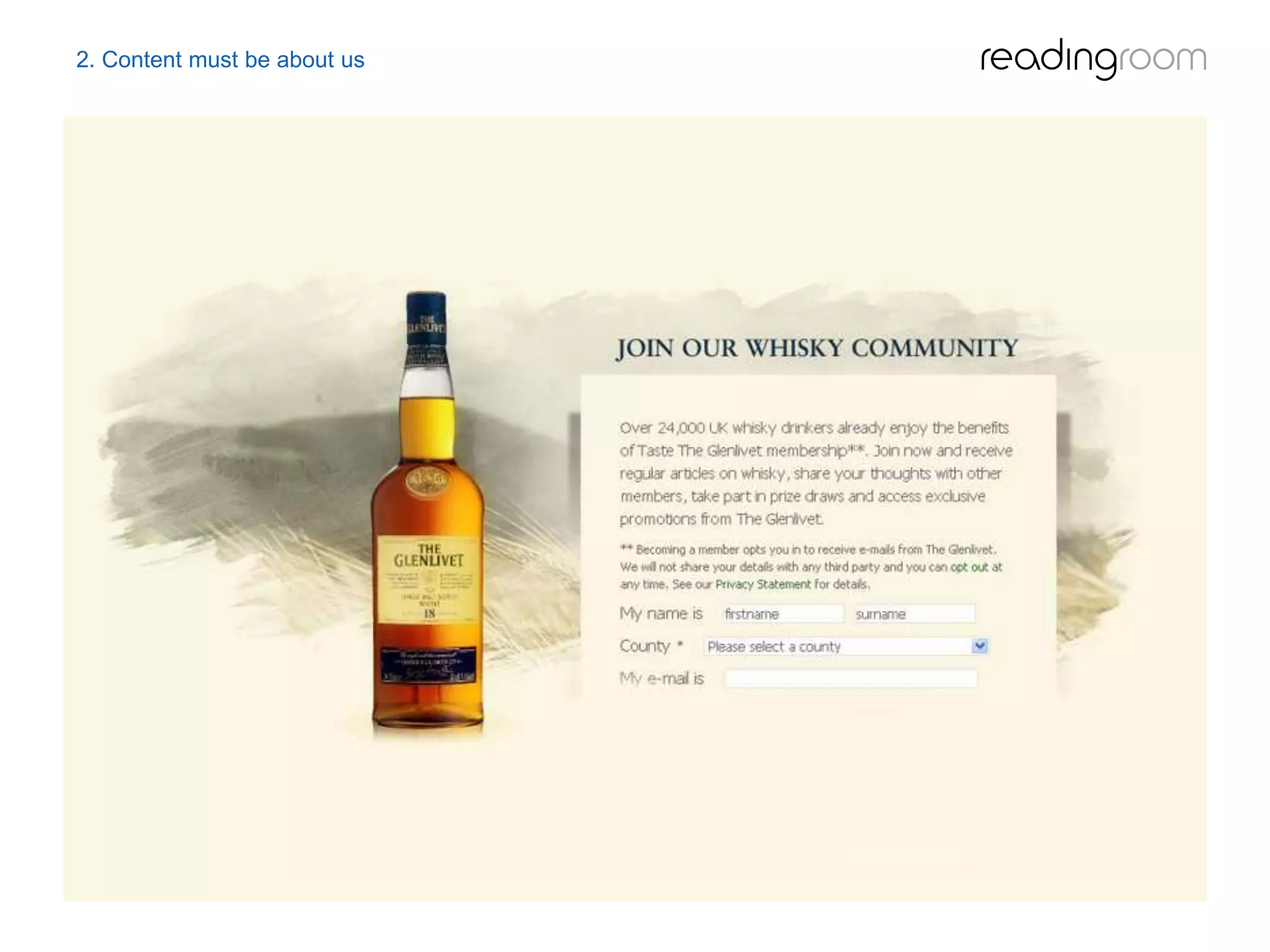
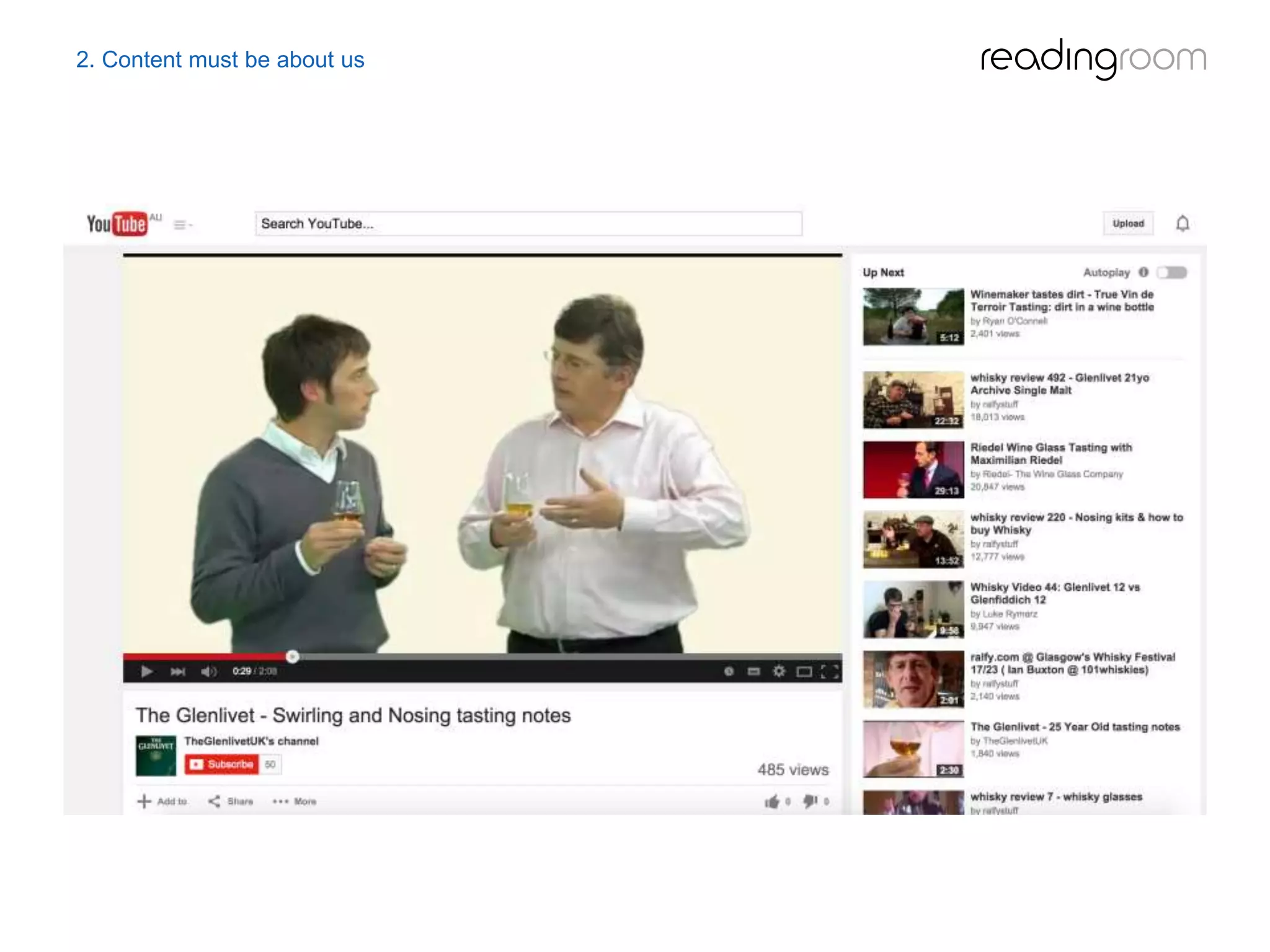
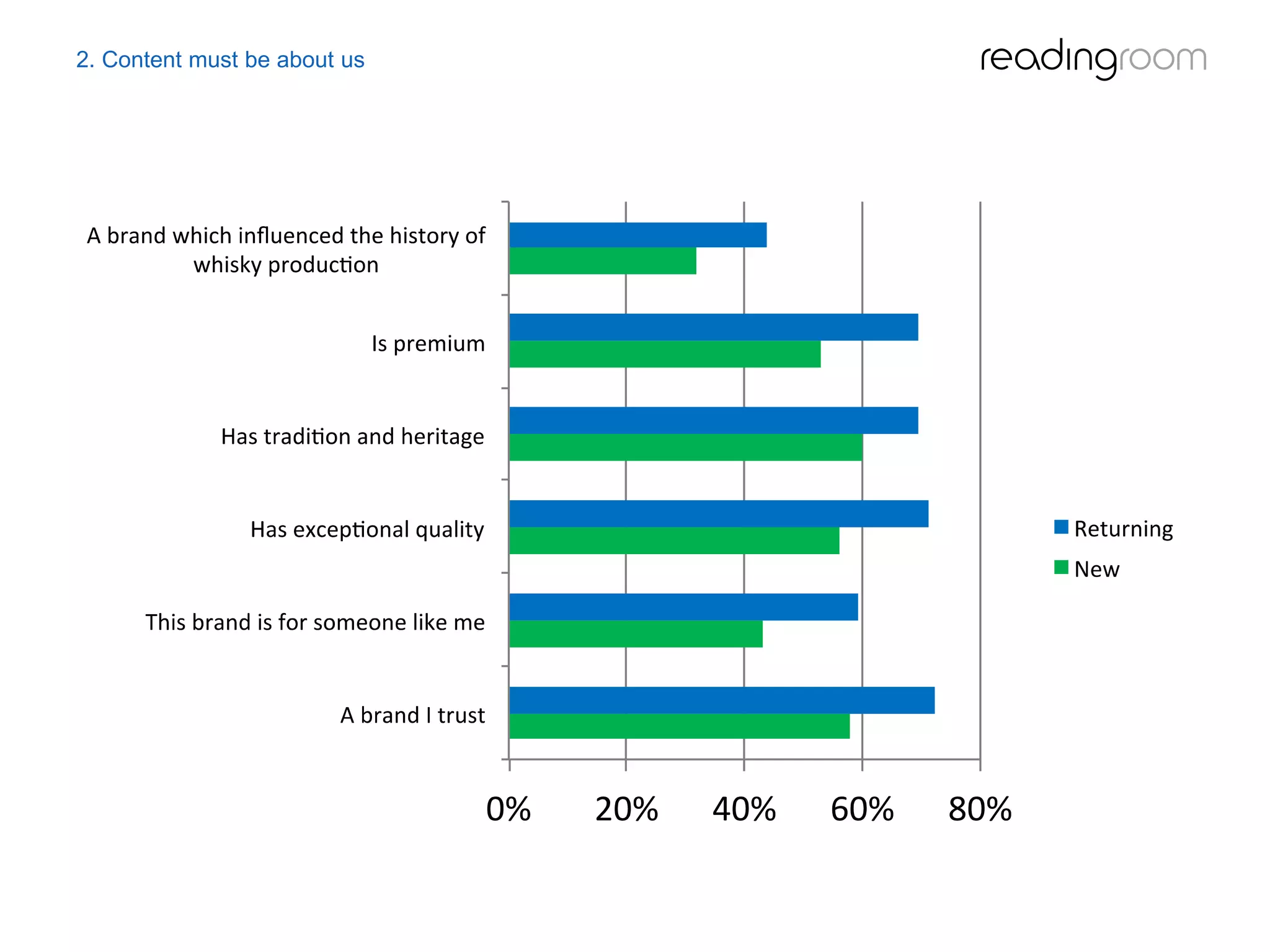
  • #45 For renowned Whisky brand The Glenlivet we produced content that wasn’t about this particular brand of whisky, but rather more general, about Whisky and life
  • #46 A series of videos explained how to taste Whisky
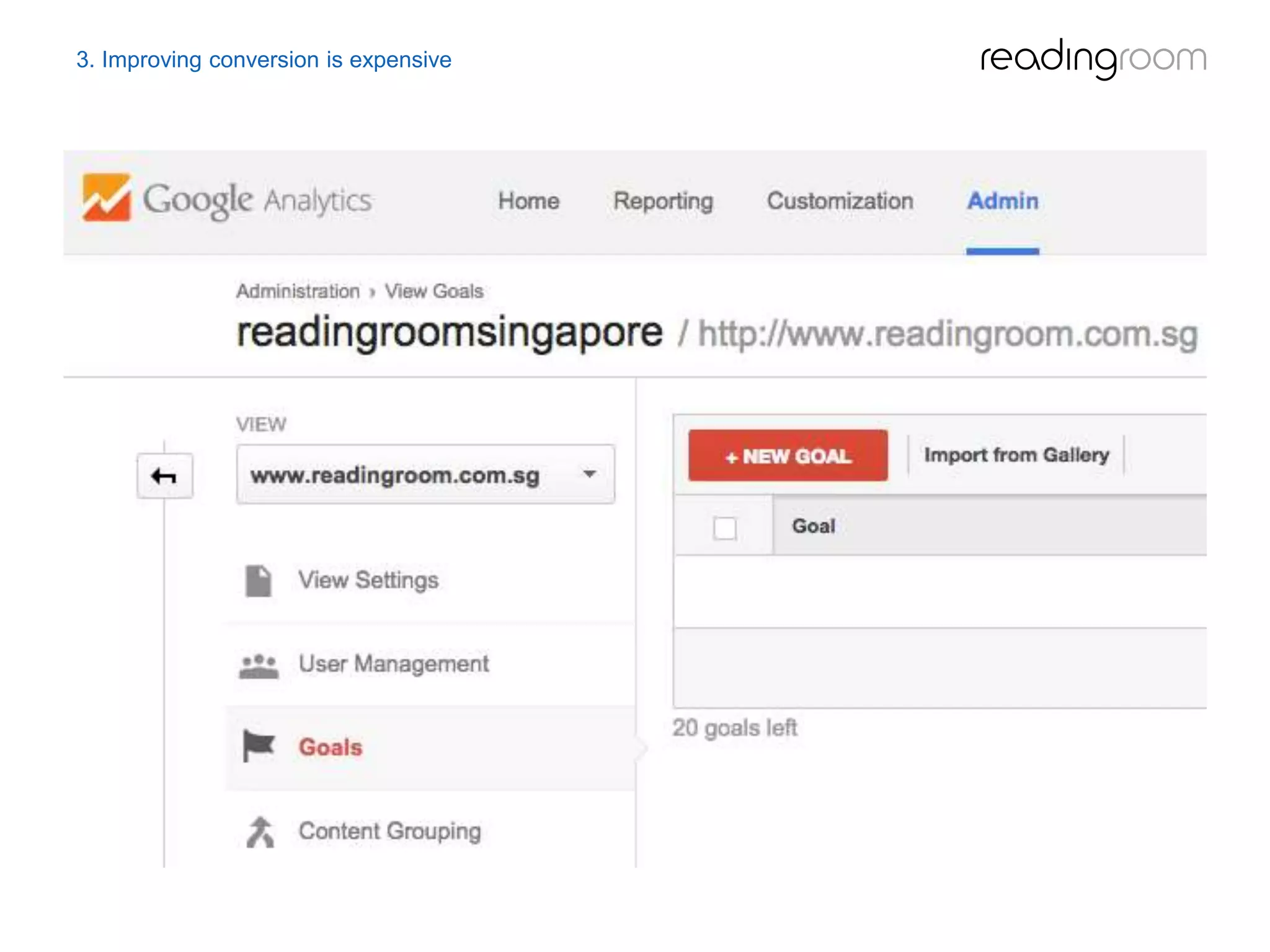
  • #51 You do not have to buy expensive software to measure, track and improve conversion A lot can be done free or with inexpensive tools.
  • #52 Of course, Google Analytics is free to use. You may want to get help from a partner in setting up goals for conversion, but there’s no licence cost
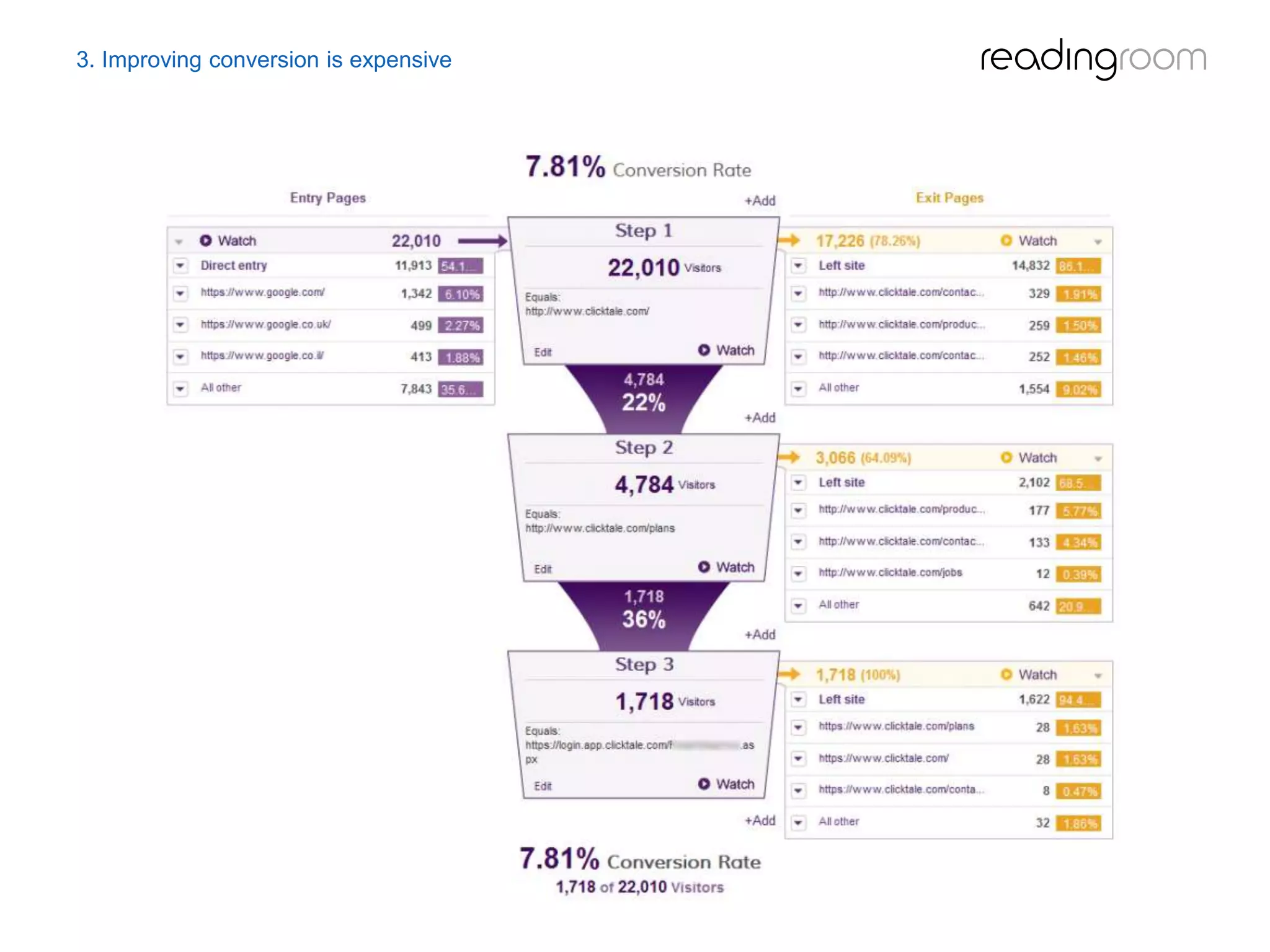
  • #53 You can set up conversion to be tracked not just as a single action, but as a path leading there and find out where you are losing and gaining users
  • #54 For more in-depth metrics, you could use something like Clicktale or Crazyegg
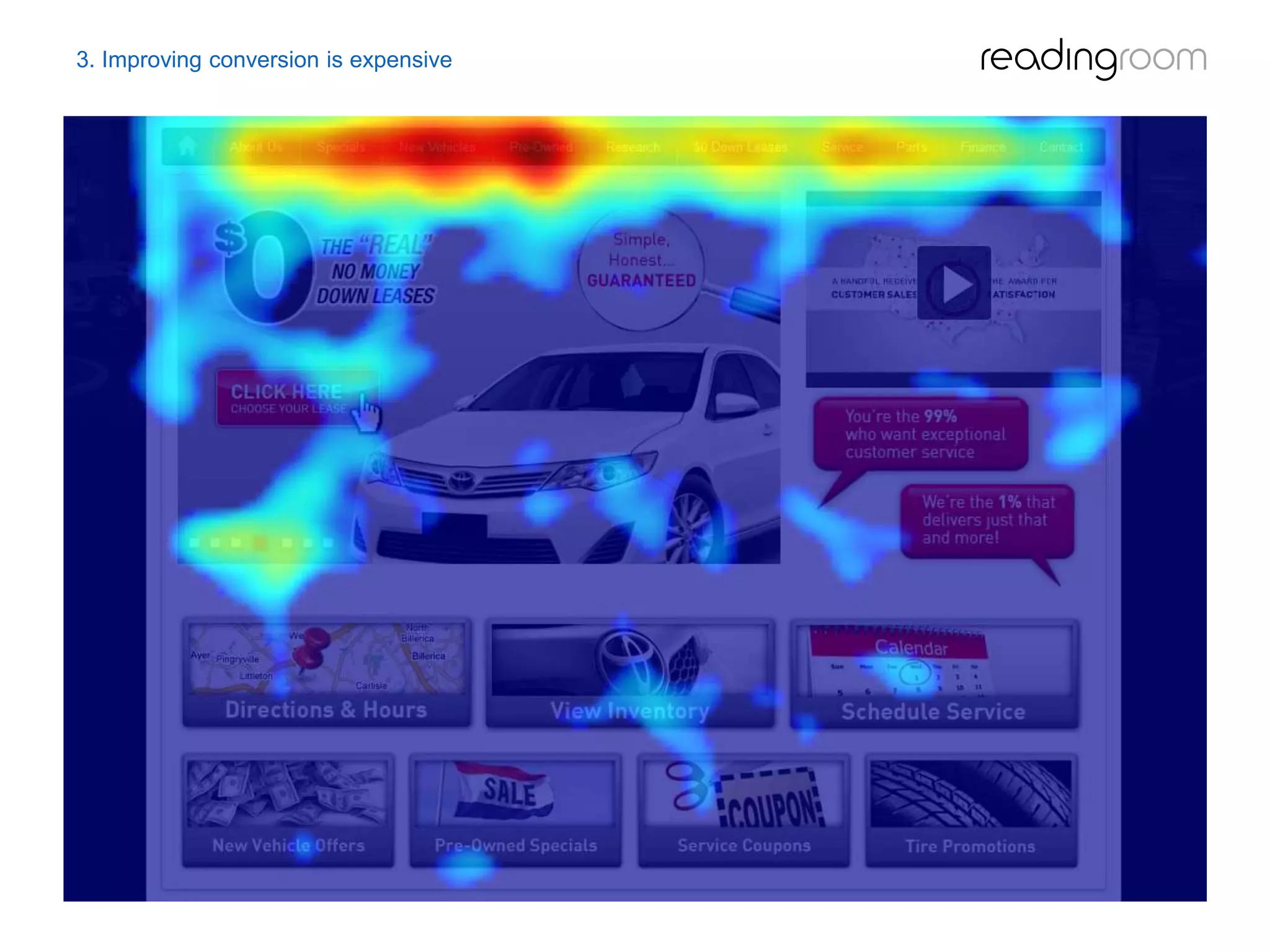
  • #55 They can provide you with click heatmaps, showing you where people hover and click…
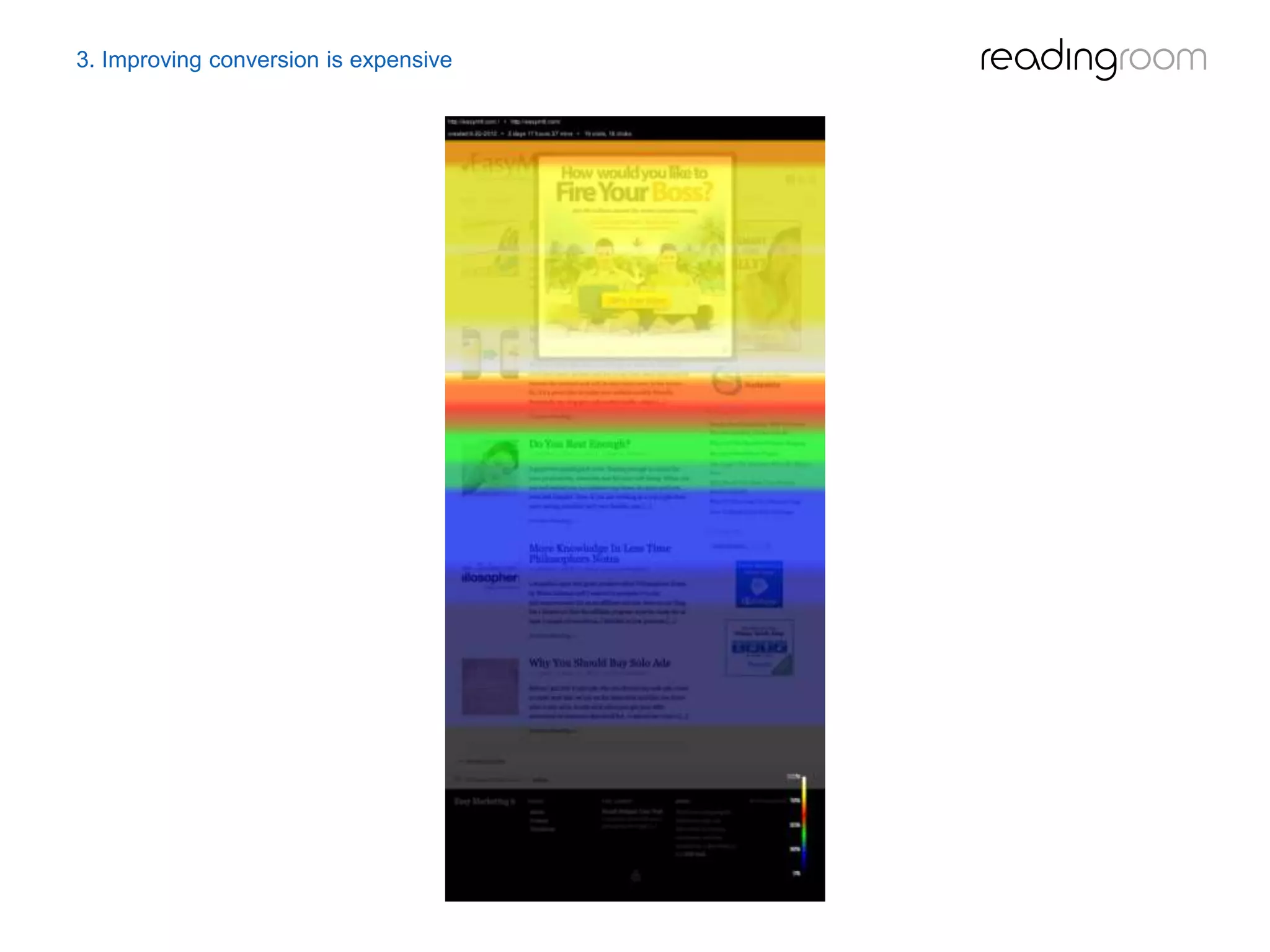
  • #56 … scroll maps showing you how far down your page people actually go, and…
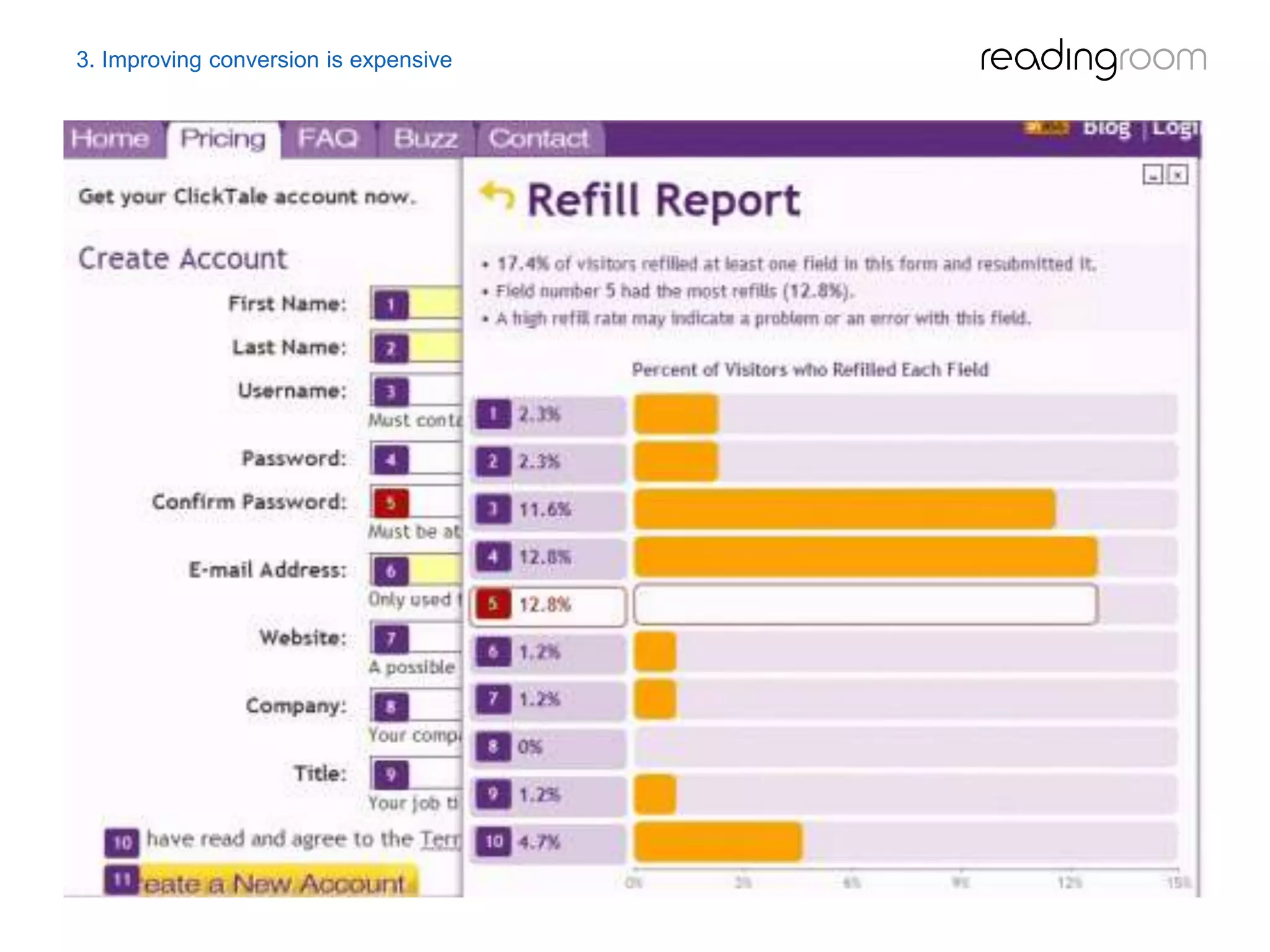
  • #57 … analyse forms and other interactive elements for you.
  • #58 We can measure through all these tools, but in order to track improvement, we need to (click) change things and measure again
  • #59 Rather making changes to the user experience and measure in a trial and error kind of way, you can use techniques like A/B and multivariate testing
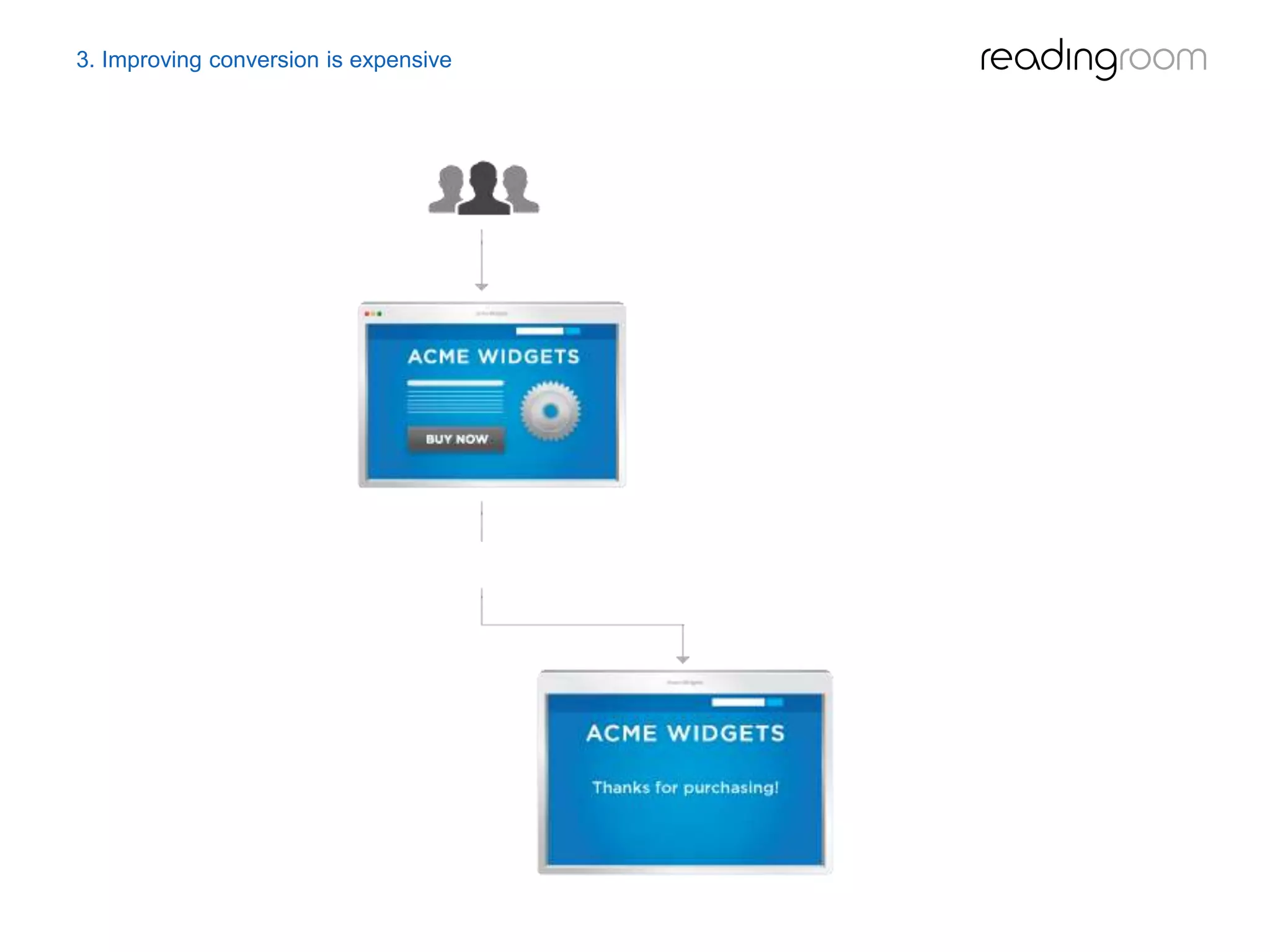
  • #60 Here we have a purchase conversion measured at the point of completion (click). To a certain percentage of the site visitors we expose a different experience. In this case a different colour call to action (click). We then measure which variant performs better. When we have more than 2 variants it’s called multivariate testing.
  • #61 We can alter anything for an A/B test, but typically it’s copy, imagery, and/or layout and interactions.
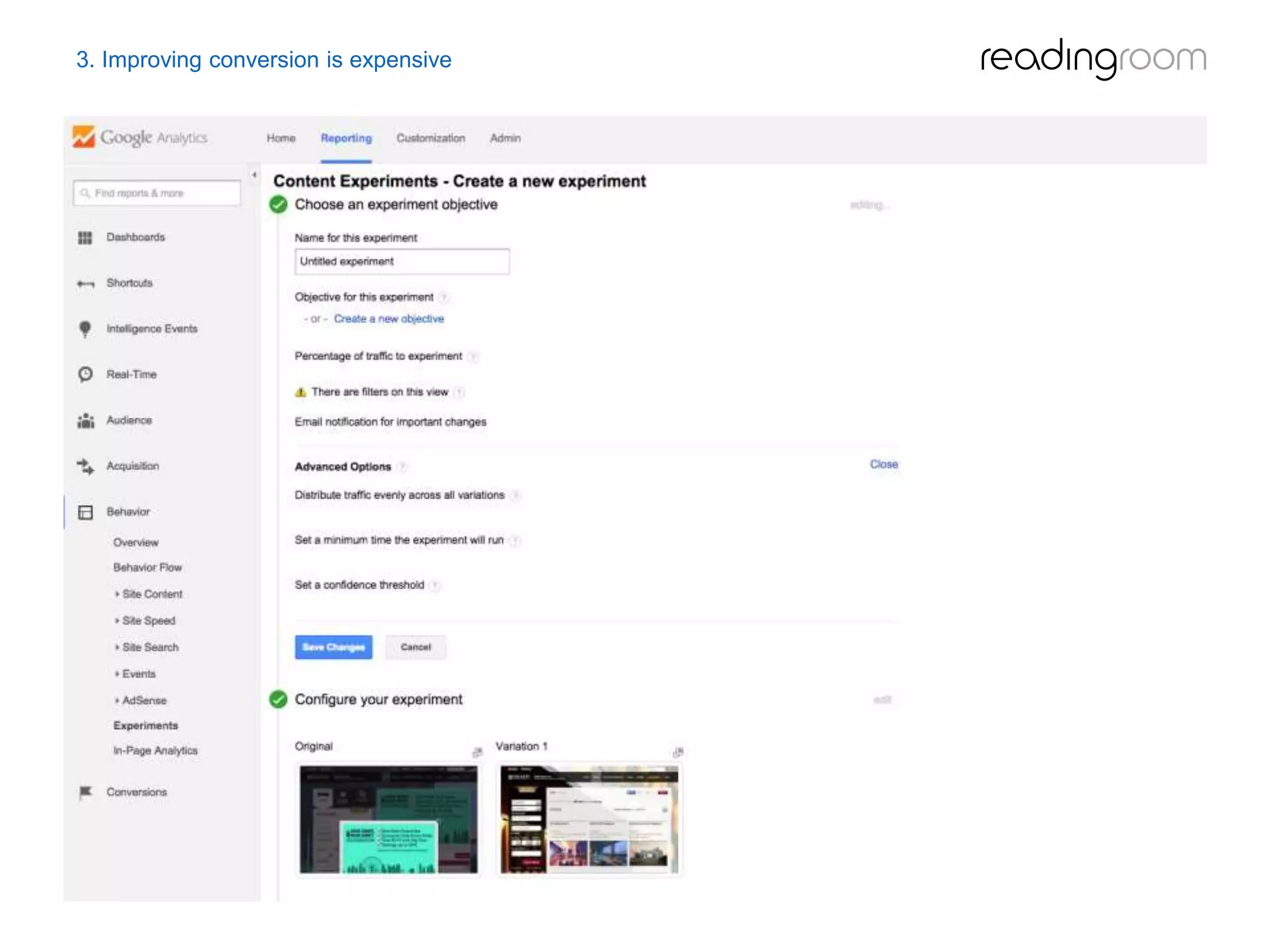
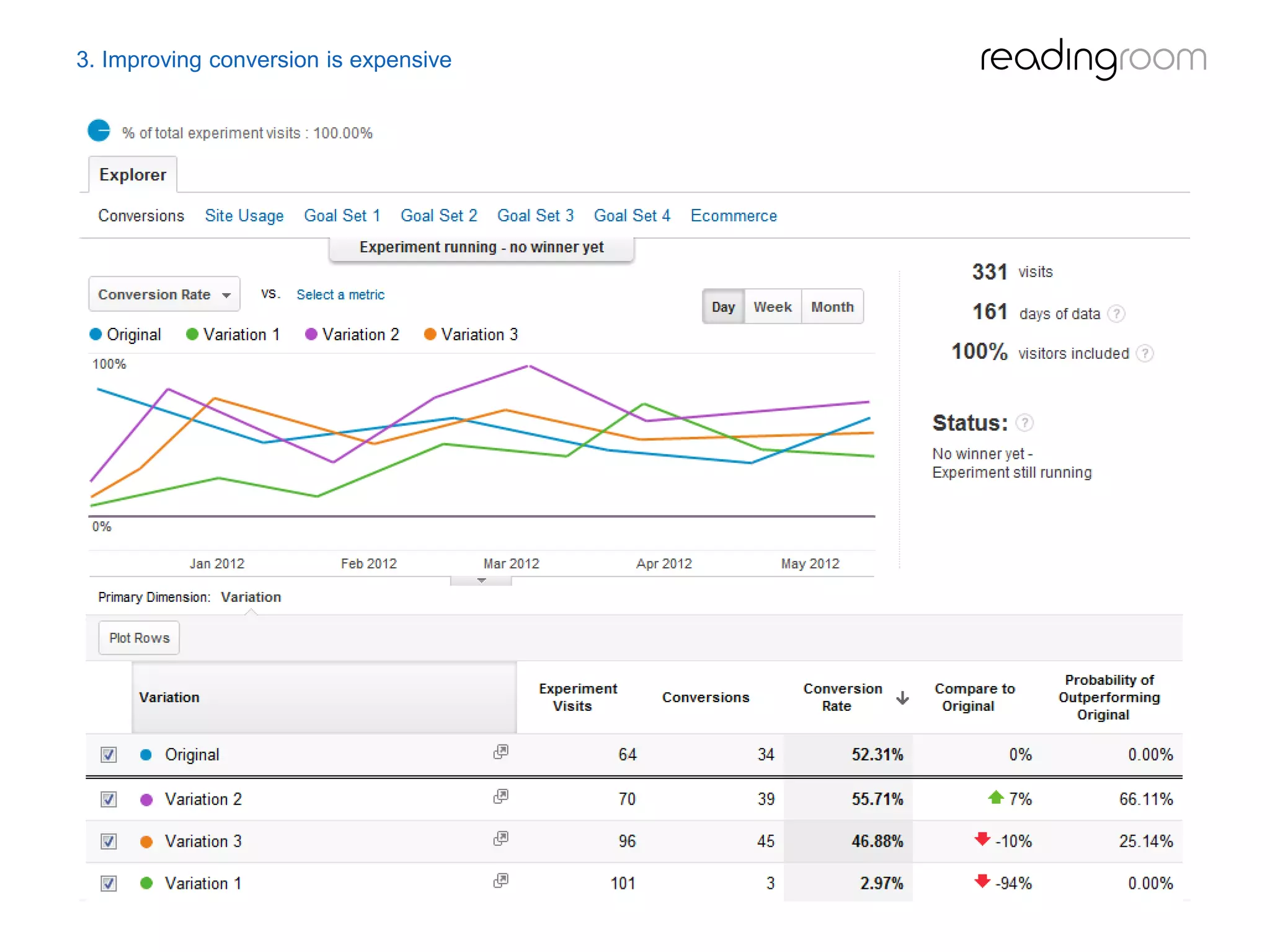
  • #62 Google’s content experiments allow you to do A/B testing and Multi-variate testing for free. You will have to create and host the variants on your site, though.
  • #63 You can compare the results within the Google Analytics interface you’re used to.
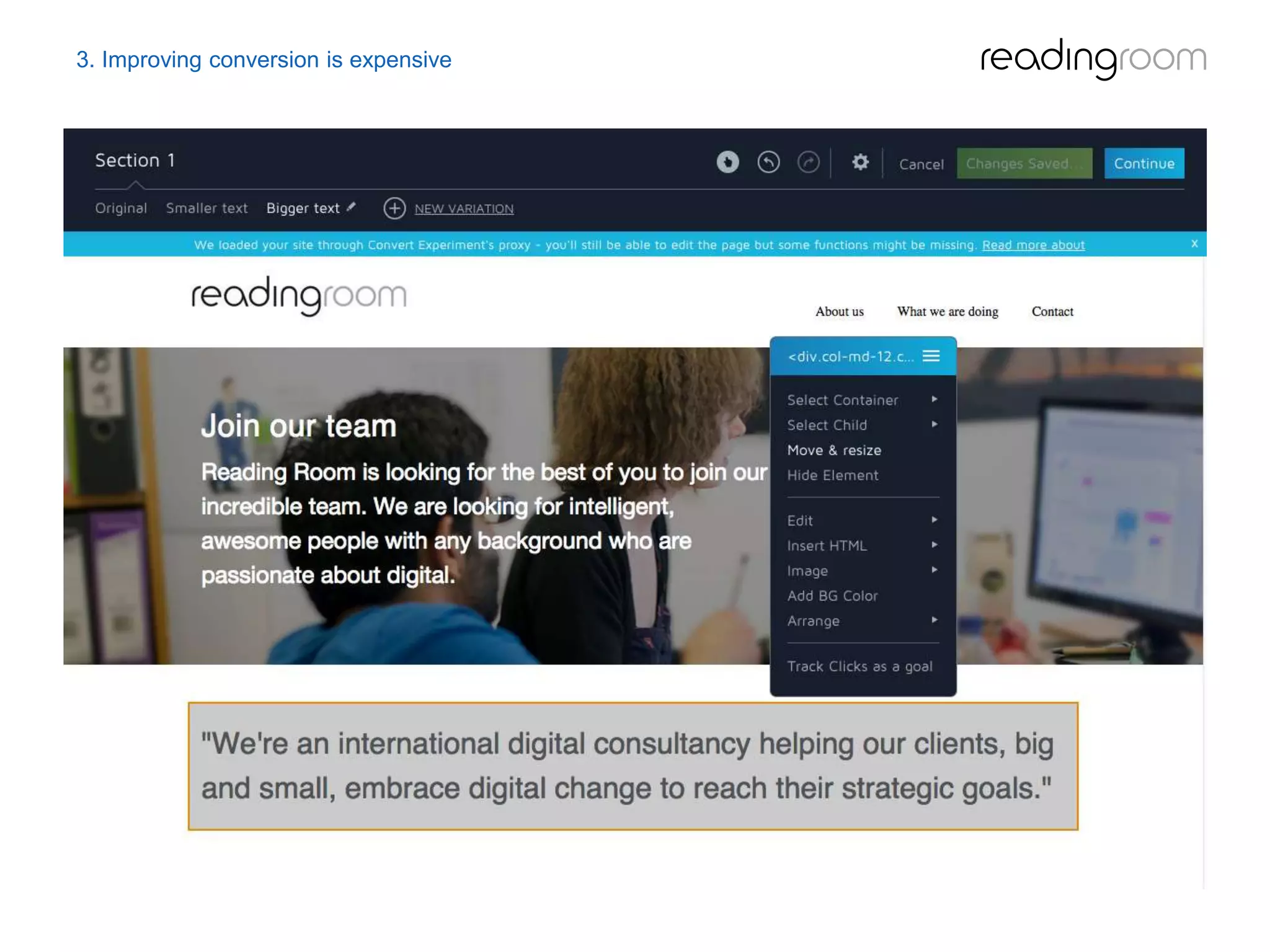
  • #64 Commercial tools, like Convert.com, allow you to click right into your website and make changes there to try out in your experiments. From $30/month.
  • #66 But what if we want to be more strategic in how we go about improving conversion?