


2NDWEEK OF
DEVELOPEMENT
COMPLETION OF IMPLANTATION
   AND CONTINUATION OF
  EMBRYONIC DEVELOPMENT
 Implantation of the blastocyst is
  completed by the end of the second
  week.
 Trophoblast contacts the endometrium
  and differentiates into:
 cytotrophoblast,

 syncytiotrophoblast
human chorionic
    gonadotrophin (hCG),
 Syncytiotrophoblast produces a hormone-
  human chorionic gonadotrophin
  (hCG), which enters the maternal blood via
  lacunae (Latin, hollow cavities) in the
  syncytiotrophoblast.
 Highly sensitive radioimmunoassays are
  available for detecting hCG and pregnancy
  and forms the basis for pregnancy tests.
  Enough hCG is produced by the
  syncytiotrophoblast at the end of the second
  week to give a positive pregnancy test.
FORMATION OF THE AMNIOTIC
         CAVITY
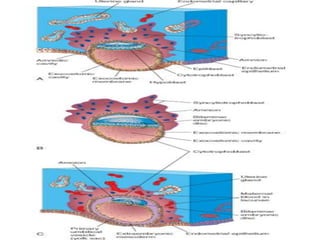
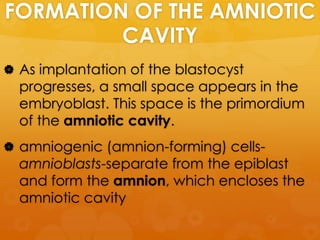
 As implantation of the blastocyst
  progresses, a small space appears in the
  embryoblast. This space is the primordium
  of the amniotic cavity.
 amniogenic (amnion-forming) cells-
  amnioblasts-separate from the epiblast
  and form the amnion, which encloses the
  amniotic cavity
 The epiblast forms the floor of the
  amniotic cavity and is continuous
  peripherally with the amnion.
FORMATION OF EMBRYONIC
          DISC
 morphologic changes occur in the
  embryoblast that result in the formation of
  a flat, almost circular bilaminar plate of
  cells, the embryonic disc, consisting of two
  layers:
 Epiblast, the thicker layer, consisting of high
  columnar cells related to the amniotic
  cavity
 Hypoblast, consisting of small cuboidal
  cells adjacent to the exocoelomic cavity
FORMATION OF UMBILICAL
         VESICLE
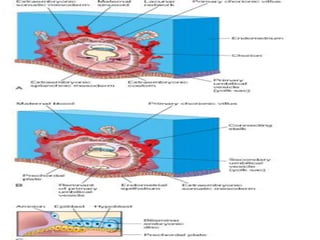
 The hypoblast forms the roof of the
  exocoelomic cavity and is continuous with
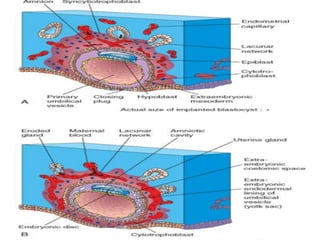
  the thin exocoelomic membrane (see Fig.
  3-1B). This membrane, together with the
  hypoblast, lines the primary umbilical
  vesicle.
 cells from the vesicle endoderm form a
  layer of connective tissue, the
  extraembryonic mesoderm
Primordial Uteroplacental
          Circulation.
 the amnion, embryonic disc, and primary umbilical vesicle
  form, isolated cavities- lacunae-appear in the
  syncytiotrophoblast.

 The lacunae soon become filled with a mixture of
  maternal blood from ruptured endometrial capillaries and
  cellular debris from eroded uterine glands. The fluid in the
  lacunar spaces-embryotroph
  (Greek, trophe, nourishment)-passes to the embryonic disc
  by diffusion and provides nutritive material to the embryo.

 The communication of the eroded endometrial capillaries
  with the lacunae establishes the primordial uteroplacental
  circulation.
Decidual Reaction
 As the conceptus implants, the endometrial
  connective tissue cells undergo a
  transformation, the decidual reaction.
 After the cells swell because of the accumulation
  of glycogen and lipid in their cytoplasm, they are
  known as decidual cells.
 The primary function of the decidual reaction is
  to provide nutrition for the early embryo and an
  immunologically privileged site for the
  conceptus.
 Changes occur in the trophoblast and
  endometrium, the extraembryonic
  mesoderm increases and isolated
  extraembryonic coelomic spaces appear
  within it
 These spaces rapidly fuse to form a large
  isolated cavity, the extraembryonic
  coelom. This fluid-filled cavity surrounds the
  amnion and umbilical vesicle, except
  where they are attached to the chorion by
  the connecting stalk.
 As the extraembryonic coelom forms, the
  primary umbilical vesicle decreases in size
  and a smaller secondary umbilical vesicle
  forms.
 During formation of the secondary
  umbilical vesicle, a large part of the
  primary umbilical vesicle is pinched off
 The extraembryonic somatic mesoderm
  and the two layers of trophoblast form the
  chorion
DEVELOPMENT OF THE
          CHORIONIC SAC
 The extraembryonic coelom splits the
  extraembryonic mesoderm into two layers:
 Extraembryonic somatic mesoderm, lining the
  trophoblast and covering the amnion
 Extraembryonic splanchnic mesoderm, surrounding
  the umbilical vesicle
 The chorion forms the wall of the chorionic
  sac, within which the embryo and its amniotic sac
  and umbilical vesicle are suspended by the
  connecting stalk.
 The extraembryonic coelom is now called the
  chorionic cavity.
THANK YOU

2nd week of intrauterine developement

  • 1.
  • 2.
    COMPLETION OF IMPLANTATION AND CONTINUATION OF EMBRYONIC DEVELOPMENT  Implantation of the blastocyst is completed by the end of the second week.  Trophoblast contacts the endometrium and differentiates into:  cytotrophoblast,  syncytiotrophoblast
  • 4.
    human chorionic gonadotrophin (hCG),  Syncytiotrophoblast produces a hormone- human chorionic gonadotrophin (hCG), which enters the maternal blood via lacunae (Latin, hollow cavities) in the syncytiotrophoblast.  Highly sensitive radioimmunoassays are available for detecting hCG and pregnancy and forms the basis for pregnancy tests. Enough hCG is produced by the syncytiotrophoblast at the end of the second week to give a positive pregnancy test.
  • 5.
    FORMATION OF THEAMNIOTIC CAVITY  As implantation of the blastocyst progresses, a small space appears in the embryoblast. This space is the primordium of the amniotic cavity.  amniogenic (amnion-forming) cells- amnioblasts-separate from the epiblast and form the amnion, which encloses the amniotic cavity
  • 6.
     The epiblastforms the floor of the amniotic cavity and is continuous peripherally with the amnion.
  • 7.
    FORMATION OF EMBRYONIC DISC  morphologic changes occur in the embryoblast that result in the formation of a flat, almost circular bilaminar plate of cells, the embryonic disc, consisting of two layers:  Epiblast, the thicker layer, consisting of high columnar cells related to the amniotic cavity  Hypoblast, consisting of small cuboidal cells adjacent to the exocoelomic cavity
  • 8.
    FORMATION OF UMBILICAL VESICLE  The hypoblast forms the roof of the exocoelomic cavity and is continuous with the thin exocoelomic membrane (see Fig. 3-1B). This membrane, together with the hypoblast, lines the primary umbilical vesicle.  cells from the vesicle endoderm form a layer of connective tissue, the extraembryonic mesoderm
  • 9.
    Primordial Uteroplacental Circulation.  the amnion, embryonic disc, and primary umbilical vesicle form, isolated cavities- lacunae-appear in the syncytiotrophoblast.  The lacunae soon become filled with a mixture of maternal blood from ruptured endometrial capillaries and cellular debris from eroded uterine glands. The fluid in the lacunar spaces-embryotroph (Greek, trophe, nourishment)-passes to the embryonic disc by diffusion and provides nutritive material to the embryo.  The communication of the eroded endometrial capillaries with the lacunae establishes the primordial uteroplacental circulation.
  • 11.
    Decidual Reaction  Asthe conceptus implants, the endometrial connective tissue cells undergo a transformation, the decidual reaction.  After the cells swell because of the accumulation of glycogen and lipid in their cytoplasm, they are known as decidual cells.  The primary function of the decidual reaction is to provide nutrition for the early embryo and an immunologically privileged site for the conceptus.
  • 12.
     Changes occurin the trophoblast and endometrium, the extraembryonic mesoderm increases and isolated extraembryonic coelomic spaces appear within it  These spaces rapidly fuse to form a large isolated cavity, the extraembryonic coelom. This fluid-filled cavity surrounds the amnion and umbilical vesicle, except where they are attached to the chorion by the connecting stalk.
  • 13.
     As theextraembryonic coelom forms, the primary umbilical vesicle decreases in size and a smaller secondary umbilical vesicle forms.  During formation of the secondary umbilical vesicle, a large part of the primary umbilical vesicle is pinched off  The extraembryonic somatic mesoderm and the two layers of trophoblast form the chorion
  • 14.
    DEVELOPMENT OF THE CHORIONIC SAC  The extraembryonic coelom splits the extraembryonic mesoderm into two layers:  Extraembryonic somatic mesoderm, lining the trophoblast and covering the amnion  Extraembryonic splanchnic mesoderm, surrounding the umbilical vesicle  The chorion forms the wall of the chorionic sac, within which the embryo and its amniotic sac and umbilical vesicle are suspended by the connecting stalk.  The extraembryonic coelom is now called the chorionic cavity.
  • 16.