GAS
EXCHANGE
Breathing
It is the physical
process of taking
in Oxygen and
releasing Carbon
dioxide
Respiration
This is the
exchange
(inhalation and
exhalation) of
gases
ANIMALS
OBTAIN
OXYGEN IN
DIFFERENT
WAYS:
1. From the air or
water through
the moist
surface directly
into the body.
(e.g., amoeba,
flatworm)
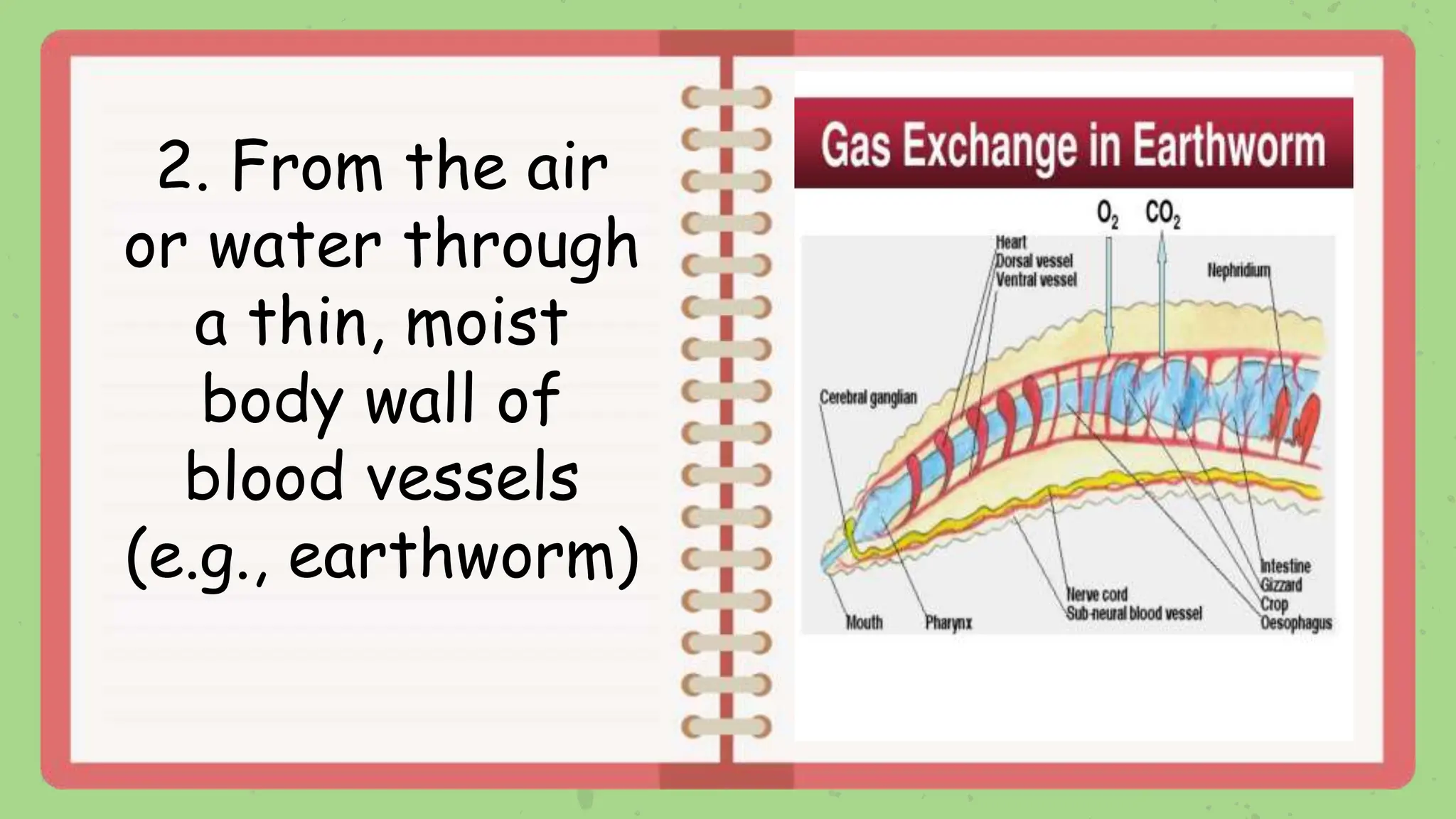
2. From the air
or water through
a thin, moist
body wall of
blood vessels
(e.g., earthworm)
3. From the air
through spiracles
(openings on the
thorax) or a
tracheal system to
a system of ducts
to the tissue
(e.g., insects)
4. From water
through moist
gill surfaces to
blood vessels
(e.g., fishes,
amphibians)
5. From the air
through moist
lungs surface to
blood vessels
(e.g., land snail,
land vertebrate)
TYPES OF
GAS
EXCHANGE
Skin System
Animals that live in moist
environments, such as amphibians
and worms, breathe in oxygen
through their moist body
surface. The skin of frogs, for
instance, is made up of very thin
tissues that allow for the smooth
exchange of gases.
The skin or body surface system
is also known as the
integumentary system.
Gills System
Aquatic animals use body parts called
gills to promote the exchange of
gases.
These are extensions of the outside
membranes in most aquatic animals;
although in some, these may also be
found inside the body. Because the
gills of an aquatic animal have very
thin membranes, these are able to
get oxygen that has been dissolved in
the water into the animal’s
bloodstream also goes out through its
gills.
Tracheal System
Gas exchange is some animals like
insects takes place in their
tracheae, which are several air
tubes that form a network in
their bodies. These tubes have
holes called spiracles that open
to the outside surface of the
animals’ bodies. Among the
animals with this gas exchange
system are grasshoppers and
spiders.
With the tracheal system, oxygen enters the
animal's body through its tracheae, while carbon
dioxide leaves the body through the spiracles. The
tracheal tubes deliver the oxygen directly to the
cells of the animal's body and take away the carbon
dioxide from the cells, so there is no need for the
bloodstream to circulate these gases throughout the
body.
Lungs System
Inside the body cavity of land
animals including humans are the
lungs, a pair of organs divided
into small chambers filled with
capillaries. In humans, the chest
cavity is bisected by the
trachea, a tube that connects
the nose and mouth to the lungs.
One lung lies to the right side of
the trachea while the other lies
to the left side.
Under the lungs is a dome-
shaped muscle called the
diaphragm. The lungs are
enclosed in the rib cage, which
serves to protect the respiratory
organs and the heart.
SOME DISEASES RELATED
TO GAS EXCHANGE
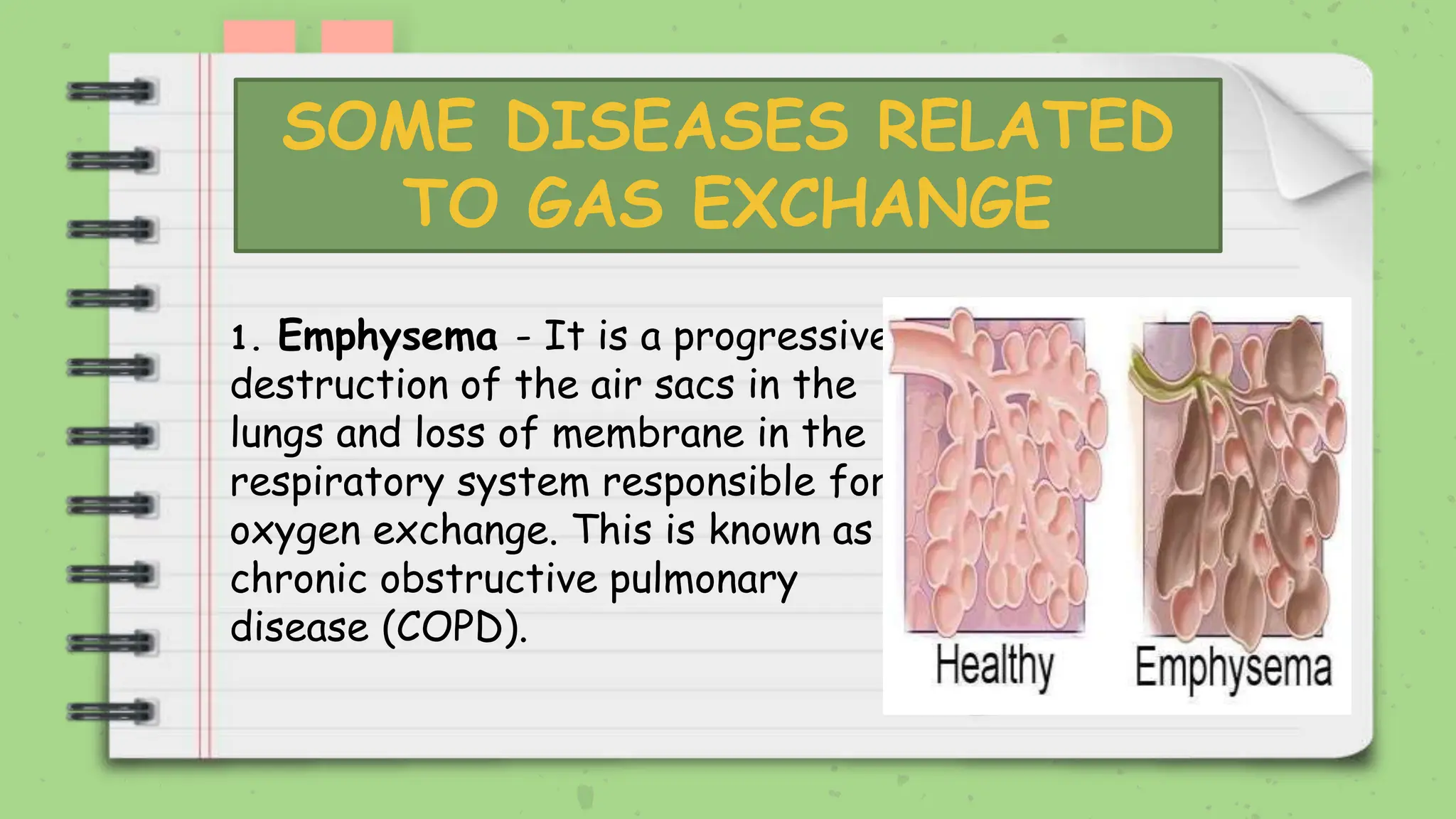
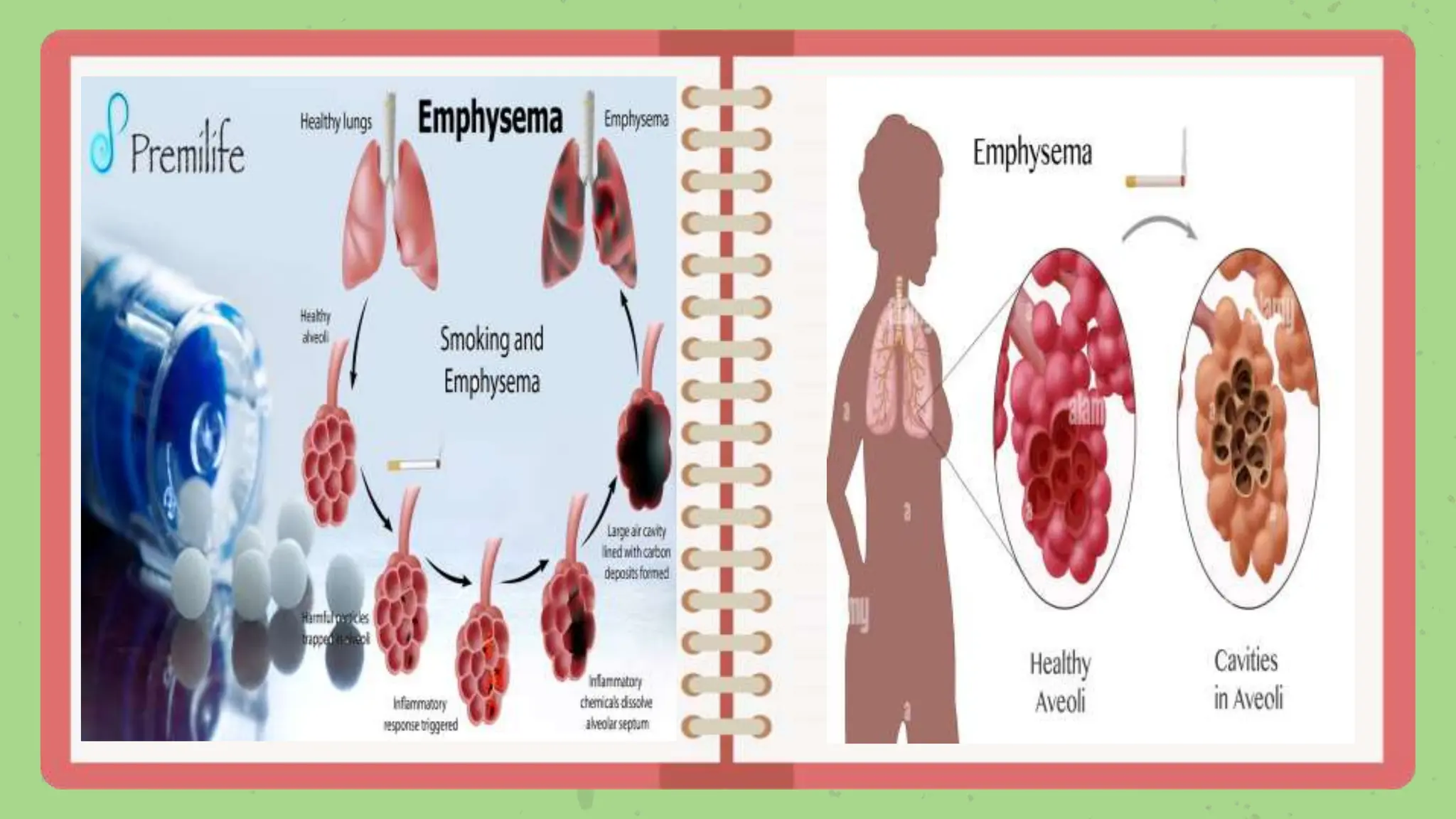
1. Emphysema - It is a progressive
destruction of the air sacs in the
lungs and loss of membrane in the
respiratory system responsible for
oxygen exchange. This is known as
chronic obstructive pulmonary
disease (COPD).
SOME DISEASES RELATED
TO GAS EXCHANGE
2. Cystic fibrosis - It occurs when
there is increased scarring (fibrosis)
of the lungs due to hard-to-treat
lung infections because of the
presence of thick mucus. This
inheritable disease affects both the
lungs and other body systems,
including the digestive system.
SOME DISEASES RELATED
TO GAS EXCHANGE
3. Pneumonia - It is an
inflammation of the lung
especially the alveoli or air
sacs. It is caused by
bacterial and viral
infections.
2nd QUARTER LESSON 3 - GAS EXCHANGE.pptx

2nd QUARTER LESSON 3 - GAS EXCHANGE.pptx

  • 1.
  • 2.
    Breathing It is thephysical process of taking in Oxygen and releasing Carbon dioxide
  • 3.
  • 4.
  • 5.
    1. From theair or water through the moist surface directly into the body. (e.g., amoeba, flatworm)
  • 6.
    2. From theair or water through a thin, moist body wall of blood vessels (e.g., earthworm)
  • 7.
    3. From theair through spiracles (openings on the thorax) or a tracheal system to a system of ducts to the tissue (e.g., insects)
  • 8.
    4. From water throughmoist gill surfaces to blood vessels (e.g., fishes, amphibians)
  • 9.
    5. From theair through moist lungs surface to blood vessels (e.g., land snail, land vertebrate)
  • 10.
  • 11.
    Skin System Animals thatlive in moist environments, such as amphibians and worms, breathe in oxygen through their moist body surface. The skin of frogs, for instance, is made up of very thin tissues that allow for the smooth exchange of gases. The skin or body surface system is also known as the integumentary system.
  • 12.
    Gills System Aquatic animalsuse body parts called gills to promote the exchange of gases. These are extensions of the outside membranes in most aquatic animals; although in some, these may also be found inside the body. Because the gills of an aquatic animal have very thin membranes, these are able to get oxygen that has been dissolved in the water into the animal’s bloodstream also goes out through its gills.
  • 13.
    Tracheal System Gas exchangeis some animals like insects takes place in their tracheae, which are several air tubes that form a network in their bodies. These tubes have holes called spiracles that open to the outside surface of the animals’ bodies. Among the animals with this gas exchange system are grasshoppers and spiders. With the tracheal system, oxygen enters the animal's body through its tracheae, while carbon dioxide leaves the body through the spiracles. The tracheal tubes deliver the oxygen directly to the cells of the animal's body and take away the carbon dioxide from the cells, so there is no need for the bloodstream to circulate these gases throughout the body.
  • 14.
    Lungs System Inside thebody cavity of land animals including humans are the lungs, a pair of organs divided into small chambers filled with capillaries. In humans, the chest cavity is bisected by the trachea, a tube that connects the nose and mouth to the lungs. One lung lies to the right side of the trachea while the other lies to the left side. Under the lungs is a dome- shaped muscle called the diaphragm. The lungs are enclosed in the rib cage, which serves to protect the respiratory organs and the heart.
  • 15.
    SOME DISEASES RELATED TOGAS EXCHANGE 1. Emphysema - It is a progressive destruction of the air sacs in the lungs and loss of membrane in the respiratory system responsible for oxygen exchange. This is known as chronic obstructive pulmonary disease (COPD).
  • 17.
    SOME DISEASES RELATED TOGAS EXCHANGE 2. Cystic fibrosis - It occurs when there is increased scarring (fibrosis) of the lungs due to hard-to-treat lung infections because of the presence of thick mucus. This inheritable disease affects both the lungs and other body systems, including the digestive system.
  • 19.
    SOME DISEASES RELATED TOGAS EXCHANGE 3. Pneumonia - It is an inflammation of the lung especially the alveoli or air sacs. It is caused by bacterial and viral infections.