BIOENCAPSULATION TECHNOLOGIES FOR
INCORPORATING BIOACTIVE
COMPONENTS INTO FUNCTIONAL FOODS
Submitted by,
Rezwana Khan Nishat
Reg. no.- 2018421019
Dept. of GEB, SUST.
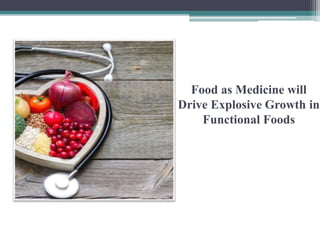
Food as Medicine will
Drive Explosive Growth in
Functional Foods
FUNCTIONAL FOOD
• A modified food that claims to improve health or well-being
by providing benefit beyond that of the traditional nutrients it
contains. Functional foods may include such items as cereals,
breads, beverages that are fortified with vitamins, some herbs,
and nutraceuticals.
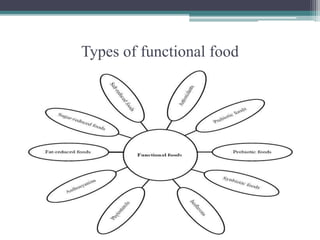
Types of functional food
Bioencapsulation technologies for
incorporating bioactive components
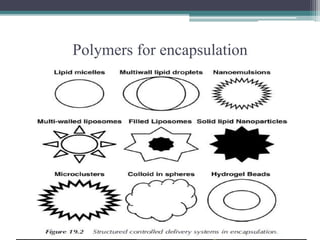
There are a number of techniques available for encapsulation of functional
ingredients. Many encapsulation processes are based on making droplets of the
active agent (in liquid or powder form) initially, and then these droplets or
beads are subsequently coated by carrier materials (polymers) in a liquid phase
via a number of physicochemical processes such as spray-drying, fluid bed
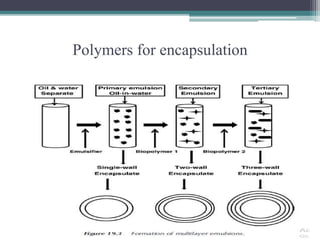
coating, spray-chilling/cooling, melt injection, melt extrusion, emulsification
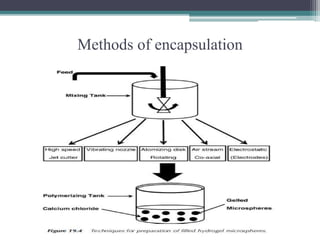
(single and multi-layers), coacervation, extrusion (dropping), co-extrusion,
inclusion complexation, liposome entrapment, rapid expansion of supercritical
fluid, freeze/vacuum drying and nanoemulsions.
Bioencapsulation technologies for
incorporating bioactive components
This process can be divided into following sections-
• Polymers for encapsulation
• Methods of encapsulation
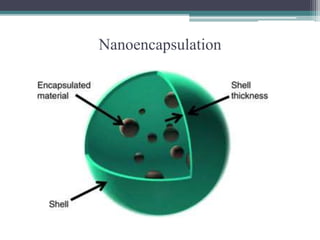
• Nanoencapsulation
Polymers for encapsulation
Methods of encapsulation
Nanoencapsulation
Applications: Encapsulation and Controlled Release
of Biofunctional Ingredients in Functional Foods:
Selected Examples
• Fish Oils
• Vitamins
• Anti-Oxidants
• Pigments etc.
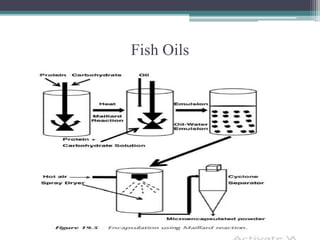
Fish Oils
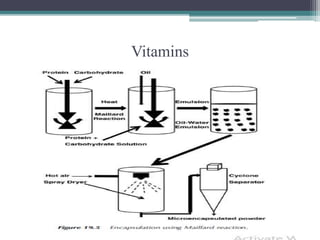
Vitamins
Future prospect of functional food
• Academic, government and private research institutes around the globe are
devoting substantial efforts to identifying how functional foods and food
ingredients might help prevent chronic disease or optimize health, thereby
reducing healthcare costs and improving the quality of life for many
consumers.
• Nutrigenomics will have a profound effect on future disease prevention
efforts including the future of the functional foods industry.
• Another technology that will greatly influence the future of functional
foods is biotechnology.
Conclusion:
The boundary between medicine and foods has recently narrowed
significantly. A large number of bioactive components in traditional foods
have been identified as contributing to therapeutic and physiological
benefits in circumventing lifestyle diseases in humans. As a result, the
therapeutic effects of medicinal foods and their use in preventative
medicine are increasingly being reported in the recent scientific literature.
New innovative ways of administering and controlling the release of
bioactive agents through functional foods and ingredients will be
developed in the near future.
2018421019  bioencapsulation technologies for incorporating bioactive components into functional

2018421019 bioencapsulation technologies for incorporating bioactive components into functional

  • 1.
    BIOENCAPSULATION TECHNOLOGIES FOR INCORPORATINGBIOACTIVE COMPONENTS INTO FUNCTIONAL FOODS Submitted by, Rezwana Khan Nishat Reg. no.- 2018421019 Dept. of GEB, SUST.
  • 2.
    Food as Medicinewill Drive Explosive Growth in Functional Foods
  • 3.
    FUNCTIONAL FOOD • Amodified food that claims to improve health or well-being by providing benefit beyond that of the traditional nutrients it contains. Functional foods may include such items as cereals, breads, beverages that are fortified with vitamins, some herbs, and nutraceuticals.
  • 4.
  • 5.
    Bioencapsulation technologies for incorporatingbioactive components There are a number of techniques available for encapsulation of functional ingredients. Many encapsulation processes are based on making droplets of the active agent (in liquid or powder form) initially, and then these droplets or beads are subsequently coated by carrier materials (polymers) in a liquid phase via a number of physicochemical processes such as spray-drying, fluid bed coating, spray-chilling/cooling, melt injection, melt extrusion, emulsification (single and multi-layers), coacervation, extrusion (dropping), co-extrusion, inclusion complexation, liposome entrapment, rapid expansion of supercritical fluid, freeze/vacuum drying and nanoemulsions.
  • 6.
    Bioencapsulation technologies for incorporatingbioactive components This process can be divided into following sections- • Polymers for encapsulation • Methods of encapsulation • Nanoencapsulation
  • 7.
  • 8.
  • 9.
  • 10.
  • 11.
    Applications: Encapsulation andControlled Release of Biofunctional Ingredients in Functional Foods: Selected Examples • Fish Oils • Vitamins • Anti-Oxidants • Pigments etc.
  • 12.
  • 13.
  • 14.
    Future prospect offunctional food • Academic, government and private research institutes around the globe are devoting substantial efforts to identifying how functional foods and food ingredients might help prevent chronic disease or optimize health, thereby reducing healthcare costs and improving the quality of life for many consumers. • Nutrigenomics will have a profound effect on future disease prevention efforts including the future of the functional foods industry. • Another technology that will greatly influence the future of functional foods is biotechnology.
  • 15.
    Conclusion: The boundary betweenmedicine and foods has recently narrowed significantly. A large number of bioactive components in traditional foods have been identified as contributing to therapeutic and physiological benefits in circumventing lifestyle diseases in humans. As a result, the therapeutic effects of medicinal foods and their use in preventative medicine are increasingly being reported in the recent scientific literature. New innovative ways of administering and controlling the release of bioactive agents through functional foods and ingredients will be developed in the near future.